Category: MAM

  • Scapia launches Leap Year to fund year-long global trip for two Indians

    Scapia launches Leap Year to fund year-long global trip for two Indians

    MUMBAI: Who says you can’t buy time? Scapia, India’s travel fintech disruptor, is offering two lucky Indians the chance to trade in deadlines for departure gates with The Leap Year, a fully funded, 12-month adventure spanning four continents. Think flights, stays, visas, a daily stipend, curated experiences, and even mentorship all covered.

    The initiative reimagines the old-school “gap year” as a bold, purposeful leap into self-discovery. Open to all Indians aged 23 and above, including existing and future Scapia users, the contest requires applicants to upload a short video at scapia.cards/leapyear explaining what travel means to them and why they’re ready to take the plunge. The deadline is 31 August, with the two winners set to be revealed in September 2025.

    To ensure authenticity, Scapia has roped in a diverse jury: celebrity chef Sarah Todd, solo traveller Aakanksha Monga, and storyteller Gaurav Sharma (Wanderda), alongside its own team. Their task? To select two individuals whose stories capture travel’s power to transform lives. The prize isn’t just sightseeing, winners will co-design their itineraries with Scapia, ensuring each journey reflects their passions and personal goals.

    The campaign launches with a digital film reminding young Indians that “there’s never a perfect time to take the leap,” a message backed by a high-impact social push and teaser content designed to spark wanderlust. With over 7,500 plus pincodes already in its user base and a growing suite of credit and travel-first features from rewards to visa services Scapia isn’t just funding trips, it’s reframing travel as an investment in self. For the chosen pair, 2025 won’t just be another calendar year, it’ll be the leap of a lifetime.

  • SKY’s the limit as Skyscanner signs Suryakumar Yadav as brand face

    SKY’s the limit as Skyscanner signs Suryakumar Yadav as brand face

    MUMBAI: When cricket’s Mr. 360 takes flight, you know it’s not just sixes soaring into the stands. Suryakumar Yadav, soon to lead India in the Asia Cup, has just been unveiled as Skyscanner’s first-ever brand ambassador in India bringing his flair for all-round play to the world of travel.

    The partnership is no shot in the dark. With nearly half of Indians (47 per cent) willing to travel just to watch cricket live, sport-led tourism is booming, as revealed in Skyscanner’s Pitch Perfect Journeys report. Yadav’s adventurous personality and nationwide appeal fit neatly into the travel app’s push to connect with digital-first, lifestyle-hungry audiences. In short, cricket meets check-ins, and boundaries meet boarding passes.

    The tie-up kicks off with a fan-driven contest across Skyscanner India and SKY’s own social media, where travellers are invited to design his ultimate personalised itinerary from hidden gems to underrated hotspots. The 10 most creative plans will win fans an exclusive meet-and-greet with the star himself. For Skyscanner, which opened its first India office only last year, roping in SKY is more than just a marketing play, it’s a bold statement of intent to become India’s go-to travel buddy, whether fans are chasing wickets or wanderlust.

  • India’s ad market rebounds in H1 2025 as TV steals the show: Excellent Publicity report

    India’s ad market rebounds in H1 2025 as TV steals the show: Excellent Publicity report

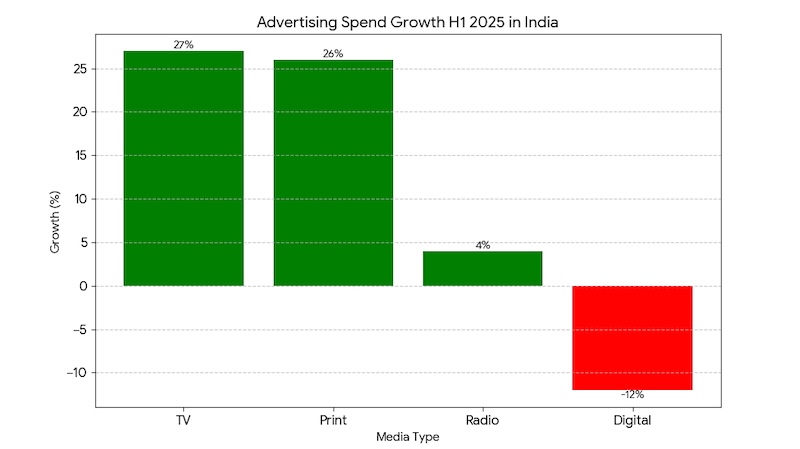
    MUMBAI: Here’s one report which is not talking of doom and gloom as far as ad spends in India are concerned. India’s advertising market kicked off 2025 on a high according to a half-yearly report by ad-tech and media planning agency Excellent Publicity, citing data from TAM Media Research, TAM AdEx and RCS India, reported Business Standard. The report said that  television powered ahead as the biggest gainer in the first half of the year, outspending print and radio, while digital was the lone laggard.

    Ad spends on TV per channel jumped 27 per cent year-on-year. Sports channels hoovered up 68.5 per cent of TV spends, trailed by general entertainment with 15.7 per cent. The e-commerce media, entertainment and social media category led volumes with a 25.6 per cent share. Star India kept its crown with 16.8 per cent of volumes, while Jio Hotstar topped the brand charts. Cellular services were the fastest risers, ballooning 17 times over the year.

    Print was no pushover either, posting a robust 26 per cent growth. Cars took pole position with 8.9 per cent of spends, while two-wheelers zipped ahead with a 31 per cent surge. Maruti Suzuki India was the top advertiser; Allen Career Institute, the top brand. Rajasthan led among states with 15.6 per cent of spends, and Delhi among cities with 7.1 per cent.

    Radio barely moved the needle, inching up 4 per cent. Properties and real estate dominated, cars followed, and pan masala muscled into the top 10. Maharashtra accounted for 19.3 per cent of radio spends, Delhi 18.1 per cent. Maruti Suzuki India again led advertisers, while Jeena Sikho Lifecare was the top brand.

    Digital, by contrast, shrank 12 per cent – the only medium to contract – though it logged the highest number of advertisers in three years. E-commerce online shopping led with an 11.2 per cent share. Amazon Online India was the top advertiser, Amazon.in the top brand. Programmatic buying made up 88.3 per cent of spends. Some niches bucked the trend: washing powders and liquids soared 21 times, perfumes and deodorants six times.

    “What’s really interesting is how brands are navigating a delicate balance,” said Excellent Publicity co-founder and director Vaishal Dalal.. “TV still captures attention, radio keeps the connection local and relatable, print is earning back trust, and digital is becoming sharper and more targeted.”

    Strangely the report did not talk about  outdoor spends. Was the situation hunky-dory in the sector like TV?

  • Simple Interest calculator: fastest way to calculate loan interest

    Simple Interest calculator: fastest way to calculate loan interest

    When you plan to take a personal loan, one of the first questions that comes to mind is – how much extra will I end up paying? This is where a simple interest calculator comes to your rescue. Instead of manually crunching numbers, this tool gives you quick results, helping you understand the total repayment amount in just seconds.

    Whether you are planning a small loan for emergency expenses or a big-ticket purchase, knowing the interest beforehand helps you make smarter decisions. A calculator not only saves time but also ensures you stay financially prepared.

    What is Simple Interest?

    Simple interest is the easiest way to calculate the cost of borrowing money. It is based on three components:

    ●    Principal amount – the actual loan you borrow

    ●    Rate of interest – the percentage charged by the lender

    ●    Time period – the duration for which the loan is taken

    The formula is straightforward:

    Simple Interest = (Principal × Rate × Time) ÷ 100

    For example, if you borrow Rs. 1,00,000 at an interest rate of 10% for 2 years, the simple interest would be:

    (1,00,000 × 10 × 2) ÷ 100 = Rs. 20,000.

    This means you will repay Rs. 1,20,000 in total.

    Why use a Simple Interest calculator?

    While the formula is easy, doing it repeatedly for different loan amounts and durations can be tiring. A simple interest calculator eliminates errors and gives instant results. Here’s why it’s helpful:

    ●    Time-saving – no manual calculations required

    ●    Accurate results – prevents mistakes in large numbers

    ●    Quick comparisons – helps you compare different loan offers

    ●    Financial clarity – know the total repayment amount in advance

    This clarity is especially useful when you are choosing between multiple lenders or loan tenures.

    Example: Rs. 50,000 personal loans

    Imagine you need quick funds for a medical emergency or urgent travel. Rs. 50,000 personal loans are often the go-to solution. Before borrowing, you’ll want to know exactly how much interest you will be paying.

    Let’s say you borrow Rs. 50,000 at 12% interest for one year.

    Using the formula: (50,000 × 12 × 1) ÷ 100 = Rs. 6,000.

    So, your total repayment will be Rs. 56,000.

    This simple example shows how a calculator can help you instantly understand the cost of borrowing.

    Benefits of knowing your loan interest

    When you are aware of your total repayment, it becomes easier to plan your monthly budget. You can:

    ●    Decide whether the loan fits into your financial plan

    ●    Avoid surprises during repayment

    ●    Compare offers and pick the most affordable option

    ●    Choose a suitable tenure based on affordability

    This financial foresight ensures that your loan becomes a helpful tool rather than a burden.

    How to use a Simple Interest calculator

    Most calculators available online are user-friendly. All you need to do is:

    1.    Enter the loan amount

    2.    Add the rate of interest

    3.    Select the loan tenure

    With just one click, you’ll see the exact interest payable and the total repayment amount.

    Final thoughts

    A simple interest calculator is the fastest way to estimate your loan cost. It allows you to make informed decisions, especially when exploring different personal loan options. Whether it’s a short-term borrowing like Rs. 50,000 personal loans or a higher amount, knowing the interest in advance ensures you stay in control of your finances.

    Before applying, always compare rates, check your repayment capacity, and use a calculator to keep your loan journey stress-free. 
     

  • Miele takes cooking outdoors, wires up pots and shrinks steam into a drawer

    Miele takes cooking outdoors, wires up pots and shrinks steam into a drawer

    BERLIN:  Miele, the century-old German maker of high-end appliances, is trying to reimagine the future of cooking. At IFA 2025 in Berlin, it unveiled what it called “a new era of cooking”: three headline-grabbing launches that stretch its brand from city flats to backyard terraces.

    The first is Dreams, Miele’s debut in the outdoor kitchen segment. A modular system that mixes minimalist design with over 60 accessories, it offers everything from gas barbecues and hobs to sinks, refrigerators and wine drawers. The centrepiece is the Fire Pro IQ, a smart gas grill fitted with multiple sensors that monitor and regulate temperatures more precisely than any backyard cook could manage. With an app connection and an AutoClean mode, the barbecue promises “perfect results without babysitting the flames” and a quick clean-up afterwards. “More and more people are embracing the outdoor living lifestyle,” said executive director for marketing and sales Axel Kniehl. “Dreams takes the Miele experience outside for the first time.”

    Indoors, the firm is touting M Sense, cookware that talks back. Pots and pans are embedded with touch controls and up to three temperature sensors, which communicate directly with Miele’s KM 8000 induction hobs. The system detects when food is about to burn or bubble over and automatically adjusts power. It is a small but telling example of how Miele is inserting artificial intelligence into everyday routines: pots send data, hobs listen, and dinner behaves. “Nothing burns. Nothing boils over. Just more time for what really matters,” said executive director and co-proprietor Markus Miele.

    The third novelty is a world first: a 14cm-high steam drawer that slips under an oven or microwave in compact kitchens. It combines baking, steaming and reheating in one, offering over 100 automated programmes powered by Miele’s DualSteam technology. The drawer is pitched at urban customers short on space but unwilling to compromise on cooking. With touch-open controls and full app integration, it can prepare meals for four people – from sous-vide vegetables to reheated leftovers – while freeing up oven space for bigger dishes.

    Beyond the headline launches, Miele used the IFA stage to trumpet a broader strategy. Digitalisation is seeping into every corner of its range. Its MasterCool fridges now come with cameras that snap photos when the door shuts, making it easier to check supplies while shopping and to reduce waste. Ovens are equipped with Smart Food ID, which recognises up to 50 dishes and adjusts settings accordingly. A step-by-step CookAssist function in the app will soon integrate with both M Sense cookware and the Fire Pro IQ grill, nudging even novice cooks towards professional results.

    The company also leaned heavily on its green credentials. It is branding its latest laundry and dishwashing models as Energy Heroes: a washing machine that undercuts the top EU energy-efficiency class by 40 per cent and a dishwasher by 10 per cent. At the fair, Miele underscored its commitment to circularity by building a trade-stand out of reusable, lightweight materials, cutting transport and storage costs by half. It has also pledged a 25-year guarantee on laundry appliance motors, a sign of confidence in longevity at a time when fast-obsolescence remains the industry norm.

    Founded in 1899 and still owned by the Miele and Zinkann families, the firm generated €5.04bn in turnover last year with around 23,500 staff across 19 production plants worldwide. Its strategy is clear: to extend its luxury image into new market niches and tie customers more tightly into its digital ecosystem. From outdoor living to AI-regulated cookware, the company is betting that the kitchen is still fertile ground for reinvention.
    “In a complex world, people want appliances that make life easier, not harder,” said executive director and co-proprietor Reinhard Zinkann. “Our task is to deliver that reliability – indoors and outdoors – with quality, innovation and sustainability.”

  • Unny Radhakrishnan to step down as Digitas India chief after 5.5 years

    Unny Radhakrishnan to step down as Digitas India chief after 5.5 years

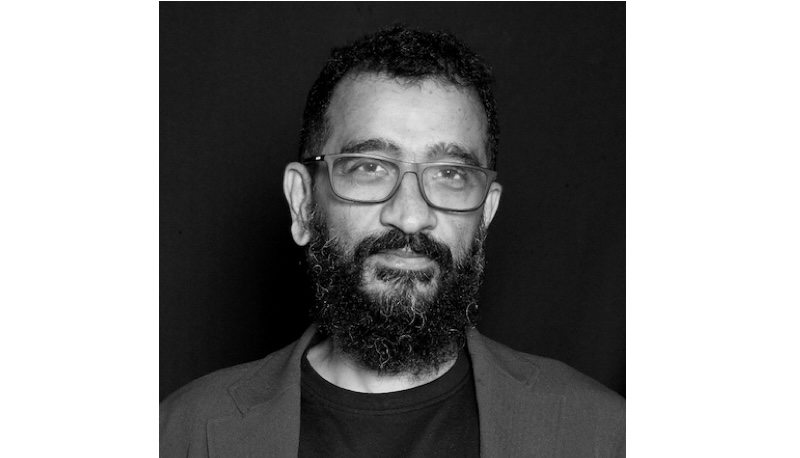
    MUMBAI:  Digitas India chief executive officer Unny Radhakrishnan will exit the agency at the end of September, drawing a close to a 5.5-year run at the Publicis Groupe-owned digital marketing firm.

    Radhakrishnan, who took charge in March 2020, steered Digitas India through a period of growth that saw it expand to a 450-strong team split between local clients and a global delivery hub. Under his leadership, the agency pushed deeper into data, user experience and technology services, cementing its position as a marketing transformation partner for brands.

    In a farewell note, he said leadership was about “bringing together people with different expertise and temperament to do things which otherwise could not have been done by any single individual”. He emphasised that before the “great place to work” labels, the focus was on being known for “great work and great people to work with.”

    Radhakrishnan’s career spans nearly three decades across GroupM, WPP and Publicis, with stints as chief digital officer for Wavemaker South Asia and earlier as head of digital at Maxus. A strong proponent of team building, he often described business as having “the responsibility to influence people to become better human beings, looking beyond the financial scorecards.”
    His next move has not been disclosed.

  • Škoda shifts gears with ‘Recess’, a playground twist on car pride

    Škoda shifts gears with ‘Recess’, a playground twist on car pride

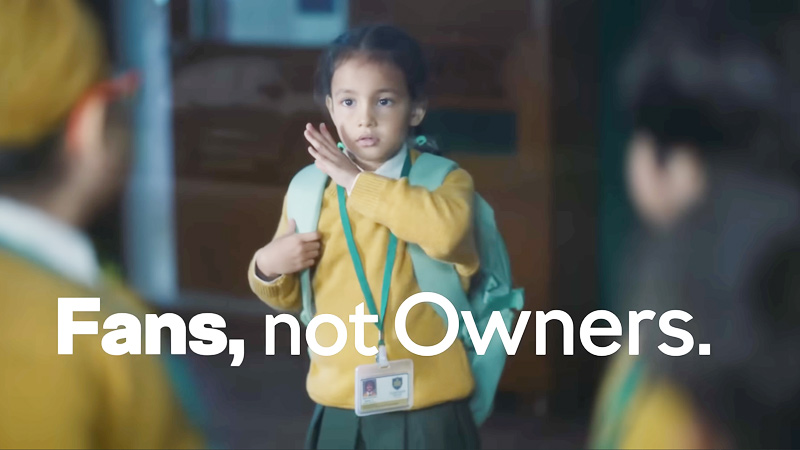
    MUMBAI: Playground bragging rights just got turbocharged. After melting hearts with its viral ‘Doda’ film, Škoda Auto India and Publicis Groupe India’s bespoke unit Team Drive are back with a cheeky new chapter in the ‘Fans Not Owners’ campaign and this time, the action unfolds in a schoolyard.

    Titled ‘Recess’ and creatively helmed by BBH India, the film captures children flaunting their families’ Škoda cars like badges of honour. From specs to features, the showdown escalates until a young girl drops the ultimate mic line: her Škoda can fly to Jupiter. With that rocket-fuelled claim, she hops into her Kushaq and drives off, leaving her peers gaping.

    The spot wraps up with a montage that celebrates not just the features of Škoda cars but the sheer pride and joy they inspire among fans staying true to the campaign’s core message that Škoda owners don’t just drive their cars, they adore them. With ‘Recess’, Škoda once again proves that when it comes to storytelling, it’s not just about horsepower, but heart power.

  • Mavericks appoints Gaurav Tuli as new digital and tech director

    Mavericks appoints Gaurav Tuli as new digital and tech director

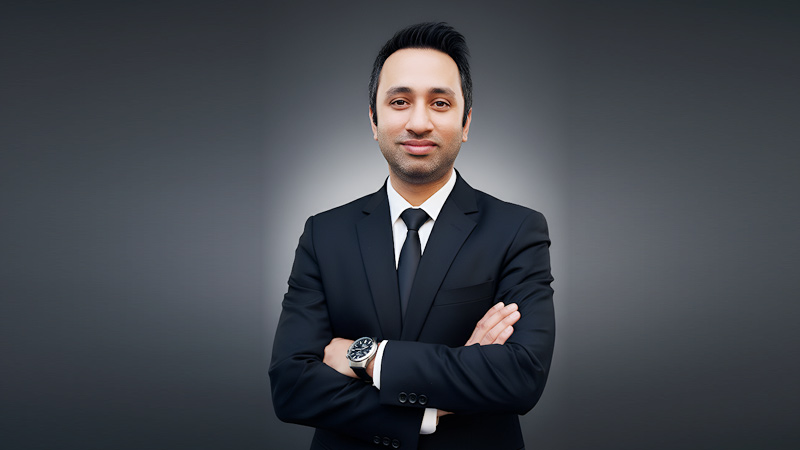
    MUMBAI: When brands talk clicks, The Mavericks wants to talk connections and its latest hire proves it’s serious. The integrated marketing communications agency has appointed Gaurav Tuli as director digital & tech, a move set to sharpen its AI-first, insight-led storytelling play. Armed with over 16 years of cross-market experience across India and Canada, Tuli has worked on marquee accounts including Bayer, Ford, Wendy’s, Jamie’s Italian, Pepsico, Swaraj Tractors, Hyatt, Interglobe, Oriflame, Luminous, and Himel. His track record spans sectors as varied as Auto, Healthcare, FMCG, Aviation, Hospitality, Banking, Alcobev, Education and Beauty blending tech with creativity to deliver campaigns that don’t just convert, but connect.

    At The Mavericks, Tuli will anchor digital transformation with new service lines built on Generative AI, predictive analytics, and automation. But for him, AI isn’t about replacing creativity, it’s about amplifying it. “The intersection of data, technology, and creativity is where the most exciting things are happening,” he said. “From Generative Engine Optimisation for AI discoverability to predictive performance models, these tools help brands move faster, listen smarter, and create more meaningfully.”

    The Mavericks India founder & CEO Chetan Mahajan echoed the sentiment, noting: “Integrated communications is no longer about channels ,it’s about cohesion. In the digital age, integration means agility, real-time impact, and context. Gaurav will be integral to building that ecosystem.”

    With brands now seeking outcome-driven communication rather than vanity metrics, The Mavericks’ appointment signals its ambition to push boundaries. For Tuli, the task is clear: keep brands discoverable, scalable, and emotionally resonant in an AI-led, digital-first world
     

  • Pantaloons weaves Pujo magic with ‘Hok Tomar Agomon’ festive campaign

    Pantaloons weaves Pujo magic with ‘Hok Tomar Agomon’ festive campaign

    MUMBAI: When the dhaak rolls, the shiuli blooms, and Kolkata’s skyline glitters with pandals, you know Durga Pujo has arrived. But this year, Pantaloons wants the celebration to be as much about your arrival as Maa Durga’s. The fashion retailer has launched its heartwarming new campaign, Hok Tomar Agomon (Celebrate Your Arrival), turning the festive lens from collective joy to individual expression. Inspired by the iconic “Maa asche” call, the campaign captures how Pujo is not only about welcoming the Goddess but also about embracing one’s own journey with style, flair, and a fresh start.

    “Durga Pujo is a festival of joy, belonging, and new beginnings,” said Pantaloons and Style Up CEO Sangeeta Tanwani. “With Hok Tomar Agomon, we wanted to capture that spirit of arrival not just of Maa Durga, but of every individual stepping into the season with confidence and style.”

    Conceptualised with Talented, the campaign infuses nostalgia with modern flair. From kaash phool and joba blossoms to bamboo scaffoldings and boats symbols of Maa’s arrival Pantaloons’ visuals are paired with Indo-Western silhouettes, contemporary accessories, and a flair designed to spark that unmistakable IYKYK feeling among Bengalis.

    The festive collection features vibrant designs and easy-to-wear pieces curated for every mood of Pujo from pandal-hopping and adda sessions to family feasts. It promises memorable festive moments for a new generation, while staying rooted in cultural traditions.

    With a high-impact media rollout spanning television, digital, outdoor, and in-store activations across West Bengal and beyond, the brand aims to bring its campaign to life wherever Pujo is celebrated.

    This year, Pantaloons isn’t just dressing up Pujo. It’s inviting every individual to celebrate their own arrival with confidence, individuality, and style. Hok Tomar Agomon.

  • Ad volumes tune up as TV, radio and print steal the show in H1 2025

    Ad volumes tune up as TV, radio and print steal the show in H1 2025

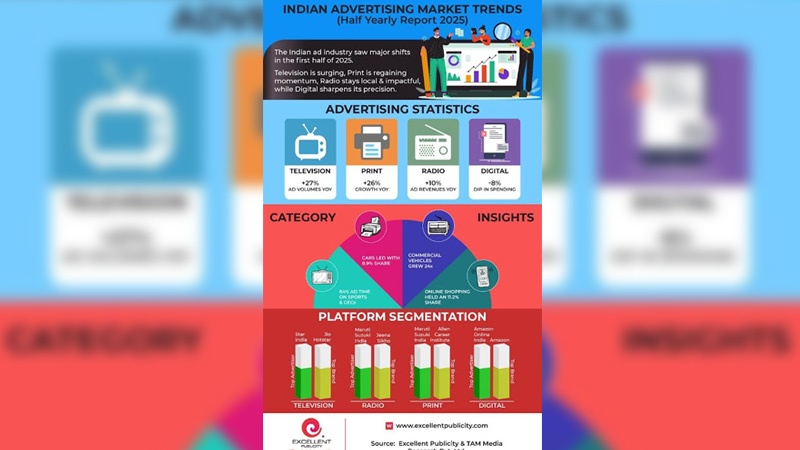
    MUMBAI: Lights, camera, action, India’s advertising pie in 2025 is anything but half-baked. The first half of the year has seen TV, radio, and print rise with renewed swagger, even as digital took a cautious breather, according to a trends report by Excellent Publicity in partnership with TAM Adex and RCS India.

    Television strutted confidently, clocking a 27 per cent surge in ad volumes and a 64 per cent jump in spends over 2023. Unsurprisingly, Star India ruled the charts, while Jio Hotstar topped brand visibility. Together, Sports and GECs claimed 84 per cent of ad time, proving that prime time still makes advertisers shine. Entertainment, e-commerce, and social media alone accounted for 25.6 per cent of volumes.

    Radio kept its local beat alive, growing 10 per cent in revenues over 2023. Real estate and cars dominated the airwaves, with Maruti Suzuki India the top advertiser and Jeena Sikho the loudest brand. The real showstopper? Commercial vehicles, which roared with a 24x spike in ad spends, underscoring radio’s rural and tier-2 pull.

    Print, once counted out, flipped back into relevance with 26 per cent growth YoY. Cars led the page with 8.9 per cent of spends, while Retail Departmental Stores made a debut in the top 10. Allen Career Institute continued to hold the spotlight, and two-wheelers raced ahead with a 31 per cent surge in spends, showing print’s enduring power in suburban and semi-urban India.

    Digital, meanwhile, had a paradoxical season. Though overall spends dipped 8 per cent YoY, the platform saw its highest number of advertisers in three years. Online shopping led the charge with 11.2 per cent of total spends, Amazon India as the top advertiser and Amazon the most visible brand. Quirky shifts included washing powders and liquids exploding by 21x and perfumes/deodorants by 6x, while programmatic accounted for 88.3 per cent of spends, cementing automation’s dominance.

    As Excellent Publicity co-founder Vaishal Dalal put it: “TV still captures attention, radio keeps it local, print earns back trust, and digital is sharper than ever. The winners are those who embrace each medium’s strengths while staying innovative.”

    India’s ad world, it seems, is learning to juggle tradition with tech – and in 2025, every medium is fighting for its close-up.