Category: MAM

  • TCS writes a new chapter with 25 years of Literacy as a Service

    TCS writes a new chapter with 25 years of Literacy as a Service

    MUMBAI: Words can change worlds and for Tata Consultancy Services (TCS), the past 25 years have been proof enough. On World Literacy Day, the IT giant marked a milestone: a quarter-century of its flagship Literacy as a Service (LaaS) initiative, which began life in 2000 under the vision of Dr F C Kohli as a modest adult literacy programme and has since grown into a global movement of empowerment.

    The numbers tell a compelling story. Over the years, 2.85 million learners across 21 Indian states, union territories, and parts of Africa have been equipped with functional, financial and digital literacy. In FY25 alone, LaaS reached more than 412,000 learners, powered by a vast network of 241,000 plus facilitators. The ripple effect extends far beyond classrooms: from helping rural women run small businesses to ensuring families understand their rights and claim welfare entitlements.

    In Andhra Pradesh, for example, TCS has partnered with the government to empower 400,000 women across 26 districts, blending financial know-how with digital skills. The platform itself has kept pace with the times available in nine Indian and three foreign languages, it uses graphics, sound patterns, vernacular content, and even AI-powered personalisation to ensure inclusivity for first-generation learners and under-served groups.

    Beyond the basics of reading and writing, the curriculum now stretches into life-relevant areas: financial literacy, digital adoption, awareness of citizen entitlements, and even disaster preparedness. The impact is visible in small but powerful ways from managing household finances to bridging the digital divide and building resilience in crises.

    The initiative has also been amplified by the “Each One Empowers One” campaign, where TCS and Tata Group associates mentor individuals within their communities, creating a multiplier effect. Social inclusion, economic participation, and self-confidence have all been central outcomes of this effort making literacy not just a skill, but a springboard for dignity and opportunity.

    TCS Joseph global head of CSR Sunil Nallapalli called it a movement rather than a programme: literacy as the seed of generational change. And after 25 years, those seeds have taken root in millions of lives, creating not just readers, but leaders.

  • Adman Diwan Arun Nanda gave India a marketing conscience

    Adman Diwan Arun Nanda gave India a marketing conscience

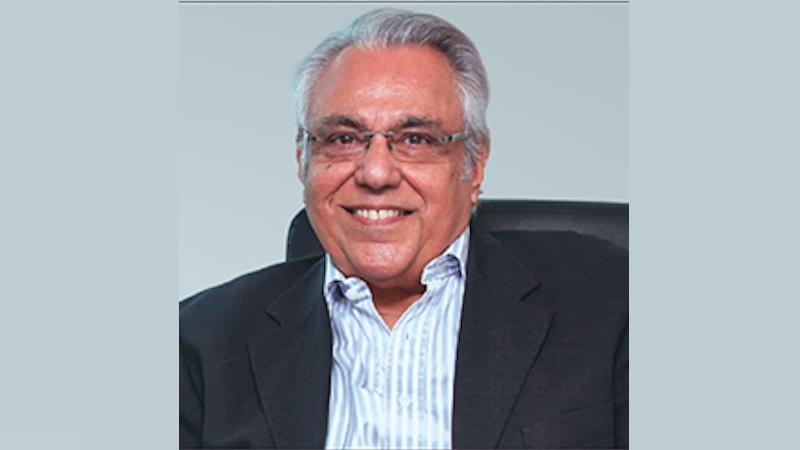
    MUMBAI: Diwan Arun Nanda who passed away this week was one of the founding fathers of independent Indian advertising and co-founder of the agency Rdiffusion.  Over half a century, Nanda transformed the way Indians understood brands, and equally, how brands understood Indians. His legacy lies not just in memorable campaigns but in the rare conviction that advertising should win trust, not merely attention.

    Born in Mumbai in 1948, Nanda belonged to the pioneering first batch of the Indian Institute of Management, Ahmedabad, where he graduated with a gold medal for academic excellence. He joined Hindustan Lever as part of its celebrated management trainee programme, a finishing school for the country’s future business leaders.

    At Lever, Nanda’s intuitive grasp of consumer recall and semiotics surfaced quickly. He was instrumental in introducing Rin’s lightning-bolt symbol, a clean graphic that turned detergent into iconography. Household recognition was instantaneous, and so was the reputation of a young executive whose instincts straddled both commerce and creativity.

    In 1973, tired of working within large corporate structures and spotting an opening in India’s communication landscape, Nanda teamed up with Ajit Balakrishnan and Mohammed Khan to found Rediffusion. Their move came at a time when multinational agencies dominated the client rosters. A truly Indian firm challenging the giants was seen as audacious.

    The gamble paid off spectacularly. Their win of the Eveready batteries account, with the deceptively simple line “The chosen one. For your transistor,” established Rediffusion as a creative force that could shape consumer culture. For the first time, Indian advertising talent was asserting that local creativity did not have to play second fiddle to imported gloss.

    Over the next decades, Nanda marshalled Rediffusion into one of the country’s great agencies, winning clients across telecom, consumer goods, airlines and banking. Its campaigns became pop-culture staples. Rediffusion was cheeky, self-assured and intensely Indian—and at its helm was a leader who prized rigour as much as wit.
    If Nanda delighted in bold slogans, he was equally defined by what he refused to sell. When a magazine failed to live up to readership claims touted in Rediffusion’s ads, Nanda chose to resign the account, believing his agency had, however inadvertently, misled consumers. Few contemporaries would have walked away. He did so without fanfare, only with the conviction that trust was more valuable in the long run than billings.

    This rare streak of principle separated him from peers in an industry where sleight of hand often outpaces substance. To Nanda, advertising was about persuasion, not deception; about clarity, not cleverness for its own sake.

    Nanda’s influence stretched beyond the confines of the ad world. In the 1980s he advised prime minister Rajiv Gandhi on communications, contributing to the narrative of a youthful, reform-minded leadership. He struck a joint venture with global player Young & Rubicam, strengthening Rediffusion’s international profile without sacrificing its independence.

    Corporate India also sought his judgement. He served as a director on the boards of Air India, Eveready, Kingfisher Airlines and Yes Bank, his counsel valued for its mix of marketing acumen, strategic vision and clean governance.

    Colleagues fondly recall Nanda’s insistence on discipline and clarity. He was a mentor who disdained jargon and demanded that ideas shine through in the simplest possible way. In an age when advertising was becoming increasingly performative, he grounded his protégés in first principles: honesty, insight, storytelling.

    He often reflected with pride on Rediffusion’s long journey, which he described as “a dream run”. It was one of the few Indian-founded agencies to achieve scale, reputation and global stature without being absorbed by a multinational. That sense of independence mirrored Nanda’s own personality—ambitious, exacting, yet unfailingly proud of domestic creativity.

    With his passing, Indian advertising loses not only a giant but also a moral compass. Nanda represented a generation that carved out space for Indian talent at a time of foreign dominance, that proved ideas from Mumbai could rival Madison Avenue, and that insisted commercial success meant little if not grounded in integrity.

    Today’s industry, beset by algorithms, influencer culture and data-driven messaging, may seem far from the world of transistors and detergents in which Nanda first honed his craft. But the central lessons he preached—that a brand must earn trust, that persuasion must be rooted in truth—remain as urgent as ever.

    Diwan Arun Nanda’s journey—from a meticulous trainee at Hindustan Lever to a mentor of agencies, CEOs and politicians—was, as he himself would admit, a testament to ambition without compromise. His campaigns lit up households, but it was his conscience that set him apart.
  • Adman Diwan Arun Nanda, co-founder of Rediffusion, passes away

    Adman Diwan Arun Nanda, co-founder of Rediffusion, passes away

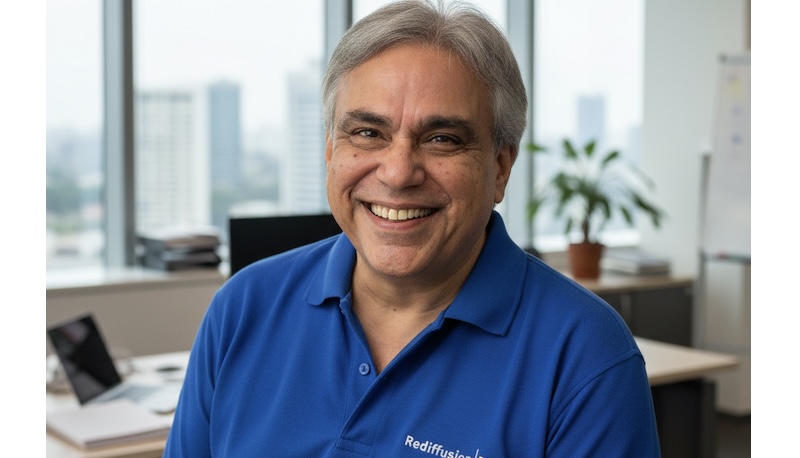
    MUMBAI: Diwan Arun Nanda, one of Indian advertising’s towering figures and co-founder of the agency Rediffusion, passed away this week in Mumbai. He was 76.

    Born in 1948, Nanda cut his teeth at Hindustan Lever after graduating as a gold medallist from the Indian Institute of Management, Ahmedabad. His early work included the lightning-bolt logo for Rin detergent, which seared itself into household memory.

    In 1973, with Ajit Balakrishnan and Mohammed Khan, he set up Rediffusion, thumbing his nose at the global giants then ruling the market. A coup soon came with Eveready’s transistor-battery campaign—“The chosen one”—that announced the firm’s creative muscle.

    Over the next decades Nanda steered Rediffusion into the premier league, wooing clients from telecoms to fast-moving consumer goods. His fame rested not just on catchy slogans but on fierce integrity. When a magazine failed to deliver on claims hyped in its ads, he promptly gave up the account, unwilling to mislead.

    Nanda’s reach went well beyond Madison Avenue. He advised prime minister Rajiv Gandhi in the 1980s, forged a tie-up with Young & Rubicam, and sat on the boards of Air India, Eveready, Kingfisher Airlines and Yes Bank. Colleagues remember him as a demanding mentor who valued clarity and principles as much as creativity.

    “Rediffusion’s journey was a dream run,” he once said. His death marks the close of an era in Indian advertising—an era of audacity, pride in home-grown talent, and the rare refusal to compromise.

  • Soaps to sodas, GST clean sweep gives FMCG a bubbly new outlook

    Soaps to sodas, GST clean sweep gives FMCG a bubbly new outlook

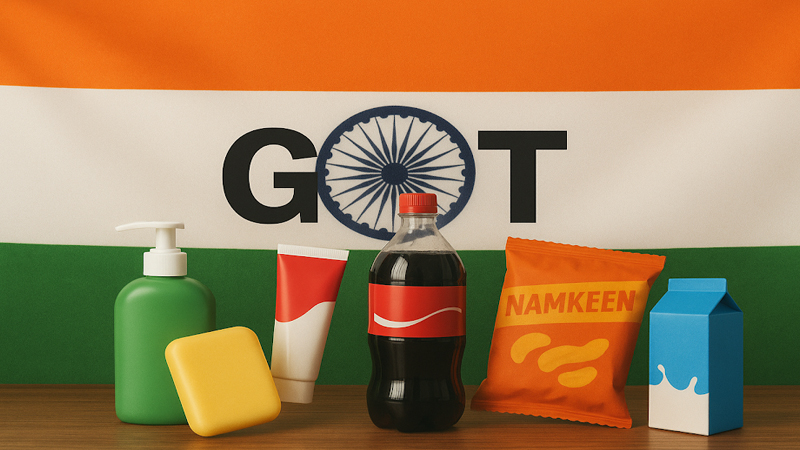
    MUMBAI: The FMCG aisle just got a tax wash, and shoppers may finally come out smelling of roses. With the government’s GST 2.0 reform collapsing the maze of 5 per cent, 12 per cent, 18 per cent and 28 per cent slabs into a neat trio of 5 per cent, 18 per cent and a frothy 40 per cent, the everyday essentials that power India’s consumption story have been given a welcome scrub.

    Soap, toothpaste, shampoos, toothbrushes and shaving cream once languishing at 18 per cent now gleam under the 5 per cent bracket, a move that analysts say could spark a volume surge of 8–12 per cent in FMCG sales in Q4 2025. For households tightening belts, and for rural India where every rupee pinches, that’s a tax break with real bite.

    Food has also found its sweet spot. Ghee, nuts, bottled water, namkeen and dairy staples have been moved to 5 per cent, with paneer and UHT milk made entirely GST-free. The dairy sector alone is expected to lap up a Rs 11,400 crore boost, with giants like Amul and Britannia licking their lips. Even indulgences like ice-cream and butter now come with a lighter 5 per cent tag.

    It isn’t just the kitchen basket that’s cheering. Tractors, pumps and fertilisers all at 5 per cent promise lower farm costs and higher rural income, feeding directly into FMCG consumption. Add cheaper packaging materials, and margins for companies like HUL, Dabur and Marico may fatten by 100–150 basis points.

    But it isn’t all sugar and spice. Premium and discretionary products still find themselves in the bitter bracket. Aerated drinks, colas, energy beverages and luxury chocolates continue to fizz under 18 per cent or the punishing 40 per cent sin rate, leaving players like Coca-cola and Pepsi nursing flat outlooks. The GST Council may have thrown a party for soaps and shampoos, but sodas are still paying for the hangover.

    On the compliance front, the industry is racing to reprint price tags and rejig invoices before the 22 September 2025 roll-out, with old stock adjustments threatening short-term headaches for distributors. Yet, with GST audits now mandatory only above Rs 10 crore turnover, smaller FMCG outfits can breathe easier.

    The broader script is clear: this reset is pro-rural, pro-consumption and pro-MSME, even if it means the exchequer takes a knock – with the Global Trade Research Initiative warning of a Rs 10,664 crore revenue shortfall from import-linked IGST alone.

    Still, for an industry fuelled by volume, the GST reboot couldn’t have been better timed. As festive season shelves stack up, FMCG finds itself freshly polished, priced to move, and perfectly poised to turn tax relief into a consumption carnival.

  • KPMG and Imarticus add up skills with global finance prep programme

    KPMG and Imarticus add up skills with global finance prep programme

    MUMBAI: When it comes to finance careers, passing the exam is only half the equation. The other half is applying knowledge where it counts and that’s exactly the balance KPMG in India and Imarticus Learning want to strike with their industry-first Global Accounting and Finance Certification Preparation Programme.

    The collaboration, unveiled this week, is designed for aspirants chasing the world’s toughest credentials CFA, US CPA, US CMA, ACCA, and FRM. Imarticus, already India’s first authorised prep provider for all five, will now add KPMG’s global expertise to the mix. The goal? To upskill 25,000 learners by FY28, a fivefold leap from the current 5,000.

    What sets this initiative apart from conventional cram-and-pass coaching is its emphasis on applied learning. Learners will access a curated collection of 23 case studies developed by KPMG in India, delivered via live online sessions across the five certification tracks. Beyond that, the programme bakes in mentorship, mock exams, career-focused exposure, and even internship opportunities for top performers, the top three from every ACCA batch and the best candidate from each of the other four courses.

    For candidates facing syllabi that are notoriously dense with CFA alone spanning ten topic areas, from quantitative methods to ethics this blend of theory and practice could make the difference between rote memorisation and real readiness.

    Imarticus Learning founder & CEO Nikhil Barshikar framed it as India’s first true industry-academia partnership in certification prep: “We’re bringing learners an unmatched blend of academic depth and practical business insights. The goal isn’t just to help them pass exams, but to build the confidence and clarity to excel in global finance roles.”

    From KPMG’s side, the focus is equally clear. KPMG in India partner and finance advisory Gaurav Vohra,  noted that the sector demands more than textbook smarts: “The finance and accounting industry is evolving rapidly, demanding professionals who can apply insights in real-world scenarios. This collaboration empowers professionals to do just that.”

    With global finance certifications commanding prestige and pass rates often hovering below 50 per cent, the need for structured, real-world prep has never been greater. By combining KPMG’s expertise with Imarticus’ reach, the programme positions itself not just as an exam pipeline, but as a launchpad for globally mobile, industry-ready finance talent.

  • Cloudtv gives ads a new dimension with India’s first 3D CTV formats

    Cloudtv gives ads a new dimension with India’s first 3D CTV formats

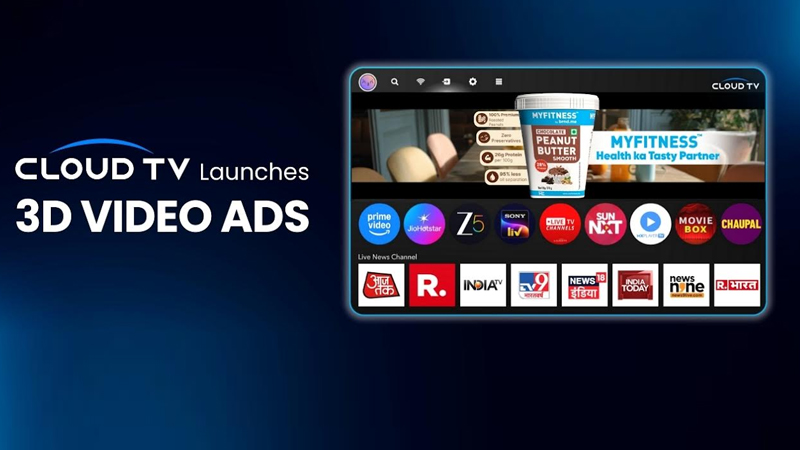
    MUMBAI: Forget skipping ads now you might just stop and stare. Cloudtv, India’s first certified Smart TV OS, has switched on a bold new innovation in Connected TV: 3D Ad-Units. Rolled out across its OS-powered devices, the new format promises to shake up how brands pop on screen, offering advertisers a premium, non-intrusive showcase that sticks in the mind.

    Already powering 250-plus smart TV brands and reaching over 12 million users across Tier 1, 2 and 3 markets, Cloudtv is no stranger to scale. But with India’s Connected TV market projected to hit 25 million households by 2026, the company is betting that immersive, attention-grabbing formats will be the next frontier of advertising.

    Early tests suggest the gamble is paying off. In a collaboration with Aiyo, an AI-first content studio, Cloudtv deployed its 3D ads for nutrition brand Myfitness. The result? A 25 per cent higher completion rate compared to regular masthead video ads proof that audiences are more likely to stick with the story when the visuals literally stand out.

    For advertisers, the appeal is clear: a unique inventory that elevates campaigns beyond the flat, forgettable formats of traditional TV spots. For viewers, the difference lies in ads that engage without feeling like interruptions, creating a sleek, cinematic environment instead of clutter.

    Addressing this strategic announcement, Cloudtv COO and co-founder Abhijeet Rajpurohit said, “The launch of 3D ads positions Cloudtv at the forefront of CTV innovation, catering to the growing demand for premium, high-impact advertising solutions. As brands look for new ways to differentiate their messaging and drive deeper engagement, Cloudtv’s 3D ad inventory offers a compelling alternative that stands out in the CTV advertising space.”

    This isn’t the company’s only power play. Cloudtv has also rolled out a dedicated CTV advertising platform and struck a partnership with Magnite (NASDAQ: MGNI), the world’s largest independent sell-side ad company, to bring global heft to its marketplace. Alongside, a new website for brands, agencies and buyers now lets partners browse inventory, audience insights and campaign opportunities in one place.

    By pushing beyond the limits of flat formats, Cloudtv is essentially opening a new dimension in CTV advertising, one where brand storytelling is immersive, measurable, and hard to ignore. In a screen space that’s heating up fast, the platform may just have given itself the 3D edge.

  • Hisense renews FIFA World Cup tie-up, flaunts RGB-MiniLED might at IFA 2025

    Hisense renews FIFA World Cup tie-up, flaunts RGB-MiniLED might at IFA 2025

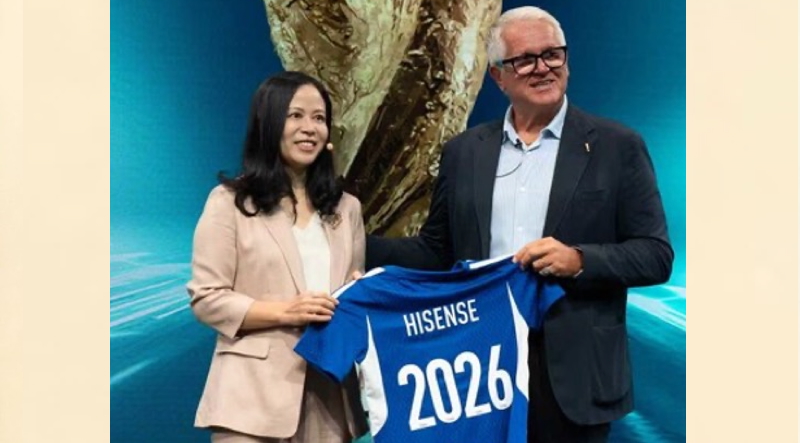
    BERLIN: Hisense, the Chinese consumer electronics and appliances giant, has confirmed it will continue as an official sponsor of the FIFA World Cup, extending a partnership first struck in 2018. The announcement came at IFA 2025 in Berlin, where the company also unveiled a raft of television and smart-home innovations designed to cement its position as a leader in next-generation display technology.

    For Hisense, football has become a stage for technology theatre. It began with logo visibility at Russia 2018, grew into content collaboration on FIFA+ in 2022, stretched to technology integration in VAR systems at the FIFA Club World Cup earlier this year, and will now culminate in sponsorship of the 2026 World Cup, the first to feature 48 teams across three host nations. Each milestone, the firm insists, has tightened its grip on global brand recognition.

    Hisense Group  vice-president  Catherine Fang said the strategy was rooted in four principles: being technology driven, user oriented, culturally grounded and smart-service focused. “Every unforgettable moment starts with the right experience,” she told the Berlin audience. “Our role is to help fans own that moment.”

    At the heart of Hisense’s display push is RGB-MiniLed — a technology it claims to have invented and now positioned as a rival to OLED. The firm has already paraded the world’s largest RGB-MiniLED set, a 116-inch television, and at IFA it showed refinements that deliver purer colours, sharper contrast and brightness levels beyond those of QD-Oled. The screens, it boasts, can achieve 100 per cent of the BT.2020 colour gamut, promising images that replicate reality.

    FIFA is sold on the promise. Romy Gai, the governing body’s chief business officer, called Hisense’s technology a way to bring “billions of fans” closer to the World Cup in 2026. For Hisense, the ambition is bolder still: to transform living rooms into front-row seats, ensuring households in Lagos, Lahore and London feel the same drama as fans in Los Angeles or Mexico City.

    IFA 2025 itself has become a proving ground. Under the banner “Own the Moment”, Hisense is staging a media showcase at City Cube Berlin and a larger product exhibition at Hall 23a, with television walls, AI-driven appliances and connected living systems all on display. The message is simple: Hisense wants to set the benchmark not just for picture quality but for how households interact with technology.

    Founded in 1969 in Qingdao, Hisense now operates in more than 160 countries and, according to Omdia, leads the world in sales of 100-inch and larger televisions in the first half of 2025. Its continued sponsorship of the World Cup suggests that, in the battle for consumer attention, football remains the ultimate shop window. For Hisense, the combination of sports spectacle and cutting-edge screens is designed to make sure that when fans cheer, they do so in front of a Hisense.

  • Prestige stirs up a clean start at Andhericha Raja this Ganesh Chaturthi

    Prestige stirs up a clean start at Andhericha Raja this Ganesh Chaturthi

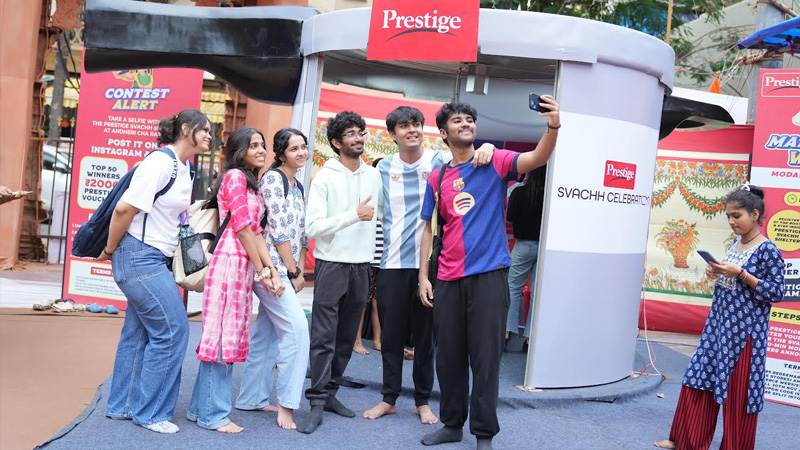
    MUMBAI: Ganpati bhakti just got a dash of kitchen wisdom. This Ganesh Chaturthi, TTK Prestige has set up its immersive Prestige Svachh Shelter at Mumbai’s iconic Andhericha Raja, proving that devotion and clean living can go hand in hand. The installation, inspired by the spill-proof deep lid of the Svachh cookware range, is drawing thousands of devotees who are discovering that true blessings may well begin at home with cleaner kitchens and mindful water use.

    Partnering with Fever FM as the official radio partner, the initiative goes beyond festive décor to become a movement. Families, youngsters and even celebrities are stepping into the Svachh Shelter to click selfies, upload them on social media and take the Svachhlivingpledge. Each post adds to a growing collective voice for sustainable practices, while participants also stand a chance to win Prestige vouchers. The shelter has quickly turned into a buzzing hub where spirituality, community and conscious living blend seamlessly.

    To spice things up, the daily Modak Making Challenge has devotees rolling up their sleeves with Prestige’s Airfryer and multi-tasking Kadai. The fun, fuss-free contest has already seen spirited participation, with cheers and applause echoing through the pandal as winners walk away with Prestige gift hampers. Beyond contests and selfies, the presence of well-known personalities has added star power, amplifying the message of cleaner kitchens and responsible living.

    Explaining the thought behind the initiative, TTK Prestige chief sales & marketing Anil Gurnani said the Svachh Shelter was designed to marry celebration with purpose reminding households that festive joy can sit beautifully alongside conscious choices for the environment. As the campaign gathers momentum, the shelter is turning from an attraction into a movement, showing devotees that devotion shines brightest when it is paired with purity, awareness and a cleaner tomorrow.
     

  • Trilok drops high-octane spin on Ganpati aarti Sukhkarta Dukhharta

    Trilok drops high-octane spin on Ganpati aarti Sukhkarta Dukhharta

    MUMBAI: Ganpati has never sounded like this before. Trilok, the AI-led music collective known for stitching Indian roots with global sounds, has taken the classic aarti “Sukhkarta Dukhharta” and turned it into a festival headliner. Think rock riffs, electronic drops, desi dhols, and a raw devotional energy that feels equally at home in a pandal or a street carnival.

    The track isn’t arriving quietly either. It comes with collaborations from Zomato, Boat, and a starry appearance by actor-creator Neel (@justneelthings) in the music video. Together, they’ve added scale and sparkle to what’s shaping up as one of this year’s biggest Ganpati content launches.

    A Boat spokesperson summed up the vibe: “Ganpati is all about music and devotion, the very spirit that our collaboration with Trilok has captured. We’ve always aimed to give local talent a platform, and this initiative reflects just that.”

    The video itself is pure Mumbai: crowds dancing in processions, dhols thundering, colour explosions, and Zomato delivery partners joining the revelry. Trilok rides through it all on a decorated truck, jamming with live drummers and blending seamlessly into the chaos and joy of Visarjan. With Neel’s unmistakable presence adding charisma, the visuals match the track’s pulsing intensity.

    This is not just another remix; it’s a reimagining that places an age-old hymn in a 21st-century soundscape, without losing the bhakti at its core. The track is now streaming across platforms, with the full video live on TRILOK’s official channels proof that tradition and innovation can thump to the same beat.

  • Navneet’s ‘salute the tr’ wins hearts nationwide on teacher’s day

    Navneet’s ‘salute the tr’ wins hearts nationwide on teacher’s day

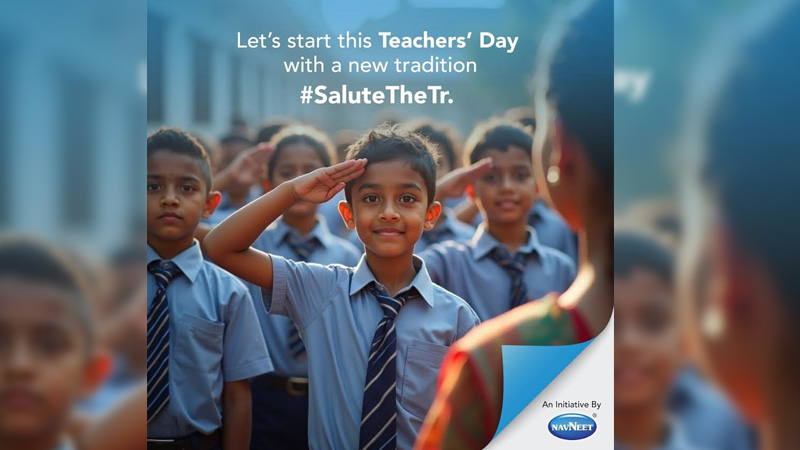
    MUMBAI: This teacher’s day, classrooms were quiet but the school grounds were full of heart. In a touching twist, Navneet education launched its newest campaign Salute the tr, swapping words of thanks for a powerful, silent salute that brought teachers to tears.

    The campaign film begins with puzzled teachers stepping into empty classrooms, only to be guided outside. There, waiting in rows of perfect discipline, are their students. What follows is a spine-tingling moment as every child raises their hand in unison, offering a crisp salute to the mentors who shaped their minds and lives.

    The gesture is as simple as it is profound. No speeches. No slogans. Just respect made visible.

    With Salute the tr, Navneet Education, one of India’s most trusted educational brands, is calling on schools across the country to make this tradition a part of every teacher’s day. It’s a move from individual gratitude to a nationwide movement, built around a collective show of respect that speaks louder than any bouquet or greeting card.

    Navneet education, director of marketing & sales, Devish Gala shared the vision behind the campaign,
    “Teachers are the real architects of society. With this campaign, we wanted to create a moment that captures their importance in a way that words simply can’t. A salute is universal, respectful, and unforgettable.”

    Kasperx marketing, co-founder and cbo, Ravi Sangtani summed it up perfectly, “Salute the tr. turns appreciation into action. It’s a moment that can become a movement. Just like uniforms or morning assemblies, let saluting teachers become part of school tradition, a small act that leaves a lasting mark.”

    Navneet has long supported India’s educators with learning tools and content, but this time, it’s handed the spotlight to the students, showing how a classroom of grateful hearts can say more with one salute than a thousand thank-you notes.