Category: MAM

  • Kaya finds its true glow with Fatima Sana Shaikh as brand ambassador

    Kaya finds its true glow with Fatima Sana Shaikh as brand ambassador

    MUMBAI: When science meets stardom, the glow is hard to miss. Marico Limited has announced actor Fatima Sana Shaikh as the new brand ambassador for its Kaya range of skincare products, bringing together 20-plus years of dermatological expertise and a star known for her bold, authentic persona.

    Kaya, trusted for formulations designed specifically for Indian skin, boasts a portfolio of over 75 products spanning acne care, sun protection, anti-ageing, pigmentation, hair, and body solutions. The brand’s dermat-led approach aims to simplify routines while delivering visible results cutting through the clutter of skincare trends that often leave consumers confused.

    For Marico, the move signals a fresh chapter for Kaya. Marico executive vice president and head of beauty & styling digital business Akash Banerji said Fatima embodies “confidence, relatability, and a progressive take on beauty,” qualities that resonate with today’s informed yet overwhelmed skincare audience. He added that Kaya’s mission remains simple: science should empower, not complicate.

    Fatima echoed this sentiment, saying Kaya stood out because it “cuts through the noise” with products co-created with dermatologists and built on trust. For her, authentic beauty is about confidence and clarity, not chasing fleeting trends.

    With this partnership, Kaya looks to sharpen its storytelling edge while reinforcing its credibility as a science-backed, results-driven skincare brand. In an industry crowded with quick fixes, its pitch is clear, stop second-guessing, trust the experts, and let confidence be the true glow-up.

  • Pee Safe’s new DVC champions toilet hygiene, one spray at a time

    Pee Safe’s new DVC champions toilet hygiene, one spray at a time

    MUMBAI: Think your spotless toilet at home is squeaky clean? Think again. Pee Safe, India’s leading hygiene and wellness brand, is out to change the way the country views bathroom hygiene with its new digital video campaign: “Hygiene ki aadat banao, Pee Safe ke saath.”

    This isn’t just another health PSA. It’s a call for a culture shift. The campaign highlights a blind spot in everyday hygiene: while people are cautious about using public toilets, they often overlook the invisible germs lurking on toilet seats in their own homes.

    “A toilet that looks clean can still be teeming with bacteria,” said Pee Safe, founder, Vikas Bagaria. “We want people to understand that hygiene doesn’t end at what the eye can see. Sanitising toilet seats should be as routine as brushing your teeth.”

    Backed by data showing India’s female workforce participation rising to 40.3% in 2023–24, the campaign also underscores the increased exposure to shared work and public restrooms. With more women navigating dynamic environments, Pee Safe is championing a hygiene habit that supports both health and confidence.

    But the initiative isn’t just for office-goers or commuters. It’s inclusive and family-focused, targeting everyone: men, women, and children with a simple, powerful message: sanitisation is self-care.

    By encouraging Indians to adopt toilet seat sanitisation as a daily ritual, the campaign aims to make the act as instinctive as washing hands. With this bold push, Pee Safe hopes to spray away old habits and usher in a new era of mindful, everyday hygiene.

  • Zappfresh serves up IPO feast with Rs 59 crore issue on BSE SME platform

    Zappfresh serves up IPO feast with Rs 59 crore issue on BSE SME platform

    MUMBAI: When the meat is this fresh, even the markets want a bite. DSM Fresh Food Limited, better known by its consumer brand Zappfresh, is sharpening its knives for a stock market debut with a Rs 59.06 crore IPO on the BSE SME platform.

    The issue opens on Friday, 26 September 2025, and closes on Tuesday, 30 September 2025, with a price band of Rs 96–Rs 101 per share. Anchor investors will get first dibs on 25 September, a day ahead of the public opening.

    The offering comprises 59,06,400 equity shares of face value Rs 10 each. Out of these, 3,31,200 shares (Rs 3.34 crore) are reserved for the market maker, leaving a net issue of 55,75,200 shares (Rs 56.3 crore). The allocation structure follows SEBI’s book-building rules:

    . Up to 50 per cent for Qualified Institutional Buyers (QIBs), with up to 60 per cent of this portion available to anchor investors.

    . At least 15 per cent for Non-Institutional Investors (NIIs), with sub-categories for bids above and below Rs 10 lakh.

    . Not less than 35 per cent for Retail Individual Investors.

    Founded in 2015, Zappfresh has carved out a niche in India’s fragmented meat market with an integrated supply chain spanning sourcing, processing, cold storage and distribution. Its omnichannel model serves both B2C consumers and B2B Horeca clients across chicken, mutton, seafood, and ready-to-cook/eat products.

    Proceeds from the IPO will fund growth and expansion, including Rs 25 crore for working capital, Rs 15 crore for marketing, Rs 11 crore for capex, and Rs 3 crore for acquisitions. The balance will go toward general corporate purposes.

    Narnolia Financial Services Limited is the sole book running lead manager.

    With its promise of “fresh, hygienic, worry-free meat”, Zappfresh is looking to slice into India’s equity appetite just as it has cut through the clutter of the butcher’s market. The question is: will investors find the flavour worth savouring?
     

  • Bright sparks ad buzz with Diwali-ready 360 degree festive campaigns

    Bright sparks ad buzz with Diwali-ready 360 degree festive campaigns

    MUMBAI: When the diyas go up, so do the billboards and Bright Outdoor Media Limited is making sure this Diwali is as dazzling on the streets as it is at home. With a 360° marketing push, the company is rolling out a festive firecracker of campaigns designed to help brands shine brighter during India’s biggest shopping and celebration season.

    At the heart of Bright’s strategy is its network of 50 plus large-format digital LED screens across Mumbai, built to deliver high-impact motion-led campaigns that can’t be missed. Tailored festive pricing ensures that brands maximise their visibility just when consumer sentiment peaks.

    Static billboards, meanwhile, are being deployed across Tier II and Tier III cities, where festive rushes make premium locations ripe for recall. And with Diwali weekends packed with blockbuster films, Bright is also leveraging cinema screens both multiplexes and single screens to deepen brand resonance with family audiences.

    The festive footprint extends further with transit media from bus wraps and metro services to cab branding ensuring brand messages follow consumers on their shopping and travel routes. On the digital front, Bright is sharpening its OTT advertising solutions, keeping pace with surging festive streaming habits.

    But the strategy isn’t limited to conventional placements. Bright is curating real-world experiences, from a Real Estate Expo in Borivali to an awards night for the Gujarati and Marwari business community, giving brands direct access to niche yet influential audiences. The company is also acting as official outdoor partner for Navratri and cultural festivals, doubling down on community-centric visibility.

    Even print retains its spotlight, with Bright offering industry-specific campaigns across leading publications where credibility and clarity still cut through festive clutter. Add to this a robust celebrity and influencer network, and Bright ensures festive ads don’t just reach audiences, they stick.

    “Diwali is more than a festival, it’s a time of connection, celebration, and joy,” said Bright Outdoor Media CMD Yogesh Lakhani. “Our 360° framework combines traditional and digital platforms with creativity and precision to ensure campaigns don’t just reach, they resonate.”

    From store launches and product unveilings to film promotions, Bright’s media professionals are turning festive season into a brand showcase, one LED, billboard, bus, reel, and reel star at a time.

  • Zoff adds spice to digital with chef Natasha Gandhi as first ambassador

    Zoff adds spice to digital with chef Natasha Gandhi as first ambassador

    MUMBAI: When it comes to adding flavour, Zoff Foods has turned up the heat by roping in Masterchef India Season 6 finalist and Forbes India Top 100 digital star, chef Natasha Gandhi, as its first digital ambassador.

    The move marks a milestone in Zoff’s next growth phase, coming on the heels of its expansion into ready-to-cook gravies and offline retail tie-ups with Reliance Retail and D-Mart. For one of India’s fastest-growing spice brands, the collaboration is all about blending innovation with scale and adding a dash of star power to its storytelling.

    Chef Natasha Gandhi, who is also the founder of House of Millets, brings with her a reputation for healthy, millet-based recipes and clean-label cooking. Her digital presence resonates strongly with young households seeking authenticity and convenience, a perfect match for Zoff’s vision of making modern Indian kitchens both healthier and easier to manage.

    From whole and powdered spices to gourmet essentials, Zoff’s portfolio is designed for India’s evolving tastes. With Natasha’s recipes and digital voice anchoring campaigns, including past hits like #UnfilteredBandhan and #goldenglowwithzoff, the brand hopes to spark new consumer movements around flavour, health, and convenience.

    “For us, it’s about empowering every home cook,” said Zoff Foods co-founder Akash Agrawalla. “With Natasha’s expertise and relatability, we see an opportunity to inspire households to put on their chef hats and trust Zoff as a kitchen partner.”

    Chef Natasha echoed the sentiment: “This is not just about recipes, it’s about inspiring Indian households to embrace healthy eating and making flavourful cooking effortless. Zoff stands for purity and innovation, which is exactly what people want.”

    With 450 plus products across skincare, haircare, bath and body already under its belt, Zoff’s foray into digital-first food storytelling looks set to redefine the spice aisle, one millet recipe at a time.

  • Inka launches India’s first AI voice assistant for insurance buyers

    Inka launches India’s first AI voice assistant for insurance buyers

    MUMBAI: When insurance starts talking back, you know disruption has arrived. Inka, India’s digital-first insurance distribution platform, has unveiled Vaani, the country’s first voice AI assistant in the sector and it promises to turn policy planning from paperwork into conversation.

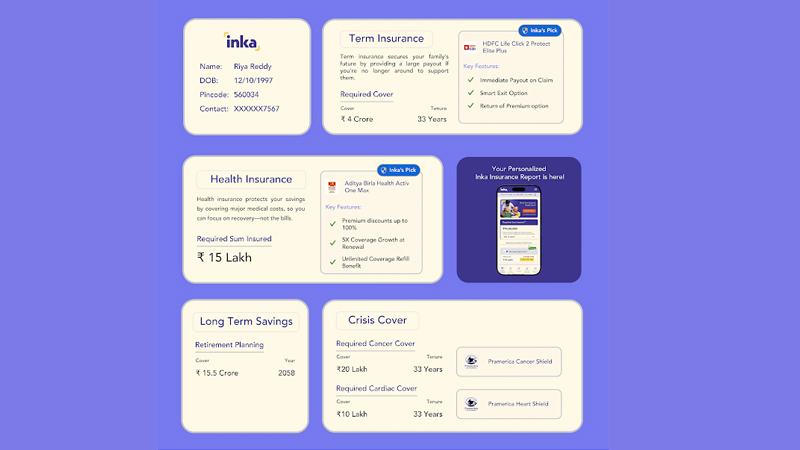
    Built on Google’s Gemini AI, Vaani doesn’t stop at basic Q&As. Instead, it draws on more than 2,400 data points to understand a user’s life stage, health profile, aspirations, and finances before suggesting tailored plans. From health, life, and term insurance to cancer and cardiac covers, long-term savings instruments, and child planning solutions, Vaani ensures every recommendation feels uniquely yours.

    What makes Vaani stand out is its voice-first, multilingual interface. Consumers can chat with it naturally in English, Hindi, Marathi, with Telugu support on the way. By ditching jargon and answering the questions people didn’t even know to ask, it makes insurance feel less like a sales pitch and more like a trusted advisor whispering in your ear.

    Beyond real-time analysis, Vaani can guide users through complex policy comparisons and even book expert consultations, all triggered by a simple voice command. Currently available on the Inkasure platform across desktop and mobile, the pilot rollout aims to refine user experience before a national launch.

    “In a market where buying insurance often feels overwhelming, Vaani represents a giant leap,” said an Inka spokesperson. “It’s about trust, utility, and empowering customers to make informed choices.”

    With insurance penetration in India still hovering around 4 per cent of GDP, the launch signals a bold step to bridge the trust gap and widen access. And with Vaani’s ability to cut through complexity, Indians might finally find their policies speaking their language.

  • New Trends in Eligibility for Loan Against Property Applications Revealed

    New Trends in Eligibility for Loan Against Property Applications Revealed

    In today’s evolving financial ecosystem, a loan against property (LAP) has become one of the most reliable instruments for accessing large sums of money. Whether it is for expanding a business, funding higher education, meeting medical emergencies, or consolidating debts, property-backed loans provide borrowers with high-value financing at relatively lower interest rates compared to unsecured loans. However, just as financial institutions continue to innovate their offerings, they are also redefining the way they assess and approve applications. The eligibility for loan against property is no longer confined to traditional metrics like income and property value alone. New trends are reshaping the approval landscape, giving more individuals and businesses an opportunity to secure funding. This article delves into the latest changes in eligibility criteria, what borrowers should prepare for, and how these evolving trends can impact loan approval in the future.

    Traditional Eligibility Framework: A Quick Recap

    Traditionally, lenders considered a few fundamental aspects when evaluating a borrower’s eligibility:

    1.    Age of the Applicant – Salaried individuals typically had to fall within the age bracket of 25–60 years, while self-employed professionals could go up to 65 years.  
    2.    Income Stability – Proof of steady income through salary slips, bank statements, or audited financials for self-employed individuals.  
    3.    Property Valuation – The loan amount was primarily linked to the property’s current market value, usually allowing borrowers to avail 50–70% of its worth when applying for a property loan.  
    4.    Credit Score – A healthy CIBIL score above 700 was considered essential for approval.

    While these parameters remain important, lenders today are incorporating additional considerations to provide a more holistic assessment.

    New Trends in Eligibility for Loan Against Property

    1. Digital Footprint Consideration  
    Financial institutions are increasingly analyzing digital financial behavior to assess creditworthiness. Online transaction patterns, timely payment of utility bills, and digital credit records are being factored in alongside traditional credit scores. This trend benefits applicants with limited credit history but strong digital financial discipline.

    2. Expanded Age Limits  
    Many lenders are becoming more flexible with age restrictions. For instance, older self-employed applicants beyond 65 are being considered, especially if they have a strong business cash flow or adequate property value. This inclusivity reflects the reality of longer working lives and entrepreneurship beyond retirement age.

    3. Inclusion of Non-Salaried Income Sources  
    Previously, income from part-time work, rental earnings, or freelance engagements was often ignored. Today, lenders are accepting diverse income streams, acknowledging the gig economy and multiple-income households. This shift broadens the pool of eligible applicants significantly.

    4. Higher Loan-to-Value (LTV) Ratios  
    Some financial institutions are now willing to sanction loans of up to 75–80% of a property’s value, especially in urban areas with high real estate demand. This helps borrowers unlock greater liquidity from their assets.

    5. Customized Eligibility for Women Borrowers  
    To encourage financial independence, lenders are introducing relaxed terms for women applicants. These may include lower interest rates, flexible repayment options, and quicker approval timelines.

    6. Focus on Business Potential for Self-Employed Individuals  
    Instead of just looking at past income records, lenders are increasingly evaluating the future potential of businesses. For example, start-ups or MSMEs with strong growth prospects and healthy order books may find it easier to secure loans even without long financial histories.

    7. Use of Alternate Data for Credit Assessment  
    Lenders are gradually embracing alternative data, such as rental payment history, insurance premium payments, or mobile wallet usage. This trend especially benefits first-time borrowers or those with thin credit profiles.

    8. Green Property Preference  
    Sustainability trends are making their way into financial services too. Borrowers pledging eco-friendly or energy-efficient properties are being rewarded with better terms, reflecting a global push toward sustainable finance.

    What Borrowers Should Keep in Mind

    As eligibility norms diversify, borrowers should proactively prepare to enhance their chances of approval:

    ●    Maintain a Clean Financial Record: Pay EMIs, credit card dues, and utility bills on time to build a positive financial footprint.  
    ●    Document All Income Sources: Whether rental, freelance, or part-time, having verifiable documentation for all streams strengthens your application.  
    ●    Leverage Technology: Use digital payment methods and maintain transparent financial transactions, as these are now being tracked by lenders.  
    ●    Choose the Right Property: If your property is in a prime location or adheres to green-building standards, it may help you negotiate better terms.  
    ●    Check Your LTV Ratio: Be aware of the current market value of your property and how much of it you can realistically expect as a loan.

    The Future of Loan Against Property Eligibility

    The landscape of eligibility for loan against property is expected to evolve even further with the adoption of Artificial Intelligence (AI) and Machine Learning (ML) in credit assessment. Predictive analytics will allow lenders to forecast repayment capacity with greater precision, reducing risks and enabling faster approvals. Additionally, blockchain technology could bring unprecedented transparency in property valuation and ownership verification, making the process smoother for borrowers and lenders alike.

    Financial inclusion is at the heart of these changes. By moving beyond rigid eligibility norms, lenders are ensuring that more individuals and businesses—especially those in the unorganized sector or with unconventional income structures—gain access to much-needed financing.

    Conclusion

    The changing trends in eligibility for loan against property applications signify a broader shift in the financial industry toward inclusivity, innovation, and customer-centric approaches. From recognizing non-traditional income sources to considering digital footprints and even the eco-friendliness of pledged properties, lenders are adapting to the realities of modern financial life.

    For borrowers, this means greater opportunities—but also a greater responsibility to maintain transparency, financial discipline, and proper documentation. By staying informed about these evolving trends, individuals and businesses can better position themselves to secure property-backed loans with favorable terms, unlocking the full potential of their assets in the process.  
     

  • How to Compare Best Health Insurance Policies Using Online Tools

    How to Compare Best Health Insurance Policies Using Online Tools

    When you choose a health insurance plan or renew an existing one, how do you determine that it’s the right one for you? You might rely on an agent’s advice or ask a family member or friend. But are these insurance policies truly the right fit for you?

    A health insurance premium calculator can help you choose the best health insurance plan for your needs. It can show you which plans cover hospitals near you, which ones offer maternity coverage, and which ones won’t break the bank. So, using this tool correctly can be very helpful, but you need to know how to use it effectively. Let’s see how to do that.

    Why Comparing Health Insurance Online is Smarter?

    Back in the day, if you wanted medical insurance, you had to meet agents, read brochures full of technical words, and then hope you didn’t miss a hidden clause. Today, you can sit on your couch, open your laptop, and see ten different health insurance plans lined up like products in an online store. So, why is this better? Because:

    ● You don’t rely only on what an agent tells you.

    ● You can compare premiums and benefits side by side.

    ● You see exclusions clearly instead of in fine print.

    It’s just like shopping online or booking a hotel. Nobody calls ten airlines anymore, although we check online. Health insurance should work the same way.

    What Really Matters While Comparing Plans

    The truth is that not every shiny feature matters. A good policy is one that actually protects you when something goes wrong. While browsing online tools, you should be focused on:

    ●    Coverage (Sum Insured): Does it cover realistic hospital bills in your city?

    ●    Cashless hospitals: If your go-to hospital isn’t on the list, it’s a headache later.

    ●    Claim settlement ratio: Higher numbers mean fewer claim rejections.

    ●    Add-ons: Maternity, critical illness, room rent flexibility, if you really need them.

    ●    Premium vs Benefits: Cheapest is not always best.

    If you only remember one thing, it’s this balance cost with coverage. Don’t be tempted by low premiums if it means compromising on actual protection.

    A Quick Walkthrough Using an Online Tool

    Let’s say you’re 32, married, with one child. You open a comparison website. It asks for details like age, city, and number of family members. You fill that in, and within seconds, you see multiple mediclaim policy options.

    Now you notice something interesting:

    Feature Policy 1 Policy 2 Policy 3
    Sum Insured ₹5 lakh ₹10 lakh ₹10 lakh
    Cashless Network 4,200+ 6,000+ 5,800+
    Maternity Cover No Yes Yes
    Premium (Yearly) ₹6,800 ₹9,500 ₹10,200

    At first glance, Policy 1 looks attractive because it’s cheap. But then you realise it doesn’t cover maternity or have as many cashless hospitals. If your family is expanding, that’s a red flag. Policy 2 or 3 might be the better choice long term.

    This is precisely why online tools help you to find the best health insurance plans. You’d probably miss these details if you were only talking to one insurance agent.

    Don’t Skip the “Exclusions” Section

    Most people skim through the benefits and ignore exclusions. Big mistake. Some health insurance plans don’t cover pre-existing diseases for the first 2 – 3 years. Others may exclude specific treatments like cataract surgery or joint replacement.

    When you buy health insurance online, every comparison site has an “exclusions” button or tab. Don’t skip it. It may not be exciting to read, but knowing what’s not covered is as important as knowing what is.

    Buying Online After Comparison

    Once you’ve shortlisted, buying health insurance online has its perks:

    ●    Time saving: Instant policy issuance (no waiting for paperwork).

    ●    Discounts: Some insurers give lower premiums if you buy directly online.

    ●    Transparency: you get all details in writing, no half-truths.

    ●    24/7 access: you can compare and buy anytime.

    Many people get a full mediclaim policy issued in less than 15 minutes online, no queues, no files, no hassle.

    So here are some main overview points that you have to keep in mind when comparing before you buy health insurance plans for family by using any online tool:

    ●    Evaluate your personal and family health requirements

    ●    Select a trusted online comparison tool

    ●    Check key features and coverage details of each plan

    ●    Understand what’s covered and what’s not

    ●    Look into claim history and settlement performance

    ●    Consider policy terms and optional add-on benefits

    ●    Directly compare multiple plans to spot differences easily

    Final Thoughts

    Honestly, picking the right health insurance isn’t as scary as it sounds. Many people just renew the same policy every year without even checking if it still works for them, and later regret it when bills pile up. Using an online comparison tool is super simple. You just spend a few minutes, see which plan covers what, check premiums, and figure out if it actually fits your family. That tiny effort can save a lot of stress later.

    When your renewal comes around, don’t just click “pay.” Take a moment, breathe, and see if your plan still makes sense. Look at the coverage, the hospitals included, maybe even check a rider or two. A few minutes now can keep you from scrambling when medical costs hit unexpectedly.


  • Kantar Insights & Airtel bag top honour at MRSI’s 33rd research seminar

    Kantar Insights & Airtel bag top honour at MRSI’s 33rd research seminar

    MUMBAI: Held in Mumbai, the event crowned Kantar Insights and Bharti Airtel Ltd as winners for their paper, ‘Reconstructing Bharat: A scientific approach to estimating India’s population demographics at a district level.’ The research tackled the challenge of building a sharper, district-level picture of India’s vast and varied population.

    The runner-up slots went to Knowledge Excel for ‘Guardians of the survey: Fighting fraud to protect research integrity and data quality benchmarking’ and to Zee Entertainment Enterprises with Third Eye Integrated Services for ‘Streaming the paradox: Gen Z and the intergenerational remix.’

    This year’s theme, ‘The Power of And’ attracted over 100 submissions, with 22 shortlisted papers presented on stage.

    The seminar opened with a keynote by Ministry of statistics & programme implementation, secretary, dr Saurabh Garg, who underlined the importance of data-driven policymaking in India’s journey towards Viksit Bharat. He highlighted innovations in AI, machine learning, and geospatial data as tools that are strengthening decision-making.

    Panels through the day kept conversations lively, from the ‘Joys and dilemmas of insight in the age of technology’ to candid discussions on how brands can authentically connect with India’s cultural and economic diversity.

    MRSI, president, Nitin Kamat set the tone and said, “The industry must embrace integration between technology and creativity, data and human stories, clients and agencies to shape the future of market research.”

    Committee chair Rituparna Dasgupta added, “The diversity of ideas, from academic breakthroughs to brand case studies, reflects the ambition of India’s insights industry.”

    With thought leaders from healthcare, hospitality, FMCG, and media in attendance, the seminar reinforced MRSI’s role as the beating heart of India’s research ecosystem and a champion of ethical, future-ready insights.


  • Nushrratt goes au naturel as face of Oshea’s herbal beauty mission

    Nushrratt goes au naturel as face of Oshea’s herbal beauty mission

    MUMBAI: When movie star Nushrratt Bharuccha says yes, she does it with her skin in the game. The actress has been named the new brand ambassador for Oshea Herbals, one of India’s most trusted herbal personal care names, in a move that blends glamour with green goodness.

    For more than a decade, Oshea has been crafting nature-led, science-backed personal care across skincare, haircare, bath, body, and professional ranges. With over 450 products to its credit, the brand has built its reputation on authenticity, safety, and quality qualities it believes Nushrratt embodies to perfection.

    Oshea Herbals CEO & MD Jeetendra Kumar Kundalia calls her “modern, relatable, and confidently real,” while co-founder Yash Kundalia believes her energy will help spark a deeper connection with today’s generation.

    The actress herself is equally upbeat: “I’ve always admired how Oshea channels the power of nature into wonderful products. What resonates most with me is their simplicity and honesty. It’s not just about skincare, it’s about embracing who you are.”

    The partnership will see Nushrratt fronting Oshea’s campaigns across television, print, digital, and on-ground activations, bringing the brand’s “simple, safe, and real” philosophy closer to millions of Indian homes.

    For Oshea, this isn’t just another star endorsement, it’s a reminder that timeless beauty lies not in filters, but in nature’s own formulas. And with Nushrratt in the picture, that story looks set to glow brighter.