Category: MAM

  • Explurger steps up to PM Modi’s call for homegrown tech

    Explurger steps up to PM Modi’s call for homegrown tech

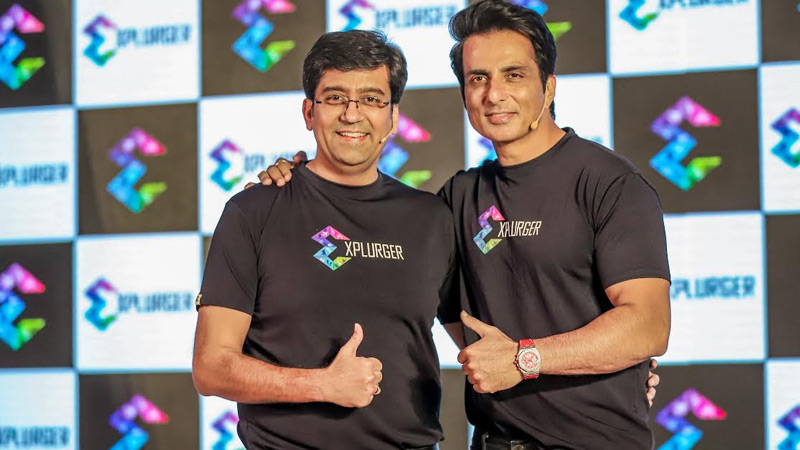
    MUMBAI: Time to log off and step out! Responding to prime minister Narendra Modi’s call for indigenous innovation, Explurger, a proudly made-in-India social media app, is reimagining how we connect online, and offline.

    Launched with the mantra “Get out – get social,” Explurger encourages users to explore the world, meet people in real life, and share authentic travel and lifestyle experiences. Every journey, check-in, or post automatically creates a digital travelogue, making social media as much about living life as sharing it.

    “The prime minister’s call underscores India’s growing confidence in building its own tech frameworks,” said Explurger founder and CEO Jitin Bhatia. “Our app is entirely developed in India, powered by Indian talent, and designed to resonate globally. Explurger shows that Indian technology can inspire, innovate, and compete on the world stage.”

    Rooted in the Make in India and Digital India missions, Explurger reflects the spirit of self-reliance. With over 17 million users, it signals a new era of homegrown digital innovation, one where technology doesn’t just connect, it empowers and enriches real-world experiences.
     

  • La Chérie’s Dancing Cloud Japanese cheesecake lands in Mumbai

    La Chérie’s Dancing Cloud Japanese cheesecake lands in Mumbai

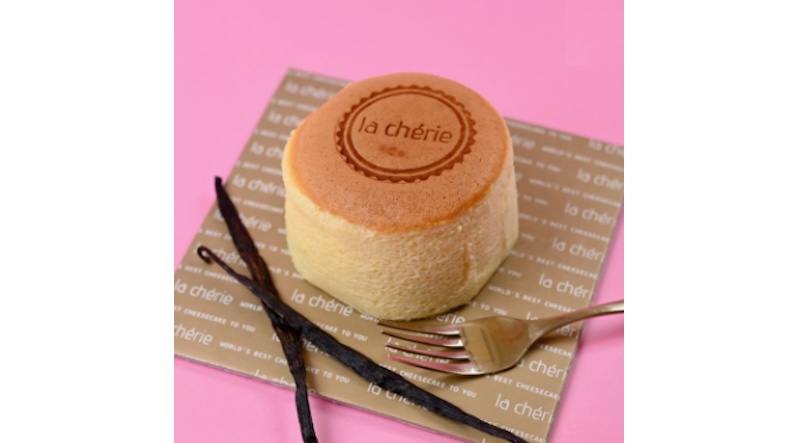
    MUMBAI: Pune’s much-loved dessert house La Chérie has wafted into Mumbai with its headline act — the Dancing Cloud Japanese Cheesecake — a dessert so airy it trembles like silk.

    A runaway hit in Pune, the souffle-style cheesecake has become a sensation for its cloud-soft texture, subtle sweetness and melt-in-the-mouth finish. Steering clear of dense, sugary cheesecakes, La Chérie’s version is baked fresh in small batches with no preservatives or artificial stabilisers — just pure technique and clean ingredients.

    “We wanted to offer something that feels familiar yet surprising — comforting but elegant,” says the La Chérie team. “The Dancing Cloud is our idea of quiet indulgence — it doesn’t shout; it stays with you.”

    With Mumbai currently in the grip of a Japanese culinary wave — from omakase dining to kawaii cafés — the brand’s entry could not be better timed. Its cloud kitchens serve a full range of cheesecakes, though the Japanese variant is the undisputed hero. Available on Swiggy and Zomato, the line-up includes the Mini Dancing Cloud (Rs 299), the Chocolate variant (Rs 359) and the Big Dancing Cloud Whole Cheesecake (Rs 899).

    What sets La Chérie apart is its restraint. There’s no gelatin, compound chocolate, agar or bulking agents — only precision baking and honest ingredients. Made with eggs, the cheesecake can be savoured warm or chilled, offering a different experience each time.

    Founded in 2020, La Chérie has built its name on craftsmanship and purity — from its signature Japanese cheesecake to its indulgent New York version. Its Mumbai launch signals more than just expansion — it’s a sweet shift in the city’s dessert culture: thoughtful, modern, and blissfully light.

  • Ajay Devgn takes a swing at India’s whisky drinkers

    Ajay Devgn takes a swing at India’s whisky drinkers

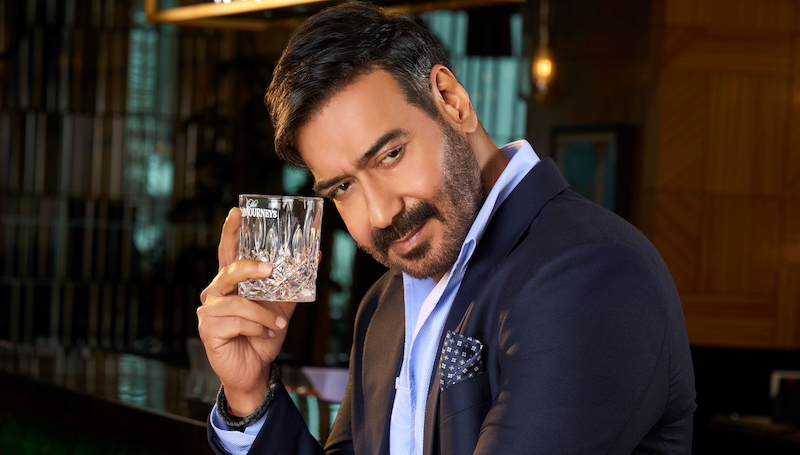
    MUMBAI: Hindi cinema stars launching whisky brands is hardly novel. Ajay Devgn is having a crack anyway. The actor and entrepreneur has co-founded The GlenJourneys, a single malt scotch brand developed with premium spirits outfit Cartel Bros, which launched its Cask Series in India in October with the ambitious goal of capturing 20 per cent of the country’s luxury single malt segment within two years.

    The brand made its global debut with the Pioneer Edition, a 21-year-old Highland single malt priced at Rs 50,000 and limited to 600 bottles worldwide, available only in select international duty-free shops. The India launch takes a more accessible approach. The Cask Series—finished in rum, bourbon and sherry casks—is priced at Rs 6,409 and crafted specifically for the domestic market, which is growing at seven per cent year-on-year.
    GlennjourneysMaharashtra gets first dibs. The GlenJourneys has targeted 10,000 cases in the state by the end of this financial year, with rollouts planned for Haryana, Uttar Pradesh, Goa and Chandigarh in November 2025, followed by other metros in early 2026. The brand has positioned itself as bridging tradition and modernity, appealing to both seasoned collectors and younger drinkers exploring premium spirits.
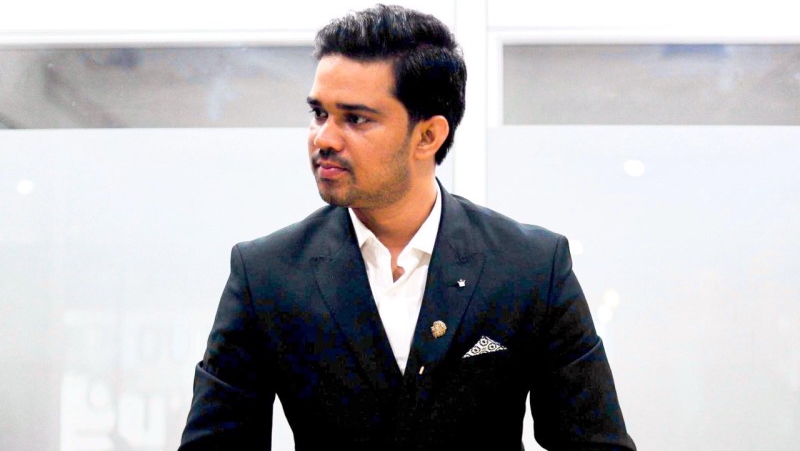
    Living Liquidz and Mansionz founder and Cartel Bros co-founder Mokksh Sani delivered the expected patter about craftsmanship. “Age refines a whisky—but a great cask defines it,” he said, claiming each expression in the Cask Series reveals “distinctive character” that sets it apart from conventional single malts. Devgn chimed in with talk of tradition meeting innovation and “the quiet power of time, wood, and artistry.”

    The GlenJourneys comes backed by Cartel Bros’ track record. The company makes The Glenwalk Scotch Whisky, which won gold at Mexico’s Spirits Selection Awards and best single malt scotch at the India Wines & Spirits Awards 2025. Whether those accolades translate into market share is another question entirely.

    India’s premium whisky segment is crowded with international heavyweights like Johnnie Walker, Chivas Regal and Glenfiddich, alongside domestic players pushing upmarket. Celebrity endorsements open doors but don’t guarantee shelf space or repeat purchases. Devgn’s star power may generate initial buzz, but sustaining a 20 per cent market share target in a competitive, slow-growing category requires more than name recognition.

    The brand’s pricing strategy suggests pragmatism. At Rs 6,409, The GlenJourneys Cask Series sits below ultra-premium territory whilst claiming luxury credentials through cask finishing and Scottish provenance. It’s a crowded middle ground where execution matters more than marketing spin. Whether Indian whisky drinkers buy into Devgn’s vision—or simply buy the bottle once out of curiosity—will become clear soon enough.

  • PR agency Adgcraft plants flag in India’s tech capital

    PR agency Adgcraft plants flag in India’s tech capital

    BENGALURU: Every PR agency in India eventually opens a Bengaluru office. Adgcraft has now joined the queue. The Noida-based communications firm, founded in 2021, launched its sixth office in the Karnataka capital, positioning itself to service clients from India’s sprawling startup and technology ecosystem.

    The new operation at Awfis, Samrah Plaza in Ashok Nagar targets startups, corporates, tech firms and artificial intelligence companies—basically anyone with a pulse and a communications budget in a city teeming with thousands of IT companies and global tech giants. Adgcraft already works with over 200 brands across banking, lifestyle, hospitality and emerging tech. The Bengaluru push aims to deepen that roster whilst building a 25-person team by 2026.

    Adgcraft managing director Abhinay Kumar Singh delivered the obligatory enthusiasm. “We are excited to open our new office in Bengaluru, the tech capital of India,” he said, calling the expansion a step towards “empowering brands by combining creativity with strategy.” The agency’s motto—”Your story is your strength, and communication is ours”—suggests it’s not shy about self-promotion.

    Adgcraft operates three verticals: Adgcraft Communications, Adgcraft AI and Adgcraft Global. The Bengaluru office will drive operations in social media, performance marketing, video production and event management, alongside traditional PR mandates like media relations, crisis communications and reputation management. The agency claims experience with international clients from the US, south Korea and other markets, though it didn’t name them.

    Four years is lightning speed in the agency world. Adgcraft has already spread across Noida, Lucknow, Mumbai and Gujarat before landing in Bengaluru. Whether that pace reflects genuine growth or overextension remains to be seen. India’s PR industry is fragmented and fiercely competitive, with established players like Adfactors, Genesis BCW and Weber Shandwick dominating corporate mandates whilst boutique agencies chase startups.
    Singh claims that Adgcraft is “one of India’s most trusted PR agencies.” Trust takes time to build, especially in an industry where reputation is currency; and he seems to have managed to gain it, going by the number of clients on the agency’s roster.

    Bengaluru offers plenty of opportunity, but also plenty of rivals who’ve been working the city’s startups and tech giants for decades. Adgcraft’s challenge is  going to be proving it can deliver results that justify the expansion into the tech gold mine.

  • European spirits maker bets big on India’s thirsty elite

    European spirits maker bets big on India’s thirsty elite

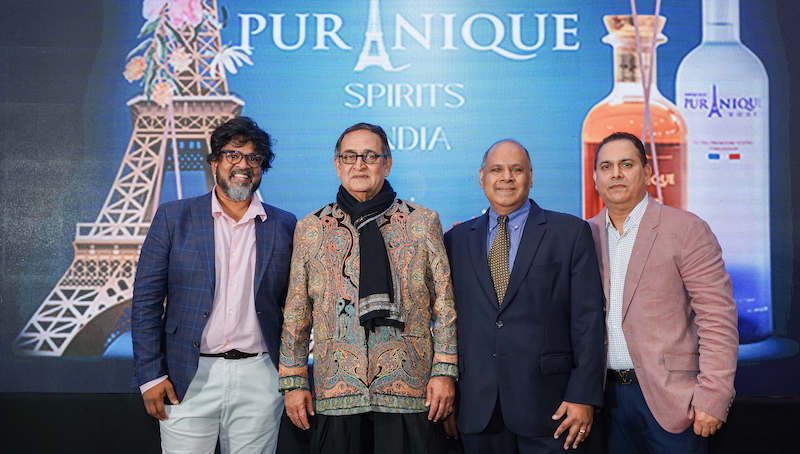
    MUMBAI: India’s premium spirits market has a new player with continental ambitions. Puranique Spirits launched its Indian operations in Mumbai on 7 October with nine-times-distilled vodka and VSOP cognac, betting that the country’s growing appetite for luxury tipples will fuel rapid expansion. By the end of 2026, the company plans to offer 24 premium products across five categories.

    The timing is strategic. India’s premium spirits segment is booming as disposable incomes rise and younger drinkers trade up from domestic brands. Puranique, which draws from distilleries in Cognac, France and the Scottish Highlands, hopes to ride that wave with products already sold in 18 countries. The company claims two decades of European distilling pedigree, producing award-winning cognac, armagnacs, liqueurs, gin, rum, absinthe and akvavit.

    “India is at the heart of the global premium spirits growth story,” said Puranique Spirits India promoter & chief executive Anoop Mohan at the Taj Lands End launch event. He framed the expansion as a “cultural bridge” between European craftsmanship and Indian taste, name-checking deepening UK-India trade ties for good measure.

    Puranique Spirits chairman Rahul Puranik struck a more measured note. “Bringing them to India feels like a natural progression in our journey,” he said, adding that the full portfolio rollout would create a “complete premium spirits ecosystem.” 

    Country head for India, Viren Moholkar promised “authenticity and unmatched quality” across 24 offerings spanning cognac, gin, rum, vodka and artisan craft spirits.

    The company also unveiled veteran actor and filmmaker Mahesh Manjrekar as brand ambassador. Manjrekar delivered the expected platitudes about heritage, craftsmanship and refinement, declaring Puranique a brand that “doesn’t just create beverages, it creates experiences.” 

    Whether Indian consumers agree depends on pricing, distribution and whether European pedigree translates into repeat purchases.

    India’s premium spirits market is crowded and unforgiving. International brands jostle for shelf space whilst domestic players like Diageo’s McDowell’s and Pernod Ricard’s Imperial Blue dominate volume. Puranique’s challenge is carving out enough premium territory to justify an ambitious 24-product pipeline within 16 months. The company’s European heritage may open doors, but execution—and taste—will determine whether it stays for the long haul.

  • Bridgers teams up with IIT Kanpur for Upstart 2025

    Bridgers teams up with IIT Kanpur for Upstart 2025

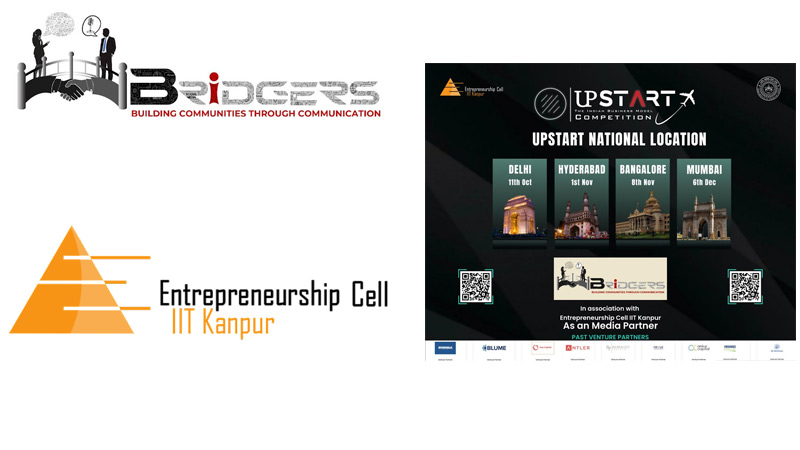
    MUMBAI: From ideas to impact, Bridgers is bridging the gap. India’s leading integrated communications agency has signed a strategic MoU with IIT Kanpur’s Entrepreneurship Cell, becoming the official media partner for Upstart 2025, the flagship pitching event designed to empower India’s budding entrepreneurs.

    The Nationals kick off in Delhi on 11th October, followed by Hyderabad (1st November), Bengaluru (8th November), and Mumbai (6th December), culminating in the finals at IIT Kanpur from 23rd–25th January 2026. Bridgers will provide end-to-end communications solutions, helping amplify the event’s reach and spotlight the most promising startups across India.

    “Startup communication is our forte,” said Bridgers founder Anubhav Singh. “Partnering with IIT Kanpur E-Cell lets us support tomorrow’s founders while contributing to India’s Viksit Bharat vision by 2047.”

    IIT Kanpur E-Cell’s Laksh Bansal added, “Bridgers’ expertise ensures Upstart 2025 gets the attention it deserves, highlighting the impact of this event and empowering our country’s future unicorns.”

    The collaboration spans strategic campaigns, community storytelling, reputation management, and media engagement across cities and national and regional platforms, bringing India’s next generation of entrepreneurs into the spotlight.

  • Technosport powers everyday champions with Dabang Delhi

    Technosport powers everyday champions with Dabang Delhi

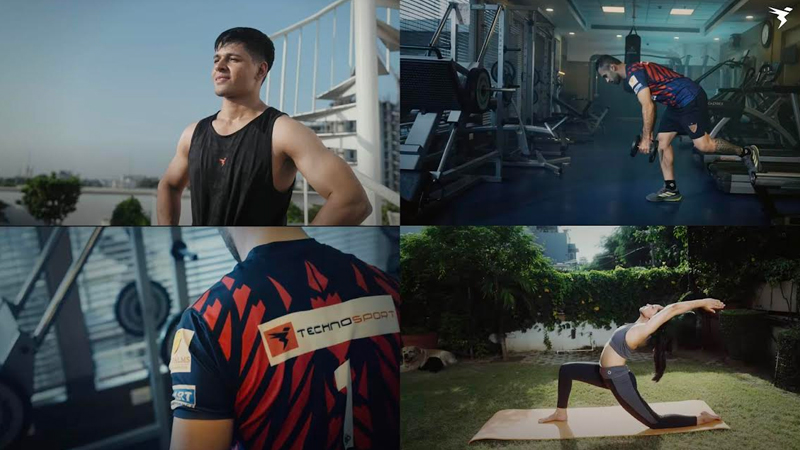
    MUMBAI: From the kabaddi mat to the morning jog, Technosport is championing movement everywhere. The homegrown activewear brand has teamed up with Dabang Delhi K.C., the Pro Kabaddi League Season 12 franchise, to launch a dynamic campaign celebrating everyday athletes across India.

    Titled Made in India. Made for Champions., the film draws parallels between the high-intensity moves of professional kabaddi players and the small yet powerful movements of daily life, whether it’s a sunrise push-up, a sprint to catch the bus, or the final gym rep that beats yesterday’s record. Every lunge, dive, and sprint tells a story of perseverance, discipline, and champion energy that doesn’t stop off the mat.

    Technosport head of marketing Patralika Agrawal said, “Performance isn’t the privilege of a few. Our collaboration with Dabang Delhi brings to life the spirit that drives everyday champions across India. From arena to street, we empower every movement with innovation, comfort, and durability.”

    As official kit partner and powered by sponsor, Technosport outfits the team with performance wear featuring UPF50 plus sun protection, antibacterial finishes, moisture-wicking tech, and four-way stretch. Every stitch, jersey, and fabric innovation embodies the brand’s belief: greatness is forged in daily motion. 
     

  • Lotto puts its best foot forward with Happy Feet

    Lotto puts its best foot forward with Happy Feet

    MUMBAI: Lotto is letting its feet do the talking. Riding high on early success in India’s sportswear and athleisure scene, the brand has launched Happy Feet, a campaign celebrating the simple yet profound way our feet express energy, joy, and individuality.

    The film pairs modern, dynamic visuals with the iconic Kishore Kumar and R.D. Burman track Yeh jawani hai deewani, capturing everyday moments where every step tells a story. It’s a playful, youth-driven narrative that positions feet as the ultimate storytellers, and Lotto as the brand empowering them.

    Happy Feet also kicks off a wider community movement, inviting audiences to celebrate authenticity and personality in motion. With this campaign, Lotto reinforces its place in India’s growing sneaker culture, blending heritage with contemporary relevance.

    Agilitas, holding exclusive rights for Lotto in India, South Africa, and Australia, plans to expand the brand into sportswear, apparel, and accessories over the next year, signalling a shift in the market towards performance-driven yet personality-packed sportswear. 
     

  • Motorola powers up with moto g06 Power launch

    Motorola powers up with moto g06 Power launch

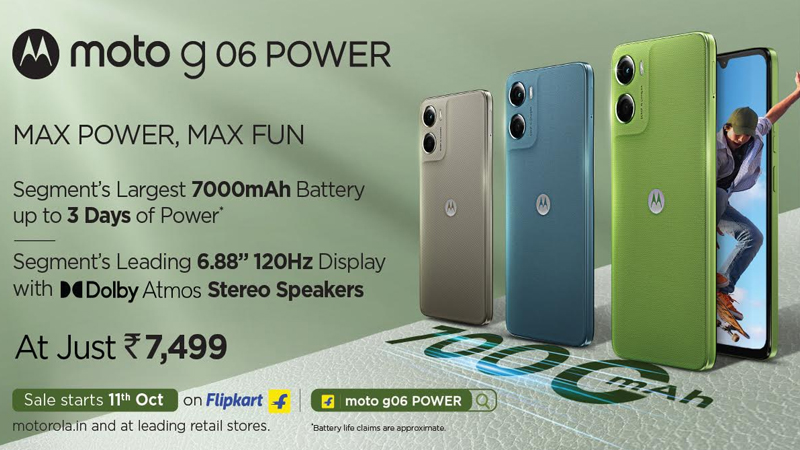
    MUMBAI: If endurance had a smartphone, it would be the moto g06 Power. Motorola has unveiled its latest entry-level powerhouse, packing a segment-leading 7000mAh battery that promises up to three days of continuous use, perfect for marathon calls, streaming sessions, or non-stop gaming.

    The device doesn’t just last long, it looks and plays the part. Boasting a massive 6.88” HD plus display with a 120Hz refresh rate, Water touch technology, and Dolby Atmos stereo speakers, the moto g06 Power delivers an immersive entertainment experience straight from your hand.

    Photography enthusiasts get a 50MP Quad pixel rear camera and an 8MP front shooter, capturing vivid, detailed shots in any lighting. Meanwhile, the Mediatek helio G81 extreme processor with up to 12GB RAM ensures smooth multitasking, while Android 15 and Moto’s UX features provide personalisation, security, and effortless usability.

    Wrapped in Pantone-curated vegan leather finishes: Tapestry, Laurel Oak, and India-exclusive Tendril, the phone combines style with durability, featuring IP64 water resistance and Corning Gorilla glass 3. Fast charging delivers up to seven hours of power in just 15 minutes, making downtime practically obsolete.

    Available from 11th October on Flipkart, Motorola.in, and leading stores across India for Rs 7,499, the moto g06 Power sets a new benchmark in the entry-level segment, proving big things come in sleek, long-lasting packages.

  • Sam Balsara warns marketers not to lose the plot in the age of digital frenzy

    Sam Balsara warns marketers not to lose the plot in the age of digital frenzy

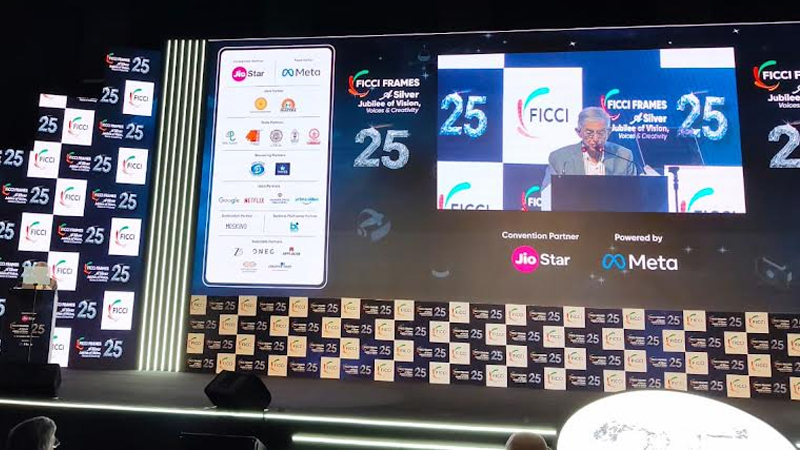
    MUMBAI: When the world is scrolling, swiping, and snacking on content, Madison World chairman Sam Balsara reminded marketers at Ficci Frames 2025 that branding remains the heartbeat of advertising. Opening with his talk “A Marketer’s Losing Fame in Branding”, Balsara mixed wit with insight, calling out the obsession with short-term performance media and urging a return to storytelling that builds lasting emotional connections.

    Reflecting on a career spanning 8 years in marketing, 8 years in advertising, and 37 years running his own agency, Balsara quipped that in India, “everybody thinks they are an advertising expert.” Yet despite decades of experience, he painted a sobering picture of the current marketing landscape: urban consumption in India has been declining for five consecutive quarters, pushing marketers to channel increasing shares of their budgets into performance media such as search, e-commerce, activation, and sampling. While these tactics are effective for immediate sales, Balsara cautioned that over-reliance is eroding the long-term ROI of advertising investments.

    He reminded the audience that the global advertising industry, already worth 270 billion dollars in 1997, is projected to surpass 1 trillion dollars this year, with 70% of the spend now going digital. “Marketers are not wrong to follow consumers online, but we must understand the nature of digital consumption,” he noted. “Most online engagement is short, quick, and snackable. It’s easy to measure, but much harder to emotionally connect.”

    Balsara then revisited the fundamentals: “What is branding? It’s more than a logo, a tagline, or a design. It’s about shaping perception, building trust, differentiating from competitors, and establishing a lasting emotional bond.” He emphasised that emotional appeal is twice as effective as rational messaging and that storytelling remains the most powerful tool for brand building. Over 50 years of experience had taught him that ads with strong narratives and emotional content consistently outperform transactional messages.

    Supporting this, he cited multiple cross-media studies showing that TV ads excel at creating emotional connections. The rise of connected TV (CTV) in India with 60–65 million homes and counting offers advertisers the chance to combine digital agility with the immersive, story-driven impact traditionally associated with television. CTV delivers a “lean-back” viewing experience that enables 20–30 second emotional ads with a storyline, which are far more effective than brief digital clips for establishing memory and preference.

    A US study conducted by Comcast and Media Science reinforced this point. The study compared ad recall and purchase intent across mobile digital platforms versus TV/CTV environments. The findings were striking: new brands saw 3.4x better recall on TV versus mobile digital, while established brands saw 4.3x improvement. Purchase intent was roughly 30 per cent higher when ads ran on TV first, and combining TV with subsequent digital exposure further amplified results. Balsara underscored that these insights are directly applicable in India: launching campaigns on TV or CTV before digital platforms maximises emotional impact and ROI.

    He also offered practical guidance on budget allocation. Drawing on research by two contemporary scientists, Balsara advocated a 60-40 split, with 60 per cent of marketing budgets dedicated to branding to recruit new users and build markets, and 40 per cent for performance to drive conversions among consumers already in the market. He highlighted examples from IPL campaigns, where television exposure drives higher search volumes and e-commerce sales, often outperforming purely digital campaigns.

    Balsara’s insights weren’t limited to statistics. He emphasised that creative messaging must align with human attention patterns: the large screen, immersive environment, and minimal distractions of TV/CTV are what allow brands to tell stories effectively. Digital publishers, he warned, must evolve to offer advertisers TV-like environments in digital contexts, replicating emotional storytelling and ensuring brand-building outcomes.

    Performance media, he admitted, has its role especially for direct-to-consumer (D2C) brands in their early years but as brands scale, performance alone fails to sustain growth or build long-term equity. Branding, by contrast, delivers sustainable profit, loyalty, and market presence. “If you want a brand to last and scale,” he said, “you cannot ignore branding. The first exposure matters, the emotional appeal matters, and repetition matters.”

    He concluded by reminding marketers that despite the digital frenzy, brand building is not optional, it’s essential. A carefully calibrated mix of branding and performance, emotionally engaging storytelling, and strategic sequencing across TV, CTV, and digital ensures that marketing budgets deliver both immediate results and enduring brand equity.

    In a world dominated by clicks, short videos, and fleeting attention spans, Balsara’s message was clear: don’t lose the plot chasing short-term wins. Stay invested in stories, invest in emotion, and let branding drive both present performance and future growth. After all, in advertising as in life, the brands that tell stories that stick are the ones that endure.