Category: MAM

  • IPL’s value down 11% to $3.67 bn as honeymoon period is over: BrandFinance

    MUMBAI: As India‘s cricket board is trying to clean up its biggestcricket-entertainment property, there are still questions looming over the business model of the Indian Premier League (IPL). The addition of two teams has only added to the financial woes as the overall brand value of the IPL has eroded.


    The IPL is valued at $3.67 billion, down 11 per cent from $4.13 billion a year-ago, as there are dark clouds raised over governance policies, according to BrandFinance India, the company which specialises in brand valuations. 
     
    “The IPL juggernaut has hit a speed breaker with an erosion of $460 million of its long-term value. As costs like players‘ wages rise, the early commercial success of IPL will be tested and the honeymoon is well and truly over,” BrandFinance India MD M Unni Krishnan said.


    The IPL branded ecosystem’s long–term sustainability is being subjected to a “stress test” from various forces. IPL’s sustainability will, thus, largely depend on infusing governance policies to align all the stakeholders towards win–win relationships and thereby preserving the value in the long run.
     
    The BrandFinance report noted that much of the brand’s initial value was built through a range of attention getting activities, which now needs to be consolidated through values driven patronage across all stakeholders.


    The report chalked out various factors on which the business model as a whole will be dependent. These are:


    • Ability to institutionalise governance processes to safeguard IPL’s ability to inspire trust flows across stakeholders which will sustain the business model’s cash flows.

    • Prudent financial management and corporate discipline to ensure commercial success at an individual franchisee level as costs like player’s wages shoot up.

    • Nurture and establish new, or improved, revenue streams so that franchisees can leverage their popularity through more diverse merchandising or new income streams.

    • Retaining the engagement levels with current and potential fan bases even as young Indians get exposed to new game formats and interest in other sports.

    • Stickiness of sponsors who may have more options. Initial enthusiasm could wane in the light of IPL’s own economic performance.
      The report, however, conceded that despite all the challenges, the IPL has remained a robust asset. “Its owners face a choice. Either they can reform the system inside out or face a meltdown in the not so distant future,” the report cautioned.

    At a broader level, the IPL is emblematic of Indian commercial and sporting prowess to the world. Oddly enough, the IPL also represents the dark microcosm of an epidemic of corruption and short–term frenzy to make a fast buck which has swept India like an avalanche over the last year,” the report added.


    IPL Franchises:
    The combined trademark value of all the eight franchisees for 2011 is pegged at $355.22 million, slightly higher than $333.35 million in 2010.
     
     
    BrandFinance, which took the eight original eight teams into consideration, categorised the teams into three brackets. The ‘breakaway brands’ consisted of Mumbai Indians, Chennai Super Kings and Royal Challengers. BrandFinance said that these franchisees seem to have worked out the secret sauce of sporting success. “Consistency and coherence across various dimensions of cricketing and marketing excellence along with governance holds the key,” it said. (For valuation, see the table).


    Mumbai Indians has made significant gains due to meticulous focus on nurturing a core team under Sachin Tendulkar, strong fan engagement efforts, sponsorship and merchandising. What makes it stand out is also the strong commitment to use the platform for the larger good like “Education for All’. It is not a mere coincidence that all the three ’breakaway brands’ are owned by large business houses, the report noted.


    Meanwhile, Kolkota Knight Riders, Delhi Daredevils and Deccan Chargers are the “middle of the road brands”. They are in a state of flux and seem to have lost their balance in key areas of cricketing excellence aka the product.


    The third in the category are the “Stragglers” and consist of Rajasthan Royals and Kings XI who have their work cut out in getting their houses in order.
     

  • OMD bags Guthy-Renker’s media duties

    MUMBAI: Direct response marketing company, Guthy-Renker, has roped in OMD as its media agency-on-record (AOR) for digital and print Media.
     
    OMD India MD Jasmin Sohrabji said, “We are excited with this win and the opportunity to work with an established global brand. We look forward to strengthening Guthy-Renker’s presence and visibility in India.”
     
    The appointment is across all Guthy-Renker brands including Proactiv and other future brand launches.
     
    OMD will be taking over the company’s media responsibilities with immediate effect.
     

  • ‘Break-even year for first eight IPL teams” : GroupM ESP managing partner Hiren Pandit

    ‘Break-even year for first eight IPL teams” : GroupM ESP managing partner Hiren Pandit

    The Indian Premier League (IPL) has seen an erosion in brand value due to governance issues. Two franchises got termination notice from India‘s cricket board but are still alive in IPL 4.0 as the court has come to their rescue.

    In an interview with Indiantelevision.com‘s Ashwin Pinto, GroupM ESP managing partner Hiren Pandit talks about how the IPL can still be a revenue earner for the franchises as new advertisers take to the sport.

    Excerpts:

    Will there be revenue pressure for the IPL franchisees to break even now that two teams have been added?
    The first eight teams that came in have done well for themselves – and will continue to do so. They will operationally break-even this year.

    The two new franchises, however, will have to have a serious ace up their sleeves to achieve their numbers. It is a tight situation and will take at least eight to nine years for them to break-even.

    Is it a good time for a franchise to sell a stake?
    At any point in time, people will be in the market trying to find the value that they can get. The question is whether they need the money or if they can hang on. Now a lot of feelers have been in the market. Kings XI Punjab was nearly sold at one of time, but then issues came out.

    Deccan Chargers were in the market after the first year, but now they have Saina Nehwal with them. They seem to have a sports strategy in place. They are trying to have a play in sports by building sporting properties and icons.

    What about Sahara?
    Sahara picked up Pune and it could be related to Amby Valley. They might try to make each property feed of each other. Otherwise, they should have chosen Lucknow. Obviously, the play goes beyond owning a cricket team. It makes sense for them to leverage the IPL across other properties.

    Can Kochi run a smooth ship given that there are so many owners?
    My first take has been that the strength of a team is as good or bad as the strength of a franchise. If the people who are there cannot run and act like a team, then the players will not fare well. This could be an internal problem and if they have resolved it then good for them. Team owners buy a team and give to a professional body or a professional set of people to run.

    They are responsible to deliver for the team. In Kochi‘s case it is the team owners who are trying to run it. The scary part here is that the glamour element that is so huge and you can‘t hobnob with the team. If this is not managed properly, then it can become a problem. I have a feeling that Kochi still has to get its act together.

    They came into the market with serious sponsorship numbers which they are not getting. This is going to have an impact on their cash flows.

    How has off-the-field controversies impacted the IPL?
    The off-the-field activities affected the IPL itself. It impacted when the auction was held. All this is behind us. However, certain issues will have to be addressed after IPL 4 is over. It is not that the off-the-field issues have disappeared; it is just that they are on the backburner.

    With India lifting the World Cup, what viewership gains do you expect?
    IPL should get a boost from the World Cup. Viewers will want to see more of the Indian players. But I don‘t see a dramatic change in viewership. Keep in mind the fact that team compositions have changed drastically – except for Mumbai and Chennai.

    How is GroupM ESP involved with the IPL this time around?
    Maxus is the agency of IPL. In the first year, we did the deal with Citibank, which continues this year. GroupM ESP has got in Volkswagen as car partner for the IPL.

    We also went outside GroupM and did deals with outside clients who wanted to be associated with the IPL franchises. It could be awareness tracks, helping a client taking on competition or helping them form an association. We have also done licensing and merchandising deals that help the brand.
    ‘The Champions Twenty20 League is a great initiative that happened may be a little too early. It will become serious five years from now. But I am not so sure if it will be as big as the IPL‘

    What growth in revenue will franchises see this time around?
    Two new teams coming in means that the central kitty will be distributed among eight to 10 teams. The franchises will see growth from stadium income.

    Some franchises went to the market with high sponsorship price points. They then had to reduce their prices. Good marketing and good performances have helped.

    Mumbai and Chennai have done well and will see substantial revenue growth. Then you have Kolkata and Delhi in the middle. I have a feeling that Pune will pull through while Kerala will struggle.

    In terms of ticket revenues, the Wankhede Stadium will make a big difference to Mumbai. It is in the heart of the city. It is also possible that Mumbai will make more money on licensing and merchandising than any other team.

    The key to success is to reduce the heavy dependence on the central pool. Do you this happening this year?
    While some franchises may manage to up their local revenues, the Central pool may stay stagnant. But Chennai and Mumbai, and perhaps Kolkata, may manage to change the percentage ratio between central and local revenue in favour of the latter.

    The World Cup meant that franchises could not carry out activation with sponsors in the lead up to the IPL. What has been the impact?
    Every sponsor was aware of this problem. But if sponsors are smart enough, they will look at it from the longevity point of view so that they can build an association. Some companies like Luminous are doing activities. It is a tight situation, though, with players not being available. Sponsors will do such things during the IPL.

    Also, with the team structure changing, the task of building a fan base becomes that much more harder. Chennai and Mumbai are, of course, better positioned to strengthen their existing fan base.

    Rajasthan brought in Floriana which is a company that has never advertised in cricket. Are we going to see more of new advertisers taking to the sport?
    You will see a lot of newcomers as there is a churn happening. Some sponsors got in due to the glamour of the IPL without understanding what their objectives were; their relationship with the franchise owner may not have been good.

    In years four and five, you will see this settling down. Sponsors now have a clearer idea of what they want; franchises also realise that you cannot have a revolving door policy where you take money and not do anything.

    Which brands have done a good job?
    Nokia and Aircel are some of the companies that have stayed on with the franchise. Vodafone has benefited with the Zoozoos as its idea. Those sponsors who only looked at it as a piece of real estate for a logo are the ones who got screwed.
     

    Will we see more advertisers this year?
    The number of advertising opportunities on clothing will stay the same. This year, though, we will see advertisers coming in as partners and doing on-ground activation. An entrepreneur in a city like Hyderabad could decide to open two restaurants and bars named after the Deccan Chargers. The logo part is static, but the number of partners can increase.

    You will see more people moving in to the licensing and merchandising space. The franchises also have to look at this more seriously. At the same time, it is a slow burner.

    Wearing the team colour is the starting point; you will see clothes, watches, etc. But a pub or a shop like what Manchester United has is still a long way off. However, licensing and merchandising will still be a small part of a team‘s revenue.

    Two more teams mean more ad clutter. Is this going to be a major challenge for brands?
    Clutter was there with eight teams. Anybody who wants to break this, must do something different.

    Of all the brands that were associated with the ICC World Cup, the one that stands out is Pepsi. The whole creative concept that they did like the ‘helicopter shot‘ gave it a different flavour. The viewers saw something different, which stood out.
     

    Some feel that having two groups was the BCCI‘s way of trying to solve a problem of 10 teams. Do you agree?
    This is a format issue. You would have had 94 games. This is a lot of games. I remember traveling the first year with the Deccan Chargers. I wasn‘t even playing, but I was still tired. If you expect people to play so many games, it is unfair.

    The BCCI has tried to fit things in the best possible manner. They will review the current situation. But the window available is 45 days; this is not going to increase.
     

    What we have seen so far over three years is loyalty to the IPL and not so much for teams. Will this situation change this year?
    This has changed. In the Mumbai versus Chennai match, the yellow and blue colours were very dominant. People were talking about teams. This time it might get affected due to a new team structure. But over a period of time, the relationship will build. Team loyalty should grow for certain franchises.
     

    Some franchises were thinking of forming alliances with clubs globally. Will this concept work?
    It is great to have a relationship. The question is what is that relationship built on? Rajasthan went abroad to play matches in the first year. It cannot just be a piece of paper, though; both parties must benefit. How many franchises have built a school to develop cricket and build a base that will feed into their team? These things need to happen. Just tying up with a foreign club is not the solution. Not enough has been done during the ‘off season‘. At the same time, money must make money.
     

    Can the Champions Twenty20 League be declared a dud?
    It is a great initiative that happened may be a little too early. It will become serious five years from now. But I am not so sure if the Champions Twenty20 League will be as big as the IPL.

  • Titus Upputuru joins Dentsu Marcom as ECD

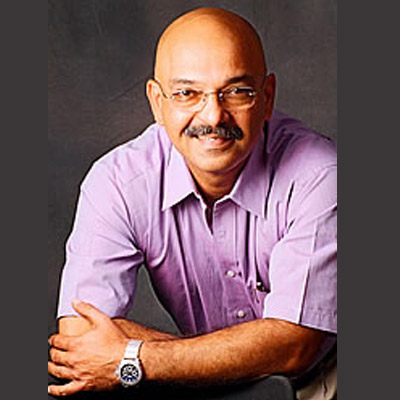
    Titus Upputuru joins Dentsu Marcom as ECD

    BANGALORE: The Dentsu India Group announced today the appointment of Titus Upputuru as executive creative director, Dentsu Marcom.

    In his new role, Titus will lead the agency’s creative efforts on Honda (cars and bikes), Sharp and new businesses.

    Based out of Delhi, Upputuru will report in to Dentsu Marcom CEO Hiroshi Omata.

    This assignment marks the return of Upputuru Dentsu. Earlier, Upputuru was executive creative director at Saatchi & Saatchi where he worked on brands such as Harley Davidson and Ranbaxy.

    Starting with Madhyam DMB&B (now, Publicis India) as copy trainee, Upputuru in his 15-year career has worked with Trikaya Grey (now Grey Worldwide), TBWA Anthem (now TBWA India), Delhi based Ushak Kaal and Ogilvy & Mather India. His brand expertise includes campaigns for Afghan Telecom, the Hutch Delhi Marathon, Sprite (Seedhi Baat No Bakwaas), Kinley (Boond Boond Mein Vishwas), Kentucky Fried Chicken (especially, Institute of Lickonomics), Fanta, Grasim Suitings, WWF and Dabur to name a few.

  • Ogilvy rules Creative Abby awards

    Ogilvy rules Creative Abby awards

    VARCA: If the advertising industry is Formula 1, Ogilvy & Mather is Michael Schumacher. At least that is how it looked at the end of the race for the Creative Abby awards this year.

    The WPP-owned agency stole the show, winning a total of 31 awards comprising one Grand Prix, five gold, eight silver and 17 bronze metals.

    O&M ruled the Integrated category as it pocketed the Grand Prix for its work done for Cadbury Dairy Milk. O&M‘s gold winning campaigns included ‘An Eye for India‘ (Design category), ‘Dum Pukht‘ (Direct category) and Vodafone Blackberry Boys for Vodafone (Film category).

    Leo Burnett followed with three gold, eight silver and nine bronze metals.

    The Radio category turned out to be Leo Burnett‘s territory. The agency collected a total of nine awards from this category, including three gold for clients Saathi, Bajaj Exhaust Fans and HP Racer 4.

    A total of six agencies grabbed two gold medals each, but Mudra Communications is ahead in terms of the total number of trophies
    garnered. Mudra won a staggering 37 titles, which is more than any other agency.

    Mudra won its two gold trophies for the campaign created for Electrolux Machine as it dominated the Print and Printcraft categories. The agency also won 13 silver and 22 bronze metals.

    This year a total of 46 agencies made it to the winner‘s list.

    McCann Worldgroup took home a total of 16 awards – two gold, three silver and 11 bronze, while Creativeland Asia bagged nine – two gold, four silver and three bronze trophies.

    The other names are Chrome Pictures with two gold and one silver and a bronze; Footcandles Film with two gold, three silver and one bronze trophy; and Flagship Advertising with two gold and one silver.

    Bates 141 walked away with one gold, two silver and six bronze titles. Bang Bang Films took home one gold and two silver metals, completing the top ten list.

  • Brands need continuity in communications


    VARCA: Brands need to maintain continuity in their communications as consumers don’t like changing their minds.


    “It takes an effort for the customers to change their minds and marketers can’t afford that. Continuity comforts the consumer. Albeit, continuity goes beyond just the logo and includes tone of voice, presentation et al”, said The Engine Group president Robin Wight.
     
    Marketers should use the latest advancements in science, technology and brain-mapping techniques to comprehend how consumer minds work.


    “Brain always saves energy for the most important things and it has nothing to do with marketing. Humans are rationalising, and not rational, creatures.”


    Wright was sharing his experience on the latest advances in brain science and how it will impact marketing in the coming times.


    Detailing his knowledge on neuroscience he said, “Consumers are in two minds most of the time. One is the genetic mind which works on the reflex system and the other is the cognitive mind, which is the thinking and feeling system. So marketers need to not just address the right brain, but also when the consumer is in the right frame of mind.”
     
    Wight claimed that most of the times marketers end up targeting the wrong mind. “Just like customers, even marketers are in two minds it seems,‘ he joked.
     
    He asserted that science can help creativity flourish. By using technology, marketers can know exactly how and why a campaign would fail. “Using technologies like functional Magnetic Resonance Imaging (FMRI), we are able to read people’s minds and evaluate campaigns.”


    He urged marketers to understand the difference between promotion and persuasion. “As marketers, we should not just promote but also persuade the customers to change his mind”, he said.
     

  • Max New York Life Insurance is principal sponsor of Pune  Warriors

    Max New York Life Insurance is principal sponsor of Pune Warriors

    MUMBAI: Max New York Life Insurance has associated with Pune Warriors India as principal sponsor and official team partner for the IPL Season 4.

    Speaking on Max New York Life’s first-ever direct partnership with an IPL team Max New York Life CEO & Managing Director Rajesh Sud said, “We are proud to be associated with the Pune Warriors India. With India’s recent success in the Cricket World Cup 2011, IPL Season 4 promises to be even more exciting for the millions of cricket fans across India. We wish the Pune Warriors team a great IPL season ahead. Max New York Life has been associated with IPL since inception and we see this association as a step to take our IPL engagement to the next level. We have always believed in experimenting with new ideas and opportunities for the Max New York Life brand.”

    Obseved Abhijit Sarkar of Pune Warriors India, “We are excited to have Max New York Life Insurance as our Principal Sponsor and the Official Team Partner. Max New York Life is a prestigious brand to be associated with and this association will strengthen Brand Pune Warriors India.“

    The insurance company will also leverage its association in the IPL Season 4 to drive focused internal and external stakeholder engagement and rewards and recognition initiatives to build on to the spirit of the T20 tournament which it feels would not only help drive the fan base for Pune Warriors India but also play a key role in enhancing stakeholder satisfaction and motivation.
     

  • Community engagement is the new mantra


    VARCA: Advertisers need to wake up to the new mantra: Community engagement.


    In today‘s age and time, consumers don‘t really need advertising; they crave for education, knowledge, experience, information, engagement and excitement.
     
    “Advertisers need to show the consumers what the ad stands for rather than simply tell them of it. With the advent of Internet, every brand has got the opportunity to become touchpoints for millions. Engagement is the new frequency,” said Contagious Communications president India region Neeraj Nayar.


    Promoting communities is the key. Clarifying this thought, Nayar touched upon Pepsi pulling out $20 million from the US Super Bowl in 2009 and instead investing it in a social media campaign. “This was a big change for a company that has spent $142 million on Super Bowl spots over the last decade and has shown commercials at the game for the past 23 years,” he elaborated.
     
    Nayar also cited the example of Levi’s ‘Go Forth’ campaign, in which the brand decided to go back to its roots by aiding the city of Braddock. “Levi’s was facing stiff competition from Diesel and Gap. But after this initiative, the brand got enormous exposure and consequently became more profitable.”


    He stated that ads shouldn’t look like an ad — only then are they good ads. “People readily don’t like ads. What normally happens is that during commercial breaks, the costumer is bombarded with ads; this shouldn’t be happening. We should create networks of the unacquainted and delight our customers.”
     
     Nayar considered the current state of advertising to be similar with a quote from AA Milne’s ‘Winnie The Pooh’: “Here is Edward Bear, coming downstairs now, bump, bump, bump, on the back of his head, behind Christopher Robin. It is, as far as he knows, the only way of coming downstairs, but sometimes he feels that there really is another way, if only he could stop bumping for a moment and think of it.” He urged advertisers to do away with the conventional ad model and be more creative.


    Nayar underlined the importance of thinking “365” i.e. 365 days and not 360 anymore, “One has to think editorially and engage the consumers real time. Projects, not campaigns, give real meaning and magic to communication.”


    “The consumer says, tell me—I forget, show me—I remember and involve me—I understand,” he elaborated.


    Volkswagen’s Piano staircase and Speed camera lottery were other great examples of people engagement, acknowledged Nayar.


    “Give something to people that they want to talk about. Think what’s in it for them. Look at things from their perspective. In the age of digital revolution, one has to lean out of the frame,” Nayar stated.


    Nayar concluded his talk by strongly favouring innovations and experimentation. He declared, “I am part of the 5 per cent club. We should invest at least 5 per cent of our budget on experimentation. Be more Silicon Valley and less Madison Avenue.”


    His final advice: “Be useful, relevant and entertaining. Don’t be afraid of taking risks.”
     

  • Create cultural movements: Baldridge


    VARCA: The task of brand managers is to create cultural movements while the concept of USP is not relevant anymore, industry thinkers said.


    While addressing the crowd at the Goafest 2011 summit, StrawberryFrog account director Jake Baldridge said that one should always start with a brand purpose and then tie it to an idea on the rise.
     
    The next step would be to find the cultural relevance of the brand and then work from inside out. Baldridge said the concept of USP is not relevant anymore and advertisers should get rid of it.


    But choosing this path may not be easy at all times. Someone has to take the initiative, without the fear of being ridiculed or being called stupid, Baldridge said.


    In his opinion, brands can speak, lead, curate and sponsor a mass movement though “only an idea with the power to ignite passion will achieve these.”
     
    He showed a video where a man without any fear starts dancing. Initially, people make fun of him but then start joining him. Eventually, people would laugh at someone who doesn’t join the leader.


    Hence, taking initiatives can be challenging, Baldridge cautioned, but it may be highly rewarding as well.


    Baldridge also shared a video where a movement has started for the love of Mother Nature. In this video, people are encouraged to be more sensible towards the resources at one’s disposal such as land, water and food.
     
    The video’s message called for being “smart against dumb”.


    This can be no different from starting a cultural movement. Baldridge said, “And what is cultural movement its nothing but a group of people coming together around an idea to create change.This is how StrawberryFrog works and creates monumental brands.”


    He amplified the importance of the first few followers. “The success of the movement depends on them; respect them and treat them as equals.”

  • Maxus clinches Media Abby

    Maxus clinches Media Abby

    VARCA: Maxus has done it again, clinching the maximum number of metals this year. The WPP agency has emerged as a clear winner at the Media Abby Awards 2011 with two gold, six silver and two bronze metals.
     
    The Tata Sky campaign in the Best Use of Television category and the Indian Premier League 3 in the Best Use of Newspaper and Magazine category did the trick for Maxus, helping it strike gold twice.

    Maxus is followed by Creativeland Asia, an independent agency, which won two gold metals, both for Hippo Baked Munchies in the Best Use of Internet and Digital Media, and Best Use of Never Before Media categories.

    Lodestar Universal occupies the third spot with nine metals but lesser number of gold. The Interpublic company won one gold (Amul’s association with the TV reality show MasterChef), six silver and two bronze metals. (See image for the awards tally)


    Mudra Max has garnered a total of five awards – one gold and four bronze.


    Mindshare has won a total of six awards – five silver and one bronze, but no gold.


    India’s biggest advertising and awards festival Goafest 2011 has given out a total of 44 awards out of 133 nominations amongst 17 agencies.


    The other takers were MEC with two silver and McCann Worldgroup with one award apiece. Isobar came in last with one bronze award.

    The categories of Verical Marketing and pro Bono Marketing didn’t see any winners.


    The complete list of the Media Abby Awards 2011 at Goafest:.