Category: MAM

  • Mandira Bedi to endorse stem cell bank Cryo-Save

    MUMBAI: Stem cell storage bank, Cryo-Save India, has appointed Mandira Bedi as their official brand ambassador.


    Bedi is expected to be involved in various strategic communication initiatives as part of an extensive 360 degree brand campaign.


    Speaking about her association with Cryo-Save, Mandira Bedi said: “Banking of Stem Cells is the best gift, which the parents can give to their child. It gives me immense pleasure to associate with Cryo-Save in spreading this awareness across India.”


    Cryo-Save India MD Rajesh Sharma said it is a vital step in spreading awareness about this concept to all strata of the Indian society.


    “We are indeed very proud and privileged to have Mandira as our brand ambassador and we welcome her to the Cryo-Save family and look forward to a long and successful relationship”, Sharma added.

  • Saatchi & Saatchi to handle creative duties of OLX

    MUMBAI: Saatchi & Saatchi has bagged the creative duties for the leader in free classifieds worldwide – OLX.


    Catering to an audience in one of the fastest growing sectors in India, OLX aims to cut across sectors with more and more people using the online space to find and buy products that they need and sell products that they don’t want to use.


    Operating in the online space, OLX helps people buy, sell, exchange products and services in their neighbourhoods and within their city. Users are free to search, list or post ads and free to transact on OLX.


    Present in more than 1000 cities in India, OLX serves as the local market place for both individuals and businesses. Categories on OLX include Jobs, Real Estate, Cars, For Sale, Services, Education and Matrimonials. Besides, it can be accessed through web or mobile and offers free apps for iPhone and Android phones that make it convenient to post ads on the go.


    OLX country manager Amarjit Singh Batra said, “We found the Saatchi & Saatchi team very responsive and excited about this idea. They spent a lot of time understanding about OLX and the needs that OLX is solving for consumers in India. We chose them over others because of the clarity and simplicity in the creative pitch idea that they presented to us. We were convinced on their approach of a humour based storyline of communicating the value proposition of OLX and their commitment to top quality production”.


    Commenting on this development, Saatchi & Saatchi India CEO Kamal Basu said, “OLX is a great brand to work on and we at Saatchi & Saatchi are very excited about the work we are doing on the brand. We look forward to a long and rewarding journey together”.


    Working on one of its first creative projects for OLX, Saatchi & Saatchi played on the proposition of the brand – buy and sell for free from the comforts of their home or office. This appeals to the Indian populace but not every connected Indian is aware of this great opportunity. Through a mass medium like TV, OLX wanted to reach out to every household in the country that can benefit from this unique marketplace. Hence, the agency developed a creative idea that would appeal to this connect between OLX and every household in India and that would simplify their understanding about Brand OLX.


    Talking about the creative, Saatchi & Saatchi chief strategy officer Sourabh Mishra said, “The task for the TVC was to make OLX.in the first name that people think of when they want to sell stuff. Our interaction with people showed that there is an element of hesitation, almost embarrassment that they have when selling personal belongings. Yet there is a strong desire to get the best price for whatever they sell. The idea was born when we reconciled these seemingly conflicting findings to arrive at the thought that ‘everything sells at the right price”.

  • ‘The challenge is to differentiate in a cluttered market’ : HDFC Life executive VP marketing and direct channels Sanjay Tripathy

    ‘The challenge is to differentiate in a cluttered market’ : HDFC Life executive VP marketing and direct channels Sanjay Tripathy

    HDFC Life‘s advertising spend will stay flat this year as it seeks to turn profitable for the first time.


    The insurance company, which ranks No. 4 among the top 10 advertisers in the category in terms of ad volumes, is looking to spend more judiciously and utilise a 360 degree approach to reallocate money across new mediums like digital and OOH.


    While 70 per cent of HDFC Life‘s marketing spend goes towards above the line, 50 per cent of this goes towards television. On television, HDFC uses news and sports for advertising as it fits into the 25-45 male target audience.


    Print, radio and OOH play a supportive role. HDFC Life has also started using social media to engage the youth.


    In an interview with Indiantelevision.com’s Ashwin Pinto, HDFC Life executive VP marketing and direct channels Sanjay Tripathy talks about how insurance companies need to differentiate in a cluttered market and build a brand equity that includes the youth.


    Excerpts:

    Why did HDFC Life go in for a brand makeover last year?
    We did a brand equity study as we wanted to see where our brand is and how it is faring versus competition. We had last done a similar study way back in 2005. We wanted to see the changes; we wanted to know how through our cmmunication and marketing activities the brand had progressed in people’s minds.


    Consumers found the brand ethical and the service value was strong. Then we asked about the areas where they felt the brand could be improved upon. They wanted it to look like belonging to the same HDFC family; they felt that the brand could look more modern and dynamic.


    Indian consumers are getting younger. People work in areas like BPO and they look at life insurance at an early age. A person buys their first insurance product between 23-28 years of age. As a brand, we wanted to attract the youth towards our products; we needed to be in the youth segment. We spoke to our board and got a favourable response.


    Also, the word standard only conveyed the basic level of facilities; it was not giving the message of Standard Life being an international brand. We wanted to be seen as being a customer centric brand. Through the rebranding, we wanted customer centricity to come out more strongly for us. The new logo represents a youthful, energetic HDFC brand.

    How do consumers perceive HDFC Life as a brand compared to the competition?
    Our awareness has gone up by 30 per cent over last year. Our communication has been well accepted.

    When marketing to consumers, what challenges do insurance companies like you face?
    The market is cluttered. There are over 23 players. The challenge is to differentiate and ensure that consumers can see your service offerings and products.


    We need to be seen as having products that are more consumer friendly; the challenge is to see that the consumer understands your brand and products.

    How do you build and leverage brand equity in the insurance category which is getting more competitive?
    We started six years back to find out why consumers buy insurance. We found that they bought it as they do not want to depend on anybody else; they want insurance for self respect. They do not want to depend on their parents; similarly, the parents do not want to depend on their children. This is how the thought for our campaign came about which is – Sar Utha ke Jiyo. We positioned our brand under the ‘self respect’ motive.


    Over time, we took the thought of Sar Utha ke Jiyo across our platforms – be it for children, pension, youth or home loan cover. It gives you a long term solution for pressing needs and self respect. Insurance operates in a long term savings plan; investment in insurance has to be linked to a long term need. This is what we have focussed on and have built consumer segments.

    To what extent will your marketing budget go up for the year?
    We are maintaining a similar spend as last year. This is the first year we are trying to become profitable. We are looking to spend more judiciously and utilise a 360 degree approach to reallocate money. New mediums have come in like digital and OOH. The aim is to make a more judicious mix of mediums available.

    “Our ad spend will stay flat this year. We are looking to spend more
    judiciously and utilise a 360 degree approach to reallocate money. New
    mediums have come in like digital and OOH”

    To what extent was this category affected by the economic downturn in terms of sales and marketing spends?
    New companies are spending heavily. Some of the older players who want to go for a public listing and want to make marketing money work harder are keeping a check on their spending. Spending in this category went down by around 20 per cent during the downturn.

    Which marketing vehicle is the most effective for you – print, TV, radio, online?
    Seventy per cent of our marketing spend is for above the line activities; fifty per cent of this goes towards television as it is the most effective medium for us.


    As we are present in over 700 cities, television offers a more cost effective reach. It provides an emotional touch point. You can link the customer with your brand and emotional thought. You can explain your concept in a situation linked to his day to day life.


    Print, radio and OOH play a support role. We have started using social media more to engage the youth.

    Which genres do you use on television?
    News and sports for TG 25-45 males works. Apart from cricket, we also do on-air sponsorship of Euro, Fifa World Cup and Wimbledon. We also spend on regional news and regional entertainment; they are pretty big for us.


    The aim is to get the top-end audience in metros and mini metros. The cost of contact may be high but cost of impact and cost to the top-end segment is less compared to other vehicles. This is the most profitable customer segment for insurance.

    Do you advertise heavily only during the end of the financial year?
    We advertise across the year. Our IPL campaign is running at the start of the fiscal. When schools open, we can run a ‘Children Plan’ campaign. Advertising in the insurance category has moved from just being end of the year to being more spread out.

    What about the festive time?
    Advertising at that period does not work. People think about spending and not about saving. It could be a counter campaign to do it in Diwali; this has not worked in the past.

    Do you use brand ambassadors?
    No! HDFC Life is a product for the common people. The thought is powerful when you connect to people; they want to see communication where people like them are investing rather than seeing somebody who does not need life insurance but is still talking about it.

    What campaigns have been done recently?
    The last campaign was a rebranding one. You don’t need to spend Rs 3-5 billion for this if you realise the core thing that you need to convey. It is not that overnight you have to change every single collateral and signage. The consumer has to be convinced that your rebranding is actually being delivered on the ground; they look at rebranding more in terms of on-ground delivery rather than on just an image or a design change.


    We also did a children’s plan campaign. We used more persuasion which was different from what was done earlier. We explained that while the child is doing fine, seats are limited and competition is severe. Parents need to plan properly; it will help the child reach that goal and get into the institution they like. The aim is to make a parent see that while things are happening normally, they still need to do something.

    As a platform, how has the Rajasthan Royals deal worked out for you?
    We look at associations where there is a good brand fit. In case of Rajasthan Royals, while Shane Warne is the captain, ordinary Indian players who people might not have heard of are given a platform. Warne helps them think like winners. If you look at the premise of believing in yourself, this goes well with our tag line ‘Sar Uthake Jiyo’.


    As a team they support youth and some of them have started playing for India. Shane Watson’s career also got revived with this team. It helps youth to think that they can beat world beaters.

    In terms of activation with that IPL franchise, what innovations did you do this time around?
    We brought a social angle into our activities for the home games. We used to take employees and distributors to meet players. We also used players for ads. We gave fans the opportunity to get tickets to enjoy the match and spend time with the cricketers. We took fans for the toss. This was run on Facebook. We also gave tickets to underprivileged people.

    Last year the franchise got into trouble with the BCCI. Did that force you to temporarily change tack in terms of your campaign?
    Not really! The IPL was over by the time these issues came up. The team management kept us informed about the steps they were taking and why they believed that they were in the right. They said that there were no issues and kept us in the loop all the time. We have a one year deal with them.

    Rajasthan Royals has not fared well during the IPL. Are you concerned at any negative brand rub off for HDFC Life?
    No! For a while, they were in the top rung of the points table. You have to look at the core strength of the association rather than one off wins or losses. The youth looks at ‘Sar Uthake Jiyo’ in a different light. The team has more youngsters compared to the previous year. So we came up with the tag line ‘Sar Utha ke Jeene ka Naya Andaaz’.

    How many campaigns do you do in a year and are there new audiences that you have started to address?
    We will do four to five campaigns and are looking at new audience segments. We have done a lot of research on this.

    The rural areas have a lot of potential but the marketing vehicles that work in the major metros might not work there. So how do you connect with those consumers?
    More than just marketing, the basics of the business have to be in place. Insurance is a long term business – and you need to understand the rural area. We do pilots to understand the rural area much more; this has multiple models that have to be run simultaneously.


    You need partners like microfinance institutions so that you can reach out to them in a much more cost effective manner. The rural areas consist of the rural rich and poor. You need different products for them while their aspirations are similar.


    We are trying to do partner marketing at the moment. We do below the line activities with partners who have the trust factor in that area. The aim is to make the brand relevant and differentiated at a local level. We do things like street plays. We need somebody to carry the message and explain it. That is why below the line activities are important.

    Could you give me examples where experiential marketing has worked for you?
    We do ‘Spelling Bee’ in 35 cities. Children in classes six to nine participate. We have 300,000 children and over 1500 schools taking part. It allows children to understand things like vocabulary and sentence formation. Parents encourage children to do this. It is a good engagement activity. Parents are also engaged in terms of helping the child spell correctly.


    Somewhere your brand rub off is also very high. The parent thinks that HDFC Life has brought a competition which they want their children to participate in. Consumer engagement is key for our category. The consumer should keep engaging with you over a longer period of time. What we are seeing is that people buy five to six insurance products over a lifetime.


    People like a brand but the decision may be deferred. I need to stay engaged constantly. I may create an engagement now, but later you may buy competition. The engagement has to be done through different methods. That is why we look at a 360 degree approach.

    Could you talk about the growing importance of OOH for you?
    This has really increased. In metros and mini metros, consumers spend time out of home. TV viewing time has come down. There is innovative media available. Obviously, hoardings have been there for a long time. Airports and stations have OOH media. You have to figure out how you can catch your TG when they spend time away from their home.

    But isn’t lack of measurement a problem?
    This is why it is a support medium. If you utilise it for the right reason and use it to support the main communication, it works well. As a support medium, it gives good ROI. OOH always complements the TVC. I can measure ROI better that way.

    Do you address women?
    In India, most homes have a single income. The male is the breadwinner; women in the working segment are still small and their needs are similar to working men. Their media consumption is similar. The campaign for men works for them also.


    We addressed upwardly women through an endowment plan campaign. The only segment that is different from men is the unmarried working woman. Other categories for women are similar to men; so I do not need to do a separate campaign for them.

  • Komli Media acquires Singapore-based Aktiv Digital

    MUMBAI: Digital network platform, Komli Media, has acquired a digital media company, Aktiv Digital.


    Aktiv is an online media sales venture with a presence in Singapore , Philippines, Malaysia and Hong Kong.


    The acquisition will not only give Komli access to the advertisers and publishers across India, South East Asia (SEA) and Australia but will also enable it to offer marketers and publishers a single marketing and monetisation window across the three markets.


    As part of the deal, all the staff of Aktiv has been retained, with sales director Chris Pattinson promoted to chief revenue officer.


    This is Komli’s third buyout in the past 12 months. In June 2010, Komli had acquired Australian website representation firm Post Click and in October they took over Indoor Media, a UK-based online ethnic marketing company focused on the South Asian community.


    Established in 2007, Aktiv is an online media sales venture with a presence in Singapore , Philippines, Malaysia and Hong Kong. The company has a consolidated platform for buying online media across its premier, target and performance product suite that aims to deliver single-site buys, content channels and a CPC and CPA performance based offering with re-targeting capabilities. The company has been working with over 500 brands in the last three years across this platform.


    Komli Media CEO Prashant Mehta said, “Aktiv Digital and its team have been at the forefront of bringing leading digital solutions to their clients, and we see them as a fantastic partner to expand in SouthEast Asia and bring our range of product and media offerings to this region.”


    Aktiv Digital CEO Matt Sutton added, “We are really excited to be a part of the Komli family. We were looking for the right strategic partner to accelerate our growth in this region and Komli offered the right mix of financial muscle, product vision and entrepreneurial DNA.”


    Komli plans to leverage its strength and expand into more markets in SEA and bring new product offerings to the market.


    Komli Media VP International Akshay Garg stated, “Having a footprint in SouthEast Asia gives us the ability to present a pan-regional solution to clients looking for marketing and monetization opportunities in APAC, and furthermore allows us to offer a broader set of Asian ethnic audiences to our clients in North America, Australia and the UK.”


    Komli Media offers solutions across the digital landscape which includes Performance Marketing, Brand Solutions, Video Advertising, Search, Social Media and Mobile.

  • Automobile, alcohol & FMCG sectors use digital media more

    MUMBAI: Marketers need to know where consumers are spending their time in order to best engage them, states a new report entitled ‘Living with the Internet – What is Driving Web behavior’, jointly executed by Microsoft Advertising, MEC and Mindshare.


    The study says that it’s important for advertisers to realise that getting consumers’ attention is becoming increasingly difficult. Brands need to understand their target audience’s surfing habit and patterns; and realise where, how and when is the ideal time to best engage with them.


    Brands must be market specific and use audience targeting tactics to pinpoint their consumer base. They must surround their consumers, the study claims.


    MEC South Asia COO Shubha George said that the digital world is an amalgamation of multiple digital touch points, often simultaneously. Hence, “for holistic campaigns, brands need to activate all aspects of digital to engage the multi-tasking consumer”.


    The report advises that brands should look to feature owned assets on the most popular platforms as much as possible. As the report has claimed that transaction is not the primary motivating factor for internet usage, brands should look to avoid allocating substantial budgets towards developing content close to the point of sale.


    The report also maintains that marketers should consider the platform that consumers use to go online – and use this platform to the best of their ability.


    Given the different role of smartphones and laptops in the digital world, advertisers should realise the benefits of customising their content and placement to match their business objectives, the study maintains.


    For example, if the brand’s goal is to create awareness or provide interesting brand knowledge (information) to users, advertisers should put heavy resources towards the development of mobile applications based on these research results.


    “In an increasingly connected and multi-tasking world this means, that brands need to create strong somatic markers for themselves. The key is to adopt a smarter approach to online media by making a brand’s presence fit more naturally into a user’s experience”, the study asserts.


    Except for online information seeking and content creation, laptops are more favorable when it comes to — communication: laptop (51 per cent) versus smartphone (46 per cent); entertainment: laptop (23 per cent) versus smartphone (17 per cent); transaction: laptop (13 per cent) versus smartphone (8 per cent).


    Television creates awareness and creates a desire, while Internet provides the platform to execute them, said Mindshare South Asia leader R Gowthaman.

  • Advertisers show concern as IPL 4.0 sees 29% dip in ratings

    MUMBAI: In victory, Dhoni‘s ‘Men in Blue‘ proved to be much more popular than his IPL franchise. While the cricket World Cup final notched up a whopping rating of 23.21, the match in which Dhoni won the Indian Premier League for his franchise Chennai Super Kings (CSK) was much less watched.


    IPL fanatics may say that it is an unfair comparison to make as national pride will always occupy a higher pedestal. But even in IPL versus IPL, the third edition has won over the fourth. And since the fourth has raked in more moolah (Rs 10 billion) for the official broadcaster Max, advertisers are questioning whether the ad rates should be reworked or it is a stray case where the IPL suffered an immediate punch from the World Cup in which India triumphed.


    The lopsided final, which saw CSK defend its crown against Royal Challengers Bangalore, rated a mere 6.96 TVR, according to data from TAM Sports for C&S 4+, six metros market. This is the first time that an IPL final did not reach double-digit ratings. Last year, the final between Mumbai Indians and CSK got a rating of 12.85 TVR.


    What makes the tourney anti-climatic is that the first match with 7.77 TVR stayed as the most-watched of all.


    Worse, the IPL could not manage an average TVR of 4 in the six-metro market, registering a 29 per cent drop in the average ratings over the third season. The 74 matches have averaged a TVR of 3.91 compared to a rating figure of 5.51 last year, 4.66 in the second season when the event was held in South Africa and 5.39 in the debut year. This, indeed, is the first time in the event‘s four-year history that the IPL has landed up with a tournament rating below 4.


    Even the last four matches of IPL 4 could not draw higher ratings as they managed an average TVR of 6.1 compared to a TVR of 8.07 in the earlier year.


    The only highpoint this season was that the total viewers who watched IPL have grown to 160.2 million, according to the All India market data from TAM Sports. In the last season, 143.7 million viewers had tuned in to the event.


    Despite the decline in ratings, the IPL still remains a highly watched event. Maxus Global National Trading Head Sidharth Parashar notes that while the cost efficiencies were affected to an extent compared to last year, one cannot call the IPL a disappointment. “A rating of nearly 4 over such a long period is still a good performance. Having said that, the BCCI could have a re-look at the format. I think that the increase in the number of games led to a certain amount of monotony setting in. The BCCI could also look to have more matches during primetime. Also, the World Cup did have an impact in terms of viewer fatigue.”


    VivaKi Exchange COO Mona Jain believes advertisers would be more cautious when they negotiate next time. “They will not be so blasé and just put money down, expecting the IPL to automatically perform. This time the ratings did not show up as was expected. Advertisers will be looking for benefit. I also think that 74 matches are a stretch for the event. Advertisers will take a conscious call next year.”


    LG CMO LK Gupta says that while the company is satisfied at the level of visibility, the fact that the ratings came down was a disappointment. “Consumers spent a lot of their energy on the World Cup and there was fatigue. The World Cup had offered the highest class of cricket and there was a dampening effect to an extent when the IPL came along as it is about club against club. However, the IPL is still the biggest platform during this period. It is very much viable. I am satisfied at the delivery of cricket during the World Cup and IPL. It is not that fans are fed up of cricket. This has been an expensive but a good time for marketers.”


    Asked about the challenge of clutter, Gupta argues that this is something that one has to live with. “We took on-air sponsorship as we wanted the largest share of voice in our category. While competitors also advertised, their time was much less and so it wasn‘t an issue for us. The key is to creatively break out of the clutter. This time we focused on our LCD TVs. Our core audience was males.”
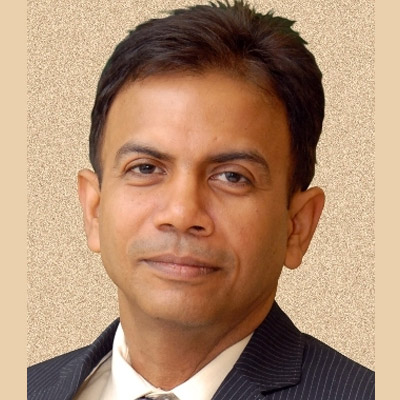
  • Godrej acquires 51% stake in pan-African hair care company

    MUMBAI: Godrej Consumer Products (GCPL) has acquired 51 per cent stake in Darling Group Holdings that manufactures and distributes a range of hair extension products across sub-Saharan Africa.


    The deal is expected to enable GCPL to leverage its product portfolio and capabilities in personal wash, toiletries, household insecticides and air care across the African continent. Also, the company aims to build a global, premium ethnic hair care brand across Africa through marketing and innovation processes.


    Darling Group’s current management team will continue to manage the business. GCPL will put in place a cross-functional team consisting of current Darling Group management and GCPL’s team members. These teams will work in the areas of marketing, sales, manufacturing, finance and human resources.


    GCPL believes that over time, this acquisition can provide a strong distribution and marketing platform for taking other home and personal care products from the company’s portfolio to the African consumer.


    As part of increasing its emerging markets footprint, GCPL recently acquired Megasari Group, a household care company in Indonesia — Tura, a personal care company in Nigeria — and Issue Group and Argencos, two hair colorant companies in Argentina.


    GCPL chairman Adi Godrej said, “The Darling Group enables us to take our presence in Africa to the next level. Our aspiration is to touch the lives of at least 100 million consumers across Africa in the next 5 years through superior quality innovative products at affordable prices. We believe that the timing is opportune for us to scale up our presence in the region. More than ever, we are convinced about the tremendous potential that Africa offers. There are also several similarities in the retail and distribution environments across India and Africa.”

  • MPG retains MTS biz worth Rs 1.5 bn

    MUMBAI: Havas Media’s flagship brand, MPG India, has retained telecom service provider MTS’s media account.


    The account size is estimated to be Rs 1.5 billion.


    The mandate was awarded following a multi agency pitch that also involved Mediacom, Motivator, Mudra and LMG.


    MTS has chosen Portland and OAP as their outdoor agencies.


    The two agencies were appointed following a multi agency pitch that was attended by Laqshya, Posterscope, Percept and Aaren.


    While the North and East regions will be looked after by Portland, OAP will manage the West and South.

  • Spatial Access restructures senior leadership team

    Mumbai: Media audit company Spatial Access has restructured its management team into two business verticals – media and marketing input audits. It has also appointed of Nikhil Rangnekar as Joint CEO of the company.


    Rangnekar moves in from Starcom Worldwide where he was as executive director, India-West.


    Also, Geetanjali Bhattacharji will be promoted as Joint CEO and head the marketing input audits vertical consisting of the Production, BTL and PR audits. In addition, she will be responsible for business development.


    According to an official note, the restructuring is aimed to
    streamline operations and allow managing partner Meenakshi Madhvani to explore the international ambitions for the company.


    Rangnekar will join Spatial Access on 15 June and will head the media vertical. His mandate will be to focus on delivering media audits, advisory and analytics services.


    Madhvani said, “I am looking forward to Nikhil bringing in fresh
    thinking and ideas, which will enable us to grow the service, business and our reputation. We have competent teams who have been dealing with clients independently. My idea is to move out of the frontline and leave the media vertical in Nikhil’s capable hands.”


    Elaborating on the new direction for the company, Madhvani added, “A lot of the services that we offer today have been developed by me based on need gap analysis and research done among our clients and prospects. In fact, at this point we have commissioned an independent investigator to discover clients ‘pain points.’ This is really where I come into the picture. We should be able to articulate tomorrow’s opportunities even before our clients voice them.”

  • DKT India awards creative duties to Guava

    MUMBAI: Guava Creative Solutions has bagged the creative duties for social marketing organisation, DKT India.


    The account size is estimated to be Rs 250 million.


    Pickle Lintas was the incumbent agency. The mandate was awarded without any formal pitch process.


    Says Guava creative director Vikisha Mehta, “Our mandate will be to reposition the company’s existing brands that include Zaroor condoms and Choice oral contraceptive pills.”


    Mehta said besides a new condom brand, the company is also coming up with its first emergency oral contraceptive pill in October, and the agency will work on their launches.