Category: MAM

  • Rajkummar Rao & Patralekha challenge household norms in Vim’s Equal Vows

    Rajkummar Rao & Patralekha challenge household norms in Vim’s Equal Vows

    MUMBAI : Vim’s latest campaign, Equal Vows, takes a fresh look at household equality with film couple Rajkummar Rao and Patralekha Paul Rao. Tackling the age-old divide in domestic chores, the campaign challenges traditional gender roles and encourages couples to share responsibilities as true partners.

    The campaign’s ad film follows a young couple, Isha and Nimit, who host Rajkummar and Patralekha for dinner. When Isha’s mother questions why Nimit is washing dishes, the conversation shifts to the true meaning of partnership in marriage. The film ends with Isha and Nimit pledging to share household duties equally.

    HUL head of home & hygiene Ashwini Rao  said, “Household chores, especially after marriage, often fall disproportionately on women. Through ‘Equal vows,’ we aim to challenge these ingrained perceptions and promote true partnership in relationships.”

    Rajkummar and Patralekha, who embody these values in their own lives, expressed their support for the campaign. “We believe in sharing responsibilities at home Patralekha enjoys cooking, and I do the dishes. It’s a simple yet important way to show mutual respect,” said Rajkummar.

    The campaign extends beyond television and digital platforms, with Vim partnering with Bharat Matrimony to engage soon-to-be-married couples. Celebrities such as Tanvi and Rohan, along with comedian Varun Grover, have also joined the movement, sharing their commitment to equal partnerships.

  • Jasprit Bumrah joins foundit: Precision bowling meets smart job matching!

    Jasprit Bumrah joins foundit: Precision bowling meets smart job matching!

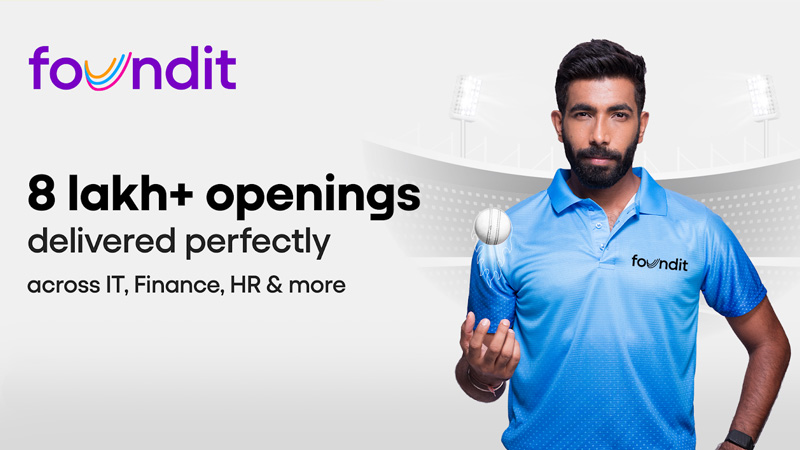
    MUMBAI : India’s pace sensation Jasprit Bumrah is teaming up with foundit, a leading jobs and talent platform, in a partnership that brings together the precision of world-class cricket and the accuracy of AI-driven job search. Just as Bumrah delivers pinpoint yorkers at blistering speed, foundit aims to match job seekers with the right opportunities with the same level of focus and efficiency.

    Commenting on the partnership, foundit CEO V Suresh said, “Jasprit Bumrah’s agility, accuracy, and dependability perfectly align with our mission to empower professionals in a dynamic job market. His stellar performances, including India’s World Cup triumph in 2024, make him an ideal representative for our brand.”

    Foundit VP– marketing Anupama Bhimrajka added, “With 70 per cent of India’s jobseekers engaged in cricket, Bumrah’s influence resonates widely. His precision mirrors our commitment to matching candidates with the right opportunities through advanced AI technology.”

    The campaign featuring Bumrah will roll out across multiple media platforms in the coming months, drawing parallels between his pinpoint accuracy on the field and foundit’s data-driven job search approach.

  • Canon India rolls out I #CANwithCanon campaign empowering positive attitude

    Canon India rolls out I #CANwithCanon campaign empowering positive attitude

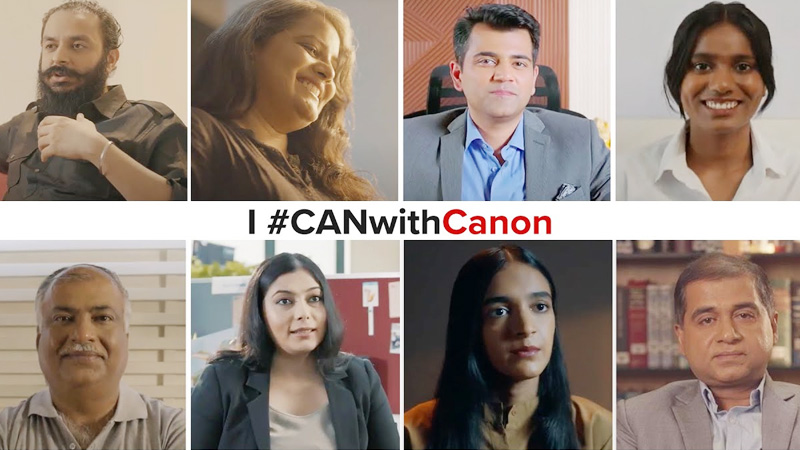
    MUMBAI: Canon India has just given storytelling a powerful new lens with the launch of its latest campaign, ‘I #CANwithCanon’, proving that when it comes to real impact, technology isn’t just about pixels and prints—it’s about possibilities. This campaign doesn’t just celebrate Canon’s products; it highlights how its solutions empower individuals, businesses, and communities to achieve the extraordinary. And yes, it’s all based on real-life stories—not just glossy advertisements.

    Canon, which has been a household name in India for nearly three decades, is using this campaign to underscore its role not just as a tech leader, but as a partner in progress for its consumers, businesses, and society. With six compelling videos spanning consumer, SME, enterprise, government, and social sectors, I #CANwithCanon delivers proof that innovation is not just about gadgets—it’s about making lives better.

    Kicking off the campaign, Canon India president & CEO Toshiaki Nomura remarked, “For over two decades, Canon India has been at the heart of countless success stories across the nation. I #CANwithCanon is our tribute to these partnerships and milestones, showcasing how Canon’s solutions have empowered individuals and businesses to unlock their full potential.”

    Adding to this, Canon India senior director- product & communication, C Sukumaran stated, “This campaign brings alive Canon’s philosophy of enabling excellence in business and everyday life. These stories demonstrate how our solutions address real business challenges and creative aspirations.”

    Canon’s technology has turned businesses into powerhouses. Just ask Wee Prints, a major player in digital printing. Before Canon stepped in, their print volume was 1.5 lakh pages—impressive, but not enough. With Canon’s cutting-edge solutions, they’ve now ramped up to 2.5 lakh pages, meeting increasing client demands with ease and efficiency. Their business performance? Sharper than ever.

    Printers and copiers are great, but what’s even better? A trusted partner. That’s what Wheelzy Spot (an authorised JK Tyre dealer) discovered when they sought Canon’s help. More than just technology, they needed efficiency, reliability, and—most importantly—support. Canon delivered all three. With a dedicated service team ensuring smooth operations, Wheelzy Spot’s business is running smoother than a newly paved highway.

    Beyond business, Canon’s skill development & livelihood program is changing lives. Tanu and Karina, two individuals who were once struggling to find stable employment, are now thriving professionals, thanks to Canon’s initiatives. Their stories are a testament to the company’s commitment to real progress and meaningful change.

    Canon India has built its brand not just on its technology, but on its customer-first approach and social commitment. As this campaign rolls out, more real stories of growth, success, and transformation will be unveiled in the coming weeks.

    Because at the heart of every great achievement, there’s someone who once said, “I CAN.”

  • Indian commercial office market hits record high, signals major shift in 2025

    Indian commercial office market hits record high, signals major shift in 2025

    MUMBAI: India’s commercial office market has reached new heights, with leasing volumes hitting a record 66.4 million square feet in 2024, a 14 per cent  year-on-year growth, according to the Ficci-Colliers report: India Office | Setting New Standards for 2025. The market is projected to grow further to 65-70 million square feet in 2025, marking a significant transition from a supply-led to an occupier-driven landscape.

    Bengaluru led the charge with its highest-ever absorption of 21.7 million square feet, while Hyderabad recorded the strongest growth at 55 per cent. The dominance of the technology sector has declined from 40-50 per cent  to 25 per cent , with engineering, manufacturing, financial services, and flexible workspaces now accounting for more than half of Grade A office demand.

    Global capability centres (GCCs) have emerged as a key driver, leasing 25.7 million square feet in 2024, a 41 per cent   increase year-on-year. Bengaluru captured 47 per cent   of GCC leasing, while Mumbai saw a fourfold rise in uptake.

    “Office leasing is expected to grow another 8-10 per cent   in FY26, fuelled by demand from GCCs and the financial services sector,” said Ficci committee on urban development and real estate chairman & RMZ chairman Raj Menda. 

    Sustainability is also shaping occupier preferences, with over 70 per cent of leasing now in green-certified buildings, a figure expected to rise to 80-85 per cent by 2025. Menda added: “Nearly 80 per cent   of new supply over the next two to three years will be green certified. By embracing sustainability and innovation, we can contribute to economic growth, enhance well-being, and leave a lasting impact on the environment.”

    The real estate investment trust (Reit) landscape is expanding, with 80 million square feet currently under Reits and an additional 400 million square feet identified as potential Reit stock. The listing of India’s first small and medium Reit (SM-Reit) in 2024 has opened new avenues for retail investors.

    Looking ahead, new office supply is expected to reach 60-65 million square feet in 2025, with vacancy levels projected to decline to 15-16 per cent. Average rental values are forecast to touch Rs  100-110 per square foot per month.

    Ficci committee co-chairman and managing director and CEO Godrej Properties  Gaurav Pandey highlighted the residential sector’s milestone in 2024, with demand hitting 1 billion square feet, valued at Rs  8.5 lakh crore, primarily concentrated in India’s top five cities.

    “The sector needs execution build-up and brilliant talent across both white-collar and blue-collar jobs,” Pandey added, stressing the importance of labour strategy and talent management for sustained growth.

    On the investment front, institutional inflows reached USD 4.7 billion in the first nine months of 2024, with over 60 per cent directed towards industrial, warehousing, and residential assets. The government’s Rs  1 lakh crore urban challenge fund aims to transform cities into growth hubs and improve infrastructure.

    However, affordability concerns persist in the residential segment said Ficci committee co-chairman and managing director and CEO HDFC Capital Advisors Vipul Roongta: “With the average unit price at Rs  1 crore in major cities, home ownership remains out of reach for the emerging middle class, who can typically afford homes in the Rs  50-75 lakh range.”

    Meanwhile, DLF vice chairman and managing director, rental business, Sriram Khattar, noted a shift in commercial real estate priorities: “Gone are the days when offices were built at 70-80 square feet per desk and simply filled up. The emphasis now is on quality workspaces that enhance occupier and employee experience.”

    Looking ahead, Colliers India managing director office services  Arpit Mehrotra stated: “The occupier-driven Indian office market will continue to diversify in 2025, and developers will need to remain agile to meet evolving preferences.”

  • Footprints honours employees with ‘Humans of Footprints’ celebration

    Footprints honours employees with ‘Humans of Footprints’ celebration

    MUMBAI: What makes an organisation truly great? Its people!

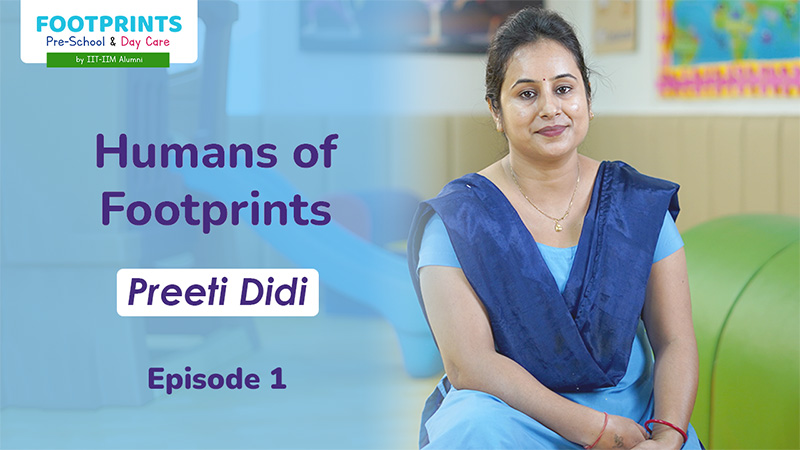
    India’s pioneering tech-enabled and AI-assisted preschool and daycare chain, Footprints has launched its ‘Humans of Footprints’ campaign to shine a well-deserved spotlight on the incredible stories of its employees. These are the unsung heroes who have dedicated over seven to eight years of service, shaping little minds while building a nurturing space for early childhood education.

    It’s more than just a campaign—it’s a heartfelt thank you to the people who have made Footprints a trusted name among parents nationwide. Through a series of moving video narratives, employees share their journeys, challenges, and triumphs, offering a rare glimpse into the beating heart of the organisation.

    The first chapter of the campaign introduces Preeti, a beloved member of the Footprints family who has been serving as a didi and cook for over eight years. Her journey is nothing short of inspiring—having faced immense personal struggles, she took a leap of faith to step into the workforce. As a single mother, she made a tough yet empowering choice to work, ensuring a better future for her children. At Footprints, she not only found employment but also a supportive, female-driven environment that made her feel valued, safe, and empowered.

    But Preeti is just the beginning! Every week, Footprints will unveil more stories of grit, passion, and dedication, highlighting the real people who make the brand what it is today.

    For Footprints co-founder & CEO Raj Singhal this campaign is a tribute to the company’s ethos of fostering a community—not just for children, but for its workforce too. “Footprints is not just about shaping young minds; it’s about creating opportunities, empowering individuals, and building a culture of growth and inclusivity. Through this campaign, we want to celebrate the inspiring journeys of our employees and showcase the transformative power of a supportive work environment”, said Singhal.

    The ‘Humans of Footprints’ campaign goes beyond employee recognition; it’s a testament to the brand’s commitment to ensuring every individual—whether a child, a parent, or an employee—feels valued and heard.

    These narratives serve as a reminder that the strongest organisations are built on more than just policies and profits—they thrive on people, passion, and purpose.

  • Liz Clarke joins Fabric as director of sales & business development

    Liz Clarke joins Fabric as director of sales & business development

    MUMBAI: Fabric, the entertainment industry’s powerhouse for data and operations solutions, has shaken up its sales and business development team by appointing Liz Clarke as director of sales and business development, EMEA. With over two decades of experience in media, entertainment, and post-production, Clarke is stepping in to steer Fabric’s growth strategy across the region, ensuring that media companies cut through the operational chaos and tap into new revenue streams with ease.

    Fabric, fresh off its integration with Xytech, continues to redefine media management by consolidating workflows, from quote-to-invoice to project management and content metadata. In other words, it’s taking the industry’s messy backend and tidying it up into one smart, seamless platform. And Clarke, with her extensive expertise, is stepping in at precisely the right moment to help drive that transformation.

    Before joining Fabric, Clarke served as EVP of strategy and development at Bitmax, where she championed business growth initiatives and streamlined workflows across international teams. Her journey has also included a pivotal role as VP of client operations at Mirriad, working with major broadcasters like Channel 4, Channel 5, RTE.ie, TF1, France Télévisions, Prosiebens, and RTL. Having previously held senior positions at Ascent Media, Deluxe, and Prime Focus Group, Clarke is no stranger to building and executing world-class media strategies.

    Fabric CRO Kira Baca expressed enthusiasm for Clarke’s arrival, “We are thrilled to welcome Liz to Fabric. Her impressive industry expertise, incredible reputation, and proven ability to drive business growth align perfectly with our mission to help media companies scale and succeed. Liz’s leadership will be instrumental in expanding our footprint across EMEA, ensuring that more organisations can leverage Fabric’s solutions to meet their content goals.”

    Fabric’s goal is simple but ambitious: unify media operations, streamline data, and help teams worldwide deliver seamless content experiences. The company’s solutions integrate operations and catalogue management, resource scheduling, data enrichment, and AI-powered workflow insights—effectively eliminating operational bottlenecks that have long plagued media companies.

    According to Clarke, the opportunity to be part of this mission was too compelling to pass up. “Fabric is focused on providing solutions that deliver provable value, from simplifying and streamlining operations to maximising content revenue potential globally. I am excited to join the team and bring my experience in business development and sales, along with my understanding of the M&E industry, to drive growth across the EMEA region. I look forward to working with the teams to unlock new opportunities and enhance operational efficiencies with Fabric’s innovative solutions.”

    With global digital ad spending projected to reach $667.6 billion in 2025, the demand for integrated, AI-driven media solutions has never been greater. The media landscape is shifting, and companies must adapt to stay relevant. Fabric’s integrated approach offers a competitive edge by eliminating inefficiencies, optimising workflows, and giving businesses a crystal-clear view of their content pipelines.

    Fabric’s expansion into EMEA comes at a time when media companies are grappling with increasing operational complexity. As advertisers pour more dollars into programmatic and AI-driven content personalisation, Fabric’s solutions provide the agility needed to navigate this rapidly evolving landscape.

    With Clarke leading the charge, expect Fabric to strengthen its presence across Europe, the middle east, and Africa, proving once again that smart, data-driven operations are the future of media management.

  • “AI-powered influencers are reshaping brand engagement” – Vinit Karnik

    “AI-powered influencers are reshaping brand engagement” – Vinit Karnik

    MUMBAI: The advertising landscape in India is on the brink of its most transformative year yet. With AI taking over marketing workflows, quick commerce redefining e-commerce, and connected TV (CTV) gaining an unprecedented foothold, brands are scrambling to stay ahead. The latest forecast from GroupM’s TYNY report outlines the trends that will shape 2025, and let’s just say, if you’re not innovating, you’re falling behind.

    AI agents take the wheel

    The machines are here, and they’re not just running ads—they’re planning, activating, and measuring entire campaigns. The rise of sophisticated AI agents will automate scheduling, reporting, and even basic content creation, freeing up human marketers to focus on strategy. By late 2025, expect AI-powered agents to handle customer service, hyper-personalised advertising, real-time campaign optimisation, and even vernacular content creation at scale.

    GroupM south Asia CSO Parthasarathy Mandayam (Maps) stated, “As consumer behaviour grows more complex, marketing measurement is rapidly evolving. With data privacy driving change, traditional analytical models are integrating AI and real-time analytics for better accuracy. Brands are adopting unified measurement frameworks to make smarter decisions. In 2025 we also see a rapid adoption of AI agents, going beyond automation and productivity enhancement to transform areas like customer service, vernacular engagement and real-time campaign optimisation.”

    GroupM south Asia CSO Parthasarathy Mandayam

    Quick commerce rewrites the e-commerce playbook

    E-commerce in India is growing at breakneck speed, and quick commerce (Q-commerce) is its turbocharged engine. The online digital commerce market is projected to touch Rs 167,000 crore by 2028, making up 9-11 per cent of total retail GMV. India’s advertising industry is keeping up, with ad revenue expected to reach Rs 1,64,137 crore in 2025, growing by 7 per cent. Digital media alone will account for 60 per cent of all advertising, an 11.5 per cent jump from last year.

    GroupM India president – data, performance, and digital products, Atique Kazi explained, “The convergence of brand and retail media is rapidly shaping a unified ‘One Commerce’ ecosystem. Marketers are quickly pivoting to connected commerce outlook bridging multi-channel commerce approach and how media investments in one channel influence or cannibalise the other. As quick commerce promises instant delivery and purchase gratification, it has also pushed the marketers and agencies to be quicker, agile, nimble, and war-footed.”

    GroupM India president – data, performance, and digital products, Atique Kazi

    Q-commerce brands are also experimenting with time-based advertising. Morning ads for dairy, late-night campaigns for desserts, and weekend promotions for snacks are becoming the new norm. As for marketing costs? “CPMs on Q-commerce can rival IPL rates,” the report notes, urging brands to negotiate smarter and automate their ad buys.

    CTV’s big leap

    India’s CTV (Connected TV) market is exploding. By 2025, over 65 million households—or 30 per cent of India’s TV viewers—will be watching content via CTV, making it a goldmine for hyper-personalised and programmatic advertising.

    “CTV has got the eyeballs; however, advertising spends haven’t matched the viewership in comparison to the audience reach it holds. Live sports have been an exception. The unlock for 2025 is not to get caught in measurement; blending strategies that are device-agnostic is key,” said Kazi.

    Advertisers are also getting smarter with CTV ads. From leveraging advanced ACR (automatic content recognition) data to hyper-target users based on past viewing habits, to innovating with interactive ad formats, CTV is redefining TV advertising. However, measurement remains a pain point. “A dual measurement approach is necessary until we get a unified industry standard,” experts suggest.

    Data privacy

    With India’s Digital Personal Data Protection Act coming into play, data clean rooms are becoming indispensable. These secure environments allow brands to collaborate on audience insights without directly sharing data. By integrating tools like Google’s audience data hub and Amazon marketing cloud, brands can now measure campaign effectiveness while keeping consumer privacy intact. Digital is expected to drive 60 per cent of India’s ad growth in 2025, accounting for Rs 10,225 crore of incremental advertising.

    GroupM Nexus president Priti Murthy highlighted, “With the rise of data clean rooms, marketers are now unlocking deeper audience insights while maintaining consumer trust—transforming data collaboration in a way we’ve never seen before. From enriched audience data and targeting to advanced analytics opportunities, we see DCR transforming marketing.”

    GroupM Nexus president Priti Murthy

    AI disrupts search

    Google searches as we know them are changing, thanks to generative AI. Instead of clicking through multiple links, users are getting AI-generated answers directly in search results. This is a game-changer for SEO, forcing brands to focus on structured content, semantic SEO, and featured snippets to stay visible.

    “Performance marketing will no longer be about driving clicks but about owning conversations, influencing AI-driven content discovery, and ensuring brands remain top of mind in a world where traditional SEO is being rewritten,” added Murthy.

    Influencers, but make them AI

    The influencer marketing game is getting a digital facelift. AI-powered influencers are gaining traction, offering consistent brand messaging, 24/7 availability, and endless scalability. Unlike human influencers, they don’t age, don’t demand higher pay, and don’t get involved in scandals (at least not yet).

    GroupM south Asia head of sports, esports, and live entertainment, Vinit Karnik noted, “The rise of AI-powered influencers is revolutionising how brands engage with audiences, blending technology and creativity to drive authentic, scalable interactions. As India’s 750 million smartphone users consume more immersive content, AR-driven campaigns are already delivering up to three times higher conversions for brands.”

    GroupM south Asia head of sports, esports, and live entertainment, Vinit Karnik

    With these seismic shifts in advertising, brands must embrace AI, double down on data privacy, and rethink their media strategies. The future belongs to those who can balance automation with creativity, scale personalisation without breaching privacy, and engage consumers across multiple channels.  

  • India’s ad spend set to hit Rs 1.64 trillion in 2025, growing by 7 per cent

    India’s ad spend set to hit Rs 1.64 trillion in 2025, growing by 7 per cent

    MUMBAI: India’s advertising industry isn’t just growing; it’s strutting down the marketing runway like a star-studded campaign launch. The media investment giant under WPP, GroupM has unveiled its latest This Year, Next Year (TYNY) report, forecasting a seven per cent boost in India’s ad market, pumping total spend up to Rs 1,64,137 crore in 2025. That’s a jaw-dropping Rs 10,730 crore more—now that’s what we call an ROI worth bragging about!

    Digital is the undisputed king, now commanding a hefty 60 per cent of ad revenues. As brands compete for attention, they are diving deep into AI-driven marketing, immersive content, and hyper-personalised engagement to stay ahead.

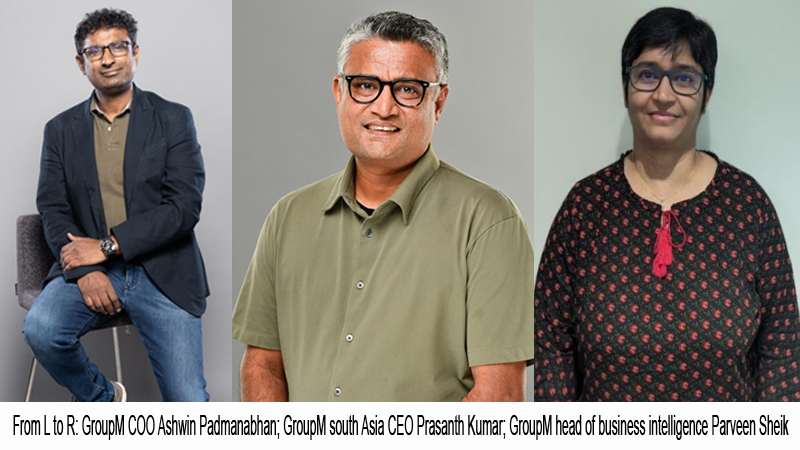
    GroupM south Asia CEO Prasanth Kumar stated, “India is at the forefront of a marketing revolution driven by AI and data privacy. As global ad spend surpasses $1 trillion, India emerges as a top 4 growth market, with digital now accounting for over 60 per cent of ad spend. With a shift to personalised engagement, commerce-driven marketing, and responsible innovation, mixed reality and immersive tech fuel experiential content. While TV remains vital, AI agents are transforming customer interactions, and emerging formats like programmatic CTV and AI-driven retail media are redefining brand-audience connections. All of this positions India for unprecedented innovation and impact in the modern marketing era.”

    TV and digital together are the powerhouses of India’s ad industry, contributing a colossal 86 per cent of total ad spend. Streaming TV is no longer an afterthought either, now making up 12.6 per cent of total TV ad revenue.

    “India’s advertising ecosystem is being reshaped by digital dominance and shifting consumer behaviours,” said GroupM COO Ashwin Padmanabhan. “Key sectors like SMEs, real estate, education, BFSI, and tech/telco—contributing 60 per cent of total advertising—are set to grow at around 10 per cent, further accelerating market expansion. Additionally, rising investments from EVs, fintech, and gaming are fuelling the market’s momentum.”

    Despite economic fluctuations across the globe, India’s GDP is projected to expand by 6.5 per cent in 2025, keeping its advertising sector resilient and strong. GroupM head of business intelligence Parveen Sheik highlighted, “With India’s GDP projected to grow by 6.5 per cent in 2025, its advertising market remains strong, ranking 9th globally. Digital ad spend is now close to Rs 1 lakh crore, driven by AI, commerce, retail media, and hyper-personalisation marketing. As the economy grows, brands must embrace agility, data intelligence, and sustainable strategies to maximise impact in this dynamic landscape.”

    Trends shaping 2025: What’s hot in advertising?

    GroupM’s TYNY report reveals a host of transformative trends set to redefine India’s advertising scene in 2025. Here’s what brands should keep an eye on:

    ●   AI agents take over: Marketing campaigns are being revolutionised with AI-driven customer interactions.

    ●   Immersive experiences explode: Mixed reality, immersive tech, and smartphones are fuelling India’s surge in experiential content.

    ●   Privacy takes centre stage: Data clean rooms are shaping India’s privacy-first marketing landscape.

    ●   Retail media booms: Omnichannel strategies are redefining India’s e-commerce future.

    ●   Quick commerce accelerates: The e-commerce sector is shifting gears with lightning-fast commerce solutions.

    ●   Generative AI rules search: Traditional search and SEO are evolving as AI takes the lead.

    ●   AI influencers rise: Forget traditional celebrities; AI-driven brand storytelling is taking centre stage.

    ●   Chief prompt officers arrive: India’s content marketers are leading a global transformation in AI-driven campaigns.

    ●   CTV goes big: Streaming TV’s rise is ushering in an era of hyper-personalisation and programmatic ads.

    ●   Data privacy & AI converge: New integrated measurement frameworks are addressing fragmentation and privacy concerns.

    With AI shaping every facet of marketing, India’s advertising industry is on an unstoppable trajectory—like a viral ad campaign that refuses to be skipped. Brands that embrace this digital-first, AI-powered landscape will thrive, riding the Rs 1.64 trillion wave of opportunity. Those that don’t? Well, they’ll be the advertising equivalent of a banner ad—ignored, blocked, and eventually forgotten. 

  • How to Track the Performance of Your ULIP Over Time?

    How to Track the Performance of Your ULIP Over Time?

    If you have invested in a ULIP scheme (or are planning to do so), you might have had a few nagging concerns! They could be, “What’s my risk appetite?” or “How do I track my ULIP over time?” Getting the answers to these questions will ease your curiosity and put your mind at rest before taking action.

    Remember that childhood lesson you learned – “Look before you leap.” It wasn’t just for fun; it’s good advice to avoid confusion and surprises later! To save yourself from the discomfort of an unclear ULIP scheme, you need to know how to track and manage it to avoid any mess.

    This post will help you do just that – guide you through the steps of tracking and managing your ULIP efficiently so that you can leap with confidence!

    What to Keep in Mind Before Selecting a ULIP Scheme?

    You must keep some important factors in mind before you choose the right ULIP scheme:

    Consideration

    Details

    1. Understand Your Financial Goals Define your financial goal (retirement, children’s education, wealth accumulation) to select the right investment strategy and life cover.
    2. Choose the Right Fund Equity Funds: Higher growth potential but higher risk.     
    Debt Funds: Safer, stable returns, ideal for conservative investors.     
    Choose based on your risk appetite and goal.
    3. Select Life Insurance Coverage Choose a life cover that’s sufficient to meet your family’s financial needs in case of unforeseen events.
    4. Lock-in Period ULIPs have a 5-year lock-in period. Stay invested for longer to benefit from compounding returns. Surrendering early may lead to penalties.
    5. Stay Updated on Market Trends Regularly monitor market trends to adjust your investment strategy and optimise returns by reallocating funds as needed.
    6. Be Aware of Charges

    Understand the charges involved:

    1. Mortality/Morbidity Charges
    2. Policy Administration Charges
    3. Fund Management Charges
    4. Premium Allocation Charges
    7. Choose a Suitable Payment Option
    1. Single Premium: One-time payment.
    2. Limited Premium: Limited number of years.
    3. Regular Premium: Ongoing payments. Choose based on your financial situation.
    8. Fund Switching Flexibility ULIPs allow you to switch funds (equity, debt, hybrid) to optimise returns. Understand the cost of switching and free switches, and calculate fund performance before switching.

    Know How to Track Your ULIP Over Time

    Let’s now learn the simple methods of tracking the performance of your ULIP. This way, you stay on the same page regarding your investment and plan your financial goals accordingly. Here below are the key steps you need to keep practising:

    1.  Calculate the Net Asset Value (NAV)                
    The first thing is to calculate ULIP’s NAV and compare it with the initial NAV. This will give you an idea of the absolute return value of your investment.

    2.  Use an ULIP Calculator                
    A trustworthy online ULIP calculator can help you to track your policy’s performance easily. You need to enter your premiums and the duration for which they are paid, along with some other details.

    3.  Monitor Periodic Statements                
    Mostly, the insurance companies provide regular statements that have the details of your ULIP’s fund value, NAV, etc. You need to thoroughly review them in order to remain updated on how your investment plan is performing.

    4.  Evaluate Fund Performance                
    Closely assess the performance of the specific funds in which your ULIP usually invests. Examining their past growth and risk variables throughout different periods in time is worthwhile.

    5.  Compare with Benchmark Indices                
    Benchmark indices like NIFTY or Sensex are useful for you to compare with your ULIP’s returns. This enables you to assess the performance of your funds in relation to market trends.

    6.  Understand the Charges                
    ULIPs carry a number of costs, including policy administration, fund management, and premium allocation. Identify these deductions and what effect they have on your entire returns.

    7.  Track via Online Portals                
    Numerous insurance providers provide online portals with up-to-date information on the performance of your ULIP. You may access fund valuations, transaction histories, and other crucial information through their websites.

    8.  Seek Expert Advice                
    In case you have any trouble evaluating the success of your ULIP, you can speak with insurance agents or financial specialists. They can provide insightful information on fund selection, market movements, and modifying your plan in accordance with your objectives.

    9.  Reassess Your Goals Periodically                
    Review your risk tolerance and financial objectives on a regular basis. In the context of such things, you might wish to change funds or modify the amount of your premium so it fits your changing goals.

    Summing Up

    So, now you’re all set with the know-how of choosing the right ULIP scheme and tracking its performance. Take the right approach to be able to leap with confidence and watch your investment’s impressive growth. Invest in peace!

    FAQs on ULIP Scheme Tracking

    1.  How to check ULIP return?                
    You can check the ULIP return by doing calculations based on the Net Asset Value of the fund. The Net Asset Value is easily calculated by dividing the total number of units held by investors by the value of the fund’s assets, removing its liabilities.

    2.  Is ULIP better than FD?                
    Indeed, ULIPs offer better investment opportunities than FDs. They offer you life insurance and guarantee the security of your funds. Also, they provide you with the opportunity to profit from investments. They are among the top spots to invest in because of their adaptable nature.

    3.  What is a ULIP calculator?                
    An insurance seeker can use this customised online tool (ULIP calculator) to compare various ULIPs. It helps them determine the maturity amount based on the amount they spend over a selected time period.

  • Reliance eyes sports drinks disruption with Rs 10 Spinner

    Reliance eyes sports drinks disruption with Rs 10 Spinner

    MUMBAI: It’s looking at pumping up a rather placid Indian  sports hydration drink market which has not seen much innovation from major players who have  gotten used to selling bottled refreshments at high sticker prices.  

    Reliance Consumer Products is, like in the past, using price and packaging as points to gain consumers’ attention and possibly upset the existing economics that multinationals have put in place for their production pipelines over the decades that they have been present in India and serving sports hydration drinks.  

    Spinner the  Reliance offering is priced at Rs 10 for 150 ml, making it much more affordable than established players like  Pepsico’s Gatorade and Coca-Cola’s Powerade which retail at Rs 50 and above  for 500 ml. Decathlon’s sports drink Aptonia costs Rs 99 for a 400 ml bottle, though it is available at Rs 69 on the portal.

    Co-created with cricket legend Muttiah Muralitharan, Spinner is be available in lemon, orange and nitro blue flavours. The company aims to create a Rs 83,000 crore (US$1 billion) sports beverage category in India within three years.

    The launch follows Reliance’s successful disruption of the sparkling beverages market with Campa, which gained 10 per cent market share in some states within two years. The company has partnered with five IPL teams including Mumbai Indians and Gujarat Titans to boost brand visibility. 

    “We’ve created an affordable hydration solution for everyone,” said Ketan Mody, chief operating officer at Reliance Consumer. The launch comes after the company’s recent entry into energy drinks with RasKik Gluco Energy, also priced at Rs 10.

    600 ml of Spinner -four packs of 150 ml each –  will cost  Rs 40, which is a substantial hair cut over the long-in-existence  price point that the big two have been commanding in the market. A price war is imminent with packaging variants  and pricing options being forced upon  Powerade and Gatorade.

    Should the consumer celebrate?