Category: MAM

  • Agilitas snags ex-Bumble director Samarpita Samaddar for comms lead

    Agilitas snags ex-Bumble director Samarpita Samaddar for comms lead

    MUMBAI: Agilitas is making bold moves, and this time, it’s off the track. India’s fastest-growing, end-to-end futuristic sportswear company has roped in Samarpita Samaddar as its communications lead, ensuring the brand sprints ahead in storytelling, reputation, and PR-led campaigns.

    With a stellar track record, Samaddar is no stranger to crafting narratives that resonate. As the former communications director, India and southeast Asia at Bumble Inc., she was the force behind the women-first dating app’s award-winning campaigns, leading its communication strategies and serving as its official spokesperson in India for nearly four years. If Bumble made headlines, chances are, she had a hand in it.

    But her expertise goes beyond swiping right. With 14 years of experience under her belt, Samaddar has built aspirational brands across consumer technology, entertainment, arts, lifestyle, and sports. Before diving into the world of dating apps, she shaped India’s film industry, helping establish powerhouse studios such as Zee Studios and Eros International. Her portfolio boasts over 40 film campaigns, including blockbusters like Bajirao Mastani, Newton, Aligarh, Dhadak, Ki & Ka, and Kesari.

    Now, at Agilitas, she steps into a world where performance meets innovation—this time, in sportswear. Her challenge? To drive brand and corporate communications while ensuring Agilitas makes as much noise in the media as it does in the athletic arena.

    Sharing her excitement on LinkedIn, Samaddar stated, “Super excited to share that I’ll be leading communications strategies at Agilitas in my new role! Building a pathbreaking journey for and telling the story of India’s fastest growing end-to-end, agile, futuristic, consumer-focused sportswear company is a rare opportunity, and I’m all geared up to go! I’m thrilled to help revolutionise India’s sports, fitness and fashion landscape, working closely with visionaries and an incredibly talented team. Here’s to making moves to change how people look and feel as they move!”

    From Hindi cinema to Bumble and now to bold new beginnings in sportswear, Samaddar’s journey proves that storytelling has no boundaries—only new arenas waiting to be conquered.

  • Vikram Goel appointed chief business officer at Mahindra Lifespaces

    Vikram Goel appointed chief business officer at Mahindra Lifespaces

    MUMBAI: Vikram Goel has been appointed chief business officer at Mahindra Lifespace Developers Ltd, the company announced yesterday.

    Goel joins the real estate arm of the Mahindra group after nearly two years at HDFC Bank, where he served as senior vice president for realty business finance. He will focus on integrated cities and industrial clusters in his new role at the Mumbai-based developer.

    With over two decades of experience in the property sector, Goel previously held key positions at HDFC Limited as head of the special situations group for construction finance. His career includes a stint as chief executive of Quikr Realty Ltd and an eight-year tenure at HDFC Realty, where he rose to become CEO.

    Goel also brings international experience, having previously managed HDFC’s mortgage business across nine locations in the Middle East, including the UAE, Qatar, Oman, Kuwait and Saudi Arabia.

    The appointment comes as Mahindra Lifespaces continues to strengthen its position in the industrial real estate market.

  • Surbhi Jain Joins Cred as public relations specialist

    Surbhi Jain Joins Cred as public relations specialist

    MUMBAI:  Surbhi Jain has been appointed public relations specialist at Cred. Jain joins the financial technology firm after more than two years at CoinSwitch, where she most recently served as senior manager, public relations.

    In her first week at Cred, Jain praised the organisation’s commitment to its values, particularly highlighting “radical candour” as a core principle driving productive disagreement and stronger outcomes.

    With extensive experience in technology communications, Jain previously held roles at Unacademy, The PRactice, The Mavericks and H+K Strategies India. She brings expertise in stakeholder management, strategic planning and content development to her new position.

    This appointment comes as Cred continues to strengthen its corporate communications team amid ongoing expansion in the Indian fintech sector.

  • Mother Dairy creams off victory in cola campaign clash

    Mother Dairy creams off victory in cola campaign clash

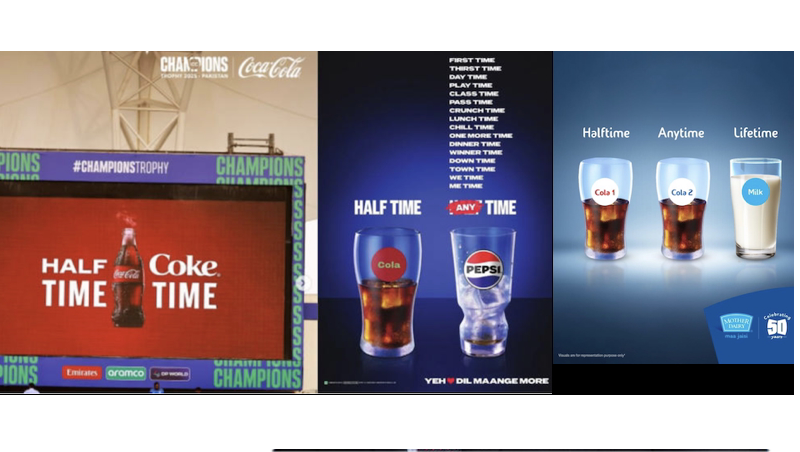
    MUMBAI: As Pepsi and Coca-Cola reignite their decades-long fizzy feud ahead of the the IPL 2025 and the coming blazing summer, dairy giant Mother Dairy has quietly churned up a storm by pouring itself into the beverage battle with an utterly brilliant repartee campaign.

    The latest skirmish began when Coca-Cola launched its nostalgic “Half Time, Coke Time” campaign, encouraging cricket fans to reach for the red can during match intervals. Pepsi quickly fizzed back, rebranding the Times of India as the Any Times of India with its “Anytime is Pepsi Time” response – a strategic play reminiscent of their legendary 1996 “Nothing Official About It” campaign that outflanked Coca-Cola’s official World Cup sponsorship.

    Pepsi’s effervescent retort listed life’s precious moments – “first time, thirst time, play time, crunch time, winner time, we time, me time” – suggesting their blue brand transcends scheduled refreshment, sparking a social media frenzy with fans bubbling over about the clever wordplay.

    Just as the carbonated competitors were locked in their temporal tussle over “half time” versus “anytime,” Mother Dairy skimmed past the conflict with a masterful third-way strategy, unveiling its “Not Just a Drink, but a Lifetime Companion” advertisement. The dairy disruptor effectively curdled both rivals’ messaging by positioning milk as the true timeless beverage.

    “Coke claimed half time, Pepsi countered with anytime, but Mother Dairy has completely changed the game with lifetime,” notes a marketing analyst. “It’s like watching two soda brands argue over when you should drink them, while Mother Dairy calmly points out what you should be drinking all along.”

    Industry experts suggest this calcium-rich counterpunch represents perfect timing from Mother Dairy, which has milked the opportunity to remind health-conscious consumers there’s a nutritionally superior alternative.
    “This isn’t just about stealing attention; it’s about changing the conversation entirely,” explains a  consumer behavior specialist. “While the cola giants debate between ‘half time’ and ‘anytime,’ Mother Dairy has moved the goalposts to ‘lifetime’—effectively highlighting that their product doesn’t just refresh momentarily but nourishes permanently.”

    In this high-stakes game of marketing chess, Mother Dairy appears to have made a strategic moo-ve that has left the cola kings decidedly cheesed off and scrambling to respond to this unexpected dairy disruption in India’s competitive beverage market.

  • PepsiCo’s India ambitions: fizzing with growth potential

    PepsiCo’s India ambitions: fizzing with growth potential

    MUMBAI: In the sweltering heat of India’s bustling metropolises, where street vendors hawk their wares amid a cacophony of honking horns and animated chatter, PepsiCo has spotted an oasis of opportunity. The beverage and snack behemoth aims to double its revenue in this vibrant South Asian nation over the next five years, viewing India as a critical “key anchor market” where it’s pouring investments like a perfectly fizzy drink into a chilled glass.

    PepsiCo India & South Asia CEO Jagrut Kotecha,  with eyes sparkling like carbonated bubbles rising to the surface, revealed that India will serve as the “engine of growth” for PepsiCo’s global revenue ambitions. Standing tall among the company’s top three markets globally, India’s performance has been anything but flat, serving up double-digit growth that’s as refreshing as a cold sip on a blistering summer day.

    Lays“We believe India will be the engine of growth for PepsiCo to drive the top line,” Kotecha explained, gesturing expressively during an exclusive interview with PTI. “Our per capita consumption in India is still very low, not only for beverages and food, but we would expect one of PepsiCo’s fastest-growing economies to change that,” he added, his optimism as effervescent as a freshly opened bottle of cola.

    The company hasn’t been crisping about when it comes to investments. PepsiCo has already established greenfield plants in the northern state of Uttar Pradesh, where golden wheat fields stretch to the horizon, and is preparing to pop open a new facility in Assam, nestled among lush tea plantations in India’s verdant northeast, by year’s end.

    “We are not going to be investment shy,” Kotecha declared, with the confidence of someone holding the winning hand in a high-stakes game. “We’re going to be investing forward to drive that growth because it’s there for us to capture.”
     

    Pepsi Beverages

    The numbers tell a tasty tale: PepsiCo has poured close to Rs 3,500-4,000 crore into the Indian market over the past three years—an investment as substantial as a fully loaded potato crisp.

    The American giant has crafted a strategy as carefully layered as a perfectly constructed sandwich. It has divided the kaleidoscopic Indian market into nine distinct clusters based on taste preferences, demonstrating an understanding that India’s palate is as diverse as its colourful festivals and traditions.

    PepsiCo operates through instantly recognisable brands that have become as familiar to Indians as the sight of cricket matches in neighbourhood parks—Kurkure with its distinctive crunch, Lay’s with its perfect crisp, thoughtful Quaker, and zesty Doritos dominate its food segment, which contributed a hearty 80 per cent to PepsiCo India’s revenue in 2023.

    The remaining 20 per cent bubbled up from beverages, a segment handled by bottling partner Varun Beverages Ltd (VBL), which operates a network of 41 plants scattered across the country like stars in the night sky. VBL isn’t sipping slowly either—they’ve increased capacity by a quarter this year alone.

    Kurkure

    Its beverages brand include carbonated fare such as  Mountain Dew, 7up, Pepsi, and energy drink Sting and sports beverages Gatorade, while in juices it has Tropicana and Slice brands .PepsiCo operates with Kurkure, Lays, Quaker and Doritos in the snacks category. 

    When questioned about new competitor Reliance’s Campa Cola, which has been creating ripples in the market with aggressive pricing and distributor margins, Kotecha maintained the composed demeanour of a drink that hasn’t lost its fizz.

    “It’s always good to have competition. Competition only helps to grow the category,” he remarked with the wisdom of a seasoned market player. “Even before Pepsi and Coke were there, there were a lot of local, regional players. Now Campa has also come with a lot of flair and expense. So our belief is the category will then grow and consumption will grow.”

    This optimistic outlook comes even as India’s per capita consumption remains “far less” than neighbouring Pakistan—a fact that doesn’t seem to dilute Kotecha’s enthusiasm.

    The vision for PepsiCo India is as clear as a glass of Mountain Dew: to achieve $2 billion (around Rs 17,000 crore) in revenue in the coming years. Having reported over Rs 5,950 crore in 2023 (for nine months due to a change in fiscal year), and maintaining double-digit growth since then, PepsiCo appears to be on a trajectory as steady as a perfectly balanced can of soda.

    As the sun sets over the vast Indian landscape, painting the sky in hues of orange and purple, PepsiCo continues to bet big on a country where every street corner could potentially house a new consumer ready to reach for a cold drink or a packet of crisps. In this land of a billion dreams, PepsiCo is hoping its growth story will be nothing short of effervescent.

  • ICC & Unilever partner to push women’s cricket

    ICC & Unilever partner to push women’s cricket

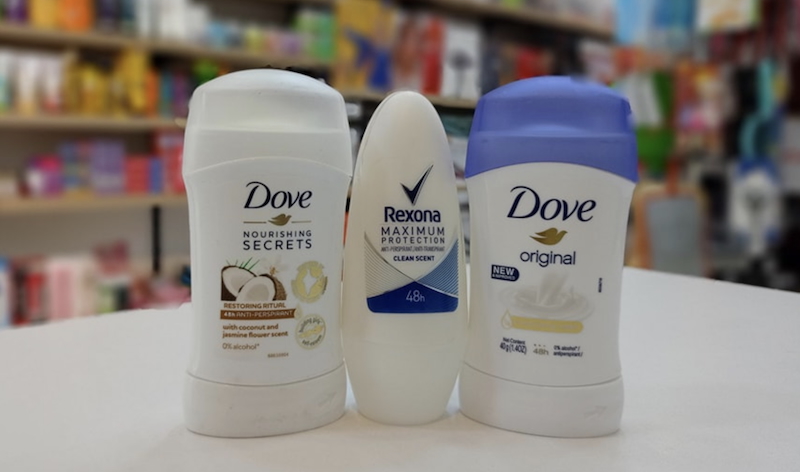
    MUMBAI: It’s got a lever into the International Cricket Council (ICC) – the apex body of the cricketing world. FMCG behemoth Unilever  has announced a  two-year partnership for two of its personal care brands, Rexona and Dove,  with the cricket body for women’s cricket that will run until the end of 2027. 

    The alliance was unveiled during a vibrant criiio cricket festival in Dubai on International Women’s Day, featuring 100 participating girls. This strategic collaboration brings together two influential organisations committed to accelerating the growth of women’s cricket globally.

    The partnership comes at a crucial time when women’s cricket is experiencing unprecedented growth. It will span several major tournaments, beginning with the ICC Women’s Cricket World Cup 2025 in India and including Women’s T20 World Cups, U19 Women’s T20 World Cups, and the inaugural Women’s Champions Trophy in 2027.

    ICC chairman  Jay Shah described the deal as “a pivotal moment for women’s cricket” that will “empower female cricketers, inspire future generations, and contribute significantly to the continued growth and success of women’s cricket globally.”

    ICC chief commercial officer  Anurag Dahiya highlighted the significance of pursuing partnerships specifically focused on the women’s game, noting that this deal “not only highlights the growing commercial appeal of women’s cricket but also underlines ICC’s position as one of the pioneers of the women’s sport movement.”
    Rexona, as the world’s leading deodorant brand with a mission to inspire movement and confidence, will implement various initiatives including a flag bearers programme and digital experiences during events. The brand will also support participation through women’s criiio festivals and leverage its expertise to collaborate on women’s hygiene education programmes.

    Hindustan Unilever CEO& MD Rohit Jawa  called the partnership “an exciting opportunity for Rexona to tap into a cultural moment, connect with new audiences, and importantly help drive women’s cricket further.”
    The deal was facilitated by Unilever International, the company’s global business unit focused on exploring new market opportunities.

  • Niva Bupa cracks the ‘Girl Logic’ code to empower women with health cover

    Niva Bupa cracks the ‘Girl Logic’ code to empower women with health cover

    MUMBAI: Health insurance isn’t just a policy, it’s power. And this Women’s Day, Niva Bupa Health Insurance is giving women the nudge they need with its latest campaign, health insurance ka Girl Logic. While women are breaking barriers across education, careers, and lifestyle, many still shy away from financial decision-making especially when it comes to health insurance. Niva Bupa is on a mission to change that, one smart choice at a time.

    At the heart of this campaign is entrepreneur, philanthropist, and wellness advocate Shalini Passi, who redefines ‘Girl Logic’ as the ultimate life hack for financial and health security. In her signature style, she highlights how choosing health insurance should be as instinctive as any other self-care decision because true independence starts with being prepared for the unexpected.

    Niva Bupa EVP & CMO Nimish Agrawal explained, “Women are often the primary caregivers, yet their own health and financial security take a backseat. ‘Health Insurance ka Girl Logic’ is a reminder that protecting yourself is not just about health, it’s about empowerment. Partnering with Shalini Passi brings this message to life, inspiring women to take charge of their future with confidence.”

    The campaign takes a light-hearted yet impactful approach to encourage women to prioritise their own health, instead of leaving financial decisions to the men in their lives. With engaging digital storytelling, Niva Bupa simplifies health insurance, making it relatable, accessible, and essential.

    This Women’s Day, Niva Bupa invites women to embrace their ‘Girl Logic’ because when it comes to health and finances, being in control is the smartest decision of all.
     

  • ITC empowers Women across industries with HerStory campaign

    ITC empowers Women across industries with HerStory campaign

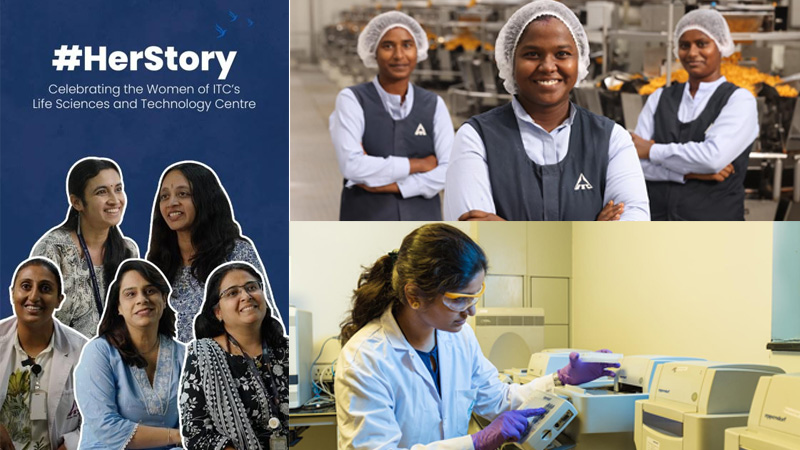
    MUMBAI: Marking International Women’s Day, ITC has launched the HerStory campaign, celebrating the vital role of women across science, agriculture, manufacturing, and entrepreneurship. This initiative underscores ITC’s commitment to gender equity by showcasing women breaking barriers across its diverse operations.

    The campaign kicks off with a video honouring women scientists at ITC’s Life Sciences and Technology Centre (LSTC) in Bengaluru, highlighting their contributions to innovation. With women making up nearly 47 per cent of LSTC’s workforce, ITC continues to challenge gender imbalances in STEM.

    ITC is also transforming shopfloors, with its Pudukkottai factory in Tamil Nadu employing 67 per cent women and the Khordha facility in Odisha operated entirely by women. These milestones reflect ITC’s efforts to increase female participation in the industrial sector.

    Beyond corporate spaces, ITC empowers women in agriculture through Itcmaars, facilitating over 1,700 Farmer Producer Organisations (FPOs), ensuring at least one female director in each, and forming 25 all-women FPOs. More than 7,500 women farmers have been supported, driving sustainable agribusinesses. Additionally, ITC’s Women-Managed Agri-Business Centres (WMABCs) have enabled over 6,000 rural women across 12 states to become entrepreneurs.

    At the grassroots, ITC’s women’s empowerment programme focuses on financial literacy, social security, entrepreneurship, and livelihood support. With over 6 million women benefiting from various initiatives including self-help groups, education, and health interventions the programme is fostering financial independence and community resilience.

    Watch the video here 
     

  • Women are smashing stereotypes-But when will the stigma croak?

    Women are smashing stereotypes-But when will the stigma croak?

    MUMBAI: Do you only appreciate God during festivals, or is the devotion an all-year affair? If faith and admiration are ingrained in us for the divine, why does it stop short when it comes to one of God’s finest creations—WOMEN? Why do we insist on sticking a ‘special’ label on just one day of the year to praise, worship, and acknowledge the achievements of women in male-dominated fields? Newsflash: women don’t magically become remarkable on 8 March and revert to invisibility the next day. Let’s retire the ceremonial fanfare and start giving credit where it’s due—every single day.

    In India, women aren’t just breaking the glass ceiling-they’re bulldosing right through it, leaving society scrambling to pick up the shards. They’re running boardrooms, leading billion-dollar empires, and rewriting the rules of success. And yet, the elephant in the room remains stubbornly unbudged: why does gender bias still loom like a ghost that refuses to be exorcised? Women in leadership are no longer the underdog story-they’re the main event. So why does recognition still feel like an annual festival rather than an everyday reality?

    Celebrating women once a year and calling it progress is like drinking one green smoothie and calling yourself a Indiqube executive director & COO Meghna Agarwalhealth guru. Indiqube executive director & COO Meghna Agarwal gets straight to the point, “Women’s economic participation is not just a social imperative but a strategic one, with the power to significantly boost India’s GDP.” And yet, despite the high-decibel conversations about equality, many women still find themselves playing a never-ending game of ‘prove yourself’ while their male counterparts get automatic upgrades.

    The numbers across industries tell an interesting story. In IT, multinational corporations (MNCs) are making strides—mentorship programs and global capability centers (GCCs) have propelled 1,100 women into global roles over five years. In marketing, women hold 60 per cent of jobs in North America and 52 per cent of CMO positions, but only 24 per cent of C-suite roles in UK SEO firms. Advertising remains stubbornly male-dominated, with men holding 71 per cent of leadership positions.

    media & entertainment

    India’s progress is a mix of wins and gaps. In media & entertainment (M&E), women hold just 12 per cent of leadership roles in top firms, down from 13 per cent last year. However, they shine on streaming platforms, occupying over 20 per cent of head-of-department roles. In advertising, women make up 40 per cent of the workforce but only 30 per cent of leadership positions-though leadership representation in India hit 36 per cent in 2025, surpassing global averages.

    Meanwhile, tech and finance continue to lag. Women hold less than a third of tech jobs and only 18-19 per cent of executive roles. In NBFCs and MFIs, women occupy just 12.5 per cent of leadership positions, proving finance still clings to its glass ceilings. Progress is real but moving at a snail’s pace.

    Aruna C. Newton

    Infosys VP, head of diversity & inclusion, ESG governance & reporting, Aruna C. Newton highlights the slow but steady march forward. “Through our flexible hybrid work model and programs like Restart with Infosys and #IamtheFuture, we continue to unleash opportunities for women to stay intentional about their careers and cement their leadership in technology,” she states. Infosys is gunning for a workforce that’s 45 per cent female by 2030, but the question remains: if businesses can adapt at the speed of light for profits, why does gender equality move at the pace of a sloth on vacation?

    The government is also throwing its hat in the ring. Supriya Shivani Wagh Lifescience Ltd. joint managing director Shivani Wagh points to the Union Budget 2025-26, which allocated Rs 4.49 lakh crore for gender-focused initiatives-a 37.5 per cent boost. “With over 14 per cent of Indian enterprises led by women, women-led entrepreneurship is on the rise,” she states. But there’s a catch. Access to the capital is still harder for women than finding a cab during peak hours. For every woman who secures funding, dozens more are stuck navigating a maze of bureaucracy and bias.

    Priya Krishnamurthy Paper policies sound great, but until the money starts flowing into real businesses, they’re just glorified wish lists.
    Tech, of course, remains one of the toughest nuts to crack. Acer India director – commercial sales, Priya Krishnamurthy gets it, “Advancing gender equality is not just a necessity but a catalyst for transformation.” 

    Translation? If the tech industry wants to stay ahead, it needs to do more than just talk a good game. Until women in STEM are as common as overpriced lattes in co-working spaces, we’re not done yet.

    The outdated belief that women lack the ‘testosterone’ to run Fortune 500 companies is about as relevant as a fax machine. Women have proven, time and again, that they can lead with both ambition and empathy-two traits that businesses desperately need. And here’s the kicker: many of the men who once doubted them now report to female bosses. And guess what? The world didn’t end. In fact, it’s thriving.

    Solitario Lab Grown Diamonds head of business & strategy Kamini Singh is all about recognising the brilliance of women. “Women are the driving force of change, shaping industries, breaking barriers, and redefining success on their own terms. This Women’s Day, we celebrate their brilliance, resilience, and unstoppable spirit. At Solitario, we believe every woman deserves to shine, not just beautifully, but powerfully, just like a diamond: strong, radiant, and timeless. Let’s Bling it!” she exclaims.

    Meanwhile, SIG Group head of market, India & Bangladesh, Vandana Tandan insists that equality needs to move beyond paper promises. “Real progress in any industry depends on recognising and valuing the unique talents of every individual. International Women’s Day provides an opportunity to reaffirm our commitment to building workplaces where equal opportunities are more than just a policy, they are a reality,” she says. In other words, let’s ditch the lip service and get down to business.

    Apollo Green Energy GM-corporate communications & digital marketing, Aanchal Sharma weighs in on the shift in leadership dynamics. “The stigma around women in leadership has not just changed. It has been challenged by women who refused to accept the notion that they did not belong. This shift has not been a single sweeping revolution but a series of quiet and persistent actions. A woman speaking up in a meeting despite being interrupted. Another negotiating her salary without apology. One balancing ambition with empathy without feeling the need to justify either. These everyday acts, multiplied across millions, have reshaped leadership.”

    She continues, “Yet, progress remains slow. Women lead only 1.6 per cent of companies listed in the Fortune India 500, despite businesses with diverse leadership teams being 25 per cent more likely to outperform their peers in profitability. The numbers tell a clear story. When women lead, companies thrive. But leadership is not just about economic success. It is about reimagining workplaces where women do not have to fight twice as hard to be heard, where ambition is not mistaken for aggression, and where success is defined by impact, not outdated expectations.”

    So, the million-dollar question: when does the stigma finally disappear? Women are already etching history-it’s society that’s dragging its feet catching up. 

    Because the future isn’t female-it’s equal. And if you’re still debating that, you’re already in the past.

     

  • Frido challenges comfort norms Women’s right to live on their terms

    Frido challenges comfort norms Women’s right to live on their terms

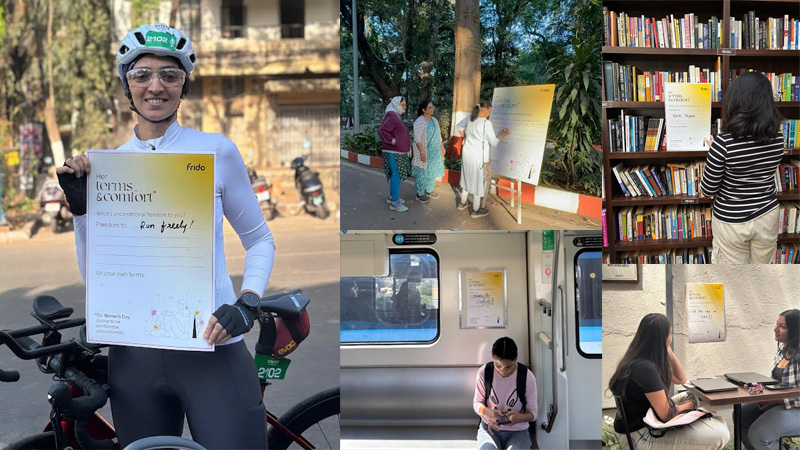
    MUMBAI: This Women’s Day, Frido is challenging the traditional notion of comfort with its bold campaign, ‘Her Terms and Comfort’. Designed to encourage women to prioritise themselves unapologetically, the campaign highlights the right to live without compromise, both at home and in public spaces.

    Frido’s exclusive comfort edition packaging for the occasion has turned into a platform for self-expression. Each package features a dedicated space where women can write what freedom means to them, with a pen included to bring their thoughts to life. Women from all walks of life, including students, professionals, and senior citizens, shared their reflections in a variety of languages including Hindi, Marathi, and English.

    For many, freedom was embodied in diverse ways—from running and feeling the wind on their face, to dancing without inhibition, reading in peace, or enjoying the solitude of solo travel. The messages spoke to a deeper truth: comfort is not just physical, but about living unapologetically and on one’s own terms.

    The campaign extends beyond product packaging, with on-ground activations in Pune, Mumbai, and Delhi. Interactive boards in libraries, cafes, and hostels allowed women to share their thoughts in everyday spaces. The conversation continues online through the hashtag Hertermsandcomfort, where women including influencers, entrepreneurs, and changemakers share their personal stories and views on what freedom and comfort mean to them.

    Frido co-founder & CEO Ganesh Sonawane stated, “Women lead with strength and resilience in all areas of life. Her Terms and Comfort is about celebrating their right to choose comfort for themselves. It’s not a luxury; it’s a necessity.”

    Co-founder & COO Arif Khan stated, “At Frido, we design products that ease everyday movement. But true comfort goes beyond physical relief it’s about choice, confidence, and the freedom to live without compromise. This Women’s Day, we’re not just offering products; we’re sparking a conversation that we hope inspires lasting change.”

    Frido’s campaign is more than just a product promotion it’s a statement. It reminds women that comfort is a right, not a privilege, and encourages them to live and express themselves freely, without compromise.