Category: MAM

  • Fast Data Connect bands together with Connect Publics to help US startups crack India’s market

    Fast Data Connect bands together with Connect Publics to help US startups crack India’s market

    MUMBAI: Launching a startup in India can sometimes feel like navigating through Mumbai traffic at rush hour: chaotic, exciting, and occasionally overwhelming. Enter Fast Data Connect (FDC) and Connect Publics, a new dream team ready to steer US startups clear of potholes and straight towards success in the Indian market. Forget GPS—this partnership promises to be the ultimate roadmap for American entrepreneurs aiming to conquer India.

    Announced on 20 March 2025 in Delhi, FDC, a US-based consulting and IT services wizard, partnered with the dynamic PR and branding agency Connect Publics. Their combined superpowers will deliver market entry strategies, crisp brand positioning, savvy public relations, and razor-sharp digital marketing, all wrapped up neatly for US startups eager to explore India’s booming economy.

    “India’s startup ecosystem is booming, and the country is making a mark on the global stage. With more international companies looking to expand here, our partnership with Connect Publics ensures that these startups have the right marketing, PR, and outreach strategies to make a successful entry into the Indian market,” said FDC CEO Mike Agar.

    Connect Publics founder & brand strategist Aviyukta Adlakha echoed the excitement, “India’s growing success in every field is attracting international businesses and entrepreneurs. This collaboration with FDC is a milestone as we help US startups launch and build a lasting presence in India, a country that offers tremendous growth opportunities with its large, diverse, and tech-savvy market.”

    Adding more fuel to the startup fire, Connect Publics co-founder Sandarbh Shrivastava commented, “As India continues to rise as a global leader in innovation, it’s becoming a top destination for entrepreneurs worldwide. Our partnership with FDC will help US startups connect with Indian audiences in a meaningful way and establish a strong foothold in this fast-growing economy.”

    Over the coming months, this collaboration plans to unleash a series of exciting startups across sectors like technology, healthcare, fintech, and consumer brands. With tailored marketing campaigns, influencer partnerships, strategic media outreach, and impactful PR initiatives, FDC and Connect Publics are set to turn startup dreams into business realities.

  • Rategain bets big, names Anurag Jain as EVP to lead growth charge in APMEA

    Rategain bets big, names Anurag Jain as EVP to lead growth charge in APMEA

    MUMBAI: In the high-speed world of travel tech, getting left behind is about as appealing as missing your connecting flight. So, Rategain Travel Technologies has strapped itself firmly into the pilot’s seat by appointing Anurag Jain as its executive vice president for the Asia Pacific, middle east, and Africa (APMEA). With Jain at the helm, Rategain’s aiming to ensure its AI-powered solutions fly higher than ever—no turbulence allowed.

    Announced on 20 March 2025, Jain’s appointment signals Rategain’s serious play to turbocharge its growth, partnerships, and market presence. Bringing more than 20 years of heavy-hitting experience, Jain previously transformed businesses at Expedia, Amazon, Johnson & Johnson, and Godrej. At Expedia, he notably drove expansion in south Asia, Indonesia, and China, helping hotels navigate digital mazes to optimise revenue streams.

    “Anurag’s extensive experience in travel, e-commerce, and market expansion makes him an invaluable addition to Rategain,” said Rategain founder & MD Bhanu Chopra. “As APMEA continues to see rapid digital adoption and evolving travel trends, his leadership will be crucial in helping our customers maximize revenue, enhance distribution, and stay ahead in a competitive market. We are pleased to welcome him to the team as we further our mission to empower travel and hospitality businesses with AI-driven solutions, achieving unparalleled growth.”

    Equally excited, Jain stated, “I am excited to join Rategain at a time when AI-driven innovation is reshaping the travel and hospitality industry. The opportunity to work with industry leaders and bring cutting-edge solutions to hotels, airlines, and OTAs across APMEA is incredibly exciting. I look forward to driving growth, building strategic partnerships, and delivering impact in one of the most dynamic travel markets in the world.”

    An enthusiastic traveller himself, Jain enjoys exploring new destinations and is passionate about digital transformation—further proving he’s the right man to pilot Rategain’s next big leap. With Jain onboard, the journey ahead for Rategain promises to be as smooth as a first-class flight, equipped with all the latest tech upgrades.

  • Dhruv Dhawan checks in at The Trade Desk to power adtech growth in India

    Dhruv Dhawan checks in at The Trade Desk to power adtech growth in India

    MUMBAI: In a move that’s set to make waves in the adtech space, Dhruv Dhawan is joining The Trade Desk as vice president for revenue. With over two decades of expertise spanning communications, digital transformation, and consulting, Dhawan’s appointment signals a strategic push to strengthen The Trade Desk’s position in the Indian market.

    From Google to Disney+ Hotstar, Airtel to Accenture, Dhawan’s career has been a masterclass in building brands, driving sales, and shaping digital-first strategies. At Google, where he spent nearly a decade, Dhawan worked across multiple industries including telecom, financial services, FMCG, automotive, e-commerce, and retail helping businesses leverage digital tools for both online and offline growth. His most recent role as head of ads at Disney+ Hotstar saw him navigating the rapidly evolving streaming landscape, further solidifying his expertise in media and advertising.

    Beyond his industry credentials, Dhawan is also known for his passion for people development, having spearheaded sales training initiatives and workplace culture programmes focused on psychological safety and team dependability. His diverse skill set spanning product management, marketing, and consulting makes him a formidable addition to The Trade Desk’s leadership team.

    With programmatic advertising in India witnessing unprecedented growth, Dhawan’s appointment comes at a pivotal time. His vast experience in ad sales, digital evangelism, and data-driven marketing will be instrumental in driving revenue growth, forging new partnerships, and further establishing The Trade Desk as a leader in the adtech ecosystem.

  • Adobe teams up with AWS and Amazon Ads to boost customer experiences

    Adobe teams up with AWS and Amazon Ads to boost customer experiences

    MUMBAI:  Adobe has announced a strategic partnership with Amazon Web Services (AWS) to create new offerings that help marketing and creative teams deliver better customer experiences more efficiently. The collaboration, revealed at Adobe Summit, combines Adobe’s customer experience expertise with AWS’s cloud capabilities.

    Building on Adobe experience platform’s availability on AWS, the partnership introduces new integrations with AWS’s generative AI services, Amazon connect and Amazon ads. These tools will enable businesses to create more meaningful customer interactions while leveraging AWS’s security and global infrastructure.

    “The growing digital economy demands more engaging and personalised content to drive customer loyalty,” said Adobe experience cloud vice president Sundeep Parsa, “These new integrations will help businesses deliver impactful customer experiences using deep data insights, while maintaining high privacy and security standards.”

    The collaboration will bring several new offerings to market:

    1    Enhanced omnichannel experiences: Integration between Adobe experience platform and Amazon connect will provide comprehensive visibility into customer journeys while protecting privacy. This combines Adobe’s customer profiles with Amazon connect’s customer care insights.

    2    AI-driven interactions: Using Amazon Q in connect alongside Adobe’s AI assistant and AI agents, businesses can deploy personalised experiences based on unified customer data, enabling more contextual interactions across touchpoints.

    3    Marketing performance boost: Adobe real-time customer data platform collaboration will integrate with Amazon marketing cloud, allowing marketers to combine customer data with performance insights from Amazon Ads to measure segment performance and improve ad spend return.

    4    Streamlined creative workflows: Direct integration between Amazon ads and Adobe creative cloud applications will help businesses create and publish high-quality ads more efficiently. Creative teams will access professional templates for Amazon ads within Adobe Photoshop and Adobe Express.

    Applications powered by Adobe experience platform will also be available in AWS marketplace, making it easier to find, test and deploy solutions.

  • Liqvd Asia swallows Adlift in digital marketing power play

    Liqvd Asia swallows Adlift in digital marketing power play

    MUMBAI: Two digital marketing outfits have decided that in the cutthroat world of online advertising, it’s better to bed down together than battle it out alone. Liqvd Asia, a digital-first advertising agency, has snapped up Adlift, a performance marketing and SEO specialist, in a move that promises to shake up the industry’s established order.

    The tie-up, announced on 20 March, creates a full-service digital powerhouse that marries Liqvd Asia’s creative chops with Adlift’s data-driven prowess. The combined entity aims to offer clients the holy grail of marketing: campaigns that not only look pretty but actually deliver the goods.

    Founded in 2013, Liqvd Asia has made its name flogging digital branding and content campaigns. By acquiring Adlift, which has been pushing data-driven performance marketing since 2009, the agency is clearly gunning for a bigger slice of the digital marketing pie.

    Liqvd Asia founder &  managing director Arnab Mitra couldn’t resist a bit of corporate speak when explaining the deal: “This acquisition marks a natural evolution in our journey to create an end-to-end marketing powerhouse that blends storytelling with performance at scale.” Strip away the jargon and the message is clear: they want to be the biggest and the best.

    Adlift co-founder &  chief executive Prashant Puri was equally bullish about the union: “This acquisition is not just about expansion—it’s about setting new benchmarks in digital marketing innovation.” Translation: we’re coming for everyone else’s lunch.

    With Adlift’s team staying put under a joint leadership framework, the merger should avoid the usual corporate bedlam that follows such deals. The companies are betting that their combined financial muscle will allow them to splash the cash on fancy AI platforms and automation technologies.

    Liqvd Asia, which already has studios in Mumbai, Gurgaon, Bengaluru and Kolkata, has made no secret of its global ambitions. The firm has its sights set on the US, Gulf states, Asia-Pacific and Europe, with Adlift’s international connections providing a ready-made launchpad.

    Adlift brings to the table a team of over 200 digital experts and relationships with more than 250 blue-chip clients, including Walmart, Shopify and HDFC Bank. The agency has built its reputation on the back of search engine optimisation, paid media and content marketing—all areas where Liqvd Asia was looking to beef up its offerings.

    If the two agencies can successfully merge their strengths without stepping on each other’s toes, they might just create the digital marketing juggernaut they’re promising. But as many a corporate marriage has shown, the path from honeymoon to happily ever after is often strewn with unexpected obstacles.

  • Breaking the ad code ASCI Global Adda 2025 sparks bold brand conversations

    Breaking the ad code ASCI Global Adda 2025 sparks bold brand conversations

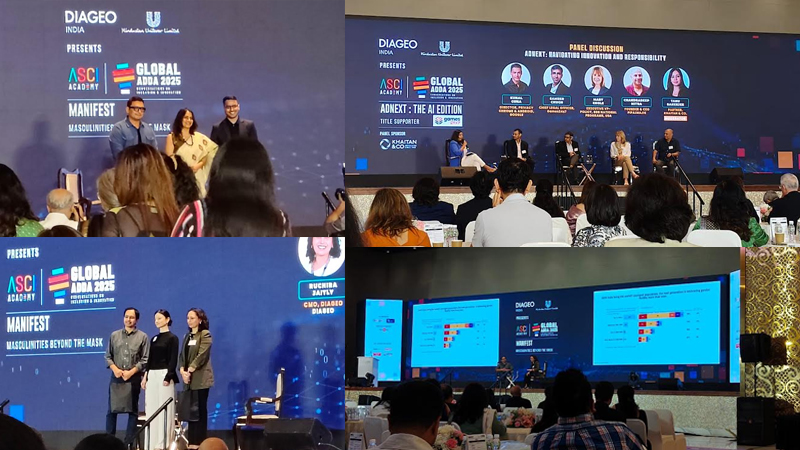
    MUMBAI: Advertising isn’t just about selling products anymore, it’s about shaping the world we live in. That was the resounding message at Asci Global Adda 2025, where industry leaders, marketing pioneers, and policy experts gathered to discuss the power of advertising to drive meaningful change. From redefining masculinity in Indian media to harnessing AI’s potential responsibly, the event sparked thought-provoking discussions on the evolving role of brands in an increasingly complex digital world.

    Masculinity in advertising is getting a reality check, The event kicked off with a powerful discussion on gender representation in Indian advertising with the unveiling of Manifest: Masculinities Beyond the Mask. The report, presented by Arvind Mohan of Religious Brands, explored how masculinity has evolved in Indian media and the advertising industry’s role in shaping it.

    Taking the conversation further, renowned mythologist Devdutt Pattanaik analysed how traditional archetypes of masculinity rooted in mythology and historical narratives continue to influence modern media. He argued that while Indian advertising has made progress in challenging outdated gender roles, the industry still has a long way to go in truly redefining masculinity for contemporary audiences.

    A panel discussion followed, featuring actor Abhishek Banerjee, filmmaker Paromita Vohra, and Unilever’s Anila Vinayak. They debated whether advertising should simply reflect societal changes or actively drive progress. With Indian cinema still dominated by hyper-masculine narratives (like Kabir Singh and Animal), the advertising industry faces a critical choice, should it play it safe or push for progressive storytelling?

    The consensus? Stereotypes might sell, but inclusivity builds long-term brand loyalty. As the panelists pointed out, modern audiences—especially Gen Z—are demanding more authentic, diverse, and inclusive portrayals of gender in advertising.

    How brands Can Drive Real Change? Well, brands have immense power in shaping culture, but inclusivity in advertising must go beyond token gestures. That was the key takeaway from the Insights & Action: Brand Case Studies session, featuring Diageo India’s Ruchira Jaitly and L&K Saatchi & Saatchi’s Kartik Smetacek.

    Jaitly highlighted Diageo’s commitment to unstereotyping, showcasing campaigns that do more than just tick diversity checkboxes. For example, Royal Challenge’s gender-equitable jersey campaign broke stereotypes in sports marketing, while Johnnie Walker’s ‘Keep Walking’ campaign told stories of resilience and reinvention that resonated across diverse identities.

    “We’re not just talking about representation,” Jaitly stated. “It’s about depth, agency, and authentic storytelling—because consumers can see through empty gestures.”

    Joining the discussion, Bajaj Auto’s Sumeet Narang and Ogilvy’s Sukesh Nayak explored how brands can strike the right balance between mass appeal and progressive storytelling. In a country where traditional masculinity still dominates pop culture, brands must navigate the fine line between commercial success and meaningful representation.

    The discussion underscored that progressive storytelling isn’t just ethical, it’s profitable. Diageo’s research with Kantar and Asci revealed that ads promoting inclusivity drive higher brand distinctiveness, purchase intent, and long-term sales. However, the challenge lies in ensuring authenticity, as performative inclusivity can backfire and damage a brand’s credibility.

    As the day progressed, the spotlight turned to AdNext: The AI Edition, a deep dive into how artificial intelligence is reshaping the advertising industry.

    Kunal Guha (Google) set the tone, describing AI as both “overhyped and underappreciated”. He compared it to having “the world’s greatest polymath in your pocket”, a tool that enhances human creativity, decision-making, and efficiency at an unprecedented speed.

    But with great power comes great responsibility. Sameer Chugh (Games24x7) raised concerns about AI-driven hyper-personalisation, warning that while AI can enhance consumer experiences, it also poses risks from privacy violations to manipulative targeting.

    Meanwhile, Mary K Engle (BBB National Programs, US) highlighted the urgent need for self-regulation in AI-driven advertising, arguing that proactive industry standards must be established before government intervention becomes inevitable.

    One of the most heated debates of the day revolved around whether AI-generated content should be labelled.

    While panelists agreed that AI-generated content in high-risk industries (like healthcare and finance) should be clearly labelled, they cautioned against over-labeling in advertising. Excessive disclaimers could create consumer fatigue, making audiences less likely to trust AI-generated content altogether.

    AI is set to contribute nearly $1 trillion to India’s digital economy, but for India to lead globally, panelists emphasised the need for strong collaboration between businesses, regulators, and policymakers.

    To truly harness AI’s potential, the advertising industry must prioritise the development of ethical AI frameworks that strike a balance between innovation and responsibility, ensuring that technological advancements do not come at the cost of consumer trust. Additionally, AI literacy among consumers must be actively promoted, helping them understand how AI-driven content and recommendations work, thereby fostering greater transparency and trust in digital interactions. Equally important is the commitment to inclusive, unbiased AI-driven advertising, ensuring that automated decision-making does not reinforce stereotypes or exclude marginalised voices. By integrating these principles, the industry can leverage AI’s transformative power while maintaining ethical integrity and consumer confidence.  

    Whether it was Diageo’s commitment to breaking gender stereotypes in advertising or the transformative role of AI in reshaping marketing strategies, Asci Global Adda 2025 made one resounding point, brands are no longer just selling products; they are actively shaping the world we live in. The discussions at the event underscored how companies must move beyond traditional storytelling and embrace purpose-driven marketing to connect meaningfully with modern consumers. With AI becoming the driving force behind hyper-personalised advertising, ethical considerations around transparency, bias, and consumer trust took centre stage. Industry leaders agreed that AI is as disruptive as the internet was in its early days, bringing both unprecedented opportunities and complex challenges.

    As Tanu Banerjee of Khaitan & Co. aptly put it, “AI is the new internet, we must decide now how we want it to shape our lives.”

    This powerful statement highlighted the urgency for businesses to take proactive steps in defining ethical AI frameworks, ensuring inclusive narratives, and fostering consumer education to build trust in AI-powered advertising. With marketing standing at a pivotal crossroads, the question remains: will brands take charge and lead this transformation, or risk being left behind? Judging by the insights and commitments made at Asci Global Adda 2025, the industry is already racing towards a future where innovation and responsibility must go hand in hand.  

  • Asci AdNext Report: Indian Advertising Industry Embraces AI

    Asci AdNext Report: Indian Advertising Industry Embraces AI

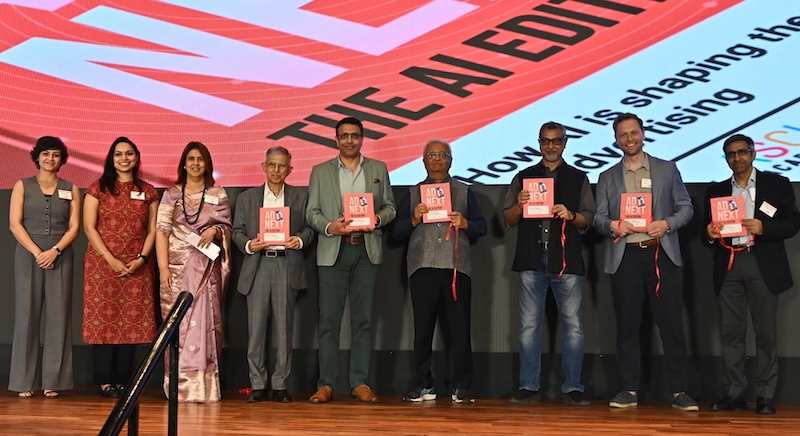
    MUMBAI: At a glitzy Mumbai summit today, India’s advertising watchdog unveiled its latest deep dive into how AI is revolutionising the way brands seduce consumers. The Advertising Standards Council of India (Asci) dropped its AdNext: The AI Edition  report during the ICAS Global Dialogues Summit, delivering a sweeping analysis of artificial intelligence’s growing footprint in the advertising landscape.

    The report—crafted by design tech outfit Parallel HQ with backing from Google and Games 24X7—stitches together insights from over 27 industry heavyweights, including brand gurus, agency wizards, legal eagles and tech innovators.

    “AI presents an unprecedented opportunity for the advertising industry to connect with consumers in more meaningful ways,” said ASCI chief executive and secretary general  Manisha Kapoor.”However, this power must be wielded responsibly.”

    The findings paint a picture of an industry caught in a whirlwind romance with AI.  They highlight the optimistic outlook surrounding AI integration in advertising, with experts recognising its potential to drive efficiency and personalisation. A significant finding is the understanding that AI’s true strength lies in augmenting, not replacing, human creativity, enabling advertisers to craft compelling and nuanced narratives.

    Digital-native businesses are embracing the technology with open arms, while traditional players are finding clever workarounds to join the party. Perhaps most tellingly, the report suggests Indian consumers are surprisingly game for AI-powered advertising tricks—making the subcontinent a potential playground for experimental approaches. Recognising the need for guardrails in this rapidly evolving landscape, the report advocates for responsible AI frameworks and principles to guide the development and deployment of AI in advertising.

    ParalleL founder and chief executive Robin Dhanwani noted that “AI is reshaping industries rapidly, and advertising is no exception.” The report highlights how generative AI is democratising the playing field for small businesses that previously couldn’t afford Madison Avenue magic.

    Following the reveal, industry bigwigs locked horns in a spirited panel discussion exploring the tightrope walk between pushing AI’s boundaries and maintaining responsible practices. The chinwag featured perspectives from legal minds, tech giants and regulatory bodies on everything from data privacy to creativity concerns.

    In a separate fireside chat, additional secretary at the Ministry of Electronics and Information Technology, Abhishek Singh, waxed lyrical about AI’s transformative impact on personalised content and audience targeting.

    The report concludes with a call for ongoing dialogue among stakeholders to develop frameworks for responsible AI use—ensuring the technology serves both corporate coffers and consumer interests equitably.

  • Cars24 adds a nostalgic twist to no parking signs in Gurgaon

    Cars24 adds a nostalgic twist to no parking signs in Gurgaon

    MUMBAI: No parking signs are usually dull and unremarkable, but Cars24 has injected a dose of nostalgia into them by replacing standard warnings with playful phrases that take people back to their childhood.  

    Instead of stern messages, Gurgaon streets now feature signs with a humorous spin, such as,

    Bolo pencil, yahan parking cancel.

    Aao milo Sheela Shaalo, car kahin aur lagalo.

    The initiative aims to grab attention, evoke nostalgia, and gently remind drivers to park responsibly without the usual monotony. The campaign has already sparked a buzz on social media, with residents sharing photos and tagging friends, turning an everyday frustration into a moment of joy.

    A local resident summed it up, “For the first time, a no parking sign made me laugh instead of sigh. Now, I want to spot them all.”

    Cars24 commented: “Our goal was to take an everyday challenge and make it more engaging. These signs not only serve their purpose but also bring a smile to people’s faces. We’re thrilled to see the response.”

    Designed for maximum visibility, the signs have been strategically placed in high-traffic areas where parking is a common issue. By blending humour with a practical message, Cars24 continues to connect with urban audiences in a creative and relatable way.

  • TCS takes off with Air New Zealand in AI-fuelled digital leap

    TCS takes off with Air New Zealand in AI-fuelled digital leap

    MUMBAI: Tata Consultancy Services (TCS) has clinched a five-year deal with Air New Zealand to revamp the airline’s digital infrastructure, propelling it into the AI-powered future. The tie-up, inked at TCS’ Banyan Park campus in Mumbai, aims to supercharge customer experience, sharpen operational efficiency and make Air New Zealand the world’s most digitally advanced airline.

    With the airline ferrying over 15 million passengers on 3,400 weekly flights, TCS will streamline digital services across 600-plus applications, injecting AI-driven automation and cloud muscle into fleet management, crew scheduling and ground services. Disruption management, cargo services, retail offerings and maintenance systems are also in for a tech overhaul.

    The signing ceremony saw a heavyweight guest list, including New Zealand prime minister Christopher Luxon, Tata Group chairman Natarajan Chandrasekaran, Air New Zealand chief executive Greg Foran and TCS chief executive K Krithivasan.

    Foran called TCS an “instrumental partner” in Air New Zealand’s cargo digital transformation and digital retail expansion. “We’ve already seen results since teaming up in September 2024. The benefits this partnership will bring to our customers and the aviation sector are huge,” he said.

    Krithivasan echoed the excitement: “With AI, automation and cloud tech, we’ll help Air New Zealand set new benchmarks in efficiency, sustainability and passenger engagement. This partnership is all about reimagining airline operations and unlocking new growth.”