Category: MAM

  • The Indian Life Insurance Market is Growing with Increasing Premiums and Policy Numbers

    The Indian Life Insurance Market is Growing with Increasing Premiums and Policy Numbers

    India’s life insurance market has witnessed substantial growth over the past decade. The rise in disposable incomes, increased awareness about financial security, and favorable government regulations have contributed significantly to this expansion. 

    A life insurance policy is now considered an essential financial instrument that provides financial protection to individuals and their families. Additionally, the rise of digitalization and innovative insurance products has made purchasing a policy easier than ever. The market’s growth is evident from the rising premiums collected by insurance companies and the increasing number of policies sold each year.

    Growth of the Indian Life Insurance Market

    The Indian life insurance market is one of the largest in the world. As per the Insurance Regulatory and Development Authority of India (IRDAI), the sector has been expanding at a compound annual growth rate (CAGR) of approximately 10% over the last few years. Several factors contribute to this surge, including higher financial literacy, changing demographics, and improved accessibility of insurance services.

    One of the primary indicators of market growth is the increase in total premiums collected. According to industry reports, total life insurance premiums in India have been rising consistently. The premiums are broadly categorized into new business premiums (NBP) and renewal premiums. The NBP refers to the first-year premium collected from new policyholders, while renewal premiums are those collected from existing policyholders when they continue their policies. In recent years, both categories have witnessed significant growth.

    Key Factors Driving Market Growth

    1. Rising Awareness and Financial Literacy

    With financial awareness increasing across urban and rural India, more individuals recognize the importance of having a life insurance policy. The efforts of government programs, insurance companies, and financial institutions in educating people about financial planning have resulted in higher insurance penetration.

    2. Economic Growth and Higher Disposable Income

    India’s growing economy has led to higher disposable incomes among middle-class families, enabling them to allocate funds towards financial security. As people become more affluent, they are more likely to invest in life insurance to safeguard their future.

    3. Government Initiatives and Regulations

    The Indian government has introduced various schemes and regulations to promote insurance adoption. Programs such as Pradhan Mantri Jeevan Jyoti Bima Yojana (PMJJBY) and Atal Pension Yojana (APY) have helped increase insurance coverage among the economically weaker sections of society. Additionally, tax incentives on life insurance premiums under Section 80C of the Income Tax Act encourage more individuals to invest in insurance policies.

    4. Digital Transformation and InsurTech Innovations

    The digital revolution has played a crucial role in transforming the life insurance sector. InsurTech companies have leveraged artificial intelligence, big data, and blockchain technology to enhance customer experience. The ability to purchase, renew, and manage a life insurance policy online has attracted tech-savvy consumers. Digital distribution channels, mobile apps, and chatbot-driven assistance have simplified the insurance-buying process.

    5. Customized Insurance Products

    Life insurance companies have diversified their product offerings to cater to different customer needs. Traditional endowment plans, unit-linked insurance plans (ULIPs), and term insurance policies have been customized with flexible premium payment options, additional riders, and higher sum assured benefits. Term insurance, in particular, has gained immense popularity due to its affordability and high coverage benefits.

    The Role of Term Insurance in Market Growth

    Term insurance is one of the most preferred types of life insurance policies due to its cost-effectiveness and extensive coverage. Unlike traditional insurance policies, term insurance offers pure life cover without any investment component. This makes it an attractive choice for individuals seeking financial security for their families at a lower cost.

    Benefits of Term Insurance:

    . Affordability: Term insurance policies provide high coverage at relatively low premiums.

    . Financial Protection: In case of the policyholder’s demise, the sum assured is paid to the nominee, ensuring financial stability.

    . Tax Benefits: Premiums paid for term insurance are eligible for tax deductions under Section 80C.

    . Flexibility: Many insurers offer the option to enhance coverage through riders like critical illness cover, accidental death benefits, and waiver of premium.

    With increasing financial awareness, more individuals are opting for term insurance as a crucial part of their financial planning. The convenience of buying term insurance online has further contributed to its growing demand.

    Challenges Faced by the Life Insurance Market

    Despite the impressive growth of India’s life insurance market, certain challenges remain:

    1. Low Penetration in Rural Areas: Although awareness is increasing, insurance penetration in rural areas is still low due to lack of accessibility and affordability.

    2. Mis-selling and Complexity of Products: Many policyholders struggle with understanding complex insurance terms, leading to mis-selling or underinsurance.

    3. Claims Settlement Issues: Some insurers face criticism for delays or rejections in claim settlements, affecting trust in the industry.

    4. Market Competition: The presence of numerous players in the market leads to intense competition, making it difficult for smaller insurers to sustain growth.

    The Future of the Indian Life Insurance Market

    The future of India’s life insurance market looks promising, driven by continued economic development, technological advancements, and customer-centric innovations. Several trends are expected to shape the industry in the coming years:

    1. Expansion of Digital Distribution Channels: With increasing internet penetration and smartphone usage, more insurers will focus on digital platforms to reach a broader audience.

    2. AI and Data Analytics Integration: AI-driven underwriting processes and predictive analytics will help insurers provide personalized insurance solutions.

    3. Increased Focus on Health and Wellness: Insurers are likely to introduce policies that incorporate wellness programs, rewarding customers for healthy lifestyles.

    4. Microinsurance and Inclusive Policies: Companies will continue to develop low-cost microinsurance policies to cater to rural populations and low-income groups.

    5. Regulatory Developments: IRDAI is expected to introduce new regulations to enhance transparency, customer protection, and ease of policy acquisition.

    Conclusion

    India’s life insurance market is on a steady growth trajectory, fueled by increasing premiums and policy numbers. Factors such as rising financial awareness, digital transformation, government initiatives, and customized insurance products have contributed to this expansion. Term insurance, in particular, has emerged as a preferred choice for individuals seeking cost-effective and high-coverage policies. However, challenges such as low rural penetration and claims settlement issues need to be addressed to sustain long-term growth. With continued innovation and regulatory support, the Indian life insurance sector is set to flourish, providing financial security to millions of individuals and families.

  • Vdo.ai round table helps make sense of the Gen Z ad code

    Vdo.ai round table helps make sense of the Gen Z ad code

    MUMBAI;  In a world where Gen Z tunes out the moment an ad feels off, Vdo.ai is on a mission to turn advertising from an interruption into an interaction. The video ad tech powerhouse just hosted a high-stakes roundtable, pulling together marketing’s sharpest minds to crack the Gen Z conundrum—how to sell to a generation allergic to brand loyalty, sceptical about data tracking, and always on the lookout for the next big trend.

    Vdo.ai co-founder & CTO Arjit Sachdeva set the tone. “Advertising is evolving fast, and Gen Z is calling the shots. If your ads aren’t immersive, interactive, and tailored to them, they won’t just scroll past—you won’t exist.”

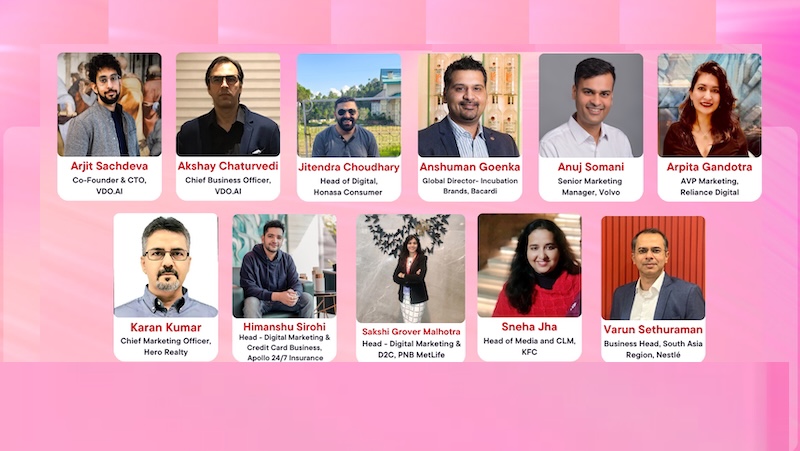
    The event drew heavy hitters from brands that shape how we eat, drive, and shop: Arpita Gandotra (avp marketing, Reliance Digital Retail), Varun Sethuraman (business head, Nestlé), Anshuman Goenka (global director – incubation brands, Bacardi), Sneha Jha (head of media and CLM, KFC), Sakshi Malhotra (head – digital marketing & d2c, PNB MetLife), Anuj Somani (senior marketing manager, Volvo Cars), Karan Kumar (cmo, Hero Realty), Jitendra Choudhary (head of digital, Honasa Consumer Ltd – Mamaearth), and Himanshu Sirohi (head of digital marketing & credit card business, Apollo 24×7).

    Some of the nuggets that emerged from the roundtable included: 

    The numbers don’t lie:
    * 60 per cent of Gen Z disengage from ads they find irrelevant or overly personal.
    * Just 9.6 per cent feel any real brand loyalty—they care more about price and trends.
    * 43 per cent are wary of being tracked online.
    * A mere five per cent say product quality or cost matters more than a killer brand experience.

    What’s hot, what’s not:
    * Repeating an ad doesn’t build reputation anymore—it just builds resentment. Brands need sharp, engaging storytelling.
    * AI-driven content is rewriting the rulebook on audience targeting.
    * Digital-first touchpoints aren’t a nice-to-have, they’re the whole game.

    Vdo.ai chief business officer Akshay Chaturvedi pointed to the $1.8bn consumption potential Gen Z will bring to the table by 2035. “If brands want in, they need AI-powered, hyperlocal and immersive experiences—because attention is the new currency, and Gen Z isn’t handing it out for free.”

    As the conversation wrapped up, one thing was clear: the advertising playbook is being rewritten in real time. And keeping pace with that is crucial if one wants in with the GenZ audience. 

  • Coke Zero goes full ‘method’ with invisible cans and calorie-free genius

    Coke Zero goes full ‘method’ with invisible cans and calorie-free genius

    MUMBAI: Coke Zero just pulled off the ultimate disappearing act. On 3 April, Coca-Cola India launched a campaign that literally showed nothing—and yet, everything. Titled ‘Coke Zero Auditions’, the campaign serves up a visual metaphor as crisp as the drink itself: a zero-calorie beverage promoted with zero product.

    Conceived by Ogilvy India under the WPP Open X banner, the campaign takes cues from acting school 101—where aspiring stars mime sipping an imaginary drink during method auditions. But in a meta twist, these mock auditions were the actual ads.

    Actors pretend to sip from invisible cans in a series of raw, unfiltered clips, and the result? A surprisingly effective pitch for Coke Zero’s ‘no calorie, all taste’ promise.

    “Across geographies and generations, Coca-Cola is known for its taste and iconicity and Coke Zero for all the delicious Coke taste with no calories. This campaign leans into the simplicity of a very clever idea to bring the delicious taste of a Coke Zero to life without the usual taglines, direct messaging… without even showing the product!” said Coca-Cola India and southwest Asia VP – marketing, Greishma Singh.

    With no catchy jingle, zero product placement and absolutely no script, the campaign might just be the boldest mic drop in soft drink advertising this year. It’s minimalism with a fizzy punch.

    Ogilvy India CCO Sukesh Nayak added, “We realised that the biggest inspiration lies within the name ‘Coke Zero’. In the spirit of ‘zero’, we designed a campaign that simply and effectively shows the Zero impact that it carries, by not showing the product at all.”

    And the cherry on top? You can sip the campaign—metaphorically—on Youtube and Instagram:


    In a world where brands yell to be seen, Coke Zero has whispered—and made everyone look.

  • Women of industry band together to form Oon

    Women of industry band together to form Oon

    MUMBAI: A fresh collective of leading women professionals has launched Oon, an integrated marketing communications firm that aims to simultaneously serve clients with top-tier expertise and create a collaborative platform for independent women professionals.

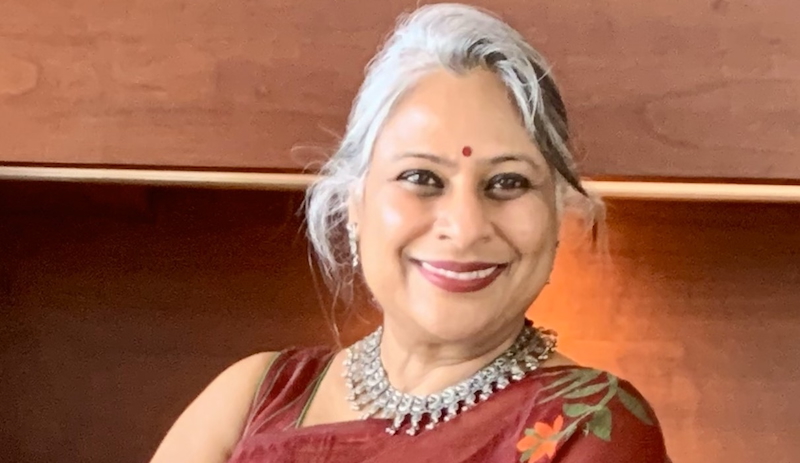
    The brainchild of industry veteran Rekha Rao, who boasts nearly three decades of experience spanning advertising, film production, public relations, and corporate communications, Oon (a dialectal version of “one” in British English) is putting a distinctly feminine spin on the marketing world.

    “Over the years I have seen women navigating multiple challenges to thrive and succeed in the punishing marketing, media, and communications industry,” says Oon founder & chief executive Rao. “This wealth of potential and experience with women who are already successful and those who have immense talent but need the opportunity inspired me to create something unique.”

    The powerhouse network includes a veritable who’s who of female talent—marketers, entrepreneurs, strategists, journalists, content specialists, art directors, filmmakers, and advocates from LGBTQAI+, PwD and sustainability communities. The collective also features digital marketers, influencers, and practising professionals including doctors, lawyers, chartered accountants and academicians—each bringing at least 15 years of experience to the table.

    From design and advertising to PR, content to reputation management, digital marketing to policy advocacy, Oon curates bespoke teams tailored to diverse client needs from their pool of experts. The firm offers solutions across the communications spectrum, with experience spanning global brands, corporate leaders, start-ups, and entrepreneurs.

    Rao, known for her out-of-the-box thinking and penchant for large-scale campaigns that have garnered over 100 awards, envisions Oon as “not just an agency—it’s a movement” representing the “49.75 per cent of the world that is women.”

    The Oon collective includes an impressive roster of specialists, including creative strategist Amee Sanghvi, strategic growth partner Anshul Mishra, award-winning journalist Anusha Subramaniam, and transgender activist Gauri Sawant serving as LGBTQIA+ counsel.
     

    oon collective

    For clients seeking fresh perspective in marketing communications, OON promises a distinctive approach—delivering campaigns that don’t just target audiences but genuinely speak to them, all while advancing opportunities for women in the industry.

    The Oon Collective:
    o Amee Sanghvi- Creative and Design Strategist | Creative Brand Partner, Oon
    o Anshul Mishra- Strategic Growth Partner | Scale-up Specialist | Marketing Counsel @ OON
    o Anusha Subramaniam – Award-winning journalist | Content Consultant | Inclusion Advocate | Strategic Content Counsel @ OON
    o Dipali Sikand – Serial Entrepreneur | Women Empowerment Champion @ OON
    o Gauri Sawant- Transgender Activist | LGBTQIA+ Counsel @ OON
    o Gayatri Ramanathan – Sustainability & ESG storytelling expert
    o Minari Shah- Corporate and Brand Narratives | Building Leaders of the Future | Corporate and C-Suite Reputation Counsel @ OON
    o Nitisha Agrawal, Nitisha Agrawal | Founder & Director, Smokeless Cookstove Foundation | Access to clean energy & climate adaptability for the most marginal communities | Climate Change from the Grassroots Specialist @ OON
    o Pallavi Mutalik Hebbar, Consulting & Risk Advisory,Geopolitics,  AI Counsel @ OON 
    o Renuka Sanghvi, Mental and Emotional Health Counsel @ OON
    o   Roopa Arun, Educationist | Policy | Institution Building | Education Industry Counsel @ OON
    o Sangita Thakur – Founder, Ashtavakra Accessibility Solutions | PwD Counsel and Inclusive Communications Strategist @ OON
    o Sowmya Raman- Organisational Transformation | Change Management Specialist |  Talent and Internal Communications Counsel @ OON
    o Talish Ray, Partner, TRS Law Offices | Policy and Law | Legal Expert @ OON
    o Wei Ling Chiu, Founder & Chief Client Engagement Officer, Be Bold | B2B and Enterprise Technology Counsel @ OON

    The OON Partners:
    o Preeti Juneja, DreamWeb India | Personal Branding Partner, OON
    o  Rachana Chowdhary, Founder & CEO, MediaValueWorks | Partner, OON
    o Smita Uchil, Co-founder, Mavendoer | Digital Partner, OON
    o Wei Ling Chiu, Founder & Chief Client Engagement Officer, Be Bold | B2B and Enterprise Technology Partner @ OON


  • WPP snaps up InfoSum, promising a data-driven bonanza for brands

    WPP snaps up InfoSum, promising a data-driven bonanza for brands

    MUMBAI:  WPP has bagged InfoSum, the data collaboration cutting edge solutions provider. This acquisition, a proper “data-licious” deal, promises to supercharge WPP’s AI-driven marketing arsenal, giving clients access to a treasure trove of data signals.

    “At WPP, we have been building the technology and data infrastructure that will give our clients a unique competitive advantage in the AI era. Bringing InfoSum into WPP is a major step forward for our data capabilities and the results we can deliver for our clients,” said WPP CEO Mark Read. “It allows clients to stay in complete control of their first-party data, while also giving them access to vastly greater quantities of high-quality, privacy-compliant data and pioneering technology that is not available anywhere else in the market today.”

    InfoSum’s patented cross-cloud tech allows brands to mingle their data with billions of signals from big hitters Channel 4, DirecTV, ITV, Netflix, News Corp, and Samsung Ads, as well as major retailers around the world and five billion identifiers through identity and data partners like Experian, TransUnion, Circana, Dynata, and NCSolutions. 
     
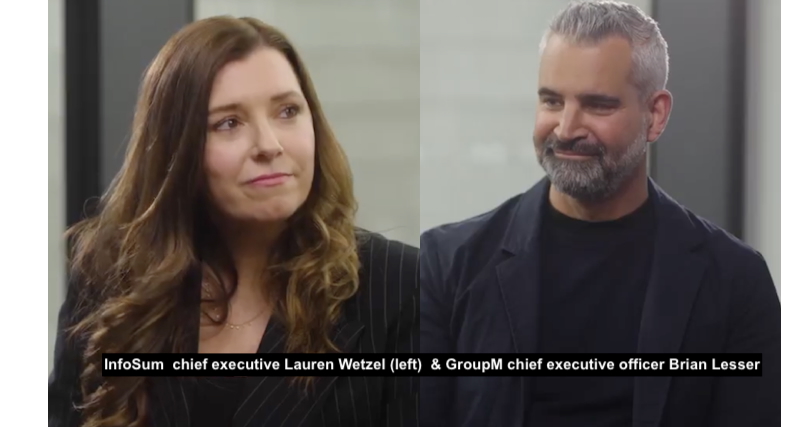
    “InfoSum’s mission has always been to reimagine how data powers marketing in a secure, privacy-first, and, most importantly, impactful way for advertisers and consumers. WPP and GroupM are the perfect partners to help us accelerate our impact on a truly global scale. We couldn’t be more excited to join forces with the team at GroupM as privacy and security become non-negotiables, and AI allows us to redefine what’s possible for advertisers and our network of media and data partners,” quipped InfoSum  chief executive Lauren Wetzel, who’ll now be pulling double duty as GroupM’s chief solutions officer.

    GroupM chief executive officer Brian Lesser was equally enthusiastic, stating, ” Directly integrating InfoSum’s global data network and technology infrastructure will allow our clients to create even more value from their first-party data and enable us to train client AI models against the most data, from the most places, at unprecedented scale and speed. Our approach recognizes the importance of identity data to today’s marketing strategies while allowing us to take advantage of the limitless opportunities for growth we can create by moving beyond them. As more and more clients leverage our AI-first solutions, every client model, every audience, and every campaign will benefit from network effects that will exponentially increase their intelligence and competitive advantage.” 

    The deal allows WPP’s clients to train custom AI models in secure environments, delivering smarter audiences, optimised campaigns, and better business outcomes. Basically, it allows the ability to get your hands on all the juicy information, without anyone else seeing your private bits.

    InfoSum’s network boasts hundreds of billions of data signals, and five billion identifiers, allowing for a level of insight that’s previously been the stuff of marketing fantasies. No more relying on those crumbling cookie-based systems, which are about as useful as a screen door on a submarine.

    This acquisition represents a bold leap into the future of predictive performance and AI-driven marketing intelligence. WPP is betting big on AI, and with InfoSum in its pocket, it’s ready to unleash a marketing storm that’ll leave competitors scrambling for cover.

  • United Breweries  launches Amstel Grande in Uttar Pradesh

    United Breweries launches Amstel Grande in Uttar Pradesh

    MUMBAI: India’s brewing behemoth United Breweries Limited (UBL) has finally popped the cap on its premium beer Amstel Grande in Uttar Pradesh, giving the state’s tipplers a taste of Dutch brewing prowess. The Heineken-owned company is betting its bottom rupee that UP’s increasingly sophisticated beer swiggers are ready to part with extra cash for a more refined gulp.

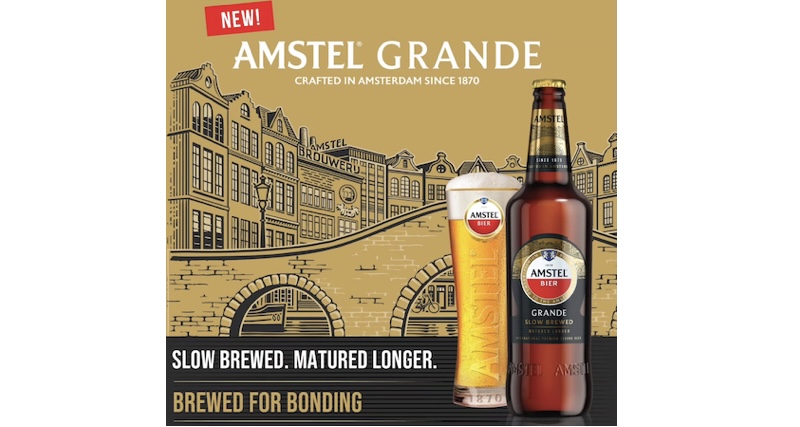
    Amstel Grande, which has already wet whistles in Maharashtra and West Bengal, is being flogged as a slow-brewed revelation. The company rather grandly claims its “secret ingredient” is time—allowing the beer to marinate longer before hitting parched throats

    “After receiving an overwhelming response in Maharashtra and West Bengal, we are excited to bring Amstel Grande to Uttar Pradesh,” said  UBL chief marketing officer Vikram Bahl. “Uttar Pradesh is a vibrant market with a growing demand for premium beverages and we are confident that Amstel Grande will quickly become the go-to choice for those seeking unmatched quality and craftsmanship. This launch further strengthens our commitment to delivering world-class quality.”

    The Dutch beer, born of two mates’ boozy dreams in Amsterdam circa 1870, now finds itself competing in the crowded Indian hooch market. The Heineken-owned brand has cleverly pitched its local brewing operation as “globally inspired, locally brewed”—a neat trick that saves on shipping costs while maintaining the exotic foreign cachet.

    For the privilege of quaffing this premium amber nectar, UP’s beer connoisseurs will have to shell out Rs 110 for a 330ml bottle, Rs 160 for 500ml, and  Rs 210 for the full 650ml experience. The price reflects what the company insists is a sugar-free formulation using “the finest quality barley” and “carefully selected hops.”

    The packaging, dripping with illustrations of Amsterdam’s canals and buildings, ensures drinkers can feel smugly continental while getting sozzled in Lucknow. The brew’s philosophy of being “brewed for bonding” suggests that friendship itself might be impossible without the lubricating effects of a premium lager—a bold claim, but one that countless pub-goers have tested thoroughly over the centuries.

    As summer scorchers loom, UBL will be hoping that Amstel Grande flows freely through India’s most populous state. For a beer that boasts about taking its time, its success or failure should become apparent rather quickly.

  • Haier redefines luxury with Lumiere, India’s first 4-door convertible fridge

    Haier redefines luxury with Lumiere, India’s first 4-door convertible fridge

    MUMBAI: Haier Appliances India, has redefined luxury and innovation with the launch of Lumiere, India’s first 4-door convertible side-by-side refrigerator. The grand unveiling took place at the Hindustan Times (HT) India’s Most Stylish 2025, a celebration of fashion, glamour, and cutting-edge trends.

    Haier, the only brand manufacturing 4-door side-by-side refrigerators in India, continues to push boundaries in premium home appliances. Lumiere, designed for modern Indian homes, seamlessly blends advanced technology with refined aesthetics, setting new benchmarks in both style and functionality.

    The reveal was a showstopping moment, presented by actress and UN ambassador Dia Mirza, co-host Cyrus Sahukar, and , Haier Appliances India president NS Satish. Adding to the excitement, cinema icons Akshay Kumar, Abhishek Bachchan, Shikhar Dhawan, Kanika Kapoor, and Farhan Akhtar explored Lumiere’s sleek design and intelligent features at Haier’s exclusive brand zone during the red carpet segment.

    Haier Appliances India president Satish said,
    “At Haier India, we take immense pride in being the only brand in India manufacturing 4-door convertible side-by-side refrigerators. This achievement reflects our commitment to innovation and delivering solutions that cater to the evolving needs of modern Indian homes. The launch of the Haier Lumiere Series is a proud addition to our ‘Made in India, Made for India’ vision, combining advanced technology with elegant design. Our association with HT India’s Most Stylish 2025 provided the perfect platform to showcase a product that redefines style and functionality. As we continue to innovate, Haier remains dedicated to introducing appliances that elevate everyday living while complementing contemporary lifestyles with elegance and performance.”

    HT Media Group Ltd VP & head branded IPs Vijay Nair added, “We are delighted to have Haier India as a valued partner at the 13 edition of HT India’s Most Stylish. As the voice of the nation since 1924, HT has been at the forefront of culture, style, and innovation. This year, we crafted an immersive experience, celebrating 100 years of style through the cinematic lens where fashion met storytelling in its most iconic form. Haier’s spirit of innovation perfectly complemented our vision, making this collaboration truly special. We are proud to have provided a platform that showcased Haier’s commitment to redefining home experiences with style and functionality through the launch of the Lumiere series refrigerator.”


  • Rohitash Srivastava joins 82.5 Communications as chief strategy officer

    Rohitash Srivastava joins 82.5 Communications as chief strategy officer

    MUMBAI: 82.5 Communications has appointed Rohitash Srivastava as its new chief strategy officer in a move that underscores the agency’s commitment to strengthening its strategic capabilities and accelerating growth. This internal transfer within the Ogilvy Group brings Srivastava’s two decades of experience as a communication planner, experience strategist, and brand consultant to the agency.

    Previously prominent strategic planning at Ogilvy India (north), Srivastava has shaped the brand strategies of industry giants, including The Coca-Cola Company, GSK’s Eno, Dabur India, Perfetti, Mother Dairy, and RSPL Group. His expertise in consumer-centric thinking and brand-building will play a pivotal role in 82.5 Communications’ continued success.

    “82.5 Communications is on a fantastic growth journey, fueled by the great work our teams are producing,” said  82.5 Communications CEO Kiran Ramamurthy. “Srivastava’s strategic acumen and proven track record are exactly what we need to accelerate this momentum. Srivastava thrives on simplifying complex challenges and making brand strategy feel refreshingly clear and actionable, with an approach rooted in common sense, conversation, and creativity.”

    Srivastava added, “82.5 is fast becoming the growth engine for Ogilvy, and I couldn’t be more excited to be part of this transformative moment. The talent and energy I see in Ramamurthy, our COO, and our CCOs Anuraag and Mayur make 82.5 a powerhouse of modern brand-building. We have great momentum, we’re already putting out some fantastic work, and this is just the beginning.”

    Srivastava’s accolades include multiple Effie awards, including a Gold and three Silvers in APAC Effies, and recognition as India’s Top Digital Planner by Digital Market Asia and Business World in 2016. He is also an academic contributor, teaching brand strategy at MICA and MET Mumbai and publishing insights in Brand Equity, WARC, and Campaign India.

  • Equitas brings in Balaji Nuthalapadi to hardwire its digital backbone

    Equitas brings in Balaji Nuthalapadi to hardwire its digital backbone

    MUMBAI: India’s second-largest small finance bank just added some serious tech muscle. Equitas Small Finance Bank has appointed Balaji Nuthalapadi as executive director – technology and operations, signalling a sharp push towards tech-led transformation, seamless customer journeys and operational muscle.

    The appointment, effective 29 March 2025, has received the green light from both the Reserve Bank of India (RBI) and the Bank’s Board. With this move, Equitas is throwing down the digital gauntlet, placing a proven transformation leader at the heart of its operations.

    “We are delighted to welcome Balaji Nuthalapadi to our leadership team. His vast experience in banking operations, technology and digital transformation will be a valuable asset as we continue to enhance our operational efficiency and drive innovation. His passion for digital banking, financial inclusion and social impact aligns seamlessly with the values and mission of Equitas Small Finance Bank,” said Equitas Small Finance Bank MD & CEO Vasudevan P N.

    Nuthalapadi joins the Chennai-based bank with a CV that reads like a fintech playbook. At Citi Bank, he served as MD & head of centralised controls testing execution. There, he built a 1,100-member India team—one of the largest in global banking—to oversee international controls testing.

    Previously, as MD & head of operations and technology for Citi south Asia, he helmed functions across India and southeast Asia, playing a crucial role in expanding Citi’s global hubs in India. An IIM Ahmedabad alumnus, he brings over two decades of hands-on expertise across operations, digital banking, and wealth management.

    Now, Equitas is counting on that arsenal of experience to turbocharge its already impressive growth story. With a stronghold in financial inclusion and digital-first banking, the bank sees Balaji as the lynchpin of its future tech playbook.

    The question now: how fast can he turn transformation into traction?

  • Honda wraps FY25 with a turbocharged 58.31 lakh units sold, goes full throttle

    Honda wraps FY25 with a turbocharged 58.31 lakh units sold, goes full throttle

    MUMBAI: Honda Motorcycle & Scooter India (HMSI) hit the finish line of FY 2024–25 with its engines roaring, posting a massive 58.31 lakh unit sales—cruising ahead with a 19 per cent year-on-year jump. In March 2025 alone, the company sold 4,27,448 units, including 4,01,411 domestic and 26,037 exported two-wheelers. That’s not just acceleration—it’s domination.

    If FY25 had a theme, it would be more power to Honda—and not just the fuel-injected kind. The brand broke into electric mobility with its ACTIVA e and QC1, launched bookings on 1 January and started deliveries by March. At the Bharat Mobility Global Expo 2025, Honda didn’t just flex—it showed off its green muscle with tech-laden concepts, including the CB300F Flex-Fuel, Motocompacto, and advanced battery-swapping tech.

    The OBD2B compliant line-up got a massive revamp too, covering popular models from Activa to Hornet 2.0, showing Honda’s commitment to stay road-ready and regulation-proof.

    HMSI’s premium BigWing arm also fired on all cylinders. The launch of the NX200 with new-age upgrades and the refreshed CB650R and CBR650R turned heads in the upper cc league. And the 300cc flex-fuel CB300F? It’s now a first in India.

    Milestones? Oh, plenty. Shine & SP125 crossed 30 lakh customers in eastern India and 10 lakh in Madhya Pradesh, while the south saw Honda break the two crore sales mark. The numbers weren’t just big—they were legacy-defining.

    On the social front, HMSI didn’t let off the throttle either. It educated over 97 lakh citizens on road safety across 120 cities and trained women cab drivers under its Stree सारथी programme. From planting one lakh trees during environment month to empowering farmers through Project Annadata, it’s clear Honda’s drive is as much about heart as horsepower.

    Motorsport fans weren’t left in the dust. Mohsin Paramban dominated the IDEMITSU Honda Indian Talent Cup, while Honda Racing India made noise at the Asia Road Racing Championship. Even at the rough-and-ready Dakar Rally, Honda clinched a double podium with style.

    Honda didn’t just close FY25 on a high. It wheelied across it, leaving behind skid marks of innovation, impact, and sheer velocity.