Category: MAM

  • Gender bender agenda breaks bias on brands’ storytelling assembly line

    Gender bender agenda breaks bias on brands’ storytelling assembly line

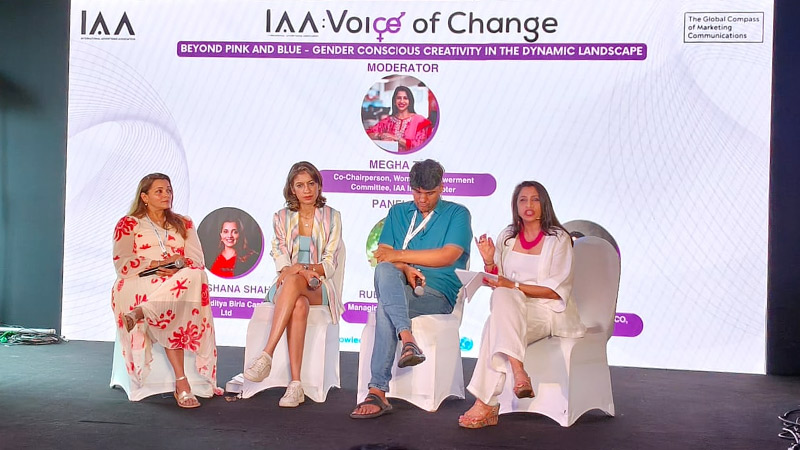
    MUMBAI: Stirring the pot, not the soup, panel shreds the gender script in adland, Forget ‘pink for girls’ and ‘blue for boys’ at the GoaFest 2025 panel Beyond Pink and Blue, industry leaders dismantled the creative clichés still haunting adland like ghosts of campaigns past. From financial services to fashion, panelists shared both their victories and roadblocks in trying to make marketing more inclusive, authentic, and frankly, less boring.

    Moderated by Megha Tata, the discussion brought together voices from across the spectrum like Aditya Birla Capital CMO Darshana Shah, Neil Patel Digital MD Rubeena Singh, Talented co-founder and CCO P.G. Aditya, and Makemytrip CMO Raj Rishi Singh.

    Darshana Shah laid bare the startling findings of a study supported by UNICEF and the Gina Davis Institute: of over 1,000 TV and digital ads analysed using AI, women appeared as often as men but were largely stuck in kitchens or beauty aisles. Men, unsurprisingly, got to handle the chequebooks and cars.

    Even more worrying was how these stereotypes are being hardcoded into generative AI tools. Shah recalled prompting image generators for a 40-year-old Indian woman, only to be served stocky brown-skinned figures wearing bindis with yoga pants. “Even when you say ‘no saree,’ the AI insists on putting her in one,” she quipped, pointing out how algorithms are learning from outdated media input.

    As she explained, “We’re teaching AI stereotypes faster than we’re unlearning them ourselves.”

    Despite leading marketing in a “quintessentially male-targeted” financial services firm, Shah has spearheaded campaigns like Motherhood on Hold, addressing the rising trend of women delaying childbirth due to financial independence. A staggering 45% of Indian women now make that choice, a reality rarely reflected in advertising.

    Still, progress hits walls. Shah shared how she turned down a bold campaign idea around gender-transition challenges in financial documentation simply because the infrastructure and regulation weren’t ready. “We can’t just talk inclusivity if the backend systems still say ‘no’ to identity updates,” she said candidly.

    P.G. Aditiya offered a refreshingly blunt perspective: “Old tropes are not just sexist, they’re creatively lazy.” Behind Talented’s much-lauded work for brands like Tanishq and Urban Company, he credited not just client bravery, but female creators leading the charge from strategy to direction.

    He urged agencies to reframe inclusivity not just as ‘good business’ but ‘good storytelling’. Referencing the Bechdel Test (which Shawshank Redemption famously flunks), he said creatives should challenge the tired setups: men watching TV while women cook. “If your ad only works with that setup, your idea probably isn’t strong enough,” he said.

    Digital may be dynamic, but it’s not immune to legacy mindsets. Rubeena Singh observed that while Gen Z consumers fluidly reject binary gender norms, media decision-makers largely male and over 45, still cling to archaic assumptions.

    From fertility brands that shy away from including men in IVF discussions, to women’s safety campaigns unwilling to speak to male allies, Singh said, “We’ve won some battles, but most briefs still come in wearing blinders.”

    And when briefs do break bias? “It’s usually the younger teams pushing it,” she said, advocating for greater representation at all levels—especially in client rooms where bold ideas often get neutered.

    Across the board, the panel agreed: change starts with who’s in the room. Shah now insists on reviewing director lists for gender diversity before any campaign shoot. “If we want diverse stories, we need diverse storytellers,” she said.

    The path to gender-conscious creativity may not be smooth, but panels like this prove the appetite for transformation is alive and well. As one speaker put it, “Doing the right thing is also often the more interesting creative path.”

    Now that’s a plot twist adland could use.
  • From AI to identity: Goafest day two opens with punchy panels and purpose-driven ideas

    From AI to identity: Goafest day two opens with punchy panels and purpose-driven ideas

    MUMBAI: Day two of Goafest 2025 opened on a high note—literally—with Indian musician Raghav Sachar delivering a live performance titled Ignite Hungama, presented by Sharechat, Moj, and Truecaller. As the crowd swayed, the festival shifted gears into strategy mode with conversations that touched tech, gender, identity, creativity, and commerce.

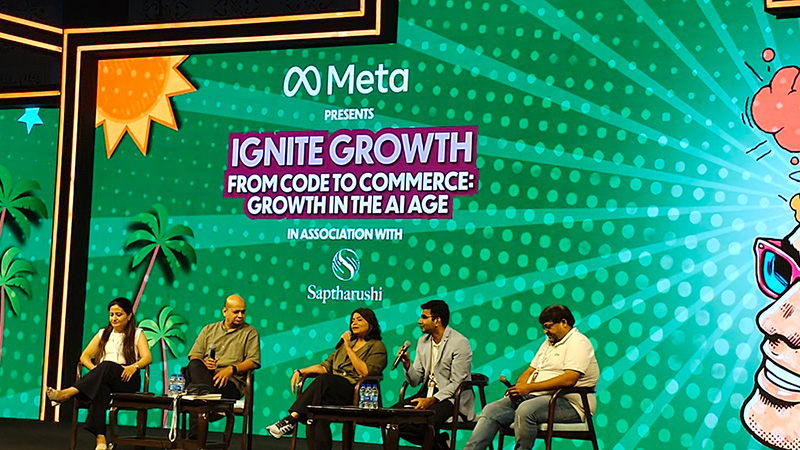
    The morning’s keynote panel, ‘From Code to Commerce: Growth in the AI Age’, brought together Arjun Choudhary (Swiggy), Sanket Prakash Tulangekar (MakeMyTrip), Tejas Apte (HUL), and Pragya Bijalwan (Voltas), moderated by journalist Anuradha SenGupta. Presented by Meta and Saptharushi under the Ignite Growth theme, the discussion centred on how generative AI is upending business operations, creativity and consumer journeys.

    Choudhary described AI as “as fundamental as math”, citing how non-tech teams now use it for demos, dashboards and decision-making. Bijalwan called AI an enabler of “personalisation and predictive maintenance”, adding that it “humanises technology in consumer products”. Hul’s Apte showcased tools like Shikhar and internal GenAI platforms for R&D, while Tulangekar introduced Myra, Makemytrip’s AI-powered assistant built on multi-agent orchestration. Each panellist agreed: AI is a skill, not a threat—and reskilling is the need of the hour.

    At the Gyaan Podium, Warc and Andersen Consulting India unveiled the Pace Principles report. Biprorshee Das and Sujeet Kulkarni called for a balanced media strategy: 50 per cent on long-term brand-building and 50 per cent on performance marketing. “It’s not ‘brand plus performance’, it’s ‘brand-time-performance’”, Kulkarni said. Das urged marketers to stop isolating equity work, calling the ‘multiply effect’ a winning integration model.

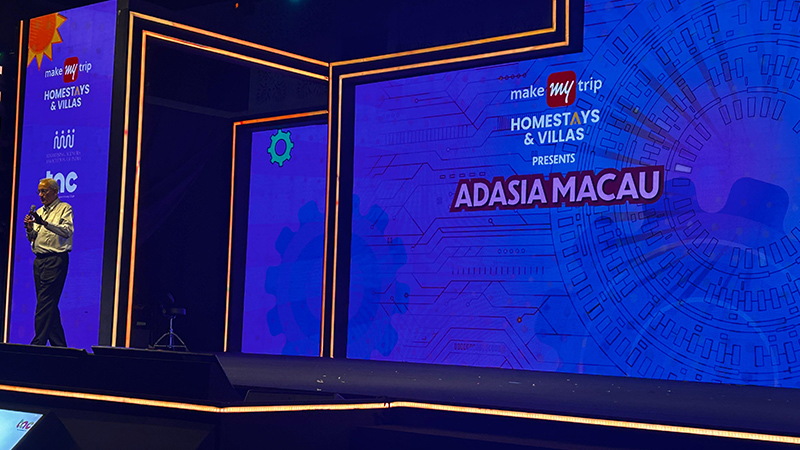
    At the Makemytrip Presents AdAsia Macau Road Show, AFAA chairman Srinivasan Swamy confirmed the 39 edition of AdAsia will be held in Macau on 27 August. Swamy called for over 100 Indian delegates and assured attendees of familiar comforts: “Indian food and hospitality will be arranged”.

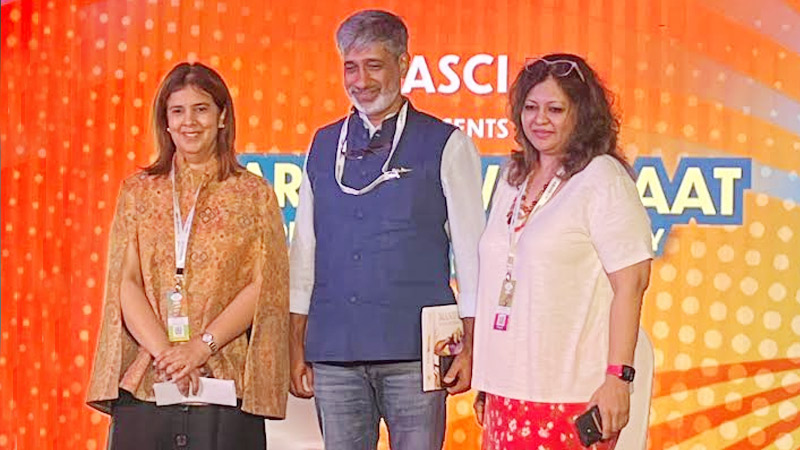
    Back at the Knowledge Partner – ASCI panel, “Mardon Wali Baat: A Discussion on Masculinity in Advertising” brought together Karthi Marshan and Nisha Singhania, moderated by Manisha Kapoor. Singhania tore into the trope of men as ‘fixable’ through marriage. “India is changing, and so are its men”, she said. Marshan added, “Disruption grabs attention, and attention drives engagement—regardless of who you target”. The panel called for a more honest portrayal of modern masculinity.

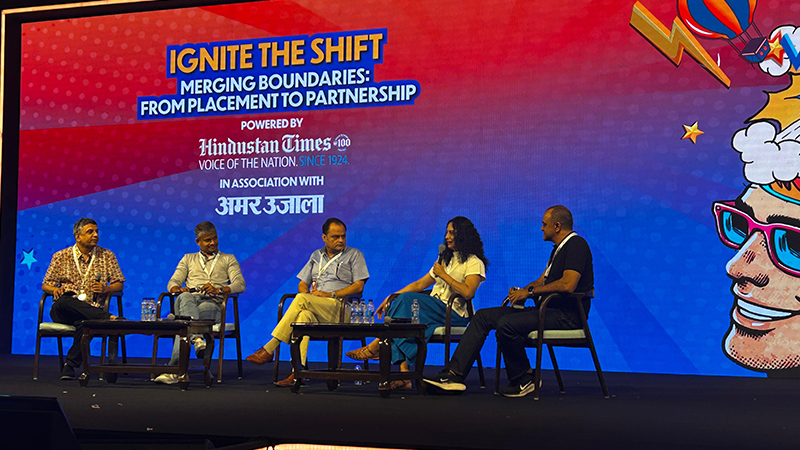
    Under the Ignite The Shift banner, the panel “Merging Boundaries: From Placement to Partnership”, powered by Hindustan Times and Amar Ujala, featured Satya Raghavan (Google), Rathi Gangappa (Starcom), Ajit Varghese (JioStar), and Shubhranshu Singh (Tata CVs). Moderator Kartik Sharma led the conversation through themes of integration, consumer insight, and operational scalability. Gangappa summed it up: “It’s no longer about placements; it’s about building cohesive narratives”.

    Another panel, “Beyond Pink and Blue”, presented by IAA, featured Darshana Shah (Aditya Birla Capital), Rubeena Singh (Neil Patel Digital), and P.G. Aditiya (Talented), moderated by Megha Tata. Shah called out early-life bias and systemic exclusion. Singh championed gen z’s gender-fluid mindset and called for progressive narratives. Aditiya urged leaders to act from belief, not tokenism. “Don’t just fix the old”, he said. “Build new stories with inclusion at the core”.

    Goafest also took a green turn with a tree plantation ceremony hosted in collaboration with Earthday.org. Attended by industry veterans including Sam Balsara, Anupriya Acharya and Raj Nayak, the initiative underscored a collective commitment to sustainability.

    Meanwhile, at the Bioscope – Cinema Room, Ashish Khazanchi (Enormous) reminded creatives that “self-expression, not awards”, should drive campaigns. The first half of day two also featured a host of masterclasses, offering deep dives into AI, storytelling and strategic branding.

    Lunch was presented by Sync Media.

  • Ashish Khazanchi says forget the trophies, chase truth and craft instead

    Ashish Khazanchi says forget the trophies, chase truth and craft instead

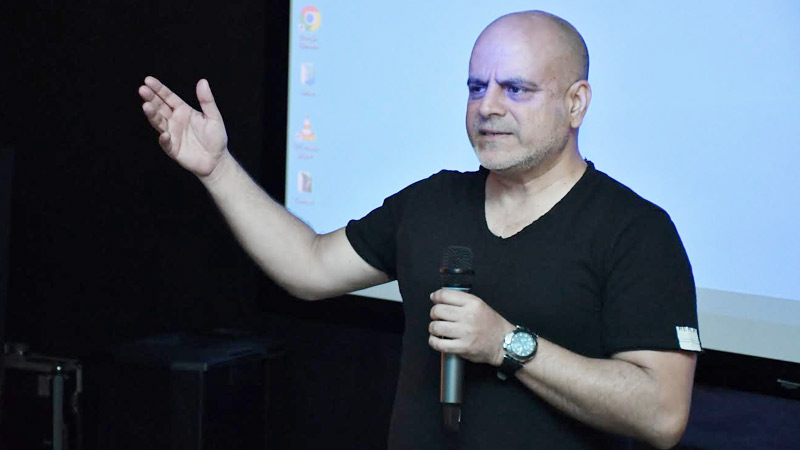
    MUMBAI: Ashish Khazanchi took the stage at Goafest 2025 with neither glitter nor gloss—just a blunt reminder: advertising isn’t about awards, it’s about expression. Delivering his keynote titled “Ignite Your Mind”, the Enormous managing partner reminded attendees that the work must speak before the metal does.

    “Self-expression, not awards, is the true reason to enter advertising”, he declared, dismantling the decades-old belief that awards define success. According to Khazanchi, awards are nothing but the inevitable byproduct of solving real problems with genuine passion.

    He emphasised that modern judging panels don’t have time to savour slow-burn brilliance. “Immediate impact is key—judges don’t have time for nuance”, he said, urging creatives to cut through the clutter with speed and surprise.

    Craft, originality, and clarity formed the holy trinity of his talk. “Craft and surprise make ideas stand out”, he added, nudging creators to resist the temptation of safe bets. Khazanchi pushed the idea that creativity thrives not on briefs but on boredom. “Great ideas often come from proactive, self-initiated work”, he said.

    He advised attendees to never settle for their first idea. “Always explore multiple executions”, he said, adding that lazy storytelling is the fastest route to forgettable work. The real win, he noted, comes when the message lands with both the jury and the janitor.

    For those chasing visibility, Khazanchi had a pragmatic tip—amplify. “Use LinkedIn and media to get your work noticed”, he quipped, reinforcing the need for creators to be their own hype machines.

    From dissecting campaign anatomy to elevating originality, Khazanchi’s keynote was less a creative sermon and more a survival manual. His final rallying cry? Keep the story clear, the spark original, and the execution bold.
     

  • Masculinity needs a makeover, not a rescue mission, say ad leaders at Goafest 2025

    Masculinity needs a makeover, not a rescue mission, say ad leaders at Goafest 2025

    MUMBAI: Goafest 2025’s day two lit up with sharp insights and simmering provocations during the session “Mardon Wali Baat: A discussion on Masculinity in Advertising”. Held under the banner of ASCI Academy’s report ‘Manifest: Masculinities beyond the Mask’, the panel challenged brands to move past rigid and reductive representations of men.

    Moderated by Advertising Standards Council of India (ASCI) CEO & secretary general Manisha Kapoor, the panel featured Marshan.Ink (formerly Kotak) principal Karthi Marshan, and Infectious Advertising co-founder & director Nisha Singhania.

    “Masculinity is not unidimensional—it has many facets”, said Singhania, kicking off the discussion. She stressed that the emotional complexity of men is often neglected in ad narratives, where strength is still seen through a bicep rather than vulnerability. “Men are tired of being portrayed as a ‘work in progress’ or needing to be fixed”.

    She also took aim at legacy brands. “They rely too much on past data and lack the patience to build new narratives”, she said, pointing out that India’s evolving masculinity isn’t as entitled or rigid as marketers presume. “The narrative of ‘get him married and he’ll change’ is outdated and unfair”.

    Marshan pushed for a fundamental mindset shift: “Masculinity vs. feminism is a false dichotomy—we need to move beyond gender and sexuality labels”. He challenged the belief that long-term investment alone makes a campaign successful. “Disruption works—if a brand gets attention, people will engage, regardless of target audience”.

    Echoing Singhania’s view, Marshan said, “Marketers underestimate audiences—viewers are more progressive than assumed”. He called on creatives to stop playing safe and start trusting viewers’ ability to embrace evolved storytelling.

    The session served less as a sermon and more as a mirror—reflecting both the flaws in the way men are marketed and the possibilities that await when brands loosen their grip on stale stereotypes.

  • CCOs are shepherds, not showmen, say ad veterans in spirited Goafest debate

    CCOs are shepherds, not showmen, say ad veterans in spirited Goafest debate

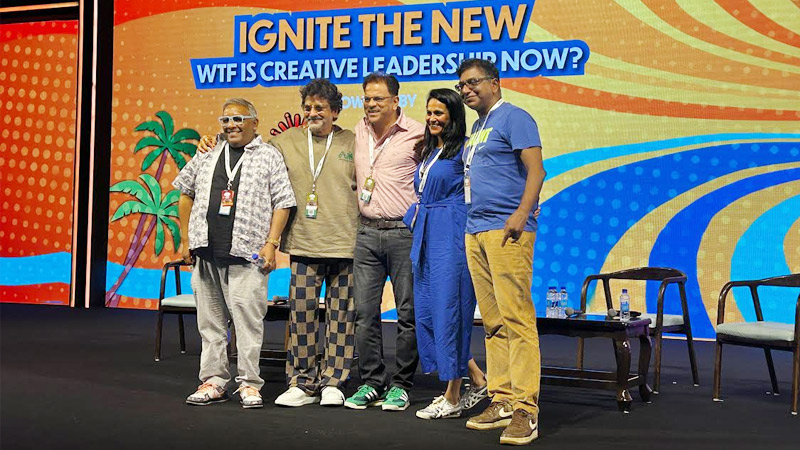
    MUMBAI: At Goafest 2025’s high-energy panel “WTF is Creative Leadership Now?”—powered by Sun NEO and Amar Ujala—the crowd wasn’t just fed insight, it was served a full-course debate. The motion on the table: “The chief creative officer (CCO) is no longer the heart of the creative agency”. What followed was part philosophy, part punchlines, and all-out passion.

    Moderated by Ohriginal founder Rohit Ohri, the session featured industry legends and present-day captains: Bobby Pawar, Sonal Dabral, Senthil Kumar (VML India), and Lulu Raghavan (Landor APAC). The format was unconventional—a structured debate—and emotions ran high as both sides made their case.

    Pawar, speaking for the motion, fired the opening salvo: “The CCO has become a generalist, not a specialist”. He lamented the erosion of focus, saying creatives today juggle too many hats—part spreadsheet warrior, part HR liaison, part plumber of broken processes. “The CCO is supposed to make people better, not just the work”.

    Dabral echoed the sentiment. “The role’s been marginalised”, he said. “Once upon a time, creative work brought in the revenue. Now, we’ve surrendered that ground to consultants and growth officers”.

    On the other side, Raghavan mounted a spirited defence. “The CCO is the custodian of the brand’s unified creative vision”, she said. “They’re culture magnets and client counsellors. Yes, the role has evolved, but that doesn’t mean it has weakened—it has amplified”.

    Kumar brought the flair, calling today’s CCO a “playing captain”, not a bench-bound boss. “They’re curators of talent and makers of movement. They must know when to step up and when to step back.”

    The debate heated up as rebuttals flew. Pawar quipped, “If the client only wants to speak to one person, why do they need the rest of us?” Raghavan countered, “Then make that person the one who inspires, not just manages”.

    What united both camps, despite the sparring, was a shared reverence for creativity’s core purpose. All agreed that CCOs must move beyond ego, protect originality, and build cultures that nurture bold thinking. In Ohri’s closing words, “It’s not about idea ownership anymore—it’s about creating open spaces where ideas can roam freely and return home safe”.

    The rapid-fire round that followed was peak Goafest theatre. The panelists defined today’s CCO in their own punchy terms: “instigator”, “playing captain”, “creative curator”, “versatile”. When asked to choose between a Cannes Lion or a lifetime client, most cheekily opted for both.

    As the session wrapped, the takeaway was clear: the CCO isn’t dead. They’re just shape-shifting—and perhaps learning to lead not from the podium, but from the pasture.

  • Brand-time-performance wins the day as Warc unveil ‘Pace Principles’

    Brand-time-performance wins the day as Warc unveil ‘Pace Principles’

    MUMBAI: Speed met substance on day two of Goafest 2025 as Warc unveiled findings from the ‘Pace Principles’ report—a pioneering marketing effectiveness study rooted in Asian data. Amid the sun, strategy, and scribbles at Taj Cidade de Goa, two marketing heavyweights cut through the jargon to drive home a single truth: performance and branding aren’t rivals, they’re running mates.

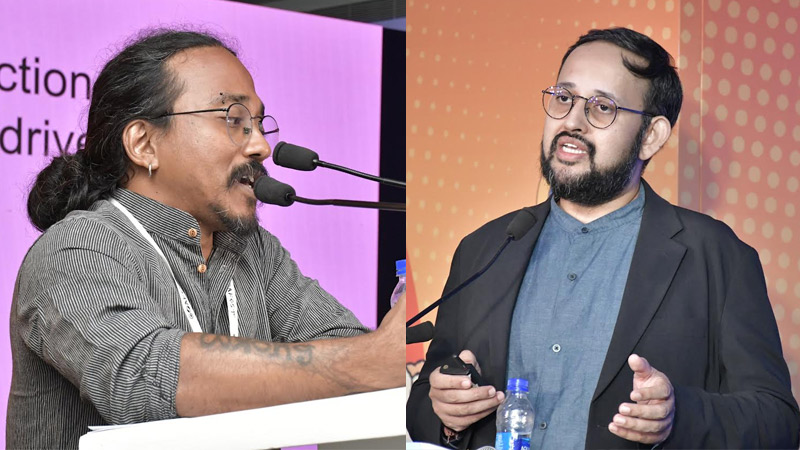
    Sujeet Kulkarni – Global Advisory Consultant, Lions Advisory opened the session by underscoring that Warc’s insights are backed by the creative might of the Lions ecosystem. He dismissed the longstanding divide between brand-building and performance marketing. “Measuring brand and performance separately is a false premise”, he said. Instead, he urged marketers to view it through the lens of ‘brand-time-performance’, emphasising the role of time in cementing long-term success.

    According to Kulkarni, the sweet spot lies in marketing across six-and-a-half channels—a curious yet data-driven benchmark for campaign momentum. He stressed that marketers must “use time as an ally” to stay committed to sustained brand narratives.

    Warc India editor Biprorshee Das brought regional nuance into focus. He argued that speed has been wrongly cast as the enemy of brand investment. Citing Asian campaigns, he showed that a 50:50 split between conversion-focused and brand-building strategies yields the highest effectiveness. Das cautioned against treating long-term branding as a siloed initiative. Instead, he championed the “multiply effect”—a marketing phenomenon where cross-channel, time-sensitive integration drives better returns.

    The session didn’t shy away from bigger truths either. “Culture is not just about geography—it’s about the values we share”, Kulkarni concluded, suggesting that culturally relevant brands don’t just survive—they scale.

    The findings mark a turning point for marketers in Asia, urging a rethink on how success is measured—not just by short-term spikes, but by long-haul gains. With campaign tracking recommended beyond active periods, the call for better measurement frameworks grew louder through the day.


  • Agencies must connect, not just communicate, say industry leaders at Goafest 2025

    Agencies must connect, not just communicate, say industry leaders at Goafest 2025

    MUMBAI: Goafest 2025’s marquee session, ‘Ignite The Shift’, powered by Hindustan Times and Amar Ujala, staged a spirited conversation on marketing’s evolving ecosystem. The panel, titled “Merging Boundaries: From Placement to Partnership”, brought together five sharp minds—Google India director – marketing partners Satya Raghavan, Starcom India CEO Rathi Gangappa, JioStar head of revenue, entertainment & international Ajit Varghese, Tata Commercial Vehicles CMO Shubhranshu Singh, and moderator Omnicom Media Group India group CEO Kartik Sharma—for a high-voltage discussion on what defines partnership, performance, and brand-building in 2025.

    Opening the session with nostalgic candour, Sharma remarked, “Media was once a business of placement; now it’s a business of partnership”. He added that today’s agencies juggle multiple hats—from storytellers and influencers to data miners and tech integrators.

    Gangappa drove the point home: “It’s no longer innovate or die—it’s connect or die”. She called on agencies to shift from delivering solutions to forging seamless partnerships. “Partnerships today are about connecting the dots—storytelling, media, commerce, influence, even loyalty—and doing it all with intelligence and empathy”.

    Varghese reinforced that clients today demand more, “Agencies now invest in first-party data and tech stacks, stitching solutions across OTT, mobile, and CTV”. From integration to insight, agencies, he said, must become navigators across a complex media map. “Clients expect segmentation, measurement, and execution to be interlinked. When they demand precision, we bend backwards”.

    Raghavan added flair with an Avengers analogy. “The agency is literally the CMO’s superpower”, he joked. “In today’s marketing universe, consumers flit between universes—Youtube, search, Shorts, and shopping. Pinpointing them with the right message at the right moment is the challenge—and technology is the bridge”.

    Singh brought it back to brand belief, “Separating performance from brand-building is a disservice”. He warned against the trap of short-termism. “If everything is dictated by last-click logic, brands lose soul. Media must also create scale and salience”.

    The panel echoed a shared frustration with how measurement obsession has stifled creativity. Singh recalled, “We’ve become a business of attribution. But not everything valuable is measurable”. Raghavan nodded, saying that AI should empower creativity, not constrain it. “We’re now designing better razors, not just machines that shave you”.

    As the session closed, Sharma fired a rapid question: “What are you doing today that would’ve sounded crazy five years ago?”

    Raghavan shared that Google India had built an internal martech platform just for partner enablement. Varghese said he uses AI to ideate around obscure marketing days like “World Menstrual Hygiene Day”. Singh, meanwhile, said it’s time to rename the agency itself. “The term ‘media agency’ no longer fits. We’re something more”.

  • AdAsia 2025 invites India to Macau for a marketing carnival with desi flavour

    AdAsia 2025 invites India to Macau for a marketing carnival with desi flavour

    MUMBAI: At Goafest 2025, Asian Federation of Advertising Associations (AFAA) chairman Srinivasan K Swamy took to the stage to give India’s adland a tempting invitation: Macau is calling. Promoting the upcoming 39 edition of AdAsia—Asia’s largest and oldest advertising congress—Swamy laid out a compelling case for Indian participation in this high-octane, cross-cultural marketing festival.

    Scheduled for 27 August 2025, the event will take place in the glitzy heart of Macau and marks the 13 time AdAsia is being hosted in Asia since its inception in 1958. “Macau offers a vibrant, unique experience”, Swamy said, as he pitched the city not just as a conference host but as a creative playground.

    Swamy noted that the lineup boasts over 30 global speakers, including several Indian industry stalwarts. “Known for top-tier content and speakers”, the event promises insight, inspiration, and a heavy dose of networking.

    The push this year? More Indian presence. Swamy shared that the organisers are targeting over 100 Indian delegates and reassured the crowd that home comforts wouldn’t be missing. “Indian food and hospitality will be arranged”, he promised, garnering a few knowing laughs from the audience.

    He closed with a rallying call for professionals across agencies, brands, and media to join the India delegation. “All are invited to join the India delegation”, Swamy said, making it clear that AdAsia 2025 isn’t just about geography—it’s about bringing the continent’s finest together on one stage.

  • Byte the Future AI is Serving Up Personalised Innovation

    Byte the Future AI is Serving Up Personalised Innovation

    MUMBAI: Who knew your AC could get to know you better than your flatmate? At GoaFest 2025, the session “From Code to Commerce: Growth in the AI Age” proved that artificial intelligence is no longer just a boardroom buzzword, it’s in your shampoo, your samosa delivery, your summer holiday plans, and maybe even your next Instagram ad.

    AI isn’t just flipping the script, it’s writing it, testing it, and turning it into 150,000 personalised versions overnight. In a power-packed panel at GoaFest 2025, leaders from HUL, Voltas, Makemytrip and Swiggy sat down with journalist Anuradha SenGupta to unpack how artificial intelligence is moving from the back end to front-of-house, making businesses smarter, faster, and far more personal.

    Voltas CMO Pragya Bijalwan  revealed how AI is transforming the home appliance business from cold machines to warm experiences. “Walk into a room and your AC already knows your favourite temperature,” she quipped. But it’s not just comfort AI is driving predictive maintenance, energy efficiency, and post-sale service readiness. Voltas uses customer data platforms to pre-empt service needs and personalise communication. One such campaign featuring their long-standing mascot ‘Mukti’ achieved a staggering 98 per cent CTR and an 87 per cent full-view rate with many recipients believing the video was speaking directly to them.

    HUL, head of media & digital marketing Tejas Apte shared how AI now powers product prototyping through the company’s Agile Innovation Hub, even allowing 3D-printed SKUs based on global trendspotting. AI also fuels the “Shikhar” app, used by kirana store partners now responsible for 20 per cent of HUL’s sales. Retailers can simply snap a photo of their shelf, and AI recommends stock-ups, upsells and even helps co-create hyperlocal ad campaigns. “Last year, we generated 150,000 AI-personalised video ads with Arshad Warsi customised to individual kirana stores,” said Apte.

    For Makemytrip, AI is less about flash and more about function. Director Sanket Tulangekar outlined how Myra, their AI assistant, has evolved to summarise reviews, answer natural language queries, and assist with travel planning. Myra now uses multi-agent orchestration, acting like an intelligent concierge handling everything from hotel bookings to activity recommendations. Tulangekar stressed the importance of red-teaming, bias testing, and moderation in ensuring AI-generated content is both accurate and safe.

    Over at Swiggy, VP Arjun Choudhary revealed how generative AI has quietly revolutionised internal operations. Sales teams now use AI co-pilots for performance insights, and restaurant partners receive personalised business analytics through conversational dashboards. “Even non-tech teams are generating demos and PRDs using AI,” said Choudhary. AI also boosts consumer experience through in-session personalisation and catalogue video generation. The company recently condensed a three-month cataloguing task into a single week using AI.

    Panelists agreed AI is now function-agnostic relevant across departments, not just digital teams. While job fears loom, Bijalwan emphasised it’s an evolution, not a threat. “It’s like when Google launched, initially scary, but now second nature,” she said.

    Ethics, however, remain a looming shadow. From labelling AI-generated ads to ensuring consent with India’s DPDP Act, companies are cautiously optimistic. “Change is inevitable,” the panel echoed, “but accountability must keep pace.”

    Whether you’re in media, FMCG, travel or tech, one thing’s clear: in the age of AI, relevance isn’t optional, it’s algorithmic.

  • Klugklug appoints Ruchika P. as Chief Business Officer to drive India market strategy

    Klugklug appoints Ruchika P. as Chief Business Officer to drive India market strategy

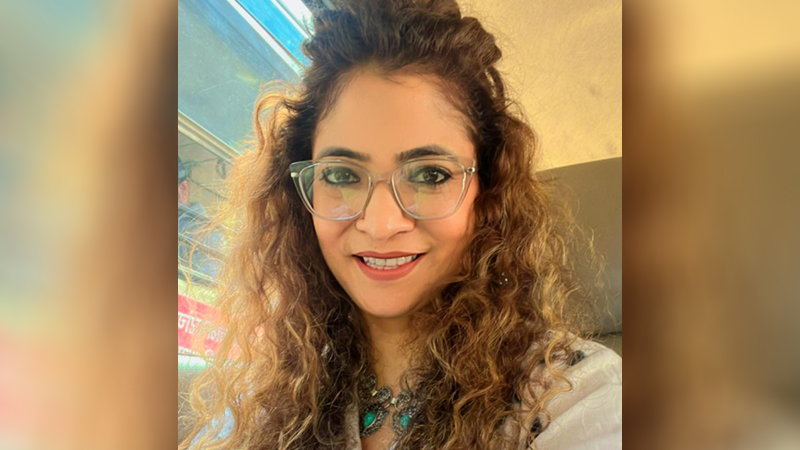
    MUMBAI: Influencer marketing just got a shot of seasoned leadership. The global influencer marketing SaaS platform, Klugklug announced the appointment of Ruchika P. as its chief business officer (CBO) for India on 22 May 2025. The move signals the company’s aggressive growth plans in a sector rapidly shifting towards data-driven credibility and scale.

    With more than two decades of experience across digital advertising, ad tech, and sales leadership, Ruchika joins Klugklug at a pivotal inflection point. She previously held leadership roles at Rezworx and Inshorts and led business development for Colombia Ads at Times Internet. Her deep engagement with media agencies like GroupM, Dentsu, IPG, Havas, and Publicis adds strategic heft to her new role.

    “We’re pleased to welcome Ruchika as our chief business officer. The first aspect of her that caught our eye was something we internally call ‘Klug-ness’, which is about her being ‘a self-motivated ninja’, which is what her past has shown, and Klugklug is gunning for that and another trait – ‘radical transparency’ in all our engagements. Her leadership and structured thinking will be key in expanding our operations and reinforcing Klugklug’s values in the Indian market”, said Klugklug co-founder & CEO Kalyan Kumar.

    Co-founder & CPO Vaibhav Gupta added, “Brands today are gradually realizing the importance of data science and tech in influencer marketing. With Ruchika’s experience, she brings a thoughtful mix of industry knowledge and new energy. Her grasp of what brands look for, along with her focus on structured, data-driven approaches, sits well for Klugklug’s growth in India”.

    Ruchika said the role felt like a natural alignment. “I am excited to join Klugklug at such a pivotal time in its growth journey. The company has already shown a completely novel and audacious approach to influencer marketing, and this resonated with my experience and passion for driving real and impactful business outcomes & unlocking true value to every brand’s Influencer deployment. I am stoked to be a part of the talented team at Klugklug, especially since the Founders, who have been entrenched in the Influencer space for over a decade, and the growth of this category has only just begun”.

    Klugklug currently serves over 200 Indian and global brands across FMCG, D2C, electronics, beauty, health, and e-commerce. Its AI-powered platform analyses more than 400 million influencers across 150+ countries, 35,000+ cities, and 160+ languages. With robust tools for audience insights, credibility scoring, and campaign intelligence, Klugklug is building transparency into every layer of the influencer marketing funnel.