Category: MAM

  • Ashish Singh hops over to Starcom as vice president after a long Mindshare innings

    Ashish Singh hops over to Starcom as vice president after a long Mindshare innings

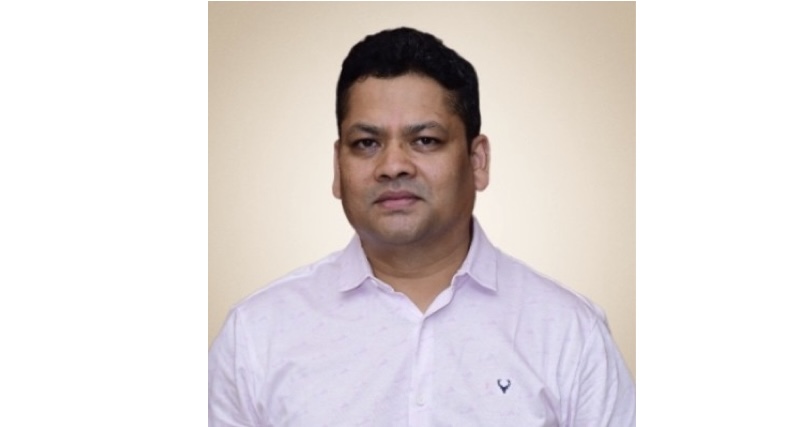
    MUMBAI: Ashish Singh, a seasoned digital strategist with close to 20 years in media and marketing, has joined Starcom as vice president. The move comes after a rewarding 6-year run at Mindshare, where he last served as principal partner.

    Ashish’s career reads like a masterclass in Indian media evolution — from steering digital growth at Mindshare and Carat, to shaping strategies at Omnicom, Isobar, Hungama, and even a pre-digital era stint at Naukri.com.

    From new business pitches to integrated digital solutions, Ashish has been the go-to guy for driving revenue and innovation. His impressive resume includes managing marquee accounts, building digital roadmaps, leading pitch wins, and mentoring teams across verticals.

    With this power move to Starcom, industry insiders are watching closely as Singh aims to script a fresh growth story at the Publicis-owned agency. Let the planning wars begin.

  • Time’s up for boring watches as G-Shock teams up with Extra Butter

    Time’s up for boring watches as G-Shock teams up with Extra Butter

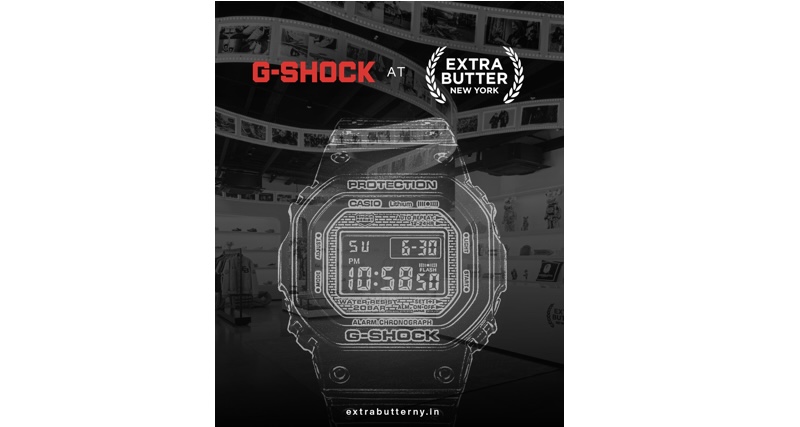
    MUMBAI:  G-Shock has found its perfect match in Extra Butter, proving that even the toughest watches need a bit of street credibility. The Japanese timepiece titan has struck a partnership with the Mumbai-based concept boutique, bringing its legendary “absolute toughness” philosophy to India’s fashion-forward crowd.

    The deal sees G-Shock’s most iconic models, including the battle-tested DW-5000R, landing on Extra Butter’s shelves and digital storefront. But the real prize? Twenty pieces of the mythical Casio Ring Watch—a collector’s item that vanished faster than free samples at a department store—will be available exclusively through the partnership.

    Casio India managing director Takuto Kimura said, “G-Shock has always stood at the intersection of style, culture, and resilience. Our partnership with Extra Butter Mumbai gives us a unique platform to engage with the new generation of creators and tastemakers in India. We are confident that this partnership will resonate with individuals who define strength on their own terms and reflect our evolving engagement with India’s emerging wave of tastemakers.”

    Extra Butter’s founder  Ankur Amin added: “Our partnership with G-Shock is rooted in a shared commitment to design that disrupts and storytelling that connects. We’re excited to bring their legendary watches to our audience, both in-store and online, further enriching our curated selection of lifestyle products.”

    The partnership marks G-Shock’s boldest play yet in the Indian market, where streetwear culture is exploding faster than a dropped smartphone screen. By aligning with Extra Butter—a brand that’s made its name curating the coolest kicks and threads—G-Shock is betting big on India’s emerging wave of style mavens.

    The timing couldn’t be better. India’s youth are hungry for brands that speak their language of authenticity and rebellion. G-Shock, with its four-decade legacy of surviving everything from skateboard crashes to military operations, fits the bill perfectly.

    The watches are now available both at Extra Butter’s Mumbai store and online, offering collectors and first-time buyers alike a chance to strap on some legendary toughness. Whether you’re a streetwear obsessive or simply someone who believes watches should survive longer than your last relationship, this partnership promises timepieces that tick all the right boxes.

  • Shubman Gill gets specs appeal as Oakley’s new poster boy

    Shubman Gill gets specs appeal as Oakley’s new poster boy

    MUMBAI: India’s newly-appointed  test series captain Shubman Gill has added designer shades to his flashy cricket gear, becoming Oakley’s latest brand ambassador in a partnership that promises to give Indian sport a serious style upgrade. The young batting sensation, known for his elegant stroke play and unflappable temperament, is now the face of Oakley’s Artifacts from the future campaign—his first foray into the eyewear game.

    At 25, Gill has already established himself as one of cricket’s most promising talents, captivating fans with his consistency and composure under pressure. Now he’s set to captivate them with his choice of sunglasses too, joining an elite roster that includes football’s Kylian Mbappe, basketball’s Damian Lillard, and American football’s Patrick Mahomes II.

    “I’m very excited to join Oakley, a brand that stands for performance, progression and passion – values that resonate strongly with mine.,” said Gill. “Oakley has been an integral part of my cricketing journey every time I took to the field. The innovative lens and frames technologies in every Oakley help enhance performance, and I love how unapologetically stylish they are!” 

    Oakley senior brand business manager Sahil Jandial was equally effusive about the partnership. “Oakley is firmly rooted in sports, and is one with the culture and community of athletes pushing the boundaries of performance. Shubman, with his relentless pursuit for perfection and progression, is a great embodiment of the Oakley spirit. I am confident this partnership will inspire millions to stay the course till they become the best version of themselves…. And onwards from there!” 

    The timing is spot-on for Oakley, which is marking its 50th anniversary with the launch of its futuristic “Artifacts from the future” collection. The range includes the Plantaris, described as “a high-wrap piece of future-facing art,” alongside the heritage-inspired Lateralis and the minimalist Masseter—names that sound more like Roman gladiators than sunglasses.

    Oakley’s pitch is that these designs are “created for 2075 and delivered to 2025,” which is either brilliantly forward-thinking or the sort of marketing hyperbole that would make Don Draper blush. Either way, the California-based company, now owned by Luxottica, has built its reputation on innovation, holding more than 900 patents and establishing itself as the go-to brand for athletes who need to look good whilst performing exceptionally.

    For Gill, the partnership represents more than just a commercial opportunity—it’s a chance to influence India’s youth beyond the cricket pitch. His journey from promising youngster to established international star and now test Captain for India mirrors Oakley’s own evolution from a small garage operation in 1975 to a global lifestyle brand.

    The collaboration also reflects cricket’s growing commercial appeal, particularly in India where the sport commands massive audiences and generates enormous revenue. By aligning with one of the game’s stars, Oakley is betting that Gill’s influence extends far beyond the boundary rope.

    Whether this partnership will inspire millions to “embrace their true selves and push beyond limits”—as the press release breathlessly claims—remains to be seen. But one thing’s certain: in the increasingly style-conscious world of modern sport, looking the part is almost as important as playing it. And with Gill now sporting Oakley’s latest designs, cricket just got a little cooler.

  • Indian watchdog had reason to raid global ad agencies for price-fixing

    Indian watchdog had reason to raid global ad agencies for price-fixing

    MUMBAI: Even as India’s advertising industry executives were painting the town red at their annual jamboree in Goa, a Reuters exposé should have them reaching for paracetamol. The party-poopers at India’s Competition Commission have uncovered a cosy cartel that makes the old boys’ club look positively egalitarian.

    A confidential document dated 7 February reveals that global advertising giants have been caught red-handed coordinating the commissions they charge clients—a practice about as competitive as a rigged horse race. The evidence was so damning it prompted surprise raids in March at the Indian offices of WPP-owned GroupM, Interpublic, Publicis and Dentsu, along with three industry bodies that apparently forgot the first rule of cartels: don’t leave a paper trail.

    The Competition Commission of India’s  (CCI’s) sleuths discovered not one but three separate cartels operating through the Indian Society of Advertisers, the Advertising Agencies Association of India  (AAAI) and the Indian Broadcasting and Digital Foundation (IBDF) . It’s like finding out your local parish council is actually running the mafia.

    Since at least 2023, these agencies have been exchanging commercially sensitive information through WhatsApp groups. They agreed to stick to pre-decided commission structures with the discipline of a Swiss watch, the commission found.

    The AAAI, which represents the big four agencies, didn’t just coordinate prices. It organised virtual meetings to align on responses to clients and discussed “retaliatory action” against members who dared to break ranks. The group also “fixed the formula for fees in case of fee-based service to advertisers”, the commission noted—apparently unaware that price-fixing went out of fashion around the same time as top hats.

    None of the accused parties responded to Reuters’ queries, maintaining the kind of stony silence usually reserved for caught teenagers or politicians facing corruption charges.

    The case was triggered after Dentsu turned whistleblower—a move that proves there really is no honour among thieves. The revelations cast a shadow over India’s booming media sector, where Reliance-Disney and Sony are top dogs in a market worth $18.5 billion last year.

    The commission found that advertisers had “established a buyer’s cartel” whilst broadcasters engaged in “collective action to refrain from giving discounts.”. Another cartel lurks in the media segment, with attempts underway to establish one in the creative business too, because apparently one conspiracy just isn’t enough.
    In recent weeks, the AAAI  has privately advised members to avoid pricing discussions during meetings unless their legal adviser is present.

    The investigation comes as India’s advertising landscape shifts following last year’s $8.5 billion merger between Walt Disney and Reliance’s Indian media assets, creating a behemoth with an estimated 40 per cent share of the television and streaming ad market.

    India ranks as the world’s eighth-biggest advertising market, making this less a local spat and more a global reckoning. The CCI’s  investigation is expected to rumble on for several months before final findings emergE.

  • Breathe easy burnout is not your creative destiny

    Breathe easy burnout is not your creative destiny

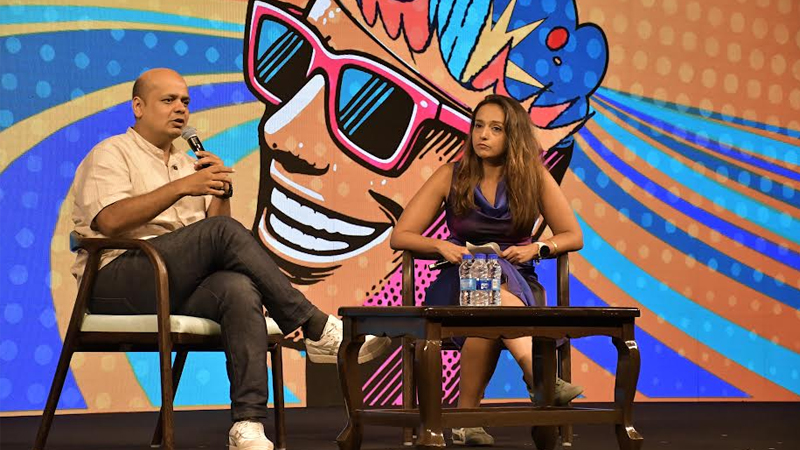
    MUMBAI: Tired is not a personality trait. And if your big ideas feel more foggy than fiery, wellness expert Luke Coutinho might know why. At the Goa Fest 2025 fireside chat with VML India’s Babita Baruah, he unpacked the anatomy of burnout and why hustle culture is creativity’s worst enemy. “Are you exhausted or just on autopilot?” That was Luke Coutinho’s call to action to a room full of creative professionals who raised their hands at the mere mention of burnout. But Coutinho, integrative medicine expert and long-time advisor to India’s armed forces wasn’t here to peddle another green juice. He was here to challenge the cult of grind and offer a surprisingly simple antidote: adapt.

    Burnout, he explained, isn’t just about being busy. It’s chronic stress that numbs joy, dulls creativity, and disconnects people from the very things that once brought them meaning. “It’s when your favourite song doesn’t hit the same, your child’s smile doesn’t light you up, and your morning coffee is just a prop to survive,” he said.

    Contrary to social media’s rigid checklists, Coutinho advised attendees to stop chasing generic wellness trends and instead tailor health practices to their own lives. “Trying to live like a reel will burn you out faster than your deadlines,” he quipped. The solution? A mindful mix of food, sleep, movement, and emotion.

    Four lifestyle levers for creative spark:

    ●    Nutrition: Ditch junk and stimulants. They tank energy and ideas.

    ●    Sleep: It’s not about waking up early, it’s about completing your sleep cycle.

    ●    Emotional wellness: Channel pain into power, not procrastination.

    ●    Movement: Walk, stretch, breathe—endorphins boost the prefrontal cortex, your creative HQ.

    Coutinho dismantled hustle culture as “glorified exhaustion”. Instead, he urged for a shift from performative busyness to “purposeful urgency”. As proof, he shared a story about the architect of Dubai’s Burj Khalifa who, before his big pitch, didn’t power through but went for a swim to reconnect with himself. “Stillness before action. That’s how true creativity emerges,” said Coutinho.

    He also offered a practical fix: six minutes a day. That’s all you need, he said, to begin rewiring your burnout brain:

    1.    Mind Sweep (Morning) – List 3 things you’re grateful for. Set a daily intention.

    2.    Breath Stacking (Midday) – Take 8–10 deep, slow breaths. Reset.

    3.    Digital Sunset (Evening) – Switch off all screens and reflect on a small win.

    These micro-rituals anchor you in the present, a place creatives rarely linger.

    He concluded with a reality check shaped by his work with terminal patients: “Not one of them talks about their titles or salary. They remember love, laughter, and memories.” The lesson? Life isn’t a sprint, and your legacy won’t be built in unread emails.

    So the next time your creativity stalls, don’t scroll or sprint pause, breathe, and ask: what really makes me feel alive?
  • Pulse on point as DS Group proves culture is the sweetest strategy

    Pulse on point as DS Group proves culture is the sweetest strategy

    MUMBAI: When a candy meant for grown-ups causes a social media frenzy and movie stars post about it for free, you know you’ve struck marketing gold. That’s precisely what DS Group sr. vice president of corporate marketing Rajeev Jain laid out in his eye-opening session at Goa Fest 2025 titled ‘Cultural Marketing Can Be a Winner: Pulse Candy a Case Study’.

    Jain opened with a powerful quote from CK Prahalad, “While it is true that multinationals will change emerging markets forever, the reverse is also true.” And Pulse, it turns out, is a case of the latter, an unapologetically Indian brand that rewrote the rules of candy marketing.

    The secret sauce? Culture. Not just flavours, but deep-seated values and norms. Jain drew parallels from around the globe: how Coca-Cola supported Saudi women driving under its “Keys of Change” campaign, or how Nescafé cracked Japan by first selling coffee-flavoured toffees to build a taste habit among kids who grew into coffee-loving adults.

    Pulse did something equally audacious back home.

    Backed by two years of intense R&D, Pulse launched a centre-filled candy that catered to Indian palates think tang, spice, and chatpata chaos. It wasn’t your average sweet treat. It was a nostalgia bomb, a street-side snack, and a meme-worthy munch all rolled into one.

    The brand boldly went where few dare: marketing candy to adults. “Why should kids have all the fun?” wasn’t just a slogan, it was a war cry. And consumers responded with their thumbs generating a flood of user-generated content without a rupee spent on influencer tie-ups.

    Case in point? Disha Patani posting about Pulse on her own. “That’s when we knew we weren’t just in the candy business,” said Jain. “We were in the cultural relevance business.”

    The talk underscored a central truth: great cultural marketing isn’t loud, it’s resonant. Pulse didn’t follow trends; it tapped into India’s taste DNA. The result? A product that felt tailor-made for the local market yet had the swagger of a global disruptor.

    In a world flooded with algorithm-driven campaigns and AI-generated creatives, Pulse’s story is refreshingly analogue, it’s about listening before selling, and tapping into what people crave emotionally, not just gastronomically.

    At a fest packed with tech talk and future-forward buzzwords, Jain’s candy-coated case study reminded everyone that flavour still wins when it hits the culture nerve just right.

  • Clickbait to clean slate as HUL leads media trust reset drive

    Clickbait to clean slate as HUL leads media trust reset drive

     MUMBAI: What’s invisible, expensive, and possibly not even human? Thirty percent of your ad impressions. Hindustan Unilever Ltd (HUL),  head of media and digital marketing Tejas Apte didn’t mince words at Goa Fest 2025 as he peeled back the pixel-perfect surface of digital advertising to reveal a mess of murky metrics and media mayhem.

    Speaking in a session titled ‘Building a Safer, Smarter, Cleaner Media Ecosystem’, Apte laid bare the underbelly of modern marketing where ad fraud, bot views, and misuse of data are quietly eating away at ROI and trust. With up to 30 per cent of digital impressions possibly fake, brands aren’t just losing money; they’re losing credibility.

    “Legacy media had a balance subscription and ad-funded models. But digital is almost entirely ad-funded,” he noted. “And that makes transparency and safety non-negotiable.”

    As part of the Indian Society of Advertisers (ISA), HUL has taken a lead in drafting a four-point media charter that aims to disinfect digital with real-world rigour:Safe placements for both brands and users, Viewability standards to filter out the fake, Fraud prevention that spans all formats and platforms, Responsible first-party data usage grounded in clear consent.

    Apte underscored that these principles weren’t just boardroom theory, they were co-created with platforms like Google and Meta, ensuring that everyone speaks the same metric language. The focus is shifting from shallow click metrics to meaningful business outcomes.

    The ad world’s changing algorithm isn’t just affecting platforms, it’s rewriting agency job descriptions. With automation and AI replacing mechanical tasks, Apte sees agencies morphing from campaign vendors to strategic business partners. “In-housing is real, but rarely complete. Agencies remain critical, if they evolve from service delivery to impact delivery.”

    While some brands are building internal muscle, the ISA charter pushes for an ecosystem-wide adoption from nimble startups to legacy giants. The ultimate goal? A future where every impression counts, every ad is seen by a human, and every click has consequence.

    Practising what they preach, HUL has already implemented these guidelines internally. The result? Sharper first-party data strategies, better media ROI, and a wave of new, trustworthy media partners.

    So, next time your ad gets a million impressions, pause to ask were any of them real? Or are we all just chasing ghosts in the machine?

    As Apte put it with a smile, “Click fraud is not just a tech issue. It’s a trust issue.”

  • Enormous takes the creative agency Abby crown at GoaFest 2025

    Enormous takes the creative agency Abby crown at GoaFest 2025

    GOA: Mumbai’s glittering advertising elite gathered for the Abby creative awards 2025, powered by One Show, and what a bash it was! The night saw agencies duking it out for supremacy, with some truly enormous wins and a few surprises.

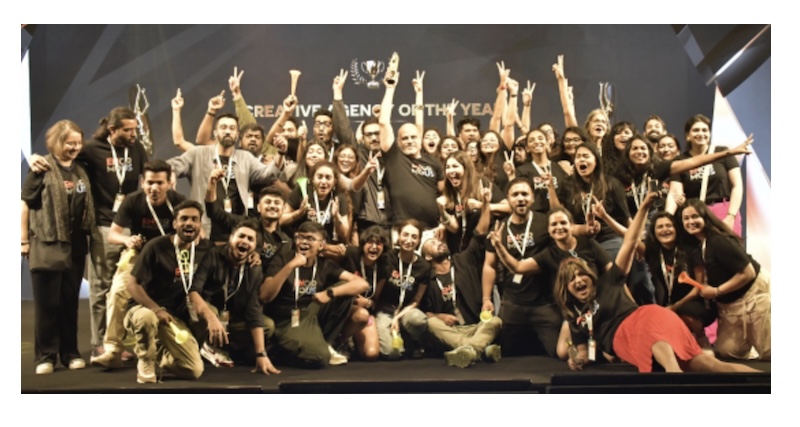
    Enormous clinched the coveted creative agency of the year title, proving their creative muscle is, well, gargantuan. ItFCB  bagged a whopping 67 metals, including 6 gold, 17 silver, 24 bronze, and 20 merits, accumulating a grand total of 286 points. Leo India, not far behind, stacked up 51 metals for a respectable 196 points, while VML India, with a Grand Prix under its belt, tallied 78 points. Clearly, size does matter when it comes to creative firepower.

    In the specialist categories, Leo India showed its strategic genius, being crowned the brand activation & promotions specialist agency of the year with 30 points and also dominating as the health specialist agency of the year, amassing 40 points. Talk about being a well-oiled machine!

    FCB India wasn’t to be outdone, nabbing the branded content & entertainment specialist agency of the year with 30 points. It seems their content is so good, it’s almost too branded. And when it came to the visual feast, Good Morning Films was hailed as the video craft specialist of the year, scoring a dazzling 84 points. Their work, one might say, was simply picture-perfect.

    Individual campaigns that got chatter going  included Famous Innovations’ The Anatomy of Suffering for Henlo Pet Nutrition, which snared a Grand Prix in Still Print – Still Craft – Art Direction. Pet lovers, prepare to be paws-itively moved. In the Audio-Visual category, Enormous bagged two golds for Wok Tok By Veeba’s “Chinese, par apne style se” and Lahori Jeera’s “Har Koi Peera Lahori Zeera“—proving that when it comes to food, Enormous really knows how to cook up a storm.

    Meanwhile, Neeman’s Are Those Neeman’s Shoes Phone Hack campaign by VML India caused quite the stir, landing a Grand Prix for Audio – Voice-Activation. One might even say it spoke volumes! Famous Innovations also scooped up a Grand Prix for The Anatomy of Suffering for Henlo Pet Nutrition in Out of Home (Ambient Media), showing that their suffering has truly paid off.

    From Durex India’s Teaching India to get it wrong by FCB India to MyMuse’s Designed to Find the Right Spot by Famous Innovations, the awards celebrated campaigns that were both bold and brilliant, leaving no creative stone unturned.

     The Abbys once again showcased that in the mad world of advertising, a bit of cheeky creativity and strategic nous are always a winning combination.

  • Ad reels and recall: Senthil Kumar reveals what set the jury screens ablaze at Goafest 2025

    Ad reels and recall: Senthil Kumar reveals what set the jury screens ablaze at Goafest 2025

    MUMBAI: In a session that played out like a director’s cut of India’s most memorable commercials, VML India CCO Senthil Kumar took the Goafest 2025 audience inside the jury room for a deep dive into what makes an ad truly work. The verdict? If you’d willingly watch it again, it’s doing something right.

    Speaking under the session banner ‘What Ignited the Jury Room?’, Kumar opened with a simple litmus test: “The best ad films aren’t just one-watch wonders. A great film has repeat value”.

    Kumar walked attendees through a curated list of top-performing ad films that had not just caught the jury’s eye, but had also burned themselves into the audience’s collective memory.

    One of the top contenders was the Lahori Zeera commercial. “Every frame had the brand. That’s rare today”, Kumar said, noting how strong visual branding contributed to high recall.

    Another winner was the Veeba Desi Chinese spot, which cleverly flipped expectations. “Chinese characters behaving like Indians—it’s fresh, culturally playful, and paired with a sticky soundtrack. That’s what lands”, he said.

    He also tipped his hat to the Snickers ad directed by Rohit Shetty. While Kumar admitted it wasn’t a novel idea globally, its execution was unmistakably local and creatively bold. “’Grab a Snickers’ may not be new, but how you grab attention is”, he said.

    In the Dream11 campaign, Kumar praised its sharp scripting and cast synergy. “It’s not easy to pull off dialogue-led storytelling with both actors and cricketers, but this one had audiences asking, ‘Aapki team mein kaun hai?’ on loop”.

    He rounded off with the Adani campaign highlighting rural electrification. “’Pehle pankha aayega, phir bijli aayegi’ wasn’t just a line, it was a layered narrative of transformation”. Kumar added.

    Throughout the session, Kumar emphasised one consistent metric: resonance. “An idea may be clever, but if it doesn’t move you—or make you laugh, pause, or hum—it’s just noise”, he concluded.

    Goafest’s jury, he noted, rewarded ads that nailed both craft and clarity, but above all, evoked genuine emotion or reaction. In the scroll-and-skip era, Kumar reminded creatives that the real test of storytelling lies in its staying power.

  • Being uncomfortable is a creative superpower, says Marcel CEO Youri Guerassimov at Goafest 2025

    Being uncomfortable is a creative superpower, says Marcel CEO Youri Guerassimov at Goafest 2025

    MUMBAI: At Day three of Goafest 2025, Marcel (Paris) chief creative officer & CEO Youri Guerassimov delivered a wake-up call to a packed house, reminding brands that playing safe is a fast-track ticket to irrelevance. His keynote, titled ‘Creativity That Dares to Disrupt’, challenged marketers to ditch comfort and lean into creative bravery.

    “Bravery in advertising is about stepping outside comfort zones and challenging norms”, said Guerassimov, adding that brands face an uphill battle for attention with over 6,000 ads bombarding consumers each day. Visibility alone no longer cuts it; what cuts through is conviction.

    Citing global studies, he noted that 86 per cent of consumers (Edelman) now expect brands to take a stand on social or environmental issues, and 66 per cent (Accenture) are willing to switch allegiance if companies remain silent. “Fear is temporary”, he warned. “Regret is forever”.

    Drawing from iconic campaigns, Guerassimov spotlighted Nike’s controversial Colin Kaepernick ad as a case of calculated defiance and cultural impact. He also praised Volvo for its courage in sharing a safety innovation with rivals—an act that served both purpose and people.

    Importantly, he clarified that bravery in branding doesn’t always require provocation. “Bravery can be strategic, design-led, or business-oriented”, he said, showcasing Mcdonald’s minimalist billboard and Marcel’s ‘Inglorious Fruits and Vegetables’ campaign. The latter began as a simple retail concept and grew into a national movement tackling food waste.

    Guerassimov also emphasised that bravery lies not in budgets but in belief. Whether it’s a few purposeful words added to a contract or overhauling a store layout to reflect values, real change comes from intent and execution.

    He celebrated Patagonia’s headline-making move to donate its profits to climate activism as a prime example of purpose-driven disruption. “Bravery is a strategic tool”, he affirmed. “A superpower to connect with consumers and lead markets”.

    Ultimately, Guerassimov urged brands to trust their ideas and act on them decisively. “When you feel a little uncomfortable with your idea, that’s often the sign you’re on the right track”.