Category: MAM

  • 1702 Digital taps Vishal Dhar to lead digital charge

    1702 Digital taps Vishal Dhar to lead digital charge

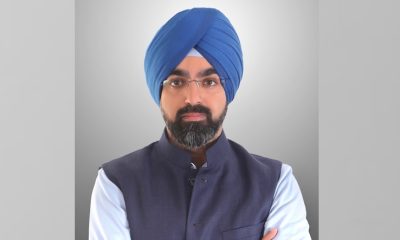
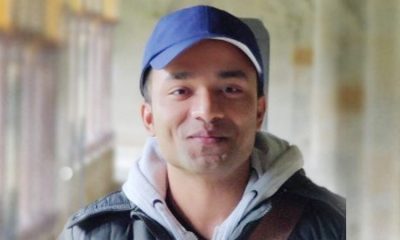
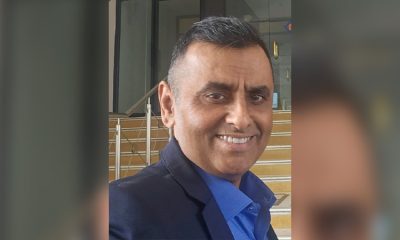
    MUMBAI: 1702 Digital is betting on experience to fuel its next growth spurt. The Mumbai-based consultancy, which bills itself as one of India’s fastest-growing full-service digital transformation shops, has appointed Vishal Dhar as vice president of digital—a move designed to muscle up its strategic firepower in an increasingly crowded market.

    Dhar will lead digital strategy, performance marketing and innovation initiatives, working alongside the leadership team to sharpen the agency’s integrated offerings. His brief: drive large-scale campaigns that marry data-driven insights with creativity whilst delivering measurable results.

    The appointment comes as 1702 Digital pushes to redefine how brands connect with audiences through what it calls a blend of creativity, technology and measurable impact. Translation: no fluff, all outcomes.

    “I’m thrilled to join 1702 Digital at a time when the digital space is evolving faster than ever,” said Dhar. “The agency’s bold approach, creative agility and focus on impact-driven results resonate deeply with my own vision. I look forward to contributing to the next phase of 1702’s growth and driving success for our clients.”

    1702 Digital co-founder Mihir Joshi welcomed the hire as a strategic upgrade. “Vishal’s experience and strategic mindset will further elevate our digital capabilities and strengthen our position as a leading partner for brands looking to achieve transformative growth through digital innovation.”

    Founder & managing director Aanchal Arora doubled down on the sentiment. “His experience and understanding of the evolving digital landscape make him a perfect fit for our next phase of growth. As we continue to expand our digital ecosystem, Vishal’s leadership and strategic insight will play a pivotal role in elevating our capabilities and reinforcing 1702 Digital’s position as a creative powerhouse.”

    The hire marks a key milestone in 1702 Digital’s expansion trajectory, signalling ambitions to move beyond fast-growing upstart status into established player territory. Dhar brings extensive experience across marketing, digital transformation and business growth—credentials the agency clearly believes will help it punch above its weight in pitches and delivery.

    Whether 1702 Digital’s bet on seasoned leadership translates into the transformative growth its founders promise remains to be seen. But in an industry where digital expertise is currency and results are king, hiring someone who’s driven large-scale campaigns before is a sensible play. Now Dhar just needs to prove he can do it again—this time with 1702’s name on the work.

  • Dentsu cracks the code: three human truths that will define marketing in 2026

    Dentsu cracks the code: three human truths that will define marketing in 2026

    MUMBAI: In an era where artificial intelligence orchestrates our every click, the most valuable marketing insights remain decidedly human. Dentsu’s latest media trends report strips away the algorithmic complexity to reveal three enduring behaviours that will separate winners from also-rans in 2026: our craving for simplicity, our need to connect, and our dwindling attention spans.

    The sixteenth edition of Human Truths in the Algorithmic Era arrives as brands grapple with seismic shifts—conversational search engines that blur the line between query and oracle, agentic AI that promises to shop on our behalf, and cultural formats from Japanese anime to Chinese microdramas rewrite entertainment rule books.

    “Just a few years ago, the media landscape seemed dominated by a handful of platforms,” said dentsu global practice president of media and integrated solutions  Will Swayne. “By 2026, the foundations may crack even further. Brands must focus on what remains stable over time by rooting their strategic thinking in core, invariable human behaviours.”

    The first truth—we are simple until we are complex—captures how consumers chase convenience but rebel against algorithmic predictability. Nobody enjoys searching for parking spots or wading through bloated recipe blogs. Yet the Labubu plush toy frenzy proves the thrill of the chase still matters.

    Dentsu identifies search experience optimisation as the new battleground, encompassing everything from large language model optimisation to retail search. As zero-click searches proliferate, brands must ensure content appears everywhere consumers look—whether that’s ChatGPT, TikTok or Amazon.

    The report warns against “agent inflation”—rushing to deploy AI agents without strategy. With 80 per cent of chief marketing officers citing generative AI as a priority investment, dentsu urges building context-aware systems with governance safeguards, not chatbots slapped together for boardroom optics.

    Then there’s the friction paradox. Whilst Amazon rolls out instant-scan shopping and same-day perishable delivery, cult brands like Knitwrth announce collection drops weeks in advance with strict no-returns policies. Trader Joe’s refuses online ordering entirely. Strategic friction, dentsu argues, can spark desire and build community—if wielded deliberately.

    The second truth—we are social animals—explores how influence has decentralised. Nearly half of American adults regularly spend time with friends, and 83 per cent of consumers believe brands should facilitate human connections, not just transactions.

    Reddit threads now rival mainstream media for product reviews. Substack recently surpassed The Wall Street Journal in traffic. Dentsu’s research shows promotional content from creators holds attention longer and drives greater consideration than brand ads—but only when creators retain control.

    The report urges brands to invest in diverse smaller creators with authentic ties rather than chasing mega-influencers. Twice as many people engage most with influencers under one million followers than with mega-influencers. Gen Z favour Twitch and Discord; boomers prefer LinkedIn and Facebook.

    Live experiences remain unmatched for forging shared memories. Streaming platforms are acquiring sports rights and launching original live programming—WWE’s Raw has ranked in Netflix’s global top 10 every week in 2025. Meanwhile, Millennial nostalgia is peaking: Oasis tours, Buffy reboots, and The Devil Wears Prada sequels are minting money in 2026.

    Business messaging is finally monetising at scale. WhatsApp, WeChat and Messenger each boast over one billion monthly users, with WhatsApp reportedly opened 891 times monthly versus TikTok’s 359. New ad placements are emerging, but the real opportunity lies in unified commerce and customer experience through persistent conversations.

    The third truth—we don’t read advertising—acknowledges that nobody ever has. Howard Luck Gossage nailed it decades ago: “People read what interests them; and sometimes it’s an ad.”

    With exploding screen time and AI slop drowning feeds, advertisers are collectively spending more to reach fewer people. Dentsu’s answer: play the quality game, not the saturation game.

    AI-generated audiences offer a way forward. These synthetic consumer profiles simulate real-world attitudes and behaviours, providing immediate creative feedback and reducing research costs. Dentsu’s Generative Audiences capability combines ID-based precision with AI-driven scale, enabling brands to engage known customers accurately whilst connecting with new audiences as interests shift.

    Carat’s Brand Reset research—the world’s largest attention study on video’s long-term impact, spanning 40,000 people and ten NextGen video platforms—reveals that connected television now delivers outcomes comparable to broadcast. A single CTV exposure lifts long-term sales by 3.16 per cent over three years, approaching broadcast television’s 3.61 per cent. Even short-form vertical video in fast-scroll environments can lift sales by 6.62 per cent with proper attention.

    Entertainment presents untapped white space. Sports docuseries reach 40 per cent of global consumers monthly, capturing women, Gen Z and emerging markets where traditional sports lag. Gaming still captures less than five per cent of global media investment despite massive user bases. And 50 per cent of Gen Z watch anime at least weekly—more than any major sports league in the United States.

    dentsu creative and media brands in South Asia chief executive Amit Wadhwa frames the challenge starkly: “In a world ruled by algorithms, human truths remain our compass. Technology opens doors, but empathy, creativity and understanding people will determine who truly wins.”

    The report, developed by 30 global media experts, positions media not as a channel but as a growth engine connecting creativity, commerce and culture. Brands that anchor strategy in enduring human truths whilst embracing new formats—from agentic AI to microdramas—can move beyond mere survival.

    Because in 2026, as algorithms reshape everything from search to shopping to storytelling, the brands that win won’t be those with the most agents or the biggest ad budgets. They’ll be the ones that remember we’re still human—simple when we can be, social when we need to be, and utterly unmoved by advertising that forgets what interests us.

  • Ad Man for All Seasons Enters the Hall of Fame at AdAsia Beijing

    Ad Man for All Seasons Enters the Hall of Fame at AdAsia Beijing

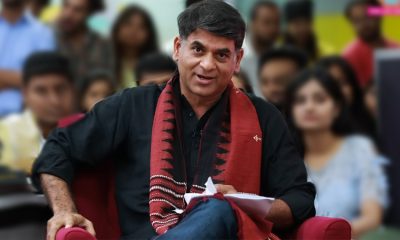
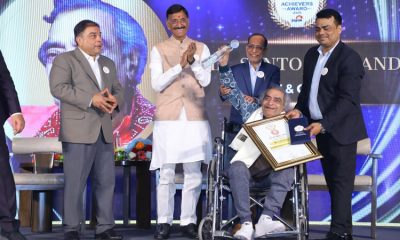
    MUMBAI: In a world where ad campaigns come and go with the seasons, one man has managed to make his impact timeless. Srinivasan Swamy, chairman of R K Swamy ltd., was inducted into the Hall of Fame of the Asian Federation of Advertising Associations (AFAA) at the grand AdAsia Beijing, joining an elite circle of legends who’ve defined the region’s advertising landscape.

    The honour AFAA’s highest recognition was presented by Raymond So, immediate past president of AFAA, in the presence of delegates from 32 countries, each applauding a career that has shaped not just Indian advertising, but global marcom thinking.

    For over 40 years, Swamy has been more than an adman, he’s been an architect of industry institutions. The citation, read before a full house, traced a remarkable career spent leading and building one of India’s largest integrated marketing groups, the R K Swamy Hansa group, which he has helmed for over 25 years.

    But his legacy stretches far beyond boardrooms. Swamy has steered nearly every major advertising and marketing body worth its acronym AFAA, IAA, CAAAA, AAAI, ASCI, ABC, AIMA, and more with distinction, diplomacy and a deep sense of purpose.

    He’s been President of the India Chapter of the International Advertising Association (IAA) for an unprecedented four years, President of the Advertising Agencies Association of India (AAAI) for a record three consecutive terms (and now, re-elected again in 2025), Chairman of the Advertising Standards Council of India (ASCI), Chairman of the Audit Bureau of Circulations (ABC), and even President of the All India Management Association (AIMA).

    And that’s not counting his presidencies at the Madras Chamber of Commerce and Industry, the Madras Management Association, and the Advertising Club Madras, where he remains a beloved mentor and fixture.

    Swamy’s fingerprints are on some of the most defining industry moments from the birth of GoaFest, the country’s biggest celebration of creativity, to the IAA World Congress 2019, the IAA Silver Jubilee Summit in Kochi, multiple editions of the CII International Brand Summit, and the AIMA World Marketing Congress.

    Each of these events, powered by Swamy’s vision, cemented India’s stature on the global advertising map. His leadership style, a mix of quiet conviction and unflagging optimism has turned committees into communities and conferences into milestones.

    Swamy’s shelf of awards could fill a museum and each comes with a story of grit, growth and generosity.

    He’s the only Indian to have received the Award of Appreciation from the Japan Advertising Association, the IAA Global Compass Award, and the AdStar Korea Lifetime Honour Award rare distinctions that underscore his global influence.

    Add to that the AFAA Special Merit Award, the IAA Inspire Champion Award, the IAA North Star Medal, Honorary Life Fellowship from AIMA, Lifetime Achievement Awards from AAAI, Rotary Club of Guindy, and Indira Institutions, and it’s clear the industry has been applauding his impact for years.

    Even his alma mater, Alagappa College of Technology, honoured him with a Distinguished Alumni Award during its Platinum Jubilee celebrations, a homecoming moment that completed the circle.

    But what sets Swamy apart isn’t just the positions he’s held, it’s the purpose behind them. His contributions extend to education, healthcare, culture, and community development, where he has quietly but consistently supported institutions and causes that build social capital alongside business growth.

    Colleagues often describe him as “approachable yet awe-inspiring,” a man whose friendly demeanour, wise counsel, and willingness to help have earned him as much affection as admiration. In an industry known for its egos, Swamy’s humility stands out like a perfectly written headline simple, powerful, and memorable.

    As AFAA conferred its Hall of Fame honour, the applause in Beijing carried a sense of inevitability. Here was a man who didn’t just witness the evolution of Indian advertising he helped write its script, one association, one reform, one landmark event at a time.

    Swamy’s story mirrors the evolution of India’s creative economy itself: rooted in Madras, reaching the world, powered by persistence and propelled by purpose.

    In an industry built on ideas that sell, his greatest idea has been service to the profession, to people, and to progress.

    So, what do you call an adman who’s outlived every campaign, outperformed every title, and outshone every accolade? In the language of advertising, a timeless brand. And as Srinivasan Swamy takes his rightful place in the AFAA Hall of Fame, one thing’s clear: legends don’t retire, they just find better placement.


  • From watching TV, swiping the mobile screen – to reading books

    From watching TV, swiping the mobile screen – to reading books

    MUMBAI: The covid-prompted lockdown turned every parent into a jailer. Trapped indoors with nowhere to run, children reached for the nearest dopamine hit, usually a glowing rectangle promising infinite scroll and zero effort. Kranti Gada, a media entrepreneur and mother of two, watched the same zombie-eyed transformation unfold in her Mumbai home. The dinner table conversations died. The bedtime stories vanished. Imagination, that most precious childhood commodity, seemed to flatline somewhere between Instagram and Youtube.

    Then she noticed something curious bubbling up in her school Whatsapp group. Some 200 desperate parents were frantically swapping books like contraband, passing dog-eared copies of Harry Potter and Geronimo Stilton from flat to flat, anything to prise their children’s fingers away from the screen. The informal lending library worked. Kids were reading again.

    “If this tiny circle could share resources so effectively,” Gada thought, “why not scale it for millions of mothers across India?”

    The result is neOwn, a subscription platform that has become Netflix for the printed page. Children aged 0 to 15 can binge-read from a catalogue of over 9,000 titles delivered straight to their doorstep anywhere in the country. Pick five books a month for Rs 1,299, keep them for 30 days, swap them for fresh ones. Repeat until literate. A single copy of Diary of a Wimpy Kid costs Rs 699 in bookshops; neOwn lets young readers devour up to 15 books a month for roughly double that price.

    The business model is deliciously simple: rent, read, repeat. But the execution requires military precision. Every book undergoes rigorous quality checks and sanitisation before it leaves the warehouse, no one wants sticky fingerprints or mysterious stains from the last borrower. The collection now spans 50,000 physical copies across adventure, mystery, fiction, general knowledge, fantasy and graphic novels, plus a growing selection of regional-language titles. Each book is reviewed by experts before making the cut. This isn’t just bulk-buying from publishers; it’s careful curation designed to hook reluctant readers and challenge voracious ones.

    The neOwn app does the heavy lifting that frazzled parents cannot. It offers personalised recommendations based on age, reading level and genre preferences. Reading progression trackers show how a child evolves from picture books to chapter books to young adult fiction. A waitlist function solves the perennial library problem: if that coveted title is currently out, you simply add it to your wish list. As soon as someone returns it, parents get a Whatsapp alert and an app notification. The book gets reserved for three days. Confirm your interest and it’s blocked exclusively for you, no one else can nick it, ready for your next delivery.

    Reading challenges gamify the experience in ways that would make a Silicon Valley product manager weep with envy. Children log their reading minutes, earn badges, compete (gently) with friends, and build consistent habits. Suddenly, books aren’t homework or vegetables to be endured. They’re addictive. They’re social currency. They’re something to boast about in the school playground.

    The numbers suggest Gada has tapped into something real and urgent. Over 10,000 active readers now scroll through the app. Some 8,500 subscribers are scattered across 350 cities, half of them outside the usual metropolitan suspects of Mumbai, Delhi and Bengaluru. Geography is no barrier; neOwn ships everywhere from tier-1 metros to tier-3 towns, proof that the hunger for stories transcends postcodes and privilege.

    But logistics remain a challenge. Children in Delhi and Bengaluru currently wait five to six days for books couriered from Mumbai, a delay that can dampen enthusiasm when attention spans are measured in seconds. Gada’s solution is simple: decentralise. New warehouses in Bengaluru are coming first, followed by the national capital region. Local distribution means faster deliveries, lower shipping costs, and happier parents. Nearly 10 per cent of neOwn’s subscribers are based in Bengaluru alone, a market too valuable to serve slowly.

    Gada’s background explains why neOwn feels less like a scrappy startup and more like a well-oiled machine. As chief operating officer at Shemaroo, the entertainment giant, she spent years transforming a traditional business-to-business enterprise into a consumer-facing brand. She launched broadcast channels, built OTT platforms, and dragged the company into the digital-first age. An MBA from NMIMS and an alumna of IIM Bangalore, she made Business World’s Disrupt 40 Under 40 list and currently sits on the management committee of the International Advertisers Association’s India chapter.

    “Everything I know I learned there,” she says of Shemaroo. “It’s like my alma mater.”

    That institutional knowledge, how to scale, how to market, how to build infrastructure, now powers neOwn’s rapid expansion.

    But neOwn isn’t just clever logistics wrapped in an app. Gada understands that reading is a social act, not a solitary one. The platform regularly hosts online storytelling sessions, sometimes led by professional narrators who bring characters to vivid life, other times by authors themselves who chat with children about plot twists and character motivations. Young readers ask questions. Authors answer. The distance between creator and consumer collapses. It’s part book club, part fan convention, part interactive theatre. Authors promote neOwn to their followers; neOwn promotes authors to its subscribers. Everyone wins, especially the children who discover that writers are real people with interesting things to say.

    Her “Million Readers Pledge” aims to mobilise an entire country into a reading insurgency. Parents, teachers, corporates, Rotary Clubs, even people without children, everyone is invited to take small, weekly actions that promote literacy. “Gift a book instead of a toy,” Gada urges. “When everyone does a little, together we create a massive impact.” It’s grassroots activism dressed up as consumer behaviour.

    When she appeared on the television show Ideabaaz, which showcases promising business ideas, Liberty Shoes owner  Anupam Bansal immediately pledged his support. “We should encourage her,” he told the cameras. The reaction is typical wherever Gada pitches neOwn: people grasp the mission instantly and instinctively. There’s no need to convince anyone that children spend too much time on screens. The problem is obvious. What’s rare is a solution that’s both practical and scalable.

    Subscriptions currently range from Rs 4,000 for book-only plans to around Rs 8,400 for bundles that include educational toys, yes, neOwn has expanded beyond books into a full ecosystem of learning and play. Parents don’t subscribe once and vanish; they stick around because the value proposition is undeniable.

    The ambition, however, is enormous. Gada wants to scale from 10,000 readers today to 100,000 in the near term, then to one million active readers annually. With an average spend of Rs 8,000 to Rs 10,000 per customer, that translates to Rs 1,000 crore in revenue, a thousand-crore brand built on the radical notion that children might prefer stories to screens if given half a chance. It’s a bold target, but not an insane one. The infrastructure is proven. The engagement metrics are solid. The book quality is high. What’s needed now is reach, and that’s what the new warehouses and the Million Readers Pledge are designed to deliver.

    For Gada it’s like going back to her roots. Shemaroo, was a book lending library (it’s still operational), it moved forward into circulating videos, when her uncles – the Maroo family –  ran it in the seventies and eighties. Today, it runs channels galore and offers several video services to the media and entertainment industry.

    In an age when algorithms curate childhood and attention is the scarcest resource, Gada has sparked a kranti, a revolution, by offering something delightfully analogue. The crackle of a new page. The weight of a hardback. The shared wonder of a story told well, discussed over breakfast, argued about with siblings, remembered for life. She’s betting that beneath all the screen addiction lies something older and more powerful: humanity’s ancient love affair with narrative. Give children access to great stories, remove the barriers of cost and clutter, make reading social and rewarding, and they’ll choose books over Instagram.

    Turns out the greatest gift you can give a child isn’t a screen. It’s a plot and a twist and a turn. And nowhere can you find as many of them as in a book.


  • Glow and Behold as Colors Queen Rules the Raabta Runway

    Glow and Behold as Colors Queen Rules the Raabta Runway

    MUMBAI: When beauty met bling, sparks quite literally flew. As the Diwali lights shimmered across the grand Raabta by Rahul showcase, all eyes were on the runway and on Colors Queen Cosmetics, the official beauty and makeup partner that turned the ramp into a riot of radiance. The luxury jewellery brand’s much-awaited festive gala known for its grandeur and glitterati found a perfect match in Colors Queen’s artistry. With each model’s look curated from the brand’s own product line, the beauty label didn’t just style faces; it sculpted the very mood of the night.

    The event’s theme, saltanat evoking imperial opulence came alive in a parade of luminous skin, jewel-toned eyes, and statement lips. The in-house creative team at Colors Queen went beyond standard runway glam, designing every look as a story of texture, tone, and technique. The result? A seamless dialogue between couture and cosmetics where shimmer met substance.

    And then came the showstopper moment: Kangana Ranaut swept down the ramp, radiating a mix of regal poise and modern fire. The actress’s striking presence, paired with Colors Queen’s bold yet refined palette, drew collective gasps from the audience. For a night built on sparkle, she was the incandescent finale.

    For Colors Queen Cosmetics co-founder Nitin Panjwani, this collaboration was more than a commercial tie-up, it was a celebration of vision and artistry. “Our collaboration with Raabta by Rahul was not merely a partnership; it was a celebration of eternal beauty and modern expression,” Panjwani said. “At Colors Queen, our mission has always been to offer high-performance, luxurious yet accessible beauty. Being part of an event of such magnitude reiterates our role in empowering beauty professionals and celebrating confidence with color and creativity.”

    From backstage brushes to bold beauty statements, the brand’s team ensured every element aligned with Raabta’s luxury ethos. The models’ looks mirrored the jewellery intricate, confident, and unmistakably Indian.

    Colors Queen extended its touch beyond the ramp, curating an entire pre-event experience that felt as indulgent as the runway itself. Each celebrity guest and influencer received an exclusive invite paired with a specially designed beauty hamper featuring the brand’s newest product launches.

    This strategic move proved a masterstroke: the campaign clocked a combined online reach of over 1.1 billion views across social media platforms, amplifying the brand’s voice well beyond the Diwali dazzle.

    Among the star-studded attendees were Meenakshi Dutt, Sara Khan, Guneet Virdi, Kriti DS, and Harpreet Suri, who shared their behind-the-scenes glimpses and red-carpet moments, flooding timelines with a generous dose of glitz and gloss.

    The event underlined Colors Queen’s growing stature in India’s booming beauty market. Positioned at the intersection of fashion, celebrity culture, and accessible luxury, the brand is steadily redefining what Indian beauty looks like confident, creative, and unapologetically bold.

    With this partnership, Colors Queen isn’t just selling makeup; it’s scripting cultural moments, the kind that blur the lines between fashion week spectacle and festive tradition. The brand’s DNA is unmistakably Indian but its aesthetic is global, a blend of precision, pigment, and panache that resonates across runways and reels alike.

    If Raabta by Rahul was about timeless jewellery, Colors Queen added the modern shimmer. The collaboration stands as a reminder that in the world of fashion, beauty isn’t the finishing touch, it’s part of the narrative.

    As Kangana Ranaut glided off the ramp and flashbulbs popped, the message was clear: beauty doesn’t just complement luxury, it completes it. And with each brushstroke, Colors Queen is painting its own legacy bold, brilliant, and beautifully Indian.

    After all, when you’re born to rule the runway, the crown isn’t gold, it’s glitter.


  • Teen Taal tunes into Lucknow for 125th bash

    Teen Taal tunes into Lucknow for 125th bash

    MUMBAI: They’ve tickled funny bones across the country, and now they’re bringing the laughter live. Aaj Tak Radio’s chart-topping Hindi podcast Teen Taal is heading to Lucknow for a special live recording of its 125th episode on Saturday, 4 October, promising an evening that’s equal parts wit, warmth and wackiness.

    After the roaring success of their 100th-episode celebration in Pune, where fans even flew in from abroad, the trio is now set to charm the city of nawabs with their signature flair. Expect Tau (Kamlesh Kishore Singh), Sardaar (Kuldeep Mishra) and Khan Cha (Asif Khan) to serve up their trademark mix of humour, satire and spicy observations, all wrapped in the kind of banter that’s made Teen Taal a national favourite.

    The live show at Indira Gandhi Pratishthan will turn everyday tales into laugh-out-loud stories, with the audience playing an active role in the fun. Fans can meet the hosts, join the conversation and be part of a recording that’s sure to become podcasting legend.

    A clever cocktail of storytelling and social commentary, Teen Taal has cemented its place as India’s No.1 Hindi podcast, consistently topping Apple Podcasts and other platforms. The Lucknow live marks not just a milestone episode but a celebration of the show’s unique ability to turn ordinary life into extraordinary entertainment.

    The laughter kicks off at 8 pm, but with seats limited and anticipation high, fans would do well to tune in early and register fast. After all, Teen Taal’s rhythm is best enjoyed live, with the crowd clapping in perfect sync.


  • Sunfeast melts hearts with a squeeze of chocolate

    Sunfeast melts hearts with a squeeze of chocolate

    MUMBAI: When life gives you bread, drizzle chocolate on it. ITC’s Sunfeast Fantastik! is making that sweet fantasy a delicious reality with its latest innovation, Choco Meltz, a rich, smooth molten choco that’s playful, portable and priced at just Rs 5.

    Reimagining how India indulges, Choco Meltz isn’t just another chocolate fix. It’s a squeeze of joy that can be sipped, drizzled or spread, over toast, paratha, fruit bowls or even straight into your mouth. With its no-fuss packaging and silky texture, this one’s designed to turn every “yum” moment into a “yummy” one.

    The new campaign, crafted by FCB Ulka, captures that feeling perfectly through a series of fun, relatable stories, from siblings sneaking a molten choco moment to friends sharing secret squeezes under desks. Each film showcases how Choco Meltz makes even everyday snacks feel indulgent.

    Speaking on the launch, ITC Foods VP & head of marketing (confectionery, chocolates and coffee) Anuj Bansal said that Choco Meltz was all about “democratising indulgence,” making rich chocolate accessible, affordable and irresistibly fun. Meanwhile, FCB Ulka national creative director Suchitra Gahlot noted that the campaign blends “indulgence and emotion” to show how a squeeze of chocolate can melt hearts as easily as it melts on toast.

    Currently available across Karnataka, Kerala, Tamil Nadu and Telangana, Sunfeast Fantastik! Choco Meltz is already sweetening shelves and smiles at just Rs 5, proof that a little chocolate can go a long way. 
     

  • Bingo! chips away at Its past with a bold new bite

    Bingo! chips away at Its past with a bold new bite

    MUMBAI: Now that’s how you take the chips on your shoulder and turn them into a punchline. Bingo! potato chips has flipped the script on its “Big No” phase with a hilariously self-aware new campaign that sees the brand roast itself before making a fiery comeback.

    Known for its trademark wit and quirky energy, Bingo! has never shied away from humour, and this time, it’s using it to reclaim its snack throne in north and west India. In the new campaign film, the brand cheekily admits it wasn’t quite everyone’s first pick before declaring, “Yes, we were a Big No. But not anymore!”

    The bold relaunch features a complete makeover, right from edgy, gothic-inspired pack designs to two flavour-packed innovations, butter garlic, the garlic-bread-in-a-chip experience, and Himalayan pink salt, a refined twist on a timeless classic. With six striking packs that blend art, attitude and appetite, Bingo! is betting on curiosity, confidence and serious crunch.

    “Humour has always been in Bingo!’s DNA,” said ITC Foods VP & head of marketing, snacks, noodles & pasta Suresh Chand. “This isn’t just a comeback, it’s a new energy, a new attitude, and a brand that’s owning its journey.”

    Echoing that sentiment, Ogilvy senior executive creative director Rohit Dubey added, “When mischief and marketing meet in the right spot, magic happens.”

    With this self-roasting, high-flavour reboot, Bingo! isn’t just back on the shelves, it’s back in the conversation. And this time, the answer to Bingo! is a loud, crunchy “YES.”

  • Uber shifts gears with Rituraj Chaturmohta in the driver’s seat

    Uber shifts gears with Rituraj Chaturmohta in the driver’s seat

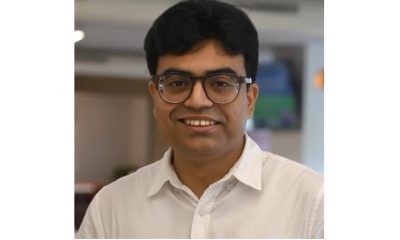
    MUMBAI: Uber for Business is cruising into a new chapter, and it’s Rituraj Chaturmohta taking the wheel. The enterprise arm of Uber has appointed him as senior country manager for India and South Asia, a move aimed at fuelling its next phase of growth across the region’s bustling corporate mobility landscape.

    From boardrooms to backseats, Rituraj’s mission is clear: strengthen partnerships, build smarter enterprise travel solutions, and keep innovation firmly in the fast lane. With over a decade of experience across two-sided marketplaces and platform businesses, he’s no stranger to navigating complex ecosystems.

    Before joining Uber, Rituraj led sales and business development at Airbnb, where he managed teams across supply and demand balancing the platform’s dynamic growth on both ends. A former entrepreneur in India’s hyper-local delivery space, he brings a sharp understanding of what drives both businesses and consumers in one of the world’s most competitive markets.

    Welcoming him aboard, Uber regional general manager and of Uber for Business head for APAC Eric Lee, said, “We are delighted to have Rituraj join our leadership team to drive Uber for Business’ growth and partnerships in India and South Asia. His experience in scaling platform businesses and understanding the Indian market will be instrumental in strengthening our enterprise offering.”

    Excited about the road ahead, Rituraj said, “I am thrilled to join Uber for Business to lead India and South Asia, one of Uber’s most dynamic growth markets. Uber for Business is reimagining how businesses move with scale, sustainability, and customer centricity at the core. My focus is to deepen Uber’s relationships with business clients, build tailored mobility solutions that drive measurable ROI, and make Uber for Business a growth partner for every company in this region.”

    Globally, Uber for Business powers mobility for over 200,000 organisations, helping them manage employee travel, meals, and commute programmes through Uber’s trusted platform. In India alone, more than 8,000 organisations are already on board, using its solutions for business travel, daily commutes, and employee shift transport.

    With Rituraj in the driver’s seat, Uber for Business seems ready to chart new routes merging convenience, technology, and enterprise efficiency into one smooth ride.


  • Transbnk taps Amar Bhartia to drive global product vision

    Transbnk taps Amar Bhartia to drive global product vision

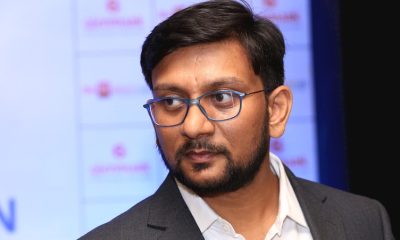
    MUMBAI: Transbnk is cashing in on global experience to turbocharge its product game. The next-gen transaction banking platform has appointed Amar Bhartia as global product head, marking a strategic move as it gears up for international expansion.

    A Deutsche Bank veteran, Amar brings over a decade of expertise in cash management, treasury solutions and fintech partnerships. At Deutsche Bank, he played a key role in rolling out Payment Acceptance across the APAC region, working with regulators, payment aggregators and fintech innovators.

    “I’m excited to join Transbnk at such an exciting phase in its journey,” said the newly minted global product head Amar Bhartia. “The intersection of banking, fintech and digital infrastructure offers a rare chance to reimagine how institutions transact globally. I look forward to shaping world-class products and delivering real value for clients.”

    Co-founder and CEO Vaibhav Tambe, welcomed the appointment, calling it a timely boost for Transbnk’s global ambitions. “Amar’s proven ability to scale banking-grade platforms will be vital as we expand our reach. With our recent Series B raise and Amar’s leadership, we’re powering ahead towards building a unified transaction-banking operating system for banks and enterprises,” he said.

    The appointment follows Transbnk’s successful 25 million dollars Series B funding round led by Bessemer Venture Partners. The fresh capital will help strengthen its tech and product teams while driving expansion into Southeast Asia and the Middle East.

    With Amar at the helm of product strategy, Transbnk seems ready to turn its global growth plans into a blockbuster sequel, one transaction at a time.