Category: MAM

  • JioStar rolls out the red carpet for brands with its CTV playbook

    JioStar rolls out the red carpet for brands with its CTV playbook

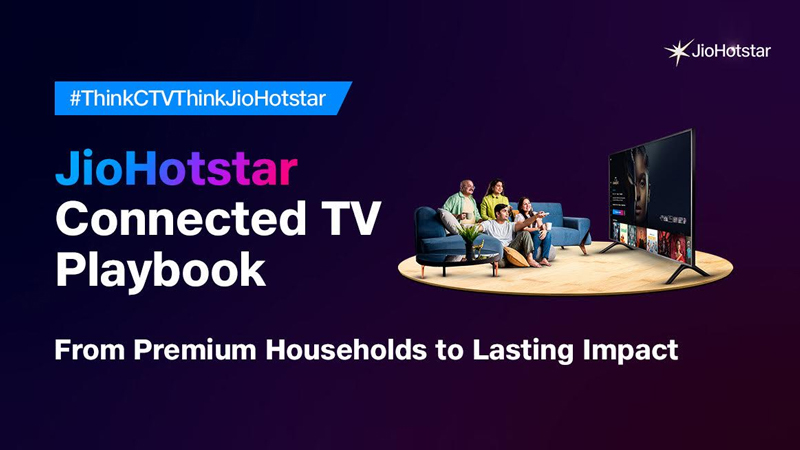
    MUMBAI: JioStar Entertainment is turning up the volume on India’s Connected TV (CTV) revolution with the launch of its first-ever CTV Playbook — a glossy, data-rich guide to decoding the premium, couch-loving consumer.

    At a time when the nation’s living rooms are morphing into digital-first, high-attention arenas, the playbook unpacks how brands can ride the CTV wave to deliver deeper stories, smarter targeting, and sharper results. Built in partnership with research giant Ipsos, the report combines national survey insights with platform analytics from June 2025 to offer a panoramic view of India’s CTV surge.

    At the heart of the playbook is the R.A.C.E. framework — Reach, Attention, Connection, and Effectiveness — a four-step mantra that helps brands move beyond vanity metrics into full-funnel firepower. Think targeted storytelling that doesn’t just get seen, but remembered and acted on.

    Watch time on JioHotstar’s CTV platform has exploded by 85 per cent, with 40 per cent of all streaming now happening on the big screen. Average daily CTV viewing stands at over 100 minutes — that’s 1.5x more than mobile. What’s more, co-viewing on JioHotstar clocks in at a staggering 3.1x, with 70 per cent of users watching with family and 66 per cent doing so together.

    And it’s not just quantity, but quality. The report reveals 90 per cent of CTV viewers come from affluent homes, 81 per cent are NCCS AB, and over 60 per cent live in India’s top 8 metros. In short, CTV is where the money is — and where the marketing should be.

    The content ecosystem packs a punch too: 22,000+ titles across 19 languages, 250+ originals, 7,000+ global hits from 10+ international studios. Impressively, 91 per cent of JioHotstar Specials’ CTV viewers are paid subscribers — that’s 50 per cent higher than the platform average.

    “Connected TV is no longer just a screen—it’s becoming the new center of gravity in India’s digital households. With co-viewing at 3.1X, 90 per cent of audiences being affluent, and an 85 per cent surge in watch time, the scale and quality of engagement on JioHotstar’s CTV platform is unmatched. This Playbook is a strategic response to this shift—built to help marketers harness the full-funnel potential of big-screen storytelling. From lean-in attention to measurable business outcomes, CTV offers an unmatched canvas for brands to move beyond impressions to impact. At JioStar, we’re excited to lead the charge in shaping this premium, intent-rich space into a high-performance marketing platform for the future”, said JioStar head of revenue, entertainment & international, Ajit Varghese.

    “The shift toward CTV within the digital ecosystem is a behavioural shift in how families consume, co-view, and even co-decide. Our research with JioHotstar supports what the data shows: CTV audiences are more premium, and more likely to recall and act on brand messaging delivered in a big-screen environment,” said Ipsos managing director – research, Jyoti Malladi.

    Regional storytelling is having its moment too. While Hindi and English dominate, regional languages especially Malayalam are breaking barriers, with over 80 per cent of Malayalam CTV viewers coming from outside the community.

    With the living room now centre stage for digital India, JioStar’s playbook gives advertisers the cues they need to own it, encouraging marketers to #ThinkCTVThinkJioHotstar.

    jiostar

    (If you are an Anime fan and love Anime like Demon Slayer, Spy X Family, Hunter X Hunter, Tokyo Revengers, Dan Da Dan and Slime, Buy your favourite Anime merchandise on AnimeOriginals.com.)

  • A Modern Men’s Guide ToMaximising Fertility

    A Modern Men’s Guide ToMaximising Fertility

    New Delhi [India], July 16: Thinking about making an addition to your family, or want to start a family? Well, it may be a wake-up call to start thinking about the health of your sperm. Interestingly, a significant number of the male population are facing male fertility issues due to poor sperm health problems, such as low sperm count and low sperm quality. These problems are caused by genetic disorders, hormonal imbalances, anatomical issues, to mention but a few. Fortunately, there are ways in which men can effectively maximise fertility, as proven by specialists from the best IVF centre in Ludhiana.

    Importance Of Maximising Fertility

    Maximising fertility is very crucial as it allows individuals and couples to fulfil their goal of parenthood by enabling them to achieve their desired family size. Not only will they experience the joy of parenthood, but they also obtain personal fulfillment. Moreover, maintaining a sustainable level of fertility ensures the continuation of lineages. Besides that, maximising fertility is crucial for population dynamics as it significantly contributes to the social, economic, and demographic attributes of society. Therefore, it is crucial for men to consult with health specialists to seek ways to maximise fertility, especially if they have been facing issues with fertility.

    How Can You Enhance Your Fertilty?

    According to the best IVF centre in Amritsar, to maximise fertility, men have to focus on the following areas:

    •    Diet – Men have to consume food that is important for sperm production and health. Their diet should consist of plenty of fruits, vegetables, and whole grains. Additionally, they also need to incorporate foods that are rich in zinc, folate, and antioxidants. Besides that, they should limit the mistake of unhealthy fats often found in processed foods, as they can negatively impact their sperm quality. Staying hydrated also helps with optimising bodily function.   
    •    Lifestyle – A few tweaks to daily habits can help to maximise fertility. By engaging in moderate physical exercise, men can encourage the production of testosterone and improve sperm quality.. Also, stress management is crucial as it helps to avoid sperm production and hormonal imbalance issues. Maintaining a healthy weight is also vital as it helps to prevent low sperm count. Habits like smoking and excessive drinking should be avoided as they can lead to poor sperm quality.

    To recapitulate – This simplistic guide can help men to maximise fertility effectively. There are also other considerations, such as the incorporation of certain supplements that may be beneficial, like vitamin B and C, zinc, and many others available; however, it is important to consult with a healthcare specialist before starting a supplement routine. IVF treatment is also highly effective for maximising fertility, and one may need to consult a specialist to inquire about IVF cost in India and other related information. Therefore, it is important for men to address lifestyle factors and look for professional guidance. Men should take bold steps to maximise their fertility and increase their chances of having children.  

    Disclaimer:This article has been published without the journalistic or editorial involvement of Indiantelevision.com. IndianTelevision.com Group, or any of its affiliated websites. IndianTelevision.com Group does not endorse, subscribe to, or take responsibility for the content, opinions, or views expressed herein.

    Readers are further advised that Online Casino, Betting, Cryptocurrency products, Financial Investments/Engagements, NFTs, and products or calls-to-action related to Health, Booking, Wellness, and Food are largely unregulated and carry significant risk. There may be no regulatory protections or avenues for recourse in the event of financial losses or health-related risks arising from engagement with such products or services.

    IndianTelevision.com Group expressly disclaims any responsibility or liability for the information, views, announcements, declarations, or affirmations presented in this article. By choosing to proceed, the reader acknowledges and agrees that they do so at their own discretion and risk, and expressly absolve indiantelevision.com (IndianTelevision.com Group) from any potential legal claims, liabilities, or actions.

    The content provided is solely for informational and awareness purposes.
        

  • Vishnu Kanth Gokul ‘leapfrogs’ into creative carnage

    Vishnu Kanth Gokul ‘leapfrogs’ into creative carnage

    He is not just any punter. This is the top dog with 300+ WhatsApp groups under his belt and 20 thriving communities he’s built from scratch. One man, pure genius and probably a tad knackered from all that graft!

    Need a community so strong it could win a rugby scrum? Or perhaps just a bit of a kick up the arse (aka mentorship) to get your career motoring? Vishnu Kanth Gokul’s strategic noise is the game-changer you are looking for. He’s got more tricks up his sleeve than a magician at a royal variety show.

    Over the past two decades, he’s had the smashing privilege of contributing to the growth stories of some of India’s most iconic platforms from Rediff.com, Sify.com, Rajshri.com, 123Greetings.com, Cricbuzz.com to Percept, Qoruz, FoxyMoron Sida (South Indian Digital Awards).

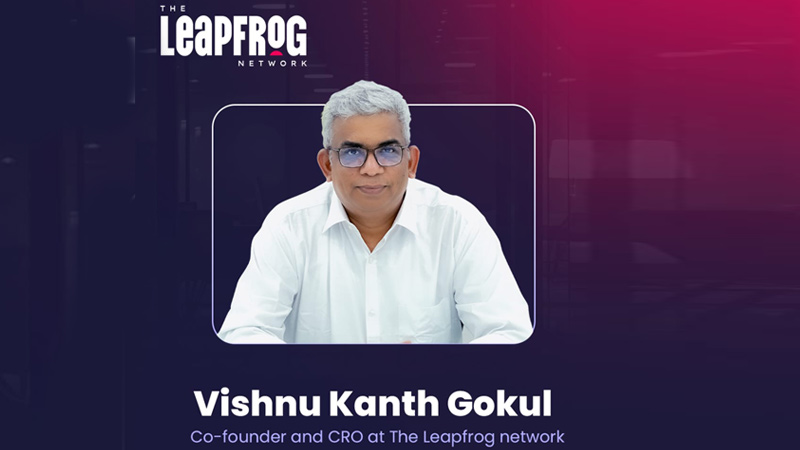
    Today, he’s the co-founder and chief revenue officer at The Leapfrog Network, leading the charge on growth strategy, revenue and brand partnerships. He’s blending content, media and creative innovation like a master chef, cooking up brands that actually matter. None of your wishy-washy rubbish here, just pure, unadulterated brand brilliance!

    Indiantelevision.com’s Rohin Ramesh managed to collar Gokul for a tete a tete via email. Keen as mustard, he was ready to spill the beans on his spanking new role and a whole lot more!

    Excerpts:

    On taking the leap with The Leapfrog Network whether it was love at first brand or your co-founder buddies Yash and Rishabh charmed you over a chai banter

    It was a bit of both, honestly. The vision was clear from day one, we weren’t building just another agency, we were building a cultural engine. Yash and Rishabh brought the firepower with their storytelling chops, and over multiple chai sessions, it evolved into a blueprint for something bigger. It wasn’t just about creating content but is all about shifting conversations. I knew this was the leap worth taking.

    On any original clients who jumped on early and are staying loyal

    Yes, we had a few early believers who backed us not just for the work we promised, but for the energy we brought. OTTplay was one of our first marquee collaborations, and working with a brand that already had scale gave us the chance to shape something culturally sticky. Their trust gave us the runway to experiment, fail fast, and grow sharper. We’ll always tip our hats to  early partners who saw the spark before the flame.

    On the overall team strength creative and strategy wise

    We’re a tight-knit crew of 65 today. Honestly, we don’t like boxing people into roles. One day someone’s cracking memes, and the next they’re presenting to a boardroom. That agility is our edge. We hire for mindset over resumes, people who think like strategists but execute like creators.

    On secret of brands taking the leap with The Leapfrog Network

    Our superpower is cultural intuition. We don’t chase virality, we engineer resonance. Every campaign, every post, every reel is backed by behavioral insights. We bridge brand goals with cultural fluency. And we’re not afraid to tell clients what not to do. That honesty, paired with hustle, builds trust. That’s our secret sauce.

    On juggling all the responsibilities without going wrong on creative

    There’s always a bit of creative chaos, and that’s the fun part. But I believe in systemising creativity. We’ve built ops that are robust enough to track ROI, but flexible enough to pivot when a trend shifts overnight. Delegation, clarity, and trust in the team allow me to juggle without burnout. It’s not about doing everything, it’s about empowering the right people to do the right things.

    On balancing bold commercial moves without losing the agency’s pop culture

    That’s a tightrope walk, no doubt. But for us, business growth and cultural relevance are not at odds, they’re intertwined. The brands that win today are the ones that can entertain, engage, and still convert. We ensure every growth lever we pull still speaks in the language of our audience. It’s a strategy without selling out.

    On keeping your machete sharp and staying ahead of the algorithmic anacondas

    We keep our machete sharp with a mix of curiosity and humility. Platforms evolve, but audience behavior is the constant. We’re not chasing every new feature blindly, we’re observing, testing, and iterating. Weekly trend roundups, tight feedback loops, and a very geeky media + analytics team ensure we’re not just following the algorithm, sometimes, we beat it to the punch.

    On missing the good old sales floor days at Rediff where the only strategy was hustle

    I do. There was raw energy on the floor, no decks, just drive. But those days taught me resilience and the power of showing up. Now, I bring that hustle to a more structured ecosystem. It’s still a people-first business, whether you’re selling ad slots or narratives. What’s changed is the toolkit, not the hunger.

    On TLF ever be the next Marvel of branded content

    We’re definitely building our own universe just not with capes. Thinking creator-first IPs, snackable series, and community-led platforms. We don’t just want to activate influencers, we want to co-create with them. There are a couple of IPs in stealth mode right now, and if they hit like we believe they will, we won’t just be running campaigns, we’ll be producing culture.

    On your personal mission at TLF whether it be saving the world, one meme at a time

    My mission is to make marketing more human and more honest. I want to help brands speak with people, not at them. If a meme can spark a conversation that leads to a connection, our job is done. The world doesn’t need more ads; it needs more clarity.

    On cracking ROI or decoding the Gen Z lexicon  

    Decoding Gen Z, hands down. ROI has formulas. Gen Z has feelings, filters, and a whole vocabulary that evolves faster than a budget cycle. But once you stop overthinking and start listening you realise they’re not that complex. They just want brands to show up real, not rehearsed.

    On a scale from “mild disruption” to “creative carnage,” you see TLF heading under your revenue radar

    We’re definitely mixing up with “creative carnage” but the good kind. We’re not here to play it safe. We’re scaling, yes, but not at the cost of our creative soul. We want to be the agency that launches narratives, not just ads. So expect disruption, with a healthy dose of discipline.

    On some new ripples we expect from you in the Leapfrog way of working

    Trends are table stakes. What we bring is foresight, basically the ability to spot shifts before they become mainstream. We’re building playbooks that are agile, data-rich, and culturally sharp. The goal is not to ride the wave but to shape it.

  • Publicis Groupe smashes expectations with blistering 5.9 per cent organic growth

    Publicis Groupe smashes expectations with blistering 5.9 per cent organic growth

    PARIS: Publicis Groupe delivered a scorching second quarter that left competitors in the dust, posting 5.9 per cent organic growth that significantly outpaced expectations and cemented its position as the industry’s standout performer.

    The French advertising behemoth’s net revenue hit €3.6bn in Q2, up 4.6 per cent on a reported basis, whilst organic growth accelerated to 5.9 per cent – well ahead of the company’s five-year compound annual growth rate of 4.9 per cent for the quarter.

    Chairman & chief executive Arthur Sadoun didn’t mince words about the performance: “In a tough macroeconomic environment, Publicis had a very strong Q2 ahead of expectations,” he said, highlighting an “outperformance versus competition once again, of 800 basis points.”

    The stellar quarter was underpinned by what Sadoun called an “unprecedented new business run” of over a dozen material wins in the first six months of 2025, prompting the company to raise its full-year organic growth guidance to close to five per cent, up from the previous four to five  per cent range.

    Every major region delivered solid growth in Q2, with north America posting 5.8 per cent organic growth (5.3 per cent in the US), Europe climbing 4.6 per cent, and Asia Pacific surging 5.7 per cent. Latin America was the standout with a blistering 19.8 per cent organic growth.

    The company’s integrated model proved its worth in North America, where connected media and intelligent creativity drove “very solid growth,” whilst technology posted slight positive organic growth despite delayed capex spending across the IT consulting industry.

    Perhaps most impressively, Publicis managed to expand its operating margin to a record 17.4 per cent in the first half whilst sustaining significant investments in artificial intelligence, talent acquisition, and new business development.

    First-half net revenue reached €7.2bn, up 6.9 per cent, with organic growth of 5.4 per cent. Headline diluted earnings per share rose 3.8 per cent to €3.51, whilst free cash flow before working capital changes jumped 11.3 per cent to €828m.

    The company has been on a targeted acquisition tear, snapping up seven companies in the first half including Lotame’s identity solutions, Captiv8’s influencer technology platform, and Australia’s Atomic 212º media agency. These deals are designed to bolster Publicis’s AI-led capabilities and strengthen its “category of one” positioning.

    Despite ongoing global economic uncertainty, Publicis maintained its industry-high financial targets for 2025, expecting operating margins slightly above 18 per cent and free cash flow of around €1.9bn.

    “We are uniquely positioned to continue to win market share by bringing clients the immediate business solutions they need to grow in an uncertain global context,” Sadoun declared, signalling the company’s confidence in its ability to outmaneuver rivals in a disrupted industry.

    The results underscore Publicis’s transformation from traditional advertising agency to an integrated marketing technology powerhouse, with its data-driven approach and AI capabilities proving increasingly attractive to clients navigating digital disruption.

    With 108,000 professionals across over 100 countries, Publicis appears well-positioned to maintain its momentum through the remainder of 2025, despite anticipated client spending reductions in the second half.

  • Q1 FY26: Reliance Retail charges ahead with Rs 84,171 crore revenue blitz as profit surges 28 per cent

    Q1 FY26: Reliance Retail charges ahead with Rs 84,171 crore revenue blitz as profit surges 28 per cent

    MUMBAI: Reliance Retail has delivered a commanding first quarter performance, posting revenues of Rs 84,171 crore—an 11.3 per cent year-on-year surge—whilst profits catapulted 28.3 per cent to Rs 3,271 crore as the retail behemoth continued its relentless expansion across India’s consumer landscape.

    The company’s earnings before interest, taxes, depreciation and amortisation climbed 12.7 per cent to Rs 6,381 crore, with margins expanding 20 basis points to an industry-leading 8.7 per cent—cementing its position as India’s most profitable large-scale retailer.

    Reliance Retail’s physical footprint swelled with 388 new store openings during the quarter, taking the total count to 19,592 stores spanning 77.6 million square feet. The registered customer base hit 358 million, reinforcing the company’s claim as one of India’s most preferred retailers.

    The star performer was JioMart, which the company  described as “India’s fastest scaling digital grocery platform.” The hyperlocal delivery service registered explosive growth with daily orders surging 175 per cent year-on-year and 68 per cent quarter-on-quarter, now serving 4,290 pin codes through 2,200-plus stores across 1,000-plus cities.

    JioMart’s rapid-fire expansion included launching AJio Rush, a four-hour delivery service now live in six cities with 130,000-plus options. The initiative is delivering superior unit economics driven by higher average bill values and lower returns, according to the company.

    Fashion and lifestyle delivered robust growth, with emerging formats Gap, Azorte and Yousta registering 59 per cent year-on-year growth across 170 stores. Ajio’s new customer revenue share reached 18 per cent, up 150 basis points year-on-year, whilst average bill values jumped 17 per cent. The platform expanded its catalogue to 2.6 million options—44 per cent growth year-on-year.

    Consumer electronics faced headwinds from early monsoon onset impacting air conditioner sales, though average bill values surged 26 per cent with conversions up 200 basis points. The company bolstered its own-brand strategy by acquiring Kelvinator brand intellectual property for India.

    Grocery maintained its market leadership with broad-based growth across categories. Home and personal care grew 15 per cent year-on-year, as did fruits and vegetables, whilst packaged foods expanded 13 per cent. The Metro format delivered standout performance with home and personal care categories growing 25 per cent year-on-year.

    The quarter also saw strategic brand expansions including Shein crossing two million app downloads with 20,000 live options, whilst AJio Luxe grew its portfolio to 875 brands. Premium brands continued segment leadership with Hamleys expanding geographically and launching its Green Club sustainability programme.

    “Reliance Retail delivered resilient performance during this quarter driven by our relentless focus on operational excellence, geographical expansion and sharper product portfolio,” said executive director Isha M. Ambani “Our continued investments in cutting-edge technologies and differentiated product offerings have enabled us to serve our customers better and scale with agility.”

    The results underscore Reliance Retail’s dominance in India’s Rs 70 trillion retail market, with the company now processing 389 million transactions quarterly—a 16.5 per cent year-on-year increase—as it continues reshaping India’s retail landscape through aggressive digitisation and expansion.

  • Reliance hits record Q1 FY26  EBITDA as Jio and retail fire on all cylinders

    Reliance hits record Q1 FY26 EBITDA as Jio and retail fire on all cylinders

    MUMBAI: Reliance Industries has kicked off FY26 with a blockbuster first quarter, posting its highest-ever consolidated quarterly EBITDA of Rs 58,024 crore ($ $6.8 billion), a sharp 35.7 per cent leap over last year, fuelled by robust performances across digital, retail and energy verticals.

    Group net profit soared 76.5 per cent year-on-year to Rs 30,783 crore ($3.6 billion), aided by operational gains and a Rs 8,924 crore windfall from its stake sale in Asian Paints. Total revenue rose 6 per cent to Rs 2.73 lakh crore ($31.9 billion), with EBITDA margins improving by a stellar 460 basis points to 21.2 per cent.

    Reliance Jio continued to dominate the digital landscape, crossing a jaw-dropping 200 million 5G subscriber milestone and 20 million home broadband connections. Jio Platforms’ revenue jumped 19 per cent to Rs 35,032 crore, while EBITDA climbed 24 per cent to Rs 18,135 crore, with margins expanding 210 basis points to a best-in-class 51.8 per cent.

    ARPU rose to Rs 208.8, driven by premium subscriber additions and deepening data consumption, which reached 54.7 billion GB this quarter. Jio also unveiled its next-gen tech stack—JioGames Cloud, JioPC, and the proprietary UBR fixed wireless platform—taking a firm aim at India’s AI and home computing future.

    Reliance Retail cemented its pole position, clocking Rs 84,171 crore in revenue (up 11.3 per cent), and EBITDA of Rs 6,381 crore (up 12.7 per cent), marking an industry-leading margin of 8.7 per cent. The business added 388 new stores, taking the total footprint to 19,592 outlets spanning 77.6 million sq ft.

    JioMart’s hyper-local push paid off with daily order volumes exploding 175 per cent year-on-year. AJIO continued to thrive in the online fashion segment with its new 4-hour delivery service and strong traction for Shein, while the FMCG arm doubled revenue to Rs 4,400 crore.

    Reliance’s Oil-to-Chemicals (O2C) segment, despite a 1.5 per cent drop in revenue due to crude price softness and planned shutdowns, posted a solid 10.8 per cent EBITDA gain at Rs 14,511 crore. Jio-bp’s aggressive retail fuel push contributed significantly, with volumes of petrol and diesel up 38.6 per cent and 34.2 per cent respectively.

    With net debt remaining flat at Rs 1.17 lakh crore and capital expenditure of Rs 29,875 crore this quarter, the group is doubling down on its “golden decade” growth strategy across tech, consumption, and energy. Chairman Mukesh Ambani said, *“Reliance will continue its stellar track record of doubling value every four to five years.”

    From superfast data to doorstep delivery and clean fuels, Reliance is firing on all fronts—and showing no signs of slowing down.

  • Waves 2025 Brings Big Deals and Bold Dreams to India’s Media Sector

    Waves 2025 Brings Big Deals and Bold Dreams to India’s Media Sector

    MUMBAI: If the Indian media sector were a movie, Waves 2025 would be the montage sequence fast cuts of big money, bold ideas and breakout talent all coming together for a dramatic makeover. Held in Mumbai, the Waves Summit 2025 saw the Government of Maharashtra sign MoUs worth nearly Rs 8,000 crore, giving the media and entertainment sector a starring role in the state’s growth narrative. Among the headliners:

    . Rs 3,000 crore from Prime Focus to build a 200-acre Film City

    Rs 2,000 crore from Godrej for a film, TV and media campus in Panvel

    .  Rs 1,500 crore each from the University of York and the University of Western Australia to set up their first Indian campuses in Mumbai

    And just like that, education and entertainment are sharing billing on the marquee.

    Waves 2025 also introduced the Nifty Waves Index, listing 43 media and entertainment companies finally giving the sector its own Sensex-style snapshot. Meanwhile, the Indian Institute of Creative Technology (IICT) inked partnerships with industry giants including Google, Apple, Microsoft, Meta, Adobe, Nvidia, and Toon Boom, rolling out opportunities for scholarships, internships, rendering parks, game design courses and creative entrepreneurship.

    Waves Bazaar cemented its role as the sector’s B2B-B2G power corridor. Launched in January 2025, the digital-first marketplace has already hosted 2,450 projects, with 6,442 buyers and 6,106 sellers participating across film, animation, XR, gaming and advertising verticals. It’s India’s global swipe-right moment for creative deals.

    Elsewhere, WaveX turned into a high-stakes pitch fest where creative dreams met venture capital muscle. From 1,504 applicants, 30 high-potential M&E startups in gaming, storytelling, immersive tech and the creator economy pitched live to 29 marquee investors including Lumikai, Jio, and Warmup Ventures. With 127 startups securing connections or partnerships, and applications vetted by IAMAI and KPMG, this wasn’t just razzle, it was rigor with returns.  

    Enter the Create in India Challenge, a flagship talent hunt that hosted 34 creative contests across animation, AR/VR, gaming, music and films. Finalists competed in the buzzing Creatosphere, a zone dedicated to next-gen creators. Eight expert masterclasses helped sharpen their edge, while the finals turned the stage into a launchpad.

    Not to be left out, Waves Culturals gave attendees a feel of India’s artistic pulse through performances blending traditional and global forms. The event’s heart, however, was the Bharat Pavilion, inaugurated by prime minister Narendra Modi on 1 May 2025. Designed as an immersive tribute to India’s storytelling roots, it showcased four thematic zones Shruti (oral traditions), Kriti (written heritage), Drishti (visual storytelling), and Creator’s Leap (future tech).

    Over in the FM lane, the 8th National Community Radio Conference saw 12 CR stations receive national awards for innovation and inclusivity. With 531 CR stations and over 400 representatives attending, it was a mic-drop moment for grassroots broadcasters.

    Add to that the launch of the first Indian Film Festival in New Zealand and fresh Indo-UK film collaborations and you’ve got an M&E summit that doesn’t just talk global, it screens it.

    From classroom tie-ups to cultural showcases, and from startup pitches to mega MoUs, Waves 2025 didn’t just imagine India as a global creative powerhouse it laid down the blueprint, cast the crew and started shooting.

    And with Maharashtra calling action on infrastructure, investment and innovation India’s media industry is no longer just watching the story unfold. It’s writing the script.
     

  • Brijesh Magoo takes the reins as national programming head at Ishq FM

    Brijesh Magoo takes the reins as national programming head at Ishq FM

    MUMBAI — Radio maven Brijesh Magoo is back in the national saddle. The award-winning content strategist and brand innovation specialist has been named national programming head at 104.8 Ishq FM, marking a sharp career pivot after a year steering the Mumbai unit as creative lead and programming head.

    Magoo, a Mica postgraduate with over 18 years of experience across radio, TV and digital, is best known for crafting advertiser-funded IPs that blur the lines between storytelling and sales. From sharp copy to immersive campaigns, he’s built a reputation for fusing creativity with commercial impact.

    Before his latest elevation, Magoo held a series of high-impact roles at Ishq FM, climbing from Mumbai programming head to national creative lead. Prior to that, he spent six years at Red FM, where he rose from executive producer to assistant programming head. His early stints at Media2win, 9X Media and Jack in the Box Worldwide further honed his blend of copywriting and brand thinking.

    Expect the beats at Ishq to get bolder.

  • Red Bull-branded jumper Felix Baumgartner dies in paragliding crash at 56

    Red Bull-branded jumper Felix Baumgartner dies in paragliding crash at 56

    MUMBAI: Felix Baumgartner, the Austrian skydiver who stunned the world with his supersonic leap from the edge of space in 2012, has died aged 56 in a paragliding crash in Porto Sant’Elpidio, Italy.

    The Red Bull poster boy, dubbed “Fearless Felix”, reportedly lost control of his glider and plummeted to the ground near a hotel swimming pool, with local authorities suspecting a medical emergency during flight.

    Baumgartner shot to fame in October 2012 when he jumped from 39km above the Earth as part of the Red Bull Stratos project. The death-defying stunt saw him break three records—highest freefall, fastest speed in freefall, and highest manned balloon flight—and made him the first human to break the sound barrier without mechanical assistance.

    The former paratrooper and Base jumping legend carved a name for himself leaping off skyscrapers, bridges and cliffs. His Red Bull jump remains one of the most iconic branded stunts of all time, catapulting the energy drink maker into global cultural relevance.

    His death marks the end of an era for extreme sports.

  • Caller of the Wild: Truecaller Rings in Record Growth with 15m New Users

    Caller of the Wild: Truecaller Rings in Record Growth with 15m New Users

    MUMBAI: Truecaller has dialled into another stellar quarter and this time, it’s all about strong signals and even stronger numbers. The Swedish platform, best known for helping users identify who’s calling and block the rest, has reported a 21 per cent surge in net sales (in constant currencies) for Q2 2025, clocking in at SEK 496.4 million which is around 47 million dollars.

    Even in Swedish Krona, which saw a sharp rally, growth was a healthy 9 per cent. The company’s EBITDA margin (excluding incentive costs) rose to a punchy 42.6 per cent, with absolute EBITDA at SEK 211.6 million up 20 per cent year-on-year.

    More than just the money, the momentum was visible in user growth: Truecaller added 15 million monthly active users this quarter alone, pushing its non-iOS MAUs to 426.6 million. That’s a 55.3 million jump from Q2 2024, a clear sign that spam isn’t winning.

    Subscriptions were on a tear too, with paying users now crossing the 3 million mark including 1 million on iOS. Subscription revenues shot up by 48 per cent in constant currency, while Truecaller for Business climbed 53 per cent. Advertising revenue, despite currency drag, held steady with 11 per cent growth in constant terms.

    To boost its ads play, the company launched the Truecaller Masthead and Truecaller Play, expanding its video and display offerings. It also introduced an in-house AI recommendation engine, tested with Uber and Bajaj Auto, which showed promising upticks in click-throughs and conversions.

    India, its biggest market, recorded a 5 per cent growth in Q2 net sales. But the Middle East and Africa (MEA) stole the spotlight with a 23 per cent jump, followed by an 18 per cent rise in the rest of the world.

    Still, it wasn’t all sunshine profit after tax dipped to SEK 118 million (from 123 million), thanks in part to the strong Krona. Yet Truecaller CEO Rishit Jhunjhunwala remains upbeat: “We’re solving everyday communication problems and building long-term value. The future looks bright and spam-free.”

    With AI-fuelled growth, a booming subscriber base and a sharp eye on regional expansion, Truecaller’s trajectory might just be the one call everyone wants to answer.