Category: MAM

  • Mahesh Shetty: the unassuming low profile deal maker at JioStar Entertainment

    Mahesh Shetty: the unassuming low profile deal maker at JioStar Entertainment

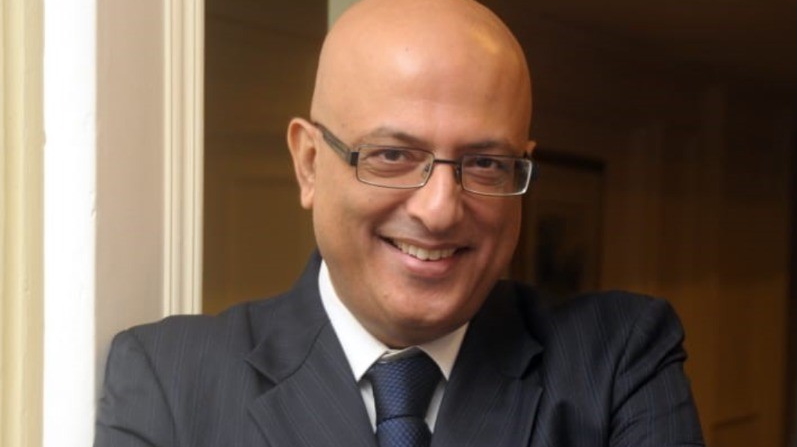
    MUMBAI: In a media industry obsessed with the limelight, Mahesh Shetty remains an anomaly. No splashy interviews, no endless conference panels, no constant social media updates. Instead, a man who lets numbers and results do the talking. Now, as he takes charge of revenue at JioStar Entertainment, succeeding Ajit Varghese who departs for Madison, Shetty is poised to script the next big chapter of his career.

    For industry insiders, this move feels less like a surprise and more like a natural progression. Over nearly three decades, Shetty has quietly built a résumé that stretches across the most competitive corners of Indian business: FMCG, radio, broadcast television, live events, and OTT streaming. Each stint has added another layer to his arsenal, sharpening a leadership style best described as calm, precise, and relentlessly focused on outcomes.

    When Shetty joined Viacom18 in April 2019, he was already regarded as a heavy hitter in sales and monetisation. Over the next five years, he transformed revenue operations, straddling linear television, Jiocinema, Viacom18 Live, and the Consumer Products and Licensing divisions. But it was the December 2024 merger with Disney Star that truly tested his mettle.

    Handed responsibility for a formidable empire of 90‑plus TV channels and JioHotstar, Shetty got to work without fanfare. While the spotlight stayed firmly on content deals and boardroom machinations, he was busy engineering the rise of the Large Client Sales (LCS) portfolio. Under his watch, LCS swelled until it accounted for over 80 per cent of JioStar’s entertainment revenues, an achievement industry peers describe as “quietly spectacular.”

    Unlike many of his contemporaries, Shetty has never been a fixture on the media circuit. A quick Youtube search throws up barely two interviews in decades of leadership. For him, visibility isn’t the goal revenue is. Colleagues often describe his style as understated but laser‑focused: the kind of leader who invests in people and processes rather than profiles.

    And yet, in boardrooms and client meetings, his presence is anything but muted. Those who have negotiated with him speak of a professional who can combine charm with steely precision, moving effortlessly from big‑picture strategy to the finest of details.

    At JioStar Entertainment, Shetty now steps into the role at a pivotal moment. He continues to oversee LCS while expanding his remit to drive topline performance across verticals. Reporting directly to him are trusted lieutenants Anuradha Mathu Agrawal, Srijith Jagdish, Shubhra Sethi, and Kingshuk Mitra. The wider reporting structure remains unchanged, a signal of stability even amidst transition.

    But the challenges ahead are anything but routine. India’s entertainment market is in flux, with digital consumption soaring, advertisers demanding sharper ROI, and post‑cookie targeting reshaping the playbook. JioStar itself is betting aggressively on original content, hybrid monetisation models, and cutting‑edge audience intelligence. For Shetty, this means crafting not just a revenue plan but a reinvention of value creation in India’s content economy.

    Part of what makes Shetty uniquely suited to the task is the breadth of his experience. Before Viacom18, he spent 12 years with Radio Mirchi, rising to the role of COO, where he built some of radio’s most successful monetisation strategies. Before that, he logged more than a decade at Pepsico India, beginning as an assistant marketing manager in 1995 after earning his B.Com and MBA in Marketing. There, he cut his teeth in senior sales and marketing roles heading marketing for Gujarat, and later serving as GM for National On‑Premise Sales.

    This mix of FMCG discipline, radio agility, broadcast heft, and OTT dynamism has forged a leader uniquely comfortable navigating JioStar’s complex entertainment revenue landscape. From regional advertisers looking to tap India’s heartland, to global partnerships eyeing scale and reach, Shetty has seen and sold it all.

    For JioStar, the stakes could not be higher. With platforms like JioHotstar pushing for scale and viewership habits fragmenting across screens, Shetty’s challenge will be to stay ahead of the curve: innovating in ad formats, deepening client relationships, and ensuring measurement keeps pace with expectations of accountability.

    If the past is any indication, he won’t be chasing headlines or soundbites while doing it. But in boardrooms and balance sheets, his impact will be impossible to ignore.

    For now, all eyes are on Mahesh Shetty not because he craves the spotlight, but because he knows exactly how to deliver when it matters most.
  • Anirban Basu back to ‘home’ turf, takes charge at Abbott India

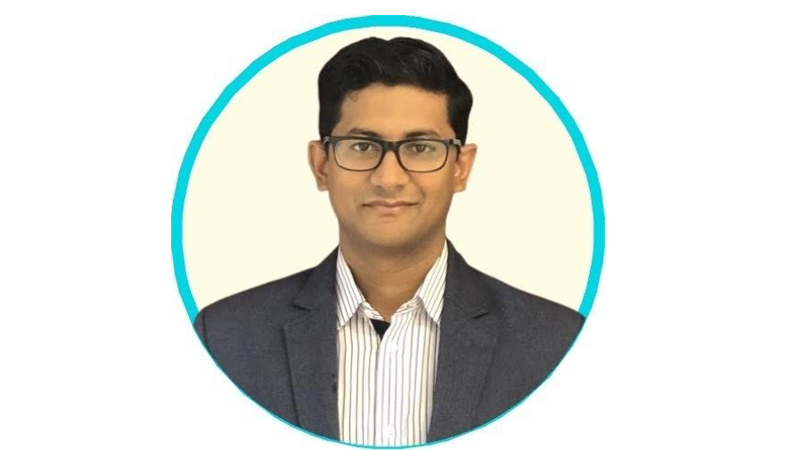
    Anirban Basu back to ‘home’ turf, takes charge at Abbott India

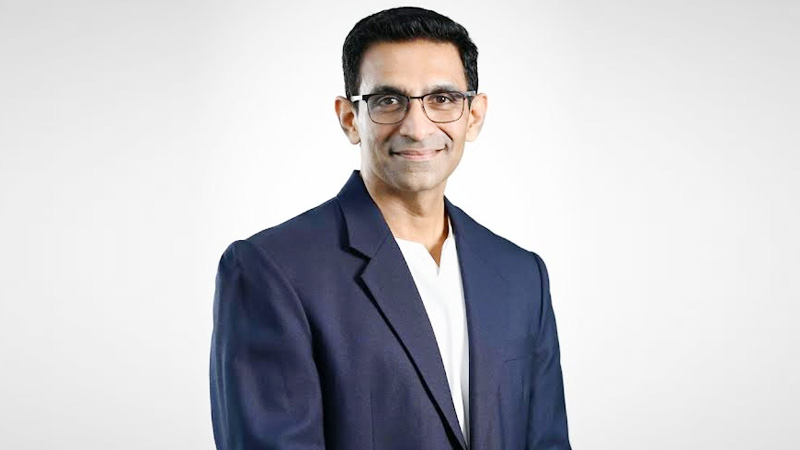
    MUMBAI: Anirban Basu, a seasoned hand with nearly two decades in the cut-throat world of nutrition, food & beverages, and CPG (FMCG), is heading back to his stomping grounds, taking up the mantle of general manager – India at Abbott.

    With 18 years under his belt, Basu isn’t just a pretty face. His CV boasts multi-country P&L management, a fancy way of saying he knows how to make money, and lots of it, across borders. He’s also a dab hand at market strategy, building robust business models and assembling winning teams. Clearly, he’s no stranger to cracking the whip when needed, all while nurturing a passion for innovation and entrepreneurship.

    Beyond the boardroom, Basu wears several other hats. He’s a keen mentor to young students and startup founders, perhaps whispering sweet nothings about the virtues of a balanced ledger. And, proving he truly puts his money where his mouth is, he’s an active angel investor in a clutch of early-stage D2C and tech businesses. Furthermore, he’s a board member of the American Chamber of Commerce, cementing his place as a mover and shaker in the subcontinent’s business echelons.

  • Mobikwik sees Rs 419 million Q1 loss despite revenue crossing Rs 2,700M

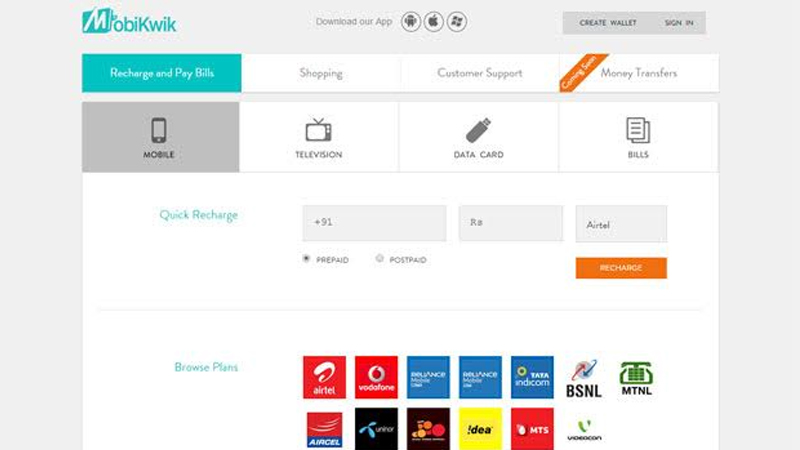
    Mobikwik sees Rs 419 million Q1 loss despite revenue crossing Rs 2,700M

    MUMBAI: Wallet lightens despite wallet biz boom Mobikwik’s Q1 balance isn’t adding up just yet. One Mobikwik Systems posted a consolidated net loss of Rs 419.2 million for the quarter ended 30 June 2025, nearly doubling its loss from the same quarter last year (Rs 66.15 million), despite generating revenues of Rs 2,713.63 million from operations. While revenue held steady quarter-on-quarter, rising marginally from Rs 2,677.84 million in Q4 FY25, expenses continued to outpace topline growth.

    The company’s total income stood at Rs 2,816.16 million in Q1 FY26, including Rs 102.53 million in other income. However, total expenses surged to Rs 3,128.17 million, driven by high payment gateway costs (Rs 1,427.82 million) and financial guarantee expenses (Rs 213.88 million), the latter jumping over 700 per cent from the Rs 25.27 million reported in Q1 FY25. Operational expenses for the lending business also remained significant at Rs 291.82 million.

    Earnings before interest, tax, depreciation and amortisation (EBITDA) came in at a negative Rs 312.01 million, narrowing the loss from Rs 457.61 million in the previous quarter but falling sharply from a positive Rs 22.3 million a year ago.

    Finance costs rose to Rs 78.27 million, while depreciation and amortisation were at Rs 28.57 million for the quarter. Loss before tax stood at Rs 418.85 million.

    MobiKwik’s initial public offering (IPO), completed in December 2024, raised Rs 5,305.17 million (net of expenses). Of this, only Rs 2,140 million has been utilised so far, leaving Rs 3,165.17 million unspent. Key deployment areas included Rs 459.5 million for financial services growth and Rs 699 million for the payments vertical. Investments in R&D (Rs 307.6 million), capex for payment devices (Rs 23.9 million), and general corporate purposes (Rs 650 million) accounted for the rest.

    Employee benefit expenses remained flat at Rs 419.55 million, while other expenses (Rs 775.1 million) included brand, tech, and operational overheads.

    Diluted earnings per share (EPS) stood at negative Rs 5.39, compared to negative Rs 8.88 in Q4 and negative Rs 1.16 in Q1 FY25.

    Mobikwik granted 3,27,688 new stock options in the quarter under its 2014 ESOP plan and saw 4,65,873 options exercised. The company’s paid-up equity share capital rose to Rs 156.38 million post IPO.

    Despite widening losses, the company said it continues to operate as a single segment player across digital financial and payment services, and remains focused on sustainable growth and technology investments. With Rs 1,040.5 million still earmarked for financial services and Rs 762.4 million for R&D, MobiKwik appears to be playing the long game even if short-term results are deep in the red.

  • AI CERTs rolls out ‘Mission AI-Saksham’ to plug India’s AI skills gap

    AI CERTs rolls out ‘Mission AI-Saksham’ to plug India’s AI skills gap

    MUMBAI : AI CERTs, the global provider of vendor-aligned, role-focused AI certifications, has kicked off ‘Mission AI-Saksham’—a no-fee initiative to arm India’s students with future-ready AI skills. The scheme will see tie-ups with universities and colleges across disciplines—engineering, management, arts, commerce, and more—to deliver industry-backed AI training straight to campus.

    The urgency is stark. India’s AI sector is tipped to create 2.3m jobs by 2027, yet only 1.2m qualified professionals are likely to be in the market. AI CERTs wants to close this yawning gap with a potent mix of free certifications, workshops, and AI-first curricula.

    Speaking on the initiative, AI CERTs’ general manager Chintan Dave said, “As artificial intelligence reshapes global industries, the mismatch between academic curriculum and real-world job requirements has never been more evident. ‘Mission AI-Saksham’ is our response to this challenge. It’s an invitation for institutions and students alike to co-create a learning ecosystem that is agile, inclusive, and aligned with tomorrow’s demands.”

    The company aims to certify one billion learners worldwide in AI and emerging tech. With ‘Mission AI-Saksham,’ that grand vision plants its flag in India, giving students the skills to code their own future, while turning a looming skills crisis into a classroom revolution.

  • Planet Herbs Lifesciences unveils latest TVC for its flagship Synotiz Pain Relief Oil

    Planet Herbs Lifesciences unveils latest TVC for its flagship Synotiz Pain Relief Oil

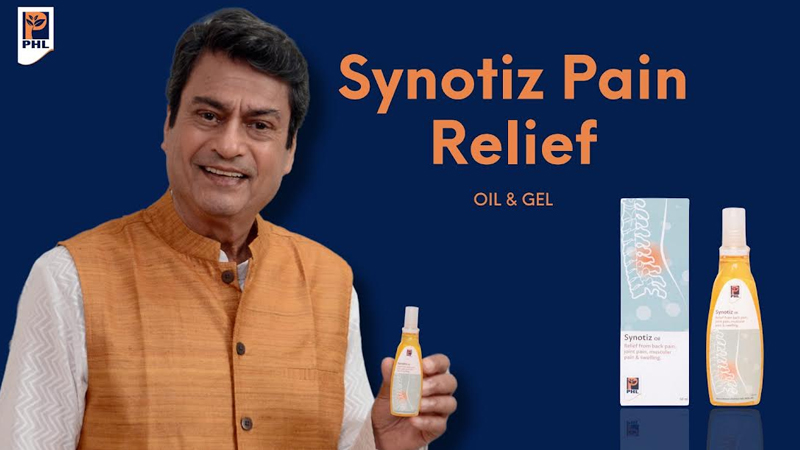
    MUMBAI: Planet Herbs Lifesciences (PHL), has launched a touching and evocative TVC for its flagship product, Synotiz Pain Relief Oil. The TVC highlights the product as more than just a pain-relief remedy— a timeless symbol of tradition and generational care.

    Airing across Television channels, YouTube, Instagram, and other digital platforms, the new TVC is aptly titled “Gir ke uthne ko udaan kehte hain”. It features veteran actor Kanwaljeet Singh in the lead with the narrative unfolding as a gentle story, focusing on a grandfather and granddaughter’s quiet care as they take turns to comfort each other in painful circumstances. Soft visuals and evocative flashbacks create a moving parallel between past and present, highlighting how familial roles shift, but the bond remains timeless.

    The new campaign positions Synotiz Oil as an essential in every Indian household—trusted by children, parents, and grandparents alike. Rooted in Ayurvedic wisdom yet attuned to modern-day needs, the film presents Synotiz as more of an emotional heirloom.

    “This TVC isn’t just a campaign, it’s a reflection of my own story,” said Planet Herbs Lifesciences director Sargam Dhawan Bhayana. “The story draws inspiration from my own life experience, when I have always found comfort in the most painful days by my grandfather who is also the founder of Planet Herbs Mr VK Dhawan. He remained committed to ensuring I was safe and protected and now it’s my turn to make sure he’s fine. I continue to carry forward his values with the same integrity, compassion, and excellence towards our products and our company. Synotiz Pain Relief Oil has always stood for more than just relief. It represents the wisdom of Ayurveda, the care of family, and the trust built across generations. With this film, we hope to remind people that true healing is rooted not only in nature, but in the traditions we hold close.”


  • Moloco plugs into Google’s AdMob and Ad Manager with self-serve SDK

    Moloco plugs into Google’s AdMob and Ad Manager with self-serve SDK

    MUMBAI: Moloco, the AI performance advertising company, has rolled out its SDK on Google’s AdMob bidding and Ad Manager’s SDK bidding platforms, making the tool fully self-serve for publishers.

    The move cements Moloco’s credentials with Google’s stringent performance and reliability standards, giving app developers fresh access to its global advertiser demand while preserving user experience. Publishers already plugged into Google can now tap Moloco’s ecosystem without extra effort.

    “Moloco has consistently been recognised as a top-performing platform for ad monetisation, optimised to drive real business outcomes,” said Moloco supply head Yoni Markovizky He added that with Google onboard—alongside existing integrations with AppLovin’s Max and Unity’s LevelPlay—the company can fuel more publishers’ growth “with no margin fees, applying the cost savings directly to our partners.”

    Nearly 500 publishers, including Voodoo, Crazy Maple and Audiomack, already use Moloco’s SDK. The platform’s AI ensures the right ad finds the right user, maximising revenue while allowing publishers to control how creative formats appear. Advertisers, too, gain sharper targeting and more control, boosting return on investment.

    Moloco, founded in 2013 by ex-Google machine-learning engineers, now operates across the US, Europe and Asia. Its platform powers mobile app growth, retail media and streaming monetisation for businesses worldwide.

  • Vikram Sakhuja to take up executive director position at Madison Media based in New Delhi

    Vikram Sakhuja to take up executive director position at Madison Media based in New Delhi

    MUMBAI: With Ajit Varghese heading back to Madison Media, this time as partner and group CEO of Madison Media & OOH, questions were being asked about the role of long-serving group CEO Vikram Sakhuja. The suspense was laid to rest a short while ago when Madison promoter Sam Balsara confirmed that Sakhuja will continue as executive director, focusing on building organisational capability from New Delhi.

    Meanwhile Balsara is quite confident about Varghese’s appointment as the agency’s leader. “Ajit has all the credentials to steer an agency like Madison into the future,” he  said, citing Varghese’s stints at Madison, GroupM, a digital publisher, and most recently JioStar. Like Sakhuja, Varghese will hold a stake in the business.

    Calling it a “homecoming”, Varghese said he was returning with a renewed mission. “The world of media is transforming at lightning speed, and Madison is uniquely poised to lead with its client-first thinking, independent spirit, and deep talent,” he said.

    Madison Media, India’s largest homegrown communications agency, is ranked the world’s fourth-largest independent media agency by Recma. It manages media planning and buying for marquee clients including Marico, Asian Paints, Titan, TVS, Godrej Properties, Pidilite, Ceat, and the BJP. Through its 11 units, Madison World served some 500 advertisers last year.

  • Kiran Mani to chair IAMAI’s digital entertainment committee

    Kiran Mani to chair IAMAI’s digital entertainment committee

    MUMBAI: The digital entertainment world just got a new ringmaster. The Internet and Mobile Association of India (IAMAI) has announced that Kiran Mani, the CEO – digital, JioStar, will now chair its Digital Entertainment Committee. This is a rather significant appointment, as the committee is tasked with shaping the future of India’s rapidly evolving digital content ecosystem – no small feat, given the nation’s insatiable appetite for streaming.

    Mani, who also happens to be an elected Governing Council member of IAMAI and the former co-chair of the Direct-to-Consumer (D2C) committee, brings a hefty two decades of experience to the table. He’s been living and breathing at the crossroads of technology, content, and consumer behaviour for quite some time. In his current gig, he’s at the helm of JioHotstar, one of India’s largest digital entertainment platforms, which is, rather impressively, redefining how millions experience their stories.

    Joining him as co-chair is Deepit Purkayastha, co-founder & CEO, Inshorts. This pairing promises a potent blend of product, platform, and editorial expertise, which should certainly keep things interesting.

  • Agri sector spends 66 per cent on print ads in 2024, digital sees 18 per cent growth: Excellent Publicity report

    Agri sector spends 66 per cent on print ads in 2024, digital sees 18 per cent growth: Excellent Publicity report

    MUMBAI : The humble print ad is still king of the farm, it seems, as a new report from Excellent Publicity, India’s ad-tech wizards, reveals that the agriculture and farming sector splurged a whopping 66 per cent of its total ad spend on print in 2024. That’s a bumper crop of broadsheets and tabloids reaching the heart of rural India.

    The report, drawing insights from thousands of campaigns and TAM Media Research data, painted a vivid picture of the agri-sector’s media consumption habits. While print remains the sturdy backbone of advertising efforts, digital is certainly planting its seeds, showing an 18 per cent growth in 2024 over 2022. It appears even farmers are swiping right on new tech.

    North Zone proved to be the print-loving powerhouse, accounting for 35.7 per cent of total print ad spends, with the South close behind at 30.8 per cent. Regional stalwarts like Dainik Bhaskar and Eenadu continued to harvest the lion’s share of regional ad spaces, proving that local news still cuts the mustard.

    Indian Farmers Fertiliser Cooperative (IFFCO) cemented its position as the top dog in print, commanding a massive 65.6 per cent share. Clearly, they’re not just fertilising crops, but ad pages too. And for those wondering, 99.4 per cent of these ads were in glorious technicolour – because even a tractor looks better in high definition – with nearly three-quarters gracing those coveted front-page spots.

    Television, however, saw a bit of a dry spell, with ad spends declining by 53 per cent in 2024 compared to 2022. Yet, insecticide brands sprayed their way to the top, seizing a 16.2 per cent share. News channels, ever the purveyors of prime-time drama, scooped up 80.4 per cent of TV ad spends. And who was the most familiar face gracing these agricultural advisories? None other than ajay devgan, whose celebrity endorsements tilled nearly 12 per cent of total TV ad durations.

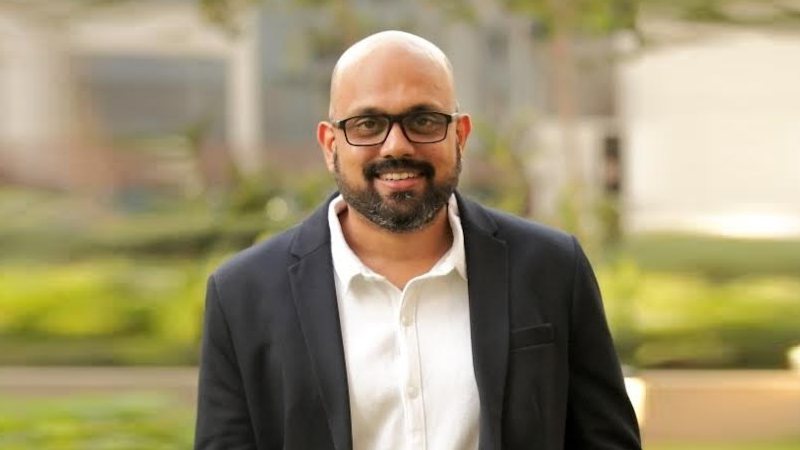
    Excellent Publicity co-founder & director Vaishal Dalal commented, “The agriculture and farming sector continues to show a strong preference for traditional mediums, particularly print, which offers unparalleled reach in rural and semi-urban India. However, we are seeing growing digital adoption, especially for precision targeting and building direct engagement with the new-age farming community. The integration of digital with traditional advertising will likely shape the sector’s future media strategies.”

    Radio, that old faithful, saw a 38 per cent surge in ad spends in 2023 over 2022. Tirth Agro Technology, clearly with an ear to the ground, dominated radio waves, capturing 30 per cent of total radio ad spends in 2024. The West Zone was the loudest on radio, contributing 59.1 per cent, with My FM becoming the most preferred network. It seems radio still holds its own, proving that some classics never go out of style.

    Digital, the youthful disruptor, witnessed an 18 per cent growth in 2024 over 2022, with Jain Irrigation System leading the charge. Facebook.com, perhaps surprisingly, reaped 60.6 per cent of total digital ad spends, followed by X.com at 28 per cent. Display ads, those familiar banners and pop-ups, were the preferred format, making up 95.4 per cent of total digital ad volumes. Video, while sprouting interest, still has some growing to do. Over 190 advertisers cultivated exclusive digital campaigns in 2024, showing a clear shift towards digital-first strategies.

    The report concluded that advertising activity generally followed the agricultural calendar, peeking from May to November on TV, October to December in Print, January to March on Radio, and June to August on Digital. It seems advertisers know exactly when to sow their seeds to reap the best results.