Category: People

  • Anitha Krishnan to join JWT as Executive  Business Director

    Anitha Krishnan to join JWT as Executive Business Director

    MUMBAI: Anitha  Krishnan will  be joining  JWT Mumbai  as an Executive Business Director effective January 13, 2014. Prior to joining JWT, Anitha was leading Contract’s Bengaluru office.


    In her new role, Anitha will be handling Godrej Corporate, Godrej Appliances, Godrej Security, J& J, Monsanto, LIC, UTI and other businesses.


    On her joining, Anitha  Krishnan says, “JWT is a much  larger playing field  and I am looking forward to the challenges and opportunities  that come with that kind of scale. What makes this move exciting is the diversity that JWT offers, be it the kind of brands, the people, platforms and the opportunity to present a truly integrated business solution.”


    Having spent close to a decade with Contract in Mumbai and Bengaluru, Anitha brings with her a wealth of experience of having handled brands across categories from FMCG to Retail and Financial services. With an overall work experience of 16 years,  Anitha understands the luxury and the youth segment with exposure to premium brands over the course of her career.


    While at Contract, Anitha was spearheading relationships with clients that include Louis Philippe, Platinum, HSBC Premier, Shoppers Stop, Royale from  Asian Paints and young brands such as Vladivar, White Mischief and Jockey.

  • Hungama Digital Services appoints Mohit Hira as CEO

    Hungama Digital Services appoints Mohit Hira as CEO

    MUMBAI: JWT south Asia has announced the appointment of Mohit Hira as the CEO of Hungama Digital Services (HDS).


    Mohit, who joined JWT in November 2012, has been overseeing JWT Group’s digital initiatives over the past eight months; in addition to his role as the business lead on Airtel. Given JWT’s increased focus on digital, he will now assume leadership of digital. As part of this, Mohit will be overseeing the entire operations of HDS and JWT Digital, thereby ensuring seamless integration of the two to offer truly integrated digital solutions to all HDS and JWT clients.


    “Mohit is well poised to take on this role, given his proficiency in creative, content and strategic planning along with his experience as a brand custodian.  With his strong creative and digital capabilities Mohit will be leading one of India’s highly awarded digital agencies that will continue to live up to being a ‘single source’ partner for our clients across all their digital platforms,” said JWT south Asia CEO Colvyn Harris.


    Mohit is an advertising creative director turned netvangelist, with a career spanning over two decades with rich and diverse experience across advertising, marketing, journalism and digital media. He was recently nominated to the Impact India Digital Power 100 List and has also been on the IBM-Paul Writer list of Top 50 CMOs earlier.


    On his new role, Mohit said, “I have been working closely with the team at Hungama Digital in the past few months and the opportunity of leading an extremely talented and committed team there was irresistible. Neeraj set up India’s leading digital agency ahead of its time and it has grown into a strong, respected company of creative technologists. I’m looking forward to partnering Neeraj and JWT in the mission to make HDS one of the most sought-after digital agencies in the region.”


    JWT acquired a majority stake in HDS in May 2012 to offer to its clients a full services digital agency specialising in digital marketing and social media solutions. As part of the acquisition, Hungama’s activations arm, Hungama Promo Marketing also merged with HDS to provide an engagement platform linked to online and offline deliveries.

  • Rishikar Krishna joins Radio Mirchi, again

    Rishikar Krishna joins Radio Mirchi, again

    MUMBAI: Rishikar Krishna is all set to return to Radio Mirchi to take responsibility for its largest brand properties as its new marketing head.

    Krishna who was earlier with the company for seven years as marketing manager will now be reporting to The Indian radio network’s chief strategy officer Mahesh Shetty.

    Prior to this, he was with Skechers USA where he was responsible for creating brand awareness in India.

    In his new role, Krishna will manage the Mirchi Music Awards and Mirchi Top 20 as well as other large intellectual properties. His responsibility is to add new elements to the 32 station brand and take them to market.

    Krishna began his career with Phillips before moving into radio.

  • Vikram Gaikwad quits Creativeland Asia

    Vikram Gaikwad quits Creativeland Asia

    MUMBAI: After six years in Creativeland Asia, Vikram Gaikwad has put down his papers as partner and executive creative director.

    He has been with the agency since its inception in 2007.  Gaikwad said, “I am very proud of what we have achieved at Creativeland in a very short time. With the coming of the New Year, I have decided to move on and make time for my other areas of interests. My heart and good wishes will always be with Creativeland and I hope they get every success they deserve.”

    Commenting on the development, Creativeland Asia founder and creative chairman Sajan Raj Kurup said, “Vikram has been a great friend and an incredible support in my journey. Creativeland is thankful to him for all the support and service that he has extended. And I sincerely wish him the best for the new path that he has charted out for himself.”

    Prior to Creativeland, Gaikwad had worked with Enterprise Nexus, Leo Burnett and Grey.

  • Contract gets a new head of art – India in Vineet Mahajan

    Contract gets a new head of art – India in Vineet Mahajan

    MUMBAI: Contract Advertising has brought on board Vineet Mahajan as head of art – India. Prior to this, Mahajan was heading McCann Erickson’s Delhi office as head of art. It would be his second stint at Contract after a gap of five years.


    Mahajan said, “Contract holds a special place for me and the new role will be far more challenging with lots of new opportunities. New city, new role, new place should be exciting.”

    Contract Advertising COO Rana Barua said, “Contract prides itself in offering the best talent available in the country to its clients. Vineet’s coming on board is yet another step in that direction as his impeccable credentials and skill sets will bring in a huge value add to our clients. Contract is well poised to take bigger strides in the industry as we get into the New Year with a lot of hope and zeal to partner our clients in their journey to success.”


    In the past, Mahajan along with Contract Advertising NCD Ashish Chakravarty was also instrumental in putting Contract Delhi on the International awards map after a gap of 10 years. “Well, frankly Vineet Mahajan needs no introduction, so let me just say that I am absolutely thrilled to have him on board. He will be based out of Mumbai, but will work closely with me on all key brands across all offices. There is much value he brings to the table in terms of art and aesthetics, and I feel all our clients should benefit from this. Plus he has such a colorful presence, it should certainly liven things up at Contract”, said Chakravarty.


    With over 15 years of experience, he has spent between O&M, McCann Erickson and Contract where he has worked on various award-winning campaigns.


  • RAPP India appoints Kapil Bhatia as associate VP

    RAPP India appoints Kapil Bhatia as associate VP

    MUMBAI:  RAPP India has roped in Kapil Bhatia as AVP for the agency’s growing clientele in Mumbai.

    Kapil joins RAPP India from Squad Digital, Nairobi, where he was general manager overseeing the operations of the agency across digital strategy, creative solutions, media planning, social media marketing and mobile marketing.

    Before moving to Nairobi, Kapil worked with the DDB Mudra Group for four years and was primarily in-charge of client servicing for one of the agency’s largest clients, LIC.

    On joining RAPP India, Bhati said, “This is going to be an exciting opportunity to tap into my through the line communication understanding. I look forward to help RAPP with the building its multi-channel capabilities.”

    RAPP India and Tribal Worldwide India president Venkat Mallik said, “We are going through an interesting phase of transformation and growth at RAPP in India. Kapil joins RAPP at just the right time as we look to remodel the agency and introduce a set of new initiatives to strengthen  the multi-channel RAPP offering across Mass Media, E Commerce, Social Media, Email marketing & CRM. RAPP is one of the few agencies with the ability to offer genuinely integrated communication thinking and Kapil’s skills and experience complement this really well.”

    Commenting on this, Vice President, RAPP India vice president Bijoe George said, “As we go about building RAPP INDIA as a media agnostic, data-led agency we needed leaders who can champion this cause amongst clients. Kapil comes with the requisite experience and fits the bill perfectly”.

  • Brands, youth mindsets & Samyak Chakrabarty

    Brands, youth mindsets & Samyak Chakrabarty

    MUMBAI: “Who can know the heart of youth but youth itself?” wrote punk rocker Patti Smith in her memoir, Just Kids.

    Indeed, global brands have made it their business to figure out what the youth wants, often ending up classifying them into categories which they think define them – cool, sexy, social media presence and so on.

    This is however their biggest mistake, opines DDB Mudra chief youth marketer Samyak Chakrabarty. “Youth can’t be classified or boxed into traditional or conventional SECs. A certain 21-year-old may appear to be the consumer for a brand but this doesn’t mean he/she will actually purchase it. For instance, a youngster living in Dharavi may own an iPhone while someone in SoBo may have a Nokia Asha,” he says.

    Samyak is speaking from a position of knowledge; he and his agency have spent six months with 40 youth unraveling the complexity of a youth generation in the Indian metros which is more connected and aware than any other in the history of mankind, thanks to the spread of the internet, mobiles and the power that both have showered on them. The output is Youth Report 2013 which aims to provide some insights into those between 18-25 years of age.

    While many question whether it is right to paint a very disparate and fickle demographic grouping with a broad sweep of a brush, Samyak has indeed taken a shot at it in his Youth Report 2013, which is drawing some attention amongst advertisers and marketers.

    The basic premise of his report is “that those born post 1988 are extremely moody people. At one level they are very sure of what they want to do in the long run, but on another there is immense amount of confusion and parallel thought flow. Again it is the number of options available and continuous bombardment of information through new media to blame. 9 out 10 decisions are made based on the prevailing environment and frame of mind.  5 mindsets (read: mood) existing every Young Indian born post 1988 living in metro cities. Each gets triggered based on the type of decision and plays a critical role in influencing choice.”

    The five according to Samyak are:

    * The Passionista: Someone who transforms into a Passionista while making decisions would base judgment purely on feelings often also defying strong logic.

    * The Racehorse: It’s always about being the first in everything he/she does. Such as state of mind is active in people who are generally very motivated, aggressive and competitive in nature.

    * The Label: All decisions are completely based on the badge value of a product. Unlike someone who thinks likes a racehorse, here it’s not about being the first but rather being the ‘coolest’.

    * The Shiny Disco Ball: If someone thinks like a Shiny Disco Ball, He / She is an optimist and will be open to try different things just for the experience.

    * The Kite: Those in this state of mind prefer to follow others when it comes to buying decisions.

    And how do these mindsets come into play. Samyak explains that if the youngster has a racehorse mind or competitive and aggressive mindset, he/she will buy a certain product to be in a position of leadership and create talk value among others.

    If a youth has a kite mind where say five friends get together in a bar with four of them ordering a certain brand of beer, the fifth friend will display a kite mind and order what his four friends ordered. At this point, his/her mindset is to simply go with the flow. However, if the same person is in a passionista mindset, he/she will take charge and order what he/she likes instead of blindly following the others.

    “Today, youngsters are driven a lot by mindsets rather than economics. I think they are more inclined towards their passion, following their desires and finding ways and means to achieve them,” says the young in years, but old in experience Samyak. Irrespective of their economic background, they strive to achieve what they want and it doesn’t have anything to do with their ability or inability to buy the product. It has got more to do with what they want.”

    However, diversity (economic, social, geographic or religious) does influence choice and so. Say, a like on a facebook page does not always translate into the youngster buying the brand and that’s where mathematics fails, explains Chakrabarty.

    For a brand to understand the youth, it is necessary to tap the thinking process. “Tap it because it remains constant. If a brand has been able to understand the ingredients that contribute towards building an opinion or brand preference, it has cracked the code,” says Chakrabarty.

    He cautions against the use of jargon and quick fixes like celebrity endorsement, popular lingo and bright colours to attract the youth. Asked how the Youth Report would help brands understand youngsters, he says: “One must remember that most statistics expire even before they are put to print. For instance, a report may say that seven out of 10 people think this way and so end up buying a certain product. However, what influenced a person today may not influence him/her tomorrow depending on the influence of his/her peer group and other such.”

    While the Youth Report helps brands by offering this kind of a classification, Chakrabarty also points out that brands would do well to stick to their core values even if they reinvent themselves with time. He cites the example of Red Bull which at its core continues to be about energy and adrenaline however much it may revamp itself. Ditto for Nike and Kingfisher.

    “It’s suicidal for a brand to reinvent its core because then you lose the long term relationship with the TG. Young people don’t wake up thinking about brands. They don’t care. If brands want to be in the youth’s priority list, they need to connect emotionally with the youth or have the youth looking up to them for example Apple,” he elaborates.

    The other thing he talks about is how a 22-year-old will always have options B and C if he/she doesn’t get option A but the same 22-year-old will turn 50 at some point in future. So, it is for brands to decide if they want a long-term relationship with such a customer. In the event they do, the message has to be sustainable and not fluctuating.

    Chakrabarty is candid about the fact that media – both print and television (even the likes of MTV and Bindass) – has failed to capture the mind of the youth.

     “MTV was MTV because of the music. It picked up on various popular trends and kept changing according to time. But now, shows have become bigger than the channel. Take Roadies, for instance – if we take the show away from the channel and put it on any other, it will still work. The same can be said about Emotional Atyachar. There has to be a balance between content and the brand. That is why we tell our clients to focus on 10 per cent of people and not the remaining 90 per cent because you can’t please everyone. When a brand tries to be overly youthful, it has lost the plot. MTV made a big blunder by changing their core.”

    “Having said that, I also think we give undue importance to the youth. Yes, it is true that those born after 1988 and those before 1988 will behave differently. The main reason is of course the social influences around them – internet was not an integral part of life before 1988, facebook wasn’t around, there was no ‘e’ before commerce. Plus, as a society too, we are changing, parents are giving more freedom to their children. The problem lies in the fact that people think that today’s youth is special, which it is not. Yes, it is different and it is quantitatively more but there is nothing starkly unique about it,” he adds.

    However, wouldn’t he agree that social media, which has become an integral part of youth today, has changed the youth’s psyche? He disagrees: “The time has changed but the thinking hasn’t in a way. Earlier our parents used to tell us to beehave in a certain manner because of what the society will think. And now youngsters behave in a certain manner because they want to be seen like that on social media. However, social media doesn’t influence when it comes to brands. It might surprise you to know that a brand so popular on social media may not have so many consumers. Also, there isn’t too much of branded content on social media that will engage young people.”

    Chakrabarty points out that the Youth Report clearly highlights the power of off-line communication (word of mouth).

    If someone were to buy a Rs 30K phone, he/she is going to show off in front of his/her friends. He/she may read a few reviews but will talk to his/her tech-savvy friends before making the purchase. In this case, it’s not peer pressure but peer influence. According to Chakrabarty, this can be artificially regulated and the agency is working toward it.

    And what is the youth’s attitude toward money? “There is no answer to it. We are still trying to figure it out. At one level, there are a lot of young people exploring the merits of economical products and savings. Currently, whatever the youth earns, 75 per cent of it is spent on satisfying desires while the rest is spent on survival. They do try to achieve a balance between the two. However, my prediction is that looking at our future and the way the economy is youngsters too will become cautious about their finances. So, all the financial product companies shouldn’t ignore them. They might form only five to seven per cent of the TG of these companies at present but it is going to amplify into something much bigger,” says Chakrabarty.

    Apart from what the youth think and how brands can decode that, Chakrabarty, who started young, is simultaneously running a Blackdot campaign to motivate youngsters to step out and vote in Maximum City. He feels that this year, a lot of youngsters are going to take charge because they want a better future and know that they need to take a stance rather than being passive observers. Maybe, he does know their mind better than most others….

  • Contract Bengaluru gets a new ECD in Manoj Jacob

    Contract Bengaluru gets a new ECD in Manoj Jacob

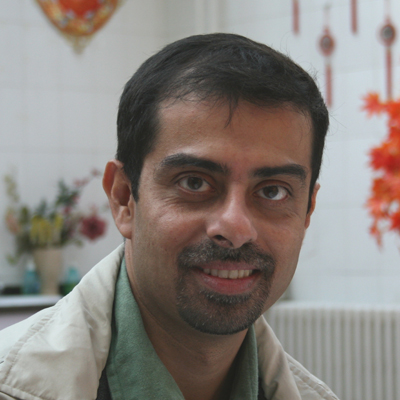
    MUMBAI: Contract Advertising has got a new executive creative director (ECD) for its Bengaluru office. It has hired Manoj Jacob, who has worked with the company earlier as well and joins back after a gap of six years. Jacob will be reporting to Contract Advertising NCD Ashish Chakravarty and would also work in partnership with Monojit Ray who recently joined Contract as the Bengaluru head.

    Prior to joining Contract, Manoj ran his own creative consultancy firm, where he worked with clients such as Nova Specialty Surgery, Apollo Hospitals, Simply South Restaurant and Abs Fitness among others.

    “I am very happy to have Manoj on board as the ECD of our Bangalore office. He is extremely passionate about his craft, very driven, and a hands-on kind of leader. Having worked with him in the past, I won’t be surprised if he dives straight into the deep end from day 1 itself.  It is a challenging role, but I am positive he will shine,” said Chakravarty.

    Manoj comes with an experience of 17 years and has worked with O&M, McCann Erickson, Satchi & Satchi, Euro RSCG, orchard, Publicis Ambience and Bates over the course of his career. He has also handled some of leading brands across verticals such as IBM, Air Deccan, Cavin Kare, Mitsubishi Motors, Wipro Consumer Care and Weekender.

    On his coming back to Contract, Manoj said, “It’s an awesome new team, across disciplines, that is getting together at Contract Advertising and I’m very happy to be a part of it.”

    Manoj’s work has won him a lot acclaim and rewards both nationally and internationally from Cannes to New York festival to winning at AD Spot Non Profit Awards, Italy and the Bangalore Ad Club awards.

  • Global Advertisers appoints Sudhendu Ram as marketing head

    Global Advertisers appoints Sudhendu Ram as marketing head

    MUMBAI: Global Advertisers, an outdoor advertising agency, has strengthens its team by appointing Sudhendu Ram as head marketing initiatives pan India.

    The agency has expanded its business in tier II and tier III cities as BTL activities focus more here. Ram new role will primarily focus on marketing brands and the agency itself in different geographical areas. His will also be responsible for market research, bringing new selling propositions and increase sale of the outdoor inventories offered by the agency.

    Commenting on this, Global Advertisers MD Sanjeev Gupta said “Outdoor industry is undergoing tremendous change, brands are now exploring new opportunities to tap consumers of tier II and tier III cities. Therefore, to cope up with the increasing demand, we have roped in several senior professionals and young talent this year. Now we have Sudhendu on our board to maximize our reach and improve the quality of our service. We wish him all the best for his new challenge.”

    With over seven years of experience in media marketing and advertising, Ram said about his new role, “I am excited for my new challenge. My aim is to take Global to the next level of media engagement and recall with my deep understanding of media and expertise in terms of Networking and knowledge. Global is a place to be for committed and self motivated professionals.”

  • DDB Mudra Group elevates Aditya Kanthy & Amit Kekre

    DDB Mudra Group elevates Aditya Kanthy & Amit Kekre

    MUMBAI: Aditya Kanthy and Amit Kekre, currently senior VPs, DDB Mudra, have been elevated to the role of national strategic planning heads by the agency.

    In their new roles, Kanthy and Kekre will jointly take on the national mandate of looking after strategy and planning for all of DDB Mudra offices in the West, North, South as well as Tribal, Rapp and Remedy.   Arun Sharma in Delhi and Rajesh Sharma in Bangalore will work closely with Kanthy and Kekre respectively.  

    On the elevations, DDB Mudra Group group CEO & MD Madhukar Kamath said, “Aditya and Amit make a formidable team, both thorough with all facets of strategy planning, yet each with their unique worldview. They have both contributed greatly to strengthening the agency’s creative-effectiveness credentials and I am sure together they will take it to greater heights.”

    During his decade long stint with the DDB Mudra Group Kanthy has contributed to some of India’s most loved brands and trusted companies and has over a dozen wins across categories (including health & digital) at the Effies.

    Kekre began his planning career in 2001, and has worked with agencies in India and abroad. He was featured as one of 10 best planners across Asia Pacific by Media Magazine. On his new role, he said, “Imagination is the beginning of all planning. The last two and a half years I?ve been with DDB Mudra, I am glad this personal belief has found a turf on which it flourishes. Ours is a truly remarkable team – as adept with tools and processes, as it is with the most fundamental aspect of all communications? exploring people, imagining a different reality, imagining newer narratives. I am proud of our unique and in more ways than one, ‘total’ planning offering. Aditya is an amazing mind. The two of us together are only one of the visible signs of DDB Mudra?s core pillars, Together, we are better.”

    “DDB Mudra has a legacy of putting strategic thinking at the heart of the work we do. Over the years our management has displayed a serious commitment to planning by investing in an excellent team across the country and it’s been paying off. The product’s improved, our clients vouch for the quality of the thinking and the planners have forged deep partnerships with the creative and account management teams. With top class brand, media and activation planning under the same roof, we could lead the way in shaping the discipline. Amit’s a terrific partner, we enjoy working with each other and we’re raring to go”, said Kanthy.