Category: Media and Advertising

  • FCB Ulka CCO Satbir Singh puts down papers

    FCB Ulka CCO Satbir Singh puts down papers

    MUMBAI: FCB Ulka chief creative officer Satbir Singh has put down his papers and decided to move on.


    Singh has led some memorable work across brands during his short stint with the company. He joined the agency only earlier this year.


    As a parting message Singh said, “It has been a short but enjoyable stint with FCB Ulka. In this brief period I have been fortunate to have worked with some excellent people who created much talked-about campaigns like the ones for Snapdeal, Tata Salt, Zee. From clients to brands to people, 2015 has been a good year.”

  • McCann Erickson’s Happy Dent ad one of 20th century’s best ads: Gunns Report

    McCann Erickson’s Happy Dent ad one of 20th century’s best ads: Gunns Report

    MUMBAI: It’s a proud moment for McCann Erickson, Mumbai as the agency’s Happy Dent Teeth Whitening Gum Happy Dent Palace ad has been shortlisted as one of the 20 best ads of the 21st century.


    This list was compiled after The Gunn Report ran a popular poll asking readers to choose ten ads each from a pre-selected list of 30. McCann Erickson Mumbai is the only agency from India to have had its work shortlisted in the compilation.


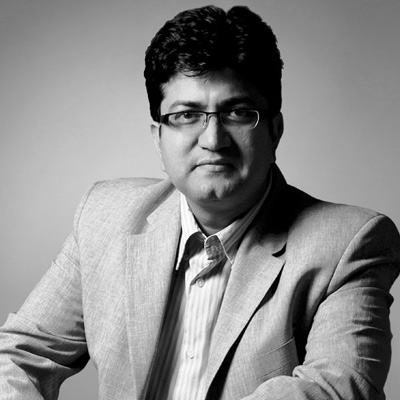
    “Very rarely do you see an advertisement reaching a level when it is considered as historical in the international stage. I am happy that my work has appeared as all time top 20 in 21st Century. I am honoured and deeply moved,” an elated McCann Worldgroup Asia Pacific chairman Prasoon Joshi tells Indiantelevision.com.


    The advertisement shows utopian India in its bygone eras (possibly the 20th Century) when bright shiny teeth are source of light for people after sunset, and people replace street lights and even chandeliers!


    This quirky, outlandish and downright hilarious concept for an ad that speaks of a teeth whitening candy gum devised primarily for electronic medium immediately went viral after its television release. 


    Joshi points out that the ad doesn’t take itself seriously and that is exactly what has worked in favour of the TVC. 


    “It knows it is a gag for a product in the impulse purchase category. It’s for a chewing gum and it doesn’t take itself seriously, and that drew people in,” Joshi adds with a chuckle. Other nuances that helped it cut above the noise was it’s fun storytelling, beautiful and catchy music. “Somewhere it appeals to the fantastical and escapist side of the consumers. What if the world was like this? What if this could happen? The ad tends to urge us to imagine out of the box. On top of it is very focused about what it is trying to say about the product,” he adds.


    Joshi also informs that being in a prestigious list or winning an award wasn’t on his mind at all when penning down the concept for the advertisement.


    “Awards and rankings are not what we aim for when creating ads. When writing the script of this one, I was more immersed in it than anything. When awards follow it definitely inspires us to do better and encourages us, but that is never the end goal,” he  says.


    Recalling the time the ad was launched, Joshi further adds that it initially released as any other advertisement and then gradually gained popularity as well as critical appreciation by winning advertising awards at Cannes. “Then people started circulating it through mails, talking about it and it became viral on its own right,” Joshi says, with a look ahead to keep creating more ‘timeless ads.’

  • Publicis undertakes major client-centric restructuring for 2016

    Publicis undertakes major client-centric restructuring for 2016

    MUMBAI: Publicis Groupe is undertaking a major client-centric restructuring of its business model, which will see agency breaking down its disciplines into four distinct ‘solution hubs’ with each client that will be led by a chief client officer.


    With effect from 2 January, 2016, the change also includes a new role for Leo Burnett’s APAC chairman and CEO Jarek Ziebinski.


    The Groupe’s disciplines will now be organised across four solutions hubs namely Publicis Communications, Publicis Media, Publicis.Sapient and Publicis Healthcare.


    Publicis Communications will be led by CEO Arthur Sadoun and will comprise all creative networks: Publicis Worldwide, MSL, Nurun, Saatchi & Saatchi, Leo Burnett as well as BBH and Marcel. It will also include the production hub, Prodigious.


    Publicis Media will be led by CEO Steve King and will bring together Starcom Mediavest, ZenithOptimedia, Vivaki, Performics, MRY, Moxie or RUN and all the associated entities. All clients will benefit from the economies of scale and research efforts, key elements in this field. 


    Publicis.Sapient is a platform designed for tomorrow’s world: a world of digital platforms. Led by Alan Herrick as CEO, this hub includes Sapient Consulting, SapientNitro, DigitasLBi, Razorfish and all the associated entities. Clients fully benefit from R&D investments, cutting edge technology solutions and the Groupe’s leading position in e-commerce, as well as new tools that will transform their marketing approaches and their business models. 


    Publicis Healthcare led by CEO Nick Colucci is a fully integrated Health and Pharma solution. It covers all of the Groupe’s clients’ needs, from a new product launch to the transition to generic branding, including digital applications and sales force management. 

    Each Brand, for instance Saatchi & Saatchi, ZenithOptimedia or DigitasLBi, will keep expanding, with its own culture and specific approach to creativity and services. The identity and the success of each of the Groupe’s brands will be preciously preserved and nurtured. 

    The Groupe generates more than 90 per cent of its revenue in about 20 countries. As a result, many other countries don’t get the attention they rightfully deserve and the Groupe footprint is often too fragmented. This is why all of these countries will now be managed through a dedicated Groupe entity, Publicis ONE, with will be led by Ziebinski as CEO.


    In the Publicis ONE countries, all entities will be reunited under one roof and one management team. This will ensure a better coordination of all client services while respecting strictly confidentiality rules. These structures will attract great talent, both through their scale and comprehensiveness. 


    Businesses all over the world, no matter their industry, are continuously faced with the upheavals brought on by digital and the constant evolutions affecting our society, the way we work, communicate and consume. In order to better advise and serve its clients, Publicis Groupe decided to radically modify its business model by putting the client at the heart of its organisation.


    The idea consists of reversing its current structure, built around the concept of worldwide networks, by breaking down silos in order to offer clients the Groupe’s entire know-how and expertise through the “Power of One”: all Publicis Groupe capabilities will be available to each of its clients – in a simple, flexible and efficient way. A bit like a smartphone: powered by sophisticated technology but very easy to use.


    From now on, the Groupe will gauge its performance using a new standard: client service, led for each client by a chief client officer. This person will be responsible for the entire range of services and skills the client can benefit from, no matter the discipline or the country. Whenever possible, the dedicated teams will be gathered under one roof.


    The teams of chief client officers will be supervised by a Groupe chief revenue officer. Laura Desmond will fulfil this newly created role. The mission will be to simplify the way clients access the range of solutions, without duplication or delay, and to accelerate the Groupe’s growth and development. Laura Desmond will also be responsible for the Groupe’s growth (new business and future developments).

  • Geometry Global Encompass Network ropes in Aaraadhee Mehta as VP

    Geometry Global Encompass Network ropes in Aaraadhee Mehta as VP

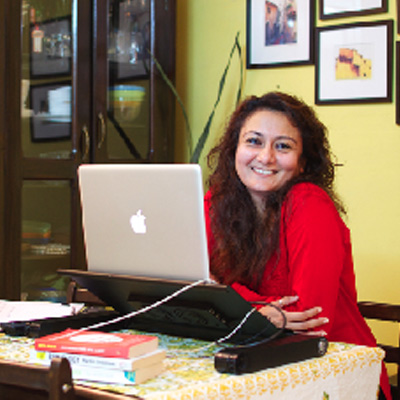
    MUMBAI: Geometry Global India has appointed Aaradhee Mehta as Geometry Global Encompass Network vice president – shopper marketing. She will report into Group COO Rahul Saigal.


    With over nine years of shopper marketing experience, Mehta has worked with clients such as Colgate, Mondelez, Reckitt Benckiser, Unilever, ITC Foods and Personal Care, HP, Diageo, Diesel, Steve Madden and Brooks Brothers. 


    Prior to specialising in shopper marketing, Mehta worked in agencies such as Lowe, JWT and Bates. 


    Mehta said, “I’m excited to lead the shopper marketing practice for the country’s largest experiential marketing agency. I am looking forward to working with clients such as Mondelez and Hindustan Unilever and growing our shopper practice in India.”


    Mehta’s appointment comes just weeks after the Geometry Global and Encompass Network launch was announced.

  • ‘Technology is the future of experiential marketing:’ Vidur Patney

    ‘Technology is the future of experiential marketing:’ Vidur Patney

    MUMBAI: When talking of marketing campaigns we often come across the term ‘on ground activation.’ While at a rudimentary scale, it’s how a brand markets itself through direct engagement with consumers, its utility and purview is infinitely evolving. The idea is to create a bond between the consumer and the brand beyond ‘buying and selling’ by immersing them in a fun and memorable experience, which evokes emotions within the consumers that they thereafter associate with the brand instead.


    From a simple handing out of Red Bull cans at a music concert to Multi Screen Media’s open air bus ‘Bulaava Express,’ which toured the country across 13 cities creating euphoria for the 2014 IPL — the beauty of experiential marketing lies in its flexibility of mode and scale to target the consumers.


    While the concept isn’t new to marketers, its rapid evolution over the years armed by technology and digitisation has made it increasingly important to understand experiential marketing from an insider’s perspective.


    With that in mind, Indiantelevision.com approached recently appointed Maxus national director – experiential marketing Vidur Patney to shed light on the changing landscape of experiential marketing, and the role it is going to play in the near future.


    Purview:


    From on ground and van activations through major cities to team building activities from brands at corporate level, experiential marketing plays on a wide range, and the possibilities are endless.


    How you use the formula to connect with your consumer, what chord you strike with them in the process is what puts you at an advantage when it comes to this form of marketing. The idea is to wow the consumers with unique interactions and engagements that leave impressions in their minds. Creating vanilla experiences that the consumers can then start associating with the brand is also part of the process.


    Though the possibilities are endless, it is getting increasingly challenging to come up with new ways to give consumers that vanilla experience. The only way forward is to use the available digital and technological tools at our disposal. By identifying how the consumers engage with such tools, we come up with concepts that allow us to make the most of it.


    Evolution:


    The evolution of experiential marketing has happened in three phases. Often considered an old school marketing art, the first hurdle was to get brands and marketers to realise its potential in the current ecosystem. To make them look beyond the generic TVC marketing and acknowledge that today consumers are not content with just knowing a brand through their television sets.


    Once that was established, phase two was to explore the various ways in which experiential marketing can be used, and integrated with the headlining campaigns. This was the period we saw an increase in on-ground activities, contests, product launches where consumers could interact with brand ambassadors, etc.


    Once that was achieved, we had to think how to expand the reach of experiential marketing, take it from being a space restricted solution, to a trigger that leads to conversations and interactions about a brand on a larger scale. That’s why currently we are concentrating on making way for more and more shareable experiences using the digital platforms.


    Role of technology:


    There’s no denying the fact that technology is the way forward when it comes to marketing, be it at the concept level or while executing. It has become an integral part of our consumers’ lifestyle. We can not only target consumers better with analytical tools made available to us through technology, but also engage consumers to give them the best of experiential.


    Technology is also the differentiator when a brand wants to stand out and grab eyeballs. It is no longer something people are averse to. People are willing to accept technology into their lives and know more. As a result, to customise for them, to garner more participation and deliver a powerful brand message, technology plays a very important role.


    The tools could be one on one engagement through technology, giving consumers a virtual experience. Use of technology is important because it is something today’s generation is excited about. If used right, it helps give that wow factor and conveys a much stronger message for the brand. Also, it goes a long way into consumers accepting what you are saying and giving them something memorable.


    For example, the recent use of virtual reality (VR) and augmented reality technology can and has opened up new avenues when it comes to experiential marketing. People can now get a first hand interaction with how a brand functions. These are extremely useful tools for automobile and technology related brands where a consumer can see the inner workings of a car or a phone. It has a much bigger impact than simply sharing the specs with a consumer. But its use is endless when it comes to other sectors as well. One may argue that applying virtual and augmented reality in marketing may rack up the cost of marketing for brands but that’s just the initial phase. Just like any other technology, it’s the first investment that costs more, after which one can cash in on them while enjoying more innovations.


    Going beyond metros:


    Experiential marketing can be a very important marketing tool when it comes to tier II and tier II cities. We have noticed that while on ground activations work in metros, its reach is becoming limited. It only draws in a niche crowd. The urban consumer isn’t easily wowed by simple events, you need to spend more and innovate your engagement concepts to keep their interest. They get easily bored. Consumers in tier II and tier III cities, on the other hand, can still be catered with vanilla experiences by creating simple engaging moments. With brands now looking their way to expand consumer base, use of experiential marketing becomes crucial in those areas.


    We recently did an on-ground activation for a movie screening in Indore where hundreds of kids and their parents turned up by simply allowing them to play games on an app we developed for the event. In a metro that would have only interested a niche group, way below hundred.


    Experiential marketing in sports:


    If there is one section where experiential marketing dominates, it is sports. We all interact with sporting events for a personal connection, be it our passion for the sport, our loyalty to a team or love for a favourite player. That is why brands love to associate with sporting events. It is easier to create those memorable moments, which brands would to be credited for. They want consumers to associate their favourite on ground memories with the brands.


    There are numerous possibilities for experiential marketing for any sporting event, be it Indian Premiere League, Indian Super League, Pro Kabaddi League, etc.


    A holistic marketing solution:


    Experiential marketing and digital marketing forms two important pillars of the core media solution that we provide our clients. Having an experiential marketing arm gives Maxus an added advantage of providing a holistic marketing solution.


    It’s a three way communication within Maxus that helps us achieve that. When it comes to digital technology and bringing it on ground, we have Metalworks. Figuring out how that technology can be used to wow and create a memorable experience for the consumer is what we at Experiential Marketing do. When these come together with Maxus’s core media vertical, we are able to give brands the best possible solution to engage with the consumer.


    Going only experiential:


    So far experiential has worked in collaboration with core media and other arms of marketing. While there are certain brands that can go only experiential as their marketing strategy, it highly depends on the brand’s target audience and the type of campaign. There are some products for which experiential gets the lion’s share of the marketing budget.


    While there is no set rule, more and more brands are keeping budgets aside for experiential marketing because it’s the last mile of communication between the brand and a consumer.


    Experiential works best when it’s area specific. If a brand launches a product aimed at consumers of a certain area, having a localised approach makes more sense rather than a TVC.
  • Coca Cola and NDTV’s ‘Support My School’ campaign raises Rs 20 crore

    Coca Cola and NDTV’s ‘Support My School’ campaign raises Rs 20 crore

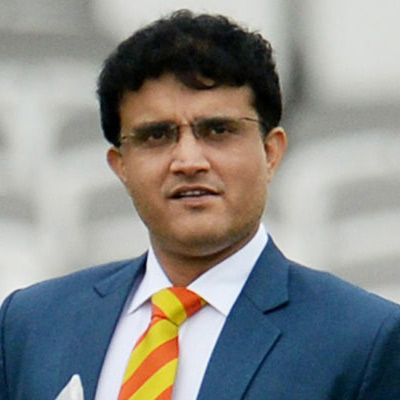
    MUMBAI: NDTV, Coca-Cola and UN-Habitat once again came together with campaign ambassador Sourav Ganguly to support the 6 hour telethon that went live across all channels on the NDTV network on 29 November.


    The campaign, which was started in 2011 once again received an overwhelming response from people across different walks of life and generated over 20 Crores to support 400 schools. The target of revitalizing 1000 schools which the campaign set for 2017 was achieved in 1 day itself. The telethon saw the foundation being laid for the first school under the Support My School Campaign in Shillong. School dedications & celebrity visits were organized in other cities like Gwalior, Jaipur, and Pondicherry amongst others.


    Hosts NDTV,  Group CEO Vikram Chnadra, Coca Cola India, SW Asia, president,  Venkatesh Kini and campaign ambassador Sourav Ganguly took centre-stage to reach out to millions of viewers to generate maximum funds for the cause. Ranveer Singh extended his support to the campaign.


    Delighted with the tremendous response received for the initiative NDTV Group CEO  Vikram Chandra said, “This multi partner campaign has seen tremendous response from across the country and is growing at a rate which will soon help us reach our next goal. We would like to thank our viewers for the amazing support they have been extending and urge everyone to keep coming forward and help Sourav and NDTV Support My School.”


    Speaking about the campaign Coca-Cola India and Southwest Asia president Venkatesh Kini said, “Support My School has grown from being an initiative to a campaign that has more than 50 partners in 23 states across India impacting nearly 200,000 children in 600 schools. All of this has been possible with the support of our strategic partners and NGOs, who implemented it at the grass-root level and made the dream come true for many children.”

    Campaign ambassador, Sourav Ganguly said, “It gives me immense pleasure to be associated with such a cause that not only impacts several lives but has a vision of building India’s future. We need more initiatives like Support My School, which has helped in holistic growth of children in many schools across the nation”


    The day saw participation from policy makers like Gujarat CM, Anandiben Patel Uttarakhand CM, Harish Rawat  and Bollywood personalities like Raju Hirani, Sonali Bendre, Sports personalities like Sunil Gavaskar, Nobel laureate Kailash Satyarthi along with renowned industrialists such as Infosys founder NR Narayana Murthy HSBC chairperson Naina Lal Kidwai, JPMorgan Kalpana Morparia and more.


    During the event Sourav Ganguly engaged with students and viewers during ‘Sourav ki Pathshala’, where he gave some valuable tips and demonstrated a few strokes. Budding cricketers from the Sehwag Sports Academy got tips from Dada himself. During the 6 hours event he repeatedly appealed for donations.

  • ShopClues launches TVC on Sunday Flea Market

    ShopClues launches TVC on Sunday Flea Market

    The campaign shows how consumers gasp with disbelief when they see the discounts on offer.


    MUMBAI: ShopClues has rolled out another witty and engaging TVC to highlight the incredible propositions offered on its Sunday Flea Market. Through the ad film, ShopClues showcases how shoppers gasp with disbelief when they check out the discounts and deals on this exclusive sale property.


    The new TVC created and conceptualised by Enormous Brands plays on the popular Indian notion that when someone remembers you, you start hiccupping ceaselessly. The ad film shows a woeful man called “Bhai Sahab” who suffer this fate every Sunday when people around the country see the deals on offer on the Sunday Flea Market and let out the popular expression of surprise in India, “Oh Bhai Sahab.” In a most endearing and relatable way, the TVC illustrates how unbelievable the offers are during this ShopClues property. The core idea is encapsulated in the final message of the creative, “Duniya bhar ka aflatooni samaan, kuch aflatooni rates par.”


    Speaking on the campaign, ShopClues.com CBO and co-founder Radhika Aggarwal said, “The ShopClues Sunday Flea Market has been a tremendous success since its launch. It appeals to the common Indian who is used to shopping at delightful price points from local bazaars on specific days of the week. We have emulated this delight on the online platform and through this TVC we want to garner greater mindshare for this one-of-its-kind online flea market. The idea is to get more and more shoppers to check this property out and fulfil all their needs at the best possible prices!”


    Enormous Brands managing partner Ashish Khazanchi added, “The Sunday flea market offers unbelievable deals on everyday products. ‘Unbelievable’ being the starting point, we used the exclamation “oh bhai saab” to portray the same. The commercial shows a hapless ‘bhai saab’ hiccuping incessantly on Sundays, when people inadvertently call out his name. We see the kinds of products available, and humorously establish Sunday as SFM day in the minds of the customers.”

  • Ad Club modifies Effie 2015 Awards format

    Ad Club modifies Effie 2015 Awards format

    MUMBAI: The Advertising Club, which will be holding the Effie 2015 Awards on 27 January, 2016, has drawn up a slew of changes to the same keeping in tune with the changing times.


    For the first time, entries can now be submitted online. As an acknowledgement to the increasing importance of the startup ecosystem in India, a new category called ‘New Product or Service – Best Campaign for a Start-up’ has been introduced.


    The Digital Campaign category too has been redefined into the Integrated Marketing Category – a tacit nod to the evolution of the digital platform as an inclusion rather than extension of an ad campaign.


    The growing economic influence of small town India came to the fore as the erstwhile Rural Marketing category has been rechristened as Small Town and Rural Marketing Category. Though not renamed, the Healthcare Category also underwent a redefining exercise, to account for the increasing diversity of the segment. Barring the Best Ongoing Campaign, all other categories will now be eligible to compete for the Grand Effie.


    Commenting on these improvements, The Advertising Club president Raj Nayak said, “The Effies is the award that recognizes advertising effectiveness. To be able to do justice to its purpose, it is imperative that we recognize and integrate the changing landscape of advertising in India with the rules of the award. I am confident that the modifications that we’ve introduced this year will further streamline the purpose of Effies with the ground realities of advertising in India.”


    2015 Awards chairman Ajay Kakar added, “The advertising industry has grown from strength to strength since its inception in India. Not only has our industry grown in volume but also in terms of geographical spread. It is in recognition of this reality that, for the first time, Effie India will be organizing the first round of judging at Bangalore besides Mumbai & Delhi.”


    2015 Awards co-chairman Vikram Sakhuja opined, “What’s new in Effies is your work. Celebrate the fact that you did something creative, analytical, but always accountable. We love madness but love the method underlying even more. If you’ve done something that made you proud chances are we would love to see it. Let it rip.”


    The Effie 2015 Awards will be held at the Seaside Lawns, Hotel Taj Lands End in Mumbai. Campaigns that ran in India from 1 October, 2014 to 30 September, 2015 (12 months) are eligible for entry.

  • GroupM ups U.K. ad growth forecast to 7% for 2015 & 2016

    GroupM ups U.K. ad growth forecast to 7% for 2015 & 2016

    MUMBAI: U.K advertising spending in 2015 is anticipated to grow by seven per cent, and in 2016 GroupM predicts strong demand for digital advertising will usher another year of strong advertising growth (also seven per cent), pushing total U.K. advertising investment above ?17 billion. 

    The new GroupM forecast released raises the prior 2015 estimate by one point (six to seven per cent) and raises the 2016 outlook by two points (five to seven per cent).

    If GroupM’s forecasts prove accurate, 2016 will mark the fifth straight year in which U.K. ad spending has outpaced the Kingdom’s gross domestic product (GDP) growth (2012-2016). The U.K. is again the fastest-growing mature advertising market worldwide and is among the world’s fastest-growing markets full stop.

    “Digital technology and media platforms continue to expand the role media plays in marketing and as a result media investment is both growing and shifting. Digital advertising represents a tremendous opportunity for clients to create more targeted media campaigns that activate consumers, but it has also added enormous complexity and our group continues to solve this with strategy, innovation and investment. The year ahead is a promising one for growth of overall media investment as we work with clients to tap into empowering economic trends we see empowering U.K. consumerism,” said GroupM, United Kingdom CEO Nick Theakstone. 

    GroupM identified a number of economic factors underpinning its U.K. predictions. The nation currently enjoys the highest recorded employment rate in its history with 74 per cent of the working-aged populace in jobs. Additionally, workers’ real wages have risen near to their 2008 peak, while consumer-price inflation has not similarly risen, at least not yet. Low energy prices and property wealth are additional tailwinds for a very positive outlook on U.K. consumerism, and as a result GroupM believes U.K. consumers will be spending more next year. U.K. advertisers will marshal their efforts to seize this opportunity with a strong increase in media investment.

    GroupM’s forecasted distribution of advertising investment growth across media formats is detailed below:

    With this updated forecast, GroupM introduces a new category dubbed ‘Pure-Play Internet,’ which is ‘Digital’ minus TV and print content repatriated back to its parent media. This allows for broadcaster VOD and digital platforms to be considered together with ‘TV,’ and likewise for print media to have the benefit of their digital assets when viewing the pace of their contraction.

    GroupM believes this more sober view of how ad investment is shifting across categories better supports industry dialogue and trend analysis. However, while delineating Pure Play Internet gives legacy media a fairer consideration, the impact is slight on the still rapid growth of the internet category which is estimated to be 13 per cent in 2016. On like-for-like comparison, this is a slight deceleration from 2013 to 2014, but Pure Play Internet will still grow far faster than second-fastest-growing TV which will realize 7.4 per cent growth in 2016. It should be noted that the growth performance of TV is strong in its own right, and the prediction holds for a fractional share gain in 2015 and 2016.

    “The influence of digital is everywhere. It suggests that legacy media channels must think and behave like media brands or what could be dubbed ‘audience brands.’ Digital’s influence is also pulling trading toward a more common GRP basis versus the idiosyncratic variety of the present, creating urgency to discriminate between correlation and causality, and driving demand for better reporting standards,” said Futures director Adam Smith. “With this year’s U.K. forecast we seek to make better sense of the investment trends across categories with ‘Pure Play Internet.’ We feel this is essential as content continues to rise with the browsing appetites of our increasingly digital culture.”