Category: Media and Advertising

  • Bajaj V campaign calls for Indians to celebrate national pride every day

    Bajaj V campaign calls for Indians to celebrate national pride every day

    MUMBAI: Be proud to be Indian, every day. Bajaj Auto has released a new brand film for V – the bike that contains the metal of the legendary warship INS Vikrant. The film raises an important question about why national pride is restricted to select occasions of national significance such as the Independence Day or Republic Day, and forgotten the next morning. Also, the new film features the fresh navy blue color of Bajaj V recently introduced through the new campaign.

    The film aims to inspire people to cherish India’s rich and glorious history and feel a sense of pride every single day of the year. In what is probably the first time ever in Indian advertising, the story is narrated from the point of view of a real life war hero. Rear Admiral S. K. Gupta, a Mahavir Chakra awardee who served aboard the INS Vikrant in the 1971 war, features in the film and talks about how the Bajaj V now allows us to experience our pride every day.

    Bajaj V, launched on the Republic Day earlier this year, created quite a stir in the market, with its first campaign – clearly establishing their distinct positioning of being made of pride.

    Bajaj Auto motorcycles marketing VP Sumeet Narang said, “With the V, we are not just selling motorcycles but celebrating the pride of the nation. Consumers are also playing back this feeling of pride. The new campaign takes the proposition forward and talks about how the V helps you experience pride every day, and not just on select occasions of national significance.”

    Leo Burnett CCO Rajdeepak Das said, “This is the harsh reality of our country. While we all see ourselves as proud Indians, we are quite happy just expressing them in occasions. Like beating a key rival in cricket, winning the World Cup, medals at Olympic games, and the two national days.” The film has been directed by Prakash Varma of Nirvana Films.

  • Indian Media Review: Shashi Sinha addresses the elephant in the room — common measurement

    Indian Media Review: Shashi Sinha addresses the elephant in the room — common measurement

    MUMBAI: All eyes were trained on this year’s media review by The Advertising Club, what with the stalwarts of the industry repeatedly endorsing it on the social media weeks before the event took place. And indeed, the topic that the session addressed hit close to to every stakeholder in the industry alike — be it publishers from across media, advertisers or media agencies. It was on having a common currency of measuring the effectiveness of media for advertising across platforms.

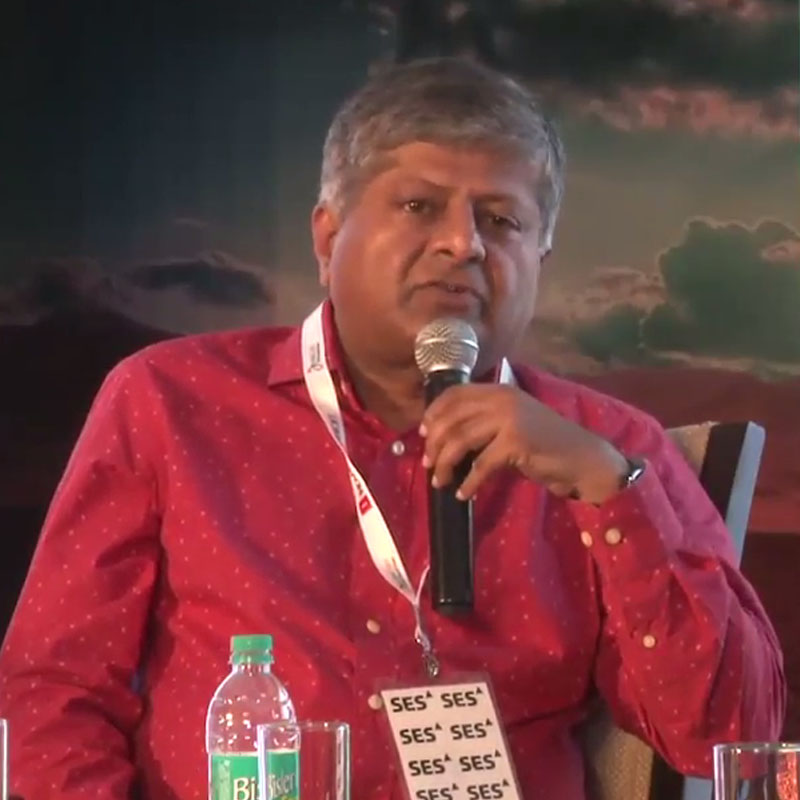
    IPG Mediabrands CEO was one of the key speakers at the review. Shashi Sinha started off on a more comfortable note of how agencies can help businesses grow with an effective measurement.

    According to him, “Instead of complaining that clients are demanding more accountability from the media they bought, agencies need to understand that better measurement gives CMOs better rationale for justifying better budgets.”

    This ‘better measurability’, as per Sinha, is being achieved in several ways at present, primarily — introduction of BARC’s measurement system for broadcasters, revival of the Indian Readership Survey (IRS) by next year, and digital.

    The issue, Sinha emphasised, came down to whether the fraternity wanted to take a few more steps further to improve the system of measurement across media after understanding the need of the hour or whether they wanted to stall the progress and delay the combined measurement system.

    Speaking specifically of the digital measurement system, Sinha shared that it was wrong to expect a panel of digital platforms or ‘OTT’ players to be self regulators of their measurement systems, given that the category is extremely fragmented. Therefore, he openly asked if “digital publishers are willing to be measured by third parties and be transparent with their numbers?”

    Highlighting how the IRS, which Sinha expects to be fully functional in eight months, will increase the sample size of print publishers by 40 per cent, he added that multimedia evaluation was also being considered by the board.

    Sinha expressed his welcome surprise at the Audit Bureau of Circulation (ABC) testing the measurement possibilities in the publishing side of digital (as BARC only caters to video consumption measurements). “Unlike video measurement, it is relatively cheap and is actually already functional for the last three to four months. We just need the heavyweights in the medium to come to a consensus for it to be fully rolled out,” Sinha added.

    After addressing and updating the audience about the different scopes of measurements in each media, Sinha quickly moved on to emphasise the need to have a common source of truth or ‘a single view of truth’

    This brings him to suggest the ambitious idea of Media Research Users Council (MRUC), the IRS, BARC and ABC to come together to contribute to a common pool of data that can be further sliced and diced in accordance with each media based on the clients requirement, although Sinha agreed that currently major challenges were in making that thought become a reality.

    Instead, one could start with thinking along the lines of a measurement currency that each media can be compared in, and according to Sinha, it is CPT,

    “Television measurement needs to move from CPRP to CPT format, and that’s a good starting point of having some commonality of currency between mediums. Publishers need to understand that moving from one currency system to the other doesn’t bring any difference in the buying and selling equation with clients. That will always be based on the demand-supply ratio,” assured Sinha, adding that the current CPT of channels is actually an opportunity to drive growth.

    CPT or Cost Per Thousand is basically the advertising cost of reaching a certain number of viewers in a defined target group on television, while CPRP or Cost Per Rating Point is the cost of advertising time on television based on the price of time for a single rating point generated by the channel.

    More mature markets such as the US, the UK and Germany have already switched to CPT as a currency when buying and selling television media.

  • Indian Media Review: Shashi Sinha addresses the elephant in the room — common measurement

    Indian Media Review: Shashi Sinha addresses the elephant in the room — common measurement

    MUMBAI: All eyes were trained on this year’s media review by The Advertising Club, what with the stalwarts of the industry repeatedly endorsing it on the social media weeks before the event took place. And indeed, the topic that the session addressed hit close to to every stakeholder in the industry alike — be it publishers from across media, advertisers or media agencies. It was on having a common currency of measuring the effectiveness of media for advertising across platforms.

    IPG Mediabrands CEO was one of the key speakers at the review. Shashi Sinha started off on a more comfortable note of how agencies can help businesses grow with an effective measurement.

    According to him, “Instead of complaining that clients are demanding more accountability from the media they bought, agencies need to understand that better measurement gives CMOs better rationale for justifying better budgets.”

    This ‘better measurability’, as per Sinha, is being achieved in several ways at present, primarily — introduction of BARC’s measurement system for broadcasters, revival of the Indian Readership Survey (IRS) by next year, and digital.

    The issue, Sinha emphasised, came down to whether the fraternity wanted to take a few more steps further to improve the system of measurement across media after understanding the need of the hour or whether they wanted to stall the progress and delay the combined measurement system.

    Speaking specifically of the digital measurement system, Sinha shared that it was wrong to expect a panel of digital platforms or ‘OTT’ players to be self regulators of their measurement systems, given that the category is extremely fragmented. Therefore, he openly asked if “digital publishers are willing to be measured by third parties and be transparent with their numbers?”

    Highlighting how the IRS, which Sinha expects to be fully functional in eight months, will increase the sample size of print publishers by 40 per cent, he added that multimedia evaluation was also being considered by the board.

    Sinha expressed his welcome surprise at the Audit Bureau of Circulation (ABC) testing the measurement possibilities in the publishing side of digital (as BARC only caters to video consumption measurements). “Unlike video measurement, it is relatively cheap and is actually already functional for the last three to four months. We just need the heavyweights in the medium to come to a consensus for it to be fully rolled out,” Sinha added.

    After addressing and updating the audience about the different scopes of measurements in each media, Sinha quickly moved on to emphasise the need to have a common source of truth or ‘a single view of truth’

    This brings him to suggest the ambitious idea of Media Research Users Council (MRUC), the IRS, BARC and ABC to come together to contribute to a common pool of data that can be further sliced and diced in accordance with each media based on the clients requirement, although Sinha agreed that currently major challenges were in making that thought become a reality.

    Instead, one could start with thinking along the lines of a measurement currency that each media can be compared in, and according to Sinha, it is CPT,

    “Television measurement needs to move from CPRP to CPT format, and that’s a good starting point of having some commonality of currency between mediums. Publishers need to understand that moving from one currency system to the other doesn’t bring any difference in the buying and selling equation with clients. That will always be based on the demand-supply ratio,” assured Sinha, adding that the current CPT of channels is actually an opportunity to drive growth.

    CPT or Cost Per Thousand is basically the advertising cost of reaching a certain number of viewers in a defined target group on television, while CPRP or Cost Per Rating Point is the cost of advertising time on television based on the price of time for a single rating point generated by the channel.

    More mature markets such as the US, the UK and Germany have already switched to CPT as a currency when buying and selling television media.

  • Usha releases ‘Hawa Happy’ for fans

    Usha releases ‘Hawa Happy’ for fans

    MUMBAI: You become of a fan of Hawa Happy! Usha International, one of India’s leading consumer durables company, has launched a campaign with the theme of “Hawa Happy”.  The TVC captures some endearing and identifiable moments of an Indian family and how Usha fans and coolers form an integral part of these moments. 

    Usha International AVP- Marketing, Fans and Home Comfort Bharat Kharbanda, said, “One of the key objectives of the TVC is to showcase the entire range of Usha fans and how they are well integrated into the day to day living. With this film we hope to further strengthen Usha’s presence in the industry and increase brand saliency among customers.”

    Leveraging the festive season fervour, this TVC is being aired nationally with heavy spends in the southern and western markets to ride on the seasonality in these two regions. The film will be aired in local languages and will be supported by on ground, in-cinema and digital campaigns.
     

  • Usha releases ‘Hawa Happy’ for fans

    Usha releases ‘Hawa Happy’ for fans

    MUMBAI: You become of a fan of Hawa Happy! Usha International, one of India’s leading consumer durables company, has launched a campaign with the theme of “Hawa Happy”.  The TVC captures some endearing and identifiable moments of an Indian family and how Usha fans and coolers form an integral part of these moments. 

    Usha International AVP- Marketing, Fans and Home Comfort Bharat Kharbanda, said, “One of the key objectives of the TVC is to showcase the entire range of Usha fans and how they are well integrated into the day to day living. With this film we hope to further strengthen Usha’s presence in the industry and increase brand saliency among customers.”

    Leveraging the festive season fervour, this TVC is being aired nationally with heavy spends in the southern and western markets to ride on the seasonality in these two regions. The film will be aired in local languages and will be supported by on ground, in-cinema and digital campaigns.
     

  • DeBeers brings ‘ek heera aapke heere ke liye’ for festivities

    DeBeers brings ‘ek heera aapke heere ke liye’ for festivities

    MUMBAI: DeBeers, in collaboration with GJEPC, has announced an India-specific advertising campaign for the upcoming festive season to consolidate and enhance the demand for diamonds in India.  DeBeers is a leading diamond company.

    The campaign ‘Ek Heera Aapke Heere Ke Liye’ (Only a diamond is worthy of your diamond) is about the appreciation of a husband for his wife for the little things that she does which makes his life, a life worth living. This campaign has been developed and conceptualized by J. Walter Thompson India (JWT, India) and produced and directed by Joydeep Sarkar of Native Films.

    Conceptualized on the idea of ‘appreciating your wife with a diamond’ the campaign creatively depicts the little things a wife adds in her husband’s life and how his life is a brighter, happier life because of her in it.  The wife is at the core of the commercial and depicts how she is the soul of the household and how everyone’s life is better because of the love care and concern she shows them and how she completes them. It signifies that every woman is the diamond in her husband’s life and is truly deserving of a diamond as appreciation of all the effort she puts in for her family.

    The TVC takes us through the life of a modern Indian woman taking care of her family (her husband, child and in laws) doing what comes naturally to her. Starting with her mischievously waking her husband up in the morning. To making breakfast a fun experience for her child, to ensuring the comfort of the elders of the family.  The ad ends with the husband gifting his wife diamond earrings to show that he appreciates her contribution to his life.

    Forevermark president Sachin Jain, commented, “India is one of the top performing markets for diamond consumption in the world. This campaign will focus on retaining the consumer preference for diamonds while reinforcing consumer confidence and demand for diamond jewellery, in the market.”

    JWT national creative director Tista Sen, added, “Celebrate the woman in your life, this festive season with an exquisite diamond. Through this campaign, we applaud women in their everyday avatar and their everyday multiple roles.”

    The Ek Heera Aapke Heere Ke Liye’ campaign will utilize the national media channels such as TV mainlines, magazines, paid search, online display and video audience buying, key digital sponsorships, social media platforms, and online television. The campaign will debut on National TV with a 60second commercial in Hindi and local languages like Tamil, Telugu, Malayalam, Bengali, Gujarati, Marathi and will across entertainment, movies and news channels for a period of three months all through the festive season.

    Download link 
    https://we.tl/FfTml5zsVO

  • DeBeers brings ‘ek heera aapke heere ke liye’ for festivities

    DeBeers brings ‘ek heera aapke heere ke liye’ for festivities

    MUMBAI: DeBeers, in collaboration with GJEPC, has announced an India-specific advertising campaign for the upcoming festive season to consolidate and enhance the demand for diamonds in India.  DeBeers is a leading diamond company.

    The campaign ‘Ek Heera Aapke Heere Ke Liye’ (Only a diamond is worthy of your diamond) is about the appreciation of a husband for his wife for the little things that she does which makes his life, a life worth living. This campaign has been developed and conceptualized by J. Walter Thompson India (JWT, India) and produced and directed by Joydeep Sarkar of Native Films.

    Conceptualized on the idea of ‘appreciating your wife with a diamond’ the campaign creatively depicts the little things a wife adds in her husband’s life and how his life is a brighter, happier life because of her in it.  The wife is at the core of the commercial and depicts how she is the soul of the household and how everyone’s life is better because of the love care and concern she shows them and how she completes them. It signifies that every woman is the diamond in her husband’s life and is truly deserving of a diamond as appreciation of all the effort she puts in for her family.

    The TVC takes us through the life of a modern Indian woman taking care of her family (her husband, child and in laws) doing what comes naturally to her. Starting with her mischievously waking her husband up in the morning. To making breakfast a fun experience for her child, to ensuring the comfort of the elders of the family.  The ad ends with the husband gifting his wife diamond earrings to show that he appreciates her contribution to his life.

    Forevermark president Sachin Jain, commented, “India is one of the top performing markets for diamond consumption in the world. This campaign will focus on retaining the consumer preference for diamonds while reinforcing consumer confidence and demand for diamond jewellery, in the market.”

    JWT national creative director Tista Sen, added, “Celebrate the woman in your life, this festive season with an exquisite diamond. Through this campaign, we applaud women in their everyday avatar and their everyday multiple roles.”

    The Ek Heera Aapke Heere Ke Liye’ campaign will utilize the national media channels such as TV mainlines, magazines, paid search, online display and video audience buying, key digital sponsorships, social media platforms, and online television. The campaign will debut on National TV with a 60second commercial in Hindi and local languages like Tamil, Telugu, Malayalam, Bengali, Gujarati, Marathi and will across entertainment, movies and news channels for a period of three months all through the festive season.

    Download link 
    https://we.tl/FfTml5zsVO

  • Kantar IMRB appoints Paru Minocha as head of qualitative business

    Kantar IMRB appoints Paru Minocha as head of qualitative business

    MUMBAI: Kantar IMRB, a leading market research company, announced the appointment of Paru Minocha as the head of qualitative business Unit. She has taken over from Rohini Abraham. Paru joined Kantar IMRB in Sept 2015 and is based in Mumbai. She will play a key role in leading the company’s go to market services & drive the growth of the Qualitative business pan India.

    Armed with over 20 years of experience in market research, Paru started her career as a qualitative researcher in MARG and went on to set up & head Synovate in Delhi. Having done this successfully, she moved to Mumbai to head Synovate pan India and subsequently, as head of innovation in IPSOS.

    Paru can boast of a well-rounded experience in Market Research, a mix of both Qualitative & Quantitative research. She has expertise in several sectors including Social, FMCG, Tobacco and Automotive.

    Kantar Insights CEO – South Asia Preeti Reddy said, ‘’Paru’s experience in both Qualitative and Quantitative will prove to be an asset. She brings in a deep understanding of research, complex business environments and client needs. Paru’s cross sector experience will certainly aid IMRB Qualitative to rise to greater heights under her stewardship”.

    Paru Minocha said, “I’m thrilled to be leading this role when the core Qualitative research is being redefined. I look forward to leveraging technology, social media data and marrying them with the primary survey data. This new approach is also reflected in how as a company we are organized and the investments that we are making in technology and digital. As Kantar IMRB, we have unique access to social data, proprietary syndicated data as well as strong partnerships with third party data owners. I strongly believe that qualitative research would form an integral part in decoding and making sense of the big data

    Paru has done B Com Honors from SRCC and holds MBA degree in Marketing and Finance from Xavier’s Institute of Management.