Category: Media and Advertising

  • Infectious Advertising appoints Smriti Tewari business head

    Infectious Advertising appoints Smriti Tewari business head

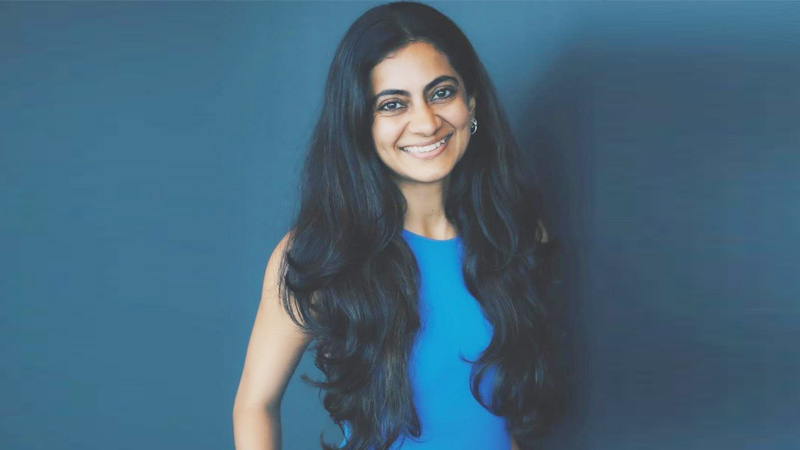
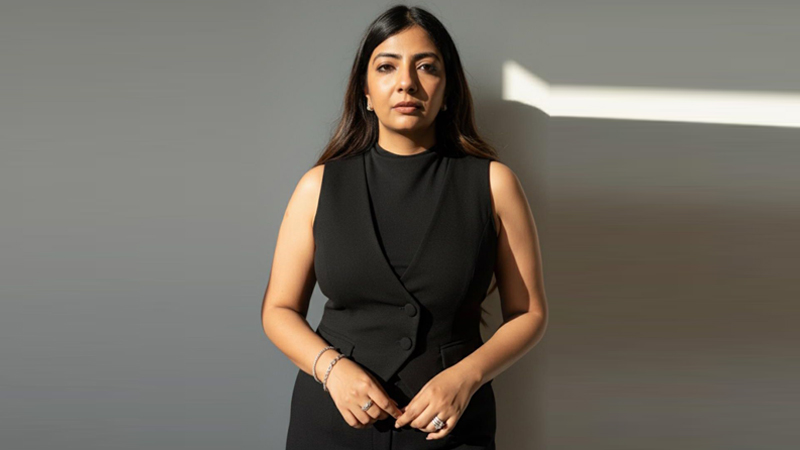
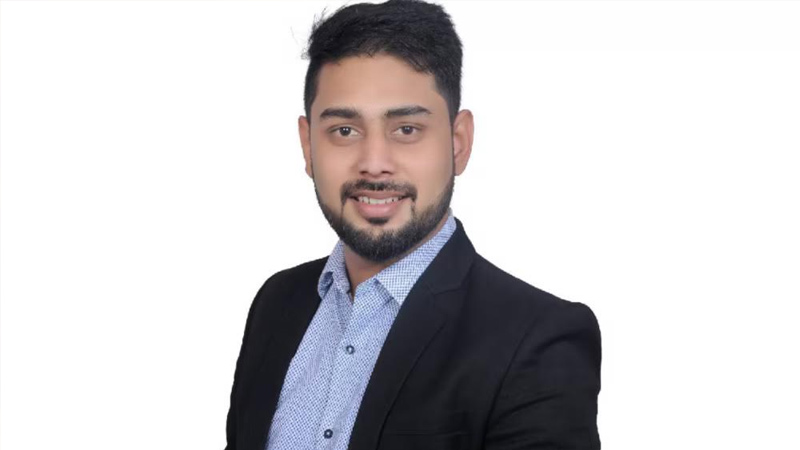
    MUMBAI: Infectious Advertising, one of India’s leading independent agencies, has named Smriti Tewari as business head, marking a strategic move to sharpen client focus and expand new business opportunities.

    With 13 years in advertising and marketing, Tewari has worked across categories including automobiles, FMCG, home paints, fashion, real estate and financial services, at agencies such as Ogilvy, FCB, The Minimalist and VML. She has partnered with brands like Honda Cars, BMW, KFC, Dulux Paints and Colgate Palmolive, managing integrated campaigns across ATL, BTL and social media.

    Managing partner & chief operating officer Siddhartha Singh said, “Smriti will play a pivotal role in strengthening client relationships and unlocking new opportunities. Her vast experience lays a strong foundation for driving work that is both effective and highly shareable.”

    On her appointment, Tewari said, “Stepping into this role is both an honour and a thrilling responsibility. Infectious has always believed in ideas that spark energy and drive meaningful change. I’m eager to elevate the agency through creativity, collaboration and client focus.”

    Infectious Advertising continues to focus on delivering bold, effective campaigns that connect with audiences across platforms.

  • ANI upgrades field units with TVU one 5G pack for stronger live coverage

    ANI upgrades field units with TVU one 5G pack for stronger live coverage

    MUMBAI: ANI, South Asia’s leading multimedia news agency, has upgraded its field production fleet with TVU Networks’ latest TVU One 5G backpack. Designed for challenging environments, the compact pack houses six 5G modem modules, each paired with a dedicated three-antenna Mimo (multiple-input, multiple-output) array, plus a four-antenna Wi-fi Mimo system totalling 22 antennas.

    This advanced design significantly improves performance in congested urban areas, crowded venues, disaster zones, and weak-signal rural regions, enabling crews to go live from locations where other systems often fail.

    Unlike typical single-antenna printed designs that face near-field interference and self-cancellation when radios are clustered, TVU’s per-modem antenna diversity ensures cleaner rf conditions across carriers and frequency bands. The result is stronger links, higher stability, and more reliable throughput even under demanding conditions.

    At the transport layer, TVU’s ISX (Inverse Statmux) technology bonds and orchestrates traffic across all available connections: 5G, ethernet, and Wi-fi, while dynamically routing packets around congestion and cell-edge dropouts. This ensures ultra-low latency and broadcast-grade stability even in contested spectrum environments.

    “As South Asia’s leading news agency, it is our responsibility to deliver breaking news with speed, reliability and quality,” said ANI CEO Sanjiv Prakash. “By upgrading to TVU’s latest 22-antenna 5G system, our journalists can now go live from places others can’t: faster, more reliably, and with greater consistency.”

    “We engineered TVU One’s RF system to thrive in the harshest real-world conditions,” said TVU Networks CEO Paul Shen. “Its six 5G modules, each with a three-antenna MIMO array, plus a four-antenna Wi-fi Mimo backbone, give it the density and isolation needed to overcome congestion, while ISX technology ensures seamless data flow.”

    The TVU One 5G features a total of 22 antennas, comprising six 5G modem modules with three antennas each and a four-antenna Wi-fi Mimo setup. Despite its advanced hardware, the pack remains lightweight and compact, ensuring mobility without compromising performance. Its antenna diversity and isolation architecture mitigate near-field interference effectively, while ISX technology provides real-time bonding and adaptive path optimisation across carriers and frequency bands. The system’s multi-provider and multi-band agility also guarantees stability across varying infrastructures and international deployments, making it ideal for global field operations.


  • Indobevs names Vikas Kumar co-founder to lead growth

    Indobevs names Vikas Kumar co-founder to lead growth

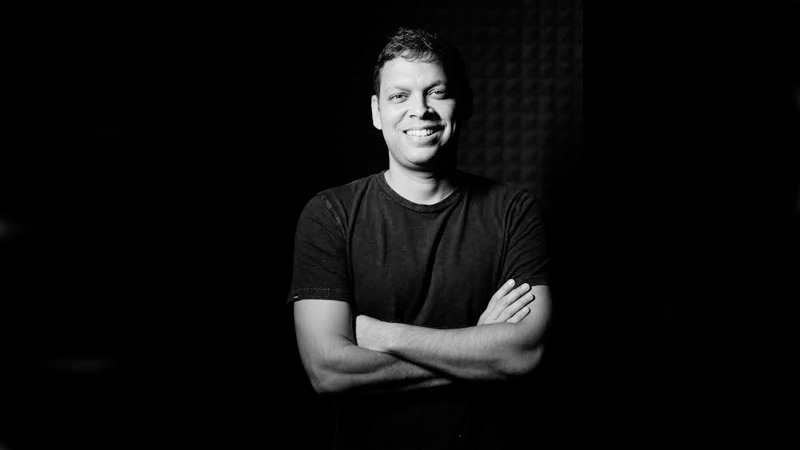
    MUMBAI: Indobevs, one of India’s fastest-growing alco-bev companies, has elevated Vikas Kumar to co-founder, signalling a bold step in its expansion drive. In his new role, Kumar will steer operational strategy, boost manufacturing muscle, and tighten supply chains to support Indobevs’ ambitious growth plans.

    Kumar, who joined Indobevs seven years ago, has been the architect of the company’s operational backbone. He built robust manufacturing systems, streamlined supply chains, and implemented scalable processes that have helped the company grow nearly 40 per cent year-on-year.

    With more than 20 years of experience across Hindustan Coca-Cola Beverages, United Biscuits and SC Johnson, Kumar brings expertise in supply chain management, plant engineering, project execution and process optimisation.

    “Indobevs has always stood out for bold ideas and quality focus,” Kumar said. “As co-founder, I aim to make our operations resilient, agile and future-ready, ensuring we scale responsibly while delivering exceptional value to customers.”

    Co-founder Geetika Mahandru added, “Vikas’ vision and operational insight have been key to our growth. Under his leadership, we are well-positioned to expand into new markets and continue offering premium, consumer-focused experiences.”

    Indobevs is expanding both domestically and internationally, with greenfield facilities under construction in Uttar Pradesh and Karnataka. New launches include the liqueur Bonga Bonga and multiple whisky variants, all under Kumar’s operational oversight.

    Founded in 2007, Indobevs has built a diverse portfolio that includes Brocode, Big Bro, Bro Red, Brose, Bonga Bonga Mystery Liqueur, Enso Japanese Whisky, Eden Blended Malt Whisky, Wingman Blended Malt Whisky, God’s Own Cognac and Tom & Mew Gin. The company continues to push bold flavours and contemporary drinking experiences.

  • Cairns Crocodiles make waves in India ahead of 2026 festival

    Cairns Crocodiles make waves in India ahead of 2026 festival

    MUMBAI: At the thoroughfares of Juhu Tara Road, inside the warm and welcoming setting of Soho House Mumbai, Misfits Media CEO David Hovenden and Cairns Crocodiles Special Envoy Sangeeta Leach unleashed the India chapter for the Asia-Pacific creative community, of three days of awards, masterclasses, and industry networking event planned for May 12–14, 2026, in Cairns, Australia.

    The exclusive evening brought together bigwigs from leading marketing, advertising, and creative agencies such as Leo Burnett, Lintas, Brandmusiq, and Schbang. The room bustled with laughter, lively and insightful conversations, and a shared joie de vivre about the media, entertainment and advertising industry as Hovenden and Leach spoke about how Cairns Crocodiles aims to be a stepping stone for creative minds across the world.

    In a candid tête-à-tête with Indian Television’s Megha Misra, CEO David Hovenden recalled how the idea of starting the festival was conceived in the most unexpected of times, during the peak of the pandemic.  

    “In 2020, when covid happened, we said, this is going to happen. And we tried to stand the event up. But because of the changing nature of covid and border restrictions, we had to reschedule it five times.” Hovenden noted. “Australia’s states had different rules, and people weren’t even allowed to move within them. So we kept shifting dates, hoping we could finally make it work. Every time we cancelled and moved it again, more people got on board, cheering us on and barracking for us.”

    What began as a logistical nightmare soon turned into a marketing success. “Who would’ve thought covid could be a brilliant marketing tool?” he added. “Everyone felt sorry for us and they started rooting for us. In the end, it worked out brilliantly.”

    After two years of perseverance, Hovenden and his team realised they had built something people truly loved. “We started seeing participants not just from across Australia, but also from parts of Asia,” he said. “That’s when we knew it was time to grow… to make it bigger and more inclusive.”

    The decision was made to transform the event into a truly Asia-Pacific celebration and introduce a dedicated awards programme to honour creativity across the region. “It couldn’t just be an Australian event,” Hovenden explained. “We’re part of a wider creative region, and it was important to reflect that inclusivity.”

    And that’s how the Cairns Crocodiles came to life, evolving from the tongue-in-cheek name into a full-fledged festival of creativity and connection.

    “Over the past three years, we’ve travelled to India, Thailand, Japan, Singapore, Malaysia, and Korea, inviting people to participate, collaborate and showcase their best work,” Hovenden noted. “We’re finally seeing that momentum build.”

    Before moving to address the attendees at the soiree, Hovenden brought out a set of the ‘Hatchlings’ awards, the festival’s category for young participants under 30. The Hatchlings trophies are particularly special. Each team receives two separate trophies, one for each member, designed in the shape of a young crocodile hatchling. When placed together, the two pieces form a single trophy, embodying both teamwork and the festival’s spirit of nurturing new talent. The playful design also inspired the name “Hatchlings,” symbolising the next generation of creative professionals ready to make their mark.

    The Cairns Crocodiles Festival celebrates world-class creativity across advertising, marketing, media and brand. In 2025 more than 2,100 of the region’s most influential agency leaders, marketers and rising stars descended on Cairns for three days of awards, inspiration, learning and unforgettable networking.

    Early ticket sales and enquiries are pointing to this number ballooning out to more than 3000 high powered delegates for 2026, with an expanded presence in particular from India.

    With an ambitious objective to surpass previous participation turnout, Hovenden didn’t shy away from setting a bold target.

    “I want to have over 5,000 participants next year,” he said. “With India having some of the sharpest creative minds and the most dynamic storytelling cultures in the world, we’re happy to encourage more participation from here.”

    As the Cairn Crocodiles CEO put it, this wasn’t just another meet-and-greet, it was a teaser of what’s to come. The Cairns Crocodiles, often dubbed the ‘Cannes of the Asia-Pacific’, are eyeing India as a key creative hub and a vital audience for their upcoming 2026 edition.

    “We’re here to build genuine partnerships, not just host an event,” Hovenden added. “This is the beginning of an exciting creative bridge between Australia and India.”

    Taking a cue from Hovenden, co-founder Sangeeta Leach spoke about the spirit that defines the festival. “I think the most important thing about the Cairns Crocs is that creativity is something we take very seriously. We’re fun, we’re candid, we’re honest. We are real.”

    There were also two past jury members of Cairns, guests of honour and long-time friends present at the soiree, who shared their own experiences with the festival: Ex-BBH & Publicis Worldwide, India CEO Subhash Kamath and Brandmusiq CEO and founder Rajeev Raja. The two friends reminisced about their vibrant experiences at the event in Cairns.

    “I found that at Cairns, there’s a real genuineness and intellectual honesty in the way ideas are nurtured. After graduating and earning my PhD, it felt refreshing to return to that kind of nurturing environment, almost like being back in a nursery. That’s the kind of simplicity and honesty with which Cairns has truly flourished,” shared Kamath, encouraging his fellow attendees to spread the word that Cairns in Tropical North Queensland, Australia is the place to be.

    His sentiments were echoed by his dear friend Rajeev Raja, who said he had an absolute blast attending the Cairns Crocodiles in 2025.

    “I found the attendees in Cairns to be incredibly welcoming, inspiring and a whole lot of fun. I was particularly taken with keynote speaker Olympic gold medallist Ariarne Titmus,” said Raja, who enthralled crowds in 2025 with an onstage performance with his legendary jazz flute.  

    Another significant announcement made at the event was that the Cairns Crocodiles would officially be opening a permanent Indian Office with the promotion of Bhavika Sharma to general manager India.

    “I am delighted to be moving to the land of my parent’s birth and super excited to be calling Mumbai, the city of dreams, my new home. I look forward to continuing to engage the marvellous Indian creative community and bringing many of you across to Cairns in May 2026,” said Sharma.

    The 2026 edition of the Cairns Crocodiles promises to be bigger and more inclusive than ever. The festival has expanded its awards categories to include new regional-specific Asia segments, designed to celebrate standout work from South-east, South and North-east Asia. For the first time, it will also introduce new regional awards that recognise market-leading campaigns across Asia-Pacific subregions.

    The Hatchlings competition, which shines a spotlight on emerging talent, is also getting a creative boost, now welcoming entries in ‘Print & Publishing’ and ‘Out of Home’ categories to give young creatives even more ways to showcase their skills. The judging framework has been refined too, with a sharper focus on clarity, effectiveness and real-world impact.

    To better accommodate international participants, deadlines for Hatchlings have been moved earlier, ensuring smoother visa processes for finalists. Additionally, the 2026 programming will embrace richer, more inclusive content that reflects the diversity and creative energy of the region.


  • WPP and Google forge $400m AI alliance to turbocharge marketing campaigns

    WPP and Google forge $400m AI alliance to turbocharge marketing campaigns

    CALIFORNIA: WPP and Google have announced a five-year expansion of their partnership that represents nothing short of a full-throated embrace of artificial intelligence as the defining competitive advantage in modern marketing. The creative powerhouse will pour $400m into Google technologies—cloud infrastructure, generative models, cutting-edge AI systems—betting that the combination can compress months of campaign planning, creative development and media buying into days, and unlock growth that conventional efficiency drives could never reach.

    The deal, cemented at Google’s Mountain View headquarters with WPP chief executive Cindy Rose, Google Cloud chief Thomas Kurian, and senior leadership from both organisations gathered around the table, aims to fundamentally revolutionise how brands connect with customers at scale. Rather than simply speeding up existing processes or squeezing more productivity from existing workflows, the partners plan to enable something far more radical: real-time personalisation for millions of people simultaneously, powered by bespoke AI models that learn, adapt and optimise on the fly.

    The ambition is extraordinary. WPP will receive preferred early access to Google’s latest generative models—Veo for video generation, Imagen for image creation, and a suite of others still in development—all integrated directly into WPP Open, the firm’s proprietary AI platform for marketing. The practical impact is already staggering. Campaign-ready creative assets that would traditionally take weeks to produce can now be generated in days. Efficiency gains are reaching 70 per cent. Asset utilisation is accelerating 2.5 times over. For one global retailer pilot, these aren’t abstract metrics: they translated to 98 per cent accuracy in audience targeting and an 80 per cent boost in operational efficiency, freeing entire marketing teams to focus on strategy rather than execution.

    WPP Media, the group’s media planning and buying division, will deploy bespoke audience models powered by Google DeepMind’s AI products through a new solution called Open Intelligence. The promise: build custom audience segments and deploy hyper-targeted campaigns across all channels—including Google Ad Platforms—with unprecedented speed and precision. For a multinational energy company, this looked like developing a custom AI Marketing Agent that automatically generates comprehensive marketing briefs, connects stakeholders to a single point of contact, and draws on a library of best-practice documents, past campaign performance and proven playbooks. The system works in real time, adapting to local challenges across multiple markets.

    The partnership extends into the creative layer itself. AKQA, WPP’s design and innovation company, is developing a new generation of AI-powered experiences that transform static websites into intelligent, generative platforms. The live AKQA Generative Store recreates the experience of personalised luxury retail service digitally—dynamically adapting product visuals, messaging and recommendations for each customer in real time. AKQA Generative UI, launching imminently, will instantly generate tailored, on-brand pages for users across enterprise and B2B contexts, with no manual intervention required.

    Privacy and data security thread through the entire architecture. Using InfoSum’s Bunkers technology, now integrated into WPP Open and available on Google Marketplace, WPP can enforce secure data collaboration without physically moving sensitive customer data. This allows brands to harvest deeper, richer insights for AI marketing whilst maintaining ironclad privacy protection—a crucial advantage in an era of tightening data regulation and consumer scrutiny.

    The talent dimension is equally ambitious. WPP’s Creative Technology Apprenticeship programme, which has placed more than 50 early-career technologists across WPP agencies since 2022, will expand dramatically with Google joining as the primary curriculum partner. The goal is audacious: train over 1,000 creative technologists by 2030 in a world-leading curriculum covering creative coding, generative AI and robotics. These apprentices will work on real-world challenges from major clients—L’Oréal, Unilever and others—building the next generation of marketing talent fluent in machine learning, AI prompt engineering and algorithmic thinking.

    Beyond client work, Google AI will also transform WPP’s internal operations. Automated data analysis, intelligent resource allocation and instant access to global insights will flow through WPP’s workflows, accelerating the development of solutions, sharpening team responses and ultimately delivering superior speed and value to clients worldwide. The logic is clear: make the machine fast enough and the organisation responds like an organism, not a bureaucracy.

    There is a feedback loop built into the model that gives WPP an unusual advantage. New solutions are collaborated on, tested and validated first within Google’s own marketing operations—real-world testing grounds where ideas either survive or die quickly. The insights flow back to WPP clients, who receive solutions already battle-tested against the toughest marketing challenges. In a rapidly evolving AI landscape crowded with noise and overpromise, that’s a rare competitive edge.

    Rose called it a redefinition of what’s possible for clients. Kurian framed it as harnessing generative and agentic AI to transform business outcomes. Google global marketing senior vice-president Lorraine Twohill spoke of exploring what marketing and storytelling look like in a new era.

    But beneath the corporate language lies a harder truth: the pace of marketing innovation just accelerated dramatically, and the winners will be those organisations—agencies, brands, technologists—that can think and move at machine speed. Everyone else faces a widening gap between aspiration and execution.

  • Havas hits the accelerator as AI strategy bears fruit

    Havas hits the accelerator as AI strategy bears fruit

    PARIS: Havas is charging into the final quarter of 2025 with a spring in its step. The advertising group posted organic net revenue growth of 3.8 per cent in the third quarter, smashing expectations and vindicating its strategic pivot towards artificial intelligence and data-driven marketing. The surge in top-line performance prompted management to sharpen full-year guidance decisively upwards, signalling confidence that the worst of the economic headwinds facing the sector have passed.

    The results reveal a business in motion. North America blazed a trail with organic growth of 7.4 per cent, driven chiefly by Havas Health’s double-digit expansion and its ability to wring higher budgets out of existing clients—a rare feat in an industry where money typically flows only to new business wins. The Asia-Pacific region bounced back smartly from a tepid second quarter with 8.2 per cent growth, whilst the United Kingdom performed solidly. France, dragged down by a tough comparison with last year’s Olympic Games boost, and Latin America, battered by unfavourable currency moves, were the laggards.

    Havas now expects full-year net revenue organic growth of between 2.5 and 3.0 per cent, up from previous guidance of above 2.0 per cent. More significantly, the group reckons on an adjusted EBIT margin improvement of around 50 basis points to approximately 12.9 per cent—a meaningful lift that suggests operational leverage is kicking in. The nine-month figures show organic growth of 2.8 per cent, buoyed by cross-selling wins amongst the top 30 clients.

    The financial picture is straightforward: Havas is extracting better returns from its existing client base whilst simultaneously expanding its footprint. Operating margin expansion of this magnitude rarely happens by accident. The group has plainly succeeded in persuading clients to spend more on higher-margin services and shifted work into more profitable lines—precisely what a well-functioning agency should accomplish.

    Two strategic moves underscore management’s ambition. The majority acquisition of Tidart, a Spanish digital performance specialist, plugs gaps in Havas’ capabilities across e-commerce and performance marketing. More consequential is the formation of Horizon Global, a joint venture with Horizon Media Holdings worth a combined $20 billion in global billings. Styled as an “AI-native solution,” the venture signals that Havas’ Converged.AI strategy—the group’s bet on helping clients harness artificial intelligence across their marketing ecosystems—is moving from rhetoric into revenue-generating reality.

    Chief executive vYannick Bolloré  spoke of “impressive commercial momentum” and “notable new business wins.” Translation: the market is buying what Havas is selling.

    None of this occurs in a vacuum. Foreign exchange movements clipped 3.9 per cent from reported revenue growth, with the dollar’s recent weakness particularly stinging. Geopolitical tensions, trade pressures and political uncertainties lurk in the background. The group remains cautious about the year ahead, even as it tightens guidance.

    The broader picture for Havas: a global advertising industry grinding through modest growth and relentless margin pressure is being challenged—and beaten—by a group that has successfully positioned itself as a challenger taking share through genuine commercial innovation. Whether that momentum persists through 2026 is the question investors are asking now. For the moment, the trajectory looks encouraging.

  • Snehita Chakravorty joins KFC India as marketing manager

    Snehita Chakravorty joins KFC India as marketing manager

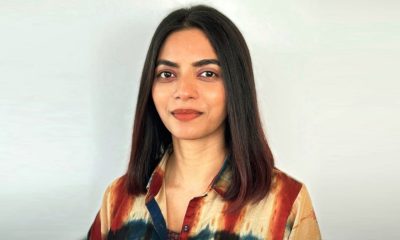
    MUMBAI: KFC India (Yum! Brands) has appointed Snehita Chakravorty as marketing manager – dine-in business, tasking her with enhancing in-restaurant experiences and driving deeper consumer engagement.

    Chakravorty joins from Jubilant Foodworks, Domino’s, where she was deputy manager – marketing, shaping region-specific campaigns, executing high-impact activations, and supporting new store launches. She also collaborated closely with operations and digital teams to strengthen brand performance at scale.

    “I’m thrilled to start this new chapter at KFC India, focusing on the dine-in business. QSR has long been a passion, and I look forward to creating memorable experiences for our guests,” Chakravorty said on LinkedIn.

    With a strong grasp of the QSR landscape, Chakravorty is expected to drive initiatives that reimagine the dine-in experience, a growing differentiator in India’s competitive fast-food market. Her appointment reflects KFC India’s focus on customer-first storytelling and immersive brand engagement.

  • CTV Ads hit record completion for consumer electronics

    CTV Ads hit record completion for consumer electronics

    MUMBAI: As India’s festive buying fever peaks, consumer electronics ads are enjoying a record-breaking audience on Connected TV (CTV), according to a new study by VDO.AI. The consumer electronics ad engagement benchmark study, analysing over 200 campaigns, found an average video completion rate of 91 per cent, up from 87 per cent last year, proving CTV is more than just a screen; it’s a stage for discovery and conversion.

    Interactive display ads are also hitting new highs, with Click-Through Rates (CTR) peaking at 0.39 per cent in Eastern India, up from 0.26 per cent last year. This demonstrates a growing appetite for consumer-initiated engagement formats that blend entertainment with high-intent exploration. Scratch-to-reveal ads emerged as the most popular interactive format, highlighting a clear shift toward hands-on, engaging experiences.

    “For consumer electronics, purchase decisions are research-driven,” said VDO.AI. co-founder & CEO Arjit Sachdeva. “CTV’s distraction-free canvas allows brands to tell longer, clearer stories that viewers actually watch to the end. When paired with interactive display formats, campaigns are no longer passive, they become immersive experiences.”

    CTV completion rates for categories like televisions, appliances, and personal gadgets suggest viewers are willing to stay engaged while exploring features and demonstrations. Meanwhile, display ads are proving effective for recall, discovery, and direct engagement, particularly in regions like the East, where CTRs are highest.

    With India’s consumer electronics ad spend projected to grow over 20 per cent year-on-year during the festive quarter, VDO.AI’s findings signal that brands leveraging CTV and interactive display will lead the charge, blending entertainment with measurable consumer intent to maximise festive conversions.

  • CSI sports scores big with John Skipper on board

    CSI sports scores big with John Skipper on board

    MUMBAI: CSI Sports kicks off a winning streak. CSI Sports is gearing up for a game-changing move with the appointment of renowned sports television executive John Skipper to its board of directors. Skipper, the former president of ESPN, co-chairman of Disney Media Networks, executive chairman of DAZN, and co-founder of Meadowlark Media, will also serve as senior executive advisor to co-founders Richard and Craig Miele. His decades of global experience promise to bring a fresh playbook to the sports, streaming, and media arena.

    The announcement comes just ahead of Sportel, signalling CSI Sports’ ambition to level up its presence in the global sports content market. CSI Sports has also strengthened its executive team with HBO Sports veteran Mark Taffett as head of global live events, reality TV producer Brian Robinson as senior supervising producer of reality programming, and communications leader Chris DeBlasio of Showtime Networks as head of global communications.

    The organisation continues to invest heavily in global content acquisitions as it gears up for strategic partnership launches in 2026. With this stellar lineup, CSI Sports is clearly playing to win and redefining the rules of engagement in sports entertainment.

  • Snehita Chakravorty joins KFC India to lead dine-in marketing strategy

    Snehita Chakravorty joins KFC India to lead dine-in marketing strategy

    MUMBAI: KFC India has appointed Snehita Chakravorty as marketing manager – dine-in business, as the quick-service restaurant (QSR) major sharpens its focus on elevating in-restaurant experiences and deepening consumer engagement.

    Chakravorty announced her move on LinkedIn, expressing excitement about joining Yum! Brands’ flagship chain and her passion for the QSR space.

    She joins KFC India from Jubilant Foodworks, where she served as deputy manager – marketing for Domino’s Pizza. At Domino’s, she drove region-specific campaigns, high-impact brand activations and new store marketing initiatives, working closely with digital and operations teams to improve customer experience and brand visibility.

    With a strong grasp of India’s fast-evolving QSR market, Chakravorty is expected to play a key role in redefining KFC’s dine-in positioning: a priority area as in-store experience becomes a decisive factor in brand differentiation.

    Her appointment underscores KFC India’s continued push to blend brand storytelling, customer insight and experiential innovation in its restaurant network across key markets.