Category: Media and Advertising

  • WPP Media’s ‘beyond price tags’ redefines India’s e-commerce game

    WPP Media’s ‘beyond price tags’ redefines India’s e-commerce game

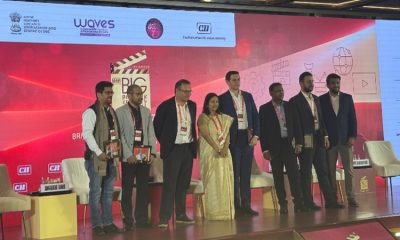
    MUMBAI: Forget discounts and flash sales. India’s next e-commerce boom is getting a luxury makeover. WPP Media India has unveiled ‘Beyond Price Tags: The Power of Premiumization’ in India’s e-commerce boom, a new playbook that argues the future of online shopping is not just digital, but decisively premium.

    Launched in Mumbai, the report sheds light on how Indian consumers are moving beyond price wars and seeking something more lasting: experiences, personalisation, and ethics over mere affordability. The message is clear: value is being redefined.

    Drawing from insights by leading platforms, brands, and experts, the playbook highlights that premium demand is now democratised. Thanks to credit solutions, efficient delivery networks, and the rise of social and quick commerce, premium choices are no longer limited to metro buyers, they’re reaching the heart of Bharat.

    Among its key findings, the report identifies five defining shifts: the democratisation of premium demand; consumers’ appetite for elevated experiences; platform-driven brand reinvention; a cross-category tilt towards feature-rich, design-led products; and the evolution of mass brands into “masstige” offerings.

    To help brands turn insight into action, WPP Media introduces four strategic frameworks: Flash, Vista, Prime, and Rise, each designed to guide discoverability, curation, customer experience, and loyalty building in the digital era.

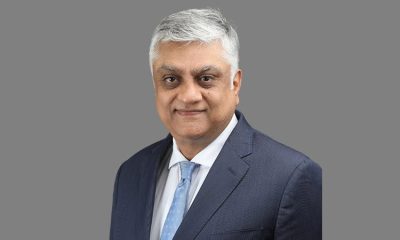
    “At WPP Media, we are constantly at the forefront of shaping the future of commerce,” said WPP Media South Asia COO Ashwin Padmanabhan. “The premiumization trend in Indian e-commerce is more than just a shift in price points, it reflects evolving consumer aspirations and the growing desire for quality, experience, and status.”

    Echoing this, WPP Media India head of commerce Sairam Ranganathan added, “Premiumization marks a pivotal shift where rising aspirations, global exposure, and digital empowerment are redefining how consumers engage with brands. This playbook is not just a guide but a catalyst for growth.”


  • Apna appoints Kartik Narayan to lead its jobs marketplace vertical

    Apna appoints Kartik Narayan to lead its jobs marketplace vertical

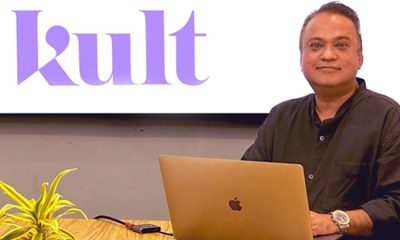
    MUMBAI: Apna Group has appointed industry veteran Kartik Narayan as the chief executive officer of its jobs marketplace vertical, signalling a fresh chapter in the company’s growth story.

    Narayan, who most recently served as CEO of Teamlease’s staffing business, brings more than two decades of leadership experience across giants such as Vodafone Idea, Cisco, and Bharti Airtel. In his new role, he will report directly to Apna’s founder and group CEO, Nirmit Parikh.

    As Apna scales its rapidly growing jobs platform, Narayan will lead efforts to strengthen employer partnerships and drive adoption of AI-powered hiring tools. He also aims to make recruitment smarter, faster, and, quite literally, more conversational, thanks to Apna’s latest tech ventures.

    “We’re thrilled to welcome Kartik to our leadership team,” said Parikh. “With his decades of experience running large businesses, we’re confident he’ll help us empower millions of job seekers and employers who rely on Apna every day.”

    Narayan, clearly energised by the new challenge, added, “Apna has redefined how India hires at scale. What excites me most is seeing companies build their own AI recruiting agents on our platform, it’s like watching the future of hiring unfold in real time.”

    The appointment comes as Apna Group diversifies beyond jobs, with the launch of Blue Machines, an enterprise-grade Voice AI platform, and a new education vertical in the works: both designed to prepare India’s next-generation workforce for an increasingly digital world.

  • Piyush Pandey, the adman who made India feel, is cremated

    Piyush Pandey, the adman who made India feel, is cremated

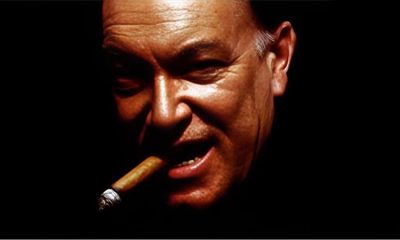
    MUMBAI: The man who taught India to sing together was cremated at noon on Saturday, his mortal remains consigned to flames at Mumbai’s Shivaji Park crematorium. Piyush Pandey, the advertising genius who turned mundane products into cultural touchstones, died on Friday following an infection.

    They came in their thousands—chief executives whose fortunes he’d reversed, rival agency heads, Ogilvy’s fiercely loyal staff, office runners. All wept. Pandey had that rare gift: he spoke to drivers and sweepers with the same warmth he reserved for corner-office wallahs. In an industry built on hierarchy, he demolished it with a handshake and that signature grin.

    Well done piyush

    Posters lined the crematorium showing Pandey’s famous moustache and wide smile. His younger brother Prasoon, himself a renowned filmmaker, performed the last rites surrounded by family. Then something extraordinary happened. The mourners broke into song—Mile Sur Mera Tumhara, the anthem Pandey created decades ago that stitched a fragmenting nation together through music.

    After the body entered the electric crematorium, Prasoon addressed the assembled crowd. “Thank you for the love you’ve showered on Piyush. He loves you too,” he said, voice steady despite grief. “We’ll celebrate his life with a gathering soon. We’ll keep you informed.”

    Pandey would have approved. The man who spent his life connecting Indians through stories deserved nothing less than a final act of collective remembrance.

  • Piyush Pandey’s leaves behind a legacy the world will never forget

    Piyush Pandey’s leaves behind a legacy the world will never forget

    MUMBAI: Piyush Pandey the ad man – a lot has been written about his mastery in connecting through communication with the lay person on the street. Which is why most of the ads which he was involved in as a creative guide live with us till today. Fresh as the day they hot the screens. 
    His passing has left a deep impact on colleagues and industry folks the world over who have shared their grief and their admiration for the genius that he was and most of all for the great human that he was.  

    Liz Taylor, Global Chief Creative Officer, Ogilvy  
    “A quiet Friday morning brought news that shattered our hearts: the legend, Piyush Pandey, has left us. The void he leaves is immense—a silence where once his booming laughter, humble mentorship, and profound humanity resonated. 
    To the world, Piyush was an icon, a creative giant, an advertising hero. To Ogilvy, he was our coach, our champion, our spiritual guide, our heart and soul. His passing is a loss that words cannot capture. 
    Yet even as we grieve, a profound sense of gratitude and purpose fills us. For Piyush, creativity was about connection—about making something that lived in people’s hearts. And that’s exactly what he did, time and again. His ideas shaped brands and culture. His kindness shaped people. 
    He taught us that living with generosity and creating with enormity leaves a legacy beyond measure. We will honor him in all that we do—not just in advertising, but in the way we live, lead, and care—striving always to act in the light of his values and to make him proud in every part of our lives.”

    Joe Sciarrotta, Deputy Global Chief Creative Officer, Ogilvy  
    “It’s hard to know where to begin. Personally, he was a brother to me. We spoke often. I spent time with his family, and he with mine—my mom would often ask after him. His is a loss I cannot fathom. But I also know that I’m not alone in that.  
    Piyush was a legend of our industry, and a national treasure in India. I was once on a tour bus in Goa with him and someone asked where we were from. Ogilvy, we said. They respond ‘Oh! Piyush Pandey is from Ogilvy. He’s very famous.’ To which I said, ‘Well, Piyush Pandey is standing right next to you.’ The man nearly had a heart attack from his awe and excitement. What many people don’t realize is that Piyush gave India its voice back, after having been so Westernized for so long. There was nothing he was more proud of than his country and his people. His greatest gift was that he treated ordinary people extraordinary, and extraordinary people ordinary. He saw, and celebrated, the humanity in it all. And that’s the impact he’s had on the next generation of creatives, and that will ripple for generations to come.”

    Devika Bulchandani, Chief Operating Officer, WPP  
    “Piyush was not just the most important man in Indian advertising, he was the most important man in so, so, so many of our lives at Ogilvy. He may have left us but his work and his legacy will live forever.   
    I am personally heartbroken. I lost my biggest champion. Just last month when I got the WPP job he sent me a note, “Prouder than a peacock can be.” And I always told him, ‘You are my wings.’” 
     

    Shelly Lazarus, Chairman Emeritus, Ogilvy  
    “Piyush Pandey had a giant brain and a giant heart. It was an honor of my life to have been his partner and his friend. 
    Piyush built Ogilvy India into what it is today. He commanded the respect of everyone who worked with him and knew him. I loved walking down the street with Piyush and have people stop and ask him for his autograph. 
    There are some few people who are immortal. Piyush Pandey is one of them. 
    I will miss you, my friend.”

    Hephzibah Pathak, Executive Chairperson, Ogilvy India:  
    “It’s hard to capture the immense impact Piyush had on us all. He didn’t just change the game for our industry; he changed our lives. A giant of a leader, his fearless heart and unwavering goodness inspired us to see the world, and ourselves, differently.  
    His beautiful philosophy, ‘Kuch khaas hai hum sabhi mein’ was his very essence–always finding and celebrating the specialness in everyone. We are so privileged to have been raised and nurtured by him.  
    Godspeed, Piyush. Rest in eternal peace.”

    Harshad Rajadhyaksha, Kainaz Karmakar and Sukesh Nayak, Chief Creative Officers, Ogilvy India: 
    “”The most honest thing we can say is that we’re numb. SO many memories are flooding our hearts. His living room was our second office. From the day we joined Ogilvy, to this day, he was our Creative Director and we were his team. This is an honour we can’t forget or replace. Even if he can’t hear us present ideas anymore, every time we create something, we will be asking ourselves, ‘Will Piyush like this?’ What we can promise as our tribute to him is to carry on his belief in creativity, culture and bravery.”

    Reed Collins, Chief Creative Officer, Ogilvy APAC 
    “Our hearts are stilled, for a legend has departed. Piyush Pandey didn’t just shape culture; he shaped us. We mourn his absence, yet rise with fierce gratitude, committed to carrying his bat, forever building on the extraordinary innings he so brilliantly played. ?????? “

  • Piyush Pandey: India’s greatest adman never stopped watching, listening and loving life

    Piyush Pandey: India’s greatest adman never stopped watching, listening and loving life

    MUMBAI: The lights went out on Indian advertising this Diwali. Piyush Pandey, the wordsmith who turned bus rides and roadside tea into unforgettable campaigns, died on Friday aged 70. Just four months earlier, at the Emvies awards in Mumbai, veterans had touched his feet for blessings while young hopefuls queued for selfies. He looked frail but smiled through every encounter. Humility was his signature; genius was his secret.

    Pandey never claimed special talent. His gift was simpler and rarer: he kept his eyes open. The famous Fevicol advertisement—a Jaisalmer bus groaning under passengers clinging to every inch—came from a real sighting. The magic was slapping a Fevicol poster on the back of the bus. “Keep your eyes open, keep your ears to the ground and have a heart willing to accept,” he told newcomers at Ogilvy. It wasn’t a slogan. It was scripture.
     

    Piyush Pandey

    He joined Ogilvy & Mather in 1982 at 27, after failing at cricket, tea tasting and construction. When Mani Iyer, who headed the agency, introduced him to me as creative director in the late 1980s, Pandey’s deep, soft voice belied a fierce passion for the craft. Like Roda Mehta, who ran media at Ogilvy, he was generous with his time,  patiently explaining the thought behind many a campaign to me. Those campaigns moved hundreds of thousands of crores worth of products off shelves over their lifespans.

    His method was observation turned into emotion. The Dum Laga Ke Haisha Fevicol spot was originally made for a smaller brand called Fevitite. The Parekhs, who owned Pidilite, told him the ad was too good to waste. Reshoot it for Fevicol, they urged. He did. That single decision spawned a series of award-winning campaigns and turned Fevicol into the category itself.

    His philosophy was disarmingly simple: love life. “Whether you are sipping tea from a roadside vendor or in a five-star hotel, whether you are travelling by second class or in a Mercedes-Benz,” he would say. Great ideas came from loving all of it—the chaos, the mundane, the sublime. “Be open to accepting ideas from the world. Be open to sharing ideas with the world. Learn to talk but most importantly also learn to listen.”

    Piyush PandeyPandey despised lazy advertising. Technology for its own sake was pointless; celebrities without ideas were  useless. “Many TVCs are pathetic these days when they use celebrities. They are made very lazily,” he once said. For him, the idea came first. Technology could enhance it; fame could amplify it. But without a core truth, it was just expensive noise.

    He believed consumers, not suits or pony-tailed creatives, made advertising great. “It’s when he or she accepts the product and emotionally bonds with it, the product becomes a brand,” he said. His advice to brand managers was blunt: stop being salesmen. Build brands, not just products.

    I lost touch with him for decades  as I went about building the indiantelevision.com group and all its ancillary services. Journalism and writing as I used to practice when I was younger was relegated to the background. It was during the pandemic that I reached out to him and requested him to spare some time for an online interview. To my surprise, he remembered me and he readily agreed. It was an interesting conversation about how Ogilvy was serving clients during the pandemic and how its creative edge was being maintained. We had agreed we would speak for 30 minutes, but the conversation went on for an hour. It was peppered with Pandey-isms. But that was the last time we spoke at length to each other, though we said hello to each other at advertising industry get-togethers which I rarely attended. Sadly, for me. 

    The man who taught India to watch, listen and love has gone silent. But his voice echoes still—in every vernacular tagline, every slice-of-life commercial, every campaign that dares to see India as it truly is. Pandey didn’t just sell products. He gave an entire nation permission to speak in its own accent, to find poetry in the everyday, to believe that the roadside and the boardroom could meet and make magic. 

    The lights dimmed this Diwali, but the spark he lit—built on observation, fuelled by empathy, sustained by love—will burn for generations. That’s not advertising. That’s immortality.

  • Piyush Pandey, the adman who gave Indian advertising its soul, passes away

    Piyush Pandey, the adman who gave Indian advertising its soul, passes away

    MUMBAI: Piyush Pandey, the creative colossus who spoke to India in its own voice passed on on Friday aged 70. The man behind Fevicol’s unbreakable bond, Cadbury’s Kuch khaas hai and Asian Paints’ promise to colour every joy had been suffering from an infection. His funeral will be held on Saturday at Shivaji Park Crematorium in Mumbai.

    For more than four decades at Ogilvy India, Pandey rewrote the rules of Indian advertising. He arrived in 1982 at 27, fresh from stints as a cricketer, tea taster and construction worker, and walked into a world dominated by English. His first assignment was a print ad for Sunlight Detergent. What followed was nothing short of a revolution.

    Pandey didn’t just change the language of Indian advertising—he changed its grammar. He brought Hindi, colloquial idioms and the rhythms of everyday India into the mainstream. His campaigns for Fevicol, Cadbury, Hutch and Asian Paints became cultural touchstones, teaching a generation that the truest ideas are often the simplest. “Har khushi mein rang laaye” wasn’t just a tagline. It was philosophy.

    Under his leadership, Ogilvy India held the top spot in Agency Reckoner, an independent survey by The Economic Times, for 12 years. In 2004, he became the first Asian jury president at the Cannes Lions International Festival of Creativity. In 2018, he and his brother, filmmaker Prasoon Pandey, became the first Asians to receive the Lion of St Mark, Cannes’ highest honour for lifetime achievement. In 2016, he was awarded the Padma Shri, the first Indian advertising professional to receive the honour.

    Despite the accolades, Pandey remained disarmingly modest. A cricket lover to the end, he compared himself to a player in a team sport. “A Brian Lara can’t win for the West Indies alone,” he once said. “Then who am I?”
    He had a simple credo: advertising must touch hearts before it wins awards. “No audience is going to see your work and say, ‘How did they do it?’” he said. “They will say, ‘I love it.’” He often warned young creatives against chasing technology at the expense of empathy, urging them to stay rooted in human experience.

    Born in Jaipur to a family of nine children, Pandey grew up surrounded by creativity. His siblings include Prasoon and folk singer-actor Ila Arun. He lent his voice to radio jingles as a child. He also co-wrote the screenplay for Bhopal Express and penned the lyrics for Mile Sur Mera Tumhara, the song that became shorthand for Indian unity. He even acted, appearing in the 2013 film Madras Cafe.

    His political work was equally memorable. In 2014, he crafted Ab ki baar, Modi sarkar, a slogan that helped sweep Narendra Modi to power. But his truest legacy lies not in politics, but in the stories and storytellers he nurtured.

    Tributes poured in from across India. Prime Minister Modi called him “admired for his creativity”. Finance minister Nirmala Sitharaman described him as “a titan and legend” who “transformed communication”. Uday Kotak, founder of Kotak Mahindra Bank, remembered Pandey launching his bank in 2003 with a campaign describing banking as “common sense”. Filmmaker Hansal Mehta captured the mood best: “Fevicol ka jod toot gaya. The ad world lost its glue today.”

    Pandey stepped down as executive chairman of Ogilvy India in 2023 to take on an advisory role. He is survived by his wife, Nita, his family and a creative community that continues to draw from his philosophy: that the best ideas are born not in boardrooms, but in the lives of ordinary people.

    The man who turned commercials into memories has left the building. But his booming laugh, his trademark moustache and his stories—rooted in the street, in life, in listening—remain. India’s advertising soul just got a little quieter.

  • Amagi appoints Hyukmo Mun to lead cloud broadcast growth in Korea

    Amagi appoints Hyukmo Mun to lead cloud broadcast growth in Korea

    MUMBAI: The cloud is rolling over Korea and it’s bringing Amagi with it. The cloud-based SaaS powerhouse for broadcast and streaming TV has announced the appointment of Hyukmo Mun as sales director for Korea, marking another bold step in its expansion across East and Southeast Asia.

    In his new role, Hyukmo will lead Amagi’s business growth in Korea, while also fuelling opportunities in Hong Kong, Taiwan, and Vietnam, a region fast becoming the epicentre of cloud-led broadcast transformation.

    With more than 18 years in the media and broadcast trenches, Hyukmo’s credentials are as solid as they come. From helping Korean broadcasters embrace advanced video compression at ATEME, to spearheading AI-powered cloud migration at Megazone Cloud, he’s been at the frontline of broadcast evolution.

    Now, at Amagi, Hyukmo’s mission is clear to help broadcasters and content owners transition to cloud-native playout and monetisation models that promise agility, efficiency, and new revenue streams in an increasingly digital-first world.

    “I’m thrilled to join Amagi at a time when broadcasters and content owners in Asia are accelerating their move to the cloud,” said Amagi sales director for Korea Hyukmo Mun. “With Amagi’s deep expertise in cloud-native broadcast and monetisation, I look forward to helping customers modernise operations, improve agility, and unlock new revenue opportunities.”

    Welcoming the appointment Amagi senior vice president for Asia Pacific Jay Ganesan noted, “Hyukmo’s appointment reinforces our commitment to the Korean and broader Asia Pacific markets. His extensive experience across broadcast, IPTV, and cloud transformation makes him an invaluable addition as we expand Amagi’s footprint and support customers in their journey toward next-generation cloud broadcasting.”

    Founded in 2008, Amagi has become a global force in cloud-based media delivery powering over 7,000 channel deliveries and enabling 26 billion ad impressions worldwide. From traditional broadcasters to next-gen streamers, the company is redefining how content travels from studio to screen.

    For Amagi, the addition of Hyukmo isn’t just another leadership move, it’s a strategic acceleration. As Asia’s broadcasters race to modernise, Amagi’s mix of cloud innovation and local expertise could make it the region’s go-to tech ally.

    Looks like the Korean wave just got a cloud upgrade and Amagi is ready to ride it.


  • Aakarsh Gupta takes charge as head of operations at Nas Daily

    Aakarsh Gupta takes charge as head of operations at Nas Daily

    MUMBAI: Looks like Nas Daily’s storytelling engine just found its new navigator. Aakarsh Gupta, the man who’s helped power billions of views and stories across continents, has been elevated to head of operations (global) at Nas Daily, where he’ll now lead 1000 Media, the company’s sister arm that crafts social media content for brands worldwide.

    Over the past three years, Aakarsh has been one of the key architects of Nas Daily’s global rise, steering production teams that helped the platform cross 10 billion views and execute shoots in over 50 countries, from Sudan and Mongolia to Ecuador and Cuba. His work on projects like the “Religion Challenge” series pushed creative and cultural boundaries, blending storytelling with social exploration.

    Before joining Nas Daily, Aakarsh worked with global powerhouses like Netflix, National Geographic, and Dubai Tourism, creating campaigns that inspired curiosity and human connection. His storytelling lens has always been global but his approach deeply personal.

    Speaking about his new role, Aakarsh Gupta said, “At Nas Daily, everything we do is about connection people, ideas, and stories. My goal is to make our operations as creative and agile as our content. Because when our teams move fast and feel inspired, we create stories that bring the world a little closer together.”

    As head of operations, Aakarsh’s next chapter will see him scale Nas Daily’s creative ecosystem streamlining workflows, mentoring creators, and ensuring every story travels faster, farther, and with purpose.

    With Aakarsh at the helm, Nas Daily seems ready to turn every 1-minute story into a masterclass in global storytelling.


  • WPP faces twin lawsuits as media arm stumbles

    WPP faces twin lawsuits as media arm stumbles

    NEW YORK: WPP, the world’s biggest advertising group, is being sued by investors who reckon the company misled them about the state of its struggling media business. Two class-action lawsuits—one from Rosen Law Firm, another from Glancy Prongay & Murray—have reportedly been filed against the British giant, both chasing shareholders who bought American depositary shares between 27 February and 8 July 2025.

    The complaints claim WPP painted a rosy picture whilst hiding an ugly truth: that its media arm, formerly called GroupM and now renamed WPP Media, was losing ground to rivals and couldn’t hack the tough economic climate. On 9 July, the firm finally admitted that performance had “deteriorated” through the second quarter, blaming “macro uncertainty” and “weaker net new business” alongside “distraction” from restructuring its media operations.

    Investors weren’t amused. The shares plunged $6.48—an 18.1 per cent drop—to close at $29.34. The lawsuits allege that WPP’s upbeat statements lacked any reasonable basis and that executives concealed the media division’s market-share losses.

    Both firms are now racing to recruit a lead plaintiff before the 8 December deadline. Rosen Law Firm, which boasts of securing the largest-ever securities settlement against a Chinese company, says investors may be entitled to compensation without upfront costs. Glancy Prongay & Murray is pitching a similar deal.
    No class has been certified yet, and shareholders needn’t do anything to remain part of the action. But if they fancy leading the charge, they’d better move fast. WPP’s troubles, it seems, are only just beginning to bite.

  • Liqvd Asia unveils Aikonic for AI-powered content

    Liqvd Asia unveils Aikonic for AI-powered content

    MUMBAI: Liqvd Asia is turning imagination into intelligence with the launch of Aikonic Studios, a pioneering creative services business putting artificial intelligence at the heart of content production.

    More than just a studio, Aikonic is designed to revolutionise how ideas come to life, merging cutting-edge AI technology with creative craftsmanship. The launch marks the first step in a larger plan to establish AI-powered studios in Mumbai, Delhi-NCR, and Bengaluru, bringing advanced creative capabilities to India’s major media hubs.

    Liqvd Asia creative producer Vishal Chavan said, “Aikonic is a game-changer, blending smart technology with creative flair. It’s a space where innovation meets imagination, unlocking opportunities for storytellers to push boundaries.”

    Creative head Sunil Gangras added, “Today’s content demands flexibility, engagement, and scale. By weaving AI into production, Aikonic enables creators to craft work that resonates deeply and reaches far. This launch is a bold step in making intelligent, AI-driven storytelling the new standard.”

    With visionary talent and an AI-first approach, Aikonic Studios reflects Liqvd Asia’s commitment to leading India’s creative transformation, empowering brands, creators, and agencies to imagine and produce exceptional content in a digital-first world.