Category: Media and Advertising

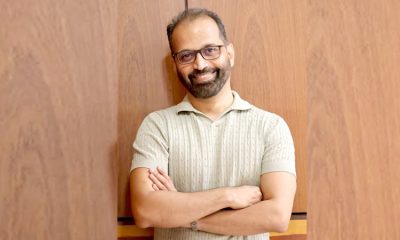
  • Mars Cosmetics welcomes Anshu Arora Sindhwani to lead innovation

    Mars Cosmetics welcomes Anshu Arora Sindhwani to lead innovation

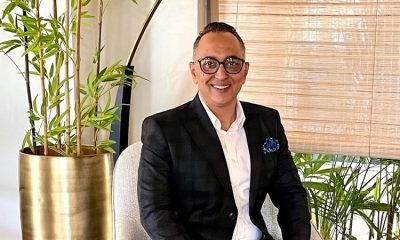
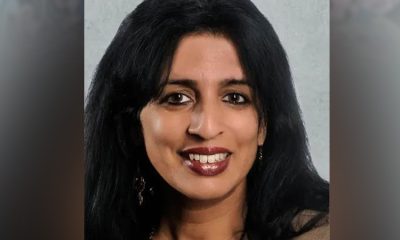
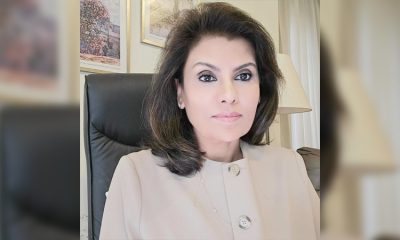
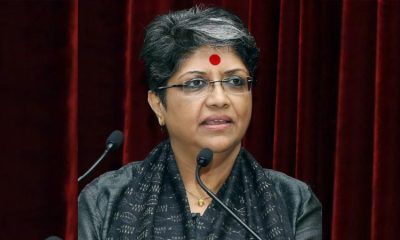
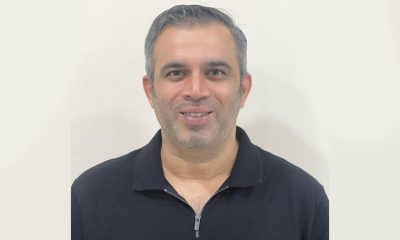
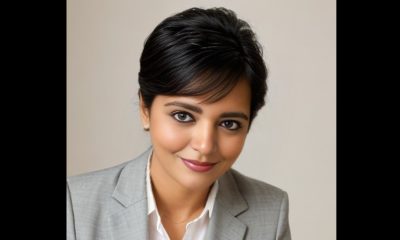
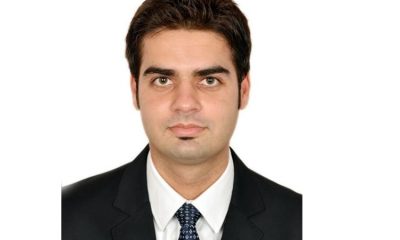
    MUMBAI: Looks like Mars just found its next shining star. India’s fastest-growing homegrown beauty brand, Mars Cosmetics, has roped in Anshu Arora Sindhwani as head of product, as it powers into its next phase of innovation and category expansion.

    With over 15 years of experience painting success stories across beauty, colour cosmetics, and FMCG, Sindhwani is no stranger to creating products that don’t just sit pretty on shelves, they fly off them. Her career spans top-tier brands such as Akzonobel (Dulux), Colorbar, Mary Kay, and Win-Medicare, where she crafted high-performance portfolios that blended strategy, science, and sparkle in equal measure.

    At Mars, Sindhwani’s mission is clear: to make “Makeup for Everyone” more than a tagline. She will steer end-to-end product strategy from new product development and category planning to lifecycle management and innovation architecture. Her focus will be on building a robust pipeline of launches that balance creativity with performance and affordability, the winning formula that’s fast turning Mars into the people’s beauty brand.

    “MARS represents a new era in Indian beauty, bold, experimental, and deeply attuned to its consumers,” Sindhwani said. “I’m excited to build on this energy by crafting innovations that not only perform but also connect bringing together creativity, technology, and inclusivity in every formulation and finish.”

    Her words mirror the brand’s growing confidence that beauty need not be imported or inaccessible. Mars has steadily carved a niche as the Indian disruptor redefining what affordable glam looks like, taking cues from its consumers rather than dictating trends from boardrooms.

    Founded with the vision of democratising makeup, Mars Cosmetics has been among India’s most dynamic homegrown names in the beauty space, capturing hearts (and vanities) across Tier 1 to Tier 3 cities. Its vibrant, high-performance products have found favour with Gen Z creators, beauty professionals, and everyday users alike, powered by a deep understanding of what Indian consumers actually want from their makeup: fun, functionality, and fair pricing.

    Adding Sindhwani to the mix signals a strategic leap towards design-led innovation and global competitiveness. “We are thrilled to have Anshu join the Mars family,” said Mars Cosmetics business administrator Rishabh Sethia. “Her deep understanding of consumers, strategic mindset, and innovation-driven approach will help us strengthen our position as India’s leading product-driven beauty brand.”

    Sindhwani’s career reads like a masterclass in product-led storytelling. Known for her consumer-first, design-thinking approach, she has pioneered several first-in-category launches that pushed boundaries of what Indian beauty could be playful, potent, and proudly local.

    Her appointment comes at a pivotal time for Mars, which is expanding rapidly and cementing its image as India’s fastest-growing beauty brand. The company’s focus on building high-performance yet accessible formulations has positioned it as a favourite among digital-native consumers who crave both authenticity and affordability.

    As the beauty industry becomes increasingly crowded, Mars is setting its sights higher and its strategy sharper. With Sindhwani at the helm of product development, the brand seems poised to blend science with sass, data with dazzle.

    In an era where every brand claims to “innovate,” Mars’ real edge may just be in how it listens and now, how it lets a product visionary like Sindhwani lead that conversation.

    Because when Mars and innovation align, beauty might just find its new orbit.

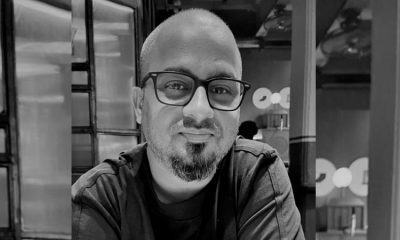
  • Samir Sagar joins TBWAIndia as senior VP

    Samir Sagar joins TBWAIndia as senior VP

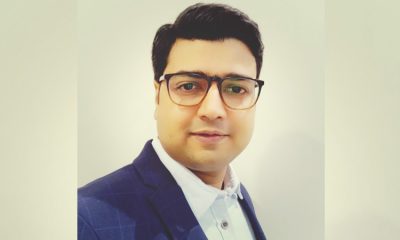
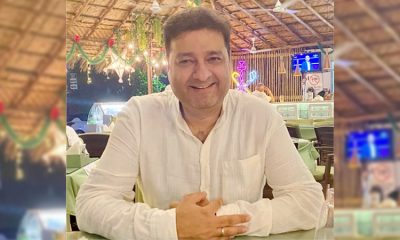
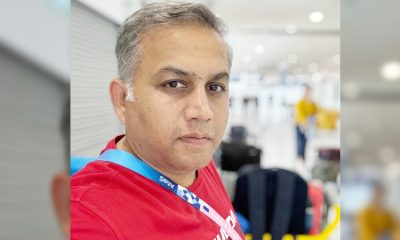
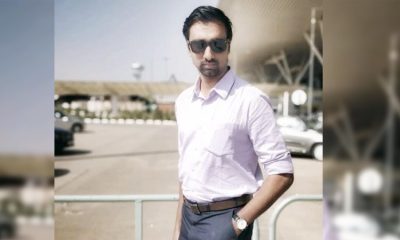
    MUMBAI: Advertising veteran Samir Sagar has stepped into a new role as senior vice president at TBWAIndia, charting the next chapter of a career brewed in strategy, storytelling and brand wizardry.

    Before joining TBWA, Sagar helmed the business at Famous Innovations as Business Head, where he led integrated marketing and brand communication mandates for marquee clients. His longest stint, however, was at MullenLowe Lintas Group, where he spent seven years rising through the ranks from associate vice president to senior vice president, shaping campaigns across Mumbai and Bengaluru.

    Sagar’s early journey took him through McCann Erickson as brand leader and The Thinking Machine in Jakarta, where he worked as brand partner, experiences that helped sharpen his strategic lens and creative instincts.

    With this move, Sagar brings his trademark blend of insight, innovation and leadership to TBWA, an agency known for its “Disruption” philosophy. It’s a fitting match, one creative disruptor joining another.
     

  • Celebrating Piyush: Mumbai’s ad world gathers to remember the maestro who made advertising human

    Celebrating Piyush: Mumbai’s ad world gathers to remember the maestro who made advertising human

    MUMBAI: At 10am on a Sunday morning, 1,500 of India’s advertising elite crammed into Mumbai’s Grand Hyatt to do what the industry does best: tell stories. This time, though, the subject was one of their own. Piyush Pandey, the creative titan who died last week, got the send-off befitting a man who transformed Indian advertising from borrowed jingles and forced sophistication into raw, real-life observation. The numbers would have swelled far higher had Ogilvy thrown open the doors, but this was an invitation-only affair—a gathering of those who’d worked alongside, been mentored by, or simply marvelled at the man who made “front foot pe khelo” the rallying cry of an entire generation.

    The two-hour tribute played out like a masterclass in the man himself—equal parts emotion, irreverence and creative brilliance. Hepzibah Pathak, Ogilvy India’s executive chairperson, took the stage visibly shaken, setting the tone for what would become an outpouring of stories that captured Pandey’s essence better than any obituary could. She was followed by a caravan of speakers: WPP’s chief operating officer Devika Bulchandani, Ogilvy India group chief executive Rajesh VR, chief strategy officer Prem Narayan, chief creative officers Kainaz Karmakar and Harshad Rajadhyaksha, vice-chairman and director client relations Madhukar Sabnavis, the legendary R Balki, McCann Erickson’s Prasoon Joshi, Pidilite director Madhukar Parekh, marketing guru Suhel Seth, his nephew and agency boss Abhijit Avasthi, and Asian Paints chief executive and managing director Amit Syngle. Even commerce minister Piyush Goyal made time to pay tribute, underscoring the breadth of Pandey’s influence beyond advertising’s narrow confines.

    PIYUSH GOYALThe 6:30am phone calls became the event’s leitmotif. Most speakers wore them as badges of honour—those dawn raids when Pandey would ring, sometimes to share a creative idea that had struck him in the shower, other times to help them excavate their own. His Ogilvy team recalled in granular detail how he mentored them: kind words when they delivered good work, sharp rebukes when they didn’t push hard enough. “Front foot pe khelo,” he’d say, deploying his favourite cricket analogy to urge aggression over timidity. Karmakar captured the bittersweet mood: “Who will make those 6:30am calls now?” she asked, confessing she’d hated being woken but lived for those conversations. Others complained they’d been left out of the dawn club, wondering aloud why Pandey’s Rolodex of early-morning confidants hadn’t included them.

    His creative team peeled back the curtain on his teaching methods. At a Cannes Lions masterclass, he’d begun not with case studies or charts but with meditative breathing. Inhale deeply and slowly, he’d instructed global participants. That’s observation—riding trains, chatting with taxi drivers, watching life unfold in its messy, unscripted glory. Exhale. That’s the creative work that connects with real audiences, not the manufactured personas of focus groups. It was vintage Pandey: grounding the lofty business of advertising in the quotidian rituals of simply paying attention.

    Syngle, who worked with Pandey for 37 years across Cadbury, Pidilite and Asian Paints, painted a portrait of a man allergic to pretence. He recalled being dragged from formal dinners during overseas trips—the kind with white tablecloths and wine lists—to eat dal chawal and bhindi at hole-in-the-wall Nepalese joints. “That was Piyush,” Syngle said. “Authentic. You got what you saw.” When invited to join the Pidilite board, Pandey made clear he wouldn’t wear formal clothes to meetings. Not as rebellion, but as declaration: this is who I am. Take it or leave it.

    Friends and cricketers Amit Mathur and Arun Lal delivered the comic relief Pandey would have demanded. They shared his joke about why actress Sridevi wouldn’t marry Lal: “Because she wouldn’t want to be called Sridevi Lal”—a reference to politician Chaudhary Devi Lal that sent Pandey into his trademark loud guffaws. The joke was terrible. The memory was priceless.

    PRASOON PANDEYGoyal’s recollection offered a window into Pandey’s principles. In 2014, the minister spent six hours at Pandey’s Shivaji Park home trying to convince him to handle BJP’s election advertising. “Despite years of friendship, he was stubborn every time I approached him for days,” Goyal explained. “I thought I’d failed. Next morning, relief: he called saying he’d do it.” The result was “Ab ki baar, Modi Sarkar”—a slogan that became the soundtrack of that election. What persuaded him remains unclear, but the episode revealed a man who wouldn’t be rushed or arm-twisted, even by friends in high places.

    Balki and Joshi traded admiration for Pandey’s work, but Balki’s anecdote cut deeper. They’d once decided to quit smoking together after visiting a hypnotherapist. Pandey called daily to compare notes—until he didn’t. When Balki rang, Pandey admitted he’d started smoking again. Balki lasted longer, then folded too. But Balki struck a defiant, almost evangelical note: at a time when advertising has become dreary—all performance metrics and programmatic buying and jargon-stuffed decks—Pandey’s death has ironically handed the industry its biggest campaign. “To bring advertising back into focus,” he said. “No amount of jargon, no amount of people trying to distract us from the fact that we have to do great stuff will work now. People are looking and saying: this is advertising. We’ve got the best opportunity for great work.” It was a call to arms wrapped in a eulogy.

    Prasoon Pandey, Piyush’s younger brother and an accomplished film-maker, delivered perhaps the most wrenching tribute. After seeing the industry’s outpouring, he wondered if his own love had been enough. “He was my elder brother, my father, my hero,” he said. “We’d speak six or seven times a day—not about work, but jokes, vicious pranks he wanted to pull on family or friends.” On work, the dynamic was pure Piyush: he’d hand Prasoon the soul of an idea in three or four words and expect execution. “We were drinking beer on our balcony when he asked: how strong would eggs be from a hen that feeds from a Fevicol container?” Prasoon recalled. “I thought it brilliant. He told me to go do it.” The result was one of Indian advertising’s most memorable campaigns—born not in a conference room but over beers and brotherly banter.

    The event was interspersed with screenings of Pandey’s greatest ads—the Fevicol campaigns, the Cadbury work that made Indians fall in love with chocolate again, the Asian Paints spots that turned home décor into emotion. The audience responded with applause, oohs, ahs, and more than a few tears.

    Lunch followed the stories: a spread of his favourite Indian dishes, the kind he’d have sought out in that Nepalese eatery instead of rubber chicken at a five-star buffet. Attendees left smiling, bellies and hearts full, having spent two hours remembering a man who’d taught them that the best advertising doesn’t sell products—it celebrates life.

    Piyush would have approved: tears, laughter, great work on screen, and damn good food to finish. Front foot pe khelo, indeed.

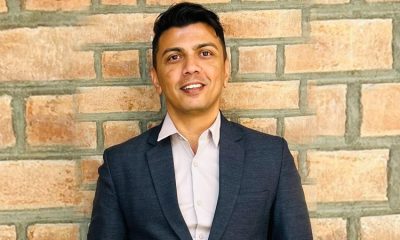
  • Preetam Thingalaya joins Bullet as vp–marketing

    Preetam Thingalaya joins Bullet as vp–marketing

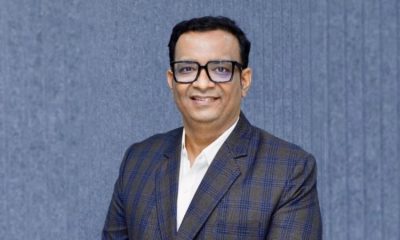
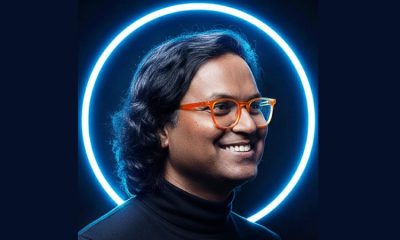
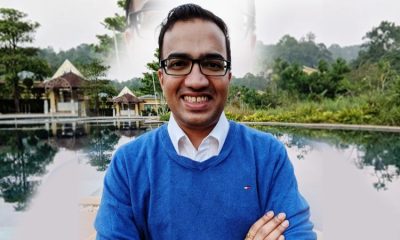
    MUMBAI: Looks like Bullet has fired its next big shot. Preetam Thingalaya has joined the newly launched micro-drama app as vice president marketing, bringing with him more than 20 years of brand-building experience across media, FMCG, tech, and entertainment.

    Preetam’s move comes at a time when Bullet, in partnership with Zee Entertainment, is aiming to reshape digital storytelling through bite-sized, vertical-format dramas designed for binge-watching.

    An industry veteran known for crafting digital ecosystems and forging creator partnerships, Preetam has previously led marketing at Eshtory, a premium original audio storytelling platform. Before that, he held key roles at Mirum India (a VML company), ZEE5, Mindshare, and Hindustan Unilever.

    With Bullet blending tech, storytelling, and creator energy, Preetam’s appointment signals the brand’s next act, making micro-dramas a macro trend.

  • Bihar Election 2020 – Political ad spend analysis: TAM data

    Bihar Election 2020 – Political ad spend analysis: TAM data

    MUMBAI: The battle for Bihar in 2020 wasn’t just fought on dusty village squares and opposition rallies. It raged across television screens and newspaper columns, with political parties unleashing millions in advertising rupees to woo voters. TAM Media’s advertising expenditure data reveals a lopsided affair: television gobbled up a staggering 93 per cent of all political advertising spend, leaving print media to scrap over a measly 7 per cent.

    The Bharatiya Janata Party emerged as the undisputed heavyweight, commanding 38.7 per cent of overall ad insertions—more than double its nearest competitor. On television, where the real money flowed, BJP’s dominance was even more pronounced at 41 per cent of all ad slots. The National Democratic Alliance, its coalition partner, secured 17.4 per cent overall, with an 18.6 per cent share on television.

    Congress, despite its third-place finish in overall spending at 17 per cent, displayed tactical nous in print advertising. The party ranked second in newspapers with 7.1 per cent of insertions as a standalone advertiser, while a Congress-led coalition (Congress-I/RJD/CPI variants) topped print spending at 15.7 per cent—edging past a BJP-led alliance’s 14.1 per cent.Top 5 ad spenders

    Rashtriya Janata Dal and Janata Dal United rounded out the top five, with 11.9 per cent and 8.9 per cent of overall insertions respectively. The fragmented opposition was evident in the numbers: 25 other parties collectively managed just 6.1 per cent of ad insertions, with print media seeing an even messier 44.6 per cent split among 15 smaller players.

    But the real story lies in the timing. TAM Media’s week-by-week analysis reveals a campaign that began as a whisper and ended as a roar. For the first six weeks—from early September through early October—political advertising barely registered on television. Print maintained a modest but steady presence during this period, with a slight peak in week three.

    Then came the deluge. From week seven onwards, television advertising exploded in a dramatic crescendo. By week nine (25-31 October), TV ad insertions hit their peak at 42 per cent of the entire campaign’s television spend—a staggering concentration just days before polling. Print advertising followed a similar trajectory, peaking at 31 per cent during the same crucial week nine, though it maintained a more consistent presence throughout the campaign compared to television’s late surge.

    The pattern is unmistakable: parties held their fire until voters’ attention was sharpest, then carpet-bombed the airwaves in the final fortnight. Week ten saw a slight decline as polling day arrived, but by then the damage—or persuasion—was done.

    The data, covering political advertisements across Bihar’s television channels and publications during the election period, paints a clear picture: in Bihar’s ad war, television was the main battleground, BJP brought the biggest guns, and everyone saved their ammunition for a final, frenzied assault on voters’ senses. Welcome to democracy, Bihar-style—where timing is everything and the biggest megaphone usually wins.

  • T-Series appoints Richa Vaidya as deputy gm

    T-Series appoints Richa Vaidya as deputy gm

    MUMBAI: T-Series has appointed Richa Vaidya as deputy general manager, music marketing, strengthening its creative leadership with a proven entertainment strategist.

    Vaidya joins from JioHotstar, where she led award-winning campaigns for original web series, post-theatrical releases and non-fiction shows across television, digital and outdoor platforms.

    A seasoned marketer with more than a decade in the entertainment business, she has previously held key roles at Yash Raj Films, Everymedia Technologies, and Balaji Telefilms, shaping digital and theatrical campaigns for major Hindi cinema releases.

    At T-Series, Vaidya will oversee music marketing and brand strategy, driving engagement across platforms for one of India’s most powerful entertainment brands.

    Her appointment marks a strategic move by T-Series to blend data-driven insights with creative storytelling, reinforcing its position at the forefront of India’s music and entertainment ecosystem.

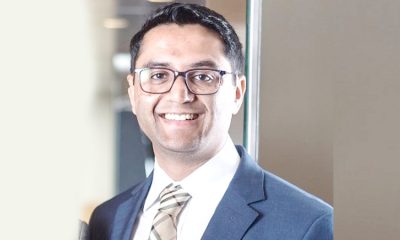
  • Comscore names Vivek Jaiswal APAC country head

    Comscore names Vivek Jaiswal APAC country head

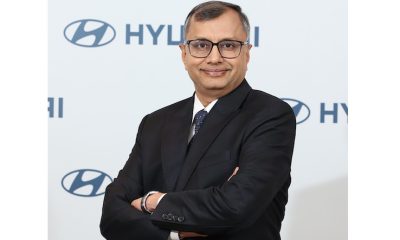
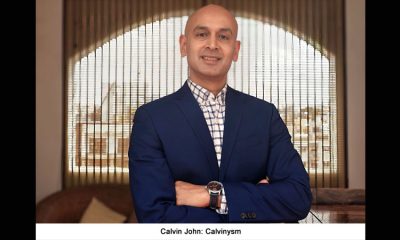
    MUMBAI: Comscore has named Vivek Jaiswal as its new country manager for Asia-Pacific, as the global measurement and analytics firm sharpens its focus on the fast-growing region.

    Based in New Delhi, Jaiswal will steer cross-platform audience measurement, deepen partnerships with brands and publishers, and drive innovation across markets.

    Jaiswal, who joined Comscore in 2022 as sales director, brings over 12 years of experience spanning SaaS, business information services and enterprise sales. Before Comscore, he held commercial roles at Dun & Bradstreet, Standard Chartered, and Kotak Mahindra Bank.

    “It’s an honour to take on this new role,” said Jaiswal. “APAC is an incredibly dynamic market, and I look forward to helping clients make smarter, data-driven decisions.”

    Comscore executive vice president international Alejandro Fosk said Jaiswal’s appointment reflects the firm’s “continued commitment to the region” and its goal of offering “reliable, future-facing measurement solutions” in a changing media landscape.

    The move cements Comscore’s ambitions to strengthen its India and APAC footprint, arming advertisers, agencies and publishers with the insights they need to navigate an increasingly fragmented digital

  • UPKL powers up play with new technical director

    UPKL powers up play with new technical director

    MUMBAI: The Uttar Pradesh Kabaddi League (UPKL) is gearing up for a stronger, sharper second season, and it’s making a power move on the mat. The league has appointed Tejnarayan Prasad Madhav, a veteran kabaddi coach and former gold medallist, as its new technical director ahead of Season 2.

    Currently serving as chief coach of the Bahrain National Kabaddi Team, Madhav brings decades of experience across playing, coaching and technical supervision. From mentoring squads at the Senior Nationals and Asian Games camps to shaping future champions at grassroots level, his record speaks of precision and purpose.

    Commenting on the appointment, SJ Uplift Kabaddi founder and director Sambhav Jain said, “UPKL has emerged as a credible platform that mirrors the sport’s rise across India. This season, our goal is to deepen that foundation by strengthening player development and maintaining the highest technical standards.”

    For Madhav, the focus is clear, getting every move right. “UPKL has created a structured environment where players can compete, learn and grow. My goal is to bring technical discipline and dynamic gameplay that highlights kabaddi at its finest,” he said.

    Season 2 of UPKL kicks off on 25 December 2025 in Noida, featuring 64 matches of full-throttle action. The player auction, set for 3 November, will set the stage for a season that promises both strategy and spectacle.

    With Madhav at the helm, UPKL isn’t just levelling up its game, it’s rewriting the playbook for how kabaddi should be played.


  • Liminal Custody names Muppalla as product chief officer

    Liminal Custody names Muppalla as product chief officer

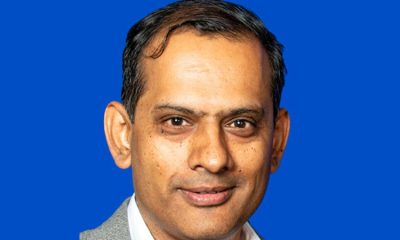
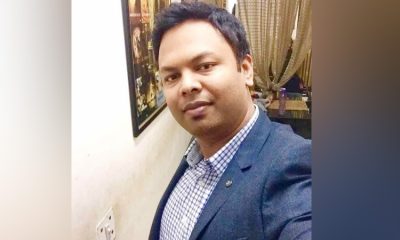
    MUMBAI: Liminal Custody has appointed Chakravarthi Muppalla as chief product officer to lead its next phase of innovation in digital asset infrastructure.

    Muppalla, who has held senior roles at Microsoft, Salesforce, Coinbase and Chorus One, brings over a decade of experience across cloud, SaaS, AI and blockchain. At Chorus One, he led the creation of Opus, a multi-chain staking and restaking platform.

    His background straddling enterprise technology and decentralised finance is expected to help Liminal strengthen its position as a trusted, regulated custody provider for institutional clients.

    Liminal Custody founder Mahin Gupta said Muppalla’s appointment marked “an important step” in the firm’s evolution. “His blend of Web2 and Web3 expertise aligns perfectly with our vision of simplifying digital asset management for enterprises globally,” he said.

    Muppalla likened the current moment in digital asset infrastructure to the early days of cloud computing. “Institutions want reliability, compliance and performance before they can truly scale,” he said. “At Liminal, I’m excited to build products that bridge that gap.”

    Under his leadership, Liminal plans to deepen its focus on institutional-grade innovation, modular product design and interoperability, helping enterprises and exchanges navigate the shifting landscape of digital finance.


  • Truth in real estate gets a Telangana tweak

    Truth in real estate gets a Telangana tweak

    MUMBAI: When it comes to buying a home, dreams often come wrapped in glossy brochures and grand promises. But in Telangana, truth in real estate ads just found a new guardian. The Telangana Real Estate Regulatory Authority (TGRERA) has inked a pact with the Advertising Standards Council of India (ASCI) to crack down on misleading property promotions and safeguard homebuyers.

    The Memorandum of Understanding (MoU) was signed in Hyderabad in the presence of TGRERA chairman N. Satyanarayana, IAS, members J. Laxmi Narayana and K. Srinivasa Rao, along with senior TGRERA officials. Representing ASCI were CEO and secretary-general Manisha Kapoor and director of operations Saheli Sinha.

    The partnership will see ASCI use its digital monitoring tools to spot non-compliant real estate ads across online platforms. Once flagged, these dubious claims will be escalated to TGRERA for swift regulatory action.

    “Clear and truthful advertising is central to consumer trust in the housing market,” said Satyanarayana. “With ASCI’s expertise and technology, we can act faster and protect homebuyers from misleading claims.”

    This collaboration mirrors similar successes in other states. In 2024, the Maharashtra regulator (MahaRERA) teamed up with ASCI to identify thousands of dubious property ads, ensuring action under RERA provisions. Telangana now aims to replicate and scale that success.

    ASCI’s Manisha Kapoor said, “Partnerships like these show how cooperation between regulators and ASCI can create real impact. Together with TGRERA, we’re helping ensure that what’s promised on paper matches what’s delivered on site.”

    With this alliance, Telangana’s real estate sector looks set for a transparency makeover, where ads tell the truth, and homebuyers finally get what they were sold on.