Category: Media and Advertising

  • Lintas Media Guide 2006 Print pocketed 57% of the total ad spends in 2005

    Media matters and how. Lintas Media Services has churned out a comprehensive media guide, which is an analysis of media spends and buys in the year gone by.Released by Intellect, a part of the Lintas Media Group, it studies all genres; television, print, radio, internet, cinema, outdoor and gives a break up of the media environment and general media industry trends of last year.

    Expansion clearly has been the mantra for the print industry all through 2005. Across publications there have been launches of editions across cities or to penetrate into the lower pop-strata. Increasing competition has brought more and more supplements everyday to seek niche reader segments. The battle of the dailies in Mumbai market is an example of the expansion drive and the result of competition adding to the product. In magazines due to the allowing of foreign direct investment (FDI) we have seen the start of foreign mastheads coming to India and this will only get faster in the years to come.

    Publishers are seeing a balance between driving subscription revenues and advertising revenues. While a few have been able to push up issue prices, most others have kept the issue prices stable. Need to garner growing advertising revenues is aided by the geographical expansion and the niche targeting possible by supplements.

    Print advertising had a share of 57 per cent of the total ad spends for the year 2005. The buoyant categories such as finance, education, auto, retail, etc are all set to adding a lot to the advertising revenues further for the print industry. Realising their strength in terms of ground network, most publication networks are extending their services beyond print space selling to solutions that give a combination of print advertising along with activation programmes at the ground level. Some publications are also able to extend the solution into the web space or other media depending upon the properties they own or are aligned with.

    Like TV, advertising avoidance is an issue for print advertisers too and there are more and more instances of innovative advertising. Advertorials are also increasing besides all efforts to align with related content. However, these as yet form a minuscule percentage of the total advertising space though it is expected to grow in the years to come.

    Readership research does not offer anything new and the issues between the IRS (Indian Readership Survey) and NRS (National Readership Survey) continues as always. There is a need for the print research to reevaluate the needs of the medium and reorient their offering.

    GROWTH OF PUBLICATIONS


    Language
    2003
    2005
    #
    Circ(mm)
    %
    #
    Circ(mm)
    %
    Hindi
    213
    13.1
    28
    203
    12.4
    25
    English
    174
    10.1
    22
    166
    10.6
    22
    Marathi
    57
    2.9
    6
    43
    2.9
    6
    Tamil
    39
    3.2
    7
    37
    3.6
    7
    Gujarati
    32
    2.7
    6
    34
    1.1
    2
    Bengali
    28
    2.9
    6
    31
    3.1
    6
    Malayalam
    32
    5
    11
    33
    6.1
    13
    Kannada
    27
    1.5
    3
    26
    1.8
    4
    Telegu
    20
    2.2
    5
    18
    2.7
    6
    Other
    83
    3.1
    7
    76
    4.4
    9
    Total
    705
    446.7
    100
    667
    48.7
    100


    READERSHIP TREND


    Claimed Readership(%)
    2004 (IRS ‘03 R2) 2005 (IRS ‘05 R2)
    All India
    Urban
    Rural
    All India
    Urban
    Rural
    Dailies 33.2 54.7 24.8 35.9 56.1 27.0
    Magazines 13.6 25.3 8.7 14.5 25.5 9.6
    Any Publication 34.6 56.4 25.4 37.5 58.1 28.5
    Source: IRS 2005 R2


    The Times of India tops the English dailies list when it comes to the top five dailies according to IRS 2005 R2 (all India average issue readership). Hindustan Times, Hindu, Telegraph and Deccan Chronicle (in that order) follow in the list.

    In the regional dailies category, Dainik Jagran rules the roost, whereas Dainik Bhaskar, Daily Thanthi, Amar Ujala and Malayala Manorama follow suit.

    In the Top five English magazines, India Today tops the charts, whereas Readers Digest, General Knowledge Today, Filmfare and Competition Success Review feature in the top five list.

    In the regional magazines category, Saras Salil is the top read magazine. Vanitha, Kumudam, Grihsobha and India Today (Hindi) also feature the top five list.

    PRINT TOP CATEGORIES IN 2004 – 2005


    Category
    2004
    Rs crores
    Category
    2005
    Rs crore
    Educational Institutes
    435
    Educational Institutes
    506
    Corporate Brand Image
    400
    Property / Real Estate
    362
    Car / Jeeps
    300
    Corporate Brand Image
    323
    Property / Real Estate
    272
    Car / Jeeps
    304
    Two Wheelers
    257
    Independent Retailers
    250
    Coaching Centers
    146
    Two Wheelers
    222
    Financial reports
    145
    Readymade Garments
    166
    Cellular Phone Services
    138
    Coaching Centers
    156
    Social Ads
    125
    Cellular Phone Services
    144
    Events
    121
    Travel & Tourism
    142
    Source: Tam Adex & Lintas Media estimates based on indicative market costs


    PRINT TOP ADVERTISERS IN 2004 – 2005


    Advertiser
    2004
    Rs crores
    Advertiser
    2005
    Rs crore
    Maruti Udyog Ltd
    135
    Hewlett Packard
    115
    Bajaj Auto LTD
    100
    LG Electronics India
    86
    LG Electronics India
    89
    Hero Honda Motors
    72
    Samsung India
    85
    Bajaj Auto LTD
    72
    Tata Motors
    69
    Maruti Udyog LTD
    63
    Hero Honda Motors
    65
    Tata Motors
    57
    TVS Motor Co
    60
    Pantaloons Retail India
    56
    Hyundai Motor India
    59
    Hyundai Motor India
    56
    Hindustan Lever LTD
    57
    Samsung India
    54
    Hewlett Packard
    54
    Toyota Kirloskar
    52
    Source: Tam Adex & Lintas Media estimates based on indicative market costs


    Stay tuned for the next in the series…

  • Lintas Media Guide 2006 Movie channels gain in HSM; main Bangla channels lose share

    Media matters and how. Lintas Media Services has churned out a comprehensive media guide, which is an analysis of media spends and buys in the year gone by. Released by Intellect, a part of the Lintas Media Group, it studies all genres; television, print, radio, internet, cinema, outdoor and gives a break up of the media environment and general media industry trends of last year.

    In the second of the series, we take a look at the channels that dominated 2005 in the Hindi speaking markets as well as in the East, Tamil Nadu, Kerala and Karnataka.

    While Star Plus continued to reign supreme in the Hindi speaking market, Hindi movie channels like Max and Zee Cinema have managed to strengthen the position of the genre in 2005.

    In the Hindi speaking markets, Star Plus continued to enjoy its leadership position throughout 2005. Its channel share, however decreased by one per cent last year to 19 per cent as compared to 2004‘s 20 per cent in the C&S 4+ SEC ABC Hindi speaking markets between week 40 – 44. Sony and Zee‘s channel shares, on the other hand, too dipped by a per cent last year to settle at six per cent and four per cent respectively.

    Meanwhile, movie channels like Max and Zee Cinema gained momentum and overall managed to their strengthen the position of the genre in 2005. While Zee Cinema, which didn‘t figure in the 2004 charts, managed to rear its head with a channel share of five per cent; Max retained its channel share of five per cent in 2005. Thus, strengthening the movie genre in the overall pie.

    Cable channels in the Hindi speaking markets too shed their numbers from 13 per cent in 2004 to 11 per cent in 2005. The channel share of DD1 dipped in 2005 from that of four per cent in 2004.

    Also, the basket of “other” channels increased from 46 per cent in 2004 to 50 per cent in 2005 in the Hindi speaking markets.

    In East India, as cable penetration increased, DD7 as a viewing choice of people reduced. Regional channels too suffered as ETV Bangla and Aakaash Bangla each lost two per cent market share last year as compared to a market share of 17 per cent and six per cent in 2004. Zee Bangla too lost one per cent in 2005 with a channel share of four per cent.

    Star Plus, on the other hand, gained one per cent and stood with 12 per cent channel share. Sony managed to hold on to its share of five per cent, whereas Zee TV and Zee Cinema both managed a four per cent channel share in 2005.

    In Tamil Nadu, Kalanithi Maran‘s empire continues to reign supreme. While the flagship channel – Sun TV – continues to rule with a channel share of 49 per cent, its sibling KTV has emerged as a frequency builder with a channel share of 12 per cent in 2005. Two other Sun channels Sun Music and Sun News also made their presence felt with channel shares of six per cent and two per cent respectively.

    On the other hand, while specific time bands of Vijay TV and Jaya TV are doing well, both channels had a share of five per cent each in 2005. Jaya TV‘s share went down by one per cent in 2005, while that of Vijay TV‘s remained status quo. The share of “Other” channels dropped in Tamil Nadu from 17 per cent in 2004 to 14 per cent in 2005.

    In Kerala, Surya TV and Asianet have been loosing their share to other channels. While Surya TV‘s share fell from 27 per cent in 2004 to 22 per cent in 2005, that of Asianet fell from 25 per cent to 23 per cent. “Other” channels have gained share from 24 per cent in 2004 to 31 per cent in 2005.

    On the other hand, in Karnataka, while Udaya leads in terms of channel share, Ushe TV has been emerging as a frequency builder. Udaya‘s shares increased from 17 per cent in 2004 to 21 per cent in 2005. ETV Kannada, on the other hand, managed to retain its share of 12 per cent through 2004 and 2005, while Sun TV‘s shares in Karnataka dropped from seven per cent to nine per cent.

    Stay tuned for the next in the series…

  • PR firm The Communique to shut shop; promoter Kalra to join Rajshri Media

    PR firm The Communique to shut shop; promoter Kalra to join Rajshri Media

    MUMBAI: Public Relations firm The Communique will close operations on 31 March. This is in the wake of the company’s proprietor, media person Nitin Kalra’s decision to join Rajshri Media (P) Limited as VP-content sales and marketing from the next financial year.

    Kalra will join Rajshri Media on 1 April. Rajshri Media is the digital company of Rajshri Productions (P) Limited. Kalra has been involved with the company as a consultant – content development since February 2005 and drives the mobile business of the company at present, the release adds.

    The Communique was started in January 2003 as a PR company. During its tenure, the company catered to over 85 clients including Rajshri Productions, Nimbus Communications, CRU India, FreeSpirit Entertainment, T-Series and singer Anu Malik.

    The company’s existing clients, besides others, include Sony Entertainment Television, Universal Music and Pankaj Udhas, states an official release.

  • TV spends show 20% increase to Rs 55 billion in 2005

    Media matters and how. Lintas Media Services has churned out a comprehensive media guide, which is an analysis of media spends and buys in the year gone by. Released by Intellect, a part of the Lintas Media Group, it studies all genres; television, print, radio, internet, cinema, outdoor and gives a break up of the media environment and general media industry trends of last year.

    With data compiled from all over the Indian subcontinent, spanning more than 28 states and seven Union territories, the guide is an all-inclusive take on the Indian media industry and players.

    Lintas Media Group director media services Lynn de Souza said, “Media closed 2005 on a happy note and 2006 promised to be an optimistic year. The total advertising media spends showed a growth of 15 per cent reaching a figure of Rs 159.41 billion. While print continued to hold more than 57 per cent of the total media spends, radio, as a means of advertising saw an increase in the ad spends. Cinema, outdoor, and internet on the other hand capitalised on innovations. In many ways, 2006 will be a year that we can all excitedly look forward to.”

    The total media expenditure mix for 2005 was that of Rs 159.41 billion over 2004‘s Rs 120.71 billion, of which press saw a growth of 14 per cent over 2004 with an expenditure of Rs 90.64 billion in 2005. Internet saw a growth of 35 per cent with its media expenditure standing at Rs 1 billion in 2005 over Rs 740 million in 2004. Radio and Outdoor medium saw a growth of 25 per cent each, with outdoor at Rs 8.55 billion and radio standing at Rs 3.75 billion. All in all, an overall growth of 15 per cent was witnessed in 2005 across all media.

    Of the total Rs 159.41 billion media expenditure in 2005, press share comprised 56.9 per cent, television was 34.7 per cent, outdoor was 5.4 per cent, radio was 2.3 per cent and internet was 0.6 per cent.

    In the first of the series, we take a look at what the Television scenario in 2005 was like.

    Television spends showed a 20 per cent increase to Rs 55.26 billion in 2005 as compared to 2004‘s Rs 46.08 billion. While cable and satellite channels contributed significantly to this growth, DD terrestrial channels too clocked a healthy growth figure. What has fuelled this growth is the sharing of cricket rights and the increasing need for the advertiser to reach smaller towns.

    Television not only saw a continued increase in the number of channels but also in ad spends. TV spends increased by news channels, kids channels, niche entertainment channels, continued to add to the existing channel bouquets.

    Not only TV software but immense progress was seen in the TV delivery systems. DTH, IPTV, digital cable, CAS – all have become a feasible reality now limited only by the government stipulations.

    The Lintas Media Guide mentions that these developments promise to aid faster penetration of satellite channels to the hinterlands and at the same time will enable providing a richer and interactive viewing experience for the upper town populace.

    DTH, on the other hand, too became a reality with DD Direct and Zee‘s Dishtv stepping on the pedal to make available their services to small town and rural areas. Now with the impending launch of the Tata Sky DTH platform, this space will gain further impetus.

    On the programming front, as family dramas lost some charm, multiple offerings amongst news, kids and niche entertainment channels brightened the choice for the viewers. However, there was no respite in the rate at which new channels are being added to the current bouquets from the earlier years.

    According to the Lintas Media Guide 2006, the emergence of niche genres and their success in capturing the interest of the evolving TV audiences has affected the share of the general entertainment genre.

    Advertising avoidance is a globally recognized issue and broadcasters, advertisers and media agencies are all aware of it. However, with TV still being the most suitable media for various brands, there is a spurt in the efforts to go beyond the 30 second commercial. Content creation, in-program placements, integration with ground activities and creating interactivity are some of the different ways in which the advertisers are trying to get the TV viewer exposed to the brand messages.

    The Guide also mentions that there have been feeble or no attempts by the broadcasters to reduce ad-clutter. Unless DTH, CAS and other addressable systems append to the subscription revenue of the advertisers, the ad clutter is set to increase. The ad-clutter (of an average ads seen by any TV viewer per week) stands at 313 ads per week and shows an increase of eight per cent over last year.

    Apart from that, TV research also continued to be a matter of hot debate and AMap, the new entrant in the industry steadily but surely managed to set up a formidable TV measurement panel aiming to be far bigger in sample size than the existing TAM panel. The year 2006 will have TAM and AMap waging an even more pronounced battle of ratings, says the Guide.

    The research users expect a larger sample size, more description variables and faster reporting among other improvements in the research system. This year will be the year to see how Tam responds to the competitive challenge and how the TV measurement system in India develops.

    According to Lintas Media estimates based on indicative market costs, the top category of advertisers on TV in 2004 – 2005 are as shown below:

    According to Lintas Media estimates based on indicative market costs, the top advertisers on TV in 2004 – 2005 are as shown below:

    According to Ficci, television advertising pie is set to increase its share to 51 per cent by 2010 and a lot of this growth is expected through subscription and content syndication amongst other things.

    “We look forward to 2006 as the year for TV to re-orient itself in the areas of multiple delivery platforms, maturing of the niche genres, innovation in advertising and improved TV research,” says the Guide.

    Stay tuned for the next in the series…

  • ‘Mid Day’ to launch in Bangalore on its 27th anniversary

    ‘Mid Day’ to launch in Bangalore on its 27th anniversary

    MUMBAI: While Mid Day is celebrating its 27th anniversary with a special issue on 27 June. This year, the anniversary celebrations are doubled as it will also launch in Bangalore on the same day.

    This time, it is not just another anniversary issue that’s coming out. After 27 years of chronicling Mumbai on the move, Mid Day is now on the move as it hits Bangalore as a separate edition.

    An official comminuque states that since Bangalore has a large English-reading middle class, which is out and about during the day and as it also has significant amount of retail advertisers in the market, it makes sense for Mid Day to target Bangalore.

    Mid Day’s Mumbai anniversary is a mega 264 pages issue. It’s the single largest issue in terms of the number of pages that a newspaper has ever done in the country. The anniversary issue has six supplements and each is highlighting fours hours of a day. It will cover Mumbai round the clock at usual places in odd hours and odd places in usual hours, exhibiting the soul of Mumbai.

    Mid Day will also launches its E-paper on the anniversary. www.mid-day.com has gone a whole lot ‘E-sier’ and much more ‘E-xciting’ after undergoing a face lift. The E-paper will be free for the readers.

  • Mobile content, digital lifestyle applications take centre stage in Singapore

    Mobile content, digital lifestyle applications take centre stage in Singapore

    MUMBAI: Convergence has brought together a showcase of overlapping technologies between the media, telecommunications and IT industries at BroadcastAsia, CommunicAsia and EnterpriseIT.

    From infrastructure to deployment, the shows gathered vendors with applications and solutions at different stages of the value chain for convergent technologies such as IPTV, broadcasting to handhelds and mobile entertainment. This year’s events hosted 2,339 exhibiting companies from 67 countries/regions.
     
    A total of 63,814 international attendees, of which 49 per cent were from overseas, saw the latest products and services birthed out of convergence that are expected to change the way consumers and businesses will use and interact with electronic devices. Attendance at this year’s event has increased by five per cent from 2005.

    Singapore Exhibition Services chief executive Stephen Tan said, “The convergence of technology has spawned off a whole new range of exciting digital lifestyle applications many of which were seen on the show floor. Clearly, the focus at this year’s exhibitions is on content for handhelds and the race is on among content providers to come up with new and exciting applications that will enhance mobility for both consumers and businesses. The increase in attendance at BroadcastAsia, CommunicAsia and EnterpriseIT and reflects a surge in industry confidence as convergence becomes reality.”

    Digital lifestyle showcase

    Ericsson showcased a video dating service where one can record a personal video message and send to new acquaintances, and a video karaoke where the user can call to see other singers and rate them as well as sing along to text and music and record it on video.

    On display at NTT Docomo was a technology that allows pet owners to see their pets as well as dispense food into the feeding bowl through their mobile phones. MyHeart by Philips Research Laboratories monitors a person’s health using intelligent biomedical clothes. The data is then sent via a wireless personal area network to a mobile phone or PDA and from there to a health care provider.

    Other mobile lifestyle applications at CommunicAsia included Bidshot – the first ever auction website that allows members to buy, and sell through their mobile phones, XFinance which is a mobile financial management tool which provides an overview of all your income, as well as Xovulation which is a mobile family planning tool.

    At BroadcastAsia, Innoxius Technologies showcased a gadget that turns a PDA into a multi-system mobile digital TV receiver for standards such as DVB-H, DVB-T, T-DMB, DAB and enhanced packet mode DAB standards in various spectrum ranges.

    French exhibitor Visiware launches the first triple-play gaming offer available on TV, mobile and broadband. Games can be played on the TV at home then continued on the mobile or internet. BroadcastAsia also hosted a DVB-H, DMB and Qualcomm’s MediaFLO feature, which demonstrated the capabilities of each standard to bring content onto handhelds.

    Launch pad for international players

    BroadcastAsia, CommunicAsia and EnterpriseIT remain an important platform for international players to reach Asia’s markets. This year, China’s participation at CommunicAsia grew by 45 per cent.

    “Participation in premier industry events, such as CommunicAsia, continue to be a good platform for Huawei to not only reach out to key influencers in the region, but also to deepen our relationship with existing and potential key customers. We have participated in CommunicAsia for more than five years and look forward to next year’s show,” said Huawei Technologies Asia Pacific vice-president Liu Jianfeng.

    The Korean presence on the BroadcastAsia show floor has doubled from last year. Korean Broadcasting Commission technology director Park Jun-Seon said, “Last year’s event was very successful in introducing DMB as one of the latest platforms for convergence services and this year we are here to showcase latest applications available through DMB. BroadcastAsia is a must attend event for breakthrough technologies such as DMB.”

    The exhibitions are seeing strong participation from Europe. The European ICT Pavilion, which was at CommunicAsia for the first time, provided an exciting snapshot of new, leading-edge technologies, products and applications for audio-visual, e-Government, e-health, e-security, and telecommunications.

    A strategic meeting place

    For many exhibitors, BroadcastAsia, CommunicAsia and EnterpriseIT were ideal platforms to showcase their latest offerings, network and meet target buyers.

    “We have found the show to be one of the means to launch and showcase our new wireline and wireless service offerings and solutions to our customers around this region. It is also a very good platform for our executives from across the globe to meet customers in this region and understand their needs so as to better our products for them,” said Ericsson Telecommunications Pte Ltd head of communications (Singapore) Jacinta Ong.

    Echolab was represented at BroadcastAsia two years back through their agents. However, this year the USA-based company considered the event important for them to book a space on their own. Echolab regional sales manager William Gray said, “BroadcastAsia presented us with a wonderful opportunity to reach some countries that are not easy to reach from the USA and also to rope in potential distributors.”

    Commenting on the CommunicAsia Summit, Lucent Technologies Singapore CTO South East Asia region Madhusudan Pandya said, “In-depth discussions on the most exciting and up-to-the-minute technologies, business solutions, and revenue-generating applications made the summit exceptional.”

    “I find CommunicAsia going beyond its name. It has truly become an international event, granting participants the world over to connect and converge more effectively and efficiently in a short duration of three days,” he added.

    Trade visitors armed with a $4.5 billion sourcing budget came looking to purchase the latest products and services and explore potential business alliances.

    “We are here to look at the different types of broadcasting technologies and compare systems to find out which ones will suit us the best. We intend to upgrade our facilities and plan to buy equipment worth millions of dollars,” said Setsiri Trisaksri from the Royal Thai Army Radio and TV, Thailand.

    “I’m a regular visitor here and this is my fourth show in a row. We are looking for small and medium enterprises, which develop niche technology. Here we find these people and we partner with them. We have been very successful in doing that and that’s why we love coming to CommunicAsia. It’s a great meeting place,” said Precision Electronics Ltd India president Nikhil Kanodia.

  • IAA Chairman Joseph Ghossoub is Campaign’s “Man of the Year”

    MUMBAI: The International Advertising Association (IAA) is pleased to announce that Chairman and World President Joseph Ghossoub has been selected “Man of the Year” by Campaign magazine’s Middle East edition.


    The award was presented to Ghossoub in Dubai by the editors of Campaign for promoting the Middle East region’s advertising and media industry around the world. Campaign is an ITP publication and a regional outgrowth of Britain’s Campaign magazine.


    “I know that I speak for the whole IAA network in congratulating Joe on receiving this great honor. We are always thrilled when our colleagues within the association receive such peer recognition,” said IAA Executive Director Michael Lee.


    ” Ghossoub is Chief Executive Officer of The Holding Group (THG), parent company of Team/Young & Rubicam, Intermarkets Advertising, ASDA’A public relations, mediaedge:cia and Wunderman. As one of the Middle East communication industry’s most prominent spokespersons, he has been involved in managing regional and global agencies for over two decades.

    When asked to comment on Ghossoub’s contribution and dedication to the world of advertising, Sir Martin Sorrell, CEO of WPP stated, “We tend to associate awards and honors in the communications industry to specific creative work and products, design, packaging or even jingles, so it is always good to be reminded of the people behind it all. All of us within WPP are very proud that Joseph Ghossoub has been named Campaign’s “Man of the Year”. It is a great honor and truly well deserved.”


    Ghossoub joined Team Advertising as Managing Partner and Chief Executive Officer in 1993. In 1997 he and his partners formed THG. Under his leadership, THG has grown to be one of the most successful Middle East communications groups, with offices throughout the Arabian Gulf, the Levant, North Africa and beyond.


    Ghossoub took office as Chairman and World President of the IAA in March 2006, coinciding with the start of the 40th IAA World Congress in Dubai. During his term at the IAA, he has worked to open levels of communication across marketing disciplines encouraging the industry to work more closely together.


    Previously, he was the President of the IAA United Arab Emirates (UAE) Chapter and in 1996 he joined the IAA World Board and IAA World Council. He was elected International Vice President and Area Director of IAA Middle East North Africa (MENA) in 2000.

    Ghossoub also serves a number of business and educational institutions. He has presided over the Lebanese Business Council and is an advisory council member of the American University in Dubai. In 2003, Ghossoub was appointed as a board member of the Dubai Media Incorporation by the Government of Dubai and most recently he has worked to strengthen cultural ties between the countries of his birth and professional life through the establishment of the Emirati Lebanese Friendship Association.

    Decorated with Lebanon’s highest civilian honor in 2004, Ghossoub is a Knight of the Order of the Cedar, in recognition of his achievements and services towards promoting regional and international understanding and cooperation. In May 2006 he was awarded the Presidency Shield of the Republic of Lebanon in recognition of his role as the Chairman and World President of the IAA.

  • Dr Kasturirangan Appointed Academician of Pontifical Academy of Sciences

    MUMBAI: Pope Benedict XVI has appointed Dr K Kasturirangan, Member of Rajya Sabha and Director, National Institute of Advanced Sciences and, former Chairman of ISRO, as an Academician of the Pontifical Academy of Sciences.

    The Pontifical Academy was founded in Rome on August 17, 1603 to promote the progress of mathematical, physical and natural sciences and the study of epistemological problems relating thereto. The academicians are chosen on the basis of their eminent original scientific studies and of their acknowledged moral personality, without any ethnic or religious discrimination, and are nominated for life by sovereign act of the Holy Father.

    This international and interdisciplinary scientific body is subject to the direct authority of the Supreme Pontiff. The academicians will contribute to the activities of the Academy and attend its Plenary Session during October-November every two years and participate in other scientific matters organised by the Academy.

    Dr Kasturirangan has made immense contribution to the Indian space programme including the development of launch vehicles and satellite technology, application in the areas of remote sensing, communications and education that have greatly benefited the society.

    The Pontifical Academy has about 90 Academicians of which 29 are Nobel Laureates. Dr Kasturirangan is only the fourth Indian to be appointed to the Academy after Dr C V Raman, Prof M G K Menon and Prof C N R Rao.

    The Holy Father will present Dr Kasturirangan the insignia of his appointment at a solemn pontifical audience sometime in the near future.

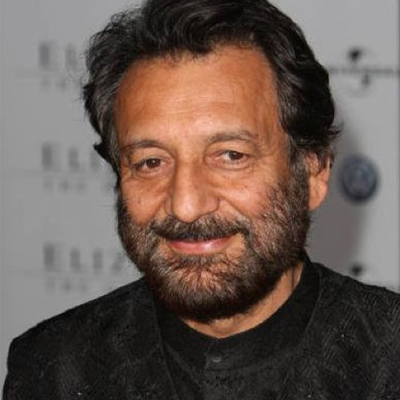
  • Shekhar Kapur- on BBC World’s ‘HardTalk Extra’

    Shekhar Kapur- on BBC World’s ‘HardTalk Extra’

    Shekhar Kapur is one of the elite club of Asian film directors who have cracked Hollywood. He talks to Mishal Husain about his early films in Bollywood, controversy around his film ‘ Bandit Queen’ , his breakthrough ‘ Elizabeth’ which gained seven Oscar nominations, including one for Best Picture . He also tells Mishal that Hollywood as we know it, is seriously under threat, as asian culture becomes a force to be reckoned with on the global stage.

    HARDtalk Extra is the BBC’s most widely broadcast arts and entertainment interview programme. Each Friday, the programme profiles leading personalities in the arts, entertainment, science, culture and the media. This edition of HARDtalk Extra will be broadcast on BBC World on Friday 3rd February @ 1000 with additional appointments to view @ 1400, 1700 and 2100 IST.

    Further information:
    Deeptie Sethi/ Neha Sharma
    Tel: 91 11 2341 2672/73 Extn. 102
    Fax: 91 11 2341 1109
    Email: deeptie.sethi@bbc.co.uk

    Notes to Editors: BBC World, the BBC’s commercially funded international 24-hour news and information channel, is owned and operated by BBC World Ltd, a member of the BBC’s commercial group of companies. BBC World is available in more than 200 countries and territories worldwide, and reaches 280 million households (136 million 24-hour homes) and more than one million hotel rooms. BBC World launched in its present format in 1995 and is funded by advertising and subscription. For further information on how to receive BBC World, download schedules or find out more about the channel, visit bbcworld.com.