Category: Media and Advertising

  • The thin red line

    By VINAY KANCHAN

    Job-definition – people in the corporate world, especially those at relatively senior levels are never really certain where the scope of their job ends (the infamous ‘thin red line‘). This insecurity leads to bosses increasingly interfering with the work of their subordinates, leading to a complete duplication of effort, which if viewed with an opportunistic eye can give rise to some quite interesting consequences.(Case in point- I have been only able to complete this column, because my boss is still ticking off items on my joblist)


    “Man, she really gets on my nerves,” said Neha, the exasperated account executive as she collapsed on a chair next to Ram. Ram was right in the middle of pretending to be busy and so he found the intrusion pleasantly welcoming. Besides he had always wanted to speak to Neha but had never sighted an opening thus far.“Who does?” asked Ram, trying to sound casually nonchalant, while fervently hoping that Neha would be oblivious that his heart had just done a triple summersault and landed back in his chest cavity, albeit beating a touch faster. He needed tea badly.“The life of a person with an intrusive boss is unquestionably something that is an irrevocable loss,” the hushed Chinese accent, the express delivery of the teacup and Chai-La, the mystical canteen boy, had disintegrated into a series of regrets.


    Neha was so self-absorbed that she failed to notice how the teacup had magically appeared in Ram‘s hands; she felt a slight turbulence in the air but cursorily attributed it to her charged personality. She returned to Ram‘s previous question.“My boss Sunetra, she just has been on my case every day this week”“Why? Is she a lawyer?” questioned Ram, through sheer force of habit.“What?” asked Neha in a manner that seemed to cue the interaction would be short lived.“You know, case and all that,” replied Ram, tentatively, not knowing if the explanation was warranted.Neha burst into a slight giggle that instantly lifted Ram‘s spirits.“Oh, I needed that,” she said. “Why don‘t we go down for some coffee?”Ram hated coffee, especially at those ‘café‘s‘. But opportunity never knocks twice.In ten minutes they were sitting at the café across the street.


    “She questions me on every little thing, she wants to be involved in every small detail, and half the time she ends up doing the job herself. I think she even wants to control when I go to the rest room, this is driving me nuts?”“Oh! she has no concept of the ‘thin red line‘?”“What was that?”“Never mind, just something that divides what your boss should do from what you should; it probably is a fictional concept today. Anyway go on.”“What‘s there to go on, that‘s my sad story. How does your boss treat you?”In all this time, Ram had never felt any fondness for Vikas, but just then Vikas seemed a great boss to have. Before Ram could suppress it, his chest inflated with pride.


    “Well, he doesn‘t really care. He lets me do my own thing. So much so that sometimes I wish he interfered a little more. I have complete freedom and ownership for all my actions.” Ram answered, realizing even as he mouthed those words that he was endowing Vikas with a rare version of corporate divinity.”He sounds so cool, you work with Vikas right? He is such a rock star.”


    “Well I wouldn‘t go that far, even that style of working can lead to heartaches sometimes,” then wanting to get the topic off Vikas he asked,” so how do you handle Sunetra?”, reflecting on the spot of jealousy that had gone through his system when Neha‘s eyes sparkled as she had spoken of Vikas.“I really can‘t” said Neha touching Ram‘s arm, sending tiny freckles of electricity up his spine. “Can you advise me?”


    “Hmm,” began Ram, touching his chin tenderly, hoping his mannerisms were causing an escalation in his perceived intelligence levels. “Why don‘t you look at the situation optimistically? You are getting your jobs done anyway. Just flow with the tide and don‘t take any stress and every day at office can be like a paid holiday. She ends up doing all the work, doesn‘t she?”


    Neha looked at Ram in the manner that a stunned audience would have if Hitler had ever said during one of his effusive diatribes that the Jews were cool.“You have no idea what it is like to work under her. What are you saying?” she began as tears started to roll.
    Ram held her hand and said in his most confident tone, “Just try it Neha, what have you got to lose?”
    The next day Ram kept his ears open as he heard what was happening in the adjacent cubicles, where Sunetra and Neha used to have their meetings.Even across the fortifications of his own cubicle he could sense that Sunetra was not one you could share a joke with. The words ‘seriously somber‘ sprang to mind.“Have you checked with the studio on the status of the artworks?”“No, I was doing other things.”“Ha, never mind I have done that already and they will be ready by seven.”“What about the quotes on the film?”“I went to the films department but they were away at a shoot.”“But I called them; they all have mobiles, don‘t they? And the quotes should be in tomorrow. What about the research boards for the focus groups?”Ram could almost picture Neha stretching out like a cat, suppressing a slight yawn, and languidly running her fingers through her hair.


    “I tried telling PP, but you know he has issues talking to juniors, he is so hierarchy conscious. I think it will be best if you brief him.”“Yes I will, I will ensure he delivers, how dare he delay work,” roared Sunetra and muttered some utterly unladylike things about PP.


    “And Sunetra since you will have all the deadlines clear in your mind, could you also please mail the daily status to client?”“Yes, once I‘m done with PP, the artworks plus the quotes, and I have made all the concerned peoples lives miserable, I will do that,” said Sunetra storming off accompanied by mayhem and a gloomy looking cloud that always seemed to lurk above her.Neha popped her head over the cubicle, her face radiating happiness.


    “This is great. I‘m glad we had that conversation yesterday. I have absolutely nothing to do; she is doing all my work. I‘m actually changing my ring tone to ‘Money for nothing‘”
    Ram‘s expression was a heroic effort to conceal his disappointment, as he was going to come up with that very same wisecrack. He felt robbed of his moment of glory.
    “So what do you intend doing for the rest of the day?”


    “I don‘t know, I had the whole morning pretty much to myself and so I went and chatted with Vikas, asked him about the ‘thin red line‘ and all that. He replied that it was not lines but rather curves that held his interest. He is such a charmer; we are going out for lunch today. In fact we might even have plans for the evening.”Ram made a note in his mental black book of things that he despised about Vikas. The black book was getting to be a rather copious volume.


    The next three days seemed to fly by and he did not see much of Neha at all.On Friday Vikas called him to his room.“Chief,:” he started and then paused to adjust his tie in his reflection in Ram‘s glasses, “You will need to help out Neha on her accounts as well for a while, the poor girl is really buried in loads of work and her boss Sunetra tells me that she herself needs to do lots of operations, so they clearly need help. Obviously nothing suffers on our side, even if I am lending you to that group. I don‘t want to be attending any client calls about delays. I hate being bothered with such things.”


    Ram thought about defending his case but with the speed of the Indian batting lineup collapsing, he saw the irony of the whole thing and gave it up.


    “I‘m out for a long lunch now,” said Vikas and sauntered out. Ram briefly glimpsed Neha accost Vikas near the elevator and seamlessly attach herself to him.


    “Advice liberally dispensed has the trait, of coming back to haunt your own fate,” Ram heard Chai-La‘s words of wisdom, even felt the teacup nestle in his hands but for once was too dejected to observe what kind of an exit the mystical Chinese canteen boy made this time. For the record he simply drew a thin red line and then erupted into a spectrum of points that strove to seek fulfillment along it. And then she blew.Sunetra‘s voice was unkind on the ear even when heard in passing, but now it sounded as mellifluous as a ravenous hyena jumping on hot coals.


    “Ram, I want you in my cubicle now, and I mean right now. I want to do a job list meeting. Don‘t forget to get a pad, pen and calculator when you come, and I don‘t want to repeat that again.”Who ever said that June 21st was the longest day?


    The writer is Vice President, Rediffusion DY&R. He is also the patron saint of Juhu Beach United, a football club that celebrates the ‘unfit, out of breath media professional of today‘. You can write to him at (vinaykanchan@hotmail.com).


    (The views expressed here are those of the author and Indiantelevision.com need not necessarily subscribe to the same)

  • Murder by numbers…

    By VINAY KANCHAN

    The brand versus sales debate has raged ever since a not so famous Greek philosopher sub let the empty seats in his ‘platonic posturing‘ classroom to tired travelers who promised to conceal their mirth as he conducted semi nude experiments on the rich and the infamous. Subsequently this laid the foundation for the guesthouse business (the resting of the travelers, not the semi nude stuff), what became of the philosopher is anyone‘s guess.


    “And that‘s our campaign, while I must say that we see great advertising coming out of it, I also think it will do wonders in term of increasing brand equity, we will occupy a unique position in the consumers mind.” Concluded PP (the creative director of the exaggerated moustache fame), clearly pleased with the way his presentation had gone.


    There was a hushed pause across the table. The marketing head Mr Bose had a rumor of a smile on his face. His subordinate Madhukar Lele (first name, courtesy parents, the second, general public) was typically non-committal, even expressionwise. All eyes rested on the Chairman of the company, Mr Digvijay Sharma (refer ‘Monday Morning Blues‘ in the archive), the doyen of the itching cream industry and the man who had virtually started from scratch, literally, figuratively and metaphorically.


    The Chairman had a metallic ear and Ram Shankar always doubted how much of anything he actually heard. He turned a little to face the agency team, the ear clanking along the way.


    “In the debate of brand versus sale, it is the brand that must always pale,” the hushed Chinese accent, the express delivery of the tea cup and Chai-La (the mystical Chinese canteen boy) had as always invisibly delivered his early morning tea cup and free consultancy with the quickness of advertisers rushing back to Ganguly, post current events.


    “The campaign might be fine, but what will it do for my sales?” enquired the Chairman in his measured tone. Pausing to emphasize every word like he was proof checking them. The agency team did what they did best at such times. They shot bewildered, urgent and enquiring looks furtively at each other. There was PP (described in an earlier bracket), Vikas (the extremely flamboyant account head), Dharti (the extremely ravishing account planning head) and Ram (the extremely ordinary account executive) in the room and classically, this was the case of someone having to start the defense.


    “Well of course it will increase the sale, this campaign will help the brand make inroads into many more homes,” began Vikas, to the background of an inward groan from PP.


    “How many homes?” asked the Chairman, gaze fixed on Vikas in a manner that suggested he had some past in third degree interrogative practices.


    “Well we can‘t exactly tell you that,” started Vikas


    “Its impossible to exactly establish how much of a sales increase can be directly attributed to advertising,” cooed Dharti euphoniously in support.


    “Advertising is not an exact science in that sense,” quipped in PP

    “It is an exacting one,” interrupted the chairman with a sardonic chuckle,” considering how much we spend every year. And yet my sales have never really taken off.”


    “Sir, we need to nurture this brand for a while,” said Mr Bose, for once, trying to help the agency, “New communication and new positioning always need time to register.”

    “And what is the time it needs? I am getting tired of the same argument, I need to see more sales,” interjected the Chairman, still looking at Dharti.


    “What we need is a promotional offer,” began Madhukar Lele, and as was usually the case whenever he troubled the airwaves, was swamped by a blitzkrieg of contrasting opinion.
    “Really? that makes no sense at all,” started Dharti.


    “Lele use your head, at least once a while,” boomed PP.


    “Where are your branding fundamentals man?” enquired Vikas.


    “Can‘t you for once try and see the larger picture?” remarked an irritated Mr Bose, justifying the last name sobriquet so aptly bestowed on his subordinate. Ram was silent, his eyes fixed on the Chairman.


    “You know, I like that idea” started the Chairman.


    “But the brand image?” began Dharti.


    “Our beautiful campaign?” said PP.


    “The competitive framework?” added Mr Bose.


    “Tea anyone?” asked Vikas, doing his ‘servicing‘ bit, and quickly getting an eyeful from his colleagues.


    “Yes, I will have tea,” replied Madhukar Lele, and once again bore the brunt of a ‘redirected frustration‘ wave.


    “Can‘t you stop thinking about yourself for even a minute?” began Mr Bose.


    “This is such a huge issue and that‘s all you can think about?” reprimanded Dharti, as Lele‘s face fell to the floor with a thud.


    “Spare the chap,” boomed the Chairman, “he has said the only thing that has made any kind of sense in this room.”


    There was silence all around and Madhukar Lele‘s face was a sight for sore eyes (well actually he was grinning from ear to ear, but still).


    “We begin this year with a sales campaign unless anyone has an objection,” roared the Chairman in a manner that unequivocally elucidated the value of silence. PP, Vikas, Dharti and Mr Bose exchanged knowing ‘lets give it up‘ glances, as yet beyond the comprehension of young Ram.


    “Sir, don‘t you think that given the task for this year and the fact that what we were recommending is so unique and different from the competition, we should invest in a brand campaign? If you create the right associations in the mind, the results in the market are but a logical corollary. Getting into a promotional activity at this time will only send confusing signals to the consumer, it will erode our equity.” Ram paused for breath, scarcely believing what he had said, neither did the others.


    Mr Bose‘s face was an agitated purple. Vikas‘s expression was that of concealed panic. Dharti‘s was of a grudging envy. PP‘s was that of restrained amusement. Madhukar as always was expressionless.


    “No young man, I do not invest in equity,” began the Chairman to the bemusement of everyone, “don‘t trust this stock market boom. I believe in making money the old fashioned way, and now lets be gone.”


    He galvanized Mr Bose and Madhukar Lele out of the conference room and into his car to do a market visit.


    “What happened there?” asked Ram, after they had left


    “Chief you were lucky you were sitting on his wrong ‘ear‘ side, so he did not hear what you were saying, but you nearly screwed us there,” said an angry Vikas as he stormed out of the room, Dharti closely following him.


    “Don‘t worry about your boss, he is anally retentive,” offered PP in a surprisingly gentle tone,” I thought you made sense.”

    “But why did he decide on the promotion?” asked Ram.

    PP helplessly shrugged his shoulders and walked out.


    “If sales numbers are the acid test, the brand will be murdered and laid to rest”, these wise words of wisdom were whispered in Ram‘s ear as he felt the tea cup nestle in his fingers and looked up just in time to see Chai-La disappear into a discarded pack of the itching cream in question.


    The writer is Vice President, Rediffusion DY&R. He is also the patron saint of Juhu Beach United, a football club that celebrates the ‘unfit, out of breath media professional of today‘. You can write to him at (vinaykanchan@hotmail.com).


    (The views expressed here are those of the author and Indiantelevision.com need not necessarily subscribe to the same)

  • Maruti in $ 1 million sponsorship deal for cricket World Cup website

    Maruti in $ 1 million sponsorship deal for cricket World Cup website

    MUMBAI: ICC internet partner Indya.com kicked off its campaign for the globe’s biggest cricketing carnival with the official launch today of its World Cup dedicated website cricketworldcup.com.

    The launch coincided with the confirmation that car major Maruti had come on board the site as presenting sponsor for cricket’s headline event. In what is being termed as the biggest online advertising deal negotiated in India in recent times, Maruti has committed somewhere in the region of $ 1 million (Rs 450 million) for the privilege of owning “most of the real estate” on the site, sources close to the developments say.

    Ajay Vidyasagar, Star India executive vice-president content and communications, while refusing to offer any comment on the size of the deal, said: “Maruti has made a significant investment in partnering with us and this is the only engagement we are announcing for the present.”

    “Maruti has always been at the cutting edge of technology and have always been open to explore and experiment with new ideas,” NDTV Media CEO Raj Nayak, whose company has been given the mandate to sell advertising for Indya.com for the World Cup, said. “I think this is a testimony to the power of the worldwide web,” Nayak added.

    It may be recalled that earlier, the sponsorship packages on offer involved one presenting sponsor and four associate sponsors. This has all changed because the size of the deal Indya has negotiated with Maruti. There will now be far less inventory available for other potential sponsors than had been originally envisaged, Vidyasagar explained.

    Speaking about cricketworldcup.com, Vidyasagar said, “We are committed to provide the most comprehensive and definitive website of the game during the tournament and assure our users an online experience that they will find unparalleled.

  • It’s a ‘Mag’ world!

    Fresh off reading the novel The Devil wears Prada and this writer is fascinated by the world of hi- fashion, hi- gloss magazines. But special interest or niche magazines are not limited to fashion, lifestyle or women’s titles alone. In fact one look at the Indian space and you will find a title for every issue that you might conjure.

    While general news, sports, women and fashion and lifestyle magazines are more popular and catch the reader’s eye, dig a little deeper and you’ll find magazines on interiors, housekeeping, carpentry, auto, health, travel, art and design. And given the average Indian’s penchant for weddings – well even an array of wedding magazines dealing with the latest in bridal fashion and bridal jewellery.

    With so many titles in the market and the niche segment only poised to grow further,Indiantelevision.comdecides to delve further into this largely unexplored market. Such an analysis becomes even more pertinent in the light of declining readership numbers and constant ‘death of the magazine’ refrain.


    The special interest magazine serves two masters and there are plenty of titles in both B2B and B2C segments to choose from. The top four categories in magazine publishing measured and reported (IRS, NRS, TAM) include: general interest, women’s magazines, fashion and lifestyle and business magazines.

    Talking about the B2B sector, Infomedia special magazines general manager publishing Krishna Tewari says, “B2B segment until now has been subscription based and controlled. It is only in recent times that the segment has grown into a more professional, organized sector. The B2C magazines on the other hand have been more visible right from the start but the entry of international publishing houses has ensured better competition amongst the existing players as well.”

    The entry of international titles has only reawakened interest in this segment, despite research studies stating a decline in readership figures. In fact, throughout 2004 and for the most part of 2005, seminars and conferences held on print and publishing sounded a death knell for this industry.

    The move was largely facilitated by the government permit to allow FDI upto 26 per cent in general interest publications and 74 per cent in special interest magazines.

    Magazines have declined in reach from 9 per cent (2005) to 8 per cent (2006) over the last one year. Magazines overall show a decline in the reader base, both in urban and rural India. The reach of magazines has declined from 75 million in 2005 to 68 million in 2006. Magazines have lost 12 per cent of their reach since 2005. It must be remembered of course that this refers only to mainstream magazines. A host of niche titles that continue to be launched regularly are not fielded and their collective readership estimate is outside the purview of the study. (NRS 2006 findings)

    Despite the NRS findings there is still significant scope for growth, as ‘359 million people who can read and understand any language do not read any publication’. (NRS 2006 findings)

    So it is not just affordability that is a constraint, since 20 million of these literate non-readers belong to the upscale SEC A and B
    segments.

    This is the market that international publishers are looking to woo. Here’s a look at some on the already existing players in the field. With the first major titles already in the market many of them are now looking to expand.

    – Worldwide Media Inc, a 50:50 JV between Times Group and BBC formed Worldwide Media Inc. The first launch from its stableTopGear is an auto magazine while the company is also actively looking at women and entertainment segments to further increase their titles roster.

    – Infomedia India Limited has been a major player specializing in this category. The company set up a 51:49 joint venture with Reed Business Information called Reed Infomedia India Pvt Ltd. Reed Business Information is part of the $ 9 billion Reed Elsevier group. Their publishing activities are focused at two broad categories – special interest consumer publishing, B2B and trade publishing. Presently, it publishes 20 titles, out of which eight are consumer magazines and 12 are trade magazines. Chip, Overdrive, AV Maxare some of their flagship brands, amongst others. The publisher also tied up Disney Publishing Worldwide India in December 2006 to launch Disney Adventures, an international tweens and kids’ magazine.

    – Haymarket Publishing of UK entered India in a 50:50 joint venture with Sorabjee Automotive Communications (SAC), publishers of Autocar India and launched its second title Autocar Professional in November 2004.

    – The much awaited titles Conde Nast International’s Indian edition of Vogue and Playboy magazine from the Hefner stables are also set to hit the Indian shores this year.

    Global brands are making a splash and how. But it is also important to see what it is that these brands mean to an Indian readership. Says Starcom managing director, India – West & South Manish Porwal, “Both realistically and perceptually, India is a booming market. Although, if you had to compare the Indian special interest segment with those in the west or even some countries in Asia, you will realize that there are at least seven to 10 magazines in each genre while in India the numbers barely cross three to four. But it is the sign of a maturing audience that brings international publishers to this market.”

    The question of greater choice is also answered by the entry of these niche magazines given increasing interest in specific topics and markets. He says, “What these magazines bring to Indian audiences is a more genuine choice. So if you had to look at the technology segment, you would have magazines for the professional and magazines for the so called dummies.”

    Advertising plays a very important role in the niche market segment. If the fallout of increasing awareness of lifestyle brands led to a boom in the fashion and lifestyle magazine segment or the traveling Indian exerted himself through travel magazines, it is now the turn of markets like the auto sector or fitness and health segment that is leading the charge.

    As an example Porwal states, “One of the reasons international editions of women’s magazines and fashion and lifestyle magazines were launched was due to a burgeoning lifestyle market. “Colour cosmetics, luxury goods and most top end products are now available in India. Designer labels in apparel, beauty products, accessories and home furnishings are the obvious advertisers for many of these magazines.”

    Industry experts, however, say that niche magazines in the US and the UK have a larger circulation base through subscriptions. In comparison, in India, niche magazines have a far smaller circulation base. Given that why aren’t magazines alarmed just yet? Au contraire there are more special interest magazines set to roll out.

    Conde Nast India managing director Alex Kuruvilla rubbishes the pessimism surrounding readership and niche magazines. “There are two approaches to magazine publishing anywhere in the world – you are either a market shaper or you become a market follower. As far as Conde Nast India and Vogue are concerned, we clearly want to be market shapers. Our experience and response in China has only strengthened our belief that there is a huge market for fashion and beauty in India as well and Vogue is certainly the bible on anything to do with fashion.”

    Conde Nast India is a 100 per cent owned company of Conde Nast International a $ 2 billion publishing house. They will publish the first global title Vogue this year. “Some of the other titles in the offering and certainly relevant to India include Glamour, GQConde Nast Traveller, Vanity Fair, Wired and Brides,” says Kuruvilla.

    While excitement is rife over the number of unexplored markets niche magaziens can tap into, one genre that has made quiet inroads into the reader space is Auto Magazines.

    Auto Magazines

    Men’s magazine were the flavor of the month last season. Maxim, M and Men’s Healthlaunched last year nailing this belief. While the auto segment has traditionally been a strong player with magazines like Auto Monitor, Overdrive, Car and Bike and Autocar, the entrance of TopGear and Autocar Professionalhas given a huge fillip to this segment. India has become Asia’s auto hub and the trend is not going unnoticed. Many auto magazine heads agree that the automotive industry is not just about flashy cars. India has an equally vibrant two wheeler- bike and scooter and heavy vehicles industry.

    Porwal explains, “International magazines tend to cultivate particular brands or a special clientele even within advertisers. Some of these advertisers have entered India at the same time as the international magazines themselves and have a long standing, loyal base with them even in the European countries.”

    A look at the Tam Adex data for Sept 05 – August 06 compared to Sept 04 – August 05 shows that the auto genre has seen the highest growth in ad volumes at 48 per cent followed by men’s magazines at 31 per cent. (See table)

    The auto magazine ranks 6th according to the genres evaluated by Tam Adex just behind the other more popular categories.(See table)

    Rank Magazine Genre Ad spends (in mn)
    1 General Interest 3497
    2 Women’s 2002
    3 Fashion, Ent &Lifestyle 1389
    4 Biz & Fin 1102
    5 Infotech 336
    6 Auto 171
    7 Career & Education 124
    8 Travel 104
    9 Men’s 69
    10 Media, Ad, Mktg 54
    11 Sports 39
    12 Scientific,Engg &Sci 36
    13 Healthcare 29
    14 Telecom 8
      Total 8960

    Courtesy:Tam AdEx-Period:Sept ’05-August ’06 Ad spends based on industry estimates

    The launch of luxury vehicles like the Rolls Royce would only be an added impetus. 

    ‘Figuring’ It Out

    Take a look at the TAM AdEX figures for Sept 2005-Aug 2006 which show a 48 per cent growth in ad sales volume in the auto genre. Auto advertisers apart there are many lifestyle and luxury products who want to target the upmarket clientelle A definite thumbs up for the auto magazines who would be the top choice for many of these advertisers to reach across to their target group. (See table)

    Genres Growth in %
    Auto 48
    Men’s 31
    Fashion, Ent, Lifestyle 29
    Women’s 29
    General Interest 26
    Business/Finance 21
    Sports 11
    Scientific, Engg, Science 10

    Source: Tam Adex- Growth in Sep’05 – Aug’06 compared to Sep’04 – Aug’06

    We spoke to two auto magazines – TopGear the newest player in the B2C segment and Auto Car Professional a B2B magazine.

    Talking about the content of TopGear, editor Gautam Sen says, “The profile of the TG reader is almost 99 per cent male, upper class with an average age of around 31 years old and is usually from a multiple vehicles home. This is our core readership and our aim is to better understand and service this readership.”

    TG has been launched with an initial print run of 50,000 to 60,000 in subscription and newsstands, although Sen points out that “as for all magazines in India, the number of magazines occupying news stands is larger.”

    Comparing TG and TG UK he adds that TG UK “doesn’t cover motorsport as much since there are further niche magazines in UK and Europe covering auto sports or even auto components. However, in India we haven’t reached that level of segmentation so TGIndia focuses on this aspect due to reader interest.”

    He is, however, quick to point out that while the ratio of the local content is about 70:30, in terms of “brand, ethos and style” TGstays loyal to its international edition.

    Auto Car Professional on the other hand acts as a “bridge between the suppliers and the customers”, says editor Murali Gopalan. Haymarket publishers operate over 40 titles including Auto Car andAuto Car Professional.

    Speaking about Haymarket’s interest in India, Gopalan says, “The international publisher has certainly looked at a few key areas before entering this segment. The levels of spoken or written English, the media driven market, the free press, the buoyant economy and the synergy with publications have all led to a number of international publishers taking more than an interested look at this market.”

    While the target group for Auto Car Pro remains similar, the magazine is well aware of changing trends. “Since we are a B2B magazine, it does not mean that we are dull or unglamorous. In fact, we realized that the women today are just as interested in vehicles and are working on a ‘Women’s Day Special’ issue come May.”

    So far so good. But many of the international titles available in the market range between Rs 70 to 100. So one of the factors that international titles will have to consider is the very sensitive price factor.

    Says Tewari, “International titles like T3, which is a technology magazine is priced at Rs 100. So is Chip. But you have to take into account that a Chip magazine comes with a dual DVD pack and free licensed software that may not even be available in the country. So the price is justified by the value we provide. You cant compare a niche magazine with the free supplements you receive along with the papers. If something is free, the value is obviously lower.”

    Kuruvilla concurs when he says, “The brand awareness and brand salience of a product like Vogue is very high. So yes we are competitively priced. But then again we are not looking at mass numbers.”

    Vogue is priced at Rs 100 and is targeting the high spending community who, he maintains, spend as much on lifestyle as any other developed country.

    Says Gopalan, “While I may be talking about the B2B model based on revenue, advertising and a very discerning clientele who is ready to pay for his piece of information, the pricing for all niche magazines follows a similar principle – the reader is paying for a high value international brand and not just any magazine.”

    In fact, this is the very change in perception that international publishers have brought to the magazine market. It is no longer about copies but brands.

    Says Madison Media Group CEO Punita Arumugam, “The niche titles are not here in the game to sell in numbers. So don’t expect the niche title to set targets like 5 million copies.”

    Many also argue that apart from high pricing, easy availability of information on the net may deter magazine readers. The question is indeed relevant in European markets where internet penetration and bandwidth is huge.

    Says Sen, “The net provides one with relevant news. A magazine like Top Gear may not provide breaking stories regularly but we do provide topical stories. For instance, with the launch of Chevrolet Aveo U-VA we did provide opinion pieces on how it fared vis-a vis a Hyundai Getz. We also do interesting features like ‘Cars of Tintin’- not exactly the kind of fare newspapers or the net can provide backed with research, analysis and some great looking visuals as well.”

    He adds “Besides the shelf life of a magazine is much higher and with niche magazines very often it becomes a habit and the aim is to get a reader to be loyal to the magazine. Many of our readers have been known to purchase and collect special issues of magazines as a collectors item.”

    Apart from web properties, many of the magazines align themselves to events. TopGear associates itself with the Design awards and also uses the Times Drive supplement to woo the newspaper reader and influence him to subscribe to the magazine. In fact, the Times has increased the number of supplement pages from 4 to 6.

    Adds Arumugam, “Many of the titles coming into India are already established brands in most markets. I would imagine tha a magazine like Vogue doesn’t really have to look at marketing itself. To the consumers they are targeting, they are already a known brand.”

    Trendspotting

    So what does the future scenario look like?

    First up, its important to understand that readership and circulation figures are wrong yardsticks to measure niche magazines because in the first place, niche magazines are not really looking at mass circulation. While readership is more fluctuating for a B2C magazine, the loyal base for a B2B magazine is more pronounced. Given this contradiction, the niche segment itself is divided between these two categories.

    On the other hand, for most international publishers, the costing factor in India is very attractive. Given the low cost of production and nominally high pricing on these niche magazines, publishers are looking at attractive margins.

    Although Porwal cautions that while the advertising share of special interest magazines is likely to be around 5 to 7 per cent, readership figures for this niche segment are even lower. Yet, the market is just about warming up to this genre.

    The Indian Magazine Congress held in November 2006 pointed out that the reach of magazines in UK stood at 83 per cent. By that yard stick, Indian magazines have a lot of growing to do from the present 30 per cent.

    Another revealing figure stated that the UK market has more than 600 publishers for magazines, and in the US, the corresponding figure is more than 2,000. In India, even after so many years, 80 per cent of the advertising revenue in the entire magazine sector goes to only 17 magazines. And those 17 magazines belong to the top four or five categories. So, to that extent, all the other categories are underexploited.

    While a better picture would emerge given correct evaluation for niche magazines, the magazines themselves need to continue giving deeper, credible information irrespective of the genre, and that would help continue writing their success story.

    With increasing saturation of mainstream media, the niche segments will come into their own in the country. So far, the emphasis has been on achieving numbers which has resulted in a one-size-fits-all approach.

    Says Tewari, “In the US there are over 3,000 to 4,000 niche magazines while in India there are barely about 100. The international trend is to satisfy the readers even within the highly fragmented niche genre. So within the auto sector, there will be more niche magazines like car modeling, vintage car magazines, car components… The talk is no longer about niche magazines but super niche magazine. This is the next step that publishers both domestic and international will have to take to generate more readership.

    (Photo Courtesy: Landmark Bookstore, Infiniti Mall, Andheri (West)
    Pictures by Nidhi Jain
     )

  • Kinetic Blaze unveils Supermodels’ calendar

    Kinetic Blaze unveils Supermodels’ calendar

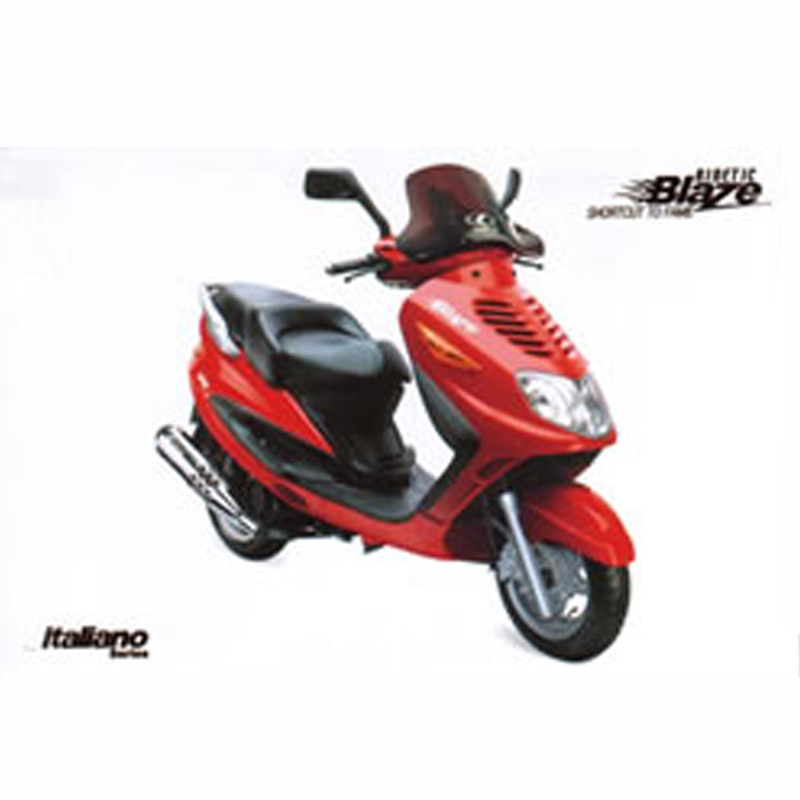
    MUMBAI: Kinetic Motor Company’s Italiano Blaze picked up some top automotive awards for design and performance. And now to entrench the brand further, Kinetic has unveiled what it claims is the automotive industry’s first glamourous calendar- the Italiano Supermodel’s Calender.

    Admittedly the theme is bold, but Kinetic’s managing director Sulajja Firodia Motwani reasons that the calendar clearly spells out the brand aspiration of her target consumer-Stylish, sexy and glamorous.

    “Around the world, calendars that blend the sex appeal of an automobile and a supermodel are a regular feature, but this is a first for the Indian automotive industry.

    Until now the scooter was considered either too old fashioned, family vehicle or effeminate. Our focus was to make the two wheeler a must-have for the young, urban male who is brand conscious and wants to look cool.”

    The calendar designed and executed by Grey Worldwide was unveiled by Firodia- Motwani and Raj Guru.

    The two wheeler claims to be India’s first powerful automatic with a 165cc, 4-valve engine. Kinetic Blaze is the first in a line of seven Italjet scooters launched under the Italiano series. The moto-scooter is prized at approximately Rs 50,000 ex-showroom. Last year, Kinetic had acquired the rights from Italjet to launch its two-wheeler range in India.

    Commenting on whether the price positioning at Rs.55, 000 for a scooter was on the high side, Firodia Motwani says, “We are competing in this market with a Pulsar or a Bullet. The brand aspiration dictates the price and the two wheeler is positioned for a city rider. It has done well mainly in the metros. For a college going guy, the price point is just right when he knows that he can own a ‘cool’ bike.”

    Kinetic Blaze may just be the beleagured company’s ‘shortcut to fame’.