Category: Media and Advertising

  • Research cites Akamai as a leader in rich media content delivery

    Bangalore, India – June 14, 2006 – Akamai Technologies, Inc., the leading global service provider for accelerating content and business processes online, announced today its position as a strong leader in rich media content delivery as evaluated by Forrester Research. Akamai was among six companies that Forrester invited to participate in its June 9th Forrester WaveTM analysis entitled Rich Media Content Delivery, Q2 2006, by Brian Haven (available for Forrester subscribers at www.forrester.com). Akamai leads in Forrester’s services evaluation, and is the only reviewed company listed as a leader.

    Forrester’s analysis states, “Akamai leads with experience” referring to the Company’s “impressive client base in terms of size and stature.”


    “Its unmatched global network, media and entertainment expertise and financial resources make it the clear Leader in rich media delivery,” continues the report.


    Forrester’s evaluation criteria included measuring each company participating in the analysis based on 70 individual metrics within three high-level categories: current offerings, strategy and market presence. Akamai led in all three high-level categories.


    In addition, the Forrester Wave analysis also recognized Akamai with top marks (5.0 out of 5.0) in the following sub-categories: network presence and service (related to current offering), and revenue, services, and employees (related to market presence).


    “The continued adoption of broadband and the increased consumer demand for rich online content is helping to fuel Akamai’s success,” said Robert Hughes, executive vice president, Global Sales, Services and Marketing, Akamai. “We’re very pleased to be recognized by Forrester as a leader in this booming market. Akamai is enabling many of the largest online companies to monetize, deliver, control and analyze their media assets, while providing a dramatically better digital media experience for their audiences anywhere in the world.”

  • ‘The pharma industry needs an absolute mind shift. They have to think FMCG and act pharma’ : McCann strategy director Manjunath Hegde

    ‘The pharma industry needs an absolute mind shift. They have to think FMCG and act pharma’ : McCann strategy director Manjunath Hegde

    Manjunath Hegde, masters in marketing management from Jamnalal Bajaj Institute, has over 23 years of experience in 360 brand management and consumer insight based strategy and creative. Over the years he has worked on some of the best brands – P&G, Unilever, Infosys, Taj Hotels, Lakme, ICICI, United Brewries, Marico, Zee TV, CRY. He is also associated with agencies such as Ambience Publicis, Leo Burnett and Bates Clarion.

    Hegde has also spent a couple of years in Dubai as COO, Liwa Advertising, restructuring the agency to global standards and getting business worth millions during the peak of recession. He also co-founded the brand consultancy firm ‘Chlorophyll‘.

    Hegde is presently McCann strategy director, specifically focusing on the pharmaceutical industry.

    In an interview with Indiantelevision.com‘s Anindita Sarkar, Hegde talks about the various advertising and marketing challenges that the pharma industry faces today.

    Excerpts:

    Unlike yesteryears, today there is a lot of brand communication talk happening within the pharma industry. Why this shift? 

    Until now pharma companies had not found a need for real brand management. But they are slowly waking up to the need. And this is because pharma companies have recognised that there is a need for multiple touch points to contact its various stakeholders – patients, chemists, doctors, relatives – for a range of categories as the market in ever expanding and is hugely competitive.


    You have been involved in branding at various levels. How similar or different is brand building in the pharma industry?

    The brand building process of a pharma product is very challenging. The principles of brand building will always remain the same; it‘s the manner of executing them that change when it comes to the pharma category.

    Look, for example, it is quite easy for the FMCG advertisers to create brands because they have access to the mass media. But when it comes to the pharma industry, there are media and legal restrictions; you need to take care of your audience and the key influencer, which is the doctor. Because, in this case, you cannot reach out to the consumer directly by foregoing the doctor.


    So, what is the communication challenge of an OTC product?

    See, an OTC product can be divided into two categories. The first kind is one which can be purchased across the counter and, therefore, can be advertised like cough syrups. The second category is where by repeat purchase (self medication), the product steadily falls into the OTC bracket again. And in both these categories, it is a must for the products to build an image of their own. The brand communication has to create space in the consumers‘ life; it has to be an experience by itself. It cannot behave indifferently. Only then will the brand be recognized by the consumer. And this is the communication challenge in this category.


    How do you deal with the branding strategy of a pharma product as against any other category?

    In the pharma industry, unlike an FMCG product which talks to masses or for that matter any other category, we are dealing with problems that are related to health issues. So, here you are talking to someone who is ill and while your audience is that one affected person, the relatives and family members also become an important audience. Also, here the communication has to be done with the key influencer or the qualified influencer, which is the doctor. And in addition to this, there are also the strict government rules which one needs to adhere to. So the category advertising by itself is extremely challenging and the treatment is very different. Here the product has to go beyond the regular talking about what it will do as a drug and rather become a part of the affected consumer through a new life changing story.

    For example, if it is a product that is made for diabetic patients, then it should talk about the healthy lifestyle approach that one needs to take if affected. It has to show support and concern. Only then will it become a part of the patient‘s life.


    What is the primary difference between promoting an OTC brand versus a general brand?

    In an OTC brand, you talk to the consumer directly. But for non-OTC, you cannot use mass media; you are not allowed to. These brands have to be prescribed by a doctor. So in this case, the communication is directed towards the doctor.

    Also, most brands decide not to go OTC (and sometimes they cannot go because its ingredient based) because it is a different ball game altogether. The media spends are higher, the exposure to competition is on a severe basis; it‘s a large market now and totally volume based. So it‘s largely a pull versus push strategy wherein you make the consumers come and ask for it. Whereas, when it comes to non-OTC, it is only a push and push strategy. The companies push it down to the doctors and then the doctors push it to the consumers.  

    ‘A larger trend is moving towards the wellness category – it is a huge market out there. So there is a huge growth opportunity in this segment.‘


    So many times is it a conscious decision to go non-OTC? 

    Absolutely. Many times it happens that brands have become OTC by default. And this means that at some point of time they were prescription based, but gradually the consumer has moved to buy the product on his own through repeated purchase. Now, one could take a decision to go OTC but in that case, it may lose out on the prescribed category because the doctor will now stop prescribing that medicine.

    The doctor has to and should refer a non-OTC brand and, therefore, companies who are pharma strong will give a window to the doctors.


    In a category like this where you cannot advertise through mass media, what are the primary marketing platforms? 

    In this category there is a need to be present so that you are seen and can touch consumer life in areas where you can meet them. These could be jogging parks, treadmill companies, doctor‘s clinics, conferences and forums. The brands have to talk about their own essence, and say, “I am there.”

    Also, the pharma industry needs an absolute mind shift. They have to think FMCG and act pharma. This means they have to look into the product from the consumer‘s point of view.


    Is there alternative medicine market in India (like ayurvedic products, etc.)? Is there a fair consumer tilt towards these?

    Today consumers are becoming more and more health conscious and, thus, there is a trend wherein people are moving towards organic and non-toxic products, courtesy the internet. A larger trend is moving towards the precaution and wellness category – it is a huge market out there. So there is a huge growth opportunity in the wellness category.
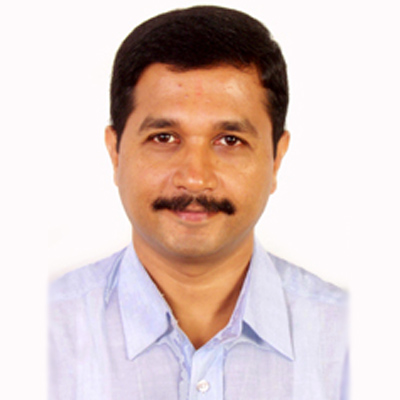

  • ‘2009 was our defining year’ : OMD India managing director Jasmin Sohrabji

    ‘2009 was our defining year’ : OMD India managing director Jasmin Sohrabji

    It was in 2007, when global marketing communications holding company, Omnicom, entered India with its media planning and buying network OMD.


    Jasmin Sohrabji, a double post-graduate in Economics and Business Management who had spent 16 years with MediaCom, was taken on board as managing director and the agency went on to make a fortunate start with clients like Ambuja, Parle Agro and J&J in its kitty.


    2009 was almost a defining year for OMD as it took up quite a few biggies under its banner, expanded footprints to Delhi and Chennai and set up new offerings in analytics and digital.


    And now it’s kicked off 2010 on a high note too. It has bagged businesses like Sony Network, Ferrero and Reliance.


    In an interview with Indiantelevision.com’s Anindita Sarkar, OMD India managing director Jasmin Sohrabji speaks about her company’s growth plans at large.

    Excerpts:

    In comparison to the other agencies, OMD is still a new player in the Indian market. Has it been a tough journey so far?


    OMD launched in India in early 2007, and the experience has been exciting, challenging and gratifying ever since! We kicked off with a very sound base (Ambuja, Parle Agro and J&J) and have built consistently and successfully since. 2009 was OMD India’s defining year where we established ourselves as a strong, top player at a national level.

    Being a new entrant, was facing up with the slowdown heat in the Indian market more challenging to gain clients?


    We were very fortunate to have our best year in 2009. We had a record number of wins (HP, Henkel, VISA, Danone, Nissan, etc); we set up two new offices (Delhi, Chennai); we launched our Analytics and Digital offer and we closed the year with global awards and recognition.

    Can you revisit the time when you started off in the Indian market and the transitions that you witnessed through time?


    Gosh, I have spent two decades in this industry and witnessed too many changes and transitions! One of the most striking of all has been in the area of availability of research and access to data; technology…both in the medium itself as well as in accessing and interacting with media and consumers; the other noteworthy change has been the shift in the role and definition of what media agencies provided as a service…we moved from a very simple ‘planners and ops executives’ managing client budgets to a much evolved, technologically sophisticated and consumer-centric thinking and creative solutions.

    What has remained consistent through the decades is ‘never having enough talent’!

    How has the first half of the year fared for the OMD in terms of revenues and clientele?


    Very well. We kicked off 2010 with the Sony Network win, and followed up with Unilever’s digital biz. More recently we won Ferrero and Reliance, among others. We hope to maintain the growth momentum we have been experiencing through the remainder of 2010.

    Has it been better than last year?


    Given the operation is just over three years old, the growth over last year has been extremely high.

    How is dealing with the Indian clients different from the others globally?


    Clients differ depending on their needs and experiences with agencies; they differ in the level of interaction and involvement with their agency partners, and on many such and other parameters. However, I really do not have a strong point of view of difference between Indian and global clients. Among our global clients, we have some who operate largely within the local environment and strategic needs; and there are those who are very much aligned to global strategies and/or processes. In fact, we recently won an award (The Internationalist, UK) for best local execution of an international campaign…so it really does not matter how different the client style is, what’s important is whether the teams at OMD India have a keen appreciation for individual working styles and are able to deliver standout strategies and solutions to the briefs we are given.

    We moved from a very simple ‘planners and ops executives’ managing client budgets to a much evolved, technologically sophisticated and consumer-centric thinking and creative solutions. What has remained consistent through the decades is never having enough talent!

    How are your other divisions of OMD faring?


    Our most successful offer outside traditional is digital. In addition to existing full service clients, we added digital only clients (Unilever, ICICI, HCL, etc). Additionally, we set up Analytics, which has now started gaining momentum. We have two new offerings starting up later this year.

    CPRP is often the final clincher for a pitch and the sole aim for all to target and deliver. Do you see any new change in this methodology?


    Not sure why we are focusing on a change in methodology…we should be looking at value adding to the metric with more engaging qualifiers. If the job of the metric is to compare cost to cost, CPRP does its job. If we are looking to add new dimensions of effectiveness to the cost of contact, then let us evaluate other metric options, not just methodology.

    While above 50 per cent of investments for brand building is made towards above-the-line activities, advertisers are also making investments in below-the-line activities. How do you perceive this medium?


    Below the line activities have always been a relevant part of the recommended mix. The issues around these activities were largely to do with measurement and scalability. What began as ad-hoc and experimental, has now become a critical piece in the communication mix. One is, and will continue to see a lot more action in this space. The biggest advantage of BTL activation is it allows for flexibility and does not have to be templated. The scale, the message, the execution can be customised to the budget, the market and the core TG!

    Which advertising platform is expected to show the maximum growth?


    While digital and radio have the potential to scale up on their currently smaller bases, TV itself will offer newer platforms of addressability and technology through DTH, etc. Radio has never really seen its potential in this market, while digital has already made small dents in traditional media budgets! TV continues to hold out in its traditional avatar…and keeps re-inventing its offer – through content, scale and technology/addressability.