Category: Media and Advertising

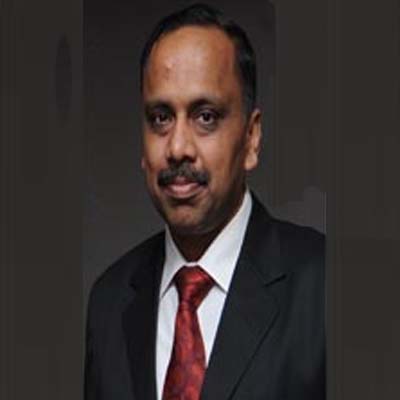
  • ‘India is witnessing a sporting revolution’ : IMG Reliance COO Ashu Jindal

    ‘India is witnessing a sporting revolution’ : IMG Reliance COO Ashu Jindal


    Last year in a bid to increase its presence in the sports world, Reliance formed a JV with IMG. The aim of the JV, called IMG Reliance, is to among other things create and operate major sports and entertainment assets in the country.


    The JV has done deals with different organisations including the Basketball Federation of India (BFI).


    It is also taking the Aircel Chennai Open tennis event to the next level. Indiantelevision.com‘s Ashwin Pinto caught up with IMG Reliance COO Ashu Jindal to find out more on the JV‘s plans.


    Excerpts:


    What is the vision for the JV in terms of the impact you see it having on the sports landscape?
    India is a sport-loving nation and we are keen on developing and promoting different sports in the country.


    In the recent past, the Indian market has witnessed the rise of some of the world‘s strongest sports brands. As India‘s sports landscape grows, we are looking at bringing several successful sports properties to India in addition to creating newer ones tailored to fit the country‘s specific requirements. We will continue to build on the strong foundation and brand equity that India enjoys.

    Which are the sports that IMG Reliance is focussing on developing and what are the various strategies being followed?
    IMG Reliance will create and operate a variety of sports assets in the country.


    As you might know, we have signed a 30-year partnership with the Basketball Federation of India (BFI) to develop basketball. The BFI has granted IMG Reliance commercial rights, including sponsorship, advertising, broadcasting, merchandising, film, video and data, intellectual property, franchising and new league rights.


    We have also signed a 15-year partnership with the All India Football Federation (AIFF). We aim to restructure, overhaul, improve, popularise and promote the game of football throughout India, from the grassroots to the professional level.

    What challenges does the economic slowdown pose for you?
    India is currently witnessing a sporting revolution of sorts. Even though the sector might still not have exclusive industry status, the country‘s most powerful business houses seem to have understood the benefits of investing in Indian sports.


    The success of the Indian Premier League and more recently the inaugural Indian Formula 1 Grand Prix illustrate the fact that the sports sector will continue to mature. Growth in the media and entertainment industry is expected to be at 14 per cent until 2015, and the entertainment and recreation arenas, including sport will be the greatest beneficiaries.


    Organising world class sporting events is IMG Reliance‘s core competency and I am certain that the businesses we operate in will continue to enjoy success in the presence or absence of a slowdown.

    On the tennis front, how has IMG Reliance grown the Aircel Chennai Open?
    As an organisation, we‘ve done our best to combine our domain expertise with unrivalled experience in promoting, commercialising, operating and distributing large-scale events.


    The support of the government of Tamil Nadu, Tamil Nadu Tennis Association and the All India Tennis Association since the tournament‘s inception has been invaluable. In many ways, the Aircel Chennai Open has been successful thanks to a combination of our global and local strengths. We are proud to have been associated with it since its inception and hosted the likes of Rafael Nadal, Boris Becker, Carlos Moya, Richard Krajicek, Patrick Rafter, Yvgeny Kafelnikov, Byron Black and India‘s own Leander Paes and Mahesh Bhupathi.


    The fact that the number of spectators attending the tournament in the first round has gone up each year is evidence of the event‘s growing popularity. Chennai‘s tennis fans have given the tournament their unstinting support. Hardly surprising that the world‘s best players love going there because the fans they play in front of are knowledgeable and immensely committed to the game.

    Increasingly corporations are moving towards the concept of ‘triple bottom line‘ which is comprised of people, planet and profit

    You have seen some tennis events including a WTA one in India close. What are the challenges involved in keeping a tournament financially viable?
    Being the largest independent promoter of events and representative of tennis players does not help unless the country you operate in loves the game. Without a doubt, we‘ve done our best to see tennis growing into one of the most popular sports in the city and state.


    With the people supporting our efforts, we have a dedicated and experienced team of individuals, both globally and nationally, who work on events like the Aircel Chennai Open.

    We are confident that any event planned professionally and executed well will continue to attract sponsorship and advertising. In addition, the Indian markets and populace are now opening up to accept and enjoy non-cricket sports, a fact that is making the growth of events like the Aircel Chennai Open easier.

    Has it been harder this year to find sponsors given the economic slowdown?
    India has been growing at a robust rate of over eight per cent over the past five years and is expected to grow at over seven per cent for the next decade.


    All signs point to a market that is ready and eagerly waiting for additional sports to enter the mainstream, thus making the process of finding sponsors easier. Positive developments such as these, apart from the rising stock of Indian sportspersons and emergence of Indian team owners and organisers on the world sporting scene, have led several exciting new sports events being organised in India.


    For Aircel Chennai Open 2012 too, we are very pleased to have Nature Valley, Parle Hide and Seek, Ricoh among others as first-time sponsors in addition to many of the others continuing their sponsorships. It is but safe to presume that the scope for marketing can only grow wider.

    How is the Aircel event perceived by viewers in India and abroad vis-a-vis other ATP events?
    The Aircel Chennai Open is the longest running tennis event in the country thanks to its popularity among both viewers and tennis stars that look forward to being a part of it year after year.


    It has grown to become South Asia‘s premier ATP World Tour event and come a long way since Leander Paes and Mahesh Bhupathi won the first edition doubles title in 1996. Though there is still a lot of room for improvement, we stand firm in our resolve to develop the event into one of the world‘s leading tennis championships.

    Is tennis finding more acceptance from advertisers looking at targeting affluent audiences?
    As a sport, tennis is garnering more and more attention from diverse fronts, especially with increasing high-intensity competition and the participation of some of the world‘s top players.


    Advertisers from India and abroad are looking at this as an opportunity to build effective marketing programs, bring their brand into India or take it abroad, and in the process engage with affluent and global sports fan bases around the world.

    What are the different ways in which sponsors leverage the Aircel Chennai Open?
    Tennis is one of the few global sports that India has doing very well off-late, not only has the sport grown in stature, it has given rise to a number of stars who enjoy celebrity status. Besides that, the Aircel Chennai Open which is in its 17th year has grown to become a marquee ATP event in South Asia which attracts some of the best known and emerging players from across the world.


    The sport is a very interesting mix of athleticism and glamour, both of which offer a host of opportunities for partners and sponsors, this, besides the regular benefits of branding and visibility in the media. The tournament takes place every year in the first week of January. It offers brands a platform for launching new products. And owing to the timing of the tournament, the overseas players usually reach around the last week of December, just after Christmas and before new year, so brands associated with the event can use this festive period for a lot of hospitality and entertainment relates activities.


    We have come up with a concept of ‘Market Square‘, this is a commercial area within the stadium premises where partners can showcase their offerings and get a captive audience who visit the stadium through the tournament. This apart, depending on the nature of sponsorship, the brands can get time from celebrity players for promotional activities.

    In terms of ROI how does tennis compare to other sports?
    According to recent numbers from Tam Sports, tennis is the fourth most watched non-cricket sport in India after soccer, wrestling and motorsports.


    So, while on the surface this may not seem the most attractive proposition for a brand to be associated with tennis, the fact of the matter is that the other three sports do not have much participation from India and neither does much action taking place here with the only exception being the Indian Grand Prix.


    As against that, tennis in India is growing by leaps and bounds, not only do we have the honour of hosting South Asia‘s only ATP event (2012 will be the 17th edition), Indian players are carving a niche for themselves in world tennis – Mahesh Bhupathi, Leander Paes and Rohan Bopanna feature among the top 15 doubles players in the world and Somdev Devvarman is one of the most promising stars in the singles arena. From a brand‘s or an investor‘s perspective, a good mix of on-ground opportunities and emerging stars offer a world of opportunities to spread the word, and from that point of view, tennis does offer a bigger bang for the buck!

    What does the deal with the AIFF encompass and what is it worth?
    IMG Reliance separately signed a 15-year partnership with the All India Football Federation (AIFF), the governing body for football (soccer) in India. IMG Reliance, in cooperation with the AIFF, will radically restructure, overhaul, improve, popularize and promote the game of football throughout India, from the grassroots to the professional level.


    This agreement grants IMG Reliance all commercial rights to football across all football properties controlled by AIFF including but not limited to the national teams and all current and future professional leagues. It is valued at Rs. 700 crores for a period of 15 years.

    How do you see television viewership of AIFF and the Aircel Chennai open growing?
    There is no denying that television has a major hand in transforming sports into a profitable business. For many years, sporting events have given advertisers around the world a phenomenal opportunity to showcase their brands to an international audience.


    In India too, football and tennis are among the most popular sports, and television audiences continue to grow at a steady pace.

    Are advertisers now more receptive to non cricket sports compared to five years back?
    As is the case that was highlighted earlier, India is going through a phase where non-cricket sports are gaining more and more importance. Much has changed in the last five years, and sporting events are being marketed as extravaganzas like no other. In a scenario like this, advertisers are eager to use sporting platforms in India.

    There is a lot of talk that companies often use sports apart from cricket for CSR rather than looking at an ROI. Do you agree with this?
    The relationship between CSR and corporate reporting (ROI being one element of reporting) has evolved and come a long way from what it used to be until a few years back.


    Increasingly corporations are moving towards the concept of ‘triple bottom line‘ which is comprised of ‘people, planet and profit‘, with people meaning the development the society within which a corporation functions. Given this, a lot of companies are now putting money into sports and development of sports at the grassroots level which could be considered a contribution towards the welfare of the society.


    So if this were to be seen from the point-of-view of the new reporting framework, this investment would be contributing directly towards the bottom line of the organisation. However, even in the traditional view of ROI, the sports sponsorship market is evolving and with so many options for sponsorship, firms are now recognising the benefit to their brands in associating with world class, professionally managed sports events in India, in all sports.

    Are you looking at cricket at all?
    As an organisation, our areas of expertise are diverse and wide ranging. We are always open to developing new opportunities in different sporting disciplines and cricket is no exception. We‘ve worked with the world‘s top cricketing nations including India, where the game will always rate highly in the hearts of sports fans. We continue to look at exciting prospects in the future.

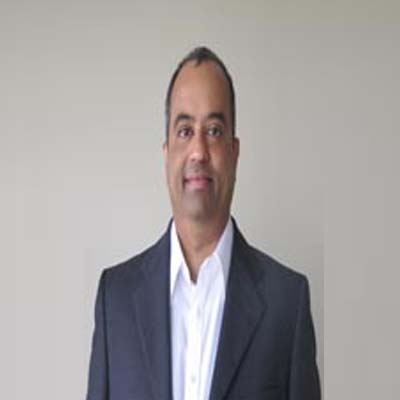
  • ‘Challenge is to harness the future focused SMG culture to build a differentiated product’ : SMG India chairman and LiquidThread MD CVL Srinivas

    ‘Challenge is to harness the future focused SMG culture to build a differentiated product’ : SMG India chairman and LiquidThread MD CVL Srinivas

    Engineering and management degrees are quite common for professionals working in automobiles. But it is a surprise to find folks who have chosen to get educated in these two disciplines before plunging into advertising. Take CVL Srinivas for instance who has an engineering degree from BITs Pilani and a management degree from XLRI, Jamshedpur.


    Today, Srini, as he is called, serves as the chairman of the Publicis-owned Starcom MediaVest Group India and also as the managing director of LiquidThread, one of its divisions.


    He has 14 years of exposure to the media business, having scored numerous successes for leading media agencies such as Madison, Fulcrum and Maxus over the period as a senior manager or head. 

    Srini is wont to do what he wants to do, like taking a four year break from media and advertising, and at a time when his career was roaring. In 2007, he gave up a plush job as CEO, Maxus Asia Pacific to become a consultant with Surewaves, a company that specialises in media convergence solutions. He then went to consult a private equity (PE) fund in the media sector and also worked with BCCL‘s Private Treaties as director for two years.


    SMG was his media comeback vehicle earlier this year. And it has been on fire under his and his colleague Mallikarjundas CR‘s stewardship. It has focused on three pillars of insights and research, digital and branded content. In the process, it has not only managed to retain old businesses but also gained some new accounts. Among the 15 brands it pocketed include: Yahoo, Biba, Sab, Pix and Aircel.


    Indiantelevision.com‘s Prachi Srivastava spoke to Srinivas about his charge, its performance and the way forward.


    Excerpts:

    How has the performance of the company been in this year, as it comes to an end?
    We are fairly satisfied with what we have achieved this year. We have managed to grow both topline and bottom-line at a healthier pace than the past few years. In terms of new business, we had a surge of wins in the past few months. We have so far bagged 15 businesses this year including one of the biggest media pitches of the year Aircel (TV and Digital).

    What was your focus this year?
    We wanted to build on the strong foundation of SMG and accelerate growth. The focus was on (1) People – where we infused talent across levels and realigned a few units, (2) Product – investing in Insights, Digital and Content and (3) Process -streamlining the operation thru‘ a newly created Business Impact function.

    You have been with multiple agencies. What difference do you see in the work culture? 
    Each agency has its own work culture, but broadly speaking the end output in this market is hardly differentiated. You hear it from clients all the time, that they hardly see any difference between one agency and another. Our challenge is to harness the future focused SMG culture to build a differentiated product.

    There were different specialist units earlier. Why were they merged in Vivaki?
    SMG had a host of specialist units in Outdoor, Retail Branding, Rural activation etc. While they helped make the product more holistic, their ability to scale up was limited. By migrating them to VivaKi, we helped these units get access to clients of our group and brought about a lot of operational efficiency. This in turn has helped SMG focus on the core product. We now have the best of both worlds.

    “Ours is a Human Experience Company that is a storehouse of insights & research that can help integrate communication plans across media and non-media channels”

    Are clients showing an inclination towards the new media (digital, internet, mobile, retail) or they continue to be comfortable with traditional form?
    There is definitely a lot more interest in digital now, than before. Not just the usual suspects, but even FMCG clients are today talking digital and investing in the medium.

    How is LiquidThread doing since its launch in India?
    We had an existing content practice in India. This made it easier to launch LiquidThread (LT) in this market. We have had a good year and have done some interesting work for our clients. There have been a few cases this year where LT created the campaign idea. We see it as integral to the communication strategy.

    How do you see the economic slowdown affecting Starcom or the advertisers‘ spend?
    Earlier forecasts were predicting an industry growth of around 15 per cent, but these days the consensus seems to be closer to 8-10 per cent. We expect to grow at a far higher pace than this given our client profile and diverse revenue streams.

    Is it as bad as the slowdown in 2008? What have been the learnings from 2008 slowdown that you apply now?
    It is too early to say if it will be as bad or worse. Right now most clients are in a wait and watch mode.

    Television today has the efficacy for advertisers. How does it affect the other mediums?
    We are largely still driven by television as the key medium. It not only has a high base but is growing faster than print and other mass media forms. While fragmentation has split the viewership across more channels, the evolution of Content on TV has kept the interest levels high for both viewers and advertisers. Digitization of the medium is going to give a further boost. For a growing economy like ours, where most categories are still under-penetrated, TV will be the lead medium for a long time to come.

    Is reallocation of resources happening from client‘s side across different media?
    Clients are willing to experiment lot more today than they used to 5 years ago. There is definitely money flowing into digital, experiential marketing and events.

    Has the concept of return of investments (RoI) changed with the clients? What is the measurement metrics followed now?
    Very few clients are able to get the true measure of RoI and lot more needs to be done here by the industry. There is an over-emphasis on the “efficiency” of a media plan in our market. So in most cases, RoI measurement is limited to measuring how “efficient” the media plan is. This leads to a frenzy of CPRP and CPT calculations and debates. Marketers need to realise that the cheapest media plan is not necessarily the best option for building their brand. The agencies need to raise the bar on this one and encourage clients to invest in capturing more data. This is the starting point if one has to build robust RoI metrics.


    SMG is pioneering lot of work in this area which I hope will benefit our clients in the coming years.

    Have the dynamics for communication to rural market changed? How are you helping your clients communicate to their rural consumers?
    Three significant developments have helped improve communication to rural markets. Firstly, the increased penetration of mass media allows conventional advertising to reach large pockets of rural India. Next, there are better technological aids to manage and monitor rural communication and contact programs. And finally there is a much better understanding of rural consumer behavior today than 5-10 years ago.

    How will Starcom MediaVest‘s business be split in Print/ TV/ FM/ outdoor/ Internet etc?
    We have more than 10 per cent of our revenue coming from digital and hope to make it 20 per cent within the next 1-2 years. We have a fairly equal split between TV and Print.

    As a media planner, how do you view the emerging radio and digital scenario?
    For radio, a lot more needs to be done at the policy level to make the medium advertiser friendly. Currently radio stations are not differentiated enough for advertisers and listenership is extremely fragmented. The stations follow a herd mentality. Radio needs to deliver niche audiences. They should also be more relevant in this day and age and compete with the immediacy of digital media. As far as digital is concerned, it is the fastest growing medium and today there is absolutely no escape from it for any advertiser. Print is the medium that will get most affected by the growth of digital.


    But we still see a dominant readership in print…

    For a majority of the population, Print is still the first choice for daily news. For advertisers, Print is still the first choice for announcement value and immediacy. According to TAM, Print has grown at 7 per cent in Nov 2011 v/s Nov 2010, led by Services and Banking. The reason why print is still a dominant media in India is that every few years, new categories come into the market and most new categories start with print and only then they come onto TV and then other mediums, whether its education, insurance or healthcare. As and when digital penetration increases, Print could start feeling the pinch. Print needs to learn how to co-exist with digital if it has to remain relevant.


    What is your strategy to integrate media plan across different verticals? How do you make that more effective?
    Our dream is to grow our client‘s business by transforming behavior through uplifting, meaningful human experiences. By investing in the right kind of talent and techniques we are trying to bring a more refreshing and relevant approach to communication planning for our clients. We do not see our job to be that of a media agency that releases advertising, but that of a Human Experience Company that is a storehouse of insights and research that can help integrate communication plans across media and non-media channels.

    What do you have to say about the cut throat competition in the media industry?
    I think it‘s a good thing to have competition in the media industry as it keeps us all on our toes helps us get better in what we do.

    Over the past five years what changes have you seen in media business, planning and buying?

    Three things that are worth mentioning – a lot more focus on digital media, advertisers willing to invest in impact and a change in the profile of a media agency, especially with the influx of insights, digital and content talent.

    Is youth still the hardest segment to capture?
    Youth was a difficult to reach segment. With the emergence of digital media and several niche channels on TV, there are several options available. What is more important is the possibility to stay constantly engaged with the youth thru‘ social media platforms. Targeting the youth is not just a one-way effort, but an opportunity to build communities, conversations and advocates for brands. There is no better time than now to have Youth as a target audience.

    When it comes to television, how do you stack up the genres as per the deliveries?
    The IPL and one day cricket is at the top of the league followed by reality shows, general entertainment channels (GEC), blockbuster movies, and then some of the other genres. It‘s more a question of what kind of audience one is trying to reach out to and the content you are looking to advertise, which determine the genre.

    What kind of research you conduct before deploying digital media for any purpose?
    At SMG we have an online panel that captures the latest trends across several markets including India. We have also done some interesting studies to understand the consumption of digital media among various target audiences in the region, including India. Apart from the available sources, our multi-disciplinary Insights & research team works closely with our communication planners for key campaigns.

    What are your plans for 2012?
    We have a few exciting plans for 2012. Apart from further strengthening our Product and developing our Talent pool, we are looking to partner with a few exciting players in core areas of our business. The momentum we have generated in 2011 with 15 new business wins is helping us aim for higher growth. We see a steep growth in our Digital and Content businesses.