Category: Media and Advertising

  • Aquaguard now asks consumers to listen to ‘Sehat Ki Awaaz’

    Aquaguard now asks consumers to listen to ‘Sehat Ki Awaaz’

     MUMBAI: Health has its voice, listen to it. This is what the new TVC of Aquaguard, ‘Sehat Ki Awaaz’, conveys to its consumers. The new ad campaign by Eureka Forbes is a step towards positioning Aquaguard ‘Paani Ka Doctor’ to ‘Healthiest Water on Earth.


    The TVC hits on where it hurts the most to any mother- ‘Her unhealthy child’. The TVC shows a doctor educating the mother about the new technologies that Aquaguard uses to ensure good health of its consumers.


    The ad campaign educates consumers about the various nutrients available in drinking water, essential for good health.


    “Water contains important minerals like calcium, sodium, potassium, magnesium and many more which are unequivocally essential for human health. Eureka Forbes believes that pure and safe drinking water is birthright of every individual and Aquaguard is our offering to the huge consumer base,” says Eureka Forbes CEO direct sales and marketing head Marzin R. Shroff.


    The new TVC positions Aquaguard as the ‘Healthiest Water on Earth’. “Aquaguard has not only emerged as leader but ultimate solution provider in the area of drinking water. The brand was positioned as the Expert Advisor and hence derived to the positioning of Paani Ka Doctor. To reinforce this change from ‘Purity to Nutrition’, ‘Aquaguard Paani ka Doctor’ has now positioned itself as the ‘Healthiest Water on Earth’. Aquaguard’s new communication will play catalyst in creating awareness among consumers about the health benefits associated with drinking water,” informs Triton Communications CEO and NCD Renton D’Sousa.

  • Phase II of ad cap comes into effect; channels follow TRAI mandate

    Phase II of ad cap comes into effect; channels follow TRAI mandate

     NEW DELHI: Indian TV viewers are going to be a delighted bunch. Reason: the number of TV commercials being bombarded at them on TV channels just got reduced.


    The Telecom Regulatory Authority of India (TRAI) ad cap regime imposed on news and general entertainment channels came into force today with an upper limit of 20 and 16 minutes per hour respectively. This will run till 30 September, following which the 12-minute rule will come into play from 1 October.


    Both Indian Broadcasting Foundation (IBF) and the News Broadcasters Association (NBA) have said their members are following the regime, the first phase of which came into effect on 29 May when its members agreed not to exceed 30 minutes of advertising per hour. IBF president Man Jit Singh and NBA president K V L Narayan Rao told indiantelevision.com that the TV channels would stand by their commitment to the government since this was now the law.


    The final decision of 29 May had taken a lot of wrangling, with the matter also going to the Telecom Disputes Settlement & Appellate Tribunal against TRAI which insisted that it was only implementing a regulation which was part of the Cable TV Networks Rules 1994.


    Following this, the IBF Board finally appointed a committee of five persons – K V L Narayan Rao, Zee Entertainment CEO Puneet Goenka, Asianet managing director K Madhavan and Disney UTV media managing director K Anand with the assistance of secretary general Shailesh Shah – to research, debate, consult and arrive at what will work.


    The committee admitted in its report that some channels especially those in regional languages ran more than 30 minutes of advertising per hour. Shah, however, claimed to indiantelevision.com that the per hour ad time works out to just over 11 minutes if a full-day average is taken.


    The TRAI, however, says it is going to keep a sharp eye on each channel to ensure that there is no violation of the time cap set on the TV broadcast industry. “TRAI would continue to monitor the timing of commercials per hour by various channels,” says TRAI principal advisor on broadcasting and media N Parameswaran.


    It is quite likely that the air time reduction, could result in revenue losses for the channels. Though none of the broadcast bodies have clearly highlighted how much this erosion could be, media buyers do acknowledge that broadcasters will no doubt hike ad rates with the implementation of 12 minute ad cap on 1 October.
    “The impact cannot be felt as of now. Once the ad time comes down to 12 minutes (across GECs) in October that is when the crunch will be felt,” said an executive from a leading media buying and planning company. June to September is a lean period for advertising on channels, especially considering it is the monsoon season all over India.


    There are also few who believe that the ad cap restriction will improve quality of viewing. Madison Group COO- buying Neel Kamal Sharma opines, “It is a win-win situation. On one hand the advertisers will benefit as now they can target their audiences in an effective way. The broadcasters will also increase their ad rates. Parallel to this even digitisation will bring in extra revenue for the broadcasters, decreasing their dependence on ad revenue.”


    Sharma hopes for the transition to take place in a fair manner, which has been recognized by all without shifting the entire burden onto advertisers. “We must take a long term view of the situation and handle it carefully as some people may try to take advantage of the situation to increase rates disproportionately which may neither be good for them nor good for TV industry’s growth in the long run as many advertisers have already started exploring alternative options,” he adds.


    The message for broadcasters is clear: take tiny steps – together with your advertising partners. Don’t go for the long jump; you might end up jumping alone.

  • Hyundai i20 viral campaign ‘Casts a Spell’ crosses over one million viewers

    Hyundai i20 viral campaign ‘Casts a Spell’ crosses over one million viewers

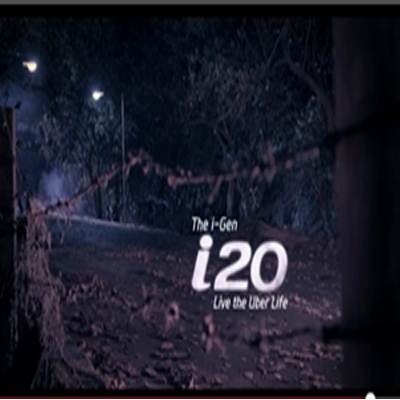
     NEW DELHI: A unique viral campaign ‘Hyundai i20 Casts a Spell’ launched by Hyundai Motor India to promote the i-Gen i20 garnered over one million views on YouTube and other digital platforms within a span of three weeks.


    The campaign is an initiative to expand its outreach through digital medium. Targeting the youth, HMIL has undertaken a slew of initiatives to engage its customers and bolster the appeal of the brand.


    The ‘Cast a Spell’ digital film uses a generous sprinkle of humour to highlight the car and its innovative features. The viral campaign creatively highlights the hatchback’s latest features including its automatic headlamps, rain sensing wipers and rear view camera with parking sensor.


    Unbridled by the constraints of a television commercial with limited time frame of 20 to 30 seconds, the video has been successful to engage its viewers, all in a short span.


    On the i20 viral video, Hyundai Motor India senior GM and group head Nalin Kapoor said, “The audience of digital media is innovative and experimental in their reception to brand communication. The viral video for the i20 was conceptualised to reach the youth on the internet in an engaging format. The i20 viral campaign was developed to create a buzz on the digital media, involve and engage consumers using humor and at the same time communicating class leading features of the i20.”

  • LINE, a free calling & messenger app launches brand and marketing campaign

    LINE, a free calling & messenger app launches brand and marketing campaign

    NEW DELHI: LINE Corporation has launched a brand marketing campaign through a series of TV commercials targeted at the Indian youth to promote its new mobile messenger service in India capable of various types of communication with free call, voice chat and sticker chat.


    LINE, headquartered in Shibuya-ward Tokyo and headed by Akira Morikawa as CEO, says its popular global messenger application is available on both smartphones and PCs across multiple carriers and operating systems including iOS, Android, Nokia Asha, Windows phone, BlackBerry, Windows and Mac. LINE messenger app comes packed with new features and functionality for a truly connected experience.


    LINE has launched its first TV campaign in India on 30 June with two very interesting advertisements highlighting the ‘group voice chat’ and ‘sticker’ features. The primary thought behind the ads was to target the Indian youth, by associating the key app features to their day-to-day activities.


    Born and headquartered in Japan on 23 June 2011, LINE has already achieved over 180 million registered users across 230 countries. LINE has already become popular messenger app in Asia with Japan having more than 45 million users, Taiwan and Thailand holding more than 15 million users respectively and 10 million users in Indonesia. LINE’s popularity is going beyond Asia with Spain now claiming more than 10 million users and South American countries such as Mexico and Argentine also witnessing significant registrations.


    Going forward, with its fast paced growth in overseas markets and expanding user base, LINE will further add new features and improve the usability of its service, with the aim to become the most preferred communication platform for consumers globally. LINE will also launch fun stickers that will suit the Indian sensibilities in the near future.


    One of the main reasons why LINE is growing so rapidly compared to other major messenger apps is its stickers function. It is extremely well-received by users as they can send large-sized character pictures with the tap of a finger, thereby providing a simple, casual and exciting way to express their emotions. The sticker characters, include LINE’s original characters and a variety of famous characters such as Disney, Hello Kitty and Ironman, are especially loved among the Asian youth, sparking LINE’s growth in many regions.


    Elaborating on the India launch LINE Corporation CEO Akira Morikawa said, “LINE has grown at a tremendous speed to reach more than 180 million in only 23 months after its launch. Today, it delivers five billion calls and messages across the world on its network per day. In fact, LINE is amongst a few services globally which has received an enthusiastic response by young generation in many countries in such a short period”.


    “After witnessing solid growth in Asia, Europe and US, making inroad into the Indian market was a part of our overall strategy. With its huge youth population, increasing mobile and internet penetration, lowering bandwidth costs, India makes a hotbed for LINE messenger application which will change the way people communicate in the country,” he added.

  • “We hope to reach a mature solution on the TAM ratings issue” :MadisonWorld chairman & managing director Sam Balsara

    “We hope to reach a mature solution on the TAM ratings issue” :MadisonWorld chairman & managing director Sam Balsara

    There are two kinds of individuals out there. Those, who lead their lives on their own terms and others, who lead their lives according to the terms set by the rest of the world. And then there is Sam Balsara, who creates benchmarks for the rest through his feisty attitude!

    Rated as amongst the top media professionals in the world, MadisonWorld chairman & managing director Sam Balsara is no stranger to a challenging situation. He is known to speak his mind without mincing his words. The media vet has worn many hats in various industry associations and committees over his very long career, which began at Sarabhai’s in the late sixties, early seventies and ended with him setting up Madison 25 years ago.

    Here, in an exclusive interview, Balsara opens up on the heated issue of Broadcasters v/s TAM Media. Who else can give us a better perspective than the advertising genius himself. Sit back, read and enjoy his engaging responses from this free wheeling chat indiantelevision.com had with him.

    Excerpts:

    What is your take on Indian Broadcasting Foundation (IBF) members deciding to discontinue subscribing to TV ratings provider TAM?

    It is very clear ratings are very important not just for advertisers and agencies alone, but for the whole industry which includes broadcasters who have worked so hard to built the industry to Rs 12,000 crore. If there are no ratings the confidence in TV advertising will go down.

    Take a look at radio and out of home; they have no robust measurement system, hence they account for just five per cent of the media spends. Television does have a robust measurement systems and it accounts for a sizeable 45 per cent.

    You don’t have to throw the baby out with the bathwater. If there is something wrong, you fix it. We have to remember that the TV ratings that come out every week are a sample not a census. At times, if it does not do justice, you don’t shut it down. The long term solution is definitely BARC…till then we have to have TAM.


    But then how do you address the problems that the IBF and the government has with the ratings?

    Let the IBF put out a paper on what their view is on what is wrong with the ratings methodology and what needs fixing. We can give our view on what can be done or should be. The answer is not stopping a rating system.

    Why do you say that?

    Stopping a ratings system would hurt the broadcast leaders in their respective individual genres, they would lose their leadership perception and this would hurt them. I think it is a very unwise decision.


    Let the IBF put out a paper on what their view is on what is wrong with the ratings methodology and what needs fixing. We can give our view on what can be done or should be. The answer is not stopping a rating system.

    Let’s say the TAM meltdown continues and you don’t have ratings, is historical data a valid barometer for buying TV advertising time?

    Historical data around TV viewership is not an option and is unacceptable to the buyer. I would not work with historical data for buying. If I am buying IPL this year, why should I use last year’s data? Why should and how can I use historical data for how a serial is performing? We know that viewership habits move around.

    Then what is the solution?

    If there is something seriously wrong with TAM‘s data, methodology, we should sit together, highlight the problems, diagnose the imperfections and come up with answers. We need to give a patient hearing to each other as to why it’s going wrong too!

    I am aware that TV ratings have been going down because of the rejig of the sample, digitisation and also LC1. But every time you go for a change in a changing environment, the findings are also going to change.


    But the dropping ratings are hurting broadcasters and they are saying how is that possible when we are paying for the measurement?

    That brings us to the fundamental question: should media owners pay for the ratings system? Maybe you are right! Media owners should not be involved in media measurement. But the fact is that no media owner has found fault with the ratings system when they are at No 1.

    But Star India which is the leader in the GEC space is also likely to discontinue its TAM subscription…

    Hmmm. The only thing I have to say is that if there is no viewership data, the TV industry is going to suffer.

    Is making the advertiser/ad agency pay for the data a solution?

    As far as the advertising industry is concerned, we don’t really care who pays for the data, we are concerned that we get the data. We are absolutely certain that we need the ratings.

    I am aware that TV ratings have been going down because of the rejig of the sample, digitisation and also LC1. But every time you go for a change in a changing environment, the findings are also going to change.

    What if broadcasters continue to refuse to accept TAM as the currency and want to do transactions for TV adverts with agencies and advertisers?

    For a deal to take place, each seller has to make something available to the buyer and the latter has to see value in it to pay for it. Both parties have an objective and as long as it is met a deal happens. You see if Dove is priced at Rs 30, and you see merit in buying it you will pay for it, if you don’t, you won’t. Similarly with us, we need a measurement metric before we buy media.

    The IBF seems to be pushing the agenda on various fronts. For instance, in the case of net billings it was the IBF which had its way by forcing the advertising industry to accept net billings? Will it do so even in TAM’s case?

    There is no question of IBF having its way. The AAAI, ISA and the IBF found a mutually acceptable solution. Some of our full service advertising agency members wanted the 15 per cent mention to be in the bills and we got that in. It was a mature solution that met the needs of all concerned. We similarly hope to reach a mature solution on the TAM ratings situation too.

  • NDTV files fresh appeal against Nielsen in New York supreme court

    NDTV files fresh appeal against Nielsen in New York supreme court

     MUMBAI: New Delhi Television (NDTV) ain’t giving up on its law suit against global research agency Nielsen on account of the TV ratings service it runs in India with global advertising powerhouse WPP under TAM Media Research. Last week, the newscaster filed fresh papers with a New York state supreme court appealing against its decision earlier this year to dismiss its $1 billion suit against Nielsen and WPP.This time, however, it has named only Nielsen group companies in the appeal, whereas earlier it had included both in its suit.

    While dismissing the suit, the New York court had then said that NDTV’s claim and complaint should be filed and contested in Indian courts where TAM, the Nielsen-WPP joint venture is based and not in New York.

    NDTV’s nine month old lawsuit states that it has lost hundred of millions of dollars in ad revenues on account of the inaccuracies in TAM’s TV ratings service in India and that it needs to be compensated for the loss. It had alleged that TAM staff took bribes in exchange for overstating ratings.

    In its fresh appeal (a copy of which is with indiantelevision.com) which it filed with the court on 15 May, NDTV sought a reversal, annulment or modification of the trial’s court’s dismissal of its application earlier as it has mistakenly ruled that the Big Apple is not a proper venue for the suit because it “failed to accept as true the allegations” that the New York-based Nielsen owns and controls the “Nielsen process” upon which its ratings services around the world operate.

    Additionally, the NDTV appeal has stated that the court has disregarded the fact that Nielsen’s hq and “senior management (and several key witnesses and thus evidence) are located in New York and the court wrongly concluded that the defendants were foreign.”

    The court has also erred earlier in dismissing its amended complaint, NDTV has stated in its appeal, “for its failure to include an indispensable party (TAM)..the court wrongly concluded that its claims address TAM’s misconduct in India when in fact NDTV’s claims are based solely on the conduct of the New York-based Nielsen.”

    “The Indian courts likely lack jurisdiction over Nielsen,” as it is based out of New York, pleads the new NDTV filing. “Contrary to the trial court’s rulings..we properly pled that Nielsen breached a duty it owed to NDTV and the breach resulted in a compensable injury.”

    NDTV has pointed out that it had brought the bugs in TAM’s ratings process in India to WPP’s and Nielsen’s notice. Both had promised to have these rectified, but did nothing about it forcing it to take the matter to the US courts.

    WPP and Nielsen had denied NDTV’s claims and said that the case should be argued in India and the not in the US, which the New York court had accepted while dismissing the case.

    TAM, on its part, in recent times, has been making efforts to spruce up its act, aiming to guarantee impartiality of its ratings service. It has set up a vigilance desk’, headed by a former senior policeman, and a ‘transparency panel’ of regulation experts. But some broadcasters have said these changes have come too late.

  • Lenovo launches TVC for smartphones

    Lenovo launches TVC for smartphones

    MUMBAI: – Lenovo India has launched a new TV campaign to showcase a new range of smartphones for the Indian market.

    The TV campaign is conceptualised by Ogilvy India and directed by Shashanka Chaturvedi.

    The commercial focuses on ‘Hands’, of different people from various walks of life: a painter using colors while painting, a boxer while shadow boxing, a gang of bikers out on their Harleys, a mob of protesters, a musician, a crew of skydivers and a group of youngsters partying. These are the same ‘Hands that hold a Lenovo’ and ‘Do More’ with their phones.

    The campaign’s theme is ‘For hands those do’.

    Speaking on the new commercial release, Lenovo India director for consumer business Shailendra Katyal said, “With this launch Lenovo continues its drive to leadership in the PC plus era and takes forward the ‘For Those Who Do’ platform. Our smartphones are synonymous with style, performance and quality, making them an ideal choice for the youth.”

    “As a brand, we are focused on empowering the youth with ‘tools’ that allow them to follow their passion, and succeed and transform their lives,” added Katyal.

    Ogilvy India creative director Rajiv Rao said, “In a market that is cluttered with various smartphone brands, the idea was to highlight Lenovo as a brand that not only has aspirational value, but also a strong connect with the youth. In short, it is an ode to what truly is the most personal and capable tool of ‘Doers’.”


  • ”Media agencies need to powerfully embrace new technology”: Maxus global planning director Nick Vale

    ”Media agencies need to powerfully embrace new technology”: Maxus global planning director Nick Vale

     A broadcast journalist who turned to advertising purely because he loved it, Maxus global planning director Nick Vale enjoys the energy of the ad industry. He started as a TV buyer and has done media agency work and travelled around the world. He has no qualms in taking pride in some of the campaigns he has helped create and today leads the planning function of GroupM’s fastest growing agency.


    Indiantelevision‘s Prachi Srivastava caught up with the dynamic Brit and needled him about topics varying from the role planning in media to the impact of fragmentation and the need for integration to competition within the GroupM agencies


    Excerpts:


    Q. What kind of independence do WPP agencies get as they are also competing with each other?

    A: I think WPP wants its agencies to compete well with each other. Sir Martin Sorell came to us in 2008, when we were facing recession. Everything was getting tougher and he decided against time to really grow and launch a media agency which is incredibly brave. He simply said, “Give me an agency that‘s built for the future.”


    We have set ourselves up to be something more interesting with a point of view that matched the businesses which we are leading into change. We are always looking for ways to think about what‘s next but remain grounded; about what‘s going to be the most important thing and big for our client and help them navigate the complexities of the world in which we are living today. We want to help clients make the right decision on where they should be investing money.


    Q. How is it to work with Vikram (Sakhuja)?

    A: Fabulous! Vikram has the same tremendous energy and enthusiasm, which is very becoming of Maxus as an entity. Thus he fits into it the ethos like a glove working with him is a real pleasure.


    Another thing about his appointment is that we now have senior people spread fully across the globe which is great. While Vikram sits in Mumbai, I sit in London, the CFO sits in Singapore and we have got people in New York. It also goes to show how small the world is now, because Vikram operates a tremendously successful business sitting in Mumbai.


    ‘Vikram sits in Mumbai, I sit in London, the CFO sits in Singapore. This shows how small the world is now, because Vikram operates a tremendously successful business sitting in Mumbai’


    Q. What changes have you seen in the planning process in the developed markets in last 4-5 years?

    A: First thing to say is that the world is increasingly becoming localised. Some 10 years ago we lived in a world where we had a bunch of very developed markets and then we had everywhere else. The very developed markets – from a media agency point of view – started to move into a more strategic area so that there was more emphasis on highend strategic approaches. Then there was the introduction of the discipline of communication planning, which essentially was designed to bring all the pieces of communication together. And that‘s what all the developed markets were focusing on. There were lots of account planners who used to be with agencies.


    What we see now is a much more patchwork – that is in terms of the way the world works. And it is much harder to say that you see there are some businesses or areas, which are more about strategy and others, which are not. We see much more localisation.


    Part of the reason that we have build Maxus the way we have is that we strongly believe that for you to be a powerful agency going forward you need to be a larger conglomerate of local agencies with a strong central presence which is if you like building sharing across those agencies and spreading good practices across those agencies.


    As opposed to a more top down approach where you would have a large room in somewhere like New York or London where you would have lots of skills like product planning and media practitioners who would then dictate what local markets should be doing. The result of this was you created what sounded like very clever great strategic work if you were in London, but it was very difficult to execute and would have little understanding of the sensitivity and culture of the local market.


    And rather than have a job that is about writing central strategy and ensuring that it is delivered locally my role now is to actually look at some of the best works that are coming from the market and ensuring that that work is having an impact on other markets which may have similar types of issues or they have clients that have similar kind of issues.


    According to me the really interesting work is happening in the developing markets and I see really exciting stuff coming from BRICS. And that‘s the market I am looking to. Markets like India are very very important to me. I see very exciting, extremely refreshing work from this market that I don‘t see from more traditional and more developed markets. Those markets have a very set way of working, basically set in delivery of similar type of product and we have become very good machines at delivering that product.


    I see in markets like India work that is genuinely surprising. This market has a different flavor, because it comes from a different culture and it comes from a different view of what good looks like. And for me that‘s incredibly important. A lot of what I do is about nurturing that local goodness as opposed to forcing principles of a more developed market on it.


    Q. What kind of work have you seen that is exciting?

    A. What I see in Maxus is a very powerful embracing of new technology and for me that is crucial because that‘s where the future lies. The future lies in really understanding how we can create communication that is genuinely useful to people and start to create pieces of media that do more than amplifying a brand‘s message. In lots of western markets we have a set of way of doing things.


    In India people are more excited by the possibility technology gives and are starting to create things which are genuinely interesting and creative.


    I saw a brilliant piece work from the Maxus team out of India of a Titan watch which was a light activated watch and we created apps that were light activated and would light when you put them under light and Facebook pages that were only light activated. You could see the pages only if there was a light source and it talked about the watch.


    That‘s not an idea that would necessarily come from some of our western markets. And it was one of Mashable‘s top six branded apps. It also helped achieve sales targets quickly, faster than planned.


    Tanishq the brand from the Tata group wanted to speak to working Indian women and they wanted to create jewellery that appealed to those women. So we decided that instead of going out and researching about what these women want, we created activation where we crowd-sourced jewellery design from common women at home and we asked them to design their perfect jewellery and send it to us. And then we took all that, selected the best work and put it into production. And if you look at a category like jewellery, the cost of design entails a large out going, but with an idea like that, we sourced three years of design.


    ‘I see very exciting, extremely refreshing work from this market (India) that I don‘t see from more traditional and more developed markets’


    Q. So, the planning agency is becoming more of a marketing partner than just an agency that plans spends across mediums?

    A. Absolutely! To really draw a great communication, you need amazing creativity which is genuinely the role of the creative agency. We need to have the understanding of the brand, the business of the client, but you also need deep understanding about the consumer and the consumer experience and communication – and that‘s what the media agency is.


    Increasingly media agencies are understanding that there is a very deep value that that they can bring to the brand and that‘s allowing us to increasingly suggest positions that may not necessarily be rooted in the planning and buying of traditional media space.


    Q. Can you throw light on remuneration for media agencies? Is it also going to be target driven, incentive driven?

    A. All of us increasingly look at a contract which frees you up to create great solutions and work in lots of different ways as opposed to shackling you to deliver the same product to the client. Our objective is to grow the client‘s business and we want to have opportunity to do that. So you might look on a contract where you might be charged at hourly basis or you might have a contract that might have some value-added elements – but the fact is we are no longer tied to working with a client as a percentage of advertising spend.


    Q. In terms of structuring, specialist practices are coming up. 

    A. I think that‘s what we have been doing for sometime now. For the past decade or so the media agencies have been very busy diversifying their offerings and they have done that because they see that‘s where consumers are going. They see that actually it‘s not just advertising which is having a powerful effect on consumers, so it makes sense that if you are going to be a media agency you have to make sure that you are able to deliver across all the different channels and on the media type that is most relevant.


    The world we are beginning to move into today is one where technology is driving much greater media change. We are beginning to build very strong thinking on digital based practices.


    At Maxus we have a division Metalworks and what it does is to create pieces of technology that deliver on client‘s needs and that‘s an interesting space. We have build a flu tracker which tracks Google searches by users and also changes in climate and a number of other things and then uses all that data to predict when people will start to get the flu. And it helps us determine when we need to operate and up the digital communication in channels for our flu products.


    We datamine stuff and are making predictive models that allow us to drive efficiency in advertising, communication. We have got that side which is very clever and future facing in place.


    We have something on the creative technology side as well. For instance in the Sydney office we have a beer fridge. The beer fridge is locked and the only way you can get the beer out is if you tweet the beer fridge. If enough people tweet the beer fridge then the beer fridge will start delivering beer. But that has got a lot of interest as a beer vending machine. It is the case of a real world experience in the digital space. We can take that to principle to clients and create vending machines, which react to things going on in the digital world. You kind of blur the boundaries of what traditional communication used to be.


    Q. How is the business and its structure changing?

    A. The media business is becoming more specialist and increasingly so at an executional level. We are in a business where people are very adept at a few quite specialist things. Whether that be as a buyer who buys space at the best price at the best quality or whether that be on the delivery of something that is more creative, innovative or unusual.


    The challenge is how to have a conductor who is sitting in the middle to ensure and that the orchestra is playing the same tune. And that is what we are building at this moment. The conductor is actually not one individual; he is a blend of three. The three are: the role of the client or the account director, and that is a very very senior person who has a very deep understanding of the client‘s need and the ability to get the orchestra to work together and deliver on those needs. He can be someone who can make things happen.


    The second role is that of the strategic thinker whose job is to think about the longer term and to think about where his brand should be going in the future and ensuring that the brand has what it needs to get to where it needs to, while ensuring that even the short term objectives are met.


    The third role is of the data specialist whose role is to essentially look at the all hard core information that is coming out of the client on a daily or hourly or weekly basis and making sense of it and ensuring that the strategic thinker is aware of what‘s going on and there is genuine rigour in his approach. That his approach is not just about the big idea and how it will be executed over time but that it is genuinely rooted in the way that the business is going. And of course that the execution is being managed by the accounts person.


    Another way of looking at it is that increasingly we are speeding up in the way we deliver media. We are very very fast in the way we turn around communication now. If you look at, say, the search specialist, they are constantly monitoring what people are searching for, they are changing the words people are searching for, they are changing the way they are buying accross search words. If you like, they are a one person agency. And increasingly that‘s the way execution works; its going to move much quicker.


    You have to have fast teams which are continuously optimizing, continuously changing to what‘s going on. And you can have slower teams who are more strategic who are more visionary. And whose job is to ensure that the fast teams are doing work that‘s aiming in the right direction.


    No one has really done what I am talking about but we are going to move towards that over the next couple of years.


    Q. What is the role of the client in such a scenario?

    A. The client has to be actively involved with the various specialists he hires around him, whether it is the creative agency or the media agency or whosoever. His role and involvement are becoming all the more important. Often times, the client briefs an agency and the agency presents three weeks later and only 20 per cent of what is presented is accepted. But if the client is involved all the way, then it is quite likely 80 per cent will be accepted. It is a much much efficient use of resource. I openly call my clients to be involved in strategy and creativity.


    ‘We are hiring people for attitude rather than aptitude and then training them for aptitude’

    Q. What about talent? How are you dealing with that?

    A. I think there is an issue with talent. There always has been that for the past 10 years. How do you encourage really young people to come and work in our business, and I don‘t think that challenge will necessarily go away.


    Increasingly we are hiring people who are very different from the kind of people we might have been hiring sometime ago. People who might be having expertise in something we might have not been involved in sometime ago. Instead of hiring people who are very very good at media, we are hiring people for attitude rather than aptitude and then training for aptitude.


    We need to be open up a lot more to sharing to new ways of looking at things, and we need to hardwire it into the agency. So that we don‘t just have people who are only good at only one thing but can‘t think about anything else. And I guess the challenge is as we become more focused in specific disciplines, we ensure that our people have an attitude to travel and bring more interesting thinking to our clients which may go beyond the scope of what they specialise in.


    Q. What is your view on the mobile device as a communication medium?

    A. The best mobile stuff I see is on dual screening – so it is stuff where you are using your mobile to interact with something else in an interesting way And I am still unsure about things like mobile advertising and mobile banners. I am not sure if I see work in that sphere that is exciting me at the moment.


    It is when people understand that the mobile is a device that was designed to augment you, to make you better and effective as human being, and then create pieces of communication that enable that, it will be effective. I think people who see the mobile as an entertainment device, as a small TV set, I am not very sure I buy it.


    The mobile device allows pinpoint-targeting. At a specific time and space, we can give the user something which makes his life better. Which is quite really cool. Then mobile wallets are becoming quite common and to talk to some body in that wallet is exciting.