Category: Media and Advertising

  • Draftfcb+Ulka’s Independence Day gift

    Draftfcb+Ulka’s Independence Day gift

    MUMBAI: At the end of every year, experts from various fields decode the year gone by or predict what will happen next. But brand management and consulting firm of the Draftfcb + Ulka group in India – Cogito Consulting – has gone a step ahead by bringing out a tome which has various industry experts forecasting what will happen in their respective fields 50 years from now.


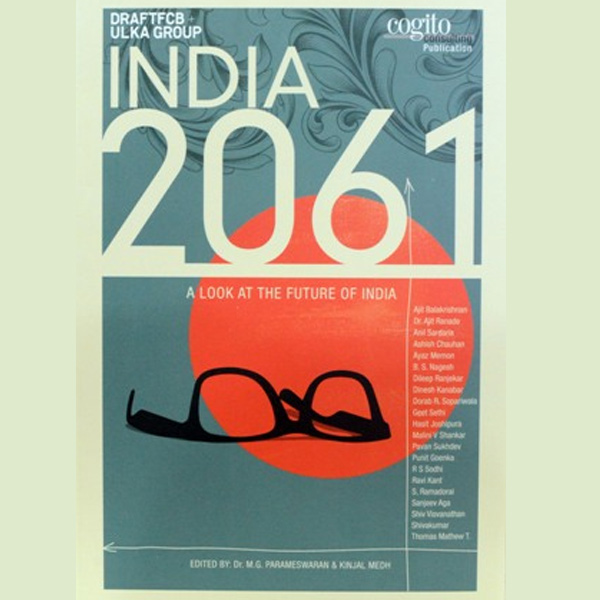
    itled India 2061 – A Look at the Future of India, the book has been released as a “special tribute to the nation on its 67th Independence Day celebrations.” It features 21 thought leaders from various industries giving their take on the challenges India will face as it gets ready to join the league of developed nations.


    Draftfcb+Ulka executive director & chief executive officer MG ‘Ambi‘ Parameswaran elaborates, “We had put down 25 different topics from various sectors and were clear that we wanted only one person to write on a particular topic. So when we sat with the topics, we contacted the first name that popped into our heads who would be able to identify with it.”


    The professionals from various fields featured in the book are Punit Goenka, RS Sodhi, Ayaz Memon, Ajit Blakrishnan, Dr Ajit Ranade, Anil Sadana, Ashish Chauhan, BS Nagesh, Dileep Ranjekar, Dinesh Kanabar, Dorab Sopariwala, Geet Sethi, Hasit Joshipura, Malini V Shankar, Pavan Sukhdev, Ravi Kant, S Ramadorai, Sanjeev Aga, Shiv Visvanathan, Shivakumar and Thomas Mathew T.


    To summarise, I truly believe that TV will not die. At Zee, we no longer term ourselves as merely broadcasters, but “content creators” and will focus on reaching out to audiences at the end of any screen that they are available on. Some screens may discontinue along the way, but there will be other screens that will emerge as life continues to evolve.

    The future of television is all about viewers experiencing entertainment and information content on their preferred devices, time and place.

    Zeel MD and CEO Punit Goenka

    (Excerpted from the India 2061- A Look at the Future of India Copyright Cogito Consulting Publication)

    It was in 2011 when the idea of writing a forward looking white paper came about just as Draftfcb‘s India arm, Ulka Advertising, was celebrating its golden jubilee. Cogito Consulting and Asterii Analytics were assigned the task of quantitatively forecasting India‘s future in areas like media, economy, internet, automobile, infrastructure, among others. Their labour resulted in a data-centric white paper entitled The India 2061 Report which was released in 2012.


    The same report has been packed as a valued-add in the pacily written book which has been edited by Ambi and Kinjal Medh with extremely high production values.


    The thought leaders have covered various fields and given various shades of the future. While some are optimistic, others are a little skeptical.


    Ambi reveals that a thousand copies of the book have been published so far and sent across to a select bunch of experts in various fields, and will be available on the agency‘s website from 15 August for download at no cost.


    “I think it is a great initiative by Draftfcb + Ulka to produce a book of the calibre that it has,” says a media observer. “It works well for Cogito Consulting too. It helps position the agency as a thought leader in terms of driving the possible agenda. By getting leading lights of industry to write about the future, it helps further cement that perception. Overall, they are doing a very good job in making people think.”

  • Draftfcb+Ulka appoints Anirban Chaudhuri as head of strategic planning

    Draftfcb+Ulka appoints Anirban Chaudhuri as head of strategic planning

    MUMBAI: Draftfcb+Ulka has appointed Anirban Chaudhuri as the head of strategic planning for its Delhi operations.


    Anirban comes in with 18 years of expertise in brand advisory and integrated marketing communications development, having worked with leading domestic and multinational players for India as well as South East Asia.


    A gold medalist in MBA from Jadavpur University in Kolkata, he has a PG Diploma in Journalism and Mass Communication. He further completed his studies on strategic management from IIM Kolkata. Anirban has worked at Shining Strategic Consultancy, IMRB International, TNS, Dentsu and DDB Mudra Group in the past and most recently was experimenting in the digital space with a marketing knowledge portal. He has also been a contributory speaker to Wharton Future of Advertising round table in India.


    He is currently exploring three areas of interest – ‘green‘ advertising, use of technology in developmental communication and ‘play’ as a technique in developing creative strategy.


    Advisor to the Board Arvind Wable said, “Anirban brings a unique combination of brand consultancy, market research and a keen insight into digital and social media which will be a valuable addition to our strategic planning efforts.”


    Draftfcb+Ulka Delhi operations COO Sanjay Tandon commented, “Anirban has a close connect with our value system and with his diverse experience promises to play a game changing role in creating brand wealth for our clients. Behind his gentle demeanor is a wealth of knowledge and sophisticated thinking that drives brand direction in an incisive manner.”


    On being appointed Anirban expressed, “Draftfcb+ Ulka is known for its strong orientation towards partnering businesses to deliver strategic marketing solutions. I am happy to be a part of that culture and looking forward to exciting times ahead.”

  • Draftfcb Ulka appoints Menaka Menon as head strategic planning

    Draftfcb Ulka appoints Menaka Menon as head strategic planning

    MUMBAI: Menaka Menon joins Draftfcb Ulka as head strategic planning at its Bengaluru office. She has over 13 years experience in advertising and media. Her professional interests include new media, understanding youth consumer and their buying behaviour.


    Speaking on her appointment, vice president Dennis Koshy said, “Menaka brings valuable experience across categories to Draftfcb Ulka. Having started her career with us, she is familiar with the organisation and I am sure she will add significant value to our clients here.”


    An alumnus of MICA, Menaka started her career at the then FCB Ulka, as part of its Star One programme. She then moved to JWT where she spent over seven years, before moving on to assignments with Big 92.7 FM, UTV New Media and MTV.


    uring the course of her career, Menaka has worked on several big brands such as Amul, Knorr, Levi‘s, Kotak, Diageo and Star across Mumbai and Bangalore.


    On her second stint at Draftfcb Ulka, Menaka observed, “Draftfcb Ulka is known for the strategic contribution it provides to client businesses. I started my career here and I am really excited about the opportunity to come back. Bangalore office has a very good portfolio of clients and brands, and I look forward to partnering them.”


    Draftfcb Ulka COO Nitin Karkare felt that, “Bangalore is a critical operation for us with prestigious brands like Sunfeast, Minto, Candyman, Santoor, Chandrika in our portfolio. Menaka is part of our Star One program and we are delighted to have her back on board. I am sure she will add a lot of value to the business with her rich experience across categories”

  • Gozoop acquires Red Digital, doubles India revenue

    Gozoop acquires Red Digital, doubles India revenue

    MUMBAI: Indian bred multinational digital agency Gozoop, which recently expanded its global presence by setting up operations in Singapore, has announced the acquisition of Red Digital, one of India’s leading social media agencies. With this business acquisition, clients and employees of Red Digital will be consolidated under the Gozoop brand, thus revitalising the latter’s Indian operations.

    The acquisition is in line with Gozoop’s strategy of increasing the revenue contribution from its Indian operations. Over the past few years, Red Digital has worked for several marquee brands such as Mumbai Indians, Dell, PepsiCo, BMW, Parker Pens, Adidas, PVR, Godrej, Berger Paints, Reliance Foundation, Educomp, Citibank, ICC and Discovery Channel.

    The acquisition of Red Digital will play a pivotal role in Gozoop’s global expansion in terms of operations and client portfolio. With Red Digital’s rich client base and strong presence in five key cities in India, and Gozoop’s international exposure and clientele, the combination will enhance Gozoop’s global presence and cost efficiencies.

    Currently, 65 per cent of Gozoop’s revenue is attributed to its international operations in UAE & Singapore. Post the acquisition and with a total of 65+ retainer clients, Gozoop aims to double its Indian revenue in the next financial year. Gozoop’s domestic operations will now contribute close to 50 per cent of revenues, an increase of 50 per cent from earlier. The acquisition will also increase the employee strength of the company to about 100 members, making Gozoop one of India’s largest digital agencies in terms of employee strength as well.

    Commenting on acquiring Red Digital MD India Ahmed Naqvi and co-founder of Gozoop said, “Gozoop has always aspired to be a market leading digital agency and this deal will exponentially accelerate our ability to realise that ambition by giving us access to newer geographies across India. Red Digital’s world-class brands & top talent, together with Gozoop’s end-end digital service offerings & social products like Zozolo, will help move our collective clients and the industry forward. We expect further consolidation in our industry and look forward to acquiring digital agencies to fuel our growth in India as well as to enter international markets like USA, Australia & Qatar.”

  • Horse & Country TV partners with Amagi for signal delivery in India

    Horse & Country TV partners with Amagi for signal delivery in India

    NEW DELHI: Horse & Country TV, the specialist equestrian sports and lifestyle network, has tied up with Amagi Media Labs to deliver its signal to cable, satellite and IPTV operators as part of its international expansion plans.

    Amagi offers a next generation cloud-based broadcast distribution and play out infrastructure for television networks. The Bangalore-based company runs India’s largest local advertising network playing more than one million local ad seconds every month on more than ten TV networks ranging from sports and news to entertainment and lifestyle. The company also has international deployments of its broadcast infrastructure in Singapore and Africa.

    Horse & Country will leverage Amagi’s cloudport infrastructure platform to deliver localised channel feeds to current and future markets where the channel is distributed.

    The cloudport platform is designed as a full-featured alternative to traditional channel play-out options (like satellite, fibre). TV networks can deliver feeds with rich channel branding, diverse language versions and subtitles using cloudport.

    The platform can incorporate local advertising and local programme insertion and will shortly also allow for the insertion of live programming. Unlike earlier iterations of remote play-out technologies, the platform allows for full monitoring of programme play-out and health of the play-out servers at the headends. The play-out servers are fully redundant which ensures seamless and fail-safe operation.

    H&C TV conducted an extensive review of technology options for international delivery and play-out of localised content including satellite, fibre and IP delivery, working with John Wallace of Wallace Broadcast, before selecting Amagi cloudport as the best solution for its specific needs for international expansion.

    H&C TV CEO and chairman Heather Killen said, “Future-proofing our channel for multi-platform international distribution has been a key strategic goal for H&C as we expand our presence in new markets. We are confident that we have found in Amagi a partner that will support our development in an extremely flexible and targeted way.”

    Amagi co-founder strategy investments and R&D Baskar Subramanian said, “We believe that cloud-based models are the future of broadcast. Cloudport holistically addresses all the needs of broadcasters for channel play-out and is set to become the standard for multi-platform channel delivery, replacing expensive satellite and fibre-based content delivery. We are delighted to announce Horse & Country TV as Amagi’s first Europe-based, international channel and look forward to a long and successful partnership as they continue their international roll-out.”

    Horse & Country TV broadcasts in the UK and Ireland, the Netherlands, Sweden and Malta. The Channel carries exclusive sports event coverage, news, documentary and personality-led programming to the passionate audience for horse sports and country living. 

  • What now for broadcasters and advertisers?

    What now for broadcasters and advertisers?

    The clock is ticking down for the seven broadcast networks, (actually eight, if you include Discovery too that joined the fray over the weekend) which coerced TAM to report on them on a monthly basis unilaterally without consulting either the Indian Society of Advertisers (ISA) or the Advertising Agencies Association of India (AAAI).


    Late Friday evening, advertisers such as Levers, P&G, Loreal, ITC, Britannia, Marico and Godrej put these broadcast networks on notice that if they did not revert to weekly ratings within 72 hours, all advertising on their channels would be pulled off and release orders would stand cancelled, 48 of those hours have already gone past. These broadcasters have only 24 hours left to take a decision.


    More advertisers have been sending in their notices over the weekend and this is likely to continue over today. And their 72 hour time bomb notice will also continue to tick.


    Advertisers sent the emails over the weekend to probably show they too mean business. Senior managements and sales heads in broadcast networks normally head of for their weekend holidays or timeoffs and hence are normally loathe to convene for any major decisions. With two days out of the three day notice period gone, now broadcasters will be hard-pressed to congregate and do some brainstorming and decide on their way forward today itself.


    Above their heads is the guillotine of losing revenues. An estimate is that these broadcaster will lose Rs 22 crore a day collectively should there be a pullout.


    There’s more to worry about for the broadcasters. If there are no TVCs, what will they do with the time that has been left vacant by the absence of ads? Fill it with promos of their own shows? Film trailers? But for how long?


    They may have to incur further costs should they rely on extra content from 22-24 minutes being churned out currently to 26-27 minutes. That is going to mean writing out larger cheque amounts to TV producers as they will have to work their crew and casts for longer hours.


    Continuing being rigid is an option broadcasters have. But it could lead to advertisers being equally rigid, leading to a standoff. Somebody will have to blink.


    Even though some of the broadcast CEOs have been haw-hawing, saying that it is the advertisers who will do so, because they need the TV channels and history shows that they are prone to buckling under earlier when they are threatened with no ads, it need not hold true on this occasion.


    Advertisers have options today: there are close to 300 channels which are continuing with weekly ratings, while around 105 channels are on a monthly engine. They could put their ads on the weekly-rating- channels. Unless of course the eight “rogue” (in the eyes of the advertisers) networks convince the remainder to join the monthly ratings gang.


    At this stage, media observers feel, both sides are doing some grandstanding, watching each others’ moves closely. The squeeze will come when ads stop on TV, and if there is a stalemate. And it will be felt by both.


    The year has already seen a slowdown on the economic front, thanks to a weak rupee and a general slowdown. Financial results for most companies are not expected to be something that shareholders will take too kindly by end this year.


    Hence, it is in the interest of both to come to the negotiating table, and hammer out a face-saving solution, sooner than later, and keep the advertising cash flows going between each other. A week’s loss of advertising equates an estimated Rs 150 crore in revenue. And a possible further slow down in consumer off take of products from shop shelves for the advertisers. That’s something both cannot afford.

  • Advertisers vs Broadcasters: The battle for weekly TV ratings

    Advertisers vs Broadcasters: The battle for weekly TV ratings

    Aegis Group plc chairman India & CEO South East Asia Ashish Bhasin does not mince his words when he says. "In the next 24 to 48 hours many broadcasters are going to be getting cancellation notices from advertisers for spots booked with them. I have been getting SMSes from some of my key advertisers to move ahead with pulling off ads from TV."

    Adds Group M South Asia CEO & Advertising Agencies Association of India (AAAI) executive committee member C.V.L Srinivas: "Starting yesterday, cancellation notices have been going to broadcasters from advertising clients across the board."

    "Earlier broadcasters took the decision and now advertisers are doing so," adds IPG Media Brands CEO Shashi Sinha.

    The CEO of a channel confirmed that his network had received emails concerning 10-11 clients. "They have given us 72 hours to resolve the issue. If we fail to revert to weekly ratings all release orders for TV spots will stand cancelled," he says.

    That is the state of Indian media today. A battle royale is brewing – some call it the mother of all battles. The two warring parties – on one side of the battle line are the advertisers, and on the other are the seven broadcast TV networks.

    Group M's CVL Srinivas says advertisers will stay away from TV until they get proper weekly viewership data

    The decision Sinha is referring to relates to these broadcasters unilaterally ordering TV ratings agency TAM Media to change the frequency of reporting on their viewership from a weekly routine to a monthly routine. And to also report those details in absolute numbers, not in percentages.

    The seven broadcast networks have more than 100 channels under their umbrella, accounting for almost 50 per cent of daily TV viewing in India.

    Advertisers on the other hand have a war chest of Rs 14,000 crore which they pump into TV channels annually to promote their products and services to TV viewers who are their consumers. And almost 60-70 per cent of that goes into those seven broadcast networks.

    "I don‘t know see why there should be a need for anyone to have a confrontation at this time," expresses Bhasin.

    Aegis Group‘s Ashish Bhasin says advertisers would prefer to put money in the bank then advertise in this situation

    In fact, the broadcast industry has been increasingly flexing its muscles in recent times. While they are competing for viewership with each other daily, they have over the past four or five years increasingly bonded together, finding common cause on issues which are plaguing them. Whether it was on the cable TV carriage fee burden or self-regulation or digitisation, the broadcasters have stood united and lobbied hard to get their views heard and get decisions taken in their favour.

    One of the issues with the ad industry was the gross billing issue. This had been a practice for decades followed by ad agencies, and broadcasters for TV spots carried on them. The broadcasters – led by their association the Indian Broadcasting Foundation (IBF)- wanted the practice to be changed to net bills when the income tax department got after them to pay tax for ad agency commission (which was not being paid by them actually but was only mentioned in the bill). Ad agencies – AAAI – resisted this change even though the IBF continually urged them to do so.

    IPG Media CEO Shashi Sinha says advertisers are now taking their decision

    The IBF then put its foot down and said its broadcaster members would pull out all TV spots from TV channels. Ad agency resistance continued for a couple of days before it melted and agencies, the Indian Society of Advertisers (ISA) and the IBF hammered out a solution, which saw net billings becoming the practice, albeit with a legend of 15 per cent commission attached. To media observers, it clearly showed who had the power – broadcasters.

    "Agreed that broadcasters had their way in the net billings case because it related to a routine mechanical exercise which did not impact advertisers. It only concerned agencies and broadcasters," explains Bhasin. "But this time it is the advertisers themselves who are being impacted."

    Adds Srinivas: "And advertisers are saying, we will not advertise on those channels for which we don‘t have data. We as their agencies cannot plan on a monthly basis without data and hence are complying with our clients."

    Madison Media COO Karthik Laxminarayan cautions that aggression is not a solution

    "The key thing is that these days advertising comes in bursts of four to six weeks," points out Bhasin. "And if reporting is going to come after the period is over, how will advertisers monitor how their communication is faring with TV viewers? The world is moving to real time reporting of viewing habits. The advertiser has a right to know how the money he is spending is faring and whether it is getting him results. With the monthly reporting, it will not be efficient."

    "India and Vietnam are the only two nations which don‘t have a daily ratings system," adds Srinivas. "And now we are talking about going monthly. It is a retrograde step and it has been pushed through without any logic."

    Bhasin points out this time the broadcasters are a divided lot too. "While these seven broadcast networks are demanding monthly reporting and monitoring, the others are still going with weekly reports," he says. "How can you have two sets of practices in the same sector?"

    Vivkai Exchange CEO Mona Jain: Advertisers will blink first

    But the fact that the broadcasting industry is divided is going to work in the advertisers favour. "I don‘t know why there is this misconception that we cannot do without these 100 channels," says Srinivas. "This is a myth. We can do good media plans and reach our customers even without these channels. There are another 200 channels we can use. And they have said they are more than willing to do deals with us. DD could be a good option."

    He also believes that advertisers are going to start putting their money into other media outlets like below the line, print, and digital. "The floodgates are going to open for digital advertising. We have seen so many clients talking about using digital media over the past month ever since the TAM issue has broken out. And over the past 24 hours two clients have totally shifted from TV – one to a print plan and the other to a digital one. Agreed one of them is a niche player, but the advertising mindset is changing."

    Agrees Sinha: " What are the alternatives left for advertisers? Some might go to print, some might stay away or some might even come back to TV, no one knows what will happen until and unless both parties talk it out."

    Havas Media MD Mohit Joshi says it is a lose-lose situation for all

    Bhasin believes advertisers might also choose to totally do without advertising and straightaway add the money saved to their bottom lines "And in this tough economic times, it is better to have cash in the bank then spend it," he says.

    "It‘s true," points out Srinivas. "Advertisers would rather not advertise than advertise without any data. One or two months without advertising is not going to break any brands. There are even more efficient ways to reach customers than TV."

    What has left most media professionals confused is the hard stance taken by broadcasters. "I agree there could be genuine problems with TAM. But how is 30 days for reporting ratings better than weekly ratings when the data is not trusted by them? There is no logic to the broadcasters‘ stance. This is not a banana republic where you turn things on and off as it suits you," says Srinivas.

    ISA media committe head Hemant Bakshi will be playing a key role

    The question on the top of everyone‘s minds is: who is going to blink first and how long will the difference of opinion continue between broadcasters and advertisers? According to Bhasin, the basics of any business is "the client is always right. I think, within a week, better sense should prevail and things should get sorted out."

    Srinivas is not willing to speculate on the time period but says advertisers will stay off the TV channels until they start getting the weekly data they seek.

    "Obviously advertisers will blink first. Where will they get such a mass reaching medium," says a TV channel CEO. "They came running back to us on the third day during the net billings crisis when we blocked them out for two days."

    Vivaki Exchange CEO Mona Jain believes that "there will be some kind of a push back wherein it will be the advertisers who will have to compromise."

    Lulla says it is a private matter between broadcasters and advertisers

    Others highlight that the combative attitude should give way to finding solutions. "We, as an industry, should not think aggressively but progressively; and try to resolve it by having a healthy discussion," expresses Madison Media COO Karthik Laxminarayan.

    Havas Media India MD Mohit Joshi says that on a personal level, "I am sad that all of us together are not able to find a solution. All such issues are in a lose-lose domain. Nobody is actually going to gain. Broadcasters could end up losing revenue."

    Indiantelevision.com got in touch with ISA media committee chairman Hemant Bakshi to get the advertiser perspective and he said he would prefer not to at this stage.

    Ditto with broadcasters. Indiantelevision.com got in touch with Star India CEO Uday Shankar, Viacom18‘s Sudanshu Vats, Times Television Network CEO Sunil Lulla for their views. All of them refused to get into any discussion. "This is not a matter for public scrutiny. It is a private matter which has to be resolved between broadcasters and advertisers," says Lulla.

    For their individual sakes, hopefully they will do so soon.
  • Divya Radhakrishnan & the Helios solution

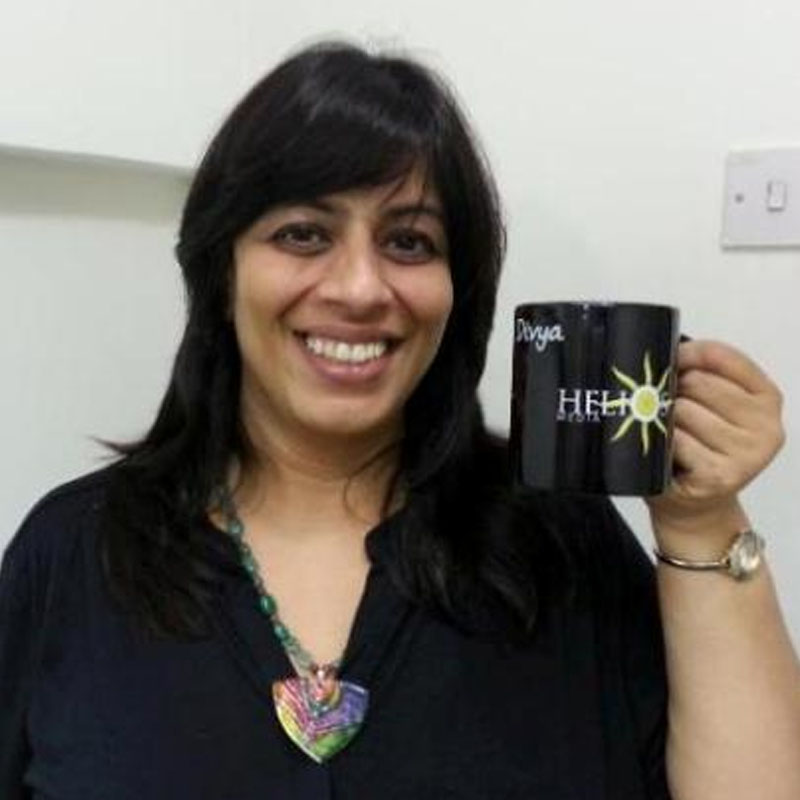
    Divya Radhakrishnan & the Helios solution

    Media veteran Divya Radhakrishnan gets a little nostalgic as she recollects that moment a couple of year ago when she was contemplating which direction her life should take. Says she: “After working for almost 25 years, when I told my mother that I was planning to quit, I least expected her to be supportive of my decision. But then her response motivated me to go ahead: she said just do it. And so I did it.”

    The former TME president finally dug her heels in and made the drastic career change.

    “I knew I was going to be on the other side of the table now and it was not going to be easy,” she says while thanking the leadership role she played at Rediffusion-Y&R, which helped her get an insight into how things work in various verticals of a media business. “But then I thought to myself that being independent and leading a business with decision-making power at my own risk would give me a greater sense of freedom and that really motivated me,” she adds.

    Her decision was pretty calculated too, she says.

    “There are close to 180 odd channels in India not aligned to any broadcast network. Agencies, clients, vendors, and others, however, expect them to have everything that a large network does like sales, marketing, research, and what have you. Now in a large network you can amortise your costs across several channels,” she explains. “But for a standalone channel the high overhead can be killing. Hence, I decided I would first focus on the sales outsourcing function for TV channels and once I achieved that, I would add more services. I needed to find someone who had a similar vision and I found that in Bala Iyengar and so we started out.”

    Right from the start, Divya was clear that her agenda would go beyond being just-another-organisation to fill a need gap, and getting recognition for creating a brand in a commoditised business of air time sales.

    Hence, Helios Media has ambitions to provide advisory and undertake operations for independent players in the broadcast industry. In order to differentiate itself it has set up various verticals like sales, marketing communications, advertising, research, content, PR, broadcast operations, syndication, events and new media to create a 360 degree outsourcing company which television channels can rely on. Divya on her part is also involved in a TV content production firm TouCan with sister-in-law Bhavna Radhakarishnan.

    With over 50 people on board now, finding the right team was not easy for Divya at the start. “Since I was coming from the other end, I needed to get the business heads in place so they could get the correct people for us,” she says.

    Among those who she managed to snare figured: Bala Iyengar (business head Zoom), Vaibhav Vishal (a former MTV veteran) and Prashant Nigam (also from Zoom). Iyengar is business director and leads the sales vertical. Vishal is the creative and content leader whereas Nigam looks after content syndication and special projects. The four pillars run the show headquartered in Mumbai, although the organisation has branches in Delhi, Bengaluru and Chennai.

    Helios is like a morphing organism, tailor making itself, depending on client and market needs. Though its headquarters are in the Maximum city, it has resources at regional levels as well.

    The organisation which started with its first client MTunes is now handling four different channels and is hoping to bill almost Rs 100 crore in revenue by this year end for them. Divya is also in conversation with others including an international TV network which wants Helios to draw out an entry and operational plan for a few of their channels.

    However, getting clients wasn‘t easy for it as it had to prove its credentials to the market.

    “The first eight to 10 months were all about investment of our resources, energy and talent to prove not only to ourselves but also to channels what we can do for them,” narrates Divya.

    Two agencies had approached the MTunes management when they announced that they would be outsourcing their ad sales functions.

    “The approach and the pitch with which Helios met us made us realise that they have enough insight and perspective about how to sell the channel at its launch stage itself,” says MTunes HD CEO Saravanan P, who asserts that the association helped their operations to touch inventory levels as high as the top two channels in the genre and they could also maintain it almost through the year.

    “The challenge was to pull off a decent ER (effective rate ) but we managed a very aggressive one which can be termed as an achievement for a channel in its first year of operation,” Saravanan adds. The agency also handles marketing, research, PR and social media.

    MTunes HD CEO Saravanan P says Divya & her team helped the new channel get very aggressive effective advertising rates

    “The past performance of the Helios team is very well known in the industry. Their recent success story with MTunes strengthened our belief on their capability. However, that is not the only reason why we outsourced our sales to them. FoodFood, being a genre creator, needed to be correctly represented to the clients and the agencies. Helios came forward with that understanding of the channel and the genre. For the long run, it is not just a few crores which advertising clients would like to put into the channel but would also like to get the correct association. We hope that Helios Media will be able to build that bridge between us and clients,” points out FoodFood CFO Sanjay Kumar Ballabh who came on board around four months back.

    Helios has a tool called DARE (defining, articulating, resulting and extending) to understand the brand and find solutions for the brand, especially for niche channels.

    “Using the tool, we could draw up the brand promise for MTunes as ‘Music like never seen before,‘” she says. “We worked almost like partners of the channel when we enabled the creation of a music countdown show called Trending which is probably the only show on right now with an indicator for the top songs in the country. We track them on YouTube, Hungama, and Radio City airplay etc and Ormax is our partner on this initiative. The concept is completely ours and has found a presenting sponsor in Airtel.”

    Divya has been focusing on other services such as marketing and content for her clients ever since she has got the ad sales engine chugging well. She says: “Marketing a channel is very different from marketing a biscuit. The customer is not really paying for a channel, and hence we have to be creative while inducing him to watch it. “

    Vivaki Exchange‘s Mona Jain & Mindshare Fulcrum‘s Amin Lakhani are impressed with Divya & the Helios team and the innovative solutions they offer brands

    Sources indicate that Helios has advised client FoodFood to go beyond cooking and also talk about other aspects related to food like eating out, food conversations, what to eat and when, health and nutrition, among others.

    Divya refused to comment on this but what she is really kicked about is the power of social media. “Digital should accentuate what‘s going on television,” she says. “And we have shown what can be done on digital through our work for MTunes.”

    Helios has designed and put together the online consumer interface for the channel in the form of its website with audio players, playlists, interviews, and what have you. But she faced a major challenge when she was assigned the task to build consumer engagement for MTunes HD on Facebook and Twitter: it had no rights to put the music it airs on TV on digital. Hence, the solution it found was to start conversations about youth interests.

    “Generally we spoke to them on Facebook and Twitter like a friend would do to them about everything that concerned them,” says Divya. “Of ocurse we also had guessing games about celebrities eyes and created special events online on friendship day. Right now we are working on creating a TV program which uses the interactivity of social media.”

    Divya and Helios have got fans in the media business. For example Vivaki Exchange CEO Mona Jain and Mindshare Fulcrum principal partner Amin Lakhani. “What sets Helios apart from the rest is not only the team which is packed with experienced as well as young talent but also the innovative ideas they come up with to service and represent a brand,” echoed both Jain and Lakhani.

    Divya knows she is onto a good thing and is looking forward to capitalise on the strengths she has built up in Helios. Says she: “When the 10+2 ad cap comes into play we will be best equipped to help our clients. Because I have all the verticals in-house and hence solutions that can help channels monetise what they have better.”

    Clearly, this is one lady on a mission.

  • Aidem Ventures: A comeback tale

    Aidem Ventures: A comeback tale

    Filling someone‘s shoes is never easy and especially when that someone is the person you‘ve always looked up to. Vikas Khanchandani, director of media outsourcing firm Aidem Ventures, who was part of the founding team humbly acknowledges the fact.

    “We all know Raj Nayak the man who started it and had the vision to look at an opportunity keeping in mind the fragmentation that the industry was witnessing. He has left very large shoes for me to fill and I don‘t think it‘s going to be easy doing that. After working with him for 14 years I am glad to make an attempt at fulfilling a dream and I know he is extremely proud of what we have done and continue to do.”

    Aidem Ventures was carved out of NDTV Media which ad veteran Raj had set up as a 26:74 joint venture in 2003 with major TV news network NDTV. NDTV Media‘s role was to do ad sales for NDTV (and any other channels it would launch), Mi Marathi and Sahara‘s TV channels. All was well for a few years.

    But then NDTV launched a Hindi GEC NDTV Imagine in 2008 and did not hand over ad sales to Raj and his team. He waited and watched for a couple of years for things to change, but nothing did.

    Vikas Khanchandani believes obstacles are the best path to take

    Hence, in 2010, Raj decided to quit NDTV Media and with the supposed blessings of both Prannoy and Radhika Roy he set up Aidem Ventures taking its entire sales team and business to the new firm in an effort to build a standalone enterprise. Things were hunky-dory, and Raj roped in some senior industry professionals such as Kaushal Dalal, M. Suku to strengthen the organisation. The venture was cruising until a year later when NDTV decided not to renew its contract. It was almost as if the entire floor collapsed under Aidem as NDTV accounted almost 80 per cent of the new fledgling‘s business. 
    Many of the founding senior management team headed for the exits. Around this time, Raj moved to Viacom18 as the CEO of Colors after finding an investor and well wisher, leaving with the belief that Vikas and team would successfully run with the baton.

    Raj also took the efforts to reassure everyone that the company will continue to keep its stakeholders‘ benefit in mind and will work forward to fulfilling its motto.

    “But those were tough times,” recollects Vikas. “We scaled down our operations and had to calm clients apart from making sure that our colleagues were absorbed in other companies. We did not lay off anyone.”

    The Aidem dream team: Alok Rakshit (regional entertainment & news head), Joydeep Ghosh (eBUS business head, India), Lama Choudhury (business development head)

    The investor that came in was none other than a client in his personal capacity: Ashok Gupta of the HDIL group, who was involved in a channel Live India. His entry and financial injection proved to be the proverbial turning point.

    From being a near basket case then, the firm has come back very strongly. And how. Today, Aidem has 100 plus employees and 30 clients across broadcasters and publishers nationally and claims to be more experienced in the outsourced model compared to any of its peers. The reason behind this is nothing but years of experience and practice that has built a whole host of services and IT enabled infrastructure that has given it an edge over some of the larger networks.

    “We spent two years to create extensive resources to have a robust platform which is web enabled giving people opportunity to feed, view and retrieve information on the go. We have experience across platforms and across genres from news – national and regional, regional entertainment, Hindi entertainment and niche and hence have build extensive knowledge and on pricing and strategy which have immensely helped our partners to improve their yields,” explains Vikas.

    He further adds, “We have the finest operations process and teams, something that keeps revenue based errors to negligible levels thereby bringing efficiencies in our service. Aidem also has one of the finest digital sales and operations team offering solutions to our digital publishers. Lastly, we are go-to-market experts, something that we have proven to our technology partners by creating the business model and then executing it as per plan and strategy to create one of the largest service providers in digital delivery of ad commercials within the country.”

    Madison Media COO Karthik Lakshminarayan agrees that there is a need-gap in the market and that is when such media-sales organisations have a huge potential to flourish. “Niche and regional channels don‘t have enough revenues to have a specified sales team and hence, such organisations come to their rescue unlike the large networks which have their own set ups.”

    The Aidem dream team contd: Neena Dasgupta (digital & international business head), Nikhil Sheth (Hindi entertainment & niche channels head) , Shailendra Shetty (systems head)

    Vikas has built a solid team, which is responsible for the Rs 200 plus crore business, Aidem generates across platforms for its clients. Alok Rakshit is the business head across regional entertainment and news. Neena Dasgupta looks after the digital & international businesses as business head. Joydeep Ghosh leads the eBUS Business for India. Nikhil Sheth is business head across Hindi entertainment & niche channels while Shailendra Shetty has been instrumental in devising and developing work flow and system for traffic and sales operations. Lama Choudhury heads the business development team and is actively involved with all commercial negotiations and deal evaluations. He has been with Aidem right from its incorporation.

    “Our hierarchy is simple, each business head has people under them looking after different regions,” explains Vikas.

    Tamil television broadcaster Jaya Network which has been with Aidem for more than an year is not only content but also thanks it for bringing in more clients (read: revenues). “We started with one channel but now Aidem handles the whole bouquet and within a year we have seen a 30 per cent increase in revenue,” proudly proclaims Jaya TV marketing head S Senthil Velavan.

    Similarly, The Economist which is in its second year of association with Aidem never anticipated the results it has got so far. “I knew Neena Dasgupta and when she came with a proposal for our online business, we were open to it. And all I can say is that revenues are now substantial while it was negligible when they came to us,” says The Economist India MD Supriyo Guha Thakurta.

    One venture which the organisation feels was a god-send was that of eBus, a digitial delivery and distribution platform for short form TV commercials, which it set up as a joint venture with a Singapore based company (headed by its CEO Carmine Masiello) of the same name in 2010. eBus is arguably one of the largest providers of this service to the advertising and broadcasting industries and was acquired by media logistics company IMD this year. “The acquisition gave us some good cash which has helped us retire all debt,” says Vikas. “But Aidem has the contract to manage it for the next five years. eBus is one of the finest cloud based delivery service and industry swears by it. We have around 300 clients using it.”

    Karthik Laxminarayan says outfits such as Aidem Ventures help the smaller players

    Like for any other, the journey for Aidem so far has been challenging, trying and exciting at the same breath. Not every client stays and it has had its fair share of losses. For instance, Radiowalla‘s co-founder Anil Srivatsa feels that though they had partnered with Aidem for only six months, the expectations and capabilities didn‘t match. He blames the timing for it, but however hasn‘t struck it off completely and wouldn‘t mind considering it in the future.

    Ups and down are a part and parcel of life and keeping that in mind Aidem sees itself as a platform that will create opportunities for many of its partners to grow and in the process grow with them. It has shortlisted some of the growth areas that it needs to put its energies in to and build them into substantial and valuable business over the next three to five years.

    “Right now, Aidem 1.0 is about trading while Aidem 2.0 will be about building platforms offering solutions across channels using technology as a tool to scale. We will also be building new business/services verticals using technology as a tool/differentiator that will help bridge some need gap within our industry,” says Vikas optimistically.

    He hopes to reduce the revenue dependence on channels too. “We are far better off from the days of the 80 per cent dependency on NDTV for revenues. But I would like it to come down from the 14 per cent to 20 per cent which it is currently. What that means is getting in more channels,” says Vikas.

    What was it that kept him going when everything else around him seemed to be falling apart? “It has been touch and go on several occasions,” he confesses. “But for all of us at Aidem: obstacles are the best path to take.”

    Maybe the quote by Marcel Proust “We don‘t receive wisdom; we must discover it for ourselves after a journey that no one can take for us or spare us” can sum up Aidem‘s journey.

  • Jayalakshmi Silks ropes in Dentsu for stronger brand campaign

    Jayalakshmi Silks ropes in Dentsu for stronger brand campaign

     MUMBAI: Expect a new TVC for Jayalakshmi Silks soon. This Kochi based textile retail brand has handed over its creative mandate to Dentsu Communications, which will work at taking the product advertisement one notch above.


    Dentsu was invited by the retail brand to handle their creative to attract more customers and build the next phase of the brands communication. “We are extremely upbeat about our Kochi operation. Jayalakshmi Silks is our second win after we won Jos Allukas as our first account. We are glad that we are partnering Jayalakshmi Silks, which is a brand of great repute in Kerala,” said Dentsu Communications CEO Arijit Ray.


    Dentsu Communications will take the brand on its next level of growth. Dentsu Communications national planning head Suresh Mohan Kumar added “Jayalakshmi is one of the strongest retail brands in Kerala. We are proud to partner them in taking the brand on its next level of growth.”


    The retail brand is looking at a total revamp of their brand communications. “We wanted a creative agency that could understand and cater to our exact needs. We have a distinct position in the category and to help maintain this leadership stance we have roped in Dentsu Communications,” informed Jalayalaksmi Silks managing partner Govind Kamathon.