Category: Media and Advertising

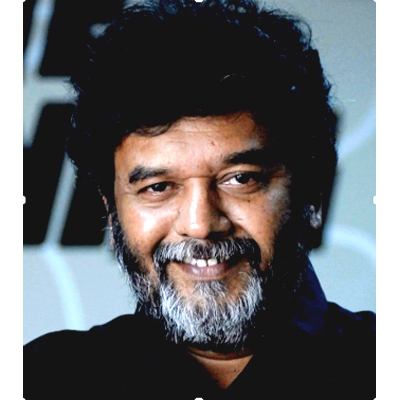
  • Hakuhodo Percept gets Bhaskar Ghosh on board as National Client Services Director

    Hakuhodo Percept gets Bhaskar Ghosh on board as National Client Services Director

    MUMBAI: Bhaskar Ghosh joins the senior leadership team at the Delhi headquartered Hakuhodo Percept, as National Client Services Director.  The former Branch Head of Rediffusion- Delhi, brings with him a wealth of experience gained over 20 years, creating new conversations for brands such as Domino’s Pizza, Coca Cola, Spice Jet, Nokia, Dabur and Sony, to name a few.


    He takes on a national role, with key focus areas being to strengthen Hakuhodo Percept’s client relationships, put in place best practises in account management, and create opportunities for new businesses and growth across branches in India.


    Speaking about this development, Elvis Sequeira – Executive Director, Hakuhodo Percept said: “ It’s been a long, long courtship, and am happy that we’ve got Bhaskar on the team. We’ve been slowly re-engineering ourselves over the last couple of years, getting fabulous talent on board to head Planning and Creative, so really this was the final missing piece in our plan. Bhaskar is a wonderful mentor for young talent and an inspirational leader who loves to roll up his sleeves and get things done. I believe that clients, brands and people have a lot to gain from Bhaskar’s talent, involvement and style of functioning.”


    Bhaskar Ghosh’s previous stints have been with Contract, Grey, Bates, Leo Burnett and TBWA. He is a Commerce Honours Graduate from Delhi University and has an MBA from the University of Bedfordshire, UK.

  • BJP’s campaign is dull, drab and quite ordinary: Prathap Suthan

    BJP’s campaign is dull, drab and quite ordinary: Prathap Suthan

    MUMBAI: The upcoming election is possibly the only one in a long history of five-year polls, where political parties are unabashedly using media to promote their prime ministerial candidates and agendas.

    Thus we have both the main players – the Congress and Bhartiya Janta Party (BJP) – splurging crores of public money on election campaigns in a bid to outdo each other. Indeed, Congress was the first to jump into the fray with the tagline ‘Main nahi, Hum’ which attracted much controversy, what with the BJP claiming the punch line had originally been used by its prime ministerial candidate Narendra Modi at a ‘Chintan Shivir’ in Gujarat.

    However, the BJP lost no time in launching its own campaign with posters, TVCs, radio spots shouting themselves hoarse – ‘Ab ki Baar, Modi Sarkar’. The underlying message being that the common man’s woes such as inflation, lack of women’s safety etc. would be assuaged if Modi was elected for the country’s top job.

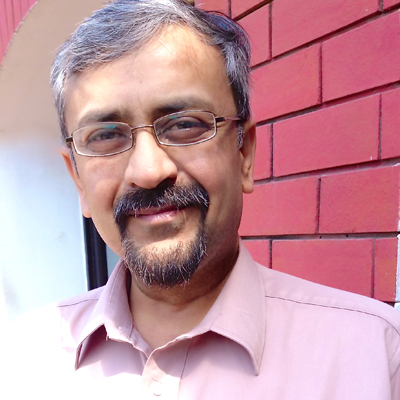
    With the political climate hotting-up this election season, both campaigns are attracting their fair share of bouquets and brickbats. But we thought it would be interesting to speak to Prathap Suthan – the man who created BJP’s earlier ‘India Shining’ campaign (2004) – and get his perspective. Excerpts…

    What do you have to say about the BJP slogan? Do you see it touching an emotional chord with urban and rural voters?

    Barring the fact that it rhymes, I don’t think it’s an inspiring slogan. It’s a mere auto suggestion as to what the voter should do. It doesn’t hold out any promise, mission and vision to people like us. It’s dull, drab and quite ordinary.

    Do you think the BJP has started too early or too late?

    The BJP campaign is at least a month late. Worse still, despite the fact they have started and bits and pieces are making their way onto social media, they have been invisible. Till yesterday, I haven’t seen their advertising in print or on TV. Anymore invisibility and they’d be sending out wrong signals to the electorate. But knowing them, and their almost strident confidence, I suspect their cause has been sabotaged by terrible media planning or a media boycott. I can’t think of any other reason why their campaign hasn’t broken out in media yet.

    Modi stands for development. Do you think the current campaign and slogan brings out this core message?

    If the Modi line of thinking has to do with progress and development, the campaign should have been a reflection of that. This is a boring campaign. I see no cues of development and young and contemporary thinking in this. Congress on the other hand, despite whatever else, has better looking advertising by far.

    What are your views on the AAP and the way they use publicity in their favour?

    I used to like the idea of AAP. But somewhere, they’ve changed into something else that they shouldn’t be.

    Considering that they don’t have the kind of media budgets that the main parties have, their public activist avatar keeps them in view. It is clever thinking because media will carry and play the de facto advertising vehicle. However, too of much of everything has a down side. You can’t be a serious national party when you pick up street fighting as a brand character. At some level, it will backfire. Leadership, and genuinely inspiring stewardship of the nation is what’s missing today, and AAP isn’t quite playing that wedge.

    One piece of advice you’d like to give to the creative and media agencies that are handling the BJP and Congress accounts?

    There is no point advising advertising agencies. I believe all of us are equally qualified and experienced to handle large campaigns. We do that day in day out, and on some very challenging focussed briefs. In this case, the client takes the call and at times, dictates. The fault, if any, doesn’t lie with the agencies. It has to squarely lie with the parties.

    Lastly, of the two parties, which is the campaign you are betting on and why?

    I think the country is loaded in favour of BJP – but they have an uninspiring campaign. One man almost looms over you. Congress, however, seems to have delivered the campaign better. It’s younger looking, modern, non-traditional, and in a strange way, more inclusive.

  • Why bigger agencies net smaller fish?

    Why bigger agencies net smaller fish?

    MUMBAI: Passion drives creative minds to set up independent agencies. In a majority of cases however, after the initial burst, resources become a constraint and growth avenues out of reach.


    While being able to do what you want, pitch to the client of your choice or leverage the tools of your choice continue to be the perks of going solo, at some point, the smaller independent agency is forced to reflect on how long it can continue to stand alone successfully.


    This is probably when selling out to a larger entity seems like the best option. In the past couple of years, there have been several instances of big networks snapping up smaller, independent agencies; the most recent being DDB Mudra’s acquisition of Bangalore-based 22feet. Indiantelevision.com spoke to a cross-section of the advertising industry in a bid to understand what really drives network agencies to invest in independents or conversely, independents to sell out or as in some cases, hold on to their freedom.


    Vineet Gupta of 22feet, who will soon take charge as MD of the new entity, 22feet Tribal Worldwide, says mergers and acquisitions (M&A) aren’t necessarily about losing independence. “We have always wanted to outperform and be ahead in the market. And in Tribal, we found a partner which had the same vision like us and hence, we went ahead by joining hands,” he explains.


    Praveen Kenneth of Law & Kenneth – at the time Law & Kenneth was integrated with Saatchi & Saatchi – had famously said that Law & Kenneth was born out of passion and had always focussed on adding value to client brands and to the lives of the people it touched every day. The story of Law & Kenneth was an example of the Saatchi & Saatchi spirit of ‘Nothing is Impossible’, and the combination of Law & Kenneth’s stability, proven success and experience in India’s dynamic market place and Saatchi & Saatchi’s iconic status and mystique had resulted in a creative powerhouse called L&K Saatchi & Saatchi.


    WebChutney, a digital agency founded in 1999, became part of Dentsu India Group when the network agency acquired 80 per cent stake in it in 2013. How has it benefitted the independent agency? Says, the agency’s co-founder Sidharth Rao, “Our unique chutney culture is the same but yes, being part of a global network has helped in terms of new alliances & smarter processes. One of the best parts is that we have access to global learnings which we think will be a big advantage going forward in our journey.”


    For Naresh Gupta, CSO and managing partner of Bang in the Middle, the iYogi in-house creative agency that went independent in 2012, the best marriage is when creative and cultural freedom isn’t taken away and bigger agencies only provide support through finance and sources to scale up. “There has to be a cultural match before any formal arrangement is made because a group which has invested too much money in acquiring one doesn’t want it to fall. It will only want it to grow as it wants back the money it had invested in it,” says he.


    Publicis’ South Asia CEO Nakul Chopra believes that while cultural and operational differences between the two agencies would never cease to exist, it depends on how well they make the marriage work. “If the home-work has been done well before the acquisition is made and the two are culturally close at the core, there are not many difficulties between them. We at Publicis have a well-oiled and tested process that allows us to achieve that goal,” he says, adding that the acquisition is also about ‘strategic fit’. “Ideally and normally, we would want to acquire an agency when it fulfils multiples of strategic goals. In parallel, we also look closely at the culture of that agency and how well it fits into the culture of our network. Only after this, do we decide on acquiring any agency.” Chopra insists that acquisitions are not like buying a shirt and either the agency is in talks with someone or someone approaches the agency. What matters is how transparent and deeply connected the two agencies feel before shaking hands.


    Dentsu India group executive chairman Rohit Ohri echoes similar sentiments. “Network agencies are always on the lookout for a holistic view. There are some or the other gaps which need to be filled-up so network agencies look for agencies which can do so. The fundamental law of any acquisition is that the two parties work closely in the pre-acquisition period to get to know each other’s culture and get a sense of partnership. There has to be a chemistry match otherwise it can lead to a fallout past acquisition or the smaller agency can collapse. There has to be a meeting of minds,” he explains.


    On the bigger agency trying to impose its culture on the smaller one, he gives the example of Dentsu’s Taproot acquisition close to two years ago. “The merger has worked well for both of us. Dentsu has been able to work on major accounts (Congress being the latest client) that were won after the merger. Taproot has been a leading light in the creative field and has a strong reputation. So we follow what they set out to achieve. It is the other way round for us. We at Dentsu are trying to assimilate that,” he says.


    And not all mergers end on a good note. Remember what happened to Enterprise Nexus? The agency was created in 1996 when Enterprise (born out of the partnership between Mohammad Khan and Rajiv Agarwal in 1983) and Nexus (founded two years later when Agarwal left the agency to launch his own along with Arun Kale) joined hands.


    However, what started off great, fizzed out soon when Agarwal and Kale, gave up their shares to Khan, making him the majority shareholder in Enterprise Nexus. The agency was later acquired by WPP and merged with Bates India.

    With a few mergers ending on a bitter note, it hasn’t stopped the majority of firms from acquiring others or launching new ones. So does the buck stop at M&A?


    According to Anil Kakar, founder of Gasoline, a lean agency structure based on a collaborative model where both like-minded creative talent and projects have been cherry-picked to ensure faster and more cost-effective solutions, “A lean agency structure ensures a greater investment of time and thought into a campaign, a greater control over the creative output, customised solutions, faster turnaround times and access to some of the best brains in the business.”


    “Obviously it helps in terms of getting access to a larger client base as well as in leveraging the media strengths of the network. The network consists of a unique bunch of agencies each with their own particular strength which is very useful when pitching to global brands,” adds Rao.


    Gupta offers a different perspective altogether. “Acquisitions work both way; most independent agencies don’t want to remain small and want to add muscle and that can be only added either by becoming a network agency or becoming a part of a network agency. Also, it is very difficult for an independent Indian guy to go international and become a network,” he says. 


    However, agencies that are “okay with what they have” may choose to remain independent. Otherwise, the question “Can I make the business grow?” is bound to crop up from time to time. “Our country is a very competitive one and it is a price-sensitive market. Clients don’t pay agencies for the amount of work they do for them,” he adds.


    In sum, you need to tread on M&A with caution: while it is necessary for further consolidation and growth, it can’t be achieved at the altar of the agencies’ DNA.

  • TO THE NEW partners with Sokrati to enhance and expand digital advertising services

    TO THE NEW partners with Sokrati to enhance and expand digital advertising services

    MUMBAI: TO THE NEW, Asia’s leading integrated digital services network, today announced a strategic partnership with Sokrati, a popular ad technology and analytics company. The strategic partnership will allow TO THE NEW to expand its service capabilities in the digital advertising space and enhance offerings in social media marketing and mobile advertising.


    Using the Sokrati platform, TO THE NEW will be able to integrate best in class ad solutions across search, social, display & real-time bidding into service delivery for clients. The partnership will also enable Sokrati to leverage TO THE NEW’s network in India, Middle East & South East Asian markets.


    According to the IAMAI and IMRB Report 2013, in FY 2012-13, out of the total online ad spend which contributes to 2,260 crore, majority of the ad spends went to search (38%) followed by display (29%) and social media (17%). The report further states that the Indian online advertising market is projected to reach INR 2,938 crore by March 2014.


    Commenting on the partnership, Mr. Puneet Johar, Managing Director, TO THE NEW said, “As brands increasingly rely on online media to acquire social and mobile first consumers, our association with Sokrati will broaden our multi-channel performance marketing capabilities. This along with our own analytics, content and technology platforms will enable us to deliver an integrated digital solution to clients.”


    TO THE NEW will leverage Sokrati’s expertise in the field of performance driven marketing which plays a crucial role in the sustenance of any organization. With its proprietary technology and solutions, Sokrati will help expand the network’s footprint on paid search, provide contextual and audience targeting on display advertising, drive loyal app-installs with mobile marketing and also help increase conversions and branding with personalized remarketing.


    “We are extremely excited to partner with TO THE NEW and their pan-Asia network. Every day, more advertisers across Asia are embracing digital as an integral part of their marketing strategy. We are confident that Sokrati’s customer-centric marketing solutions will help these advertisers expand their brand reach across all digital channels while keeping profitability and end users squarely in focus,” said Mr Ashish Mehta; Co-Founder & CEO, Sokrati.


    Through its business units – Ignitee Digital, IntelliGrape Software, Tangerine Digital, Techsailor and ThoughtBuzz, TO THE NEW offers expertise in digital marketing, content, technology, analytics and social media analytics. TO THE NEW collectively manages the mandate for more than 120 clients across Asia, in diverse sectors like BFSI, Automobiles, E-commerce, FMCG, Retail, Sports, Hospitality and Media & Entertainment.

  • SET launches Pepsi IPL’s ‘Come On, Bulaava Aaya Hai’ campaign

    SET launches Pepsi IPL’s ‘Come On, Bulaava Aaya Hai’ campaign

    MUMBAI: The IPL fever is set to grip the cricketing world once again beginning 16 April 2014 and this time around the first half it is set to kick-off in the UAE.

    The first phase of Indian Premier League (IPL) matches will be played in Abu Dhabi, Dubai and Sharjah.

    The official broadcasters of the IPL – Sony Max and Sony Six – have announced their big ticket marketing campaign for the Pepsi IPL 2014 coined ‘Come On, BulaavaAayaHai’.

    The broadcaster claims that the campaign is inspired from the fact that Pepsi IPL is the biggest cricketing extravaganza in the world. The word ‘Bulaava’ connotes the ‘calling’ with the main premise that the year’s most awaited and anticipated cricketing event has finally arrived and there is no way anyone would want to miss it.

    Talking about the upcoming season of the Pepsi IPL 2014, Sony Max EVP and business head Neeraj Vyas said in a statement: “In India, nothing supersedes the passion for cricket and during the IPL, that passion rises to an all-time crescendo. That is where we draw our latest campaign ‘Come On, BulaavaAayaHai’ emphasising that irrespective of anything that takes place in your life, the calling for the IPL will always reign supreme. This enthralling campaign coupled with world class talent on display is sure to entertain our viewers through this edition of IPL.”

    The campaign kicksoff with a series of four films set in diverse situations of different people’s life reaching a crescendo with three surprise films and culminating into a final Bulaava film. Be it a runaway bride drawn to the call of the IPL bugle, a son by the side of his ill mother or a priest struggling to free a woman possessed with a spirit, all films have the essence of the key nuance of IPL ‘Bulaava’, prompting people to literally drop everything to watch Pepsi IPL.

    Speaking about the campaign, Sony Max VP marketing and communications Vaishali Sharma added, “IPL entices people across age groups, gender and languages. This year’s campaign “Come On, BulaavaAayaHai’ is a unique thought that stems from the insight of how the passion of IPL overtakes every aspect of these different people’s lives highlighting their hunger for the tournament and eventually creating a huge national frenzy”.

    The marketing campaign jingle is one of the most awaited elements of this striking tournament. After the splendid response and adulation of last year’s jingle, Max has once again roped in the musical duo Vishal and Shekhar. Basing on the campaign theme, the duo has come up with yet another catchy song. The broadcasters feel the jingle is sure to be a mega hit and will set the nation grooving to the tunes.

    The entire campaign is the brainchild of the creative agency Havas Worldwide and has been directed and filmed by noted ad film director Rajesh Saathi of Keroscene Films.

    On the association with Max on the films Havas Worldwide ECD Vivek Rao stated: “The campaign idea of ‘Come on, BulaavaAayaHai’ is played on a simple truth – no other property provides more action, more entertainment or more opportunity whether you’re a viewer or a player. So no matter what calling you have, it’s the call of the IPL that’s more irresistible. After last year’s campaign, we needed something that would entertain as well as move the IPL brand forward. This seemed instinctively right.”

    Stretching across a four week period till the launch of the tournament, the Pepsi IPL 2014 campaign will have a complete 360 degree rollout across mass media. Starting with the campaign films on television, the communication will be seen by viewers across mediums like television, print, radio, digital, outdoor, onground, mobile, BTL and out of home. The campaign can also be viewed on www.SonyLIV.com, the online home of Sony Entertainment Network.

  • Mindshare sets up GEMS, promotes Deepika Nikhilender as CEO

    Mindshare sets up GEMS, promotes Deepika Nikhilender as CEO

    MUMBAI: Mindshare has launched a new full service media unit in Singapore called Growth and Emerging Market Solutions or GEMS, with Deepika Nikhilender as its CEO.

    GEMS will serve the needs of a number of companies who use Singapore and other Asian cities as their central marketing hubs for managing their emerging and developing growth markets across Asia, Middle East, Africa and others. GEMS will provide marketers who have responsibility for these regions with a broad spectrum of services including emerging class consumer activation, mobile marketing, category communications planning, ROMI, digital analytics, consulting, content development and management of quick data for insights. As specific sub-regional needs from clients grow, Mindshare will look to support the GEMS Singapore hub with talent based in China, India, Middle East, Africa and other developing markets.

    GEMS provides a simplified single-window access to clients looking for specialist planning skills and implementation partners in all the areas of marketing communications described above. It will house a team of client leaders along with specialists in these service areas who will help develop solutions for clients. GEMS is designed to be an open-source partner to its clients. It will bring in bespoke planning platforms and a real-time campaign data-tracking centre, which will facilitate open-source collaboration with various marketing communications partners to develop integrated marketing solutions. These partner companies will focus on word-of-mouth, activation, insights, data analytics and technology, and digital media – like Kantar, Geometry Global, Advocacy, VML and several others. In addition, GEMS will harness global partnerships with digital and mobile companies that Mindshare already has in place.

    Deepika Nikhilender previously led Mindshare Business Planning across Asia Pacific where she led and developed Mindshare’s offering in analytics, insights, strategy and data and technology solutions. She brings extensive experience on multiple product categories across Asia. In 2010 she was chosen Regional Client Leader for Mindshare APAC as recognition of her contribution to clients. In this role, Deepika will report to R Gowthman, recently appointed COO for Mindshare APAC. Deepika has been with Mindshare for 15 years.

    Deepika said, “At Mindshare, we have always kept our clients’ business at the centre of all that we do. Their expectations from Mindshare have also changed significantly in response to the changing marketing and media opportunities. We continue to evolve ourselves to stay ahead of market, while ensuring we stay relevant and competitive. Thanks to our clients who keep pushing us to raise the bar, inspiring us to open up new streams and encouraging us in all our new initiatives.”

    Ashutosh Srivastava, Chairman & CEO for APAC & Growth Markets at Mindshare, said “GEMS is part of an exciting new approach, using technology to create centres of excellence at a few hubs, look at data centrally and share precious talent across more markets when developing solutions. Hopefully this model will enable clients to use all their partners more collaboratively – to create more impactful solutions and drive growth, in markets where lack of experienced talent is currently a huge handicap. We are going to run GEMS like a start up – data and tech driven, fast and flexible, provocative and founded on collaboration, with ability to dial up and down for clients without tying up massive resource for clients.”

    Mindshare Asia Pacific’s GEMS unit and Deepika’s role are effective immediately.


  • HDS creates ‘#TheBigShot’ campaign for Bing

    HDS creates ‘#TheBigShot’ campaign for Bing

    MUMBAI: Hungama Digital Services has created a unique and one-of-its kind photography led social media campaign for Bing, one of the leading search engines by Microsoft.
     

    Bing’s homepage displays spectacular images across genres that people like to engage with; keeping this as the driving thought, HDS designed Bing’s #TheBigShot campaign that aims to bring together budding photographers to share their images with Bing and MSN to become part of Bing’s homepage imagery. The 6 week contest kick started on 10th March, 2014. Weekly themes will be unveiled by the Jury, thus inviting entries for submission in each of the categories.
     

    “We are very pleased to partner with Hungama Digital Services for this initiative. The Bing search engine is steadily gaining momentum and its visual richness is one of its top features. We are therefore excited about reaching out to top photographers across the country with our joint campaign”, says Vinay Kumar, APAC Head, Bing Partnerships.

    A celebrated jury comprising leading photographers of India such as Hari Menon, Rathika Ramaswamy, Venky of Photriya Photography and Dr. Ceaser Sengupta will not only be screening the entries, they will also aid amateur photographers with tips and tutorials to hone their photographic skills. The jury will declare a weekly winner in each of the categories, who will have their image featured on the Bing homepage for a day. Bing will also enlarge the image to poster size and send it across to them. Besides being featured in the downloadable wallpaper pack of the Microsoft website, the winning entries will be featured prominently on Bing and MSN India Facebook pages.

     
    “Images can have a very deep and lasting impact. Bing is a pioneer in this space with the beautiful imagery that goes on every day on the search engine. It makes for a beautiful experience! So we thought, why not involve our fans and ask them to contribute? Through #TheBigShot campaign, we want to nurture budding photographers and provide them with a platform to showcase their work, making it a one of its kind social media campaign”, says Kunal Arora, Head Digital Services, Hungama Digital Services.
     

    Bing’s #TheBigShot campaign reaches out to anyone and everyone who is interested in photography including amateur photographers. It will include all forms of photography across categories and themes such as People and Cultures of India, Emotions, Wildlife, Birds, Landscapes, Cityscapes and Night Life, In the lap of Nature, Macro, Micro, flora and fauna as well as Abstract.
     

    In order to participate in the contest, fans have to follow Bing India’s official Facebook page and submit their images for various themes suggested by Bing India over a span of 6 weeks.

  • IAA Green Awards: Maneka Gandhi urges advertising industry to exercise caution

    IAA Green Awards: Maneka Gandhi urges advertising industry to exercise caution

    MUMBAI: The advertising industry was at the receiving end at the International Advertising Association’s  (IAA’s) Olive Crown Awards – Asia’s only awards for green initiatives in advertising which were held in Mumbai’s Palladium Hotel over the weekend.  Environmentalist and parliamentarian Maneka Gandhi was felicitated with a special award for her years of diligent efforts to get the environment in the nation’s mainstream consciousness and getting regulations passed which saw animals and the coastal zone get protection. She received the recognition from Amitabh Bachchan.


    Even as she thanked the advertising  industry for bestowing the honor on her, she urged the creative community to be careful while using animals in the communications and commercials that it creates.


    She referred to ads in which a pug was used, something which she has highlighted in the past too.  “The problem with the ad was that it sparked off a demand for the pug which is not a local animal. Thousands of them were imported and the Indian climate does not suit them. Then these pugs find it very difficult to deliver; most of their stomachs burst during delivery.  Owners who could not handle these little cute creatures just abandoned them. And we had hundreds of them turning up at our animal shelters.”


    Gandhi then spoke about a TV commercial which featured an orangutan stealing underwear and amusing an Indian housewife. “We noticed that more and more orangutans were being smuggled after that TV commercial was aired,” she said. “We captured three of them headed for Chennai and have been on alert since then. A business man there had got fascinated by the orangutans and had ordered them.”


    She told the creative heads and senior marketers present at the awards ceremony at the Palladium Hotel in central Mumbai that they should work on communicating the right environmental messages whenever they can as part of their corporate social responsibility initiatives.  And that they should exercise extreme sensitivity while drawing up creative for ads as the content of commercials has a tremendous impact on the general Indian viewing public at home.  And in the process it can impact the environment or animals.


    The IAA presented Olive Crown Awards to McCann Erickson as the green agency of the year and to the Bruhat Bengaluru Mahanagara Palike (BBMP) as the green advertiser of the year for the clean up campaign the two created for Bengaluru.