Category: Media and Advertising

  • Initiative Media’s Virender Singh Rana joins India Gate rice maker KRBL India

    Initiative Media’s Virender Singh Rana joins India Gate rice maker KRBL India

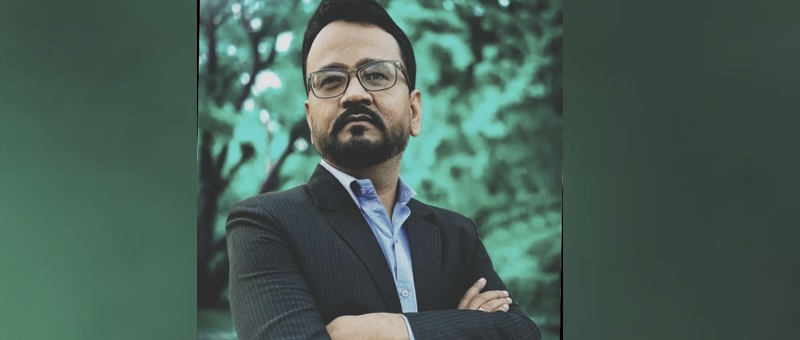
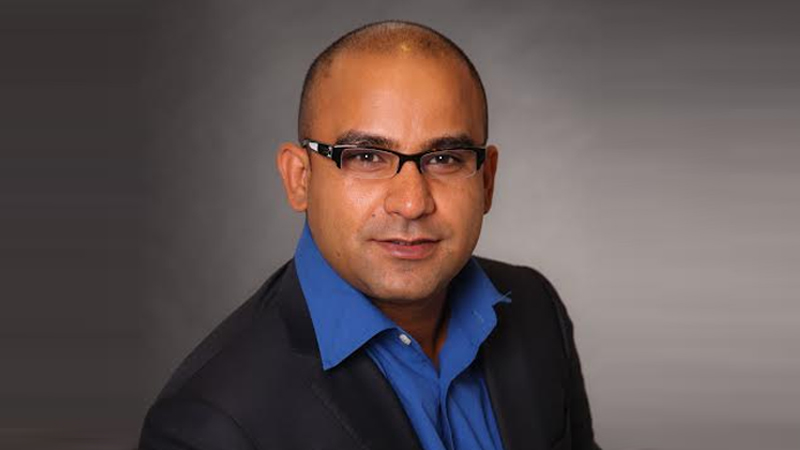
    MUMBAI :India Gate basmati rice maker KRBL has a new media custodian getting on board. Virender Singh Rana has joined the world’s largest rice millers and basmati rice exporter as assistant general manager – media and brand experience. 

    A commerce graduate, Virender has got most of his savvy media learnings over the years on the job. He spent the first eight years of his career at media concessionaire Avcom Media learning the tricks of the media buying trade . He followed that up with a good 10 years at Initiative Media getting deep insights into media strategy, media planning, buying, campaign management for clients operating in various categories right from FMCG to  e-commerce to healthcare, to lifestyle. He climbed up the ranks to become associate business director- investment.

    And that’s where he was identified as the media professional who could help KRBL as it “charts new paths with an expanding product portfolio. Virender’s strategic vision and expertise in media strategy and market analytics will play a pivotal role crafting transformative media and  brand experiences and deepening connections with the company’s consumers.”

  • AdClub’s M.Ad Quiz is scheduled for Saturday 14 Dec 2024 at 6:30 pm

    AdClub’s M.Ad Quiz is scheduled for Saturday 14 Dec 2024 at 6:30 pm

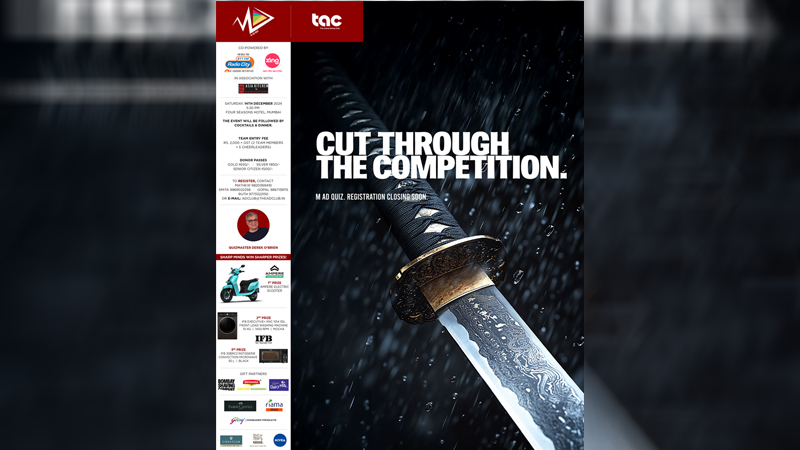
    MUMBAI: It may be called M.Ad. But the focus  at  the Ad Club’s M.Ad Quiz is not on the insanity of advertising, rather it is on the celebration of human ingenuity.  Scheduled for Saturday 14 December 2024 at 6.30 pm at The Great Room, Four Seasons Hotel, Worli, Mumbai, this event invites participants to unleash their creativity and passion for knowledge in a fun-filled evening led by the legendary Derek O’Brien, a master quiz host.

    This quiz involves  participants from the media, advertising, and marketing industries, as well as curious professionals from various sectors, including business school students.  The  program promises exciting prizes from leading brands, ensuring enjoyment for both participants and the audience. Winners can look forward to prizes such as an Ampere Electric Scooter, IFB washing machines, microwaves, and products from renowned brands like Britannia, Godrej Consumer Products, and Nestle.

    Co-powered by Radio City and Zing, with Mainland China as the associate sponsor, the M.Ad Quiz reaffirms The Ad Club’s commitment to nurturing young talent and promoting creativity.

    The Ad Club president Rana Barua stated, “The M.Ad Quiz is a testament to The Ad Club’s unwavering commitment to nurturing young professionals and creating platforms that inspire creativity and curiosity. With the legendary Derek O’Brien at the helm, this coveted quiz celebrates the brilliance of young minds and fosters connections that transcend industries.”

    Teams will consist of two members, and each team can bring five cheerleaders at no additional cost. The final six teams selected will compete on stage during the final session. Organisations can enter multiple teams.

    Entry Fee for Participation:

    1   Team Entry: Rs. 2000- plus 18% GST (total Rs. 2360/- for two team members and five cheerleaders)

    Donor Passes:

    1   Gold Member: Rs. 650

    2   Silver Member: Rs. 850

    3   Ad Club Senior Citizen Member: Rs. 500

    The event will conclude with cocktails and dinner.

  • Titan zips into fragrances with Fastrack perfumes

    Titan zips into fragrances with Fastrack perfumes

    MUMBAI:  It’s moving on to a new track. Youth fashion brand Fastrack has moved into the premium mass fragrance market with the launch of a new perfume range which is catering to the growing demand for affordable yet high-quality fragrances. 

    The target audience: Gen Z. The Indian perfume market is experiencing rapid growth, particularly in the value segment (sub-Rs 1000). This surge is driven by a new generation of consumers who prioritise personal care and self-expression. With increased awareness and the influence of social media, more and more people are recognizing the power of fragrances to enhance their personality and lifestyle. 

    Through consumer research, the brand has identified key occasion-based usage scenarios and developed fragrances that perfectly complement these moments.

    “The Indian fragrance market is experiencing a significant shift. Our research shows that young Indians are ready to graduate from deodorants to fine fragrances, but they seek affordable options that don’t compromise on quality,” stated Titan Co CEO fragrances &  fashion accessories division Manish Gupta. “The launch addresses a critical market gap in the affordable premium segment, as young consumers increasingly upgrade from deodorants to fine fragrances. These cohorts use fragrances not just as a grooming essential, but as a means of self-expression and style enhancement. As a trusted youth brand, our new perfume range is uniquely positioned to serve this emerging consumer base with premium fragrances that align with their lifestyle and aspirations. “

    The new collection comprises six distinct fragrances. For men, the range includes Night Out, a sophisticated woody fragrance with oriental notes; Rush, a fresh woody scent for dynamic personalities; and Ease, a classic fougère for everyday confidence. The women’s collection features Lush, an indulgent floral fragrance; Girl Boss, a powerful floral scent for the modern professional; and Wander, an oriental fragrance for the free spirit.

    Fastrack’s new range is strategically priced at Rs 845 for 100ml, targeting the high-potential sub-Rs 1,000 segment. 

    TVFastrack
    Fastrack has released two engaging films that resonate with the values and aspirations of Gen Z. Sick Leave celebrates the importance of mental health and self-care, challenging traditional notions of workplace culture. Date – a twist you didn’t see coming emphasises the importance of empathy, understanding, and authenticity in modern relationships.
     

  • Netflix looks to spread  Squid Game 2  fandom, partners with Duolingo for Korean language course

    Netflix looks to spread Squid Game 2 fandom, partners with Duolingo for Korean language course

    MUMBAI: K-Dramas, K-Pop are all the rage amongst India’s Gen Z and Gen Alpha. And there’s a fascination with all things Korean whether makeup or food. or Korean wear And to tap into that demand, mobile learning platform  Duolingo  has partnered with Netflix’s global sensation Squid Game to promote Korean language learning through a unique and immersive campaign.

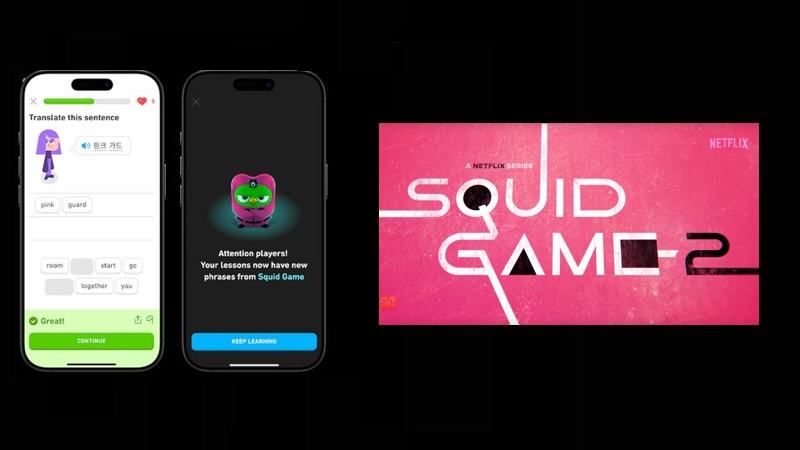
    Titled Learn Korean or Else, the initiative blends Duolingo’s signature humour with the high-stakes intensity of the hit series, inspiring fans to commit to their Korean lessons just in time for the highly anticipated premiere of Squid Game Season 2 on 26 December 2024. 

    As part of the campaign, Duolingo has updated its Korean course to include phrases and keywords inspired by the show, deepening fans’ connection to its cultural and linguistic nuances.

    As per the press release Duolingo is adding over 40 keywords and phrases from Squid Game to its Korean course, enabling learners to connect even more closely with the series. 

    By learning Korean, Squid Game fans can appreciate the renowned series on an entirely new level, experiencing dialogue, expressions, and cultural context in ways only possible through understanding the language.

    “We saw a 40 per cent increase in Korean learners just after Squid Game Season 1, underscoring the powerful connection between entertainment, culture, and language learning,” said  Duolingo CMO Manu Orssaud. “This campaign allows us to continue that momentum in a way only Duolingo can—with humour, intensity, and a bit of chaos! We hope fans will accept Duo’s challenge to learn Korean and immerse themselves in the experience.”

    “Great stories can come from anywhere, and last year, about 13 per cent of hours viewed on Netflix in the US were non-English titles — with Korean, Spanish, and Japanese stories attracting the biggest audiences. Embracing the authenticity of these local stories is important to us. Duolingo was the perfect partner for Squid Game Season 2 because not only did we see fans gravitate toward the app to learn Korean after Season 1, but also as a brand, they were willing to go bold with us,” said Magno Herran, Vice President of Partner & Brand Marketing at Netflix. “We discovered a lot of shared traits between Duo the Owl and the Pink Guards — very determined and menacing. So we made it official and gave Duo a Pink Guard uniform and ultimately created something we know fans will love and talk about, cheering A-ssa! in celebration.”

    The partnership leverages Duolingo’s beloved mascot, Duo the Owl, who has taken on the role of a Squid Game Pink Guard. Like the series’ challenging environment, Duo isn’t afraid to raise the stakes. Whether chasing down users in videos or appearing at fan events and on billboards, Duo reminds fans to learn Korean or “face the consequences”.

    Campaign Highlights

    ●    Creative Series: A suspenseful teaser video introduces Duo as a Pink Guard, setting the stage for the Learn Korean or Else message, which will also run on Netflix’s ad-supported plan. Following the teaser, an extended music video, directed by Warren Fu (Dua Lipa’s Levitating and Megan thee Stallion feat. RM’s Neva Play) and choreographed by award-winning dancer and choreographer Sean Bankhead, features Duo leading a high-energy dance routine with guards in a K-pop remix of Squid Game’s Pink Guards as they humorously chase a learner who forgot to complete their Korean lesson. The cinematic videos will air across YouTube, TikTok, and Instagram.

    ●    “Korean or Get Eaten”: Netflix’s music lab team created a K-pop remix of the ominous song, Pink Guards, now available on Spotify. The track Korean or Get Eaten, uses a naming convention Duolingo employs for its music tracks to playfully threaten learners to do their lessons (e.g. Japanese or Broken Knees, Spanish or Vanish). The lyrics, performed in both English and Korean, spotlight the recognisable Red Light, and Green Light game played in Squid Game and feature hidden threats in Korean, only understandable if you did your Korean lesson (e.g. 살아 남아야지 Don’t you wanna survive? 빨리 외워 “Hurry up and memorize it). The track supports the campaign’s dance challenge on social media, encouraging fans to engage with Korean culture through a fun, viral music experience.

    ●    TikTok Interactive Game Filter: An exclusive TikTok filter, inspired by the show’s Red Light, Green Light game, lets users test their Korean skills with voice-activated challenges featuring Duo as Squid Game’s menacing doll in the iconic pink suit.

    ●    Out-of-Home Stunts: In true Squid Game style, Duolingo and Netflix are taking over Koreatown billboards in LA, and NYC, with cryptic Korean messages challenging viewers to “learn Korean to stay safe”. In an unforgettable live stunt, Duo and his Pink Guards will hack Netflix’s iconic Sunset Boulevard marquee billboard, replacing the English words with Korean, in their menacing attempt to influence fans to learn the language.

    As fans eagerly await Squid Game Season 2, Duolingo is set to bring them closer to the action than ever before—through language. With viral social content, immersive fan interactions, and innovative language learning challenges, Duolingo’s Learn Korean or Else campaign will be impossible to ignore.

  • WPP hires former Accenture executive Prashant Mehta to lead its India GDC

    WPP hires former Accenture executive Prashant Mehta to lead its India GDC

    MUMBAI:  WPP is betting big on India. The creative transformation company early on 12 December announced that it was pumping more bucks into India by scaling up its global delivery centre  (GDC) operation in the country. It has brought on board  former Accenture executive Prashant Mehta as managing director to lead it with the responsibility of accelerating its growth globally, with the highest concentration of talent based in India.

    The specialist capability hub, which is accessible to all WPP agency teams around the world, will be headquartered in India. This further commitment to the market follows the November 2024 announcement of a new campus in Chennai,  WPP’s third after Mumbai and Gurugram.

    India’s is among its top 10 growing markets and a major source of tech innovation and creativity, and the company has been strategically scaling up its GDC team in the country.. Building on the company’s 11,000-strong workforce in the country, the GDC takes advantage of the significant resources and strong foundation of specialist expertise already in place to further accelerate WPP’s presence in the market.

    The GDC currently employs 10,000 people around the world and plays a critical role in WPP’s business transformation and simplification strategy. It unlocks WPP’s best-in-class specialist capabilities such as cloud modernisation, hyper-personalisation, composable commerce, VR and XR experiences, generative AI and product engineering to offer fully integrated and innovative solutions for clients. These services will complement existing agency expertise across media, content, customer experience (CX), commerce, technology, data and design.

    Prashant is an experienced digital transformation expert and joins WPP from Accenture, where he was global managing director of global assets at Accenture Song, responsible for its generative AI-led asset strategy, delivery and adoption. Prior to Accenture, he was the global chief product and delivery officer for Dentsu Creative & Experience, and group VP at Publicis Sapient.

    “Our GDC enables agency teams and their clients to tap into specialist expertise and new capabilities, “ said WPP CEO Mark Read. “It is underpinned by WPP Open, our AI-driven operating system for marketing transformation, fuelling growth and connecting the dots across our business. I welcome Prashant to WPP and look forward to working with him to develop our offering.”

    WPP  country manager for India CVL Srinivas, added: “As we look to drive further growth and transformation in and from India, we are excited to welcome Prashant Mehta onboard. The expertise of our team in India makes it the prime location to power our clients’ needs with a scaled world-class GDC.”

    Prashant Mehta pointed out: “It is an honour to be leading the WPP GDC, which has been built to evolve with the changing demands of our clients while delivering the highest standards of excellence. I look forward to working with our integrated teams as we harness AI and creativity to transform how we deliver growth for our clients.”

  • Shrey Talwar joins Hidesign as chief sales officer

    Shrey Talwar joins Hidesign as chief sales officer

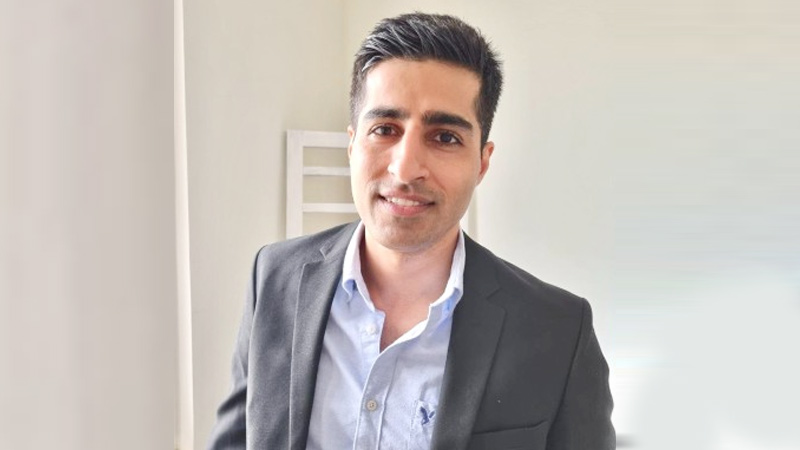
    MUMBAI: With a career graph like he has, it’s no wonder why Hidesign has taken on Shrey Talwar as its chief sales officer from the beginning of this month. The Nift graduate and business administration post graduate, spent nine years in his last assignment with Aditya Birla Fashion & Retail and exited as national retail & operations manager – Van Heusen.

    Prior to that he took a short 10 month job at Blackberrys, which he joined after working for Madura Fashion & Lifestyle for two years plus.

    He began his career with Color Plus Fashions where he was employed as an assistant manager design for nearly two years. 
     

  • AdCounty Media appoints Sanchit Sanga as board advisor for global growth

    AdCounty Media appoints Sanchit Sanga as board advisor for global growth

    In a bold move to redefine its growth trajectory, AdCounty Media onboards digital pioneer, Sanchit Sanga, as board advisor. Sanchit’s appointment marks an exciting new chapter of innovation and strategic excellence for a company with an impeccable legacy of revolutionising digital landscapes in emerging markets. He successfully navigated the complex intricacies of digital ecosystems and kept well with the company’s objective to lead the development of performance-driven marketing solutions and international growth.

    Sanchit Sanga, a seasoned digital strategist with well over two decades of expertise, has spearheaded innovative marketing campaigns that have shaped the Asian Pacific and the Middle East, leading to growth and expansion throughout Africa. He has held a significant role in establishing many digital enterprises in his successful career and is therefore aware of new industries. Sanchit is known for using data-driven insights to create strategies that have an impact, blending creativity and result-oriented thinking to promote brand engagement and long-term growth.

    With extensive expertise as a management consultant, investor, and strategic mentor, Sanchit has acquired expertise in guiding high-growth startups towards achieving their maximum potential.

    Sanchit will now assist AdCounty Media to tap into emerging markets and forge meaningful connections across diverse geographies to propel global growth through digital transformation, strategic partnerships, and market expansion WelcomingSanchit Sanga to the board reflects AdCounty Media’s focus on leveraging class expertise toward innovation, growing its international footprint, and even redefining success in digital marketing.

    “AdCounty Media’s bold vision and relentless drive resonate deeply with me. I’m excited to collaborate with this dynamic team to explore uncharted markets and make waves in the digital marketing ecosystem”, said Sanchit.

    “Sanchit’s appointment is a statement of intent. His unparalleled expertise in emerging markets and his forward-thinking approach are exactly what AdCounty Media needs to scale new heights. We’re excited to see how his vision will steer the direction of our journey,” AdCounty Media managing director Aditya Jangid.

    “Sanchit offers a special combination of execution and strategy that is uncommon in the field of digital marketing. His knack for identifying untapped opportunities will help us sharpen our focus on delivering exceptional results for our clients,” AdCounty Media chief revenue officer Delphin Varghese.

    “Having Sanchit onboard feels like adding a master strategist to our arsenal. His depth of experience in digital transformation aligns perfectly with our mission to craft innovative solutions and drive measurable success,” AdCounty Media chief strategy officer Kumar Saurav. 

  • Nestasia appoints Upasana Dash as VP of branding

    Nestasia appoints Upasana Dash as VP of branding

    MUMBAI: Nestasia has announced the appointment of Upasana Dash as vice-president of branding. With over a decade of experience in the marketing industry, Dash brings a wealth of expertise in developing integrated marketing strategies that enhance brand awareness and drive revenue growth.

    Prior to joining Nestasia, Dash held significant positions at leading organisations, including RP-Sanjiv Goenka FMCG, Berger Paints India, and Emami Agrotech. In these roles, she successfully led digital marketing initiatives, performance marketing strategies, and e-commerce developments, creating impactful campaigns that resonated with consumers.

    Dash’s leadership has been instrumental in achieving accolades for her previous companies, including a prestigious recognition as the best social media brand at the Sammie Awards in 2019. Her collaborative approach and strong communication skills enable her to effectively manage stakeholder relationships and inspire her teams.

  • Vivendi shareholders give goahead to spinoff Canal+, Havas and Louis Hachette group

    Vivendi shareholders give goahead to spinoff Canal+, Havas and Louis Hachette group

    MUMBAI: If you thought, the world of advertising is only going through fusion following  the acquisition and merger of Interpublic group by the Omnicom group, you would be better off thinking otherwise.

    In Europe, there’s fission taking place. The combined general shareholders of Vivendi yesterday gave the company the go-ahead to break into pieces. 97.5 per cent of the votes were in favour of the separation of Vivendi from Canal+, Havas, and the Louis Hachette group (the company bringing together the 66.53 per cent investment in Lagardère and 100 per cent of Prisma Media). 

    The first trading day for the shares of these three companies will therefore take place, as announced, on 16 December 2024, respectively on the London stock exchange, Euronext Amsterdam and Euronext Growth Paris.  
    With a quorum of 71.96 per cent of shareholders present or represented, the two resolutions requiring approval by a two-thirds majority of votes, namely those regarding partial asset contributions subject to the French legal regime applicable to partial demergers (apport partiel d’actifs soumis au régime des scissions), were overwhelmingly adopted with 97.57 per cent of the votes for the Canal+ partial demerger and with 97.58 per cent  for the Louis Hachette group partial demerger.

    The resolution regarding the distribution in kind of Havas NV shares to the Vivendi shareholders, requiring the approval of a simple majority of votes, was adopted with 97.61 per cent of the votes. 

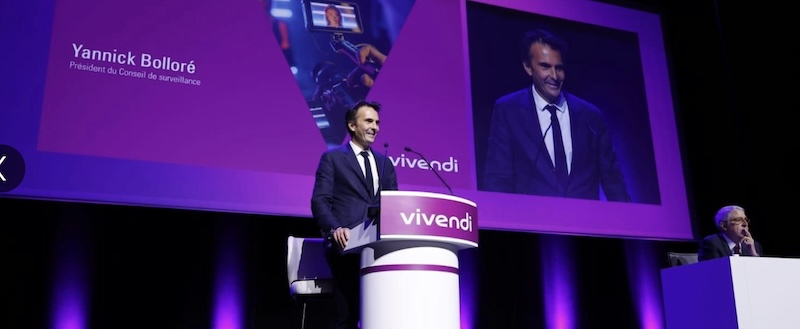
    Said  Havas chairman & CEO and chairman of the supervisory board Yannick Bolloré: “We are delighted with the very high adoption rate of our spin-off project. This undisputable result confirms the strong support of our shareholders for this transformative transaction. Over the past year, the teams have been working on this transformative project, which aims to better reflect the value of Canal+, Havas, Lagardère, and Prisma, which have been impacted by a conglomerate discount affecting the group for several years; to unlock their full potential in a global landscape filled with significant investment opportunities.This vote gives new momentum to Canal+ group, Havas, Lagardere and Prisma Media and marks a new era full of opportunities for Vivendi. The company will continue to play its role, particularly by pursuing the transformation of Gameloft and optimizing its portfolio of high-quality assets.”

  • GroupM’s year-end ad industry update and projections for 2025

    GroupM’s year-end ad industry update and projections for 2025

    MUMBAI: GroupM, WPP’s media investment group, today published the topline findings of its End-of-Year Global Advertising Forecast for 2024. The report, which analyses advertising investments over the past 12 months and shares projections for 2025 and beyond, finds that strong performance of the largest sellers of advertising and increased digital expansion have propelled growth in global advertising investment to 9.5 per cent this year.  The industry will surpass $1 trillion in total revenue for the first time in 2024 (excluding US political advertising) and grow another 7.7 per cent in 2025 to reach $1.1 trillion. Additionally, ad revenue growth will outpace nominal GDP growth in 2024 and 2025.

    Ad revenue growth

    Pure-play digital advertising (excluding digital extensions of traditional media such as CTV and digital out of home – DOOH-  but including YouTube and Tiktok) –  remains the strongest channel and is estimated to grow 12.4 per cent globally in 2024 and make up 72.9 per cent of total advertising in 2025. It is expected to grow 10 points in 2025 to $813.3 billion. The steady growth till 2029 will see it capture 76.8 per cent of all spends. 
    TV remains the most effective form of advertising, according to research. Yet we forecast global TV (including both linear and streaming, but excluding political revenue) will grow just 2.4 per cent on a compound basis from 2024 to 2029, significantly slower than total advertising growth of 6.4 per cent.  It is estimated to grow 1.9 per cent in 2025 to touch $169.1 billion.

    Retail media continues to emerge as a rapidly expanding segment within digital advertising, is estimated to reach $177.1 billion globally in 2025, surpassing total TV revenue, including streaming, for the first time.

    Out-of-home (OOH) advertising has maintained its share of the global advertising industry, largely due to the strong performance of its digital counterpart, DOOH, which is predicted to account for 42 per cent of total OOH revenue in 2025. Growth in 2025  is expected to be at at 7.2 per cent reaching $56.1 billion and accounting for five per cent of overall global ad spend. OOH has done  better than any other channel in the face of the digital onslaught.  It has almost certainly benefited from its “unskippable” nature in more recent years, its location-based value proposition, and its rapid digitalisation and innovation.

    Global AD growth vs Global GDP growth

    Global audio revenue will remain largely flat in 2025. But  streaming audio will see double digit growth in 2024 and 4.4 per cent growth on a compound annual basis through 2029.. Traditional audio, however, will see its share drop from 1.8 per cent of global advertising in 2024 to 1.2 per cent in 2029  (although it will still account for more than 60 per cent of total audio ad revenue).

    Print advertising, inclusive of all traditional and digital formats across both newspapers and magazines, will face further declines, dropping 4.5 per cent in 2024 and a further 3 per cent in 2025 to $48.1 billion. This medium continues to faces further declines, largely due to increasing digitization and the influence of AI.   By 2029 their combined share will represent just 3.0% of total ad revenue, down from 10.7  per cent in 2019 and 35.1 per cent in 2009. 

    Cinema advertising is forecast to grow 5.2 per cent in 2024 and a further 5.9 per cent in 2025, though the $2.3 billion total will fall short of 2019’s $3.0 billion global figure. Some markets will have surpassed 2019 levels by 2025, but of the world’s five largest cinema ad markets, namely the US, Brazil, the UK, India, and south Korea, only Brazil will have completed its recovery by 2025.

    All top 10  advertising markets are forecast for growth in 2024, although to varying degrees. The US and China remain the two largest markets, with total ad revenue expected to grow 9 per cent to $400.2 billion and 13.5 per cent to $204.5 billion respectively. The UK remains in third place, just ahead of Japan. Germany and France  maintain their rankings, followed by Canada, Brazil, India and Australia.

    Growth rates in ad revenues country by country

    On artificial intelligence the Group M report say that it is s a multiplier of technology and creativity, not a driver of advertising growth in and of itself. Brands are often rewarded by shareholders for touting their use of the technology to increase efficiency and improve productivity. Yet consumers are more fickle, at times embracing its uses and at other times decrying them. Brands that lean into the obvious direction of travel toward more AI while ensuring it remains ethically responsible are likely best positioned over the long
    term to capitalize on the effects. 

    The Group M report also gave some insights of the main advertising categories: 

    CPG: In a world preoccupied with conflict, technology, and an increasingly algorithmically driven media diet, CPG brands are looking to identify and align with cultural moments to help drive brand differentiation and sales growth. While media consumption has shifted in some part to online, and social channels in particular, the impact of TV (including both linear and streaming) is likely to retain its importance for CPG brands as companies look to drive both long-term brand health and near-term purchases.  the median advertising intensity (advertising expense as a percentage of revenue) is at 5.3 per cent.

    Digital endemics: In 2017, nearly a decade ago, the median advertising intensity (advertising expense as a percentage of revenue) for this group of companies was more than 19 per cent invested to a large extent on digital channels by in-house teams. Over the last two years, a focus on profitability amid rising interest rates and an increasing reliance on brand storytelling by the now “establishment players” has led to some growing pains and a sector-typical willingness to test, innovate, and make big bets. The median advertising intensity currently stands at 12.8 per cent.

    Retailers: While the biggest companies in this group, including Amazon, PDD and Walmart, have continued to report strong GMV growth, others (especially smaller, more nationally focused brick-and-mortar players), have sounded the alarm on consumer cautiousness and slowing sales. These companies may be able to offer an in-store experience the e-commerce players can’t, but some marketers may find it challenging to differentiate their store’s offerings across a range of more digital touch points. The median advertising intensity  for this category stands at 0.8 per cent.

    Media and entertainment:  The outlook for the year ahead does appear more positive than when we penned last year’s report. Streaming platforms at Disney, WBD, Paramount, and Netflix have all turned quarterly profits, and losses are narrowing at Comcast, ITV, and others. Revenue growth accelerated in Q3 of this year for all segments other than music, with positive growth in all segments (the first time that has been true since Q1 of 2022). However, linear TV’s gains from having the U.S. elections, the Olympics, the Copa America, and the Euros all in the same quarter are unlikely to be sustainable going forward. The median advertising intensity  for this category stands at 5.9 per cent.

    Automotive: Automotive advertisers are now caught in a similar situation to media companies. The writing seems to be on the wall as to future emissions requirements and the transition to battery powered and hybrid cars (similar to the shift to streaming). But the economics haven’t yet caught up and the competitive field for electric vehicles is much more fragmented than that of traditional combustion vehicles. Newer players like Byd are offering cheaper EVs and at the same time investing in coveted sports sponsorships like the UEFA Euros tournament in summer of 2024. The median advertising intensity  for this category stands at 7.4 per cent.

    Financial services: Because of compliance issues and integration complexities, the industry has been slow to avail itself of a host of new offerings that other sectors have adopted, including retail media networks, social media, and influencer marketing. Partly due to a renewed (and necessary) focus on brand building, companies in the sector continue to make significant investments in audio, TV, and sports sponsorships. Economic uncertainty and the growing distrust of traditional financial institutions further complicate the landscape, creating both opportunities and challenges for tech-forward financial brands. Balancing brand building with performance marketing and navigating compliance requirements are likely to remain key areas of focus. The median advertising intensity  for this category stands at 1.9 per cent.

    Technology:  The rapid pace of innovation is forcing adaptation on the part of tech advertisers. B2B brands are shifting to more digital marketing-led strategies, adding complexity to existing measurement and reporting. Digital channels are increasingly seen as critical to reaching new generations of consumers (whether for consumer or enterprise products), but as competition heats up, differentiation is challenging. Brand building continues to rely on sports, though advertisers are finding the space crowded as more sectors look to sporting events for scaled reach and cultural relevance. The median advertising intensity  for this category stands at  2.1 per cent.

    Pharma: Every industry is in a constant state of evolution and flux, but healthcare may rival advertising with the pace and magnitude of external factors driving change for the sector. Populations are aging and environmental and dietary factors are rapidly influencing future health outcomes (and future healthcare and pharmaceutical needs). And, in a recurring motif from this year’s report, competing successfully in a rapidly evolving industry can be complicated by internal divisions, regional and local nuance, and lagging technological integration. The median advertising intensity  for this category stands at  2.8 per cent.

    Luxury: Luxury advertisers have experienced significant volatility by region over the last four years. Consumption has flagged in China this year, and organic growth has slowed in North America as well. The APAC region, excluding Japan, has declined in the last three quarters for most companies reporting such a segment. Outperformance in Japan likely has more to do with a weaker yen and travelers from China, especially, looking for deals, implying a more transactional and price-conscious luxury consumer in 2024 and 2025.  The median advertising intensity  for this category stands at nine  per cent. 

    The report concludes by saying that the advertising industry is hurtling through a rapid evolution brought on by the pervasive use of AI and an ongoing shift to digital channels. Pureplay digital advertising, projected to surge 12.4 per cent  in 2024 and 10.0 per cent in 2025, is solidifying its dominance, representing 72.9 per cent of total advertising revenue in 2025 and a projected 76.8 er cent  by 2029. This digital dominance, however, is accompanied by increasing scrutiny and regulation, creating a complex environment for marketers to navigate. 
     
    While the narrative of television’s decline persists, its effectiveness remains undeniable. Despite this, global TV revenue, including streaming, is forecast to grow at a more modest 2.4 per cent  compound annual rate from 2024 to 2029, significantly trailing overall advertising growth. This divergence underscores the need for marketers to pursue a balanced approach, leveraging all the tools and channels available to meet both performance and long-term brand goals.

    (The visual was generated using Canva. No copyright infringement is intended)