Category: Media and Advertising

  • Mindshare launches global wearable technology unit Life+

    Mindshare launches global wearable technology unit Life+

    MUMBAI: Mindshare, the global media agency network that is part of WPP, has set up a global wearable technology group called Life+ to help brands take advantage of the nascent technology.

    Life+ is headed by Mindshare North America MD- Mobile Jeff Malmad and is designed to help brands understand the opportunity that wearable technology presents, whilst ensuring issues around privacy and consumer utility are considered and prioritized from the start.


    Mindshare clients will be able to work with leading wearable technology companies to learn, discuss and eventually create, brand related applications, integrations and product developments based on wearable tech APIs.

    Life+ has already formed a strategic partnership with MapMyFitness, the leader in the emerging connected fitness category, building on its advanced technology, data, and rapidly growing global fitness community to create unique opportunities for Mindshare clients.  The MapMyFitness platform engages over 26 million members by supporting over 400 cutting-edge fitness and activity tracking devices, along with top ranked fitness tracking apps on iOS and Android. 


    The partnership began at an event in New York on 8 July, where Life+ and MapMyFitness worked with Mindshare clients to research consumer receptivity points within their quantifiable ecosystems, including adaptive messaging opportunities based on physical state and needs. MapMyFitness will be joined by other, undisclosed, wearable technology companies to work with Mindshare client teams on brand integration opportunities as part of Life+.

    Life+ is open to any Mindshare client interested in understanding the opportunities that wearable technology can offer in enabling consumers to meet their goals and lead better lives.


    Mindshare defines ‘wearables’ as any technology worn by a human externally that is ‘beyond the three screens’ and that integrates with a human’s own biometric characteristics, which includes activity trackers (Jawbone), smart watches (Samsung Galaxy Gear), augmented reality devices (Google Glass) fitness watches and sensors (Garmin) and the broader spectrum of health-related devices.
     

    Mindshare chief digital officer Norm Johnston said, “Twenty years after the launch of the first Internet advertisement, and a year after the long-awaited mobile tipping point, digital marketing is now entering a third and radically different chapter. This new, expanded Internet will give smart brands a chance to give consumers valuable brand content and utilities in a myriad of new hyper-connected destinations. Mindshare look forward to helping our clients navigate and accelerate their efforts in this space.”


    The launch of Life+ follows Mindshare’s launch of Audio+ in November 2013, a tie-up with audio recognition service Shazam to audit, map and leverage a brand’s audio assets.

  • Cheil Worldwide SW Asia announces a raft of creative appointments

    Cheil Worldwide SW Asia announces a raft of creative appointments

    MUMBAI: Cheil Worldwide SW Asia [Cheil India] has bolstered its creative department with the appointment of seven new members.


    The names include Jayant Mathew, Varun Goswami, Joy Sen Gupta, Prashant Sharma, Navajyoti Pegu (Oyio), Prasanth G and Ankur Kalita.


     “These are truly exhilarating times at Cheil India as we see top talent making a beeline to join us,” said Cheil Worldwide SW Asia COO Hari Krishnan. “This creative infusion will give impetus to our philosophy of ideas that move in creating winning solutions for our clients.”


     “At Cheil, we are always on the lookout for talent and we have been steadily filling the place with good people at all levels. This time, however, an opportunity presented itself because of which we were able to open our doors to all these guys in a matter of a couple of months,” added Cheil Worldwide, SW Asia chief creative officer Nima DT Namchu.


    At Cheil India, Jayant Mathew will be partnering Navin Theeng, group creative director-copy. Both Varun Goswami and Joy Sen Gupta will be working as a team as will be the case with the duo- Prashant Sharma, and Navajyoti Pegu (Oyio). Prasanth G will be working on brand Samsung for SAARC and Ankur Kalita will report to Navin Theeng.


    Jayant Mathew moves from Publicis where he was creative director and will now take charge as group creative director – art.


    Varun Goswami and Joy Sen Gupta, both join from Lowe Delhi where they were unit creative directors. Goswami’s will join sr creative director –copy while Gupta is the new senior creative director –art.


    Prashant Sharma joins from McCann World Group where he was creative director- art and will join in as senior creative director-art. Similarly, Navajyoti Pegu (Oyio) will be joining as senior creative director- copy who was earlier with McCann World Group.


    Prasanth G joins from JWT and will be the new sr creative director-art.


    Ankur Kalita has moved from McCann World Group, where he was creative leader at their New Delhi office.  His current designation will be creative director – copy.

  • All India Bakchod re-lives 90’s era of Indian advertising

    All India Bakchod re-lives 90’s era of Indian advertising

    MUMBAI: Don’t judge them by their name. All India Bakchod (AIB) is what they call themselves. They are probably India’s most vocal bunch of youngsters on YouTube. They definitely make you LOL (laugh out loud) with every take of theirs be it on films, politics to even advertising.

    Team AIB which includes names like Tanmay Bhat, Rohan Joshi, Gursimran Khamba and Ashish Sakya who are popular on the digital world. The podcasters today have over 38.5 K Twitter followers, 504,286 likes on Facebook and over 505,473 YouTube subscribers.

    AIB for their latest video has collaborated with Voctronica to a pay tribute to the evergreen era of Indian advertising. It can be noted that AIB has partnered with Snapdeal and has subtle mentions of the brand for this video. Snapdeal also is selling AIB merchandise. The video has been watched over 136,260 times on the video-sharing site at the time of filling this story.

    AIB with this video takes you back to the time when advertising was all about catchy jingles.

    Click here to watch the video


  • Missed call from FB will accelerate digital engagement: Valerie R Wagoner

    Missed call from FB will accelerate digital engagement: Valerie R Wagoner

    It was in April that Facebook announced that it had 100 million active users in India, and was aiming at touching the one billion landmark. The social networking site which now has an established subscriber base, is looking at launching more ad inventories. The latest from its kitty is the missed call ad product, which according to Facebook has already started generating some buzz.  


    The announcement of this new ad format had come at a time when Facebook COO Sheryl Sandberg was visiting India hobnobbing with government officials, and small and medium business owners.


    Facebook has partnered with ZipDial, a Bangalore based mobile agency for this. Indiantelevision.com’s Priyanka Nair speaks to ZipDial founder and CEO Valerie R Wagoner at length to understand the mobile marketing ecosystem in India, partnership with Facebook, the agency’s journey and much more.


    How has marketers’ demand from mobile marketing changed in recent years? 


    In emerging markets where the vast majority of consumers are still not online and still pay for things in cash, there is exceptionally little data on consumers and their preferences and behaviours. However, only this year, marketers we work with, are ready to embrace a comprehensive data strategy.


    Four years ago at the end of 2009 when we started ZipDial, marketers were barely getting comfortable with using the mobile at all, and it was an era of small experiments. By around two-three years ago in early 2012, using the mobile for media activations had become an industry standard. By now, marketers are truly embracing both, bridging offline-to-online consumer experience over the long-term, and driving a real business impact from data and analytics.


    You have been in the business for four years. How were the initial days?


    The idea for ZipDial was born from a brainstorming session between Sanjay Swamy (now chairman of ZipDial) and me on a late night flight back to Bangalore from New Delhi. Over next couple months, we fine tuned the idea further with as many as 600 varied user cases.


    The idea just stuck, and within a few more weeks, we had launched a minimum viable product. I think the ideation and execution happened within a short time. But ideas are cheap. Anyone can have an idea. To be really successful, an entrepreneur has to be great at execution, to think strategically about how to drive real inflection points in the business, and have the stamina to see through. What was launched as a mere polling product, over time transformed into a full-fledged mobile marketing and analytics platform.


    ZipDial founder and COO Amiya Pathak and the tech brain created a prototype during IPL 2010 wherein users could give a missed call and get live cricket scores. With zero marketing, within a couple of months, millions of users were zipdialing millions of times a day. It took off completely word-of-mouth. That was the first sign of success. Shortly thereafter we cracked P&G Gillette as our first big client, and we never looked back.


    How did you partner with Facebook? Can you elaborate on how the partnership will work?


    We launched the Facebook-ZipDial missed call ad product with Facebook as its partner for emerging markets (only company in the world). We collaborated and drove conception, design, development, sales, and analytics. In fact, given that the vast majority of the engagement happens on ZipDial after the user clicks on the Facebook ad, we have a lot of interesting data comparing performance across different media as well as performance between Android and feature phones.


    The purpose of the Facebook-ZipDial ad product is to create online-to-offline engagement and driving results. Facebook can track to the level of a click and online engagement. Upon user dialing, ZipDial takes over the consumer experience to drive actual outcomes in the offline world via retargeting, for example reminders to the user encouraging them to buy a product, visit an outlet, watch a particular TV channel, download particular content or an app, etc. Everything is 100 per cent permission-driven by the user and is targeted to them.


    We also need to track performance of Facebook v/s other media channels because ZipDial integrates across all media channels, including print, TV, OOH, and non-Facebook digital ads. We can track which media drives higher RoI for the advertiser.


    To put this in simple words, Facebook is the media where the ad is displayed. The user clicks on the ad. As soon as the user responds to the ad, it bridges from Facebook into a 100 per cent ZipDial experience.

    Coca-Cola (Coke Studio), L’Oreal (Garnier Men), P&G (Gillette), Mondelez (Cadbury Dairy Milk), Disney Channel and Nestle are a few campaigns that have used the inventory so far.


    We also need to give a performance analysis across media. This includes results from analysing the cost effectiveness of each media in terms of driving unique user acquisition. The metric used is user acquisition cost = spend on media / number of unique users who engaged from that media, averaged across all client campaigns.


    It can be noted that digital (including Facebook and non-Facebook digital) performed 10.40 times better than print and Facebook performed 3.02 times better than non-Facebook digital ads.


    How does the Garnier Men campaign for which Facebook has partnered with you work?


    Garnier Men had been for long planning to run a campaign with ZipDial for print and digital media. ZipDial designed and implemented the campaign on the platform in order to drive engagement with brand content around IPL 2014. The ZipDial campaign for Garnier Men was planned well in advance.


    Luckily the Facebook-ZipDial product was launched in time such that Facebook could also become part of L’Oreal’s marketing plan for the Garnier Men campaign. The results have been phenomenal with the Facebook-ZipDial ad performing 16 times better in terms of RoI than the same ZipDial integration with Garnier’s Print Ads.


    What according to you makes a campaign hit on mobile?


    There are many reasons. But, one of the major reasons is that today almost 100 per cent of all emerging market consumers have mobile phones. There is an ease of use in the design format that makes it a single click transition from online to offline in a seamless and user-friendly manner.


    Mobile is the unique ID for the customer. Even when consumers bridge from the on-Facebook experience to an offline experience such as watching a TV show or purchasing a product, there can be an offline-engagement in a targeted way.


    What are the key things that brands should keep in mind to build a healthy social conversation? 


    We strongly believe in the six best practices for social and mobile activations. One, know your customer; a visit from an anonymous user is not enough. All engagement should be verified and known-user engagement so that the brand can personalise the experience later.


    Two, don’t lose your customer, use re-targeting and follow-up engagement, don’t just make it a one-off transactional experience. However, never ever spam your consumers, and always make the experience permission-driven and privacy protected. Three, there is simplicity in the call-to-action, do not overwhelm consumers with too many options. Give them one single compelling message and way to engage.


    Four, there is multiplicity after the call-to-action. Target your response to users on a personalised basis in terms of content and interface. No two users with different profiles should receive the same content/interface. Five, it allows to measure your media. Never run a campaign without the ability to track and measure response rates and RoI. This applies across all digital and traditional channels, including print, television, etc.


    Six, every media can go viral, including offline. Never miss an opportunity for a viral campaign. ZipDial achieves between 60-400 per cent increase in reach of media through viral campaigns even when the only media used is offline traditional media. This improves RoI immensely.


    Mobile being a personal medium, there is a lot that a brand needs to keep in mind before making that one missed call. How do you make sure that a user doesn’t hang up?


    The ZipDial platform does all the hard work automatically for the brand. Marketers only need to think about what their brand benefits and the message they want to get. The ZipDial platform does all of the hard work in analysing data and results, profiling users based on preferences and behaviours, and automatically delivering the right personalised message to the right user at the right time, and even through the right user interface (i.e. voice, text, WAP, Apps).


    ZipDial always puts the consumer’s interests and the consumer’s privacy first. If this is broken, then ultimately it reflects poorly on the brand. Conversion rates on ZipDial campaigns are between 9-45 per cent compared to industry standard conversion rates of less than 0.5 per cent. Users trust the privacy-protected and personalised ZipDial experience and therefore stay more engaged.


    Typically how does ZipDial help a brand to roll out its mobile campaign?


    ZipDial keeps a close watch on the needs and trends in the market before advertisers even realise it themselves. We invest in developing our engagement, retargeting and analytics to keep the industry move forward.


    We also work closely with all for brand marketing as well as for trade marketing. Our focus is also to integrate our advanced platform into their overall consumer loyalty, data and marketing strategies. We work hand-in-hand with our most forward thinking marketers and then replicate and scale the solutions across the industry.


    How has H1 of 2014 been for Digital ZipDial?


    ZipDial has already more than doubled its revenue run rate in the first quarter of the financial year. We look forward to working further with clients about their comprehensive mobile, data and loyalty strategies.


    What is at top of your wish list for 2014? 


    Taking ZipDial’s innovative platform global is one of our main priorities for this year. We have already started to expand into the rest of Asia, but we are even more excited to take our expansion further into Africa very soon.


  • TBWA Worldwide ropes in Troy Ruhanen as president and CEO

    TBWA Worldwide ropes in Troy Ruhanen as president and CEO

    MUMBAI: Omnicom Group has a new leader. The media agency has appointed Troy Ruhanen as president and CEO of TBWA Worldwide. Ruhanen succeeds Tom Carroll who will continue as chairman of TBWA Group. Jean-Marie Dru will continue to serve as TBWA Agency Network chairman.


    “Under the leadership of Carroll, TBWA is recognised worldwide for its strong culture and award-winning creativity,” said Wren. 


    “At Omnicom, we place considerable emphasis on succession planning, and Tom and I have long agreed that Troy Ruhanen would be the right person to take the helm of TBWA.  His experience in leading Omnicom agencies across geographies and categories makes this a seamless leadership transition that will build upon TBWA’s capabilities and reputation as one of the best in the business,” he added.


    Ruhanen joins TBWA from parent company, Omnicom Group, where he was responsible for driving cross-agency collaboration for Omnicom’s largest clients. Prior to this, Ruhanen held multiple senior management positions at Omnicom Group agencies, including chairman and CEO, the Americas, BBDO Worldwide. In that role, he managed BBDO’s operations in North and South America including the Proximity direct, digital and CRM agency network. Previous posts at BBDO include deputy chairman, North America and managing director, New York. 


    “The opportunity to lead TBWA is a great honour because of the deep rooted creative culture and its unique strategic method in disruption. The willingness to break from convention and the expectation for fresh thinking creates an environment for bolder and more innovative platforms. This attracts talent, unlike others, and produces work that creates a competitive advantage,” stated Ruhanen.


    “I love this network and I’m very proud of what we’ve become and more importantly where we are going. Troy and I have worked closely across a number of initiatives this past year and he’s the perfect person to take us to the next level,” commented Carroll.

  • Tribune Digital Ventures buys out What’s-ON

    Tribune Digital Ventures buys out What’s-ON

    MUMBAI: Atul Phadnis’ What’s-ON, a television search and electronic programme guide (EPG) data provider for India and the Middle East, has been acquired by Tribune Digital Ventures, a technology and innovation arm of Tribune Company.


    The move expands Tribune’s TV listings and video metadata footprint to more than 50 countries in 30 plus languages, reaching more than 600 million pay TV subscribers.


    What’s-ON provides EPG data and TV search products for 16 countries, including India, United Arab Emirates, Saudi Arabia, Jordan, Egypt, Qatar, Bahrain, Indonesia, Kenya and Sri Lanka.  Today, What’s-ON delivers data for more than 1,600 TV channels and helps power more than 50 million set-top boxes through the region’s top cable and IPTV services.  What’s-ON customers include some of the biggest TV networks, service providers and consumer electronics manufacturers, such as Star TV, Discovery Networks, Hathway Cable, Qatar Telecom, Samsung and Sony.


    Earlier this year, Tribune had acquired music and video technology and metadata leader Gracenote.  The company’s sizable presence in EPG data in Europe, combined with Tribune Media Services’ (TMS) presence in North America, immediately positioned Tribune as a leading provider of TV data, as well as music, around the globe.  The addition of What’s-ON further extends this reach and strengthens Tribune’s position internationally.


    “The acquisition of What’s-ON fits with our broad strategy of diversifying revenue and scaling our metadata business to meet increasing client demand,” said Tribune Company CEO Peter Liguori. 


    “The strategic investments we made over the last year expand Tribune’s presence internationally and enable us to offer a trusted solution to cable, Internet and consumer electronics clients globally.  I’m pleased that with What’s-ON we will have a new presence in markets with significant opportunity and What’s-ON’s founder and CEO Atul Phadnis and his team will work together with Rich Cusick and Tribune’s existing TV metadata team to grow this area of our business,” he added.


    India is the world’s third largest TV market, after the US and China, with an estimated 175 million homes and a growing base of digital cable subscribers, according to ABI Research.  The expansion of digital TV in Asia, featuring popular shows and movies, will enable Tribune to develop new technologies and services on top of its entertainment data that fuel discovery and recommendations on cable, satellite and over-the-top services.


    “We felt it was important to find a company that shares our vision for the business and understands the growth potential for TV data and services in Asia. And we believe we have found that with the Tribune team. Tribune’s portfolio of entertainment technology and metadata will provide us a solid foundation to grow the business and expand our services throughout the region,” said Phadnis.


    “Electronic program guides remain the primary vehicle for the discovery of TV shows and movies around the world,” said Rich Cusick, who oversees the TV metadata business for Tribune.  “While data remains the foundation of what we do, our evolution will be centered on data-driven services and features to help define new TV platforms and experiences for viewers around the world,” he added.


    What’s-ON will continue to operate out of its headquarters in Mumbai.  Its leadership team, including Atul Phadnis, will remain with the company.  Tribune’s Asian subsidiaries, including Tribune Digital Ventures Singapore, are purchasing all of the shares of What’s-ON for $27 million subject to standard adjustments.


    Edelweiss Capital served as the Investment Bank for What’s-ON.

  • Sir Martin Sorrell shares 10 trends shaping the global ad business

    Sir Martin Sorrell shares 10 trends shaping the global ad business

    The world’s biggest media conglomerate, which shapes the advertising and marketing of brands globally, has good news for marketing companies even though some nations are going through economic crises.


    WPP’s founder and CEO Sir Martin Sorrell shared his views on the trends impacting the global marketing service industry on his Linkedin blog.


    “As we plan for the future of our business, looking across the 110 countries in which we operate, we try to identify the trends that we think are shaping the global marketing services industry.


    Here’s our top ten:


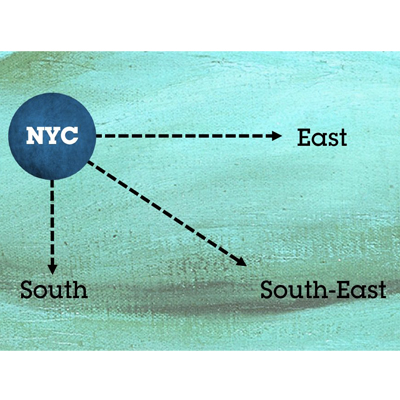
    1. Power is shifting South, East and South East

    New York is still very much the centre of the world, but power (economic, political and social) is becoming more widely distributed, marching South, East and South East: to Latin America, India, China, Russia, Africa and the Middle East, and Central and Eastern Europe.


    Although growth rates in these markets have slowed, the underlying trends persist as economic development lifts countless millions into lives of greater prosperity, aspiration and consumption.


    2. Supply exceeds demand – except in talent

    Despite the events that followed the collapse of Lehman Brothers in 2008, manufacturing production still generally outstrips consumer demand. This is good news for marketing companies, because manufacturers need to invest in branding in order to differentiate their products from the competition.


    Meanwhile, the war for talent, particularly in traditional Western companies, has only just begun. The squeeze is coming from two directions: declining birth rates and smaller family sizes; and the relentless rise of the web and associated digital technologies.


    Simply, there will be fewer entrants to the jobs market and, when they do enter it, young people expect to work for tech-focused, more networked, less bureaucratic companies. It is hard now; it will be harder in 20 years.


    3. Disintermediation (and a post-digital world)

    An ugly word, with even uglier consequences for those who fail to manage it. It’s the name of the game for web giants like Apple, Google and Amazon, which have removed large chunks of the supply chain (think music retailers, business directories and bookshops) in order to deliver goods and services to consumers more simply and at lower cost.


    Take our “frienemy” Google: our biggest trading partner (as the largest recipient of our clients’ media investment) and one of our main rivals, too. It’s a formidable competitor that has grown very big indeed by – some say – eating everyone else’s lunch, but marketing services businesses have a crucial advantage.


    Google (like Facebook, Twitter, LinkedIn and others) is not a neutral intermediary, but a media owner. Google sells Google, Facebook sells Facebook and Twitter sells Twitter.


    We, however, are independent, meaning we can give disinterested, platform-agnostic advice to clients. You wouldn’t hand your media plan to News Corporation or Viacom and let them tell you where to spend your advertising dollars and pounds, so why hand it to Google and co?


    Taking a broader view of our increasingly tech-based world, words like “digital”, “programmatic” and “data” will soon feel out-dated and obsolete as, enmeshed with so many aspects of our daily lives, network-based technologies, automation and the large-scale analysis of information become the norm.


    The internet has been a tremendous net positive for the advertising and communications services business, allowing us to reach consumers more efficiently, more usefully and often more creatively on behalf of clients. But it won’t be long before those clients stop asking our agencies for a “digital” marketing strategy (many already have). It will simply be an inherent part of what we’re expected to offer.


    4. Changing power dynamics in retail

    For the last 20 years or so the big retailers like Walmart, Tesco and Carrefour have had a lot more power than manufacturers because they deal directly with consumers who are accustomed to visiting their stores.


    This won’t change overnight, but manufacturers can now have direct relationships with consumers via the web and e-commerce platforms in particular. Amazon is the example we all think of in the West, but watch out for Alibaba, the Chinese behemoth due to list on the New York Stock Exchange later this summer in what could be the largest IPO in corporate history (and heading a capitalisation of around $200 billion).


    5. The growing reputation of internal communications


    Once an unloved adjunct to the HR department, internal comms has moved up the food chain and enlightened leaders now see it as critical to business success.


    One of the biggest challenges facing any chairman or CEO is how to communicate strategic and structural change within their own organisations. The prestige has traditionally been attached to external communications, but getting internal constituencies on board is at least as important, and arguably more than half of our business.


    6. Global and local on the up, regional down

    The way our clients structure and organise their businesses is changing. Globalisation continues apace, making the need for a strong corporate centre even more important.


    Increasingly, though, what CEOs want is a nimble, much more networked centre, with direct connections to local markets. This hands greater responsibility and accountability to local managers, and puts pressure on regional management layers that act as a buffer, preventing information from flowing and things from happening.


    7. Finance and procurement have too much clout, but this will change

    Some companies seem to think they can cost-cut their way to growth. This misconception is a post-Lehman phenomenon: corporates still bear the mental scars of the crash, and conservatism rules.


    But there’s hope: the accountants will only hold sway over the chief marketing officers in the short-term. There’s a limit to how much you can cut, but top-line growth (driven by investment in marketing) is infinite, at least until you reach 100% market share.


    8. Bigger government


    Governments are becoming ever more important – as regulators, investors and clients. Following the global financial crisis and ensuing recession, governments have had to step in and assert themselves – just as they did during and after the Great Depression in the 1930s and 1940s. And they’re not going to retreat any time soon.


    Administrations need to communicate public policy to citizens, drive health initiatives, recruit people, promote their countries abroad, encourage tourism and foreign investment, and build their digital government capabilities. All of which require the services of our industry.


    9. Sustainability is no longer “soft”

    The days when companies regarded sustainability as a bit of window-dressing (or, worse, a profit-sapping distraction) are, happily, long gone. Today’s business leaders understand that social responsibility goes hand-in-hand with sustained growth and profitability.


    Business needs permission from society to operate, and virtually every CEO recognises that you ignore stakeholders at your peril – if you’re trying to build brands for the long term.


    10. Merger flops won’t put others off

    Despite the failure of one or two recent high-profile mega-mergers, we expect consolidation to continue – among clients, media owners and marketing services agencies. Bigger companies will have the advantages of scale, technology and investment, while those that remain small will have flexibility and a more entrepreneurial spirit on their side.


    FMCG and pharmaceuticals (driven by companies like 3G and Valeant) are where we anticipate the greatest consolidation, while our own industry is likely to see some activity – with IPG and Havas the subject of constant takeover rumours. At WPP we’ll continue to play our part by focusing on small- and medium-sized strategic acquisitions (31 so far this year, and counting).”


     (These are purely personal views of  WPP’s founder and CEO Sir Martin Sorrell and indiantelevision.com does not subscribe to these views.)

  • IntelliGrape signs up with DataStax Partner Network program

    IntelliGrape signs up with DataStax Partner Network program

    MUMBAI: IntelliGrape, which is a leading player in building custom Big Data solutions, has joined hands with DataStax to increase the adoption of their Apache Cassandra-based database, used by more than 400 companies including more than 20 in the Fortune 100.


    The DataStax Partner Network (DSPN) is built around business collaborations with solution, application, infrastructure and ecosystem partners such as Accenture, Apigee and many others.


     “We are delighted to welcome IntelliGrape into the DataStax Partner Network as our first partner in New Delhi.  IntelliGrape clearly offers some great experience with Cassandra projects and without doubt will benefit both businesses and the Cassandra community” said DataStax Channel director Tim Marston.


    As a member of DataStax partner network, IntelliGrape will offer scalable, flexible and more business relevant Big Data solutions built on Apache Cassandra platform. Basis this association, IntelliGrape will also have access to DataStax’s ETL/Data Integration, BI/Reporting and Development Tools.


     “We are very excited to join hands with DataStax, which we feel will help us leverage this cutting edge platform to build and support Big Data solutions for our enterprise and start-up clients” mentioned IntelliGrape VP engineering Narinder Kumar. He further added, “All businesses across the globe are witnessing rapid technological and digital revolution, leading to a burgeoning amount of data, which needs to be analyzed efficiently and effectively for strategic business decisions.”

  • Aidem wins ad sales mandate for AM Television

    Aidem wins ad sales mandate for AM Television

    MUMBAI: To expand its reach even further in north east, AM Television has appointed Aidem Ventures as its media representative in the Delhi, Kolkata and Chennai markets for its channels – Prag TV & Rengoni.
     

    AM Television director Rajeev Bora said, “I am very happy about this association with Aidem. Their national footprint will give the channels the advertising exposure they need. We hope that this combined with Aidem’s expertise will prove beneficial to the channels’ overall growth. The north east as a market has always been ignored by marketers. Now one sees FMCG, pharmaceutical, F&B, tourism and auto clients apportioning a good amount of their advertising budgets to this market.”


    Launched in 2000, Prag TV is the oldest news channel of the north east region of India while Rengoni is an Assamese GEC that delivers a mix of fiction and non-fiction shows catering to the region. Both the channels are distributed by Assam Cable Communication (ACC) in association with the digital system of Scientific Atlanta USA.


    Aidem Ventures business head regional channels Alok Rakshit added, “Prag TV and Rengoni give us access to the North East market which has been untapped by major television networks so far. This association will give our advertisers a chance to reach out to the North East markets. The team is
    very excited about both the channels.”

  • Surewaves brings on board Ashish Baru

    Surewaves brings on board Ashish Baru

    MUMBAI: SureWaves, a media and technology company working extensively in the space of aggregating audiences on local cable and satellite channels across the country is strengthening its advertising sales team. SureWaves has appointed Ashish Baru as regional director – west to lead the business operations in the region.


    His last stint was with Headlines Today and he has also worked previously with Imagine TV and Zee group. SureWaves Network is already one of the top five TV media options in the country and is becoming an effective reach builder for lot of advertisers today across the country. 


    SureWaves COO Mandar Patwardhan said, “We are gearing up for an exciting year ahead. Ashish comes on board with rich experience and track record in media sales and would focus on establishing our leadership position in the market. The television industry is in an exciting phase with growing number of cable and satellite television channels which is leading to further fragmentation of audiences and with limitations of total inventory in the 10+2 regime, we believe SureWaves  Spot TV Network is a game changing technology innovation which is going to help the industry at large.”


    “I feel extremely privileged to be joining the SureWaves team which has created a truly unique platform for television advertisers and am excited and looking forward to creating new business opportunities,” added Baru.