Category: Media and Advertising

  • Leo Burnett appoints Rakesh Hinduja as EVP

    Leo Burnett appoints Rakesh Hinduja as EVP

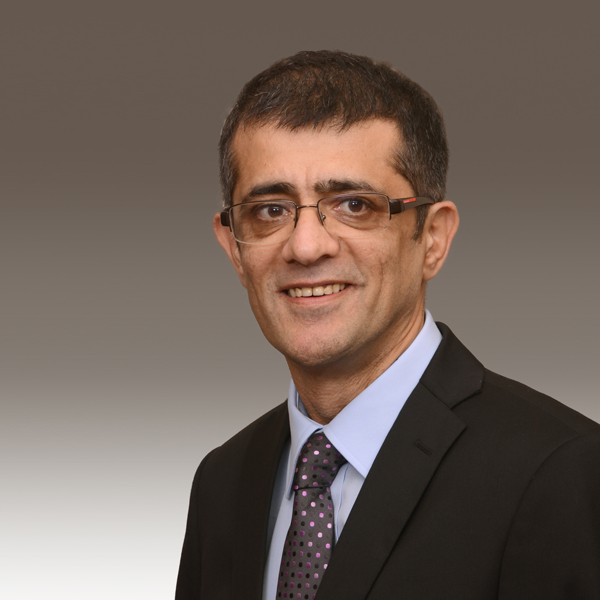
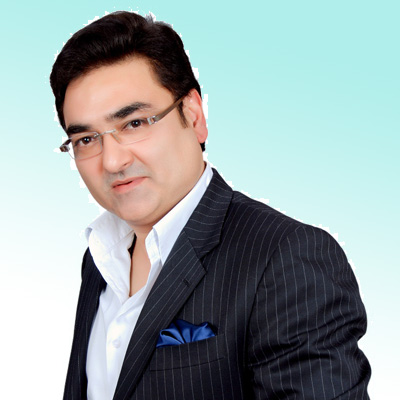
    MUMBAI: Leo Burnett India has appointed Rakesh Hinduja as executive vice president.

    He will be based at the agency’s Mumbai head office and in his new role he will have overall responsibility for one of the biggest units in the Mumbai office.

    Speaking on the appointment, Leo Burnett India CEO Suarabh Varma said, “Rakesh is a result-oriented leader. Our endeavour is to create sustainable growth for our clients and Rakesh’s appointment is aligned with that objective. His experience spans from local to regional clients, from conventional communication to integrated solutions and from brands to business management, thereby making him a vital addition to Leo Burnett and to our clients.”

    Hinduja’s experience spans over 14 passionate years in the business of telling stories that cuts across categories like consumer products, retail, financial services, consumer durables, IT and service sector, which has given him the multi-dimensional knowledge and perspective required to grow brands and businesses.

     Hinduja said, “I’m truly excited to join Leo Burnett and be back to play on home pitch, India. Leo Burnett’s vision and integrated approach to business solutions absolutely resonates with the kind of agency and passion I want to be part of. Current evolution in India presents enormous opportunity across mediums and audiences, which I would like to leverage using my experience of working across categories and channels. I look forward to working with the talented team at Leo Burnett and its prestigious portfolio of brands to do some great work for our clients.”

    He joins Leo Burnett from Publicis Singapore, where in his role as regional business director – ASIA, he partnered clients like P&G, L’Oreal and Citibank to name a few. He was instrumental in strengthening their regional footprint in markets like Australia, India, ASEAN, Japan and Korea. Prior to this, he has worked at Publicis Ambience, McCann Worldgroup, Ezeego1.com (digital interface for Cox & Kings) amongst others and partnered various clients – Marico, P&G, JK Helen Curtis, Unilever, Western Union, Balsara, UPS, Paypal, Tata, Emami, Godrej , Videocon and more.


  • Dhunji Wadia is Rediffusion Y&R president

    Dhunji Wadia is Rediffusion Y&R president

    MUMBAI: Rediffusion Y&R has announced the appointment of Dhunji Wadia as president of the agency, effective immediately. This is in addition to his role at Everest Brand Solutions.

    Wadia had joined Rediffusion Y&R Group in 2010.  On his new role, he said, “The group has given me the opportunity to use my experience and skills towards making a positive difference to our clients. I am looking forward to writing an exciting new chapter in the history of Rediffusion Y&R.”

    Rediffusion Y&R chairman Diwan Arun Nanda said, “Dhunji has strong business acumen, great entrepreneurial instincts and affinity for our clients’ businesses. What makes it all work is his ability to motivate and inspire people on all sides of the business. He’s an ideas guy who gets that great creative work and strategic insights are inextricably connected.”

    Wadia holds an MBA from the Jamnalal Bajaj Institute of Management Studies and has over 25 years of industry experience. Brands he has worked closely on during the course of his career include Parle, Tata, Unilever, Nike, Levi Strauss, Diamond Trading Co, Kellogg, Aditya Birla Group, Sony Entertainment Television (MAX and SAB), and Kotak, among several others.


  • “Want to be the ‘Influencer Network’ in 2015”: Sunil Lulla

    “Want to be the ‘Influencer Network’ in 2015”: Sunil Lulla

    With over 30 years of experience, Sunil Lulla brings skills in media, marketing, communication and management.


    From spending an early part of his career, which spanned over a period of nine years, in advertising with JWT to rolling out indya.com, in the first wave of the internet; from bringing zing and youthfulness to MTV to help build the television business for The Times Group, Lulla has been a prominent member on many industry boards and forums where he shaped policies and set industry standards and best practices.


    His decision to move on from the Times Television Network managing director and CEO to Grey Group India chairman and managing director did come as a shock to many. Nonetheless, the man who engages in a new passion every few years is back to his first passion.


    In a freewheel interview with Indiantelevision.com’s Meghna Sharma, Lulla talks about his plans for Grey and much more.


    Excerpts…


    Back to advertising. So far, so good?

    Very good. The communications business is the best place to stay eternally young (smiles).


    If you had to compare, how different has been advertising’s evolution from that of broadcasting industry?

    Both bring new challenges and new ideas each day, blended with a frenetic pace and an youthful environment. TV broadcast is focused around the consumer via which it builds relationships with the customer. Advertising is built around the customer via which it creates story telling for the consumer. They are different spectrums. The TV industry faces significantly more regulatory challenges than the communication industry. There is a zameen aasman ka difference in scale and profitability. Advertising brings the edge of ideas unlimited.


    It’s been four months, any changes that you have brought in the company? Why?

    Grey group is a stable, growing business, producing famous and effective work. I’ve used the time to get to understand the business better. Meeting clients and understanding their challenges and in helping gear Grey group offer integrated solutions and ideas, across advertising, communication, the vast spectrum of digital and social; activation and advocacy. These are via our own Grey group services and those with partners / affiliates, such as RC&M, Penn Schoen Berland and Talent House. Importantly, working closely with the team, which is energetic, talented, innovative and always bubbling with ideas and energy. I believe in the short period of four months, gearing to grow and being able to work across services seamlessly, has been my focus.


    Many of our clients are now accessing more than one service from Grey group. For our affiliate partners, we have been able to provide Grey thinking, muscle and experience. What’s visible is perhaps the new campaigns of Swacha Bharat, the Border Security Force and the announcement of Quickr and Reach Mobile as new businesses.


    Importantly, in the next few weeks there are many campaigns of Grey group, which continue to define culturally sensitive communication, aimed at changing social behaviour, which is one of the biggest challenges any communication company can deliver on. We believe our clients should be satisfied with our services and offerings but continuously challenge us to deliver outstanding performance. Which is exactly what Grey clients do.


    How has the year 2014 been for Grey India?

    There has been top line and bottom line growth as per expectations. The new account wins are all based on differentiated communicate on briefs and the focus on adding alliances is preparing Grey group for a strong 2015. Talent has been stable and the awards have been coming in. All in all – a good year for Grey. We are not very boastful about our achievements; our clients hopefully do the talking for us.


    One mandate, which you are really proud of, and why?

    I cherish my new role at Grey group, via which we are building a differentiated service business to build strong brands for our clients. Each of our clients are precious to us and the work we do, we believe, plays a big role, in making their brands famous and effective.  I do believe the new ‘Swacha Bharat’ campaign enables us to work with the Prime Minister’s vision of changing behaviour which is always a tough task. The communication is simple, mass oriented and evokes the right emotive and attitudinal cord.


    How much of the business that you generate out of India is globally aligned?

    Some of our global alignments are P&G, GSK, Volvo, amongst others. 65 per cent of our business is India alone business.


    Competition is growing multifold, so how would you differentiate Grey from the others?

    We believe Grey group’s thinking and capability is being rapidly geared to offer integrated solutions around advertising, social, mobile, web, activation, advocacy, rural and crowdsourcing. With many more to be included. Powered by our vision to create Famous and Effective solutions, work and brands, Grey group is becoming a highly differentiated ‘Influencer Network’. We say Grey groups role to influence consumer choice and thinking and via its array of skills it is designed to be ‘an influencer network of choice, creating famous and effective work’. Each way of approaching the consumer needs to be true to the host medium but interconnected to the behaviour we need to change. Grey enjoys a very strong reputation because of its Planning, Creative, Digital and Communication Skills and this is poised to grow with strength.


    According to you, has Grey really been ‘Famously Effective’?

    Absolutely – the wins at Cannes and Effies are a great testimony. The growth of each of our clients business is evidence of the work – working!


    What are the plans lined up for the digital side of your business?

    Growth is the obvious agenda. Growing and strengthening resources in the Delhi and Bangalore NCR are on the agenda for 2015. Focusing on having more of our clients across our range of services avail of our Award winning Digital solutions. Continuing to create cutting edge and new solutions is the everyday task. Focusing on learning and training for our talent is the key.


    How do you see an increase in media fragmentation impacting creative agencies?

    Agencies should stop worrying about definitions. We do not see ourselves as a creative-alone agency. Grey’s role is to influence consumers and we believe that requires each of us to continuously grow skills and expertise, which is our focus. Agencies can easily learn, adapt and innovate to tell stories be it on a one to one basis or one to many basis. If there is no structured integration, then one must bring it in any way into the service, as businesses will not grow in a linear fashion.


    With an increase in penetration of smartphones and tablets, the biggest challenge will be on how to most optimally use the mobile phone for building a brand. What advise will you give the brands and digital agencies?

    We reserve recommendations like these, exclusively for our clients (Smiles)


    Do you think Indian advertising has been able to shift paradigms with changing times?

    The glass is always half full, which makes it encouraging for the industry to keep pouring skills, ideas, talent and investment in creating culturally cutting edge work. The new Swach Bharat campaign defines that. On an overview, the Indian industry has successfully paved the way for new paradigms.


    What is at top of your wish list for Grey India for 2015?

    Be the Influencer Network which successfully enables Famous and Effective Brands and Communications.
  • MEC & FreeCharge explore new ‘Smart’ messaging platform

    MEC & FreeCharge explore new ‘Smart’ messaging platform

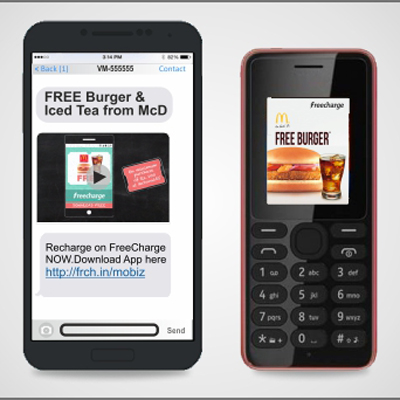
    MUMBAI: MEC, a part of GroupM, along with FreeCharge have harnessed a new ‘Smart Messaging Platform’ to reach out to consumer’s mobile phones with branded high quality, rich media such as videos, images, audio clips and more, directly, rather than having to push links.

    Smart Messaging Platform works across all platforms – iOS, Android and Windows and more and does not require users to download any application to support it. Commonly known in the Tech world as ‘MMS+ technology’, it merely requires the consumer to have a data-enabled mobile phone (both smartphones and feature phones).

    For the very first time 1,00,000 consumers across, Mumbai, Bangalore and Pune will receive a message, which will play the FreeCharge video directly without requiring the consumer to click on a link.

    MEC national director activation Sidhraj Shah said, “The MMS+ technology offers hyper-personalisation opportunities including tracking consumer reaction to the call for action, which is not possible with the current SMS platform.  At MEC we are constantly scouting to offer new experiences & technologies for our clients, to engage with their customers. With ‘Smart Messaging platform’ we have only scratched the surface.”

    Mobizon Media COO and co-founder Swapnil Rap said, “‘Messaging’ is an app that every phone in the world has by default! We have reimagined the traditional 160 characters by transforming it into a rich media communication channel. Every consumer in India can now experience high quality content from their favourite Brands, irrespective of whether they have Smart or Feature phones.”


  • Women portrayal: Better days are emerging

    Women portrayal: Better days are emerging

    MUMBAI: The debate over portrayal of women in our advertisements and soaps is ever going. Remember the recent Airtel advertisement which created a furor as people debated if a working woman should cook or not? Or even the last year’s Ford Figo advertisement, which saw people from creative agency JWT being asked to leave and not to forget the deodorant ads.
    Many blame that the sexist or regressive portrayal of women in advertisements, soaps and movies is the reason behind the way they are treated in real life. While others say it just reflects the changing morals and values of the generation that consumes it. The advertising industry has been faced with a piquant situation, for many years now.
    However, over time, steps have been taken to apply a healthy amalgam of scientific temper and good intentions to pursue the goal of gender equality.
    Advertising is known to reflect societal norms and should be a torch bearer of change. Does advertising showcase the changes in women’s roles? The question is answered in a survey, of key personnel in advertising and marketing in the report titled, Changing Gender Frames.
    In today’s connected and networked times, the role of media in shaping and forming public opinion and perceptions has been well documented. One such area is that of gender stereotyping.  So, one of the ways to change the attitude towards women could be through the change in portrayal of women in media and advertising.
    The research, included marketing and advertising professionals spread across Delhi, Mumbai and Chennai, to assess and understand the status of gender stereotypes, the perceptions of the portrayal of women in advertising and an understanding of the effect of communication that challenges gender stereotypes.
    In the research, professionals resoundingly endorsed that it is education and financial independence that is empowering women, giving them more decision making power and helping them enter public spaces and conversations.

    There was almost unanimous agreement that gender roles are less clearly defined these days, and stereotyping and accompanying social pressures are on the wane, especially for aspects like women working out of the house and men doing housework, both of which have become acceptable.  But women still feel that children are more their responsibility than that of the father.
    However, there is some ambiguity on the whole sexuality or body image aspect. Women still report that men normally judge them on the basis of beauty and sex appeal.
    Professionals are of the opinion that in advertising today women are being portrayed more as energetic, confident and modern multi-taskers than as ‘homely’. This then leads to the question of whether a new stereotype of supermom has arrived.
    While most professionals feel that the changing trend is sustainable, it rests on the fact that marketers now look at women as a potential segment which will facilitate growth; thereby making it important to tap the potential of this segment which is now experiencing independence on the financial as well as decision making front.
    Using women ‘provocatively’, in advertising is seen as a sure shot way to grab attention even today by both men and women.
    The research also flagged advertising that has been noticed for its challenging of gender stereotypes.   Airtel with the wife as boss, the remarriage story of Tanishq and the mother who trains her child in the Bournvita commercial, have emerged as examples of moving to the new gender conversation with style.
    However, there is still a majority feeling that advertising has not been able to portray the actual status of women in society.   While there seems to be a change in the portrayal of women in advertising due to her newer roles, there still seems to be a lot of opportunity to explore various facets of women and showcase them in advertising.

    Click here to read the full report


  • Rajiv Mishra to hold charge of CSR in addition to media in Samsung

    Rajiv Mishra to hold charge of CSR in addition to media in Samsung

    NEW DELHI: Senior journalist Rajiv Mishra, who had joined Samsung Electronics in August as vice president (media) of its south west Asia office in Gurgaon has been given the additional charge of heading the CSR division in India.
     
    Samsung said it lay strong emphasis on corporate social responsibility, which involves extending the company’s legacy of innovation to create value for society by addressing societal needs and challenges. Through the CSR initiatives Samsung hopes to open newer possibilities that positively transform people’s lives.
     
    Speaking about the development, Samsung south west Asia senior vice president H W Bang said: “At present, our CSR programmes focus in the areas of education, culture, sports, social welfare and community development. I am confident that under Rajiv’s leadership, Samsung’s CSR initiatives will cross new milestones.”
     
    Samsung has, over the years, leveraged its legacy of technology innovation through philanthropic initiatives focused on helping communities lead healthier, smarter and more sustainable lives. In addition to skill development among youth, Samsung also places substantial focus on providing underprivileged children a chance at quality education and in helping bridge the digital gap that exists in India.

     
    This is done through Samsung Smart Schools, set up in Jawahar Navodaya Vidyalayas across the length and breadth of the country. The Smart Classes are equipped with an interactive Samsung whiteboard, Samsung laptops for the students, a printer, wi-fi and a power backup since power outages are common. Over 198 Smart Schools have been set up to date in India, benefitting 75,000 secondary class students. Samsung continues to expand the programme based on positive feedback received from the schools on the impact on students learning and attendance.

     
    Before joining Samsung, Mishra had been chief executive officer of Lok Sabha TV for about three years.

     
    Mishra had begun his 21 year long career in media at Hindustan Times before switching over to the electronic media.

     
    He began as manager –programming in Star, then joined as senior manager – corporate in Zee TV, Reliance Infocomm as general manager – corporate affairs, News 24 (BAG Films and Media), as COO and director, India News as COO. He launched Times Now of the Times of India group in USA as India Now while working for CineMaya Media of USA.

     
    Mishra was with Lok Sabha TV as CEO in an official rank and status of additional secretary.

     
    Mishra is also the founder and first president of Association of Radio Operators for India (AROI). AROI is the industry representative body of all FM radio broadcasters/stations of India. He also founded Association of Regional Television Broadcasters of India