
Category: Media Agencies

  • Divya Radhakrishnan & the Helios solution

    Divya Radhakrishnan & the Helios solution

    Media veteran Divya Radhakrishnan gets a little nostalgic as she recollects that moment a couple of year ago when she was contemplating which direction her life should take. Says she: “After working for almost 25 years, when I told my mother that I was planning to quit, I least expected her to be supportive of my decision. But then her response motivated me to go ahead: she said just do it. And so I did it.”

    The former TME president finally dug her heels in and made the drastic career change.

    “I knew I was going to be on the other side of the table now and it was not going to be easy,” she says while thanking the leadership role she played at Rediffusion-Y&R, which helped her get an insight into how things work in various verticals of a media business. “But then I thought to myself that being independent and leading a business with decision-making power at my own risk would give me a greater sense of freedom and that really motivated me,” she adds.

    Her decision was pretty calculated too, she says.

    “There are close to 180 odd channels in India not aligned to any broadcast network. Agencies, clients, vendors, and others, however, expect them to have everything that a large network does like sales, marketing, research, and what have you. Now in a large network you can amortise your costs across several channels,” she explains. “But for a standalone channel the high overhead can be killing. Hence, I decided I would first focus on the sales outsourcing function for TV channels and once I achieved that, I would add more services. I needed to find someone who had a similar vision and I found that in Bala Iyengar and so we started out.”

    Right from the start, Divya was clear that her agenda would go beyond being just-another-organisation to fill a need gap, and getting recognition for creating a brand in a commoditised business of air time sales.

    Hence, Helios Media has ambitions to provide advisory and undertake operations for independent players in the broadcast industry. In order to differentiate itself it has set up various verticals like sales, marketing communications, advertising, research, content, PR, broadcast operations, syndication, events and new media to create a 360 degree outsourcing company which television channels can rely on. Divya on her part is also involved in a TV content production firm TouCan with sister-in-law Bhavna Radhakarishnan.

    With over 50 people on board now, finding the right team was not easy for Divya at the start. “Since I was coming from the other end, I needed to get the business heads in place so they could get the correct people for us,” she says.

    Among those who she managed to snare figured: Bala Iyengar (business head Zoom), Vaibhav Vishal (a former MTV veteran) and Prashant Nigam (also from Zoom). Iyengar is business director and leads the sales vertical. Vishal is the creative and content leader whereas Nigam looks after content syndication and special projects. The four pillars run the show headquartered in Mumbai, although the organisation has branches in Delhi, Bengaluru and Chennai.

    Helios is like a morphing organism, tailor making itself, depending on client and market needs. Though its headquarters are in the Maximum city, it has resources at regional levels as well.

    The organisation which started with its first client MTunes is now handling four different channels and is hoping to bill almost Rs 100 crore in revenue by this year end for them. Divya is also in conversation with others including an international TV network which wants Helios to draw out an entry and operational plan for a few of their channels.

    However, getting clients wasn‘t easy for it as it had to prove its credentials to the market.

    “The first eight to 10 months were all about investment of our resources, energy and talent to prove not only to ourselves but also to channels what we can do for them,” narrates Divya.

    Two agencies had approached the MTunes management when they announced that they would be outsourcing their ad sales functions.

    “The approach and the pitch with which Helios met us made us realise that they have enough insight and perspective about how to sell the channel at its launch stage itself,” says MTunes HD CEO Saravanan P, who asserts that the association helped their operations to touch inventory levels as high as the top two channels in the genre and they could also maintain it almost through the year.

    “The challenge was to pull off a decent ER (effective rate ) but we managed a very aggressive one which can be termed as an achievement for a channel in its first year of operation,” Saravanan adds. The agency also handles marketing, research, PR and social media.

    MTunes HD CEO Saravanan P says Divya & her team helped the new channel get very aggressive effective advertising rates

    “The past performance of the Helios team is very well known in the industry. Their recent success story with MTunes strengthened our belief on their capability. However, that is not the only reason why we outsourced our sales to them. FoodFood, being a genre creator, needed to be correctly represented to the clients and the agencies. Helios came forward with that understanding of the channel and the genre. For the long run, it is not just a few crores which advertising clients would like to put into the channel but would also like to get the correct association. We hope that Helios Media will be able to build that bridge between us and clients,” points out FoodFood CFO Sanjay Kumar Ballabh who came on board around four months back.

    Helios has a tool called DARE (defining, articulating, resulting and extending) to understand the brand and find solutions for the brand, especially for niche channels.

    “Using the tool, we could draw up the brand promise for MTunes as ‘Music like never seen before,‘” she says. “We worked almost like partners of the channel when we enabled the creation of a music countdown show called Trending which is probably the only show on right now with an indicator for the top songs in the country. We track them on YouTube, Hungama, and Radio City airplay etc and Ormax is our partner on this initiative. The concept is completely ours and has found a presenting sponsor in Airtel.”

    Divya has been focusing on other services such as marketing and content for her clients ever since she has got the ad sales engine chugging well. She says: “Marketing a channel is very different from marketing a biscuit. The customer is not really paying for a channel, and hence we have to be creative while inducing him to watch it. “

    Vivaki Exchange‘s Mona Jain & Mindshare Fulcrum‘s Amin Lakhani are impressed with Divya & the Helios team and the innovative solutions they offer brands

    Sources indicate that Helios has advised client FoodFood to go beyond cooking and also talk about other aspects related to food like eating out, food conversations, what to eat and when, health and nutrition, among others.

    Divya refused to comment on this but what she is really kicked about is the power of social media. “Digital should accentuate what‘s going on television,” she says. “And we have shown what can be done on digital through our work for MTunes.”

    Helios has designed and put together the online consumer interface for the channel in the form of its website with audio players, playlists, interviews, and what have you. But she faced a major challenge when she was assigned the task to build consumer engagement for MTunes HD on Facebook and Twitter: it had no rights to put the music it airs on TV on digital. Hence, the solution it found was to start conversations about youth interests.

    “Generally we spoke to them on Facebook and Twitter like a friend would do to them about everything that concerned them,” says Divya. “Of ocurse we also had guessing games about celebrities eyes and created special events online on friendship day. Right now we are working on creating a TV program which uses the interactivity of social media.”

    Divya and Helios have got fans in the media business. For example Vivaki Exchange CEO Mona Jain and Mindshare Fulcrum principal partner Amin Lakhani. “What sets Helios apart from the rest is not only the team which is packed with experienced as well as young talent but also the innovative ideas they come up with to service and represent a brand,” echoed both Jain and Lakhani.

    Divya knows she is onto a good thing and is looking forward to capitalise on the strengths she has built up in Helios. Says she: “When the 10+2 ad cap comes into play we will be best equipped to help our clients. Because I have all the verticals in-house and hence solutions that can help channels monetise what they have better.”

    Clearly, this is one lady on a mission.
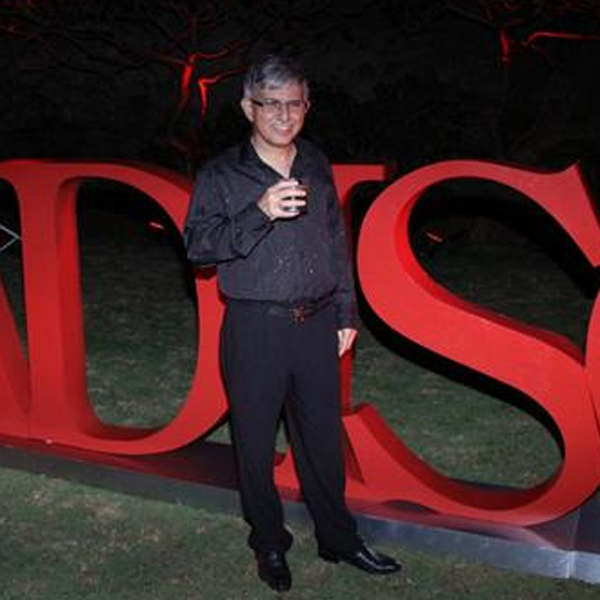
  • “We hope to reach a mature solution on the TAM ratings issue” :MadisonWorld chairman & managing director Sam Balsara

    “We hope to reach a mature solution on the TAM ratings issue” :MadisonWorld chairman & managing director Sam Balsara

    There are two kinds of individuals out there. Those, who lead their lives on their own terms and others, who lead their lives according to the terms set by the rest of the world. And then there is Sam Balsara, who creates benchmarks for the rest through his feisty attitude!

    Rated as amongst the top media professionals in the world, MadisonWorld chairman & managing director Sam Balsara is no stranger to a challenging situation. He is known to speak his mind without mincing his words. The media vet has worn many hats in various industry associations and committees over his very long career, which began at Sarabhai’s in the late sixties, early seventies and ended with him setting up Madison 25 years ago.

    Here, in an exclusive interview, Balsara opens up on the heated issue of Broadcasters v/s TAM Media. Who else can give us a better perspective than the advertising genius himself. Sit back, read and enjoy his engaging responses from this free wheeling chat indiantelevision.com had with him.

    Excerpts:

    What is your take on Indian Broadcasting Foundation (IBF) members deciding to discontinue subscribing to TV ratings provider TAM?

    It is very clear ratings are very important not just for advertisers and agencies alone, but for the whole industry which includes broadcasters who have worked so hard to built the industry to Rs 12,000 crore. If there are no ratings the confidence in TV advertising will go down.

    Take a look at radio and out of home; they have no robust measurement system, hence they account for just five per cent of the media spends. Television does have a robust measurement systems and it accounts for a sizeable 45 per cent.

    You don’t have to throw the baby out with the bathwater. If there is something wrong, you fix it. We have to remember that the TV ratings that come out every week are a sample not a census. At times, if it does not do justice, you don’t shut it down. The long term solution is definitely BARC…till then we have to have TAM.


    But then how do you address the problems that the IBF and the government has with the ratings?

    Let the IBF put out a paper on what their view is on what is wrong with the ratings methodology and what needs fixing. We can give our view on what can be done or should be. The answer is not stopping a rating system.

    Why do you say that?

    Stopping a ratings system would hurt the broadcast leaders in their respective individual genres, they would lose their leadership perception and this would hurt them. I think it is a very unwise decision.


    Let the IBF put out a paper on what their view is on what is wrong with the ratings methodology and what needs fixing. We can give our view on what can be done or should be. The answer is not stopping a rating system.

    Let’s say the TAM meltdown continues and you don’t have ratings, is historical data a valid barometer for buying TV advertising time?

    Historical data around TV viewership is not an option and is unacceptable to the buyer. I would not work with historical data for buying. If I am buying IPL this year, why should I use last year’s data? Why should and how can I use historical data for how a serial is performing? We know that viewership habits move around.

    Then what is the solution?

    If there is something seriously wrong with TAM‘s data, methodology, we should sit together, highlight the problems, diagnose the imperfections and come up with answers. We need to give a patient hearing to each other as to why it’s going wrong too!

    I am aware that TV ratings have been going down because of the rejig of the sample, digitisation and also LC1. But every time you go for a change in a changing environment, the findings are also going to change.

    But the dropping ratings are hurting broadcasters and they are saying how is that possible when we are paying for the measurement?

    That brings us to the fundamental question: should media owners pay for the ratings system? Maybe you are right! Media owners should not be involved in media measurement. But the fact is that no media owner has found fault with the ratings system when they are at No 1.

    But Star India which is the leader in the GEC space is also likely to discontinue its TAM subscription…

    Hmmm. The only thing I have to say is that if there is no viewership data, the TV industry is going to suffer.

    Is making the advertiser/ad agency pay for the data a solution?

    As far as the advertising industry is concerned, we don’t really care who pays for the data, we are concerned that we get the data. We are absolutely certain that we need the ratings.

    I am aware that TV ratings have been going down because of the rejig of the sample, digitisation and also LC1. But every time you go for a change in a changing environment, the findings are also going to change.
    What if broadcasters continue to refuse to accept TAM as the currency and want to do transactions for TV adverts with agencies and advertisers?

    For a deal to take place, each seller has to make something available to the buyer and the latter has to see value in it to pay for it. Both parties have an objective and as long as it is met a deal happens. You see if Dove is priced at Rs 30, and you see merit in buying it you will pay for it, if you don’t, you won’t. Similarly with us, we need a measurement metric before we buy media.

    The IBF seems to be pushing the agenda on various fronts. For instance, in the case of net billings it was the IBF which had its way by forcing the advertising industry to accept net billings? Will it do so even in TAM’s case?

    There is no question of IBF having its way. The AAAI, ISA and the IBF found a mutually acceptable solution. Some of our full service advertising agency members wanted the 15 per cent mention to be in the bills and we got that in. It was a mature solution that met the needs of all concerned. We similarly hope to reach a mature solution on the TAM ratings situation too.

  • NDTV files fresh appeal against Nielsen in New York supreme court

    NDTV files fresh appeal against Nielsen in New York supreme court

     MUMBAI: New Delhi Television (NDTV) ain’t giving up on its law suit against global research agency Nielsen on account of the TV ratings service it runs in India with global advertising powerhouse WPP under TAM Media Research. Last week, the newscaster filed fresh papers with a New York state supreme court appealing against its decision earlier this year to dismiss its $1 billion suit against Nielsen and WPP.This time, however, it has named only Nielsen group companies in the appeal, whereas earlier it had included both in its suit.

    While dismissing the suit, the New York court had then said that NDTV’s claim and complaint should be filed and contested in Indian courts where TAM, the Nielsen-WPP joint venture is based and not in New York.

    NDTV’s nine month old lawsuit states that it has lost hundred of millions of dollars in ad revenues on account of the inaccuracies in TAM’s TV ratings service in India and that it needs to be compensated for the loss. It had alleged that TAM staff took bribes in exchange for overstating ratings.

    In its fresh appeal (a copy of which is with indiantelevision.com) which it filed with the court on 15 May, NDTV sought a reversal, annulment or modification of the trial’s court’s dismissal of its application earlier as it has mistakenly ruled that the Big Apple is not a proper venue for the suit because it “failed to accept as true the allegations” that the New York-based Nielsen owns and controls the “Nielsen process” upon which its ratings services around the world operate.

    Additionally, the NDTV appeal has stated that the court has disregarded the fact that Nielsen’s hq and “senior management (and several key witnesses and thus evidence) are located in New York and the court wrongly concluded that the defendants were foreign.”

    The court has also erred earlier in dismissing its amended complaint, NDTV has stated in its appeal, “for its failure to include an indispensable party (TAM)..the court wrongly concluded that its claims address TAM’s misconduct in India when in fact NDTV’s claims are based solely on the conduct of the New York-based Nielsen.”

    “The Indian courts likely lack jurisdiction over Nielsen,” as it is based out of New York, pleads the new NDTV filing. “Contrary to the trial court’s rulings..we properly pled that Nielsen breached a duty it owed to NDTV and the breach resulted in a compensable injury.”

    NDTV has pointed out that it had brought the bugs in TAM’s ratings process in India to WPP’s and Nielsen’s notice. Both had promised to have these rectified, but did nothing about it forcing it to take the matter to the US courts.

    WPP and Nielsen had denied NDTV’s claims and said that the case should be argued in India and the not in the US, which the New York court had accepted while dismissing the case.

    TAM, on its part, in recent times, has been making efforts to spruce up its act, aiming to guarantee impartiality of its ratings service. It has set up a vigilance desk’, headed by a former senior policeman, and a ‘transparency panel’ of regulation experts. But some broadcasters have said these changes have come too late.

  • ”Media agencies need to powerfully embrace new technology”: Maxus global planning director Nick Vale

    ”Media agencies need to powerfully embrace new technology”: Maxus global planning director Nick Vale

     A broadcast journalist who turned to advertising purely because he loved it, Maxus global planning director Nick Vale enjoys the energy of the ad industry. He started as a TV buyer and has done media agency work and travelled around the world. He has no qualms in taking pride in some of the campaigns he has helped create and today leads the planning function of GroupM’s fastest growing agency.


    Indiantelevision‘s Prachi Srivastava caught up with the dynamic Brit and needled him about topics varying from the role planning in media to the impact of fragmentation and the need for integration to competition within the GroupM agencies


    Excerpts:


    Q. What kind of independence do WPP agencies get as they are also competing with each other?

    A: I think WPP wants its agencies to compete well with each other. Sir Martin Sorell came to us in 2008, when we were facing recession. Everything was getting tougher and he decided against time to really grow and launch a media agency which is incredibly brave. He simply said, “Give me an agency that‘s built for the future.”


    We have set ourselves up to be something more interesting with a point of view that matched the businesses which we are leading into change. We are always looking for ways to think about what‘s next but remain grounded; about what‘s going to be the most important thing and big for our client and help them navigate the complexities of the world in which we are living today. We want to help clients make the right decision on where they should be investing money.


    Q. How is it to work with Vikram (Sakhuja)?

    A: Fabulous! Vikram has the same tremendous energy and enthusiasm, which is very becoming of Maxus as an entity. Thus he fits into it the ethos like a glove working with him is a real pleasure.


    Another thing about his appointment is that we now have senior people spread fully across the globe which is great. While Vikram sits in Mumbai, I sit in London, the CFO sits in Singapore and we have got people in New York. It also goes to show how small the world is now, because Vikram operates a tremendously successful business sitting in Mumbai.


    ‘Vikram sits in Mumbai, I sit in London, the CFO sits in Singapore. This shows how small the world is now, because Vikram operates a tremendously successful business sitting in Mumbai’


    Q. What changes have you seen in the planning process in the developed markets in last 4-5 years?

    A: First thing to say is that the world is increasingly becoming localised. Some 10 years ago we lived in a world where we had a bunch of very developed markets and then we had everywhere else. The very developed markets – from a media agency point of view – started to move into a more strategic area so that there was more emphasis on highend strategic approaches. Then there was the introduction of the discipline of communication planning, which essentially was designed to bring all the pieces of communication together. And that‘s what all the developed markets were focusing on. There were lots of account planners who used to be with agencies.


    What we see now is a much more patchwork – that is in terms of the way the world works. And it is much harder to say that you see there are some businesses or areas, which are more about strategy and others, which are not. We see much more localisation.


    Part of the reason that we have build Maxus the way we have is that we strongly believe that for you to be a powerful agency going forward you need to be a larger conglomerate of local agencies with a strong central presence which is if you like building sharing across those agencies and spreading good practices across those agencies.


    As opposed to a more top down approach where you would have a large room in somewhere like New York or London where you would have lots of skills like product planning and media practitioners who would then dictate what local markets should be doing. The result of this was you created what sounded like very clever great strategic work if you were in London, but it was very difficult to execute and would have little understanding of the sensitivity and culture of the local market.


    And rather than have a job that is about writing central strategy and ensuring that it is delivered locally my role now is to actually look at some of the best works that are coming from the market and ensuring that that work is having an impact on other markets which may have similar types of issues or they have clients that have similar kind of issues.


    According to me the really interesting work is happening in the developing markets and I see really exciting stuff coming from BRICS. And that‘s the market I am looking to. Markets like India are very very important to me. I see very exciting, extremely refreshing work from this market that I don‘t see from more traditional and more developed markets. Those markets have a very set way of working, basically set in delivery of similar type of product and we have become very good machines at delivering that product.


    I see in markets like India work that is genuinely surprising. This market has a different flavor, because it comes from a different culture and it comes from a different view of what good looks like. And for me that‘s incredibly important. A lot of what I do is about nurturing that local goodness as opposed to forcing principles of a more developed market on it.


    Q. What kind of work have you seen that is exciting?

    A. What I see in Maxus is a very powerful embracing of new technology and for me that is crucial because that‘s where the future lies. The future lies in really understanding how we can create communication that is genuinely useful to people and start to create pieces of media that do more than amplifying a brand‘s message. In lots of western markets we have a set of way of doing things.


    In India people are more excited by the possibility technology gives and are starting to create things which are genuinely interesting and creative.


    I saw a brilliant piece work from the Maxus team out of India of a Titan watch which was a light activated watch and we created apps that were light activated and would light when you put them under light and Facebook pages that were only light activated. You could see the pages only if there was a light source and it talked about the watch.


    That‘s not an idea that would necessarily come from some of our western markets. And it was one of Mashable‘s top six branded apps. It also helped achieve sales targets quickly, faster than planned.


    Tanishq the brand from the Tata group wanted to speak to working Indian women and they wanted to create jewellery that appealed to those women. So we decided that instead of going out and researching about what these women want, we created activation where we crowd-sourced jewellery design from common women at home and we asked them to design their perfect jewellery and send it to us. And then we took all that, selected the best work and put it into production. And if you look at a category like jewellery, the cost of design entails a large out going, but with an idea like that, we sourced three years of design.


    ‘I see very exciting, extremely refreshing work from this market (India) that I don‘t see from more traditional and more developed markets’


    Q. So, the planning agency is becoming more of a marketing partner than just an agency that plans spends across mediums?

    A. Absolutely! To really draw a great communication, you need amazing creativity which is genuinely the role of the creative agency. We need to have the understanding of the brand, the business of the client, but you also need deep understanding about the consumer and the consumer experience and communication – and that‘s what the media agency is.


    Increasingly media agencies are understanding that there is a very deep value that that they can bring to the brand and that‘s allowing us to increasingly suggest positions that may not necessarily be rooted in the planning and buying of traditional media space.


    Q. Can you throw light on remuneration for media agencies? Is it also going to be target driven, incentive driven?

    A. All of us increasingly look at a contract which frees you up to create great solutions and work in lots of different ways as opposed to shackling you to deliver the same product to the client. Our objective is to grow the client‘s business and we want to have opportunity to do that. So you might look on a contract where you might be charged at hourly basis or you might have a contract that might have some value-added elements – but the fact is we are no longer tied to working with a client as a percentage of advertising spend.


    Q. In terms of structuring, specialist practices are coming up. 

    A. I think that‘s what we have been doing for sometime now. For the past decade or so the media agencies have been very busy diversifying their offerings and they have done that because they see that‘s where consumers are going. They see that actually it‘s not just advertising which is having a powerful effect on consumers, so it makes sense that if you are going to be a media agency you have to make sure that you are able to deliver across all the different channels and on the media type that is most relevant.


    The world we are beginning to move into today is one where technology is driving much greater media change. We are beginning to build very strong thinking on digital based practices.


    At Maxus we have a division Metalworks and what it does is to create pieces of technology that deliver on client‘s needs and that‘s an interesting space. We have build a flu tracker which tracks Google searches by users and also changes in climate and a number of other things and then uses all that data to predict when people will start to get the flu. And it helps us determine when we need to operate and up the digital communication in channels for our flu products.


    We datamine stuff and are making predictive models that allow us to drive efficiency in advertising, communication. We have got that side which is very clever and future facing in place.


    We have something on the creative technology side as well. For instance in the Sydney office we have a beer fridge. The beer fridge is locked and the only way you can get the beer out is if you tweet the beer fridge. If enough people tweet the beer fridge then the beer fridge will start delivering beer. But that has got a lot of interest as a beer vending machine. It is the case of a real world experience in the digital space. We can take that to principle to clients and create vending machines, which react to things going on in the digital world. You kind of blur the boundaries of what traditional communication used to be.


    Q. How is the business and its structure changing?

    A. The media business is becoming more specialist and increasingly so at an executional level. We are in a business where people are very adept at a few quite specialist things. Whether that be as a buyer who buys space at the best price at the best quality or whether that be on the delivery of something that is more creative, innovative or unusual.


    The challenge is how to have a conductor who is sitting in the middle to ensure and that the orchestra is playing the same tune. And that is what we are building at this moment. The conductor is actually not one individual; he is a blend of three. The three are: the role of the client or the account director, and that is a very very senior person who has a very deep understanding of the client‘s need and the ability to get the orchestra to work together and deliver on those needs. He can be someone who can make things happen.


    The second role is that of the strategic thinker whose job is to think about the longer term and to think about where his brand should be going in the future and ensuring that the brand has what it needs to get to where it needs to, while ensuring that even the short term objectives are met.


    The third role is of the data specialist whose role is to essentially look at the all hard core information that is coming out of the client on a daily or hourly or weekly basis and making sense of it and ensuring that the strategic thinker is aware of what‘s going on and there is genuine rigour in his approach. That his approach is not just about the big idea and how it will be executed over time but that it is genuinely rooted in the way that the business is going. And of course that the execution is being managed by the accounts person.


    Another way of looking at it is that increasingly we are speeding up in the way we deliver media. We are very very fast in the way we turn around communication now. If you look at, say, the search specialist, they are constantly monitoring what people are searching for, they are changing the words people are searching for, they are changing the way they are buying accross search words. If you like, they are a one person agency. And increasingly that‘s the way execution works; its going to move much quicker.


    You have to have fast teams which are continuously optimizing, continuously changing to what‘s going on. And you can have slower teams who are more strategic who are more visionary. And whose job is to ensure that the fast teams are doing work that‘s aiming in the right direction.


    No one has really done what I am talking about but we are going to move towards that over the next couple of years.


    Q. What is the role of the client in such a scenario?

    A. The client has to be actively involved with the various specialists he hires around him, whether it is the creative agency or the media agency or whosoever. His role and involvement are becoming all the more important. Often times, the client briefs an agency and the agency presents three weeks later and only 20 per cent of what is presented is accepted. But if the client is involved all the way, then it is quite likely 80 per cent will be accepted. It is a much much efficient use of resource. I openly call my clients to be involved in strategy and creativity.


    ‘We are hiring people for attitude rather than aptitude and then training them for aptitude’

    Q. What about talent? How are you dealing with that?

    A. I think there is an issue with talent. There always has been that for the past 10 years. How do you encourage really young people to come and work in our business, and I don‘t think that challenge will necessarily go away.


    Increasingly we are hiring people who are very different from the kind of people we might have been hiring sometime ago. People who might be having expertise in something we might have not been involved in sometime ago. Instead of hiring people who are very very good at media, we are hiring people for attitude rather than aptitude and then training for aptitude.


    We need to be open up a lot more to sharing to new ways of looking at things, and we need to hardwire it into the agency. So that we don‘t just have people who are only good at only one thing but can‘t think about anything else. And I guess the challenge is as we become more focused in specific disciplines, we ensure that our people have an attitude to travel and bring more interesting thinking to our clients which may go beyond the scope of what they specialise in.


    Q. What is your view on the mobile device as a communication medium?

    A. The best mobile stuff I see is on dual screening – so it is stuff where you are using your mobile to interact with something else in an interesting way And I am still unsure about things like mobile advertising and mobile banners. I am not sure if I see work in that sphere that is exciting me at the moment.


    It is when people understand that the mobile is a device that was designed to augment you, to make you better and effective as human being, and then create pieces of communication that enable that, it will be effective. I think people who see the mobile as an entertainment device, as a small TV set, I am not very sure I buy it.


    The mobile device allows pinpoint-targeting. At a specific time and space, we can give the user something which makes his life better. Which is quite really cool. Then mobile wallets are becoming quite common and to talk to some body in that wallet is exciting.

  • Rado looks at broadening appeal with Hritik; launches HyperChrome collection

    Rado looks at broadening appeal with Hritik; launches HyperChrome collection

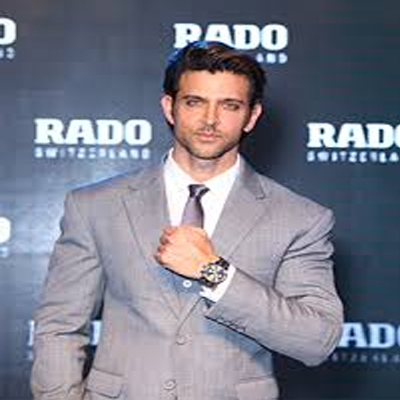
     MUMBAI: Swiss watch brand Rado has launched its HyperChrome collection. The company which recently launched its first TVC in India featuring its brand ambassador Hritik Roshan is looking at broader consumer appeal.


    32 models are available in the HyperChrome collection priced between $1000 – $4000 to address different consumer price points. The company says that the product represents a step forward in terms of design.


    Rado CEO Mathias Breschan said that Roshan was chosen not just because he is stylish but also because he is a credible brand ambassador. “Hritik Roshan is dynamic. He takes risks to innovate and looks to reinvent himself. Rado shares similar attributes. We are convinced that the TVC will help raise Rado’s profile. We are looking at the younger generation as well which is why we have got in a sporty look to our collection”.


    Roshan said that the ad made him look good. “I thought that it would be an easy shoot as this is a watch brand. But I woke up at 5 am and ran for 10 hours. Rado pushes not just its own boundaries itself but also the boundaries of people who work for it. I did somersaults on moving vehicles which I have never done before. In some key shots I when the watch grazes against the metal of automobiles I put in extra effort but nothing happened to the watch. It proved to be resistant. It showed its potential. Success is not about money, fame. It is about time management and finding time to do all the things that you want to do. The product is about perfection. Perfection is hard to find when you are in a sea of mediocrity. Rado stands for perfection”.


    The ad sees Roshan wake up late for his friends engagement party. Not wanting to let his friend down he rushes for the event. He tests the scratch resistance ability of the watch.a

  • ‘Challenge is to harness the future focused SMG culture to build a differentiated product’ : SMG India chairman and LiquidThread MD CVL Srinivas

    ‘Challenge is to harness the future focused SMG culture to build a differentiated product’ : SMG India chairman and LiquidThread MD CVL Srinivas

    Engineering and management degrees are quite common for professionals working in automobiles. But it is a surprise to find folks who have chosen to get educated in these two disciplines before plunging into advertising. Take CVL Srinivas for instance who has an engineering degree from BITs Pilani and a management degree from XLRI, Jamshedpur.


    Today, Srini, as he is called, serves as the chairman of the Publicis-owned Starcom MediaVest Group India and also as the managing director of LiquidThread, one of its divisions.


    He has 14 years of exposure to the media business, having scored numerous successes for leading media agencies such as Madison, Fulcrum and Maxus over the period as a senior manager or head. 

    Srini is wont to do what he wants to do, like taking a four year break from media and advertising, and at a time when his career was roaring. In 2007, he gave up a plush job as CEO, Maxus Asia Pacific to become a consultant with Surewaves, a company that specialises in media convergence solutions. He then went to consult a private equity (PE) fund in the media sector and also worked with BCCL‘s Private Treaties as director for two years.


    SMG was his media comeback vehicle earlier this year. And it has been on fire under his and his colleague Mallikarjundas CR‘s stewardship. It has focused on three pillars of insights and research, digital and branded content. In the process, it has not only managed to retain old businesses but also gained some new accounts. Among the 15 brands it pocketed include: Yahoo, Biba, Sab, Pix and Aircel.


    Indiantelevision.com‘s Prachi Srivastava spoke to Srinivas about his charge, its performance and the way forward.


    Excerpts:

    How has the performance of the company been in this year, as it comes to an end?
    We are fairly satisfied with what we have achieved this year. We have managed to grow both topline and bottom-line at a healthier pace than the past few years. In terms of new business, we had a surge of wins in the past few months. We have so far bagged 15 businesses this year including one of the biggest media pitches of the year Aircel (TV and Digital).

    What was your focus this year?
    We wanted to build on the strong foundation of SMG and accelerate growth. The focus was on (1) People – where we infused talent across levels and realigned a few units, (2) Product – investing in Insights, Digital and Content and (3) Process -streamlining the operation thru‘ a newly created Business Impact function.

    You have been with multiple agencies. What difference do you see in the work culture? 
    Each agency has its own work culture, but broadly speaking the end output in this market is hardly differentiated. You hear it from clients all the time, that they hardly see any difference between one agency and another. Our challenge is to harness the future focused SMG culture to build a differentiated product.

    There were different specialist units earlier. Why were they merged in Vivaki?
    SMG had a host of specialist units in Outdoor, Retail Branding, Rural activation etc. While they helped make the product more holistic, their ability to scale up was limited. By migrating them to VivaKi, we helped these units get access to clients of our group and brought about a lot of operational efficiency. This in turn has helped SMG focus on the core product. We now have the best of both worlds.

    “Ours is a Human Experience Company that is a storehouse of insights & research that can help integrate communication plans across media and non-media channels”

    Are clients showing an inclination towards the new media (digital, internet, mobile, retail) or they continue to be comfortable with traditional form?
    There is definitely a lot more interest in digital now, than before. Not just the usual suspects, but even FMCG clients are today talking digital and investing in the medium.

    How is LiquidThread doing since its launch in India?
    We had an existing content practice in India. This made it easier to launch LiquidThread (LT) in this market. We have had a good year and have done some interesting work for our clients. There have been a few cases this year where LT created the campaign idea. We see it as integral to the communication strategy.

    How do you see the economic slowdown affecting Starcom or the advertisers‘ spend?
    Earlier forecasts were predicting an industry growth of around 15 per cent, but these days the consensus seems to be closer to 8-10 per cent. We expect to grow at a far higher pace than this given our client profile and diverse revenue streams.

    Is it as bad as the slowdown in 2008? What have been the learnings from 2008 slowdown that you apply now?
    It is too early to say if it will be as bad or worse. Right now most clients are in a wait and watch mode.

    Television today has the efficacy for advertisers. How does it affect the other mediums?
    We are largely still driven by television as the key medium. It not only has a high base but is growing faster than print and other mass media forms. While fragmentation has split the viewership across more channels, the evolution of Content on TV has kept the interest levels high for both viewers and advertisers. Digitization of the medium is going to give a further boost. For a growing economy like ours, where most categories are still under-penetrated, TV will be the lead medium for a long time to come.

    Is reallocation of resources happening from client‘s side across different media?
    Clients are willing to experiment lot more today than they used to 5 years ago. There is definitely money flowing into digital, experiential marketing and events.

    Has the concept of return of investments (RoI) changed with the clients? What is the measurement metrics followed now?
    Very few clients are able to get the true measure of RoI and lot more needs to be done here by the industry. There is an over-emphasis on the “efficiency” of a media plan in our market. So in most cases, RoI measurement is limited to measuring how “efficient” the media plan is. This leads to a frenzy of CPRP and CPT calculations and debates. Marketers need to realise that the cheapest media plan is not necessarily the best option for building their brand. The agencies need to raise the bar on this one and encourage clients to invest in capturing more data. This is the starting point if one has to build robust RoI metrics.


    SMG is pioneering lot of work in this area which I hope will benefit our clients in the coming years.

    Have the dynamics for communication to rural market changed? How are you helping your clients communicate to their rural consumers?
    Three significant developments have helped improve communication to rural markets. Firstly, the increased penetration of mass media allows conventional advertising to reach large pockets of rural India. Next, there are better technological aids to manage and monitor rural communication and contact programs. And finally there is a much better understanding of rural consumer behavior today than 5-10 years ago.

    How will Starcom MediaVest‘s business be split in Print/ TV/ FM/ outdoor/ Internet etc?
    We have more than 10 per cent of our revenue coming from digital and hope to make it 20 per cent within the next 1-2 years. We have a fairly equal split between TV and Print.

    As a media planner, how do you view the emerging radio and digital scenario?
    For radio, a lot more needs to be done at the policy level to make the medium advertiser friendly. Currently radio stations are not differentiated enough for advertisers and listenership is extremely fragmented. The stations follow a herd mentality. Radio needs to deliver niche audiences. They should also be more relevant in this day and age and compete with the immediacy of digital media. As far as digital is concerned, it is the fastest growing medium and today there is absolutely no escape from it for any advertiser. Print is the medium that will get most affected by the growth of digital.


    But we still see a dominant readership in print…

    For a majority of the population, Print is still the first choice for daily news. For advertisers, Print is still the first choice for announcement value and immediacy. According to TAM, Print has grown at 7 per cent in Nov 2011 v/s Nov 2010, led by Services and Banking. The reason why print is still a dominant media in India is that every few years, new categories come into the market and most new categories start with print and only then they come onto TV and then other mediums, whether its education, insurance or healthcare. As and when digital penetration increases, Print could start feeling the pinch. Print needs to learn how to co-exist with digital if it has to remain relevant.


    What is your strategy to integrate media plan across different verticals? How do you make that more effective?
    Our dream is to grow our client‘s business by transforming behavior through uplifting, meaningful human experiences. By investing in the right kind of talent and techniques we are trying to bring a more refreshing and relevant approach to communication planning for our clients. We do not see our job to be that of a media agency that releases advertising, but that of a Human Experience Company that is a storehouse of insights and research that can help integrate communication plans across media and non-media channels.

    What do you have to say about the cut throat competition in the media industry?
    I think it‘s a good thing to have competition in the media industry as it keeps us all on our toes helps us get better in what we do.

    Over the past five years what changes have you seen in media business, planning and buying?

    Three things that are worth mentioning – a lot more focus on digital media, advertisers willing to invest in impact and a change in the profile of a media agency, especially with the influx of insights, digital and content talent.

    Is youth still the hardest segment to capture?
    Youth was a difficult to reach segment. With the emergence of digital media and several niche channels on TV, there are several options available. What is more important is the possibility to stay constantly engaged with the youth thru‘ social media platforms. Targeting the youth is not just a one-way effort, but an opportunity to build communities, conversations and advocates for brands. There is no better time than now to have Youth as a target audience.

    When it comes to television, how do you stack up the genres as per the deliveries?
    The IPL and one day cricket is at the top of the league followed by reality shows, general entertainment channels (GEC), blockbuster movies, and then some of the other genres. It‘s more a question of what kind of audience one is trying to reach out to and the content you are looking to advertise, which determine the genre.

    What kind of research you conduct before deploying digital media for any purpose?
    At SMG we have an online panel that captures the latest trends across several markets including India. We have also done some interesting studies to understand the consumption of digital media among various target audiences in the region, including India. Apart from the available sources, our multi-disciplinary Insights & research team works closely with our communication planners for key campaigns.

    What are your plans for 2012?
    We have a few exciting plans for 2012. Apart from further strengthening our Product and developing our Talent pool, we are looking to partner with a few exciting players in core areas of our business. The momentum we have generated in 2011 with 15 new business wins is helping us aim for higher growth. We see a steep growth in our Digital and Content businesses.

  • Research cites Akamai as a leader in rich media content delivery

    Bangalore, India – June 14, 2006 – Akamai Technologies, Inc., the leading global service provider for accelerating content and business processes online, announced today its position as a strong leader in rich media content delivery as evaluated by Forrester Research. Akamai was among six companies that Forrester invited to participate in its June 9th Forrester WaveTM analysis entitled Rich Media Content Delivery, Q2 2006, by Brian Haven (available for Forrester subscribers at www.forrester.com). Akamai leads in Forrester’s services evaluation, and is the only reviewed company listed as a leader.

    Forrester’s analysis states, “Akamai leads with experience” referring to the Company’s “impressive client base in terms of size and stature.”


    “Its unmatched global network, media and entertainment expertise and financial resources make it the clear Leader in rich media delivery,” continues the report.


    Forrester’s evaluation criteria included measuring each company participating in the analysis based on 70 individual metrics within three high-level categories: current offerings, strategy and market presence. Akamai led in all three high-level categories.


    In addition, the Forrester Wave analysis also recognized Akamai with top marks (5.0 out of 5.0) in the following sub-categories: network presence and service (related to current offering), and revenue, services, and employees (related to market presence).


    “The continued adoption of broadband and the increased consumer demand for rich online content is helping to fuel Akamai’s success,” said Robert Hughes, executive vice president, Global Sales, Services and Marketing, Akamai. “We’re very pleased to be recognized by Forrester as a leader in this booming market. Akamai is enabling many of the largest online companies to monetize, deliver, control and analyze their media assets, while providing a dramatically better digital media experience for their audiences anywhere in the world.”

  • IAA World Congress: Go digital, focus on new media

    The much talked about 42nd IAA World Congress has come and gone and given many an opportunity to visit Russia, which is generally not on anybody’s tourist map. I am sure all delegates are reasonably happy that they made it to the Congress, whether it was for the Congress speaker presentations or the venue Russia or the opportunity to meet with advertising big wigs from around the world.

    India, made its presence felt at this Congress with 47 delegates, three speakers – Vinita Bali of Britannia, K Srinivas of Bharti Airtel and Sam Balsara of Madison World; and bagging the 2010 IAA Chapter Excellence Award.

    When one visits a new country, in your flight, you replay the impressions you have about the country – so images of the biting cold, vodka and a language that you can‘t understand a word of came to my mind. But on stepping out of the Moscow airport, the heat and the sun gave us a not so pleasant surprise. Since the Conference was in the Kremlin, I was kind of expecting to bump into Putin, but that was another disappointment.

    But, let’s talk about advertising first. The Congress’s 38 speakers were to talk to over a thousand delegates from all over the world about the Consequences of Change taking place all around us.

    If I have to sum up what industry stalwarts like Sir Martin Sorrell, Mark Pritchard, Maurice Levy and other prominent speakers had to say, I would say I have four broad take aways that all speakers touched upon in their presentations:

    Go Digital and focus on new media

    Add value to consumers

    Increase consumer base and compete against non consumption

    Use CSR as a business tool

    Now going into details of what some of the speakers said, Sir Martin Sorrell gave a good overview of the advertising and marketing industry at large. He seemed upbeat about the emerging climate as reflected in WPP figures that he had seen days before the conference.

    He spoke about WPP’s strategy of focusing on BRIC markets, new media and digital, and consumer insights. He highlighted eight trends that he had observed or prophesised about and said because of this the advertising and marketing industry was poised to play a more critical role in the near future:

    Shift in economic power from West to East and North to South.

    Overcapacity in the world and therefore a need for differentiation.

    Growth and importance of digital companies. He cited the example of Google being the biggest media owner in the UK.

    Growth in retail.

    Internal communication and the challenge of getting people to work together.

    Shift in coordination from global to local.

    Importance of CSR and the use of CSR not for a social cause but more to meet a business purpose or goal.

    The Government in all markets is becoming extremely important and influential and a huge spender on advertising.


    India‘s Kaushik Roy at the Congress in Moscow
      Mark Pritchard, the global marketing   and     brand building officer at Procter and Gamble made a pitch for brands to move from marketing to serving a purpose. He also touched upon why a brand exists (what is its purpose or soul); what does the brand stand for (its benefits or its heart); and how is the brand expressed (its execution or body). To make his point come alive, Mark shared some examples of the work they did on Pampers in Russia, based on the insight that when babies sleep well at night,they are 

    active and grow up healthier; PUR, a campaign for clean water in Africa and from our very own India, the famous Gillette – Shave or Not to Shave campaign. No international conference can now be complete without the mention of this campaign! Divya, please take a bow. He also emphasized on the fact that when an organization does all these things, it boosts employee morale.

    Eric Joachimsthaler, spoke very passionately on Challenger Brands. He emphasized that organisations should forget about Disruption and focus on Deep Dive. The key difference between Disruption and Deep Dive being, in Disruption companies would focus on optimizing their own value chain, focus on market sharing and competing against the next competitor. While in Deep Dive the focus is on optimizing your consumer’s value chain, focus on market creation and competing against non consumption.

    He made his viewpoint come alive by giving the example of Flip, a video camera that could upload photos immediately on Facebook in six seconds and achieved 34 per cent market share in US in three years, because of understanding and capitalising on the need gap in the market. He also emphasized on the need for 365 day Communication and not 360 degree communication and the need to create social currency. Whilst Sir Martin spoke about the need for differentiation because of overcapacity, Eric felt it was no longer possible to differentiate your product in today’s fully wired and instant world.

    Vinita Bali was eloquent and said that challenger brands usually have less resources, so they employ sharper strategies, act faster and make better use of scarce resources and these are the qualities necessary for challenger brands to survive.

    The panel discussion on Media Opportunities in the BRIC markets, had Sam Balsara, representing India and the Panel spoke about how the only way to make the advertising business grow was to make the client’s business grow and aggressive use of new media and a better understanding of new media by agencies would help the cause.

    Microsoft and 20th Century Fox made a joint presentation on how they promoted and marketed the biggest animated film of the year Avaatar, highlighting that when two giants tango together you can get delightfully surprising results.

    Day 2 had Maurice Levy open the Congress and he spoke about companies‘ need to take their responsibility to society seriously and that they will be rewarded for doing that.

    Rich Riley from Yahoo spoke about taking the online platform to the next level and how Creative and Media agencies could use digital to engage with consumers in a meaningful way.

    Another interesting panel discussion was on The Advertising Agency Model which had representation from Group M, Publicis Groupe and Joanne Davis Consulting. The panel highlighted the lack of communication between clients and agencies, and groaned about the growing influence and power of procurement managers in agency-client relationships.

    Nikesh Arora from Google, highlighted that 26 per cent of the world’s population is online and 24 hours of video is uploaded every minute on YouTube. He also said that the internet provides instant feedback, interactivity with advertisers, a borderless world and gives a notion of mass personalisation. He emphasised that the last 10 global brands have all been built online – Google, Facebook, YouTube, etc.

    Another interesting presentation was from K Srinivas of Airtel, where he took the audience through the miraculous Airtel story of how it became the No. 1 telecom service provider in India through an innovative business model, focussing on outsourcing of core functions to overcome shortage of resources, but investing heavily on the brand.

    IAA also had a special package for their Young Professional Members, which gave them an opportunity to be part of the Congress at a fraction of the regular delegate fee. 16 youngsters from around the world, including me took advantage of this offer, including five from India.

    The evening entertainment organised by the IAA World Congress organisers gave the delegates a good flavour of Russian customs, from a gala dinner at The Kremlin Palace Congress Centre Rooftop Ballroom, to the Bolshoi Ballet. After the gala dinner, there was an after party on the roof top of the Ritz Carlton, at a Lounge called O2. Reminded me of our AER Bar at Four Seasons; O2 lounge gave an aerial view of the Kremlin and the Moscow skyline by night.

    Moscow as a city is similar to Delhi in winter in some ways – very wide roads, majestic buildings and flowers (tulips no less). But despite the wide road, the traffic and the traffic jams make you wonder if you are still in Bombay! With the onset of spring, the lush green gardens and flowers were in full bloom, the warm weather also got most of Moscowites out on the streets, enjoying the warmth, making walking on the streets, a delight.

    Quite a lot of Indian delegates were fortunate to bump into Indian taxi drivers from South India, most of whom came to Moscow 10 – 12 years ago to study medicine and because of circumstance landed up doing all sorts of businesses except medicine. They proved to be good tourist guides for us for both Moscow and St Petersburg city to show its historic sights. St Petersburg is another must see city, a one-hour flight from Moscow. The city again is very historic with many parts in the city looking a lot like Rome, but on a bigger scale.

    Russia as we all know is famous for its vodka, but what many don’t know is how a Russian has his vodka. Chilled vodka is poured into a short glass and right next to it comes another glass of orange or tomato juice. Instead of mixing the two together, like many of us do, they first take a gulp of the vodka followed by the juice. And by the way Russian girls don’t drink vodka.

    So on the whole, the 42nd IAA World Congress provided delegates a good overview of the state of advertising in the world today and gave me an opportunity to tick off Russia from the 100-places-to see-before-you-die list.


    (The author is Madison World Business Development & Diversification Manager)

  • Maruti in $ 1 million sponsorship deal for cricket World Cup website

    Maruti in $ 1 million sponsorship deal for cricket World Cup website

    MUMBAI: ICC internet partner Indya.com kicked off its campaign for the globe’s biggest cricketing carnival with the official launch today of its World Cup dedicated website cricketworldcup.com.

    The launch coincided with the confirmation that car major Maruti had come on board the site as presenting sponsor for cricket’s headline event. In what is being termed as the biggest online advertising deal negotiated in India in recent times, Maruti has committed somewhere in the region of $ 1 million (Rs 450 million) for the privilege of owning “most of the real estate” on the site, sources close to the developments say.

    Ajay Vidyasagar, Star India executive vice-president content and communications, while refusing to offer any comment on the size of the deal, said: “Maruti has made a significant investment in partnering with us and this is the only engagement we are announcing for the present.”

    “Maruti has always been at the cutting edge of technology and have always been open to explore and experiment with new ideas,” NDTV Media CEO Raj Nayak, whose company has been given the mandate to sell advertising for Indya.com for the World Cup, said. “I think this is a testimony to the power of the worldwide web,” Nayak added.

    It may be recalled that earlier, the sponsorship packages on offer involved one presenting sponsor and four associate sponsors. This has all changed because the size of the deal Indya has negotiated with Maruti. There will now be far less inventory available for other potential sponsors than had been originally envisaged, Vidyasagar explained.

    Speaking about cricketworldcup.com, Vidyasagar said, “We are committed to provide the most comprehensive and definitive website of the game during the tournament and assure our users an online experience that they will find unparalleled.

  • ‘Commercial Break’ trains spotlight on Delhi Agencies

    Advertising agencies in Delhi are now on the radar of the producers of “Commercial Break”, the show on JANMAT that re-discovers the advertising world for television.


    “Commercial Break” talks of the creative process, the highs and lows of the advertising world and the people who mould words and images to make us laugh, cry and think. The show on JANMAT is on every Saturday on 7.30p.m., with a repeat at 11 a.m. on Sunday. In a half hourly format, ‘Commercial Break’ covers one leading Ad Agency every week. On show are the agency’s memorable works, awards won and ad creatives that made the grade or fell by the wayside.


    In forthcoming weeks, prepare to watch fascinating episodes that zero in on leading lights in New Delhi from Dentsu, JWT, Lowe and Grey Worldwide. Chief Creative Officer at Dentsu, Gullu Sen was categorical when he said that “A bigger budget does not automatically mean better advertising”. At Dentsu, having a dream was the basis of future success!


    Senior VP and GM at JWT, Delhi, Rohit Ohri admitted of competition among JWT branches countrywide but that it was healthy and constructive! His take on celebrities endorsing products was cautious: “Using celebrities is a gamble,” he said. Pepsi reigns over his mind: “When you hold Pepsi in your hand, its much more than just a drink!


    “If you see from our point of view, we are the No.1 agency,” is what Executive Vice President of Lowe, Mohit Beotra believes. He backs his belief with his client list adding that the only parameter of success is the success of the brands that you manage. Lowe’s USP is finding surprising solutions that engage customers and help business grow.


    Prataph Suthan, National Creative Director of Grey Worldwide staked his confidence upfront: “We are an extremely aggressive and very fierce agency and India Shining was one of our most successful campaigns despite the political fallout.” He reiterated his confidence in India by saying companies who want to grow must do business in India.


    Commercial Break departs from the current industry norms of having a very formal or structured interview format. Instead it also introduces segments on old Indian commercials that have entered Indian marketing lore – for example the 40-year old Hamam ad campaign was recently showcased. There are segments on international ad campaigns, a Vox Pop for the common man and focus on the top three ads of the week.


    Positioned as India’s first Views Channel, JANMAT has brought a fresh breeze in the country’s TV viewing landscape. JANMAT is a 24-hour current affairs channel targeted towards the discerning Indian audience. Through its innovative positioning and its interactive programming JANMAT is breaking old stereotypes.
    Catch COMMERCIAL BREAK on Saturday on 7.30p.m., with a repeat at 11 a.m. on Sunday.