Category: Media Agencies

  • Arun Sharma appointed as DDB Mudra head of planning

    Arun Sharma appointed as DDB Mudra head of planning

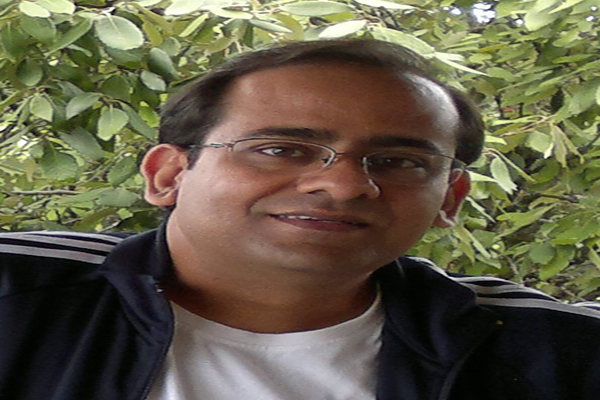
    MUMBAI: DDB Mudra has roped in Arun Sharma as head of planning, DDB Mudra Delhi. He will report in to DDB Mudra senior vice president Aditya Kanthy.

    Arun will be working on the agency’s client roster including Wrigley’s, Bata, Carrier Midea, India Yamaha Motors and Dabur among others.

    Arun joins DDB Mudra Delhi from Contract Advertising where he was VP, strategic planning. On joining DDB Mudra, Arun said, “DDB Mudra has a well known culture of planning and it’s an opportunity for me to partner Vandana and Aditya in implementing the bold planning vision for the agency.”

    With over 14 years of experience, Arun has worked on automobiles, telecom, confectionery, education, home appliances and airlines to name a few.

    Commenting on Arun’s appointment, DDB Mudra Group, Delhi president Vandana Das said, “I Welcome Arun to the DDB Mudra Group family. He has vast experience across categories and I’m sure with his experience, he would be able to add value to all our current businesses and also towards our new business initiatives.”

    Adding to this, DDB Mudra senior VP planning  Aditya Kanthy said, “Arun is a bright, ambitious and full of energy – just the kind of person we were looking for to lead our terrific young planners in Delhi. His experience is a good match for our client profile. He should have no trouble easing into our culture. I’m sure he’ll enjoy it.”

    In his earlier stints with leading agencies like Lowe, Saatchi & Saatchi and Rediffusion Y&R he got the opportunity to work on some of the largest brands in the country like Airtel, Hyundai, and Maruti Suzuki.

    Arun also had a two-year stint with ABN Amro Bank, before Contract, where he was one of the key persons responsible for the launch of ABN AMRO Broking, the retail brokerage division of ABN AMRO and managed NRI Banking.

  • Ogilvy PR Asia Pacific appoints three senior leaders

    Ogilvy PR Asia Pacific appoints three senior leaders

    MUMBAI: Ogilvy Public Relations (Ogilvy PR) has announced three appointments to its Asia Pacific management team, following the announcement that Scott Kronick has been appointed as president and CEO of Ogilvy PR, Asia Pacific w.e.f January 2014.

     Debby Cheung, currently group managing director of Ogilvy PR, China and president of Ogilvy & Mather (O&M) Group, Shanghai, has been named president of Ogilvy PR, China/Hong Kong. Current regional director of Ogilvy PR, Southeast Asia, Andrew Thomas, has been promoted to president of Ogilvy PR, Southeast Asia with additional responsibility for Ogilvy PR’s leadership in India. Similarly, current CEO of Ogilvy PR, Australia, Kieran Moore, will take on a broader role as regional director of talent to lead the firm’s regional talent initiatives, including creating processes to attract, engage, reward and retain the talent that will define the future of the public relations industry.

    Ogilvy PR, Asia Pacific president and CEO Scott Kronick said, “I’ve had the honor of working closely with these three colleagues under Steve Dahllof, the current President and CEO of Ogilvy PR, Asia Pacific.  The four of us will join together to form a stronger and even more focused regional management operation for Ogilvy PR with the goal of ensuring clients receive first-hand senior management attention and counsel.”

     With more than 30 years in the Asia Pacific region, Ogilvy PR is the largest and most awarded network regionally.


    “A region that covers 28 markets with more than 1,200 staff needs the breadth and depth of a strong leadership team, and that is what we have planned for Ogilvy PR in Asia,” said Ogilvy & Mather, Asia Pacific chairman Paul Heath. “This structure is aligned with how we are organizing ourselves throughout the region to focus our senior leadership attention on our people and clients in each of these markets.  Debby, Andrew and Kieran are first-class and they round out a very strong PR team for us in Asia.”

    On her new role, Cheung commented, “I’m a firm believer in creative thinking and original content, and this is particularly challenging in public relations because it requires constant reaction to global information flow. My focus moving forward will be to ensure our clients are getting the very best our industry has to offer in both China and Hong Kong, as a model for us in Asia and throughout the world.”

    Thomas joined Ogilvy PR in Singapore in 2005 and has been responsible for growing the firm into a market leader.  “Southeast Asia is exploding and this is providing growth opportunities throughout the region. My role will be to connect the dots in different ways for our people and our clients,” said Thomas.  “India is an exciting market and it’s a great honor to be given the responsibility for growing our presence there.”

    With more than 27 years’ experience in public relations covering strategy development and implementation, reputation and crisis management, and corporate positioning in Australia and the U.K., Moore will continue her current role, and will also serve as the firm’s Regional Director of Talent, responsible for creating and driving talent strategy for the agency, including talent attraction, people engagement and retention.

     “Talent strategy is an area that I am passionate about. People are the cornerstone of our business and I am thrilled to be asked to support our talent growth and reputation in Asia,” she said.

    The appointments will take effect 1 January 2014.

  • Aegis Media acquires China’s Trio Digital

    Aegis Media acquires China’s Trio Digital

    MUMBAI: Aegis Media acquired Trio Digital Integrated, a full-service digital agency in China.

    The acquisition will see Trio rebranded as Trio Isobar and become part of the Isobar China group, which already includes wwwins Isobar and OMP.

    Chris Chen will continue as CEO and executive creative director of Trio Isobar, supported by general manager April Chang and deputy general manager Britney Pai.

    Commenting on the acquisition, Aegis Media Asia Pacific CEO Nick Waters said, “Trio is a top class digital marketing agency with high quality creative credentials. Bringing Trio into the group adds another dimension to our market leading digital capabilities in China. This is an exciting move and we welcome Chris and his team to the company.”

    Isobar Asia Pacific CEO and global chief strategy officer Jean Lin added, “Trio offers great credibility in China when it comes to integrated creative and digital innovation, not to mention the agency’s pioneering spirit and strength of talent – something Isobar is always on the lookout for around the world. The addition of Trio will make Isobar one of the largest digital marketing agency networks, with over 700 digital specialists in China, including wwwins Isobar and OMP.”

    “Isobar’s reputation is strong in China, so when the opportunity arose to join the Aegis Media network, it was an obvious decision and one that will grow our business exponentially,” Trio Isobar CEO and ECD Chris Chen said, adding, “Isobar’s full-service digital focus and scope also allows us to connect with clients across Aegis Media in China and provide increased capabilities across the network.”

  • The Indian Media Business gets a new edition

    The Indian Media Business gets a new edition

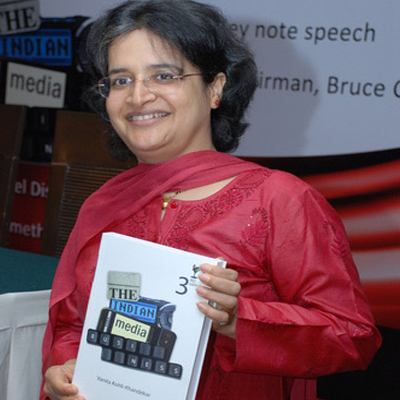
    MUMBAI: Her tome has become a reference book for students of Indian media courses. Media watcher Vanita Kohli-Khandekar released the fourth edition to her book on the Indian media business earlier this month. It has been titled matter of factly The Indian Media Business (TIMB) like in the past.

    She, however, reveals that things are different this time around in the book. Says she: “This edition has three major changes. One, there is a completely new chapter on digital media and I have dropped the chapters on telecom and internet. Two, I have focused a lot on regulation since it is very critical at this stage of the industry’s growth. And three, I have tackled a whole lot of the textural issues whether it is falling standards in news or the rising quality of Indian cinema in more detail.”

    TIMB gives a perspective and information to readers on eight segments: print, TV, film, radio, music, digital, outdoor, and events. It presents business history, current dynamics, regulation, economics, technology, valuations, case studies, trends (Indian and global) and a clear sense of how the business operates.

    The outstanding feature of the fourth edition is the chapter on digital media – arguably, the first ever serious and in-depth look at digital media from a comprehensive business perspective.  
    “This is the first time that anyone has focused on the progress of digital media in such detail, as there is no conceptual framework for the same. This chapter took a lot of effort and research,” adds Vanita.

    TIMB’s fourth edition tackles regulation in more detail than any of the previous ones. There is one large case study on the quality of regulation in India and several case-lets such as the ones on copyright law, defamation law and how it works for social media. Additionally, there are case-lets on the changes in readership methodology, on the trouble with news broadcasting and on the rising power of Hindi newspapers and the impact of digital on both print and TV among others.

    “At this stage of the growth in the industry the focus on good regulation is critical, and that can be seen in television where digitisation has finally been mandated and will have a huge impact on the top-line of the industry. So this time, this edition has a lot of focus on regulation as against earlier editions,” Vanita expounds.

    Sage Publications has been publishing TIMB for the past 11 years now. The book is also available on Flipkart.com, Amazon.com and Infibeam.com at a tab of Rs 650.   “I believe that this book will do better online as it is not in the realm of fiction. It is non-fiction and for a very specific audience,” says Vanita.

    In all 10,000 copies of the previous three editions have been sold thus far.

    Journalist, columnist and writer for Business Standard and Mid-Day, Vanita has been tracking the Indian media and entertainment business for over a decade now. Her earlier stints include one at Businessworld and Ernst & Young. A Cambridge University fellow (2000), Vanita teaches at some of the top communication schools in India as well.

    “For me professionally, it brings a lot of rigor to my work. Since I do the book every two years it forces me to sit back and read a lot of material which I would not have been able to read on the job, and this enables me to build phenomenal perspective. I ended up getting many story and column ideas while doing the research and analysis so it feels good,” Vanita exults.

    Vanita highlights that writing the book disciplines her as far as research and analysis go, and for her the whole idea of the book was that it helps those in the periphery of the media world – whether foreigner or student – get an understanding of it. A noble intent, and which many would agree has helped this generation of media professionals.

  • Media agencies go ‘deewana’ with Max

    Media agencies go ‘deewana’ with Max

    MUMBAI: Is busy schedules, hectic targets and meetings all you can picture while imagining a media agency? Well! At least for a change, you can shed that image as the agencies are gearing up for Sony Max’s No Talkies.

    The media agencies that are busy brushing up on their knowledge of movies and not brands for the dumb charades are now also discovering a bit of deewangi in one another.

    As reported earlier by indiantelevision.com, the game which is spread over three rounds will be held in Delhi, Bengaluru and Mumbai. The registrations for the competition began 3 September and continued for two weeks on the microsite http://notalkies.sonymax.tv/.

    The list of agencies who have already registered for the fun-zone are Madison, Group M, Maxus, Starcom, Lodestar, MPG, Zenith Optimedia and OMD.

    Excited, Platinum Media (Madison media) CEO Basab Dutta Chowdhry exults: “I think it’s a great initiative taken by Max. It sounds great and fun for agencies. Generally people are so busy and caught up with work and life; this is a new niche initiative where everybody can participate. There are very few initiatives like these- ‘Max-No Talkies’ which gives a chance to everyone to participate.”

    The agencies are all kicked about this competition, which is more of nostalgia for a lot of them.  To top it all, they see it as a good opportunity to meet and interact with new people. Vivaki Exchange CEO Mona Jain agreeing on this says: “No Talkies is a good and interesting initiative. It’s a first time initiative, unlike the regular parties. It also goes back to the DNA of the channel. The industry was very small earlier and people knew each other well, but the scenario is different now, the industry has expanded, so it will be a good opportunity to meet and interact with new people.”

    “It is not going to be a typical game of dumb charades,” says Sony Max VP marketing Vaishali Sharma. She further goes on to say that the channel is bringing loads of innovations to ensure engagement and an exciting evening for those who are participating.  The finale will have a Bollywood theme with different rounds, all with a twist. To amplify all the fun and frolic, the finale will be hosted by the witty and charismatic VJ, actor and presenter Gaurav Kapoor.

    Lintas Media Group vice-president Ramachandran Venkatasubramanian states: “The initiative is very interesting and this kind of activity has never been done before. No Talkies is supposed to be an interactive game and I am waiting for it. Normally bonding with people happens differently, with a game like dumb charades the bonding will happen uniquely. The game itself is very engaging and people interact with each other through it, also dumb charades is all about movies and it gets back to the genre of Max.”

    The city rounds of the activity will take place in Delhi on 18 September, followed by Bengaluru on 19 September and will close with Mumbai on 25 September. A total of five shortlisted teams – two from Delhi, one from Bengaluru and two from Mumbai will battle it out in the finale scheduled in Mumbai on 1 October at Blue Frog.
    So for agencies, it’s ready, steady, Po!

  • Ormax Media launches Ormax Brand Matrix for viewership maximisation

    Ormax Media launches Ormax Brand Matrix for viewership maximisation

    MUMBAI: Media insights firm Ormax Media announced the launch of Ormax Brand Matrix (OBM), a viewership maximisation tool. Broadcasters across categories can utilise OBM to identify a focused plan to increase viewership by upto 20 per cent within six months as the firm claims.

    The tool has been created using Ormax Media’s expertise in the area of television insights, built over more than five years, with an experience of working across 55 television channels in India.

    Ormax Media CEO Shailesh Kapoor elaborated: “Channels make huge investments, both in terms of time and money, to increase their viewership. But it is well known how difficult getting new viewers, or more time-spent from existing viewers, can be. Traditionally, viewers have been segmented by age, gender, markets, SEC and intensity of viewing, such as heavy and light viewers. In Ormax Brand Matrix, we have turned the idea of viewer segmentation on its head, and used a radically different approach – one that’s simple, intuitive and effective in equal measure.”

    Ormax Brand Matrix uses a mix of quantitative and qualitative research to recommend a viewership maximisation blueprint to channels using the product. But Kapoor believes the real power of OBM lies in its construct, adding: “Brand research can be very high on good-to-know value but poor on actionability. While developing OBM, we were very conscious that the tool had to be completely action-oriented, with only one goal – viewership maximisation. If an information need or data point is not going to help a channel increase their viewership, it’s not a part of OBM.”

    National and regional channels across categories can commission an OBM project, which has been custom-made for GECs, movies, news, music, infotainment, lifestyle, kids, youth, etc. Four channels as per Ormax are already using Ormax Brand Matrix, in less than a month since the product has been ready after two years of extensive research.

  • Max to host No Talkies for media agencies

    Max to host No Talkies for media agencies

    MUMBAI: The media agencies are busy brushing up on their knowledge of the names of movies. And why? Well, they are all gearing up for No Talkies, a dumb charades game organised by Sony Max. The movie channel which recently launched its Jahan Dekho Wahan Deewana TV campaign is now finding the deewana in media agencies, buyers and planners. Spread over three rounds, the game will be held in Delhi, Bengaluru and Mumbai.

    The channel currently is calling for registrations for the same. “No Talkies is a fun concept wherein registered teams from the media agencies will play dumb charades on Bollywood films using hand motifs to emote and communicate with each other,” says Sony Max VP marketing Vaishali Sharma.

    To register for this event, the channel has launched a microsite http://notalkies.sonymax.tv/ “Those interested can log on this site and fill up the registration form. A team comprising of three deewanas can participate. All the participating teams will be slotted into different groups and they will have to compete against each other over a few exciting rounds of the game,” informs Sharma.

    The city rounds of the activity will take place inDelhion18 September, followed by Bengaluru on 19 September and will close with Mumbai on 25 September. A total of five shortlisted teams – two from Delhi, one from Bengaluru and two from Mumbai will battle it out in the finale scheduled in Mumbai on 1 October at Blue Frog. “The finale will have a Bollywood theme with different rounds, all with a twist. To amplify all the fun and frolic, the finale will be hosted by the witty and charismatic VJ, actor and presenter Gaurav Kapoor,” informs Sharma.

    To create visibility and buzz amongst the media agencies, Max will be putting up a round of posters, tent cards, desktop pop ups and standees throughout the agencies. Also customised hoardings for a few key agencies will be placed right outside their offices. The channel also plans to host a special activity within the agencies to further boost the response for participation.

    “At Max, we recognise that the passion for Hindi movies percolates to almost everyone and No Talkies is an initiative specially designed to bring out this very deewangi. Aimed at all the media agencies across Mumbai, Delhi and Bengaluru, this activity has been conceptualised to draw in the movie buffs who have a little bit of movies madness embedded in their daily lives. This dumb charades is bound to be an epic battle of the movie lovers to prove their mettle as the ultimate Hindi Movie fan,” says Sharma.

    The registrations are open for two weeks which started on 3 September. “This is not going to be a typical game of dumb charades. We are bringing in loads of innovations to ensure engagement and an exciting evening for those participating,” she informs.

    Talking about this initiative president Rohit Guptasays, “We share a very special relationship with media agencies who have always supported us. No Talkies is an initiative to bring agencies together to feel the magic of movies as we do. It is a fabulous opportunity for the numerous media agencies to gather under one roof to enjoy, fraternise and discover a little of bit deewangi in one another.”

    First the launch of three new TV campaigns to promote deewangi and now this dumb charades game. Max is surely going maxi on strengthening its relationship with the industry.

  • Vodafone and Rockstand join hands to create a new digital reading revolution in India

    Vodafone and Rockstand join hands to create a new digital reading revolution in India

    MUMBAI: Vodafone, one of India’s leading telecommunications services provider, has announced its tie-up with Rockstand, one of India’s leading eBook and eMagazine application.

    This tie-up heralds a new chapter in the digital reading industry of the country. With this development, Rockstand has become the first eBook and eMagazine application that would include easy payment through Vodafone and thus reaching out to millions of users across the country.

    On the association, Rockstand Digital CEO Praveen Rajpal exclaimed, “Rockstand’s tie-up with Vodafone will further strengthen our relationship with them as well as with our users. We are receiving wonderful reviews for our application and recently we have crossed a mark of 50,000 downloads, which shows the growing popularity of digital reading in India. With Vodafone’s support, we will be reaching to urban as well as rural areas of the country on a strong network. We are sure this association will bear rich dividends for both Vodafone & Rockstand”

    There will be exclusive subscription option for Vodafone users where they can purchase books and magazines at Rs 7 per day.

    Apart from this Vodafone users will also have access to choose from the gamut of books and magazines of their choices, with just a click of a button from Rockstand – eBook/eMagazine collection like regional content, lifestyle, entertainment, computer, children magazine, computer books, celeb magazines and many more categories.

  • DDB Mudra and McDowell’s ‘BossPatrol’ to save you from trouble

    DDB Mudra and McDowell’s ‘BossPatrol’ to save you from trouble

    MUMBAI: Everyone likes to take a break at work every now and then, with YouTube videos, online games, Facebook, Blogs and so on. But what does one do, when your boss walks past your computer and catches you in the act? You may not see your boss coming, but your friends just might.

    Hence, DDB Mudra’s team came up with a downloadable app – ‘BossPatrol’ which lets you save your friends from trouble. It lets you choose a secret phrase example What’s the time? And then add your colleagues to the group. If you spot your boss nearby, while your friends are slacking off, all you need to do is speak out the secret phrase. BossPatrol picks up the sound through the microphone, sends a signal to your friend’s computers and instantly opens safe windows on all their computers (eg: presentations, spreadsheets etc.), just in time and your boss will never get to know what they were up to.

    Speaking on the new app, DDB Mudra Group chairman and CCO Sonal Dabral said “BossPatrol is an exciting app and a wonderful twist to McDowell No.1’s positioning as the true spirit of friendship between close friends. The idea has social interest, community feeling, bonding and friendship at it’s core all wrapped in a fun package. Not just perfectly relevant to the iconic McDowell No.1’s positioning but also all the ingredients of going viral. So it’s really heartening to see it become such a huge success in such a short time.”

    The main objective behind the app is to make McDowell’s No.1’s long running campaign “The Spirit of Friendship” relevant to younger audiences.

    The new app created by DDB Mudra for McDowell’s is surely going to be everyone’s best friend soon.

  • Advertisers vs Broadcasters: The battle for weekly TV ratings

    Advertisers vs Broadcasters: The battle for weekly TV ratings

    Aegis Group plc chairman India & CEO South East Asia Ashish Bhasin does not mince his words when he says. "In the next 24 to 48 hours many broadcasters are going to be getting cancellation notices from advertisers for spots booked with them. I have been getting SMSes from some of my key advertisers to move ahead with pulling off ads from TV."

    Adds Group M South Asia CEO & Advertising Agencies Association of India (AAAI) executive committee member C.V.L Srinivas: "Starting yesterday, cancellation notices have been going to broadcasters from advertising clients across the board."

    "Earlier broadcasters took the decision and now advertisers are doing so," adds IPG Media Brands CEO Shashi Sinha.

    The CEO of a channel confirmed that his network had received emails concerning 10-11 clients. "They have given us 72 hours to resolve the issue. If we fail to revert to weekly ratings all release orders for TV spots will stand cancelled," he says.

    That is the state of Indian media today. A battle royale is brewing – some call it the mother of all battles. The two warring parties – on one side of the battle line are the advertisers, and on the other are the seven broadcast TV networks.

    Group M's CVL Srinivas says advertisers will stay away from TV until they get proper weekly viewership data

    The decision Sinha is referring to relates to these broadcasters unilaterally ordering TV ratings agency TAM Media to change the frequency of reporting on their viewership from a weekly routine to a monthly routine. And to also report those details in absolute numbers, not in percentages.

    The seven broadcast networks have more than 100 channels under their umbrella, accounting for almost 50 per cent of daily TV viewing in India.

    Advertisers on the other hand have a war chest of Rs 14,000 crore which they pump into TV channels annually to promote their products and services to TV viewers who are their consumers. And almost 60-70 per cent of that goes into those seven broadcast networks.

    "I don‘t know see why there should be a need for anyone to have a confrontation at this time," expresses Bhasin.

    Aegis Group‘s Ashish Bhasin says advertisers would prefer to put money in the bank then advertise in this situation

    In fact, the broadcast industry has been increasingly flexing its muscles in recent times. While they are competing for viewership with each other daily, they have over the past four or five years increasingly bonded together, finding common cause on issues which are plaguing them. Whether it was on the cable TV carriage fee burden or self-regulation or digitisation, the broadcasters have stood united and lobbied hard to get their views heard and get decisions taken in their favour.

    One of the issues with the ad industry was the gross billing issue. This had been a practice for decades followed by ad agencies, and broadcasters for TV spots carried on them. The broadcasters – led by their association the Indian Broadcasting Foundation (IBF)- wanted the practice to be changed to net bills when the income tax department got after them to pay tax for ad agency commission (which was not being paid by them actually but was only mentioned in the bill). Ad agencies – AAAI – resisted this change even though the IBF continually urged them to do so.

    IPG Media CEO Shashi Sinha says advertisers are now taking their decision

    The IBF then put its foot down and said its broadcaster members would pull out all TV spots from TV channels. Ad agency resistance continued for a couple of days before it melted and agencies, the Indian Society of Advertisers (ISA) and the IBF hammered out a solution, which saw net billings becoming the practice, albeit with a legend of 15 per cent commission attached. To media observers, it clearly showed who had the power – broadcasters.

    "Agreed that broadcasters had their way in the net billings case because it related to a routine mechanical exercise which did not impact advertisers. It only concerned agencies and broadcasters," explains Bhasin. "But this time it is the advertisers themselves who are being impacted."

    Adds Srinivas: "And advertisers are saying, we will not advertise on those channels for which we don‘t have data. We as their agencies cannot plan on a monthly basis without data and hence are complying with our clients."

    Madison Media COO Karthik Laxminarayan cautions that aggression is not a solution

    "The key thing is that these days advertising comes in bursts of four to six weeks," points out Bhasin. "And if reporting is going to come after the period is over, how will advertisers monitor how their communication is faring with TV viewers? The world is moving to real time reporting of viewing habits. The advertiser has a right to know how the money he is spending is faring and whether it is getting him results. With the monthly reporting, it will not be efficient."

    "India and Vietnam are the only two nations which don‘t have a daily ratings system," adds Srinivas. "And now we are talking about going monthly. It is a retrograde step and it has been pushed through without any logic."

    Bhasin points out this time the broadcasters are a divided lot too. "While these seven broadcast networks are demanding monthly reporting and monitoring, the others are still going with weekly reports," he says. "How can you have two sets of practices in the same sector?"

    Vivkai Exchange CEO Mona Jain: Advertisers will blink first

    But the fact that the broadcasting industry is divided is going to work in the advertisers favour. "I don‘t know why there is this misconception that we cannot do without these 100 channels," says Srinivas. "This is a myth. We can do good media plans and reach our customers even without these channels. There are another 200 channels we can use. And they have said they are more than willing to do deals with us. DD could be a good option."

    He also believes that advertisers are going to start putting their money into other media outlets like below the line, print, and digital. "The floodgates are going to open for digital advertising. We have seen so many clients talking about using digital media over the past month ever since the TAM issue has broken out. And over the past 24 hours two clients have totally shifted from TV – one to a print plan and the other to a digital one. Agreed one of them is a niche player, but the advertising mindset is changing."

    Agrees Sinha: " What are the alternatives left for advertisers? Some might go to print, some might stay away or some might even come back to TV, no one knows what will happen until and unless both parties talk it out."

    Havas Media MD Mohit Joshi says it is a lose-lose situation for all

    Bhasin believes advertisers might also choose to totally do without advertising and straightaway add the money saved to their bottom lines "And in this tough economic times, it is better to have cash in the bank then spend it," he says.

    "It‘s true," points out Srinivas. "Advertisers would rather not advertise than advertise without any data. One or two months without advertising is not going to break any brands. There are even more efficient ways to reach customers than TV."

    What has left most media professionals confused is the hard stance taken by broadcasters. "I agree there could be genuine problems with TAM. But how is 30 days for reporting ratings better than weekly ratings when the data is not trusted by them? There is no logic to the broadcasters‘ stance. This is not a banana republic where you turn things on and off as it suits you," says Srinivas.

    ISA media committe head Hemant Bakshi will be playing a key role

    The question on the top of everyone‘s minds is: who is going to blink first and how long will the difference of opinion continue between broadcasters and advertisers? According to Bhasin, the basics of any business is "the client is always right. I think, within a week, better sense should prevail and things should get sorted out."

    Srinivas is not willing to speculate on the time period but says advertisers will stay off the TV channels until they start getting the weekly data they seek.

    "Obviously advertisers will blink first. Where will they get such a mass reaching medium," says a TV channel CEO. "They came running back to us on the third day during the net billings crisis when we blocked them out for two days."

    Vivaki Exchange CEO Mona Jain believes that "there will be some kind of a push back wherein it will be the advertisers who will have to compromise."

    Lulla says it is a private matter between broadcasters and advertisers

    Others highlight that the combative attitude should give way to finding solutions. "We, as an industry, should not think aggressively but progressively; and try to resolve it by having a healthy discussion," expresses Madison Media COO Karthik Laxminarayan.

    Havas Media India MD Mohit Joshi says that on a personal level, "I am sad that all of us together are not able to find a solution. All such issues are in a lose-lose domain. Nobody is actually going to gain. Broadcasters could end up losing revenue."

    Indiantelevision.com got in touch with ISA media committee chairman Hemant Bakshi to get the advertiser perspective and he said he would prefer not to at this stage.

    Ditto with broadcasters. Indiantelevision.com got in touch with Star India CEO Uday Shankar, Viacom18‘s Sudanshu Vats, Times Television Network CEO Sunil Lulla for their views. All of them refused to get into any discussion. "This is not a matter for public scrutiny. It is a private matter which has to be resolved between broadcasters and advertisers," says Lulla.

    For their individual sakes, hopefully they will do so soon.