Category: Media Agencies

  • ‘Not taking anything for granted is our guiding philosophy’: Maxus MD Kartik Sharma

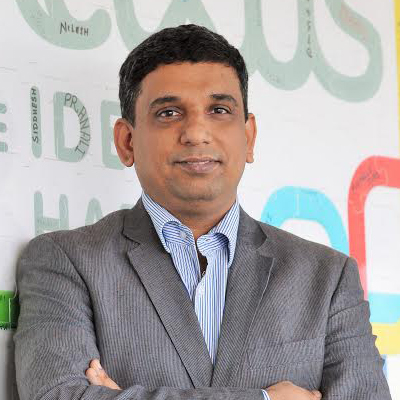
    ‘Not taking anything for granted is our guiding philosophy’: Maxus MD Kartik Sharma

    ‘No room for complacency’ is a motto Maxus South Asia managing director Kartik Sharma as well as his team follow strongly when it comes to upholding the philosophy of not taking their position in the market for granted. In a market where traditional media practices are being challenged every now and then by a new start up or biz solutions provider, Maxus isn’t too worked up, says Sharma, but is definitely not taking it easy.

    With client retention being top priority, the media agency has heavily invested in new and innovative services in the last few years… while some have worked, others have taught team Maxus what to work on next… the next innovation.

    In an interview with Indiantelevision.com’s Papri Das, Sharma speaks on the company’s future initiatives that not only prepares Maxus as an agency of tomorrow but also forms yardsticks for the dynamic current media ecosystem.

    Excerpts:

    How was 2015 for Maxus in terms of new businesses and mandates?

    2015 was a challenging as well as gratifying year. We have been successful in achieving our business goals. We have picked up a fair amount of new businesses as well. But that is part and parcel of our business. We did some landmark work in the area of sports where we helped our client Paytm bag the BCCI home series sponsorship rights of 84 matches. We also set up a new marketing command centre called Mesh that reads signals from social media and other data platforms to help brands to come up with real time interventions and help campaigns.

    What were the challenges that you faced in 2015?

    The first quarter was a bit slow and I think this was uniform across all agencies last year. Therefore business was slow but it picked up in the latter half of the year. There was also this sentiment about the new government and what it can do, which drove a lot of the business decisions as well. We had mixed feelings through the year regarding how our clients will end up spending and whether they would be making cuts, because that directly impacts our business. Having said that, things were looking better by the end of the year.

    How useful has Mesh proved for you and your clients?

    We launched Mesh around April – May last year with two centres in Mumbai and Delhi, and very soon we will set up one in Bangalore as well. The idea was to set it up internally and have a culture change within Maxus. Parallelly, we also got multiple projects at the back of Mesh. A lot of clients are already using Mesh in various ways, be it ad-hoc or continual projects.

    It actually started much earlier in a different avatar when we deployed a similar service with Nestle as a client. We did some interesting work with L’oreal on the same principles where we continued to monitor all the social media pages and activities on the brand, understand the top influences and the kind of content that was working for the brand. The engagement analysis told us which part of India was giving us response on a particular product. It was immensely helpful in understanding what consumers feel about various brands.

    With the technology evolving and the ecosystem becoming more dynamic, do you think advertisers’ dependency on media agencies has increased?

    More than dependency, I think we work with clients as partners so it’s all about being equal in that. We have been able to demonstrate the real value of what we call the command centre. It’s about telling really powerful and relevant stories, which you can actually take back as an impact on your business.

    We must also take into consideration the number of new pitches that happened globally. Last year, around 20 million plus pitches took place globally. Fortunately for us, we weren’t part of it as you can never really predict how these additions will work out. As an agency, I would rather focus on current clients doing a great job than pitching. I think that having a few new strategic pitches are fine as long as it doesn’t effect your loyalty to your current clients.

    Don’t you think Maxus as a group has the capability to take on new clients without disappointing the existing ones?

    I have mentioned this again and I will repeat it yet again, Maxus as a group never takes its position in the market for granted. We have to earn what we are standing on and demonstrate every single day to all our stakeholders. That is critical to Maxus’ functioning. Not taking anything for granted is our guiding philosophy. It is also about the changing environment and Maxus needs to be forward facing to some extent. Mesh is a project keeping that in mind. If we don’t invest in Mesh and prepare ourselves for the future, then we can’t make that transition.

    Do you sense competition from all the ‘marketing solutions’ providers that have mushroomed in the industry recently? Some of them claim to provide similar services that Maxus has.

    Competition is always welcome. It builds a certain degree of positive energy for everyone to do better. Having said this, we have our own vision. It is a very inspiring vision that leans in to change. If you look at how we work, the entrepreneurial streak is very strong within Maxus. The DNA of Maxus is all about innovation, doing new things and evolving. So I am not overtly worried about the competition, yet we will keep a watch. We will not become complacent for sure.

    We see several big agencies collaborating with start-up agencies for specific skill sets. Do you think it reflects the lack of certain skills within the big media agencies to take on the changing market dynamics?

    Firstly, the skill set factor is not affecting just the agencies, I think it is across the board. As the market landscape changes, there are two ways to deal with it – either incorporate and evolve all the skill sets internally, which requires its own time and effort, or partner with someone who has these skill sets in a focused area still relevant to you. It is always going to be hybrid between building yourself and partnering with others.

    Can it be considered a shortcut way out?

    I don’t think it’s a shortcut. Once a client comes on board an agency, we want to give them the best possible solution. Clients don’t really worry too much on where that solution is coming from. There will always be something like a super specialisation, which an agency might not require for all its clients. Therefore it is better to partner, for a particular client or for a brief period of time.

    We too work with multiple partners. For example, we introduced a tool called Synapse last year, which marries television ratings with social buzz. We work with our partner Frrole to develop that. Frrole has certain proprietary technology for which it makes immense sense for us to partner with them.

    Within the WPP ecosystem we work with the research agency Kantar because it gives us certain specialisations. Rather than replicating the same skills within the agencies, it’s better to work with the experts.

    How do you ensure client’s faith in television, especially for advertisers who are heavily dependent on the television medium when there is all this talk about television losing importance in the advertising space?

    Firstly, we will continue to use the industry endorsed television rating system, which is currently Broadcast Audience Research Council (BARC) India. Secondly, as I mentioned earlier, we have the tool Synapse that helps marry television ratings with the social buzz. For particularly niche brands, which have a well defined target group, sometimes only TV ratings may not work. It may be that a certain type of channel, say a niche channel with a very targeted audience will work for them. We can identify them by listening to the social buzz. So in many ways, we are supporting the need for television through these new initiatives.

    Agencies are increasingly facing the ‘4 second challenge’ digital platforms with this current ADHD generation. How can the industry deal with this?

    First and foremost, one needs to take a hard look at the communication created for television and have an open conversation with the client and the creative agency on whether the same communication will hold true in a digital environment.

    The second thing is about doing a lot of experiment and a bit of trial and error at low cost to see what works and then tweaking it accordingly. Keeping an eye on what’s happening globally and learning from best practices or successful examples there and contextualising in the Indian market is also necessary.

    Any new services or products that are in the pipeline from Maxus?

    There are at least four or five big initiatives that we have in mind but it’s a little premature to talk about it now. By end March or early April we will be able to give a proper communication on the same.

    We keep innovating on our product front and learn from the previous launches. If certain things haven’t worked, we go back to the black board and think on what needs to change. At this point in time, I can say that we will soon be introducing an improved version of our T2D tool that was launched last year targeting the eCommerce community. We have received good feedback on it and will build on it to develop it into a more powerful tool.


  • ‘Not taking anything for granted is our guiding philosophy’: Maxus MD Kartik Sharma

    ‘Not taking anything for granted is our guiding philosophy’: Maxus MD Kartik Sharma

    ‘No room for complacency’ is a motto Maxus South Asia managing director Kartik Sharma as well as his team follow strongly when it comes to upholding the philosophy of not taking their position in the market for granted. In a market where traditional media practices are being challenged every now and then by a new start up or biz solutions provider, Maxus isn’t too worked up, says Sharma, but is definitely not taking it easy.

    With client retention being top priority, the media agency has heavily invested in new and innovative services in the last few years… while some have worked, others have taught team Maxus what to work on next… the next innovation.

    In an interview with Indiantelevision.com’s Papri Das, Sharma speaks on the company’s future initiatives that not only prepares Maxus as an agency of tomorrow but also forms yardsticks for the dynamic current media ecosystem.

    Excerpts:

    How was 2015 for Maxus in terms of new businesses and mandates?

    2015 was a challenging as well as gratifying year. We have been successful in achieving our business goals. We have picked up a fair amount of new businesses as well. But that is part and parcel of our business. We did some landmark work in the area of sports where we helped our client Paytm bag the BCCI home series sponsorship rights of 84 matches. We also set up a new marketing command centre called Mesh that reads signals from social media and other data platforms to help brands to come up with real time interventions and help campaigns.

    What were the challenges that you faced in 2015?

    The first quarter was a bit slow and I think this was uniform across all agencies last year. Therefore business was slow but it picked up in the latter half of the year. There was also this sentiment about the new government and what it can do, which drove a lot of the business decisions as well. We had mixed feelings through the year regarding how our clients will end up spending and whether they would be making cuts, because that directly impacts our business. Having said that, things were looking better by the end of the year.

    How useful has Mesh proved for you and your clients?

    We launched Mesh around April – May last year with two centres in Mumbai and Delhi, and very soon we will set up one in Bangalore as well. The idea was to set it up internally and have a culture change within Maxus. Parallelly, we also got multiple projects at the back of Mesh. A lot of clients are already using Mesh in various ways, be it ad-hoc or continual projects.

    It actually started much earlier in a different avatar when we deployed a similar service with Nestle as a client. We did some interesting work with L’oreal on the same principles where we continued to monitor all the social media pages and activities on the brand, understand the top influences and the kind of content that was working for the brand. The engagement analysis told us which part of India was giving us response on a particular product. It was immensely helpful in understanding what consumers feel about various brands.

    With the technology evolving and the ecosystem becoming more dynamic, do you think advertisers’ dependency on media agencies has increased?

    More than dependency, I think we work with clients as partners so it’s all about being equal in that. We have been able to demonstrate the real value of what we call the command centre. It’s about telling really powerful and relevant stories, which you can actually take back as an impact on your business.

    We must also take into consideration the number of new pitches that happened globally. Last year, around 20 million plus pitches took place globally. Fortunately for us, we weren’t part of it as you can never really predict how these additions will work out. As an agency, I would rather focus on current clients doing a great job than pitching. I think that having a few new strategic pitches are fine as long as it doesn’t effect your loyalty to your current clients.

    Don’t you think Maxus as a group has the capability to take on new clients without disappointing the existing ones?

    I have mentioned this again and I will repeat it yet again, Maxus as a group never takes its position in the market for granted. We have to earn what we are standing on and demonstrate every single day to all our stakeholders. That is critical to Maxus’ functioning. Not taking anything for granted is our guiding philosophy. It is also about the changing environment and Maxus needs to be forward facing to some extent. Mesh is a project keeping that in mind. If we don’t invest in Mesh and prepare ourselves for the future, then we can’t make that transition.

    Do you sense competition from all the ‘marketing solutions’ providers that have mushroomed in the industry recently? Some of them claim to provide similar services that Maxus has.

    Competition is always welcome. It builds a certain degree of positive energy for everyone to do better. Having said this, we have our own vision. It is a very inspiring vision that leans in to change. If you look at how we work, the entrepreneurial streak is very strong within Maxus. The DNA of Maxus is all about innovation, doing new things and evolving. So I am not overtly worried about the competition, yet we will keep a watch. We will not become complacent for sure.

    We see several big agencies collaborating with start-up agencies for specific skill sets. Do you think it reflects the lack of certain skills within the big media agencies to take on the changing market dynamics?

    Firstly, the skill set factor is not affecting just the agencies, I think it is across the board. As the market landscape changes, there are two ways to deal with it – either incorporate and evolve all the skill sets internally, which requires its own time and effort, or partner with someone who has these skill sets in a focused area still relevant to you. It is always going to be hybrid between building yourself and partnering with others.

    Can it be considered a shortcut way out?

    I don’t think it’s a shortcut. Once a client comes on board an agency, we want to give them the best possible solution. Clients don’t really worry too much on where that solution is coming from. There will always be something like a super specialisation, which an agency might not require for all its clients. Therefore it is better to partner, for a particular client or for a brief period of time.

    We too work with multiple partners. For example, we introduced a tool called Synapse last year, which marries television ratings with social buzz. We work with our partner Frrole to develop that. Frrole has certain proprietary technology for which it makes immense sense for us to partner with them.

    Within the WPP ecosystem we work with the research agency Kantar because it gives us certain specialisations. Rather than replicating the same skills within the agencies, it’s better to work with the experts.

    How do you ensure client’s faith in television, especially for advertisers who are heavily dependent on the television medium when there is all this talk about television losing importance in the advertising space?

    Firstly, we will continue to use the industry endorsed television rating system, which is currently Broadcast Audience Research Council (BARC) India. Secondly, as I mentioned earlier, we have the tool Synapse that helps marry television ratings with the social buzz. For particularly niche brands, which have a well defined target group, sometimes only TV ratings may not work. It may be that a certain type of channel, say a niche channel with a very targeted audience will work for them. We can identify them by listening to the social buzz. So in many ways, we are supporting the need for television through these new initiatives.

    Agencies are increasingly facing the ‘4 second challenge’ digital platforms with this current ADHD generation. How can the industry deal with this?

    First and foremost, one needs to take a hard look at the communication created for television and have an open conversation with the client and the creative agency on whether the same communication will hold true in a digital environment.

    The second thing is about doing a lot of experiment and a bit of trial and error at low cost to see what works and then tweaking it accordingly. Keeping an eye on what’s happening globally and learning from best practices or successful examples there and contextualising in the Indian market is also necessary.

    Any new services or products that are in the pipeline from Maxus?

    There are at least four or five big initiatives that we have in mind but it’s a little premature to talk about it now. By end March or early April we will be able to give a proper communication on the same.

    We keep innovating on our product front and learn from the previous launches. If certain things haven’t worked, we go back to the black board and think on what needs to change. At this point in time, I can say that we will soon be introducing an improved version of our T2D tool that was launched last year targeting the eCommerce community. We have received good feedback on it and will build on it to develop it into a more powerful tool.

  • GST Bill crucial for Start-Up India, Digital India success: IAMAI

    GST Bill crucial for Start-Up India, Digital India success: IAMAI

    MUMBAI: Industry body – Internet and Mobile Association of India (IAMAI) has urged the Parliament to pass the crucial GST (Goods & Services Tax) Bill in the forthcoming budget session. The industry body has said that the smooth passage of GST Bill is crucial for the success of mega economic and social projects, especially Digital India and Start-Up India.

    The GST Bill, which subsumes all indirect taxes to create one rate and integrate the country into a single market, is the biggest tax reform that is being undertaken since Independence, but is pending approval of the Rajya Sabha.

    The Digital India plan is about connecting, empowering and enabling citizens and encouraging local electronic manufacturing. Similarly, Start-Up India is focused on promoting entrepreneurship, and through small entrepreneurs, generating employment.

    Local manufacturing, NoFN, e-Gov, as a part of Digital India, where private sector is involved, crucially rests on the successful passage of GST Bill in Parliament, which seeks to create one market through one tax system. Similarly, start-ups, online market places, and other online service providers, all require a single market plan.

    IAMAI president Subho Ray said, “The extant tax structure of India is heavily fragmented, with multiple indirect taxes levied by different authorities at different stages of a transaction. Fiscal federalism has led to different procedures and rates of VAT and other forms of LBTs across the states. This creates logistical challenges for the industry, besides giving rise to compliance related complications. Conflict of interests between tax authorities in case of inter-state transaction is a major pain point for the industry today. GST will help the digital industry business model flourish by providing uniformity in tax rates and regulations across the country. This will help doing business in India easier, allow free-play to market dynamics and allow deeper penetration of these services.”

    Given that much of the developments in the digital industry are disruptive innovations, business models like online platforms, aggregators, etc are essentially services provided by intermediaries. Such services are revolutionising the existing markets of both goods and services. Thus, online ticketing services or e-tailing are providing newer modes of access for consumers to existing goods and services, said IAMAI.

    The digital industry unequivocally stands for the smooth passage of GST and hopes that the bill will be passed in the upcoming budget session, as any further delay will push back the transformative projects of the government.

  • GST Bill crucial for Start-Up India, Digital India success: IAMAI

    GST Bill crucial for Start-Up India, Digital India success: IAMAI

    MUMBAI: Industry body – Internet and Mobile Association of India (IAMAI) has urged the Parliament to pass the crucial GST (Goods & Services Tax) Bill in the forthcoming budget session. The industry body has said that the smooth passage of GST Bill is crucial for the success of mega economic and social projects, especially Digital India and Start-Up India.

    The GST Bill, which subsumes all indirect taxes to create one rate and integrate the country into a single market, is the biggest tax reform that is being undertaken since Independence, but is pending approval of the Rajya Sabha.

    The Digital India plan is about connecting, empowering and enabling citizens and encouraging local electronic manufacturing. Similarly, Start-Up India is focused on promoting entrepreneurship, and through small entrepreneurs, generating employment.

    Local manufacturing, NoFN, e-Gov, as a part of Digital India, where private sector is involved, crucially rests on the successful passage of GST Bill in Parliament, which seeks to create one market through one tax system. Similarly, start-ups, online market places, and other online service providers, all require a single market plan.

    IAMAI president Subho Ray said, “The extant tax structure of India is heavily fragmented, with multiple indirect taxes levied by different authorities at different stages of a transaction. Fiscal federalism has led to different procedures and rates of VAT and other forms of LBTs across the states. This creates logistical challenges for the industry, besides giving rise to compliance related complications. Conflict of interests between tax authorities in case of inter-state transaction is a major pain point for the industry today. GST will help the digital industry business model flourish by providing uniformity in tax rates and regulations across the country. This will help doing business in India easier, allow free-play to market dynamics and allow deeper penetration of these services.”

    Given that much of the developments in the digital industry are disruptive innovations, business models like online platforms, aggregators, etc are essentially services provided by intermediaries. Such services are revolutionising the existing markets of both goods and services. Thus, online ticketing services or e-tailing are providing newer modes of access for consumers to existing goods and services, said IAMAI.

    The digital industry unequivocally stands for the smooth passage of GST and hopes that the bill will be passed in the upcoming budget session, as any further delay will push back the transformative projects of the government.

  • Dentsu Aegis launches agency to serve $200 billion B2B sector

    Dentsu Aegis launches agency to serve $200 billion B2B sector

    MUMBAI: In a bid to cater to the business to business (B2B) market, which is accelerating at speed and commanding $200 billion in estimated marketing spend, Dentsu Aegis Network Ltd. has launched Interprise, a full-service global agency specialising in B2B solutions to address expanding marketing demand in this area.

    Headquartered in London and with offices in New York, San Francisco, Singapore, Hong Kong and Sydney, Interprise will expand into other major markets during 2016.

    In addition to increasing client needs, the launch of the new agency was prompted by the increasing investment in their B2B divisions by more than 50 per cent of the world’s top global market brands and their proactive marketing activities.

    The establishment of the new agency will further strengthen the services already being provided by the Dentsu Group in the B2B domain, increase synergies with other Group companies, and expand its footprint.

    Looking ahead, the existing specialist B2B media team across the Carat Enterprise network will be integrated within Interprise to support new and existing brands with their B2B requirements. With B2B capability in creative services, media planning and buying, search, data, programmatic, events, content and out-of-home advertising, Interprise will provide new solutions in all the major markets.

    Interprise will be headed by Stuart Giddings as global president.

  • Dentsu Aegis launches agency to serve $200 billion B2B sector

    Dentsu Aegis launches agency to serve $200 billion B2B sector

    MUMBAI: In a bid to cater to the business to business (B2B) market, which is accelerating at speed and commanding $200 billion in estimated marketing spend, Dentsu Aegis Network Ltd. has launched Interprise, a full-service global agency specialising in B2B solutions to address expanding marketing demand in this area.

    Headquartered in London and with offices in New York, San Francisco, Singapore, Hong Kong and Sydney, Interprise will expand into other major markets during 2016.

    In addition to increasing client needs, the launch of the new agency was prompted by the increasing investment in their B2B divisions by more than 50 per cent of the world’s top global market brands and their proactive marketing activities.

    The establishment of the new agency will further strengthen the services already being provided by the Dentsu Group in the B2B domain, increase synergies with other Group companies, and expand its footprint.

    Looking ahead, the existing specialist B2B media team across the Carat Enterprise network will be integrated within Interprise to support new and existing brands with their B2B requirements. With B2B capability in creative services, media planning and buying, search, data, programmatic, events, content and out-of-home advertising, Interprise will provide new solutions in all the major markets.

    Interprise will be headed by Stuart Giddings as global president.

  • Cut The Crap launches design unit

    Cut The Crap launches design unit

    MUMBAI: Cut The Crap, a Mumbai based creative agency, has launched its design unit – Design Sell, which will focus on brand identity, packaging, digital and 3D designs and BTL amongst others. 

    While the unit will work as a part of the agency, it will function independently with a separate team. The new entity Design Sell will be headed by Renuka Desilva.

    Cut The Crap founder and creative head Jagdish Acharya said, “I am excited to announce the launch of Design Sell. Cut The Crap has made its mark as a creative boutique for brand building. Design Sell derives its DNA from Cut The Crap. Design is never without a marketing purpose, the objective of design in the world of brands is to sell and to therefore it is imperative that design be strategic and a part of the brand building ecosystem. Therefore, the name Design Sell. The need was felt to launch the division on its own so it can be nurtured and grown to its true potential.”

    Speaking on the potential, Acharya added, “The demand for strategic design has been growing and not just from one-off clients looking for logos, brand identity and such. We work a lot with start-ups. Some of them need only design inputs first and a full service creative interface later. Then there are those who use only BTL as a medium of brand building and they need it to be managed through strategic inputs similar to ATL.”

    Design Sell creative director and head Renuka Desilva said, “I am looking forward to building Design Sell on the terra firma of strategy and creative foundations of design. It is the understanding of brand and marketing needs that will differentiate us from other design houses. Our aim over the next two – three years will be to build a strong portfolio that showcases our point of difference. Business will only follow.”

  • Cut The Crap launches design unit

    Cut The Crap launches design unit

    MUMBAI: Cut The Crap, a Mumbai based creative agency, has launched its design unit – Design Sell, which will focus on brand identity, packaging, digital and 3D designs and BTL amongst others. 

    While the unit will work as a part of the agency, it will function independently with a separate team. The new entity Design Sell will be headed by Renuka Desilva.

    Cut The Crap founder and creative head Jagdish Acharya said, “I am excited to announce the launch of Design Sell. Cut The Crap has made its mark as a creative boutique for brand building. Design Sell derives its DNA from Cut The Crap. Design is never without a marketing purpose, the objective of design in the world of brands is to sell and to therefore it is imperative that design be strategic and a part of the brand building ecosystem. Therefore, the name Design Sell. The need was felt to launch the division on its own so it can be nurtured and grown to its true potential.”

    Speaking on the potential, Acharya added, “The demand for strategic design has been growing and not just from one-off clients looking for logos, brand identity and such. We work a lot with start-ups. Some of them need only design inputs first and a full service creative interface later. Then there are those who use only BTL as a medium of brand building and they need it to be managed through strategic inputs similar to ATL.”

    Design Sell creative director and head Renuka Desilva said, “I am looking forward to building Design Sell on the terra firma of strategy and creative foundations of design. It is the understanding of brand and marketing needs that will differentiate us from other design houses. Our aim over the next two – three years will be to build a strong portfolio that showcases our point of difference. Business will only follow.”

  • Red Chillies’ Manish Kumar turns entrepreneur with Digi Osmosis

    Red Chillies’ Manish Kumar turns entrepreneur with Digi Osmosis

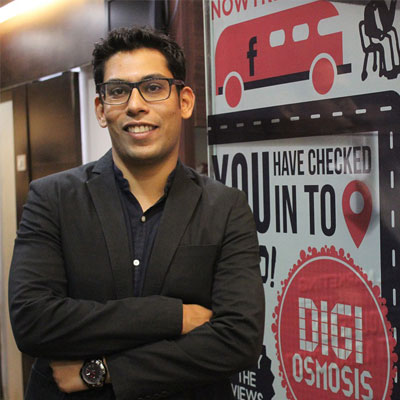
    MUMBAI: Former Red Chillies Entertainment head of marketing and digital Manish Kumar has turned entrepreneur with the launch of a marketing and advertising outfit called Digi Osmosis.

    The agency will help brands be future-ready in the digital ecosystem as well as capitalise on this new and ever-growing community. 

    Digi Osmosis founder Manish Kumar said, “It’s simple… we understand digital and technology. We are constantly exploring new ways to exploit the digital landscape and simplify it for both the clients and the consumers. Through this company, we aim to create content that engages the fans and appeals to them and marry innovation through technology by partnering with the best tech gurus in the business. We are young, passionate and think new! We don’t just dream, but we back it up with numbers. Our backbone is analytics, and we tailor solutions according to the figures. Digital is in our blood. And we bleed ones and zeroes.”

    Through digital innovations, content, engaging fans and followers and helping connect influencers via their preferred platform and technologies in the space of sports and entertainment, Digi Osmosis aims to provide a complete digital solutions package, not only driving content but become creators.

    Kumar has over eight years of experience in being a frontrunner in driving innovations and creating never-before-seen business opportunities for the Indian entertainment and sports industry in the digital space.

    Exuding knowledge in technology, marketing and digital industry and also acting as the nucleus connecting the arms of sports, entertainment and technology brands, the agency uses simple strategies and easy communication options to create digital assets for their clients through multiple ways. It integrates with systems and digital assets like media buying, viral marketing, social media marketing and using analytics efficiently to predict trends and create content in an organic manner.

  • Red Chillies’ Manish Kumar turns entrepreneur with Digi Osmosis

    Red Chillies’ Manish Kumar turns entrepreneur with Digi Osmosis

    MUMBAI: Former Red Chillies Entertainment head of marketing and digital Manish Kumar has turned entrepreneur with the launch of a marketing and advertising outfit called Digi Osmosis.

    The agency will help brands be future-ready in the digital ecosystem as well as capitalise on this new and ever-growing community. 

    Digi Osmosis founder Manish Kumar said, “It’s simple… we understand digital and technology. We are constantly exploring new ways to exploit the digital landscape and simplify it for both the clients and the consumers. Through this company, we aim to create content that engages the fans and appeals to them and marry innovation through technology by partnering with the best tech gurus in the business. We are young, passionate and think new! We don’t just dream, but we back it up with numbers. Our backbone is analytics, and we tailor solutions according to the figures. Digital is in our blood. And we bleed ones and zeroes.”

    Through digital innovations, content, engaging fans and followers and helping connect influencers via their preferred platform and technologies in the space of sports and entertainment, Digi Osmosis aims to provide a complete digital solutions package, not only driving content but become creators.

    Kumar has over eight years of experience in being a frontrunner in driving innovations and creating never-before-seen business opportunities for the Indian entertainment and sports industry in the digital space.

    Exuding knowledge in technology, marketing and digital industry and also acting as the nucleus connecting the arms of sports, entertainment and technology brands, the agency uses simple strategies and easy communication options to create digital assets for their clients through multiple ways. It integrates with systems and digital assets like media buying, viral marketing, social media marketing and using analytics efficiently to predict trends and create content in an organic manner.