Category: Media Agencies

  • Leo Burnett wins storyboard award for Bajaj V

    Leo Burnett wins storyboard award for Bajaj V

    MUMBAI: Leo Burnett India has a new feather on its cap: the agency has been honoured with the coveted ‘Storyboard Commercial of the Year’ award, at the 17 edition of the CNBC-TV18 Overdrive Awards. The agency has bagged the award for the Bajaj V launch commercial.’

    The CNBC-TV18 Overdrive awards honour India’s cars and bikes that are changing the face of the industry, through cutting-edge technologies and innovations. Storyboard is its weekly advertising, media and marketing TV show.

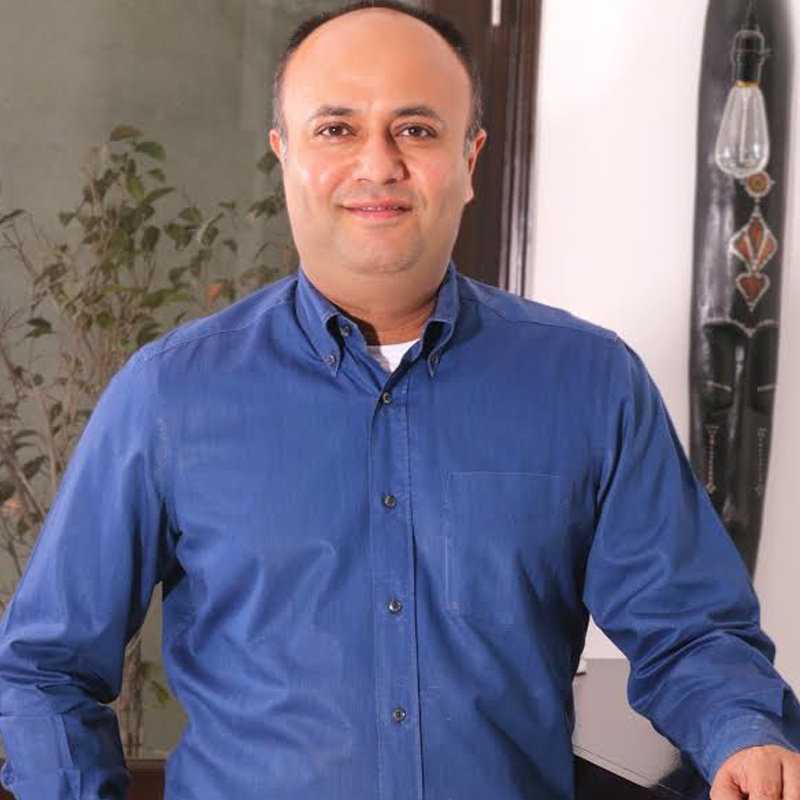
    Leo Burnett CCO RajDeepak Das who was present to collect the award said, “This is pretty much the best way to end the awards streak this year! Automotive is one of the most dynamic, high-volume categories in advertising, and making it to the top spot for real work is extremely encouraging. It is great to have walked up on the stage to receive this honour on behalf of my team. I hope Leo Burnett and Bajaj V’s great streak continues into 2017 as well.”

    The Bajaj V, that contains metal from India’s legendary warship and aircraft carrier, the INS Vikrant, was launched earlier this year on January 26. Bajaj sold a record 11,000 V bikes on the first day of the V’s launch.

  • Leo Burnett wins storyboard award for Bajaj V

    Leo Burnett wins storyboard award for Bajaj V

    MUMBAI: Leo Burnett India has a new feather on its cap: the agency has been honoured with the coveted ‘Storyboard Commercial of the Year’ award, at the 17 edition of the CNBC-TV18 Overdrive Awards. The agency has bagged the award for the Bajaj V launch commercial.’

    The CNBC-TV18 Overdrive awards honour India’s cars and bikes that are changing the face of the industry, through cutting-edge technologies and innovations. Storyboard is its weekly advertising, media and marketing TV show.

    Leo Burnett CCO RajDeepak Das who was present to collect the award said, “This is pretty much the best way to end the awards streak this year! Automotive is one of the most dynamic, high-volume categories in advertising, and making it to the top spot for real work is extremely encouraging. It is great to have walked up on the stage to receive this honour on behalf of my team. I hope Leo Burnett and Bajaj V’s great streak continues into 2017 as well.”

    The Bajaj V, that contains metal from India’s legendary warship and aircraft carrier, the INS Vikrant, was launched earlier this year on January 26. Bajaj sold a record 11,000 V bikes on the first day of the V’s launch.

  • We are actively looking to work with regional channels – Helios Media MD Divya Radhakrishnan

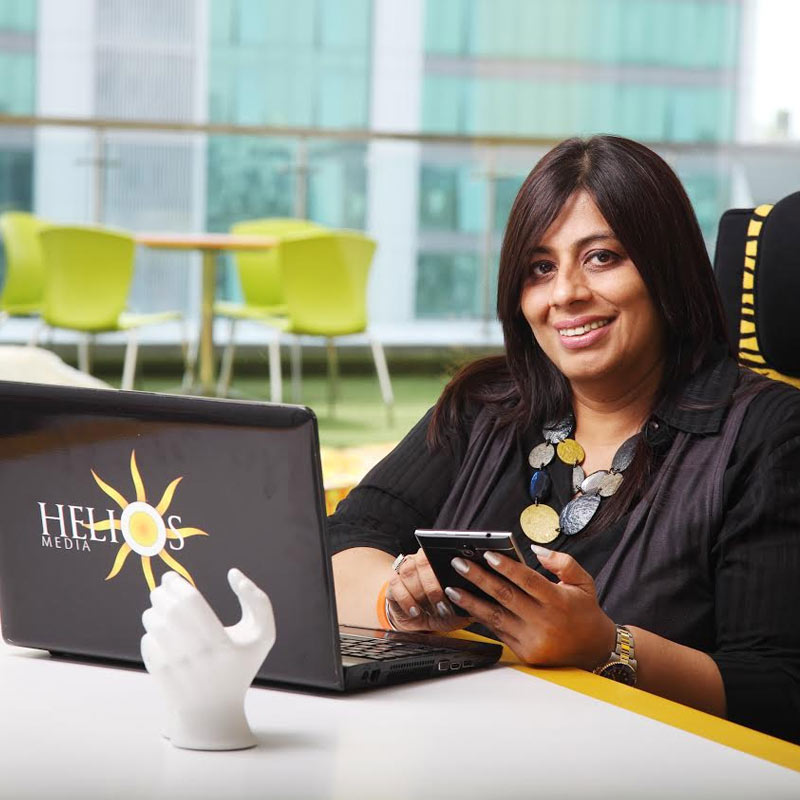
    We are actively looking to work with regional channels – Helios Media MD Divya Radhakrishnan

    1 November 2016 was celebrated with much pomp by the folks at Helios Media. Five years of successful operation in a business (which has seen many come and go in shorter periods) was a good enough reason to party till late into the night with clients, media and friends on the terrace of its expansive office in Mumbai’s Andheri East suburb. High Five was the motto for the evening, and everyone was greeted as such.

    Started by media vet Divya Radhakrishnan (on 1/11/11) who was later joined by former Zoom business head Bala Iyengar – who is now a partner in the business, Helios Media today has gained a good reputation for itself as a company that delivers. Over the years, it has helped in the monetization of channels such as MTunesHD, Fashion TV, Epic TV, FoodFood, Living Foodz, FataFati, Green TV, Fakht TV, Spin TV among many other.

    With a staff strength of 55 (most of them involved in ad-sales branded content), Radhakrishnan states that the company has attained a level of stability and is looking at revving up its gross billings to the triple digit crore mark. She has been bringing in professionals and delegating responsibility to the team she leads. “I am basically a gardener,” she says, looking at the terrace lawn that her office looks on to on the top floor of an office complex in the suburb of Andheri east.

    Indiantelevision.com’s Papri Das got into a tete-a-tete with Radhakrishnan to get her insight into what has been achieved so far and where she sees Helios Media going. Excerpts:

    Helios Media is often viewed  as an outsourced ad sales wings for channels. What is the company’s positioning in the market currently?

    Clients initially approached us for the monetizing aspect of our services and were pleasantly surprised by the bouquet of services we offer, which has grown over the years. We are currently not only into pure play ad sales. We have a tendency to typecast things and put things boxes in our country. Therefore, to launch something new that doesn’t fit into the general notions of mainstream, to carving its own niche is a long journey.

    Our aim is to highlight these services and solutions as part of the entire mix, which in turn helps the revenue grow, and is not just considered as an afterthought. Therefore, the thought ‘Beyond Obvious’ came into being, and it has been our brand positioning since the past three years. We didn’t chance upon the concept overnight, we studied cases, researched extensively, interviewed people from the industry, and found the need gaps and oriented a team on this mantra.

    What value addition is there for channels to let Helios Media handle their revenue monetisation? Are you able to fetch them premium rates for their inventories?

    Hypothetically speaking, say I have a channel going at 20 GRP which sells at an effective rate of Rs 1000, now what will I sell a channel with 5 GRP for? Rs 50, if you apply a simple sales principle. But, Helios Media has the confidence to sell it almost close to Rs 1000. We do that with right positioning of the content and brand akin-ness.

    I have often been asked how I can fetch premium rates for clients when we don’t control bulk inventories in the market across different media platforms. Our proposition isn’t to sell inventories in packages, we treat each channel differently, and a different specialist handles its sales. Just because the channels have outsourced their sales, it doesn’t mean that their inventory ‘sort of’ goes to a supermarket shelf.  We target brands based on the brand akin-ness with the channel, and given that we serve niche channels, there is no question of overlapping their sales needs.

    For example, when we launched MTunes, we researched extensively with Ormax to understand what was lacking in the music scene, to hit the sweet spot that brands wanted to target and the channel could offer. It is interesting to know that we managed to get several brands involved at the content level, and explore innovative solutions through deals with the channel, as we worked around the restrictions of the music IPs having separate owners.

    How do you go about selecting the channels to partner with?

    Call us picky but we are very particular about the channels that we choose to sell for. If you look at our client bouquet, each one of them is a specialty channel, which needs to be positioned uniquely in the market, otherwise it won’t sell well. You can’t sell a channel such as BTVi on simply the standard unit of trade, that is, GRP. You have to sell the brand positioning, for which you need to get under the skin of the content. Therefore, a lot on how we choose clients is based on their basic understanding of this, how comfortable they are with acknowledging our inputs and working according to it.

    While it is easier for us to do that for a channel we were involved with from its inception such as MTunes and Living Foodz, we have also brought in clients well into their life cycle – Food Food, Fakht Marathi, etc.

    In the past five years, Helios Media hasn’t aggressively chased new clients and taken time to add a new channel to its portfolio. Is this a conscious decision?

    Ours is a very people heavy business. It has to make logical sense to me to expand my team to add new channels to sell. It doesn’t seem cost-effective or time-efficient for us to add a bouquet of 50 to 60 channels and build an enterprise. Where we see expansion is in the increase in revenue and value of our clients, because it directly links to growth in our own value.

    We have a channel portfolio of eight now. But, there were almost 80-odd broadcasters who approached us as prospective clients, but many a times we decided not to work with them. It is because most of them lacked the depth of understanding of the media concessionaire businesses. From broadcasters going ‘I want to launch a channel one day’ to people with content who hadn’t done up the lining to folks who simply don’t understand the distribution ecosystem: there are examples of such broadcasters galore.

    Helios Media is often compared to media agencies, and its performance judged on new clients and account wins. Do you find that unfair?

    Frankly, it doesn’t bother me how many crore of account I handle as compared to others, as long as I know how my business’ bottom line works.

    Media agencies work on two and half per cent commission basis from the client’s marketing spends whereas we work on revenue-sharing. Therefore, when I say we have done business of X amount of billing, Helios Media’s earning is a substantial part of that net billing we have done for our clients. We are in a different sphere altogether. Their commission is linked to the clients spends, while ours its directly linked to revenue. A brand can cut down on its spends, but our fortune is tied to the client’s fortune. Thus, evaluating Helios Media’s business and performance on number of new accounts or total strength of account is absurd.

    Since the launch of Brand Chef, how has this new vertical been performing for the company?

    We have recently spun a new division called Brand Chef which is about consultancy for food brands. From celebrity chefs, food bloggers, popular digital stars with cooking content, we have a wide range of content solutions for brands that work directly with this division. Clients range from Go Cheese, HUL, Marico, and many more. If I were to give an estimate of how successful this division has been for us, it is almost 50 per cent of our top line revenue. We see immense potential in the food sector. We have plans to launch social media strategy for clients specifically in the food sector.

    What prospects do you see in regional market?

    We are actively looking to work with regional channels. Regional market pricing is always higher from an advertiser’s standpoint, because it has very little spillover. Also, the industry is slowly getting over the myth that Hindi is the national language. You move outside Mumbai and go to Pune, people respond to you in Marathi. Therefore, brands need to stop putting an overemphasis on the so called ‘HSM- or Hindi speaking Market.’

    We are in talks with a regional client who is seeking our help to decide on what format they should launch in GEC, movies or something else? There is another network seeking our consultancy on which language they should go into. So, we are currently doing market prospect planning as well.
  • We are actively looking to work with regional channels – Helios Media MD Divya Radhakrishnan

    We are actively looking to work with regional channels – Helios Media MD Divya Radhakrishnan

    1 November 2016 was celebrated with much pomp by the folks at Helios Media. Five years of successful operation in a business (which has seen many come and go in shorter periods) was a good enough reason to party till late into the night with clients, media and friends on the terrace of its expansive office in Mumbai’s Andheri East suburb. High Five was the motto for the evening, and everyone was greeted as such.

    Started by media vet Divya Radhakrishnan (on 1/11/11) who was later joined by former Zoom business head Bala Iyengar – who is now a partner in the business, Helios Media today has gained a good reputation for itself as a company that delivers. Over the years, it has helped in the monetization of channels such as MTunesHD, Fashion TV, Epic TV, FoodFood, Living Foodz, FataFati, Green TV, Fakht TV, Spin TV among many other.

    With a staff strength of 55 (most of them involved in ad-sales branded content), Radhakrishnan states that the company has attained a level of stability and is looking at revving up its gross billings to the triple digit crore mark. She has been bringing in professionals and delegating responsibility to the team she leads. “I am basically a gardener,” she says, looking at the terrace lawn that her office looks on to on the top floor of an office complex in the suburb of Andheri east.

    Indiantelevision.com’s Papri Das got into a tete-a-tete with Radhakrishnan to get her insight into what has been achieved so far and where she sees Helios Media going. Excerpts:

    Helios Media is often viewed  as an outsourced ad sales wings for channels. What is the company’s positioning in the market currently?

    Clients initially approached us for the monetizing aspect of our services and were pleasantly surprised by the bouquet of services we offer, which has grown over the years. We are currently not only into pure play ad sales. We have a tendency to typecast things and put things boxes in our country. Therefore, to launch something new that doesn’t fit into the general notions of mainstream, to carving its own niche is a long journey.

    Our aim is to highlight these services and solutions as part of the entire mix, which in turn helps the revenue grow, and is not just considered as an afterthought. Therefore, the thought ‘Beyond Obvious’ came into being, and it has been our brand positioning since the past three years. We didn’t chance upon the concept overnight, we studied cases, researched extensively, interviewed people from the industry, and found the need gaps and oriented a team on this mantra.

    What value addition is there for channels to let Helios Media handle their revenue monetisation? Are you able to fetch them premium rates for their inventories?

    Hypothetically speaking, say I have a channel going at 20 GRP which sells at an effective rate of Rs 1000, now what will I sell a channel with 5 GRP for? Rs 50, if you apply a simple sales principle. But, Helios Media has the confidence to sell it almost close to Rs 1000. We do that with right positioning of the content and brand akin-ness.

    I have often been asked how I can fetch premium rates for clients when we don’t control bulk inventories in the market across different media platforms. Our proposition isn’t to sell inventories in packages, we treat each channel differently, and a different specialist handles its sales. Just because the channels have outsourced their sales, it doesn’t mean that their inventory ‘sort of’ goes to a supermarket shelf.  We target brands based on the brand akin-ness with the channel, and given that we serve niche channels, there is no question of overlapping their sales needs.

    For example, when we launched MTunes, we researched extensively with Ormax to understand what was lacking in the music scene, to hit the sweet spot that brands wanted to target and the channel could offer. It is interesting to know that we managed to get several brands involved at the content level, and explore innovative solutions through deals with the channel, as we worked around the restrictions of the music IPs having separate owners.

    How do you go about selecting the channels to partner with?

    Call us picky but we are very particular about the channels that we choose to sell for. If you look at our client bouquet, each one of them is a specialty channel, which needs to be positioned uniquely in the market, otherwise it won’t sell well. You can’t sell a channel such as BTVi on simply the standard unit of trade, that is, GRP. You have to sell the brand positioning, for which you need to get under the skin of the content. Therefore, a lot on how we choose clients is based on their basic understanding of this, how comfortable they are with acknowledging our inputs and working according to it.

    While it is easier for us to do that for a channel we were involved with from its inception such as MTunes and Living Foodz, we have also brought in clients well into their life cycle – Food Food, Fakht Marathi, etc.

    In the past five years, Helios Media hasn’t aggressively chased new clients and taken time to add a new channel to its portfolio. Is this a conscious decision?

    Ours is a very people heavy business. It has to make logical sense to me to expand my team to add new channels to sell. It doesn’t seem cost-effective or time-efficient for us to add a bouquet of 50 to 60 channels and build an enterprise. Where we see expansion is in the increase in revenue and value of our clients, because it directly links to growth in our own value.

    We have a channel portfolio of eight now. But, there were almost 80-odd broadcasters who approached us as prospective clients, but many a times we decided not to work with them. It is because most of them lacked the depth of understanding of the media concessionaire businesses. From broadcasters going ‘I want to launch a channel one day’ to people with content who hadn’t done up the lining to folks who simply don’t understand the distribution ecosystem: there are examples of such broadcasters galore.

    Helios Media is often compared to media agencies, and its performance judged on new clients and account wins. Do you find that unfair?

    Frankly, it doesn’t bother me how many crore of account I handle as compared to others, as long as I know how my business’ bottom line works.

    Media agencies work on two and half per cent commission basis from the client’s marketing spends whereas we work on revenue-sharing. Therefore, when I say we have done business of X amount of billing, Helios Media’s earning is a substantial part of that net billing we have done for our clients. We are in a different sphere altogether. Their commission is linked to the clients spends, while ours its directly linked to revenue. A brand can cut down on its spends, but our fortune is tied to the client’s fortune. Thus, evaluating Helios Media’s business and performance on number of new accounts or total strength of account is absurd.

    Since the launch of Brand Chef, how has this new vertical been performing for the company?

    We have recently spun a new division called Brand Chef which is about consultancy for food brands. From celebrity chefs, food bloggers, popular digital stars with cooking content, we have a wide range of content solutions for brands that work directly with this division. Clients range from Go Cheese, HUL, Marico, and many more. If I were to give an estimate of how successful this division has been for us, it is almost 50 per cent of our top line revenue. We see immense potential in the food sector. We have plans to launch social media strategy for clients specifically in the food sector.

    What prospects do you see in regional market?

    We are actively looking to work with regional channels. Regional market pricing is always higher from an advertiser’s standpoint, because it has very little spillover. Also, the industry is slowly getting over the myth that Hindi is the national language. You move outside Mumbai and go to Pune, people respond to you in Marathi. Therefore, brands need to stop putting an overemphasis on the so called ‘HSM- or Hindi speaking Market.’

    We are in talks with a regional client who is seeking our help to decide on what format they should launch in GEC, movies or something else? There is another network seeking our consultancy on which language they should go into. So, we are currently doing market prospect planning as well.
  • Dentsu to pay USD 2.3m to clients post discrepancies

    Dentsu to pay USD 2.3m to clients post discrepancies

    MUMBAI: Japanese advertisement behemoth Dentsu was under fire from the media in late September after it publicly apologised for cases of overcharging around 111 clients. Among identified 633 cases, 14 incidents were where ads were not placed at all and other cases of incorrect placement periods and falsified reporting of ad performance.

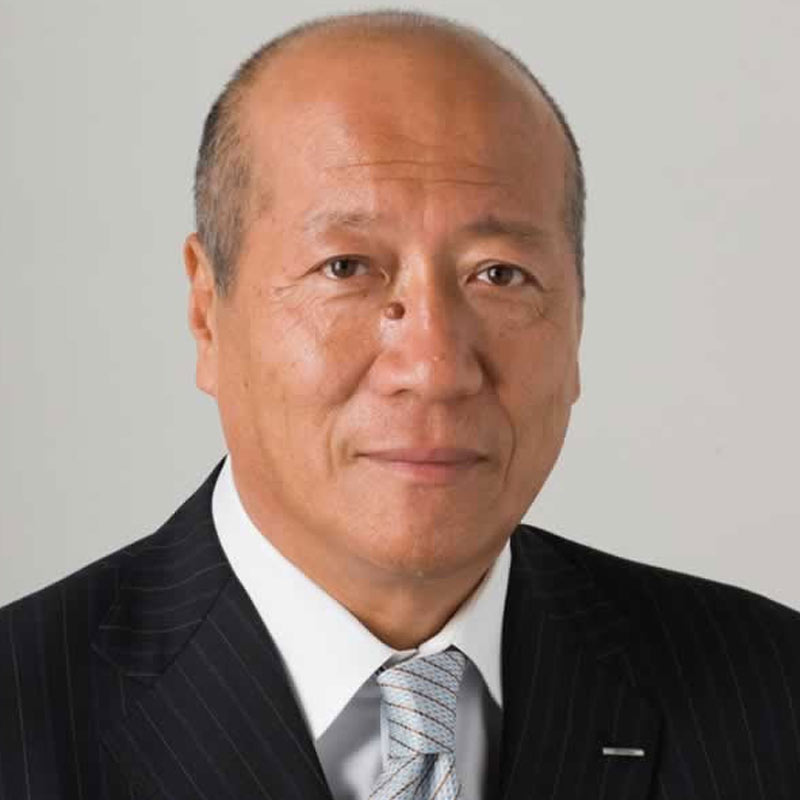
    The advertising agency is now set to pay back an estimated 230 million yen ($2.3 million) to clients after the agency uncovered a raft of discrepancies, including some cases where fees were charged and no internet advertising placement was made, it revealed in a statement on 28 October. “We will repay the 230 million yen, and we will talk with clients after all the facts are disclosed,” Toshihiro Yamamoto, Dentsu senior vice president, told reporters in Tokyo.

    The Japanese ad agency’s client Toyota was the first to point out a discrepancy, sparking an investigation into transactions dating back to November 2012, according to Bloomberg.

    “Immediately after finding out about the incidents, we organized an internal investigation team in the middle of August,” the company clarified.

    Other affected clients include LVMH Moet Hennessy Louis Vuitton SE, Diageo Plc, Nestle SA, SoftBank Group Corp. and Electronic Arts Inc.

  • Dentsu to pay USD 2.3m to clients post discrepancies

    Dentsu to pay USD 2.3m to clients post discrepancies

    MUMBAI: Japanese advertisement behemoth Dentsu was under fire from the media in late September after it publicly apologised for cases of overcharging around 111 clients. Among identified 633 cases, 14 incidents were where ads were not placed at all and other cases of incorrect placement periods and falsified reporting of ad performance.

    The advertising agency is now set to pay back an estimated 230 million yen ($2.3 million) to clients after the agency uncovered a raft of discrepancies, including some cases where fees were charged and no internet advertising placement was made, it revealed in a statement on 28 October. “We will repay the 230 million yen, and we will talk with clients after all the facts are disclosed,” Toshihiro Yamamoto, Dentsu senior vice president, told reporters in Tokyo.

    The Japanese ad agency’s client Toyota was the first to point out a discrepancy, sparking an investigation into transactions dating back to November 2012, according to Bloomberg.

    “Immediately after finding out about the incidents, we organized an internal investigation team in the middle of August,” the company clarified.

    Other affected clients include LVMH Moet Hennessy Louis Vuitton SE, Diageo Plc, Nestle SA, SoftBank Group Corp. and Electronic Arts Inc.

  • Vizeum launches Binary, special advisory unit for media clients

    Vizeum launches Binary, special advisory unit for media clients

    Mumbai: “Media business is, in the short term, headed for a tipping point, driven by the changing consumer-media interface,” emphasises Vizeum India MD Shripad Kulkarni, who strongly believes that media companies need a definitive transformation strategy in place now.

    “While planning marketing communication for a media client, an agency’s focus is on acquiring new customers/ audience and retaining them. Thus, you have to wear very different hats,” Kulkarni states, speaking exclusively to indiantelevision.com.

    Keeping these two point of views in mind, Vizeum has launched a strategic advisory and consultancy for media networks in the print/TV and radio domain. “We are currently establishing a separate specialist team outside our media planning and buying outfit to handle media clients, because it needs a unique orientation and perspective,” Kulkarni asserts. This unit will be headed by Shilpa Dhanu, who has over 20 years’ experience in media strategy and Marcom with TV channels.

    The agency also caters to several major media clients including Viacom18. Dentsu Aegis Network strengths in Digital are unparalleled and this is a major advantage Vizeum has. With Isobar, iProspect WATConsult and Web Chutney they have a suite of companies specialising in every major aspect of digital depending on the need.

    As an entrepreneur, Kulkarni has good experience in consulting and training media organisations such as Indian Newspaper Society, Sony Television, Red FM and many other media companies. Binary thus claims to have just the right combination of old-world learning and new-age solutions for the challenges faced by mainstream media.

    The service would offer focused transformation strategies and customised solutions for TV channels, radio stations and print media. The service covers two modules which would be customised to each media network as per the specific need of the business. India is a market where mainstream media is still growing. So managing the transition is an immediate plan of action. But there must be a Digital Transformation Roadmap.

    The Transition module covers four services :1) New age pricing and sales strategies for revenue maximisation titled RevenueMax; 2) A holistic marcom strategy relevant in the new milieu called True 3600; 3) Trainware to getting the team trained for the new age challenges and 4) Sales Assist: technology based real time sales support.

    This will also include update on various happenings and trends across media, competitive analysis of rates across regional publications, analysis of ad spends by category for TV and print, special analysis of various databases like IRS/TAM/TGI are some of the specialised offerings of this advisory. Under this module, the special unit will also cater to the client’s creative requirements as per the marketing communications plans.

    The transformation roadmap, likewise covers five stages : a digital review covering an audit, evaluating the business model and assessment of the new business model needs, content strategy, assessing routes for the ‘new company’, followed by digital transformation roadmap. “This is a unique Service and I am quite bullish on the business prospects,” Kulkarni added.

    Kulkarni strongly believes that media companies, although are brands themselves, have special media management requirements that is distinct from a FMCG or automobile brand. “The fact that a brand comes to a media company to reach out to an audience differentiates it from a regular advertiser,” he said.

    Vizeum India was recently awarded the media duties of one of the giants of film studio – Warner Bros Pictures. Following the win, the first movie from the Warner Bros slate that Vizeum worked on was “The Conjuring 2.” For the record, after the theatrical run of its recent release Batman v Superman, Warner Bros has now lined up as many as 15 new releases in 2016. Apart from this, the agency also caters to several major media clients including Viacom18.

    To how media clients spend differently than other brands, Kulkarni added that films and television channels operate on different ecosystem altogether. “Speaking specifically of television channels, to start with, we consider how it can use its own channel differently, because at the end of the day the broadcaster is a medium of its own. Brands and advertisers come to a broadcaster, so that its his strength. Maximising own media is the starting point. The second question a broadcaster asks is how it can maximise its reach through its home network,” Kulkarni explains.

    Keeping a clear idea of the end goal makes the planning sharper and more efficient. “The broadcaster needs to be sure of what it is chasing — new audience, or the channel’s loyal audience or home network. The media planners then need to ask if its client’s chasing the end goal through one property or multiple property, and what will get it tune ins. That’s the single-minded proposition. Because, once the tune-in happens, the channel, and the program take care of the rest,” Kulkarni adds.

    In that way films and channels are similar; in both cases the opening week or weekend (for the former) makes a huge difference.

    As per industry guesstimates, on an average, a leading GEC spends Rs 25 to 30 crore worth of media within its home network in the first two to three weeks of a show launch. If one were to monetise the value of the media, the channels’ use in it own network, it is the value of the advertising opportunity the broadcaster has lost. Beyond this, a channel can spend close to Rs 1 crore–5 crore if ‘across network’ promotion is involved, which would include outdoor and on-ground activation as well. This figure may rise up to Rs 10 crore if the channel’s home network isn’t strong enough.

  • Vizeum launches Binary, special advisory unit for media clients

    Vizeum launches Binary, special advisory unit for media clients

    Mumbai: “Media business is, in the short term, headed for a tipping point, driven by the changing consumer-media interface,” emphasises Vizeum India MD Shripad Kulkarni, who strongly believes that media companies need a definitive transformation strategy in place now.

    “While planning marketing communication for a media client, an agency’s focus is on acquiring new customers/ audience and retaining them. Thus, you have to wear very different hats,” Kulkarni states, speaking exclusively to indiantelevision.com.

    Keeping these two point of views in mind, Vizeum has launched a strategic advisory and consultancy for media networks in the print/TV and radio domain. “We are currently establishing a separate specialist team outside our media planning and buying outfit to handle media clients, because it needs a unique orientation and perspective,” Kulkarni asserts. This unit will be headed by Shilpa Dhanu, who has over 20 years’ experience in media strategy and Marcom with TV channels.

    The agency also caters to several major media clients including Viacom18. Dentsu Aegis Network strengths in Digital are unparalleled and this is a major advantage Vizeum has. With Isobar, iProspect WATConsult and Web Chutney they have a suite of companies specialising in every major aspect of digital depending on the need.

    As an entrepreneur, Kulkarni has good experience in consulting and training media organisations such as Indian Newspaper Society, Sony Television, Red FM and many other media companies. Binary thus claims to have just the right combination of old-world learning and new-age solutions for the challenges faced by mainstream media.

    The service would offer focused transformation strategies and customised solutions for TV channels, radio stations and print media. The service covers two modules which would be customised to each media network as per the specific need of the business. India is a market where mainstream media is still growing. So managing the transition is an immediate plan of action. But there must be a Digital Transformation Roadmap.

    The Transition module covers four services :1) New age pricing and sales strategies for revenue maximisation titled RevenueMax; 2) A holistic marcom strategy relevant in the new milieu called True 3600; 3) Trainware to getting the team trained for the new age challenges and 4) Sales Assist: technology based real time sales support.

    This will also include update on various happenings and trends across media, competitive analysis of rates across regional publications, analysis of ad spends by category for TV and print, special analysis of various databases like IRS/TAM/TGI are some of the specialised offerings of this advisory. Under this module, the special unit will also cater to the client’s creative requirements as per the marketing communications plans.

    The transformation roadmap, likewise covers five stages : a digital review covering an audit, evaluating the business model and assessment of the new business model needs, content strategy, assessing routes for the ‘new company’, followed by digital transformation roadmap. “This is a unique Service and I am quite bullish on the business prospects,” Kulkarni added.

    Kulkarni strongly believes that media companies, although are brands themselves, have special media management requirements that is distinct from a FMCG or automobile brand. “The fact that a brand comes to a media company to reach out to an audience differentiates it from a regular advertiser,” he said.

    Vizeum India was recently awarded the media duties of one of the giants of film studio – Warner Bros Pictures. Following the win, the first movie from the Warner Bros slate that Vizeum worked on was “The Conjuring 2.” For the record, after the theatrical run of its recent release Batman v Superman, Warner Bros has now lined up as many as 15 new releases in 2016. Apart from this, the agency also caters to several major media clients including Viacom18.

    To how media clients spend differently than other brands, Kulkarni added that films and television channels operate on different ecosystem altogether. “Speaking specifically of television channels, to start with, we consider how it can use its own channel differently, because at the end of the day the broadcaster is a medium of its own. Brands and advertisers come to a broadcaster, so that its his strength. Maximising own media is the starting point. The second question a broadcaster asks is how it can maximise its reach through its home network,” Kulkarni explains.

    Keeping a clear idea of the end goal makes the planning sharper and more efficient. “The broadcaster needs to be sure of what it is chasing — new audience, or the channel’s loyal audience or home network. The media planners then need to ask if its client’s chasing the end goal through one property or multiple property, and what will get it tune ins. That’s the single-minded proposition. Because, once the tune-in happens, the channel, and the program take care of the rest,” Kulkarni adds.

    In that way films and channels are similar; in both cases the opening week or weekend (for the former) makes a huge difference.

    As per industry guesstimates, on an average, a leading GEC spends Rs 25 to 30 crore worth of media within its home network in the first two to three weeks of a show launch. If one were to monetise the value of the media, the channels’ use in it own network, it is the value of the advertising opportunity the broadcaster has lost. Beyond this, a channel can spend close to Rs 1 crore–5 crore if ‘across network’ promotion is involved, which would include outdoor and on-ground activation as well. This figure may rise up to Rs 10 crore if the channel’s home network isn’t strong enough.

  • Interactive Television’s Buzz Index to help advertisers make smart investment in movies

    Interactive Television’s Buzz Index to help advertisers make smart investment in movies

    MUMBAI: Interactive Television, a unit of WPP, has launched ‘Buzz index’- a revolutionary buzz measuring tool for helping advertisers to make informed decisions for cinema advertising.

    Buzz Index is a measuring tool that identifies, captures and quantifies the ‘buzz’ around a particular film across all social media platforms such as Twitter, Facebook, blogs, boards, forums, news websites, aggregation, YouTube etc. which are true enablers for an unbiased evaluation of Bollywood and arrives at a unique buzz score. The Buzz Index of a specific film is based on four identifiers – positive conversation index, star cast buzz, positive views and unique authors.

    Methodology:

    After combining information from all the data points mentioned above, Buzz Index arrives at a benchmark score once the model for the index is run through Interactive’s Movie Buzz Database (2015 and updated yearly).

    All new releases will automatically be compared to the indexed number of 100 which is the average score or the Gold Standard for all films, primarily films that have done more than 100 crore at the box office. A film’s Buzz Index will be calculated regularly – (Week 1) 31 days before the film release, (Week-2) 24 days before the film release, (Week-3) 17 days before the Movie release and (Week-4) 10 days prior to the release.

    Interactive Television CEO Ajay Mehta said “Cinema advertising peaks around 10-12 blockbuster movies and in the absence of any measure of a film’s buzz, advertisers miss out on movies which are being talked about by their consumers. Buzz Index aims to change that so that even a small movie which is creating buzz and has a possibility of opening well should come up on the radar of the advertiser. With the launch of the Buzz Index , we want to make cinema advertising data driven rather than based on subjectivities. We aim to broad base the number of movies which can attract advertisers.

    The two biggest impediments to the growth of cinema advertising is monitoring and measurement. Buzz Index is our second initiative in this direction after CAM and we will be launching a lot more such initiatives in the near future to ensure that cinema advertising is transparent and accountable by being data driven and tech enabled.”

    It is common knowledge that audience preferences, pre-release affinity towards certain actors and films and consumption of digital data under the guise of “fandom” are very perceptive and honest indicators of a film’s future. If campaigns can be tailor made to align perfectly with a film, it is a much stronger advertising message; one that does not fall victim to over exposure or force fit. Capturing cinema advertising by harnessing the two most important factors shaping our generation today – social media conversation and an exuberant sentiment attached to films – was essentially the need of the hour to ensure that cinema advertising gets its due.

  • Interactive Television’s Buzz Index to help advertisers make smart investment in movies

    Interactive Television’s Buzz Index to help advertisers make smart investment in movies

    MUMBAI: Interactive Television, a unit of WPP, has launched ‘Buzz index’- a revolutionary buzz measuring tool for helping advertisers to make informed decisions for cinema advertising.

    Buzz Index is a measuring tool that identifies, captures and quantifies the ‘buzz’ around a particular film across all social media platforms such as Twitter, Facebook, blogs, boards, forums, news websites, aggregation, YouTube etc. which are true enablers for an unbiased evaluation of Bollywood and arrives at a unique buzz score. The Buzz Index of a specific film is based on four identifiers – positive conversation index, star cast buzz, positive views and unique authors.

    Methodology:

    After combining information from all the data points mentioned above, Buzz Index arrives at a benchmark score once the model for the index is run through Interactive’s Movie Buzz Database (2015 and updated yearly).

    All new releases will automatically be compared to the indexed number of 100 which is the average score or the Gold Standard for all films, primarily films that have done more than 100 crore at the box office. A film’s Buzz Index will be calculated regularly – (Week 1) 31 days before the film release, (Week-2) 24 days before the film release, (Week-3) 17 days before the Movie release and (Week-4) 10 days prior to the release.

    Interactive Television CEO Ajay Mehta said “Cinema advertising peaks around 10-12 blockbuster movies and in the absence of any measure of a film’s buzz, advertisers miss out on movies which are being talked about by their consumers. Buzz Index aims to change that so that even a small movie which is creating buzz and has a possibility of opening well should come up on the radar of the advertiser. With the launch of the Buzz Index , we want to make cinema advertising data driven rather than based on subjectivities. We aim to broad base the number of movies which can attract advertisers.

    The two biggest impediments to the growth of cinema advertising is monitoring and measurement. Buzz Index is our second initiative in this direction after CAM and we will be launching a lot more such initiatives in the near future to ensure that cinema advertising is transparent and accountable by being data driven and tech enabled.”

    It is common knowledge that audience preferences, pre-release affinity towards certain actors and films and consumption of digital data under the guise of “fandom” are very perceptive and honest indicators of a film’s future. If campaigns can be tailor made to align perfectly with a film, it is a much stronger advertising message; one that does not fall victim to over exposure or force fit. Capturing cinema advertising by harnessing the two most important factors shaping our generation today – social media conversation and an exuberant sentiment attached to films – was essentially the need of the hour to ensure that cinema advertising gets its due.