Category: Media Agencies

  • India’s ad market rebounds in H1 2025 as TV steals the show: Excellent Publicity report

    India’s ad market rebounds in H1 2025 as TV steals the show: Excellent Publicity report

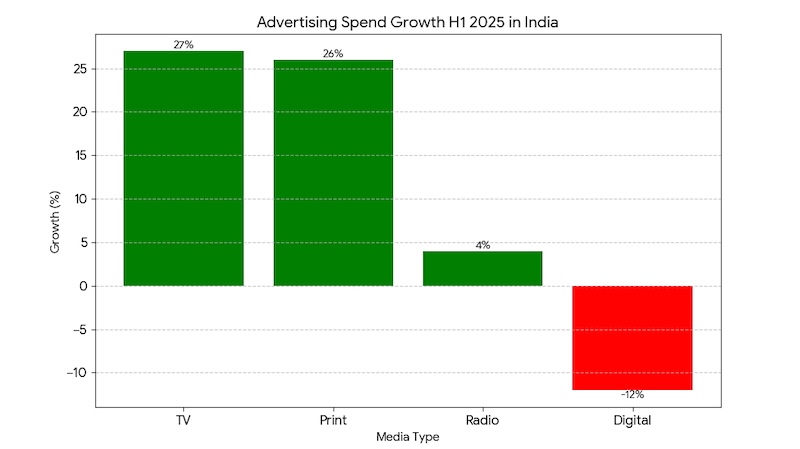
    MUMBAI: Here’s one report which is not talking of doom and gloom as far as ad spends in India are concerned. India’s advertising market kicked off 2025 on a high according to a half-yearly report by ad-tech and media planning agency Excellent Publicity, citing data from TAM Media Research, TAM AdEx and RCS India, reported Business Standard. The report said that  television powered ahead as the biggest gainer in the first half of the year, outspending print and radio, while digital was the lone laggard.

    Ad spends on TV per channel jumped 27 per cent year-on-year. Sports channels hoovered up 68.5 per cent of TV spends, trailed by general entertainment with 15.7 per cent. The e-commerce media, entertainment and social media category led volumes with a 25.6 per cent share. Star India kept its crown with 16.8 per cent of volumes, while Jio Hotstar topped the brand charts. Cellular services were the fastest risers, ballooning 17 times over the year.

    Print was no pushover either, posting a robust 26 per cent growth. Cars took pole position with 8.9 per cent of spends, while two-wheelers zipped ahead with a 31 per cent surge. Maruti Suzuki India was the top advertiser; Allen Career Institute, the top brand. Rajasthan led among states with 15.6 per cent of spends, and Delhi among cities with 7.1 per cent.

    Radio barely moved the needle, inching up 4 per cent. Properties and real estate dominated, cars followed, and pan masala muscled into the top 10. Maharashtra accounted for 19.3 per cent of radio spends, Delhi 18.1 per cent. Maruti Suzuki India again led advertisers, while Jeena Sikho Lifecare was the top brand.

    Digital, by contrast, shrank 12 per cent – the only medium to contract – though it logged the highest number of advertisers in three years. E-commerce online shopping led with an 11.2 per cent share. Amazon Online India was the top advertiser, Amazon.in the top brand. Programmatic buying made up 88.3 per cent of spends. Some niches bucked the trend: washing powders and liquids soared 21 times, perfumes and deodorants six times.

    “What’s really interesting is how brands are navigating a delicate balance,” said Excellent Publicity co-founder and director Vaishal Dalal.. “TV still captures attention, radio keeps the connection local and relatable, print is earning back trust, and digital is becoming sharper and more targeted.”

    Strangely the report did not talk about  outdoor spends. Was the situation hunky-dory in the sector like TV?

  • Dentsu weighs retreat from global stage after $5 billion gamble falters

    Dentsu weighs retreat from global stage after $5 billion gamble falters

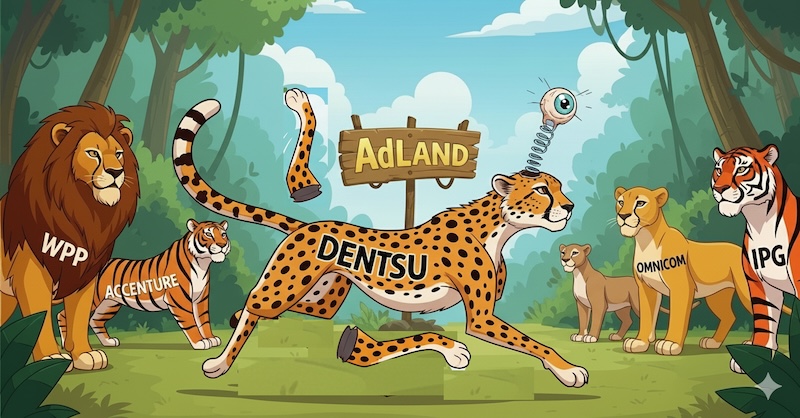
    TOKYO: It was once viewed as a cheetah making a smooth and speedy dash to the finish  tape as it went about muscling itself with acquisitions. But, hardly a decade later,  in 2025, Dentsu, Japan’s largest advertising group and one of the industry’s oldest names, is considering pulling the plug on its international ambitions after more than a decade of struggle abroad. The Tokyo-listed company has hired Mitsubishi UFJ Morgan Stanley and Nomura Securities to approach potential buyers for its overseas creative and media arm — a sprawling business that includes the former Aegis Group, US consultancy Merkle and digital production house Tag — according to a report in the Financial Times on Thursday.

    The move could culminate in a deal worth several billion dollars, insiders told the paper, and would mark a dramatic retreat for a group that only a decade ago sought to rival WPP, Publicis and Omnicom on the global stage. Options on the table range from the sale of a minority stake to an outright divestment of the entire overseas division, which generated $4.5bn in revenues last year but remains chronically underperforming.
    The potential sale underscores the failure of Dentsu’s boldest bet — the £3.2bn ($5bn) purchase of Aegis Group in 2012, then one of Britain’s largest media-buying companies. The deal was meant to be Dentsu’s passport to the global top tier. With Aegis, the Japanese powerhouse — already near-hegemonic at home — vaulted into the ranks of the world’s top five ad holding groups.

    But integration proved difficult. Dentsu’s Japanese arm remained culturally and operationally distinct from its international business. The London- and New York-led operations frequently clashed with Tokyo headquarters, leaving the business fragmented. Over time, larger rivals poached key clients, while the promise of scale failed to materialise.

    Even subsequent purchases, such as the $1.5 billion acquisition of US-based Merkle in 2016, could not reverse the trend. Instead, the group accumulated goodwill impairments and rising restructuring costs. Earlier this year Dentsu wrote down $1.38 billion on its American and EMEA units and earmarked $327 million for further restructuring, including IT upgrades and headcount cuts.

    The pressure has intensified this year. In February, Dentsu unveiled weak 2024 results and suspended dividends. In August, it reported a 0.2 per cent drop in organic revenues in the first half, cut 3,400 jobs — about 8 per cent of its global workforce — and downgraded full-year guidance from 1 per cent growth to flat. It now expects an operating loss of ¥3.5bn ($24 million) for the year, compared with a previous forecast of ¥66 billion profit.

    Hiroshi Igarashi, the group’s president and global chief executive, offered a rare public apology: “I deeply regret this situation and offer my sincere apologies on behalf of the company.” In a call with analysts, he admitted that the international unit “continues to face negative growth across all regions”. Japan, by contrast, delivered record revenues and profits.

    Industry analysts say the bifurcation of Dentsu’s fortunes reflects a deeper problem: a business structurally divided between a dominant home base and underperforming overseas assets.

    “Dentsu’s ownership of the international business was somewhat unusual because of the complete separation between it and the domestic business,” said a media observer. “Japan’s idiosyncratic isolation within the global agency industry meant the leadership in Tokyo was not plugged in to the rest of the world.”

    That disconnect became even clearer after Wendy Clark, then global CEO, quit in 2022, triggering an internal restructuring aimed at closer integration. Yet the changes failed to stem the tide.

    According to people close to the discussions, potential suitors include Accenture Song, large independent networks, and private equity funds that have circled the sector in recent years.

    IPG and Omnicom, however, are seen as unlikely contenders. The two American giants are preoccupied with completing their own merger — a blockbuster deal set to close by year-end, creating a North American behemoth. Meanwhile, Havas has been spun out of Vivendi into a standalone public company, and WPP has fended off repeated speculation about being a takeover target itself.

    That leaves Accenture — which has aggressively expanded into creative services — as perhaps the most credible buyer. Private equity funds could also be tempted by the chance to carve up the business, but the declining revenue outlook, heavy job cuts and uncertain future of traditional agency models may weigh on valuations.

    Any sale would also take place against the backdrop of an industry in flux. Artificial intelligence, once seen as a tool to aid campaign targeting, is now automating functions from media planning to creative production. Rivals such as WPP and Publicis are pouring hundreds of millions into AI platforms that promise cheaper, faster and more personalised ads.

    “Revenues are already shrinking,” one person familiar with the sale process told the FT. “It’s been bad and could get worse as no one knows what AI will do to the industry.” For Dentsu’s global unit, which has struggled even in the best of times, the disruption could prove 

    For Dentsu, a sale would be nothing short of a reset. At home, the company remains unrivalled, commanding more than 25 per cent of Japan’s advertising market. Its domestic operations continue to churn out record profits and steady growth. By contrast, its international adventure has been a costly distraction.

    Back in 2023, Igarashi insisted that selling was “totally not part of my mindset”. Today, facing mounting losses and a fragmenting industry, he has softened his stance, saying only that “strategic alternatives” are under review.

    A sale of the international arm — once Dentsu’s vehicle for global expansion — would symbolise a retreat from ambition to pragmatism. It would also leave the advertising world reshaped yet again, in a year already marked by consolidation, divestments and upheaval.

    Whether buyers emerge — and at what price — may be the truest test of how investors now value traditional ad agencies in an AI age.
  • Parrot Analytics launches Sports Demand to put rigour into soaring media rights market

    Parrot Analytics launches Sports Demand to put rigour into soaring media rights market

    LOS ANGELES: : Parrot Analytics, the media analytics firm known for pioneering streaming valuation, has launched Sports Demand, billed as the most advanced global sports analytics system. The tool is designed to arm leagues, teams, broadcasters, streamers and sponsors with data-driven insights to navigate the fast-inflating sports rights market.

    Sports rights fees have surged in recent years, with Paramount’s $7.7 billion deal for UFC events, WWE’s $1.6 billion tie-up with ESPN, and the NFL’s equity-for-content swap with Disney underscoring the scale. Parrot says its system will allow buyers and sellers to measure fan engagement market by market, justify valuations, and extract stronger returns on investment.

    “For the first time, decision-makers can weigh the impact of acquiring a sports league against investing in scripted series or films, within a single framework,” said Parrot Analytics chief executive Wared Seger. By integrating with the firm’s Demand360 platform, Sports Demand lets clients benchmark sports against TV shows, films and on-screen talent.

    Capabilities include global fan mapping across 100 markets, integrated sports-entertainment benchmarking, empirical valuation models, content optimisation, and sponsor alignment analysis. Early adopters include leagues negotiating landmark streaming deals and operators launching direct-to-consumer sports services.

    Seger argued that in an attention economy where sports compete directly with films and television for time and spend, “rigorous, standardised data is essential.” 

    Sports Demand is now available worldwide to Parrot Analytics’ enterprise clients, with dashboard and API access for seamless integration into rights, content and sponsorship strategies.

  • Mindshare veteran Sonal Jadhav moves to lead Havas Media’s western operations

    Mindshare veteran Sonal Jadhav moves to lead Havas Media’s western operations

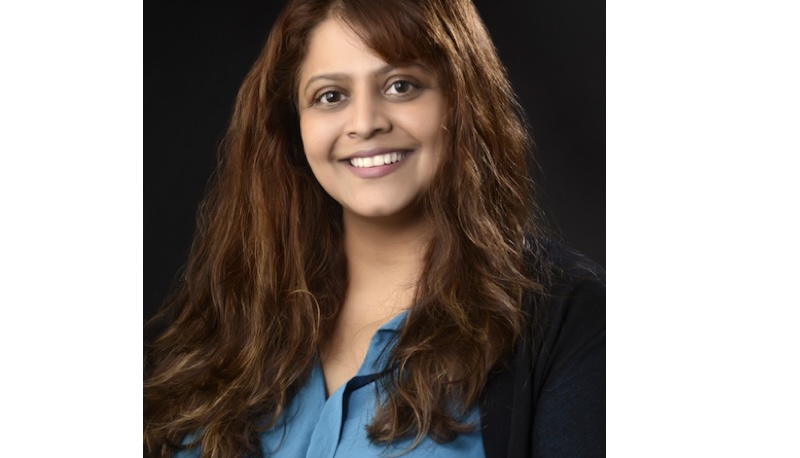
    MUMBAI: Sonal Jadhav has traded her corner office at Mindshare for the top job at Havas Media Network India, where she will serve as managing partner and west lead. The appointment marks a significant coup for Havas, which has poached one of the industry’s most seasoned media hands.

    Jadhav spent three years and seven months as principal partner at Mindshare, the GroupM-owned agency, before making the switch this month. Her departure represents a notable loss for Mindshare, where she had deep roots stretching back over a decade.

    The Mumbai-based executive brings formidable credentials to her new role. She cut her teeth during a marathon 10-year stint at Mindshare, rising through the ranks from client lead to senior cluster lead. In her most recent role there, she managed a portfolio of blue-chip accounts including Kellogg’s, ICICI, Rio Tinto and Onida, with full profit-and-loss responsibility.

    Her earlier Mindshare tenure was particularly notable for her stewardship of the Hindustan Unilever skincare portfolio, where she crafted media strategies for the conglomerate’s beauty brands from 2006 to 2013. The assignment cemented her reputation as a strategic thinker with a knack for marrying brand-building with performance metrics.

    Between her two Mindshare chapters, adhav spent four years as general manager at Wavemaker, another GroupM stable-mate, focusing on FMCG clients and honing her expertise across traditional and digital media channels.

    Her career began in print advertising, with early roles at Hindustan Times and Indian Express, where she learned the fundamentals of media sales and revenue optimisation.

    The appointment signals Havas Media’s ambitions to strengthen its presence in India’s fiercely competitive media landscape, where agencies are battling for a larger share of the country’s advertising spend. Ms Jadhav’s deep FMCG experience and client relationships make her a natural fit for a market where consumer goods companies remain among the biggest advertisers.

    At 15-plus years in the business, she represents the kind of seasoned leadership that agencies increasingly prize as they navigate the complexities of digital transformation and attribution-based media buying.

  • Roshan Salian joins Magnon Group as associate vice president – key accounts

    Roshan Salian joins Magnon Group as associate vice president – key accounts

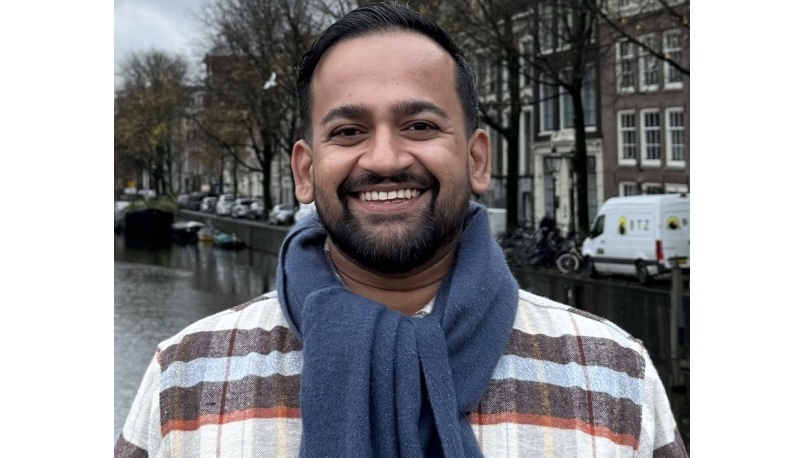
    MUMBAI: Roshan Salian has been appointed associate vice president – key accounts at Magnon group, marking the latest step in a 15-year career in digital marketing.

    Salian, who has previously held leadership roles at Social Panga, Ogilvy, Schbang, Tonic Media and Gozoop, is known for crafting customer-first campaigns and building collaborative partnerships with digital-first brands.
    At Social Panga, he spent over three years as group head – brand solutions, overseeing client relations, creative strategy and integrated marketing. Earlier stints include account director at Ogilvy and group solutions manager at Schbang.

    With his new mandate, Salian is expected to drive strategic growth for key accounts at Magnon group, leveraging his expertise in campaign strategy, operations and brand development.

  • Publicis drags CCI to court over access to files in ad cartel probe

    Publicis drags CCI to court over access to files in ad cartel probe

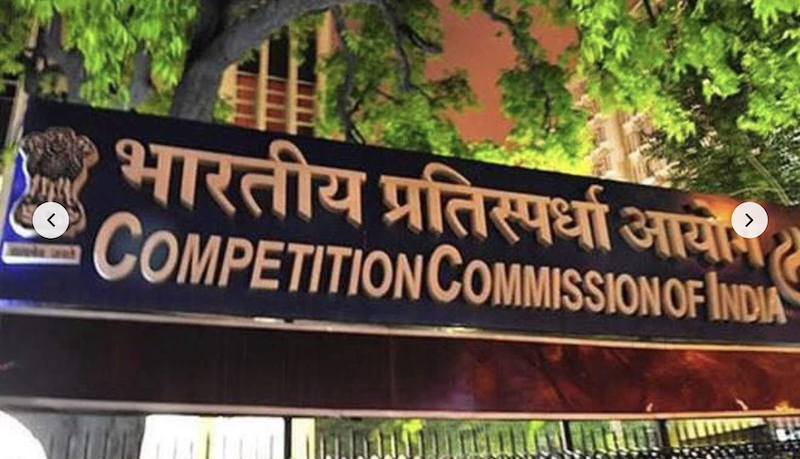
    MUMBAI: Reuters has reported that  Publicis has hauled India’s antitrust regulator to the Delhi high court, accusing it of stonewalling requests for access to case files in a high-stakes price-fixing investigation that has rattled the country’s $30bn media and entertainment sector.

    The Competition Commission of India (CCI) stunned the industry in March with dawn raids on WPP’s GroupM, Dentsu, Publicis, Omnicom and others, probing suspected collusion on publicity rates and discounts. Sources told Reuters the CCI’s early findings suggest the firms coordinated via a WhatsApp group, struck secret deals, and teamed up with broadcasters to freeze out agencies that refused to play along.

    Triggered by Dentsu’s whistle-blowing under the CCI’s leniency scheme in February 2024, the probe could see penalties of up to three times profit or 10 per cent of global turnover for each year of wrongdoing. Publicis, which operates through TLG India, says it cannot prepare a defence without access to the records, and wants the CCI to pause its investigation until the files are handed over.

    The watchdog has yet to comment. The court is expected to hear the case next week.

  • Digital media veteran climbs WPP ladder in Indonesia’s booming ad market

    Digital media veteran climbs WPP ladder in Indonesia’s booming ad market

    JAKARTA: WPP Media has promoted Mohit Sharma to president of client solutions, elevating a digital media specialist who has spent nearly three years navigating Indonesia’s rapidly evolving advertising landscape.

    Sharma’s ascent reflects the growing strategic importance of southeast Asia’s largest economy for global advertising conglomerates. Indonesia’s digital advertising market has exploded in recent years, driven by rising smartphone penetration and the dominance of platforms like TikTok and Instagram among the country’s 270m inhabitants.

    Since joining WPP Media in October 2022, Sharma has led the Beauty Tech Labs unit, overseeing a 120-person team delivering integrated media solutions spanning traditional planning, performance marketing, e-commerce and influencer communications. His primary client has been L’Oréal, the French cosmetics giant that has made Indonesia a key battleground in its Asian expansion strategy.

    The appointment caps a career trajectory that mirrors Indonesia’s digital transformation. Sharma spent nearly eight years at MEC (now part of GroupM) in India before moving to Essence and then MediaCom, where he served as partner and head of digital and e-commerce for the Indonesian operation.

    His promotion comes as western advertising agencies grapple with shifting client demands and the rise of local competitors across southeast Asia. Traditional agencies have struggled to adapt to the region’s unique social commerce ecosystems, where platforms like Shopee and TikTok Shop blur the lines between entertainment, social networking and retail.

    Sharma’s expertise in e-commerce integration may prove crucial as brands increasingly demand seamless pathways from awareness to purchase. Indonesia’s social commerce market is projected to reach $43 billion by 2025, according to consulting firm Bain & Company, making it a critical testing ground for advertising strategies.

    The move also signals WPP’s confidence in its Indonesian operations at a time when many multinational corporations are reassessing their Southeast Asian strategies amid economic uncertainties and regulatory changes. Indonesia’s advertising market, worth approximately $4.2 billion annually, remains one of the region’s most attractive despite periodic challenges from currency volatility and political shifts.

    For Sharma, the promotion represents validation of a bet on Indonesia’s long-term growth potential. His focus on data-driven strategies and digital-first approaches has aligned with local market dynamics, where mobile-first consumers have largely bypassed traditional desktop experiences.

    Whether his success can be replicated across WPP’s broader southeast Asian operations remains to be seen. The region’s fragmented markets, diverse regulatory environments and varying levels of digital maturity present ongoing challenges for global agencies seeking scalable solutions.

    Yet Indonesia’s importance to WPP’s Asian growth strategy seems assured. With the country’s advertising market expected to grow by 8-10 per cent annually over the next three years, elevating local expertise makes strategic sense—even if it means promoting from within rather than importing talent from established markets.

  • Mohit Joshi named media agency head of the year at IAA Leadership Awards 2025

    Mohit Joshi named media agency head of the year at IAA Leadership Awards 2025

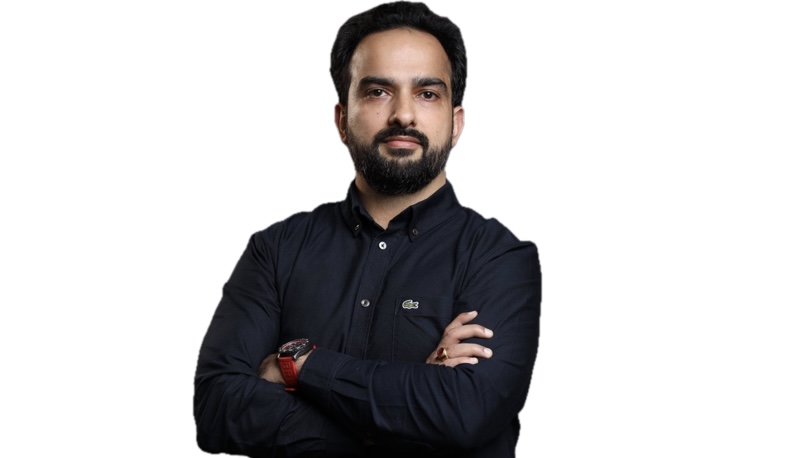
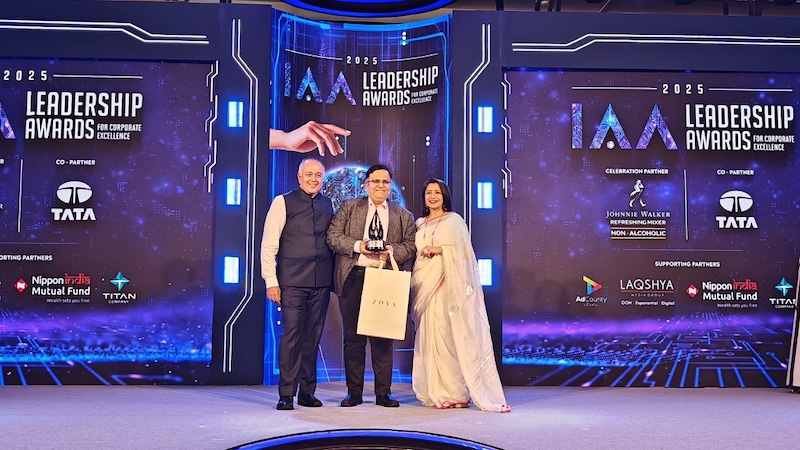
    MUMBAI:  Havas Media Network India  chief executive Mohit Joshi has been awarded media agency head of the year at the International Advertising Association (IAA) Leadership Awards 2025, held in Mumbai on 7 August. The honour caps a stellar run for Joshi, whose leadership has propelled Havas into the top tier of India’s media and advertising ecosystem.

    With nearly three decades in the industry, Joshi took charge at Havas in November 2020 and has since driven a transformation built on digital scale, data-led strategy, and deep integration. His efforts have not only expanded the network’s client portfolio but also embedded its global converged philosophy across teams, operations, and disciplines.

    ‘Mohit has evolved Havas into an integrated powerhouse, aligning media, digital, data, tech, and content into a unified strategic vision,’ said Havas India, Southeast & North Asia  group CEO Rana Barua. ”His leadership, focus on collaboration, and purpose-driven culture make this recognition richly deserved.”

    The IAA, a global body celebrating excellence in marketing and communications, lauded Joshi’s contributions to the industry. ‘Mohit’s track record speaks for itself. He is respected not just for results, but for his collaborative, warm, and helpful approach,’ said IAA India chapter & The Free Press Journal group president Abhishek Karnani.

    ‘This award is a collective win for all of us at Havas Media Network India,’ said Joshi.” It reflects our relentless drive to build an intelligent, impact-driven ecosystem. I’m grateful to my colleagues, clients, and partners for their trust and belief.”


  • Alap Ghosh named first India CEO of Assembly

    Alap Ghosh named first India CEO of Assembly

    MUMBAI:  Global omnichannel agency Assembly has appointed Alap Ghosh as its first-ever chief executive officer for India, effective 1 August. Based in Mumbai, Ghosh will report to matt adams, global chief operating officer, and lead the integration of Assembly’s media, tech, creative and commerce arms across India.

    A digital veteran with over 25 years under his belt, Ghosh joins from Google India where he helmed data and technology partnerships, driving innovation for enterprise clients. His earlier stints include leadership roles at Jellyfish and founding a data consultancy, equipping him with deep experience across adtech, martech, programmatic platforms and commercial strategy.

    “India is a critical growth market for Assembly and many of our global clients,” said Assembly global CEO Rick Acampora. “Alap brings the right mix of vision, scale and execution to help us build something truly distinct in the region.”

    Ghosh will be tasked with unifying Assembly’s footprint across Mumbai and Bangalore into a single offering that delivers connected omnichannel experiences. His remit includes accelerating growth, building talent depth and pushing innovation across data, media and creative.

    “India is moving at breakneck speed—creatively, digitally, and culturally,” said Ghosh. “By bringing our teams under one vision and one voice, we can build a next-gen agency model designed for where this market is headed.”

  • How Maitri’s South-first strategy is shaking up Indian advertising

    How Maitri’s South-first strategy is shaking up Indian advertising

    MUMBAI: Nearly three decades ago, in the laid-back lanes of Kochi, three ex-Mudra execs took a punt on building an ad agency rooted in the South—but with national ambitions. Fast forward to 2025, and Maitri isn’t just holding its ground—it’s quietly becoming one of the most disruptive indie agencies in Indian advertising.

    With offices now spanning South India, the Maldives and Seychelles, Maitri has turned its bootstrapped beginnings into a ₹75-crore creative juggernaut. Its client list reads like an FMCG-Culture-Tech dream team: Netflix, Krafton, Wipro, Saffola, Disney+ Hotstar, and longtime loyals like Muthoot Finance and Mathrubhumi.

    So what’s their killer app? Not AI. Not jargon. But cultural intimacy.
    While the big Delhi-Mumbai shops took a north-to-south approach, Maitri did the opposite—leaning into its home-turf understanding of southern India. It didn’t just talk local; it thought local.

    As managing director Raju Menon puts it, “Nothing can beat consistency. When you deliver creatives to the clients that they love, year after year, you build a relationship. And that relationship builds the brand.”

    That philosophy has brought Maitri not just loyalty, but serious hardware.

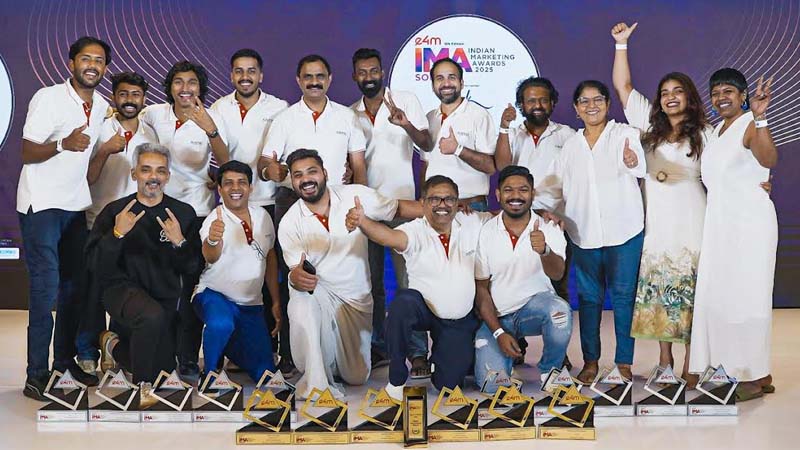
    In 2025 alone, the agency walked away with 17 metals at the Indian Marketing Awards South—a haul that included 5 Golds, 8 Silvers and 4 Bronzes for campaigns that blended heart, humour and serious social impact.

    Some of the show-stoppers?

    ●    “How BGMI made a scam ad to expose scam ads” – a digital, social, and influencer-led takedown of online fraud (3 Silvers, 1 Bronze)

    ●    “The suicide note that saved 50+ lives” – a haunting but hopeful campaign for Muktaa Charitable Foundation (1 Gold, 2 Silvers)

    ●    “Let your life shine” for Muthoot Finance – proving finance can feel (1 Gold)

    ●    “Kappa Cultr 2025” – a cultural blast that nabbed a Gold for omnichannel mastery

    Also in their trophy cabinet: campaigns for Asianet, myG, Brahmins, and Mathrubhumi’s International Festival of Letters. Each piece a masterclass in blending storytelling, strategy, and South Indian soul.

    And Maitri’s not just creatively consistent. Their secret sauce is also in the staffing. Employee churn is shockingly low in an industry notorious for its exits. Most of the agency’s top talent—many of whom cut their teeth at global agencies—have chosen to come home, literally and creatively.

    The result? A shop that has the polish of a multinational and the pulse of a neighbourhood storyteller.

    With four consecutive Agency of the Year titles under its belt, Maitri’s next chapter looks like one hell of a ride. Quietly confident, fiercely local, and globally savvy, they’ve proven that a deep understanding of people beats flashy pitches—and that sometimes, the most powerful ads come not from the centre, but from the edge. Or in this case, Kochi.