Category: Media Agencies

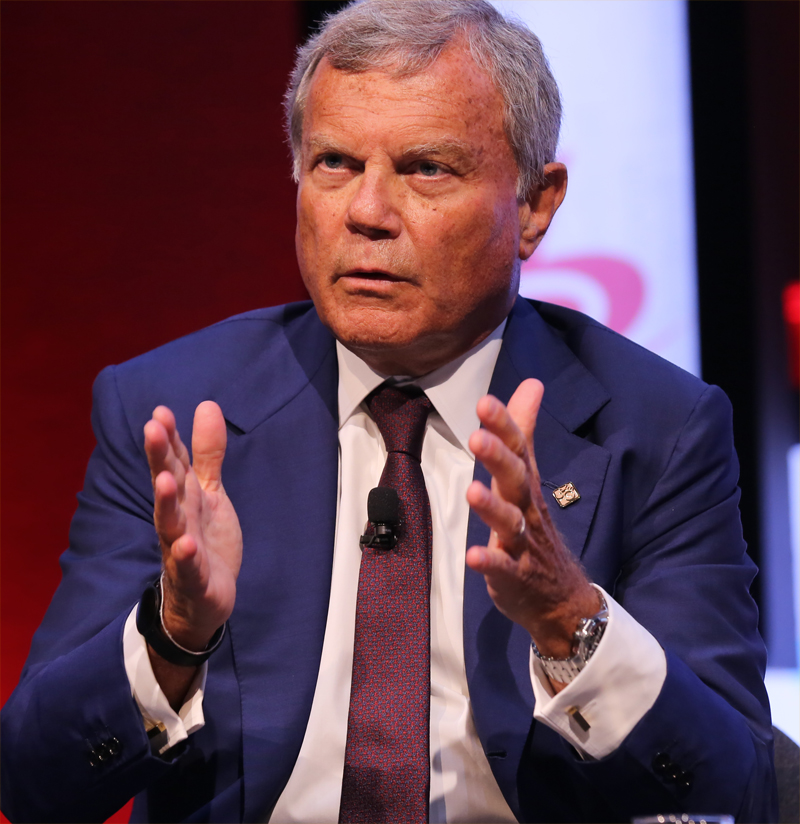
  • Sir Martin Sorrell says ta-ta to WPP, Roberto Quarta becomes exec chairman

    Sir Martin Sorrell says ta-ta to WPP, Roberto Quarta becomes exec chairman

    MUMBAI: A first gen entrepreneur of Ukrainian descent, he rose out of nowhere to build the world’s largest advertising group.  And late last night  – amidst investigations into charges of personal misconduct by the WPP board – Sir Martin Sorrell packed up his things and shockingly announced that he was saying ta-ta to the CEO’s position and moving out of the corner office.

    “Obviously I am sad to leave WPP after 33 years. It has been a passion, focus and source of energy for so long,” stated Sorrell in an emotional note to WPP staff.  “However, I believe it is in the best interests of the business …in your interest, in the interest of our clients, in the interest of all shareowners, both big and small, and in the interest of all our other stakeholders, it is best for me to step aside….the current disruption is putting too much unnecessary pressure on the business.”

    He added: “We have weathered difficult storms in the past. And our highly talented people have always won through, always. I leave the company in very good hands as the board knows… Nobody, either direct competitors or newly-minted ones can beat the WPP team, as long as you work closely together, whether by client and/or country or digitally.”

    WPP released a statement stating that the change would become effective immediately and that the advertising behemoth’s chairman  Roberto Quarta would become executive chairman until the company could appoint a new chief executive. Sir Martin would of course assist with the transition.  It added that the 73 year old  would be “treated as having retired” and that his share awards would be “pro-rated in line with the plan rules and will vest over the next five years, to the extent group performance targets are achieved.”

    WPP’s corporate development director and chief operating officer for Europe Andrew Scott and , Wunderman CEO Mark  Read would don the mantle of co-chief operating officers. Said Sorrell in his note: “We have had a succession plan in place for some time. A new generation of management, led by Mark Read and Andrew Scott , are well qualified and experienced in the board’s opinion, to deal with the geographic and technological opportunities and challenges our industry faces”

    “The previously announced investigation into an allegation of misconduct against Sir Martin has concluded,” the WPP statement read. “The allegation did not involve amounts that are material.”

    Born to Jewish parents who were from Kiev, Sorrell began his career in the renowned and trendy ad agency Saatchi & Saatchi (which fashioned winning electoral campaigns for Britain’s conservative prime minister Margaret Thatcher) in 1975. He worked closely with the brothers Saatchi (Charles and Maurice) and helped fashion its rapid growth, before going solo and acquiring a shopping basket manufacturer Wires & Plastic Products (WPP).

    He used that firm as a vehicle to gobble up various other global ad icons such as Ogilvy & Mather, Young & Rubicam and another 18 other advertising service providers over three years. WPP today has  130,000 employees in 112 countries, and a market valuation of around 22 billion pounds, or about $31 billion.

    Along the way as his legend grew – so did the amounts he took as payments for his hard labour which caused heartburn to investors and shareholders.  In 2016 when he took a pay packet of 70 million pounds and the empire struck back with protests amongst the community about all his financial excesses.

    And last month  amidst slowing down of revenues and income and the growing clout of the FANGS  – the board commenced an investigation charging Sorrell with personal misconduct and misuse of the company’s assets.

    Sorrell’s last few words in his farewell note will not only tug at WPP staff’s heartstrings but almost anyone’s.

    Said he: “I shall miss all of you greatly. You have given me such excitement and energy and I wanted to thank you for everything you have done and will do for WPP and me. As some of you know, my family has expanded recently, WPP will always be my baby too.As a Founder, I can say that WPP is not just a matter of life or death, it was, is and will be more important than that. Good fortune and Godspeed to all of you … now Back to the Future.”

  • Isobar launches commerce practice in India

    Isobar launches commerce practice in India

    MUMBAI: Isobar, part of Dentsu Aegis Network, has launched a commerce practice in India, following the launch of the global counterpart.

    The expansion of this department will lead to a commerce centre of excellence, delivering end to end experiences for clients, through integrated platforms and solutions that are informed by local insight. This addresses a growing demand for commerce solutions from clients in India, where India’s e-commerce market value is projected to grow by 30 per cent annually to a total of $200 billion by 2026 according to a Morgan Stanley report.

    Speaking on the launch, Isobar CEO Asia Pacific Jane Lin-Baden says, “Commerce is no longer about optimising the last mile, it’s now the space where people interact and experience brands. By establishing Isobar Commerce in India, Isobar can offer clients higher commercial value and customer satisfaction by leveraging our customer experience design, data intelligence, and technical commerce solutions.”

    Isobar India managing director Shamsuddin Jasani adds, “E-commerce in India has exploded. By launching Isobar commerce practice in India, we will not only be able to offer the best development capabilities but also to partner with our clients on their entire e-commerce journey and delivering solutions across the board powered by our offering across Isobar and Fractal Ink.”

    This will bolster Isobar India’s strategic capability and scale to deliver brand commerce solutions, bringing brand experience and commerce closer together. This integrated commerce offering in India will be delivered through its 150 e-commerce specialists, in addition to 450 people from design specialists (Fractal Ink-Linked by Isobar) and innovative marketing and media specialists (Isobar India).

    The Indian Isobar commerce division will join the 1,000+ commerce specialists across Isobar’s network in Americas, EMEA and Asia-Pacific. The global practice includes all commerce centres of excellence, all e-commerce, m-commerce, retail commerce experts and commerce off-shore delivery centres within the Isobar network. Isobar global commerce has strong technology credentials across all major platforms and is aplatinum Salesforce partner. Isobar is also a global alliance partner with Adobe, a SAP Hybris partner and SAP Hybris value added reseller (VAR), Microsoft managed partner, an Oracle business partner, an Apple strategicpartner, and is the Asia-Pacific leader for Magento.

    Isobar commerce practice globally combines strategic, technology, user experience (UX) and operational support to deliver rapid growth for global brands and retailers and has delivered transformational commerce work for leading brands including include Asda, Clarins, Ecco, Lacoste, Nestle, Samsonite and Pandora and more.  

    The global practice delivers commerce experiences using platforms and solutions with the biggest technology players, including Salesforce, Adobe, SAP Hybris and Magento – combining strategic, technology and operational support to multi-market and regional clients. It also covers strategy and brand commerce in third-party market-places, such as Amazon and Tmall. The end-to-end offering includes commerce strategy and consulting, customer experience design, data and technology implementation and platform management to ensure rapid growth for Isobar’s clients.


  • Mindshare South Asia announces agency restructuring, key appointments

    Mindshare South Asia announces agency restructuring, key appointments

    MUMBAI: Media agency Mindshare has announced an organisation restructure that mirrors the agency’s ambition to become collaborative in client success and navigate its marketing agenda with intelligence and agility.

    After the tremendous success of team Fulcrum in delivering client delight and industry accolades, Amin Lakhani is elevated and has taken on a larger role as president of client leadership at Mindshare India. In his new role, Lakhani is responsible to further strengthen client relationships and drive client growth in a cross media market. He will manage core client capabilities across all offices in the country. During his 14 years at GroupM and Mindshare, Lakhani has grown from strength to strength and will continue to be a key growth contributor in the new role. 

    Anita Kotwani with her unique brand of leadership at Mindshare West has ensured remarkable growth of all business teams in the region. Her continued success and motivation are evident from the number of accolades and the stream of client appreciation her teams have acquired year after year. 

    Given Mindshare’s emphasis on growth through diversification, Kotwani has been promoted to senior vice president, responsible for new business development across the market. In addition to this, she will also drive Horizontality, and work closely with the larger marketing ecosystem. 

    As Lakhani transitions into his new role, Premjeet Sodhi will join Mindshare South Asia as senior vice president at Mindshare Fulcrum, South Asia, and will lead. In his current assignment, Sodhi is the COO at Initiative/ BPN, part of the IPG group, where he handles strategy and new business development for the company. He manages clients such as Amazon, Reckitt, Gionee, Kraft Heinz, Infoedge and Bajaj Auto. With a passion for brands, Sodhi has kept pace with the evolving media space and has contributed immensely in various leadership roles. His new role is effective March 2018. 

    Mindshare South Asia CEO Prasanth Kumar says, “As we enter 2018, we are accelerating transformation which is true to our DNA. We are clear on our strategic priorities, strengthening our connections with a growing universe of clients, consumers, brands and partners in the marketing ecosystem. To be able to do so, we now have the leadership and structure within our organisation to continue our path to greater success, and our renewed focus on creating a disruptive Mindshare with speed, provocation, teamwork.” 

  • Starcom CEO Mallikarjun Das quits

    Starcom CEO Mallikarjun Das quits

    MUMBAI: After leading Starcom India through an era of strong growth and rapid transformation, Group CEO Mallikarjun Das has decided to move on from the organisation.  Das had joined Starcom India as CEO in 2011.  

    The agency will be making an announcement shortly on new leadership for Starcom India.

    “Working at Starcom over the last seven years has been a peak experience–it has left an indelible impression on me and shaped me as a professional and individual,” Das said.

    In a career spanning 20 years, Das has donned several hats. Prior to Starcom, he was COO, Madison Media Infinity.

    He added, “Wisdom of hindsight is a dangerous thing, but I count myself lucky to have had large, complex business challenges come my way in this stint. I have had the full support of my team, Anupriya and my previous bosses in facing up to these challenges. Our results speak for themselves – Starcom India has grown four times the last 4 years; our India operations ended 2017 as Starcom’s Global Office of the year. I wish everyone at Starcom and Publicis Media all the best for the future.”

    Publicis Media India Group CEO Anupriya Acharya said, “We are going to miss Das. His tenure at Starcom has been exemplary and working with him has been a wonderful experience. Starcom has had a phenomenal journey under his leadership and he has made a tremendous contribution to giving a strong foundation to Publicis Media too. Our best wishes are with him for his next assignment.”

    In a previous stint, Das has been a simulations modeler with Tata Interactive Systems where he headed the modelling practice in building simulations and games. He has worked as the Head on the P&G Planning AOR at Starcom and spent 3 years at Asian Paints as Head of Media, Market Research, Activation & PR. 

    Das holds a Graduate Degree in Statistics & is a Post Graduate in Management from the Indian Institute of Management (IIM), Bangalore.

  • How agencies deal with defaulters

    How agencies deal with defaulters

    MUMBAI: The history of the advertising industry has its fair share of examples of client default on payments leading to agencies bleeding losses. A classic case is that of JWT Walter Thompson (Now known as JWT), having to wind up back in 1974 due to non-payment by clients. Although the company resurrected a few years later, it still shows that companies aren’t secure especially when clients declare themselves bankrupt.

    In a fresh case that stirred the conversation about defaulting clients, media agency Madison Worldwide and creative agency Leo Burnett have filed a case against Chinese electronic brand LeEco over non-payment of dues in India. It failed to make payments for the period from January-December 2016, for which Madison is suing the company for Rs 39 crore plus interest in a Hong Kong court, while Leo Burnett has filed a case in the Bombay High Court for its dues of Rs 2.65 crore.

    In a typical scenario, if an agency doesn’t pay the media on time, it stands to be blacklisted by the media and will lose its accreditation with the industry. This could be a deal-breaker for them since, without accreditation, agencies have to pay the media in advance for any further business. In such a situation, if the agency does not have a large amount of fund to spare, it might have to shut down.

    Dentsu Aegis Network chairman and CEO South Asia Ashish Bhasin says, “Sometimes clients delay payments because there is a genuine reason but quite often, clients default on the payments deliberately and that puts the agency in a tight spot. Although there is a legal route, it is often cumbersome and long-drawn and agencies don’t have that kind of bandwidth. But if there is no option, that is what they have to do.”

    Calling it unfair and need for stronger laws to be implemented for the same, Publicis Worldwide chief creative officer Bobby Pawar believes it should be illegal for clients to get away without paying for the services they’ve consumed. “It is very unfortunate as more often than not, it is the agency that has to bear the cost of it,” he says.

    For print ads, the credit period is usually 45 days from the month of activity. Here, the agency has to pay media, irrespective of client payment and earns only when the client pays. Non-payment or outstanding can result in blacklisting of the agency and all activities for the agency across all clients.

    For television and radio, the credit period is 60 days from the month of activity. The agency has to pay only after the client pays, and earns only when payment happens. Problematic clients or habitual defaulters are closely monitored by Indian Broadcasters Federation (IBF), the regulatory body for TV and radio. Serial offenders work mostly on advance while tripartite agreements are usually the norm.

    For instance, if a client owed the agency Rs 7.65 crore at a certain point in time which was long overdue, at five per cent media commission, the agency retained only Rs 38 lakh. Now if the client still has an outstanding unpaid debt of Rs 1.56 crores, the net amount is a loss of Rs 1.18 crore.

    Havas Media chief finance officer Pritesh Bhatnagar believes bad debts always hit the bottom line and its impact on P&L is always significant. “Agencies need to be more prudent in agreeing to the credit terms with clients. We ensure we follow our internal credit control guidelines and policies to safeguard our interests,” he adds.

    Ad agencies must compulsorily approach the Advertising Agencies Association of India (AAAI) to recover outstanding debts but with no assurance of recovery. At best, the AAAI can prevent the media from taking any new contracts from the same client.

    Extended credit lines are vital to maintaining a competitive edge and brands may be required to have credit insurance as part of a tender, to reassure stakeholders or satisfy the bank. Advertising and media companies face risks when selling and often rely on future bookings for media space and general advertising from a number of different providers. While credit checks are routinely conducted on new clients, it is impossible to track their status for the duration of the agreement. Remarking that the industry is starting to get a little more organised, Bhasin makes a point that stringent actions against such clients need to be taken not just by agencies, but also by involving various industry bodies. “It is important for agencies to do reasonable credit rating check for clients.”

  • Havas develops CTS transparent client facing programmatic solution

    Havas develops CTS transparent client facing programmatic solution

    MUMBAI: Client Trading Solution (CTS) – a game-changing programmatic solution that gives clients complete visibility and control over their campaigns – has been launched by meta programmatic solutions pioneer Havas Group to act as a control tower, offering clients complete visibility across trading desks, DSPs and providers.

    Clients can ensure the quality of their campaigns across their own objectives (visibility, fraud control, brand safety, trading practices, costs, spending, products, formats, channels, countries, etc). The platform delivers exceptional visibility of digital workflow at every stage of the campaign – programmatic media planning, partner negotiation, ad-serving, campaign setup, monitoring, optimisation and reporting – within a fully independent, technology agnostic ecosystem that is open to all partners. The innovative product was developed by award winning data scientists, MFG labs.

    Havas group global managing director Dominique Delport said, “Client Trading Solution is a significant breakthrough. For the first time, we have an offer that gives clients full visibility and control. This innovative, platform gives brands full visibility on costs, investments, outcomes and ROI, across trading desks, DSPs, inventory, providers, marketplaces. Any advertiser using it can see exactly what’s behind all programmatic solutions, with complete transparency allowing us to work hand-in-hand with our clients to build the best strategies for their business.”

    MFG Labs product manager Raphael Mirat said, “CTS complements Havas Group’s programmatic offer. It really shines when clients want both power and control, as it gives them unprecedented flexibility to allocate budget across DSPs and trading desks, without sacrificing anything on supervision and reporting. For the first time, clients have all their trading operations and related data in a single platform, secure and efficient, built on a dedicated infrastructure.”

    Together with MFG Labs, Havas Group launched the industry’s very first Meta-DSP in 2014 and the Media Quality Barometer in 2015. CTS is the most advanced solution on the market allowing full programmatic transparency for clients. The platform has already been used successfully by Telefonica and has received endorsements from Telefonica, tech partners and leading industry bodies.

    Client Trading Solution was developed by Havas Group’s leading tech and math entity MFG Labs. CTS is already being used by traders to manage campaigns for clients via one central, shared platform. Its rich product ecosystem already includes optional features such as Campaign Parameter Optimizers (powered by MFG Labs), DMP Capabilities and Inventory Quality Assessment (powered by Artemis Alliance, Havas Group’s data capacity) and Smart First-party Segments (powered by Constellation).

    “MediaMath has applauded Havas’ continued commitment to programmatic innovation — CTS is an important and differentiated achievement that will deliver increased transparency, control and ROI to digital marketers.”, added MediaMath co-founder and head of key accounts Erich Wasserman.

    Strategic Partnerships EMEA Doubleclick by Google director James van Thiel said, “Google is proud to be part of this initiative. With the integration of DBM into Havas’ Client Trading Solution, it is now much easier for us to collaborate together with both agencies and clients. This innovative solution delivers a more efficient and transparent way for the industry to focus on results.”

  • GroupM & Kantar bring Wunderman’s Zipline to India, partner MobileWalla & Zapr

    GroupM & Kantar bring Wunderman’s Zipline to India, partner MobileWalla & Zapr

    MUMBAI: Wunderman Data Services, a leading global data and analytics company, has announced its continued expansion with the launch of data activation platform, Zipline, in India. In partnership with WPP’s GroupM and Kantar, regional clients and marketers now have easier access to the data assets, insights and expert media targeting that can transform their ability to connect and interact with their consumers.

    Through Zipline’s centralized data activation tools and the ability to integrate their own first-party data with multiple data sources, brands can build highly targeted audience segments to connect with their ideal customers across any channel.

    Partnerships with MobileWalla, the largest consumer intelligence platform, and Zapr Media Labs, India’s largest media consumption repository, expand this targetable universe by bringing marketers a growing list of rich data assets, which are all available directly within Zipline’s Public Data Marketplace. Together, these companies are able to provide dynamic mobile audience data across demographic, behavioral and location intelligence categories.

    “India is a strong market for our near and long term growth, and we’re particularly excited to be working with MobileWalla and Zapr Media Labs as we enter in to the region,” said Baldeep Singh, Country Manager, India at Wunderman Data Services. “These partnerships will play an integral role in making unique audience segments available to marketers throughout their campaigns.”

    “We are thrilled to partner with an industry leader such as Wunderman Data Services and are excited to leverage the Zipline platform, which delivers world-class data activation capabilities for marketers in India,” added Anindya Datta, Chief Executive Officer for MobileWalla.

    “The addition of MobileWalla and Zapr Media Labs in India furthers our ambition to help our clients combine their first-party data with unique data assets so they are better able to connect with their consumers in the moments that matter most,” said Jason Dodge, Managing Director, Global Markets for Wunderman Data Services.

  • Stiff competition from TV & digital has little impact on print, 2.4 cr copies added in 10 yrs

    MUMBAI: Audit Bureau of Circulation (ABC) has been continuously certifying circulation figures of member publications every six months. The trend of certified circulation figures by ABC show that the print medium (member publications of ABC) is thriving, growing and expanding in India inspite of stiff competition from all other mediums namely, Television, Radio and Digital.

    Publishers voluntarily enroll themselves as members of ABC to get their circulation figures audited. Audit Bureau of Circulations (ABC) certifies circulation figures after a stringent audit process through more than 90 empanelled Chartered Accountants, audit firms. ABC also has a provision for surprise press and market visits by empanelled firms of Chartered Accountants which further strengthens the audit process.

    As on date, ABC certifies:-
    – Daily & Weekly Newspapers 910
    – Magazines & Annuals 57

    Other members of ABC:-
    • Media and Ad Agencies
    • Print medium Advertisers
    • Govt. Organisations & DAVP

    ABC certified circulation figures are of immense value to advertisers, marketers and government departments (DAVP) whilst preparing their media plans since they are available across geographies for any town/district/state spread all over India.

    A few reasons why print publications are growing in circulation:-
     Impact of education – Growth in literacy and education have created substantial -headroom for growth of newspapers.

     Advantage of India’s Economic growth – It is believed that the growth of-
    newspapers in India is directly related to urbanization leading to higher aspirations, heightened interest in buying assets etc.

     Reading newspaper a part of daily routine combines well with ease of reading at -your own time.

     Easily accessible and available at home – newspapers are home delivered in -India, unlike in the West

     Competitive pricing – newspapers are the cheapest source of news.-

     Customized sections and pull outs cater to various segments of readers together -with localised content.

     Power of the written word – Newspapers have continued their strong traditions -over the years to provide accurate and reliable news to their readers.

    As compared to the world print market, India is one of the brightest spots in the print media:

    • India one of the few countries where print advertising revenue is growing

    • India’s paid-for daily circulation is growing whilst most other countries are declining

    • No. of paid-for titles in India highest in the world & growing while no. of titles in other countries declining More details of certified circulation figures of member publications are available on Bureau’s website:
    www.auditbureau.org

    INDIAN PERSPECTIVE
    Print is growing at an incredible 4.87% increase in CAGR over a 10 year period. 2.37 crore copies added in the last 10 years accompanied by
    an increase of 251 publishing centres.

    TOP 10 PUBLICATIONS AS CERTIFIED BY ABC FOR THE AUDIT
    PERIOD JULY-DECEMBER 2016

    1 Dainik Jagran Hindi 3,921,267
    2 Dainik Bhaskar Hindi 3,813,271
    3 The Times of India English 3,184,727
    4 Amar Ujala Hindi 2,961,833
    5 Hindustan Hindi 2,611,261
    6 Malayala Manorama Malayalam 2,441,417
    7 Eenadu Telugu 1,866,661
    8 Rajasthan Patrika Hindi 1,840,917
    9 Daily Thanthi Tamil 1,710,621
    10 Mathrubhumi Malayalam 1,473,053


  • UFO to monetise United Media screens’ ad inventory

    MUMBAI: UFO Moviez India Limited (UFO) has announced a strategic tie-up with United Media Works Pvt. Limited (UMW), a digital cinema technology and service provider having more than 300 digitised cinema screens on its network in India.

    UFO Moviez, one of India’s largest digital cinema distribution network and in-cinema advertising platforms in terms of number of screens, operates India’s largest satellite-based, digital cinema distribution network using its UFO-M4 platform, as well as India’s largest D-Cinema network.

    Under the new tie-up, UFO has acquired long-term exclusive rights from UMW to monetise the advertising inventory on these screens. In addition, UFO will share movie content to these screens in UFO M-4 format. However, existing commercial and service arrangement between UMW and its Channel Partners / Exhibitors /Distributors shall remain unchanged.

    Commenting on the development, UFO Moviez CEO – Indian Operations Rajesh Mishra said – “This strategic move leverages the strengths of both the companies and will be mutually beneficial.”

    UMW joint managing directors Ashish Bhandari and Sachin Bhandari said that “We are very happy to be associated with UFO, the market leader in the digital cinema space, and are confident that this co-operation will be fruitful to both the organizations”.

  • Healthcare products lead in ASCI norms breach, 143 complaints upheld

    MUMBAI: Healthcare products, followed by education category, led in breaching various norms set by Advertising Standards Council of India (ASCI) on advertisements and getting  hauled up for the same in the month of January this year, according to an official statement from the advertising self-regulatory body.

    ASCI yesterday noted that its Consumer Complaints Council (CCC) upheld complaints against 143 out of 191 advertisements. Out of 143 advertisements against which complaints were upheld, 102 belonged to the healthcare category, 20 to the education category, followed by seven in personal care category, six in the food & beverages category and eight ads from other categories.

    Some of the big companies and products pulled up by ASCI include Apple, Amul, Qi Lifecare Pvt. Ltd, Nivea India, HUL, Standard Chartered Bank and Coca-Cola India.

    HEALTHCARE

    The CCC found the following claims of 102 advertisements in healthcare products or services to be either misleading or false or not adequately/scientifically substantiated and violating ASCI’s norms. Some of the healthcare products or services advertisements also contravened provisions of the Drug & Magic Remedies Act and Chapter 1.1 and III.4 of the ASCI code.

    Complaints against the following advertisements, amongst others, were upheld:

    1. Proyurveda Lifescience Pvt. Ltd. (Max ARTHO Capsules, Oil and Gel): The advertisement’s claims that it “helps in protecting joint cartilage by reducing degeneration” and “helps in treating the root cause of joint pain” were inadequately substantiated and are misleading by implication.

    2. Nurture Health Care (Medora Capsules): The advertisement’s claim (in Marathi) as translated into English — “Medora capsules deliver weight reduction without any lifestyle changes” — was not substantiated with evidence of product efficacy and is misleading by exaggeration. 

    3. Qi Lifecare Pvt. Ltd. (Qi Spine Clinic): The advertisement’s claim, “new treatment approach helps 50-year-old achieve complete recovery from 12 years of chronic back pain”, was inadequately substantiated. It was considered that the testimonials did not constitute reliable objective evidence and did not entitle the advertiser to make very broad claims made in the advertisement regarding surgery-free recovery.

    Consumers were likely to understand that the testimonial was genuine representation of complete recovery from chronic back pain by the advertised treatment alone and was representative of the results that could be generally achieved by taking the treatment. Also, since the physiotherapy treatment approach is well established, calling it “new” was considered to be misleading. Further, the claim, “India’s first back pain specialist”, was not substantiated with comparative data versus other similar clinics providing similar treatment to prove this claim.  Also, the claims are misleading by exaggeration.

    4. Shree Maruti Herbal (Stay On Power Capsules): The advertisement’s claim — “clinically 99.99 per cent efficacy proven power capsules” — was not substantiated with clinical evidence of product efficacy.  Also, the claim when read in conjunction with the text in the body copy of the advertisement and product visual is misleading by implication that the product, which as per pack declaration is “herbal supplement for men”, is for improvement in their capacity for sexual pleasure.

    It was noted that this medical product is being presented as an “amazing gift”, which people could exchange for Diwali among friends, and considered to be misleading by ambiguity and a manifestation for a disregard for safety while consumption of the product could encourage negligence. It was further concluded that the advertisement gives a false impression regarding the true character of the medicine and is in breach of the law as it violated the Drugs & Magic Remedies Act (DMR Act).

    EDUCATION:

    The CCC found claims in the advertisements by 20 different advertisers were not substantiated and, thus, violated ASCI guidelines for advertising of educational institutions. Hence, complaints against these advertisements were upheld. Some of the upheld cases are the following:

    1. Vidyamandir Classes: The advertisement’s claim — “cash reward worth (Rs) 2 crore (Rs 20 million)” — was not substantiated with supporting evidence of students who have received cash worth Rs. 2 crore.  Also, the claim (“scholarship up to 100 per cent”) was not substantiated with authentic supporting data such as evidence of 100 per cent scholarships availed by students. The claims were found to be misleading by exaggeration.

     2. Cadd Centre India Private Ltd. (Cadd Centre-Ce): The advertisement’s claims (“First Time Ever In India! 1000 Jobs In 100 Days For Cadd Quest Participants” and “Job Guarantee For 1000 Students”) were not substantiated with verifiable support data such as detailed list of students who have been placed through its institute, contact details of students for independent verification, enrolment forms and appointment letters received by the students, nor any independent audit or verification certificate. The claims are likely to mislead students into believing that the institute is providing permanent jobs.

    PERSONAL CARE

    1. Nivea India P. Ltd. (Nivea Protect & Care Deodorant): The print advertisement has visual of Nivea crème super-imposed on the deodorant can image and claims were considered to be misleading by ambiguity and implication that several other major ingredients (and not only fragrance) of Nivea Crème were added to the deodorant product. The front of the pack claim (“with Nivea Crème ingredients”) accompanied by a visual of cream, and back of pack claim of “with precious Nivea Crème ingredients” is likely to mislead the consumers that Nivea Protect & Care Deodorant has several major skincare ingredients of Nivea Crème. The pre-dominant common element of both the products is the Nivea fragrance. These claims are misleading by ambiguity.

    2. Richfeel Health & Beauty Pvt. Ltd.: The advertisement showcases pictures of results of both pre and post treatment. It was noted that the advertiser did not provide its response specific to the claims/visuals objected to, nor did it provide photographic evidence to prove that the pictures shown in the advertisement (pre and post treatment) are demonstrating the real benefit achieved through the treatment. It was concluded that the efficacy being depicted via images of before and after the treatment are false and misleading by gross exaggeration. Without this evidence, addition of any disclaimers was not considered acceptable.

    3. Hindustan Unilever Limited (Rin Antibac): The advertisement’s claim (“Presenting new Rin Antibac with Ayurvedic extracts removes germs”), accompanied by visuals implying sterile clothes, was not substantiated and is misleading by implication and exaggeration as the advertised product does not have the property to provide germ protection in wear conditions. As clothes will be exposed to different environments, they would be contaminated and would carry germs. Both the claims, that is germ inhibition/sterile clothing in wear conditions and provided only by the advertised product (i.e. other detergent not providing similar benefit), were not substantiated.

    FOOD & BEVERAGES

    1. S.V.Fruit (Go Green Frozen Fruits): It was concluded that while the advertised product may be carbide free, claiming it to “protect from cancer” is misleading by exaggeration.

    2. Gujarat Co-Operative Milk Marketing Federation Ltd. (Amul Butter): The advertisement refers to butter being a rich source of Vitamin A and further states that “eat milk with every meal and live every day, worry-free”. It was considered the latter part of the statement was misleading by implication and encouraging excessive consumption of butter, which may not be advisable from a health point of view.

    3. Coca-Cola India Pvt. Ltd. (Thums Up): The advertisement showcases a rider performing a wheelie on normal streets and traffic conditions amongst a few people.  This is contradictory to the disclaimer made in the advertisement — “the actions are for representational purposes alone and must not be copied by viewers”.  It was concluded that though the overall advertisement is not objectionable, regardless of the disclaimer, the specific visual showing the stunt performed by the rider (wheelie) in normal traffic and/or in presence of bystanders and public encourages dangerous practices and encourages a disregard for safety and negligence.  

    OTHERS

    1. Standard Chartered Bank (Standard Chartered credit card): The advertisement claims that “get up to 10 per cent extra cash back on all spends with your Standard Chartered credit card”. It was considered to be false and misleading by ambiguity as the cash back being offered is limited to Rs.10, 000.

    2. Apple India Private Limited (Apple): The advertisement’s text states that “the amazing iPhone 7 is here”, but shows an image of iPhone 7 Plus variant, which is misleading by ambiguity and implication.  While the advertiser may have a logo/trademark with “iPhone7”, by omission of any reference to the word “series” in the advertisement text and in absence of any visual of iPhone 7 variant, it was concluded that the advertisement is likely to mislead consumers about the product advertised and its corresponding features.

    3. Opera Software Asa (Opera Mini): The advertisement’s claim — “saves data cost up to 90 per cent while browsing” — was not substantiated with supporting data and is misleading by exaggeration.

     ASCI is a self-regulatory organization for the advertising industry to promote, maintain, monitor and uphold fair, sound, ethical and healthy principles and practices of advertising for the protection of interest of consumers and the general public. Established in 1985, ASCI’s role has been acclaimed by various government agencies like the Department of Consumer Affairs (DoCA), Food Safety and Standards Authority of India (FSSAI) and Ministry of AYUSH.

    ASCI and its Consumer Complaints Council (CCC) deal with complaints received from consumers and industry against advertisements that are considered as false, misleading, indecent, illegal, leading to unsafe practices, or unfair to competition and in contravention of the ASCI code for self-regulation in advertising.

    The full list of companies/adverts hauled up by ASCI for breach of norms could be found here.