Category: Media Agencies

  • “India is the second largest TV market globally with 210Mn Tv HHs”: GroupM’s Atique Kazi

    “India is the second largest TV market globally with 210Mn Tv HHs”: GroupM’s Atique Kazi

    Mumbai: The emergence of addressable TV has been nothing short of ground-breaking. Offering targeted advertising opportunities and personalized content delivery, addressable TV has swiftly carved out a significant niche in the industry. India, with its burgeoning digital market and rapidly expanding connectivity, has been at the forefront of this transformative shift.

    The latest insights from GroupM’s TYNY 2024 report shed light on the remarkable momentum witnessed in the realm of TV in India. Unlike the global market, TV marked a seven per cent growth with the market share of 29 per cent. With each passing year, the adoption of connected TV and the prevalence of addressable TV homes have surged, reshaping the way audiences engage with television content and advertising.

    The report cites phenomenal momentum in the space of addressable TV over the last few years. By the end of 2023, there were 34 million addressable TV homes streaming on connected TV in India. As per the report, in 2024, this growth is expected to be reaching 45 million homes with a YoY growth of 21 per cent.

    By delving into the key findings of the report, it becomes evident that addressable TV is not just a passing trend but a fundamental evolution in the media landscape, poised to reach unprecedented heights in the year 2024. With projections indicating substantial growth in the number of addressable TV homes, India stands on the brink of a new era in television broadcasting and advertising.

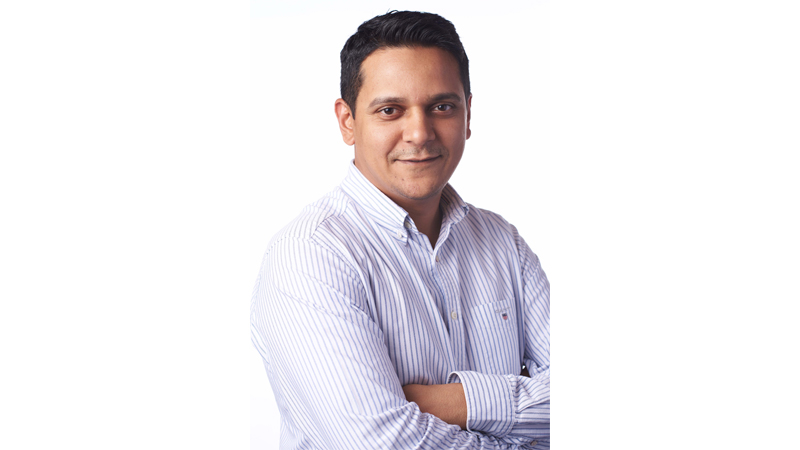
    Let’s explore the implications of this growth and future of media consumption in India as Indiantelevision on the sidelines of the GroupM event, caught up with GroupM India president (Data Performance and Digital Products) Atique Kazi, where he shared a lot of insights on the current addressable & linear TV space….

    Edited excerpts

    On the growth of addressable and linear TV in India

    In recent years, the growth of addressable TV homes has been significant. With 7-8 million Addressable TVs in 2021, it quickly rose to 17-18 million and now crossed 34 million. Current projections suggest it could breach 45 million, translating to approximately 21% of TV households in India, given there are around 210-213 million Television households. This growth is fuelled partly by the widespread availability of unlimited broadband, allowing people to stream content without constraints. Interestingly, many of the 45 million users are not completely abandoning traditional TV but are instead switching between linear and on-demand content. Primarily, these users are younger than 40, as older individuals may struggle with new user interfaces & habits. People are making smarter choices based on their viewing habits, opting for platforms that offer their preferred content without additional costs. This trend indicates a shift towards more flexible viewing options.

    On difference between USA and India’s television business and India reaching on par with the developed nations

    India is the second largest TV market globally with 210Mn Tv HHs. Recent increases in prices and the abundance of content accessible through streaming platforms are prompting consumers to transition from Pay TV to Free TV, often supplemented by low-cost or ad-supported streaming services made possible by improved internet connectivity. In the United States, over 85% of households are users of Connected TV (CTV), whereas in India, CTV penetration stands at only approximately 16% (FYR only 34mn/210mn), indicating significant growth potential in India. CTV advertising constitutes 7% of the total media expenditure in the US, while India has just embarked on this journey in the last three years, with digital extensions already accounting for 4% %( FYR only 5750cr/155386 cr ) of the overall advertising expenditure and expected to surpass the US average.

    On consumers preferring TV over mobile phones for media consumption

    The preference for viewing always rests with the consumer based on their convenience. For example, while I am outside home and want to catch on to my favourite content, mobile is definitely an option. But at the comforts of home when you have access to a large screen, preferences change. What has happened now is the ease of access to content is the same on TV & mobile, what changes is the environment with whom/where you watch them. With features such in IPL like multi camera viewing angles and enhanced post-match production, viewers are provided with an improved viewing experience, influencing their choice on a big screen vs small screen.

    On the fall of DTH industry according to TRAI’s latest reports on losing 1.32 paid subscribers in July-September 2023

    The DTH industry is shifting towards free-to-air (FTA) content over pay TV, building the need for smarter, internet-enabled set-top boxes. The advancement I foresee is for the insertion of addressable ads on linear television, revolutionizing the advertising ecosystem. However, the industry faces challenges due to broadcasters’ split strategy for television and their digital platforms, as well as the disconnect between broadcasters and distributors. Without collaboration to effectively sell addressable ads, the potential benefits of this technology, as seen in markets like Korea, may not be easy in India. Airtel and Tata Play have introduced smart set-top boxes capable of addressable ads, but without broadcaster collaboration, unlocking their full potential may prove difficult.

  • GroupM India’s 2024 TYNY Report unveils surprising trends and insights

    GroupM India’s 2024 TYNY Report unveils surprising trends and insights

    Mumbai: GroupM India has released its annual This Year Next Year (TYNY) report on 13 February 2024. The overall ad revenue is expected to reach Rs 1,55,386 crore in 2024, with an incremental Rs 14,423 crores compared to 2023.

    GroupM South Asia CEO Prasanth Kumar said, “Despite facing macroeconomic challenges, we remain optimistic about the industry. At 10.2% India will be the fastest growing top market. 2024 will also see an upside from the spends leading to the General Elections. Digital particularly retail media and digital extensions of TV are expected to drive the growth. SME continues to fuel the growth. Linear TV is at a point of inflection and needs to be enabled with rapid deployment of technology to stay relevant.”

    GroupM – India president – Investments, Trading, and Partnerships Ashwin Padmanabhan said, “The advertising landscape is evolving with the fragmentation of search, rapid rise of influencer marketing and retail media. Reflecting this, at INR 88,502 crores of the overall INR 1,55,386 crore, digital will contribute to 57% of all ad revenue. Within digital ad revenue, search contributes 22%, retail media 18% and the rest 60%. Sectors like Auto, Realty and Offline Retail are expected to power the overall advertising growth.”

    GroupM India business Intelligence head Parveen Sheik said, “Global advertising presents a steady picture: a projected 5.3% global growth in ad revenue for 2024, reaching $936 billion, with digital leading the charge at a commanding 79% share of all ad revenue. India continues to be ranked 8th globally and its ad revenue growth among its peers is a testament to its potential and resilience. Adaptability is key to navigating an evolving advertising landscape amidst inflation and geopolitical tensions.”

    The GroupM TYNY report also unveiled several evolving trends for 2024.

    Key trends include:

    1   Increasing influence of gen-alpha will drive distinctive marketing strategies

    2   Attention Planning – customising insights for actionability

    3   21% of television homes to be addressable in 2024

    4   Sports to focus on immersive experience journeys

    5   Brand marketing becomes more accountable on performance, breaking silos

    6   Step-up on search

    7   Ecommerce drives deeper into organisations

    8   India’s general & modern trade getting digitized leading to rise of omni channel commerce

    9   Rapid developments in AI will transform media, messaging, and measurement

    10   AI & technology dominate the content landscape & creator economy

    11   Importance of niche consumer segments will power the growth of micromarketing

    12   With consent becoming critical, zero party data will empower various areas of marketing

    https://indgrm.com/TYNY/

  • RVCJ pioneering the future of Meme marketing in India

    RVCJ pioneering the future of Meme marketing in India

    Mumbai: RVCJ, one of the media and entertainment companies, has been instrumental in shaping the meme marketing landscape in the country. With its unique approach to humour and witty content, RVCJ has captured the attention of millions of social media users across India. As we look towards the future of meme marketing in India, it’s impossible to ignore the role that RVCJ will continue to play.

    According to the RVCJ Media co-founder & CRO Aziz Khan, ‘ The ability to stay relevant and connect with its audience will be key to its success in the years to come. With the rise of newer platforms and changing user behaviour, RVCJ has already started exploring new formats and mediums to reach its audience. From short-form videos to interactive content, RVCJ is constantly evolving to stay ahead of the curve.

    Beyond 2024, RVCJ will likely continue to lead the meme marketing landscape in India. With its strong brand identity and deep understanding of its audience, RVCJ is well-positioned to take advantage of the growing demand for humour and relatable content. By leveraging its expertise and creativity, RVCJ will allegedly continue to shape the future of meme marketing in India and beyond.

    RVCJ’s success story in India’s meme marketing landscape can be attributed to its unique and refreshing approach to humour and content creation. With millions of social media users hooked on to their platform, RVCJ has become a household name in the world of memes and entertainment. However, experts believe that the company must continue to innovate and adapt to the changing market trends to maintain its position in the industry.

    The key to RVCJ’s future success lies in its ability to stay relevant and resonate with its audience. RVCJ has shown that it is willing to evolve and stay ahead of the curve by exploring new formats and mediums such as short-form videos and interactive content. This adaptability will be crucial in the coming years as the market continues to change and new platforms emerge.

    Looking forward, RVCJ is poised to continue to serve the meme marketing landscape in India. With its strong brand identity and deep understanding of its audience, the company is well-positioned to take advantage of the increasing demand for relatable and humorous content. By leveraging their expertise and creativity, RVCJ will undoubtedly shape the future of meme marketing not only in India but also beyond.

  • DTV introduces D’Artist Plus, transforming collaborations between celebrities and brands

    DTV introduces D’Artist Plus, transforming collaborations between celebrities and brands

    Mumbai: D’Artist Talent Ventures (DTV)  presented D’artist Plus, a pioneering service revolutionising celebrity-brand associations tailored for start-up brands, through a groundbreaking structured deals approach.

    With over 15 years of experience in celebrity-brand collaborations across diverse sectors and geographies, DTV boasts a network with an extensive portfolio of top Indian and international celebrities. Evolving with the times, DTV also actively engages with curated digital-first celebrities to extract substantial and meaningful benefits for brands.

    Leveraging profound expertise and robust  business relationships, DTV aims to empower the start-up universe through a scientifically refined strategy, termed “Enhanced Endorsements.” This strategic initiative transcends conventional practices, promising unparalleled economic advantages for both celebrities and brands, fueled by overall brand growth.

    “In introducing D’Artist Plus, we aim to foster enduring, value-driven relationships between influential personalities and dynamic consumer brands. Our goal is not merely endorsements but forging deeper partnerships,” expressed Darshana Bhalla, CEO and founder of DTV.

    Incorporating the principles of Structured Deals,’ D’Artist Plus will harness the demographic and influential power of celebrities and personalities with high consumer affinity and credibility to contribute impactful and dynamic solutions to consumer brands. Thus,  leveraging a celebrity’s efforts and involvement to create transformative value for start-ups, while creating substantial upside for their efforts.

    “D’Artist Plus addresses specific marketing challenges faced by start-ups, offering opportunities to surpass measurable expenditures and access high-impact marketing propositions. By integrating high-profile celebrities from entertainment, sports, and digital realms, we envision symbiotic associations fostering mutual benefit and growth..,” Darshana added.

    Additionally, D’Artist Plus introduces a comprehensive marketing advisory services program, ensuring the optimization and maximization of potential in unique brand-celebrity associations across different growth stages and various domains.

    “This service is administered by a highly adept and scholarly team operating in the backend, distinguished by their profound expertise and advanced capabilities” Darshana concludes

    Our prior successes with promising start-ups, coupled with collaborations underscore our ability to deliver substantially enhanced value in this mutually beneficial partnership. The formal launch of D’Artist Plus,  marks a significant milestone, bringing together the start-up brands at various developmental stages and also aligning with Atmanirbhar principles.  

    This initiative not only benefits from the homegrown and global celebrity’s influence on Indian businesses,  but also contributes to the growth and promotion of indigenous brands, skills, and initiatives, resonating strongly with companies valuing self-reliance and talent keen to support Indian Brands.

    Being a celebrity sourcing agency, our all-encompassing, solution-oriented, non-conflicting, service proposition distinguishes us as an agency dedicated to curating tailored solutions, aligning seamlessly with the distinctive needs of the brands we serve, hence elevating their marketing strategy in entirety. 

  • Six top creatives in India named to ADC 103rd Annual Awards Jury

    Six top creatives in India named to ADC 103rd Annual Awards Jury

    Mumbai: The One Club for Creativity has announced six leading creatives in India who will serve on the diverse global jury for the ADC 103rd Annual Awards, the world’s longest continuously-running global competition celebrating excellence in craft and innovation in all forms of design and advertising.

    Dimpy Bhalotia, photographer and creative director based in Mumbai, will serve as Jury President for the Photography discipline.

    Other ADC 103rd judges based in India are:

       Soumitro Ghosh, partner, Mathew and Ghosh Architects, Bengaluru (architecture/interior/environmental design)

       Anushka Sani, founder, CD, Thought Over Design, Mumbai (brand/communication design)

       Poornima Seetharaman, associate general manager, Take Two – Zynga, Bangalore (gaming)

       Sumitra Sengupta, ECD, FCB India, Gurugram (advertising)

       Juhi Vishnani, art director, November, Mumbai (typography)

    The complete ADC 103rd Annual Awards jury can be viewed here.

    Judging will finish in April 2024, with finalists announced in May. Gold, Silver and Bronze Cube winners will be announced at the ADC 103rd Annual Awards ceremony during Creative Week 2024 in New York, taking place 13-17 May.

    Entries can be submitted now, with fees increasing after each deadline period.  Regular deadline is 26 January 2024, with an extended deadline of 16 February 2024, and the final deadline is 1 March 2024.  

    New for 2024

    One notable change for the ADC 103rd Annual Awards is Best of Discipline honors will be awarded to brand-based work only. Entries for non-profit clients are no longer eligible.  

    This year will also mark the show’s first Best of Non-Profit award, presented for the top-scoring work from across all disciplines done for a non-profit client as voted by the entire jury.  Best of Non-Profit will receive the same points as a Best of Discipline winner.

    Other highlights for the ADC 103rd Annual Awards include:

    1   Rankings points – All awards will receive rankings points, multiple awards for the same work within a discipline will not be de-duped.

     Storytelling categories – Advertising discipline expanded with new categories for Storytelling in Humor and Drama genres.

     Continued partnership with creative community Working Not Working on event and content collaborations, as well as the special Freelancer of the Year award.

    4   ADC Members’ Choice Award, where freelance members of both The One Club and Working Not Working are invited to cast votes for their favorite entry amongst the year’s top-scoring works in all ADC Design disciplines.

    Tiered pricing

    A special tiered pricing structure makes it easier for smaller agencies, studios and freelancers to participate.  Larger agencies and brands pay the standard entry fee; smaller shops get a discount on entries (amount varies by discipline), and freelance creatives and one-person shops are eligible for an even greater reduction in their entry fee.

    Unlike for-profit awards shows, The One Club is a non-profit organization that puts revenue generated from awards entries into programs that serve the industry under the club’s four pillars: Education, Diversity, Equity & Inclusion, Gender Equality and Creative Development.  

    The One Club for Creativity – home of The One Show, ADC Annual Awards, Art Directors Club of Europe (ADCE), ONE Asia Awards, Type Directors Club and competition, TDC Ascenders, Young Guns, Young Ones Student Awards, Next Creative Leaders, ONE Screen Short Film Festival, and more – is the world’s foremost non-profit organisation whose mission is to support and celebrate the global creative community. Revenue generated from entries to its global awards shows goes back into the industry to fund programming under the organization’s four pillars: education, inclusion & diversity, gender equality, and creative development.

  • Sudhir Sitapati to deliver AAAI Subhas Ghosal Memorial Lecture on 18 January 2024

    Sudhir Sitapati to deliver AAAI Subhas Ghosal Memorial Lecture on 18 January 2024

    Mumbai: The Advertising Agencies Association of India (AAAI) and the Subhas Ghosal Foundation (SGF) announced that the Subhas Ghosal Memorial Lecture will be delivered this year by managing director and CEO, Sudhir Sitapati, as the esteemed speaker. The event will be held on 18 January 2024 Thursday at 7:00 pm at ITC Grand Central Parel, Mumbai.

    While talking about his personal and professional experiences, Sudhir Sitapati will share many valuable insights on building Brands in today’s India.

    As a memorial to one of the influential figures in the history of advertising, Subhas Ghosal, the Subhas Ghosal Foundation was established by a group of senior communication professionals who lived during his era. One of the primary objectives of the Foundation is to promote professional values. Ghosal embodied throughout his lifetime. With the support of Advertising Agencies Association of India (AAAI), the Foundation has been hosting its ‘AAAI Subhas Ghosal Memorial Lecture’ series, for several years, where luminaries like Rajan Anandan, Uday Shankar, Ronnie Screwvalla, Aroon Purie have delivered motivational and informative talks.

    On behalf of SGF, Sam Balsara says, “We live in a world where brands play a very important role in consumer lives and have become money spinners for those members of India Inc. who know how to create and nurture them. Sudhir, with his extensive experience of building Brands at Unilever and now at Godrej Consumer Products Limited will deliver, I am sure, a very insightful talk that will be invaluable for all of us in the Marketing, Advertising and Media World”.

    Ahead of the lecture AAAI president, Prasanth Kumar said, “Sudhir is an experienced and proven Brand builder and AAAI is delighted that he has agreed to deliver the Subhas Ghosal Memorial Lecture.”

    All members of the Advertising, Marketing, Media and Digital community are welcome. However entry is only by invitation. Please send an email to Mr. Chetan Salian at AAAI on his email id aaai@aaai.in to receive an invitation.

    The lecture is made possible by ABP NEWS’s gracious support, which the organizers are deeply grateful for.

  • IAS announces attention product to unify media quality and eye-tracking

    IAS announces attention product to unify media quality and eye-tracking

    Mumbai: Integral Ad Science (Nasdaq: IAS), a global media measurement and optimisation platform announced the general availability of its Quality Attention™ measurement product –to unify media quality and eye tracking with machine learning. The new offering provides transparent metrics to help global advertisers increase return on investment, drive brand consideration, and boost conversions.

    With Quality Attention, advertisers can capture higher attention to drive campaign performance and unlock proven results. Quality Attention uses advanced machine learning technology, actionable data from Lumen Research’s eye-tracking technology, and a variety of signals obtained as part of IAS’s core technology, including viewability, ad situation, and user interaction, and weighs them into a single attention score. IAS’s attention model is designed to predict if an impression is more likely to lead to a business result including awareness, consideration, and conversion.

    Integral Ad Science chief commercial officer Yannis Dosios said, “Attention measurement must inform actions that drive superior results for advertisers, Integral Ad Science. Our Quality Attention offering is purpose-built to help brands and agencies navigate through media clutter to seamlessly understand how media visibility, the ad environment, and customer interaction impact campaign performance. According to our research, brands that focus on driving higher IAS attention scores achieve up to a 130 per cent lift in conversion rates leading to a better return on their investment.”

    Quality Attention provides global advertisers with:

    1.   An Advanced Machine Learning Model: A singular view of campaigns’ attention performance, trained based on a pool of data consisting of billions of impressions and millions of conversion events.
    2.   Proven Performance and Brand Results: Up to a 130 per cent lift in conversion rates when comparing high attention impressions to low attention impressions, with greater attention scores seeing 91 per cent higher brand consideration and 166 per cent higher purchase intent.
    3.   Unification of Media Quality with Human Attention: IAS is the first company to combine one of the world’s largest consumer attention biometric data sets with media quality metrics to provide the most accurate picture of attention for global advertisers.

    Global healthcare company Sanofi has partnered with IAS as they move beyond traditional ways of measuring media performance. Sanofi CHC Global Digital Media Lead Anna Kechekmadze said, “We know that ad clutter is not only a frustrating consumer experience, but it also correlates with attention and carbon footprint: less ad clutter = more attention and less carbon, Our partnership with IAS on Quality Attention is giving us insight into how attention plays a role in reducing ad fatigue, getting better inventory quality and improving media KPIs.”

    IAS and Lumen Research announced their initial partnership in 2023 to change the way digital advertising impressions are measured for attention-first advertising. Now, IAS customers will have an even more powerful way to accurately track which ad impressions have captured attention and are likely to yield business results.

    Lumen Research CEO Mike Follett said, “We are excited about the evolution of our partnership with IAS and how we are offering advertisers a transparent and more accurate picture of attention, by bringing our cutting-edge eye-tracking data to IAS’s attention model, advertisers have access to the most robust predictive attention models at scale.”

    For more information, visit https://integralads.com/solutions/attention/ or read the recent report, The Attention Payoff.

  • Vibrant Media bags Rs 100 crore Jio-bp media account

    Vibrant Media bags Rs 100 crore Jio-bp media account

    MUMBAI: It’s vibrant and it’s going to be all about gas. Mumbai-based media outfit Vibrant Media has raced ahead of Group M and Beehive Communications to capture the Rs 100 crore account of Jio bp in a three-agency pitch.

    Reliance BP Mobility Limited (RBML) – a 51: 49 joint venture between  Mukesh Ambani’s Reliance Industries and global energy major bp – was set up in 2021 to operate the Jio-bp brand and make it a leading player in India’s fuels and mobility markets.

    Jio-bp has since then been  leveraging Reliance’s presence across 21 states and its millions of consumers through the Jio digital platform while bp has brought  its extensive global experience in high-quality differentiated fuels, lubricants, retail and advanced low carbon mobility solutions.

    RBML has plansto explodeits current count of 2,000gas station to up to 5,500 over the next three years.
    An advertising blitz is expected to break later this month and cuts across TV, digital, print, and outdoors, reveal sources. Jio bp had in June 2023 handed over the digital mandate for the account to Saatchi & Saatchi Propagate. That, according to sources, has been handed over to Vibrant, which handles most of the Reliance brands media spends.

    Jio BP – a joint venture between Mukesh Ambani’s Reliance Industries and oil major British Petroleum – seeks to become set up a chain of Operating under the “Jio-bp” brand, the joint venture aims to become a leading player in India’s fuels and mobility markets. It will leverage Reliance’s presence across 21 states and its millions of consumers through the Jio digital platform. bp will bring its extensive global experience in high-quality differentiated fuels, lubricants, retail and advanced low carbon mobility solutions. 

    bp and RIL expect the venture to grow rapidly to help meet India’s fast-growing demands for energy and mobility. India is expected to be the fastest-growing fuels market in the world over the next 20 years, with the number of passenger cars in the country estimated to grow almost six-fold over the period. RBML aims to expand from its current fuel retailing network of over 1,400 retail sites to up to 5,500 over the next five years. This rapid growth will require a four-fold increase in staff employed in service stations – growing from 20,000 to 80,000 in this period. The joint venture also aims to increase its presence from 30 to 45 airports in the coming years.
     

  • White Rivers Media gears up for the New Year by clocking 25 business accounts in Q4 2023

    White Rivers Media gears up for the New Year by clocking 25 business accounts in Q4 2023

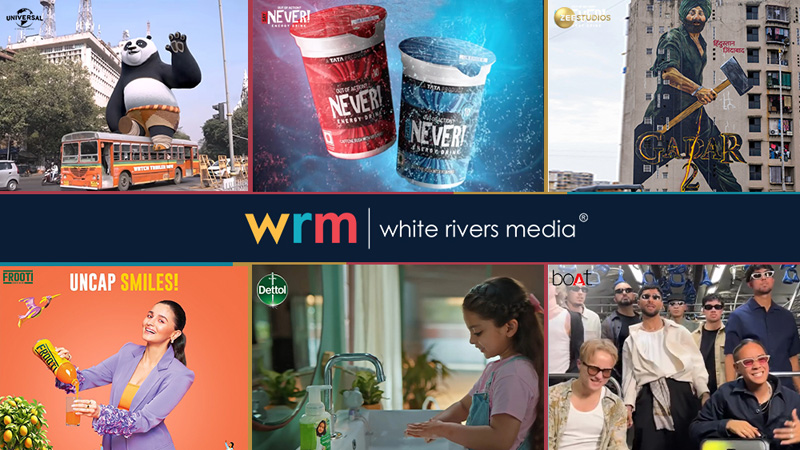
    Mumbai: The last quarter of 2023 saw White Rivers Media do campaigns for Frooti, Dettol, Tata NourishCo, Astral, Crunchyroll India, boat, Pass Pass Pulse, Chingles, Glenmark Pharmaceuticals, Zoomcar, Radico Khaitan amongst others. The agency has seen its business grow on the back of generative AI activations, trend-setting influencer-brand integrations, and evocative digital films, delivering a diverse set of strategic and tactical campaigns for brands across categories.

    This year also saw White Rivers Media launch WRM Digital Studios, an agile digital-first production arm. The studio brought to life Astral Foundation’s initiative to support Rajasthan’s eco-feminist Piplantri village, a drought-proof oasis that celebrates the birth of its daughters by planting saplings.

    Another original production, the #DettolProtectsTomorrow digital film, encouraged the nurturing of childhood curiosity and learning, empowering today’s parents to let their children explore without fear of germs, with the protection of Dettol.

    Swiggy Dineout captured hearts in the cluttered Indian festive season with the #TogetherWaliDiwali film. Reliance Jewels adorned their new collections with films that rekindled India’s love for traditional art. All were conceptualised and produced by WRM.WRM in collaboration with the curativity platform created from scratch the identity of ‘Say Never’, the brand-new caffeine-based energy drink from Tata NourishCo.

    The agency is also entrusted with expanding Frooti’s online presence, while tailoring a bespoke short-video content strategy for Zoomcar. In addition, the agency landed big hits in the AI and CGI arena with compelling content envisioned and engineered for DS Group’s Pulse Candy, Zee5 Global, and Universal Pictures India amongst many others.


    WRM also carved an all-new niche in the localisation of international internet sensations for India. They brought the multicultural international dance group The Quick Style to the country on multiple occasions, with their most viral piece of content coming from the boAt collaboration.

    The agency also collaborated with boAt to bring global YouTube superstar IShowSpeed to India, who thoroughly enjoyed getting caught up in World Cup fever.

    White Rivers Media co-founder & chief creative officer Mitesh Kothari said, “2023 has been a transformative year for us and for advertising as a whole. We made our aspiration of making WRM a nationwide tech-first creative powerhouse a reality. Given that generative AI is fundamentally altering global creative business models, I am grateful to all our clients who recognise our ability to ensure their brands set pace.”

    Reinforcing their leadership status in the entertainment marketing ecosystem, WRM splashed a larger than life Gadar 2 mural on Mumbai’s tapestry for Zee Studios, crafted a unique Oppenheimer experience on WeTransfer for Universal Pictures India, and spearheaded digital promotions for some marquee shows from Sony LIV and Amazon miniTV.

  • Breaking news: Shifting gears from short-term rivalries to long-term triumphs in the news sector

    Breaking news: Shifting gears from short-term rivalries to long-term triumphs in the news sector

    Mumbai: Renowned industry stalwart Shashi Sinha, currently serving as IPG Mediabrands India CEO, is a prominent and influential figure in the advertising sector. With a career marked by numerous triumphs, Sinha has garnered a string of accomplishments and accolades. The most recent honour to grace his illustrious career was AAAI’s prestigious Lifetime Achievement Award on 1 December 2023, in Mumbai.

    Indiantelevision.com in a freewheeling candid chat with Sinha, delved into various facets of his life, career, and vision, Sinha candidly addresses a spectrum of challenges with his trademark rapid and concise speaking style. From the intricate task of retaining talent in the advertising realm to navigating controversies surrounding news ratings, he reflects on the evolution of media buying and planning functions. Sinha also shares insights on digital ratings and contemplates the future trajectory of the advertising industry.

    Edited excerpts

    On media & Advertising evolving over the years

    In the early days of my career, the media played a relatively minor role in the creative process, with print reigning supreme and television just starting to make its mark. Today, the significant evolution lies in the vast array of media options that were unimaginable back then. India’s advertising landscape appears underprivileged due to its low value in terms of GDP and a relatively small percentage compared to the global scale. However, in terms of volume, it is one of the largest markets globally, offering diverse options and varying budgets.

    Despite the rewarding nature of the industry, the unique challenges arise from the substantial difference in the strength of searches in businesses. Indian professionals exhibit considerable competence compared to their global counterparts. The downside, however, is the high effort required for outputting work due to the low value. While many claim a lack of profitability or margins, the workforce is abundant. This abundance leads to a significant volume of transactions, impacting work-life balance across creative and media spheres, and sparking ongoing debate.

    The current scenario sees a disparity in value, attributed to market fragmentation, intense competition, and numerous options. The global competition landscape is unparalleled, contributing to suppressed prices. Additionally, the exchange rate of the rupee to the dollar further suppresses the apparent value. When viewed from an international perspective, the value seems low due to these factors, particularly when measured in dollars.

    In a recent conversation with my international boss, who questioned the high number of professionals, I explained that looking solely at dollars can be misleading. The low value is a result of both intense competition and a suppressed exchange rate. However, I emphasized that our team is an asset, and with continued automation and improvements, the system is poised to get better. I predicted a jumpstart in strength and value in the coming years, bringing about positive change in the industry.

    On linear TV still being relevant

    There’s a recurring observation that certain structural issues need addressing in the industry. Currently, our focus on measuring TV is limited to certain elements, particularly content. This measurement approach views TV as a mass medium and lacks segmentation, which excludes individuals like you and me—the key lies in the will to change, not a lack of capability.

    Segmentation is crucial, and once implemented, it can lead to tailored content creation. Presently, most OTT players struggle to turn a profit, while TV players generally do well financially. This discrepancy arises from the fact that OTT is often funded by global money, whereas TV content is primarily supported by broadcasters.

    From my perspective, advocating for industry enablement is not just a measurement company’s standpoint but extends to a broader perspective within IPG. While change won’t occur overnight, enabling this shift over a 2-3 year period could yield significant results. The fundamental belief is that TV is a lasting presence, and overlooking linear TV does it a disservice. There’s a genuine conviction that sports will continue to drive linear TV forward.

    On Indian TV ratings and measurement issues

    I don’t hold any grievances against the news channels, but there are a few aspects of the current structure that need consideration. Firstly, it’s crucial to grasp the overall context. In India, there is a multitude of options, and while everyone desires regulation, the reality is that there isn’t much. Anyone can launch a channel, resulting in a situation where approximately 10 to 12 per cent of the TRP ratings are distributed among a vast number of news channels. While my figures may have a slight margin of error, the general point holds that a significant portion of ratings is shared among numerous news outlets.

    The issue arises when they seek revenue based on their numbers, without necessarily considering the individual strength and endurance of each channel. When comparing shares, there’s a tendency to downplay smaller percentages, saying, for instance, that a 0.1 per cent share is insignificant. However, this approach ignores the potential for significant errors within such small percentages, particularly in a diverse and fragmented market like India, where each state differs significantly.

    Moving on to distribution issues and data infiltration (part two), when news channels were initially established, there were defined error levels. However, these levels have become irrelevant due to a lack of measurement capability and disruptions in the industry. Furthermore, certain markets, such as those mentioned on the record, have experienced infiltration, complicating the overall landscape.

    In my perspective, the key point I emphasised is that BARC needs to be proactive in addressing the concerns of its stakeholders. One such stakeholder group that perceives the issues is the users, and their feedback holds significance. When stakeholders raise concerns, it becomes the team’s responsibility to channel energy into managing the future.

    To illustrate, consider the current situation where meters are placed in households, requiring individuals to press buttons for data collection. This method might not be remembered by everyone, especially in upscale homes where there may be a reluctance to engage in button pressing. The categorization of audiences into NCCS or ABC groups might not accurately represent the diverse viewership. The challenge lies in the broad definition, and ownership is not as comprehensive as it seems.

    To address this, a re-evaluation of instances where industry bodies like MRSI and LSA play a role is crucial. Progress is hindered by the slow response to industry challenges. A more elegant solution involves looking at upscale homes differently. Instead of relying solely on individual data, household data can be leveraged and later converted to individual data through analysis spanning 15 years.

    An ongoing effort, spanning a few months, involves working on something that can be scaled up. For example, deploying meters in premium homes, such as those with Tata Sky, can offer nationwide coverage, providing valuable data. This approach minimizes manipulation and allows for more accurate targeting of audiences.

    The collaboration of stakeholders is essential to comprehend the benefits and overcome challenges collectively. By addressing concerns and making informed decisions, the industry can progress. The installation of new technology might take time, but it is a necessary step to answer crucial questions and improve rankings. The fundamental issue remains striving to be number one, requiring a concerted effort and understanding among stakeholders.

    The industry currently lacks sufficient data, with BARC conducting a baseline every one to two years. The last data release was incomplete due to recalibration efforts in one or two markets. Some auditors argue that cord-cutting in India is minimal, as many people own both traditional TVs and streaming devices. Theoretically, TV measurements can be done more frequently, even on a yearly or two-year basis. Connected TV measurements can be conducted easily by watermarking the credit feed. The challenge lies in accessing homes not covered by the current panel, especially in upscale markets.

    The global trend indicates a rising interest in sports, regardless of the platform – whether on TV or Connected TV. The connection with Direct TV seems like a means to an end. The focus should be on representing the top 10 per cent of homes in the country, which constitute premium audiences. This approach could address various issues and contribute to the growth of the industry.

    Quarterly battles for supremacy among industry giants may be consuming, but the real challenge lies in looking beyond immediate concerns. The key players in the industry, the leaders driving growth, need to shift their focus from immediate competition to long-term strategies for business expansion. This shift requires more than just financial investment; it demands a mindset change.

    Fortunately, the TV side of the industry doesn’t face a technological problem but rather a mindset challenge. The emphasis should be on long-term planning, not just five years ahead but beyond. It’s crucial for stakeholders, especially in the news sector, to shift their perspective from short-term rivalries to long-term growth. This shift requires concerted efforts and a commitment to investing in the future.

    On digital measurement in the advertising industry

    Ensuring stakeholder alignment is crucial, and the Industry Stakeholders’ Association (ISA) hasn’t exerted enough pressure in this regard. Various methods exist to apply pressure, with third-party measurement emerging as a critical aspect. While our capabilities are in place, some fine-tuning is necessary, addressing concerns about small inputs.

    Digital measurement isn’t a one-size-fits-all solution, but rather a combination of concurrent and cross-media measurements. This requires a shared panel, and BARC has maintained a common panel for digital measurement over the past five to six years, incurring an annual cost of 12 to 15 crores. Despite my suggestion to close it down due to perceived inefficiency, it continues, with limited public awareness.

    Our capability extends to CTV measurement, but the accuracy hinges on reaching upscale homes. While we can measure CTV, it might not align precisely with what others are working on.

    The crux of the matter is stakeholder agreement. Currently, there are three essential decision-makers, and their alignment is critical. Communicating this alignment to the public is equally crucial. Despite public reports from stakeholders, there is a noticeable absence of measurement and financial commitment. Notably, substantial funds are being invested in digital platforms.

    For a successful transition, stakeholders need to be in agreement, but it’s uncertain whether this alignment has been achieved or if it will take the anticipated six to eight months or longer. The challenge lies in fostering consensus among stakeholders.

    On the performance of industry, as there were many big-ticket properties like the ICC World Cup, Asian Games, Asia Cup, the festive season and now the Pro Kabaddi League and the first quarter of 2024

    Although there is growth, it hasn’t been as rapid as anticipated. The overall space, particularly the start-up sector, faced challenges, and CPD volumes may have increased to extract value. The issue this year lies on the supply side, with many companies facing supply chain disruptions. It has indeed been a tough year, but fortunately, events like the World Cup provide an additional boost. Looking ahead, elections and increased spending on the ground and digital platforms indicate a focus on value over volume. Despite the challenges, the government is expected to implement various measures to maintain a robust economy, attracting advertisers. In India, the share of voice game prevails – when one advertiser spends, others tend to follow suit. This trend was evident during the World Cup, where one company’s advertisement prompted 4-5 others to follow suit, reflecting the nature of the market.While the instinctive answer suggests a positive quarter, accurately predicting how well it will fare remains a tough task. People are cautious, and although the World Cup yielded good returns, the absence of a significant property in the first quarter adds an element of uncertainty.

    On being an industry veteran and what is the forecast for 2024

    The expected growth will be moderate and not exuberant. Anticipating decent but not extraordinary progress, it’s advisable to approach with caution and be prepared for various outcomes. Revenue numbers tend to be overly optimistic and can create unwarranted excitement. Learning from past experiences, such as the chaos witnessed during course corrections this year, it’s prudent to be careful and adopt a moderate stance.