Category: Media Agencies

  • PWC India & Indian entertainment & media growth projections for 2024-28

    PWC India & Indian entertainment & media growth projections for 2024-28

    MUMBAI: In July this year, PWC Global released its Global Entertainment & Media Outlook 2024-2028 which focused on global trends and growth. With the year coming to an end, PWC India decided to revisit Global Entertainment & Media Outlook 2024-2028  but from an India perspective. And here are  some of the data  points as sent out in a press release by PWC India. 

    PWC India believes that the Indian E&M industry is projected  to grow at a CAGR of 8.3 per cent to hit Rs 3,65,000 crore ($ 19.2 Billion) outpacing the 4.6 per cent global rate..

    Despite economic challenges and geopolitical tensions, global E&M revenues grew 5.5 per cent year-on-year, from Rs 13,891,000 crore in 2022 to Rs 17,359,000 crore in 2023. Currently, the US leads the global E&M market by revenue, with China in the second place and India at the ninth spot.

    PwC India chief digital officer & TMT leader Manpreet Singh Ahuja commented, “India’s entertainment & media sector is on the cusp of a major transformation. According to our report,  key growth drivers such as digital advertising, OTT platforms, online gaming, and generative AI are shaping the industry’s future. These rapidly expanding segments are positioning India as a global leader in innovation and growth. Businesses that adapt and innovate in these areas are poised to seize unparalleled opportunities in this dynamic landscape.”

    With India’s improved connectivity, rising ad revenues and favourable government policies around foreign direct investment (FDI), the country is predicted to see one of the highest growth rates in the next five years.

    The country’s large millennial and gen-Z population base of over 910 million has access to the world’s cheapest data costs. At present, India has 800 million broadband subscriptions, 550 million smartphone users and 780 million internet users. In fact, Indians are spending 78 per cent of their time on mobile phone apps related to E&M. Leveraging India’s strong growth trajectory in the E&M sector, the Indian government is set to host the inaugural Waves – a summit,  in the hope of boosting its E&M sector globally through stakeholder collaboration and innovation.

    With growing consumption and gross domestic product (GDP) growth in India, the ad market is projected to grow at a 9.4 per cent CAGR from Rs 1,01,000 crore in 2023 to Rs 1,58,000 crore in 2028, which is 1.4x the global average. Most of this growth will come from the digital front (internet advertising), which is expected to grow at a 15.6 per cent CAGR, rising from Rs 41,000 crore in 2023 to Rs 85,000 crore in 2028.

    Internet advertising’s year-on-year growth, which was 26 per cent in 2023, will remain in double digits throughout the forecast period (2024–28), and is expected to be 12.2 per cent in 2028.

    The shift towards cord-cutting is expected to accelerate. Traditional TV advertising will grow at a 4.2 per cent CAGR between 2023 to 2028, while global revenues are set to drop by -1.6 per cent. India is poised to become the fourth-largest TV advertising market by 2026.

    As per the 2024 outlook, other subsectors will also witness growth that surpasses global averages:

    * The total online gaming and esports revenue in India stood at Rs 16,480 crore in 2023 and is expected to reach Rs 39,583 crore by 2028, growing at a CAGR of 19.2 per cent. With the inclusion of real money gaming (as per PwC’s India Gaming Report ‘24) the total gaming and esports revenue would amount to Rs 33,000 crore ($ 4 billion) in 2023 and is expected to reach Rs 66,000 crore ($8 billion) by 2028 at a CAGR of 14.5 per cent. Globally, video games and esports revenue will increase at a CAGR of 8 per cent.

    * Over-the-top (OTT) will be the third-fastest growing segment with a CAGR of 14.9 per cent, putting the country in lead by 2028.

    * Infrastructure enhancements have supported massive growth in India’s out-of-home (OOH) advertising market which grew by 12.9 per cent in 2023. It is expected to continue to grow at a 7.6 per cent CAGR.

    * When it comes to print advertising revenues, despite a global decline at a CAGR of -2.6 per cent, India’s market is expected to grow at a rate of 3 per cent, making it the third  largest print market in the world by 2028

    * India’s cinema market continues to expand, growing at a 14.1 per cent CAGR.

    * The total music (live, recorded and digital) revenue grew from Rs 2,416 crore ($293 million) in 2019 to Rs 6,686 crore ($811 million) in 2023. It is expected to cross Rs 10,899 crore ($1.3 billion) by 2028, growing at a CAGR of 10.3 per cent.

    * At a 5.6 per cent CAGR, India will stand out as having the highest B2B revenue growth rate in the world over the next five years. In contrast, global B2B revenue growth is forecasted at a 1.9 per cent CAGR.
    The report highlights four key opportunities in the E&M sector.

    Internet advertising emerges as the fastest-growing market in Asia-Pacific and the second globally, with a projected 15.6 per cent CAGR (2023–2028). Companies can prioritise regulatory compliance and leverage data analytics to enhance trust and implement targeted advertising strategies.

    OTT platforms in India, the world’s fastest-growing, saw a 20.9 per cent rise in 2023, reaching Rs 17,496 crore ($2.1 billion), and are projected to double by 2028 (14.9 per cent CAGR). Focusing on advertising-supported tiers, market consolidation and regional narratives can boost engagement.

    Online gaming and esports are rapidly expanding, projected to represent nine per cent of the E&M sector by 2028. Promoting responsible gaming and investing in high-quality AAA games will position Indian studios on the global stage. Lastly, generative AI (GenAI) is set to transform content creation, personalisation and monetisation, with over 70 per cent of global companies expected to adopt it by 2025. Early adoption of GenAI in India can drive hyper-personalised content and dynamic advertising campaigns.

    The report also outlines strategic approaches for companies to enhance success. It recommends consolidation among regional or niche players through mergers and acquisitions to increase size and scale. It highlights the use of social media for marketing and distribution, as media companies leverage these platforms for content promotion.

    The report suggests innovation in content strategy, including esports, online gaming, and indigenous sports to meet changing consumer behaviours. It advises investment in cost optimisation through analytics, audits, and automation to lower operational and production costs. Finally, it points to the use of GenAI for creating hyper-personalised content discovery and improving user experiences, especially for regional players aiming to match the technological capabilities of global peers.

     

  • Zenith enlists Tanya Gupta as director strategy

    Zenith enlists Tanya Gupta as director strategy

    MUMBAI: Zenith took up a lot of her share of mind. Senior media executive Tanya Gupta has taken the plunge and moved from Mindshare India where she was senior director strategy  & insights to Zenith where she is director strategy  (yes, the insights tag has been dropped).

    Tanya has done the rounds of agencies such as Wavemaker, Interpublic group, Isobar (where she spent four years), Group M, Admagnet, Affle . Reliance Retail and Dainik Bhaskar (going in reverse order, with Dainik Bhaskar being her first job).

    Her stints at Isobar and Interpublic group gave her an opportunity to work with brands like Microsoft and Coca-Cola (sparkling, juices and hydration) = two assignments she enjoyed greatly.

    She holds a bachelor s degree in business studies marketing. 
     

  • Mediascope ropes in CNN Intl Commercial senior exec Meher Anand in strategic role

    Mediascope ropes in CNN Intl Commercial senior exec Meher Anand in strategic role

    MUMBAI: She is expanding her scope of work. Until November 2024, Meher Anand was account director south Asia of CNN International Commercial. Now she has gone ahead and joined media sales and content consultant Mediascope as vice-president strategic partnerships.

    Meher spent the last 13 years of her career working with CNN International  Commercial where she was responsible for delivery and development of the south Asia region towards the APAC/global objectives across platforms – TV, digital, social & audio.

    At Mediascope, she is expected to lead ad sales and strategic initiatives across media in both established and emerging markets in south Asia.

    “With her expertise in both domestic and international media sales, she aligns perfectly with our ambitions,” said Mediascope in a posting on Linkedin. 
     

  • dentsu’s global ad spend report predicts 6.8 per cent growth for 2024

    dentsu’s global ad spend report predicts 6.8 per cent growth for 2024

    MUMBAI: Advertisers, marketers and media establishments around the globe can bring out the bubbly. dentsu’s latest Global Ad Spend Forecasts has revealed a projected buoyant 6.8 per cent growth in global advertising spend for 2024, reaching $772.4 billion. This growth projection has been revised upwards following the return to double-digit growth (+10.7 per cent) of digital ad spend, the impact of sporting, political events and improved outlooks across the US, UK, Brazil & France. 
     
    Ad spend growth is forecast to continue at 5.9 per cent in 2025. The American region is expected to lead in 2025 with 6.3 per cent growth, driven by rich US and Brazilian markets where digital and streaming see sustained investments. The Asia-Pacific market is forecast to increase by 5.8 per cent, with AI-driven ad placements contributing to the increase in digital ad spend in markets like India. Lastly EMEA (Europe, the Middle East and Africa) has projected growth of five per cent, with strong digital performance in key markets including the UK. As the industry enters what dentsu identifies as the algorithmic era, data-enabled advertising will increasingly shape media strategies, with algorithmically enabled ad spend forecast to reach 79 per cent of total ad spend by 2027. 

    Artificial intelligence (AI) is no longer confined to experimental phases. It has become an integral tool for creating personalised, one-to-one consumer experiences. Generative AI applications like OpenAI’s GPT models are embedding themselves in everyday services, from Duolingo’s AI-driven tutor to Spotify’s personalised AI DJ. These advancements mark a new era of micro-moments that enhance user engagement by delivering tailored interactions at scale.

    As algorithms increasingly gatekeep content visibility, brands are tapping into niche communities and fandoms to drive meaningful connections. Influencers, from content creators like Mr Beast to hyper-localised niche experts, are key to cutting through the digital noise. Additionally, connected television’s growing reach provides fertile ground for cross-platform storytelling, combining scale with intimacy. Paid social is forecast to grow by 8.7 per cent in 2025 (7.8 per cent three-year CAGR to 2027), supported by an integrated ecosystem that blends shopping, video, search, and gaming capabilities. This channel remains critical for engaging younger audiences, with 79.7 per cent of gen Z using Instagram monthly and 42 per cent of CMOs planning to boost influencer marketing investments. Paid search is expected to increase by 6.7 per cent (6.5 per cent three-year CAGR 2027), driven by continuous advancements in AI-powered features that sustain relevance amid the rise of social and retail search.

    Retailers are stepping beyond traditional advertising, transforming their platforms into data-rich media ecosystems. Amazon leads this charge with a $50 billion ad revenue engine, while others like Walmart and TikTok are innovating through acquisitions and self-serve advertising solutions. This convergence is reshaping how brands measure success and optimize campaigns, fostering a holistic view of the consumer journey. From a media channel standpoint, the report highlighted that digital is expected to remain the fastest-growing channel, with a projected increase of 9.2 per cent in 2025 (8.8 per cent three-year CAGR to 2027) to reach $513.0 billion and capture 62.7 per cent of global ad spend. Significant growth is anticipated across key digital segments, with retail media leading the way at +21.9 per cent year-over-year (19.7 per cent three-year CAGR to 2027) as advertisers capitalise on the high value of retailer consumer data and increasingly invest in offsite advertising, including connected TV. 

    In a world flooded with content, quality emerges as a non-negotiable factor. Advertisers are increasingly prioritising transparent, sustainable programmatic supply chains and investing in impactful creatives to capture attention in crowded digital environments. 

    Attention metrics, such as “attentive seconds,” are now as critical as traditional ROI measurements, signaling a shift towards more meaningful audience engagement. Online video advertising is projected to rise by 8.0 per cent as advertisers continue to seek out high attention and trusted environments. Programmatic advertising is set to grow by 11.1 per cent and will account for more than 70 per cent of digital ad spend, with sustained momentum (10.9 per cent three-year CAGR to 2027). 

    Television ad spend growth is forecast to show marginal growth of 0.6 per cent in 2025, with connected television rapidly increasing (+18.4 per cent) thanks to ad-supported streaming, and broadcast television declining (-2.5 per cent). Meanwhile, print media continues to contract, while cinema and out-of-home (OOH) advertising continue to grow by 3.2 per cent and 3.9 per cent, respectively. 
     
    Significant ad spend increases are anticipated in finance (+6.4 per cent), pharmaceutical (+5.8 per cent), and travel and transport (+5.5 per cent) as these sectors adapt to meet evolving consumer needs. 

    Says dentsu’s global practice president- media Will Swayne: “Our 2025 forecast underscores the pivotal role of media in today’s economy. Data-driven and digital-first media investment strategies continue to reshape how brands connect with consumers. The surge in algorithmic media capabilities will drive fresh opportunities for brands to engage meaningfully and effectively with existing and new customers.Media investment strategy is key to transformation and growth as brands keep pace with evolving consumer behaviors.

    “As digital channels continue to lead the way, the global advertising landscape is entering a new phase of growth and innovation. The projected 9.2 per cent increase in digital ad spend for 2025, driven by segments like retail media and connected TV, underscores the immense value of data-driven strategies. As algorithmic media capabilities take center stage, brands have an unprecedented opportunity to connect with consumers in more personalised and meaningful ways. The future of advertising is not just digital – it’s deeply connected, data-empowered, and poised for transformative growth,” added dentsu chief executive officer – media South Asia Anita Kotwani.

    Despite technology’s global proliferation, access remains uneven. From regulatory hurdles to the high costs of advanced AI features, digital divides are becoming more pronounced. Brands must adopt nuanced, locally informed strategies to ensure inclusivity while navigating fragmented markets.

    The algorithmic era promises opportunities for innovation in media and marketing. However, success will hinge on a brand’s ability to adapt to evolving consumer behaviors, leverage cutting-edge AI tools, and balance global aspirations with local sensitivities.

    This year of impact calls for brands to be bold, innovative, and deeply attuned to the digital zeitgeist. The possibilities are infinite, but the imperative is clear: in 2025, making an impact is not optional—it’s the only way forward.

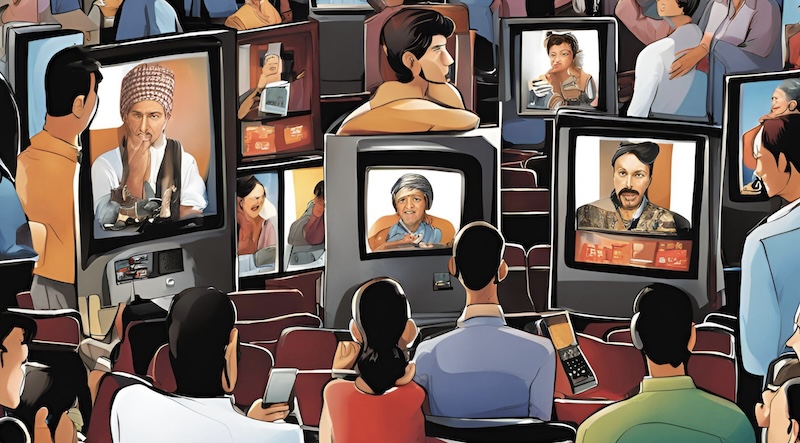
    (Picture generated using Dall-E 3 generative AI tool)

  • Warc revises ad revenue growth estimates upwards for 2024

    Warc revises ad revenue growth estimates upwards for 2024

    MUMBAI: Bullish is the mood at marketing effectiveness specialist Warc. The  firm had forecast in August 2024 that global advertising spend is on course to grow 10.5 per cent this year to a total of $1.07 trillion. Now, it has revised that growth upwards by 0.2 percentage points; its latest projection is that ad spends globally will grow by 10.7 per cent to touch  $1.08 trillion – the strongest growth rate in six years and the largest absolute rise on record if the post-Covid recovery of 2021 (+27.9 per cent year-on-year) is disregarded. 

    Warc’s latest global projections are based on data aggregated from 100 markets worldwide. Online media is on course to drive the growth,  a good year for TV has also made a notable contribution. The good news is that spends on linear TV are rising and are expected to end the year higher by 1.9 per cent, at $153.6 billion, following two years of slippage. Political TV adverts (especially in the US), the Paris Olympics and Euro football in Q3 have buoyed the spends on TV. However, before you start apart applauding please note that  linear TV’s hold today stands at just 14.3 per cent of global advertising spend, much, much lower than the heady days of a 41.3 per cent share in 2013. 

    We have all heard it before: Alphabet, Amazon and Meta are Pacmen increasingly swallowing up ad dollars in large chunks of billions every year. Warc data supports that. It stated that pure play online internet businesses like that of the three big tech firms, will see ad revenue growths of 14.1 per cent reaching $741.4 billion – accounting for a total of 68.8 per cent of all spends. Gadzillions!

    Social media ad spends are expected to leap upwards by 19.3 per cent reaching $252.7 billion -equalling 23.5 per cent of the total ad market. This is mostly because the sales folks at Facebook, Instagram and TikTok have been selling hard leading to better than expected results at the three firms during the first nine months of this year. 

    Overall ad spend growth is also expected to be buoyant next year at 7.6 per cent in 2025, and seven per cent in 2026 taking the global ad market to $1.24 trillion. For all those who have been doomsayers predicting the slamming of brakes on advertising here’s some facts: global ad investments have more than doubled over  the past 10 years and have grown 2.8 times faster than global economic output since 2014.

    Warc director of data, intelligence and forecasting and author of the research James McDonald said: “Our latest forecast anticipates $104bn in incremental advertising spend worldwide this year, the largest rise in history if the post-pandemic recovery year of 2021 were discounted. Whether this boom will sustain remains unclear, however, as 2025 presents a sliding doors moment due to heightened regulatory pressures on Google and TikTok – together a quarter of the ad market outside of China. This, alongside an increasingly challenging geopolitical climate, may spell uncertain times ahead for the businesses that rely on advertising trade.”

    (The image for this report was created using OpenArt AI. No copyright infringement is intended)
     

  • Innocean India wins Narayana Health’s consolidated media mandate

    Innocean India wins Narayana Health’s consolidated media mandate

    MUMBAI: It’s go health on its mind, and now in its pocket.  Innocean  India,  part of the global Innocean Network, has secured the consolidated media mandate for healthcare provider Narayana Health. 

    In an era where both online and offline media platforms dominate communication, ensuring timely and effective delivery of critical healthcare messages is paramount. With its expertise in strategic media planning and execution, Innocean aims to strengthen Narayana Health’s connection with its audience, fostering greater trust and accessibility.

    By aligning Narayana Health’s commitment to care with Innocean’s innovative media strategies, this collaboration looks to  reshape the way Indians engage with healthcare information, ensuring it is both impactful and life changing.

    Narayana Health chief marketing officer Ashish Bajaj said, “We are delighted to partner with Innocean India for our media mandate. Their innovative approach to media planning and execution is exactly what we need to elevate our brand and expand our reach. We are confident that their expertise will play a pivotal role in achieving our objectives and making a significant impact on the healthcare landscape.”

    Innocean won the mandate despite cut-throat manoeuvres  from other agencies.  Innocean India managing director Jaeho Yoo said:  “Innocean India is honoured to partner with Narayana Health, a leader in the healthcare industry. We look forward to leveraging our expertise to help Narayana Health reach new heights in the healthcare industry. We will strive to introduce and collaborate on innovative media solutions through close cooperation with Innocean headquarters in Korea.”

    Added Innocean chief operating officer Santosh Kumar:  “Our partnership with Narayana Health is a pivotal step in Innocean’s 2.0 journey. In today’s evolving healthcare landscape, media plays a more critical role than ever in reaching and engaging patients. By leveraging the power of strategic media planning and execution, we aim to amplify Narayana Health’s commitment to providing quality healthcare with best-in-class facilities to millions across India. This partnership aligns perfectly with our vision of driving meaningful impact through innovative media solutions.”

    Together, Innocean and Narayana Health aim to empower every individual with the critical information and knowledge they need for their well-being. Placing the consumer at the heart of their efforts, this partnership reflects a shared mission to prioritise health and safety. By combining their strengths, the duo hopes to take healthcare communication to a new high — making it more accessible, relatable, impactful, and deeply resonant with the needs of every individual.
     

  • Omnicom Media enlists Varuni Vij as vice-president

    Omnicom Media enlists Varuni Vij as vice-president

    MUMBAI: Omnicom Media group has signed up Varuni Vij as vice-president from this month. Vij has  a large part of her 16 years of working in media agencies, moving onto the client’s side in 2020 when she started  working with Reckitt.

    Vij has had stints with Zenith, Madison World, Carat, Mindshare and Initiative over her career. Her last job was with the Good Glamm Group, where she says she “started as a media lead. But  I significantly enhanced our brand’s visibility and engagement, leveraging my media expertise and passion for beauty and personal care I was promoted to Brand side for notable Beauty & Personal care brands – Organic Harvest, Manish Malhotra Beauty and POPxo makeup.”

    Her going back to the agency side will be a homecoming of sorts. 

  • TAM AdEx: Surge in political advertising during Maharashtra assembly elections

    TAM AdEx: Surge in political advertising during Maharashtra assembly elections

    Mumbai: As the election season approaches, the advertising landscape witnessed a surge in activity, especially across traditional mediums like TV, print, and radio. A recent report by TAM AdEx, a division of TAM Media Research, delved into the advertising patterns observed during the assembly election periods of September 2023 and October 2024. The report highlighted how political parties have strategically leveraged various media channels to maximize their reach and influence voters.

    The analysis focused on the ad insertions and ad volumes across different media platforms, comparing the data from the months leading up to the elections in 2023 and 2024. The study covered a range of advertising categories, primarily focusing on political ads, and provides insights into the evolving strategies adopted by political entities.

    The report noticed an increase in advertising across TV, print, and radio, particularly in the months leading up to the elections. Here’s a breakdown of the media usage trends:

    ●    Television remained the most dominant platform, capturing a large share of political ad insertions. This trend is attributed to TV’s extensive reach and ability to engage a wide demographic, making it a preferred medium for political campaigns.

    ●    Print media continued to play a crucial role, especially in regional advertising. Political parties leverage newspapers to reach specific voter bases, particularly in rural and semi-urban areas where print media retains substantial influence.

    ●    Radio also saw a noticeable increase in ad volumes, highlighting its importance as a medium for quick and cost-effective voter engagement, especially in local languages.

    The Ad Insertions data from the “Assembl Election – Ad Insertion” sheet reveals some interesting trends:

    ●    In September 2023, there was a moderate volume of ad insertions as political parties started ramping up their campaigns. However, by October 2024, there was a marked increase in ad insertions, indicating a more aggressive approach closer to the election dates.

    ●    The report highlighted that political ads constituted a significant portion of the total ad insertions across all three mediums (TV, print, and radio). This reflects the high stakes of assembly elections and the need for parties to maintain visibility across multiple channels.

    The data from the “Assembly Election – Ad Volume” sheet further elaborates on the share of ad volumes:

    ●    There was a noticeable shift in ad volumes between the two years, with October 2024 showing a higher volume compared to September 2023. This could be attributed to the heightened competition among political parties and the increasing significance of assembly elections in shaping state politics.

    ●    The increase in ad volumes suggested a growing emphasis on broadcast and print advertising as key components of election strategies. This aligns with the broader trend of political parties investing heavily in mass media to sway public opinion.

    The report also highlighted the distribution of ad insertions based on the per cent share of different media:

    ●    TV dominated the share of political ad insertions, followed by print and then radio. This aligns with the general perception that visual media has a stronger impact on viewers, especially during the election season.

    ●    The increased usage of radio in 2024 indicates a renewed interest in using audio channels to reach voters in rural and semi-urban areas. Radio’s localized nature allows political parties to tailor their messages to specific regions, making it a powerful tool for regional outreach.

    The comparative data between September 2023 and October 2024 reveals some strategic shifts in political advertising:

    ●    There was a clear escalation in ad spending as parties approached the 2024 assembly elections, indicating a more robust and aggressive campaign strategy. This aligns with the broader trend of political campaigns becoming more media-centric, leveraging high-frequency ad insertions to dominate the airwaves.

    ●    The report also suggested that political parties are increasingly adopting a multi-channel approach, utilising a mix of TV, print, and radio to ensure widespread voter engagement.

    TAM AdEx-Assembly Election Report – Sep’23 and Oct’24

  • Next Mediaworks net loss deepens to Rs 766 lakhs

    Next Mediaworks net loss deepens to Rs 766 lakhs

    Mumbai: In a turbulent quarter, Next Mediaworks Limited grappled with rising expenses and declining financial health, as revealed in its Q2 FY2025 financial results. While the media sector navigates shifting consumer behavior and rising operational costs, Next Mediaworks reported a significant consolidated net loss of Rs 766 lakhs, a 33.7 per cent deeper loss compared to Rs 572 lakhs in the same period last year. The company’s net worth remains eroded, raising concerns about its operational stability.

    Revenue from operations in Q2 FY2025 rose by 4.4 per cent to Rs 845 lakhs from Rs 809 lakhs a year earlier. This increase, however, was overshadowed by surging expenses:

    – Employee Costs: Down 18.6 per cent YoY, but up QoQ, indicating potential layoffs in Q1.

    – Radio License Fees: Steady at Rs 349 lakhs, reflecting the fixed cost structure of its business.

    – Finance Costs: Ballooned to Rs 585 lakhs, a 12.7 per cent YoY increase, highlighting mounting financial obligations.

    – Depreciation and Other Expenses: Combined, they surged 22 per cent, adding strain to profitability.

    Consequently, the EBITDA margin turned negative, showcasing the pressure from these rising costs. A critical blow came from exceptional items amounting to Rs 436 lakhs, further exacerbating losses. With losses widening, the company’s Earnings Per Share (EPS) slumped to Rs (0.68) from Rs (0.50) last year, reflecting investor concerns over sustainable returns.

    Cash and cash equivalents dwindled to Rs 67 lakhs, down sharply from Rs 762 lakhs at the beginning of the period. Despite receiving financial backing from its holding company, the lack of external borrowings raises doubts about its long-term solvency.

    To weather these challenges, Next Mediaworks plans to focus on cost optimisation while leveraging its core radio broadcast segment, which contributed 89 per cent to revenues this quarter. Strategic pivots, such as exploring digital audio platforms, might mitigate traditional revenue declines.

    The radio industry in India faces stiff competition from streaming platforms, coupled with regulatory overheads like license fees. For Next Mediaworks, the road to recovery will demand innovation and robust financial restructuring.

  • WPP scales up investment in India with new Chennai campus

    WPP scales up investment in India with new Chennai campus

    Chennai – WPP announceD a further investment in India, its fifth largest market, as it opens a new state-of-the-art campus in Chennai.

    With over 11,000 people, India is a twin growth engine for WPP, being home both to some of the company’s best performing agency teams and many of its global support functions. WPP’s Enterprise Technology team in India are the first to move into the new Chennai campus, with further teams joining at a later date.

    The new campus is WPP’s third in India after Mumbai and Gurgaon and forms part of the company’s global strategy to provide inspiring, collaborative and flexible spaces for its people. By bringing together the best talent, technological capabilities and facilities under one roof, WPP is able to effectively support its teams in their career development and their delivery of outstanding work for clients. WPP plans to continue to scale its presence in India, one of its fastest growing markets, by adding campuses in Bangalore and Coimbatore over the next few years.

    The Chennai campus is located at RMZ One Paramount and has been designed to enhance the employee experience, featuring a dedicated ‘marketplace’ of food and beverage options, EV charging, a day-care centre, several permanent art installations by prominent artists and a wellness terrace that includes a futsal court, a running track and a yoga deck. Over 62,000 square feet in size, the campus has been designed to initially accommodate over 330 people in phase one, with an expansion to 650 people by mid-2025.

    In line with WPP’s net zero commitments, the circular-designed campus incorporates green building materials. RMZ One Paramount has also been LEED Platinum certified due to its sustainability credentials, including grey water recycling and roof collection, on-site electricity generation and regenerative architecture.

    WPP’s country manager for India, CVL Srinivas said: “The scalability of our operations and expertise of our team in India makes it the prime location to power WPP’s global support functions, including the WPP Enterprise Technology team. WPP’s commitment to India through our investment in a new Chennai campus, with further campuses in Bangalore and Coimbatore on the near horizon, ensures the market will remain a significant growth driver for WPP.”

    WPP CEO Mark Read said: “India continues to be one of our fastest-growing markets thanks to its technological innovation, creative output and specialist skillsets. WPP is committed to investing in India through our new campuses, creating spaces that foster collaboration, inspire creativity and enable career development. In doing so, we are opening up new opportunities for our people in India and supporting our clients’ growth ambitions – both domestically, in the world’s most populous nation, and abroad.”