Category: Digital Agencies

  • Value 360 communications to manage the PR mandate for Sony LIV

    Value 360 communications to manage the PR mandate for Sony LIV

    MUMBAI: Sony LIV, the online entertainment destination, owned and operated by Multi Screen Media (MSM), has appointed Value 360 Communications as its official PR agency in India. Sony LIV is the latest addition to the list of industry leaders for whom the leading PR firm offers communications strategy and messaging services.

    Sony Pictures Television (SPT) backs Multi Screen Media Private Limited, which is one of India’s leading television network. It comprises of Sony Entertainment Television (SET), one of India’s leading Hindi general entertainment television channels; MAX, India’s premium Hindi movies and special events channel; SAB, a family comedy entertainment channel; PIX, the English movie channel; MIX a refreshing Hindi music channel, SIX, India’s Premier Sports Entertainment Channel and Sony LIV, the digital channel. Multi-Screen Media’s channels are available across the Globe and influence over 400 million viewers in the Indian sub-continent, and the South Asian Diaspora worldwide.

    Value 360 Communications founder director Kunal Kishore commented, “We are extremely pleased to be the partner of choice for a marquee brand like Sony LIV, an ahead-of-the-curve player in the digital entertainment space. Our key objective would be to establish thought leadership, carve a distinctive niche for the brand in the Video-On-Demand market in India and create top of mind recall amongst their target set of consumers. At Value 360, we have a team of expert consultants working in diverse areas of public relations, from traditional media to new media. We hope to successfully align this expertise into the work that we do for Sony LIV”

    Commenting on the new development, Sony Entertainment Network executive VP – New Media, Business Development and Digital/Syndication Nitesh Kripalani said, “Digital entertainment industry is on a high-growth trajectory and we are focused to establish Sony LIV as the most innovative Video On Demand Service provider that offers world class viewing experience to its users all across the world. Our motive is to fortify our position in the Indian market with a well entrenched consumer connect strategy. We chose Value 360 Communications as our preferred partner owing to the agency’s extensive experience and expertise in managing digital businesses.”

  • Gozoop acquires Red Digital, doubles India revenue

    Gozoop acquires Red Digital, doubles India revenue

    MUMBAI: Indian bred multinational digital agency Gozoop, which recently expanded its global presence by setting up operations in Singapore, has announced the acquisition of Red Digital, one of India’s leading social media agencies. With this business acquisition, clients and employees of Red Digital will be consolidated under the Gozoop brand, thus revitalising the latter’s Indian operations.

    The acquisition is in line with Gozoop’s strategy of increasing the revenue contribution from its Indian operations. Over the past few years, Red Digital has worked for several marquee brands such as Mumbai Indians, Dell, PepsiCo, BMW, Parker Pens, Adidas, PVR, Godrej, Berger Paints, Reliance Foundation, Educomp, Citibank, ICC and Discovery Channel.

    The acquisition of Red Digital will play a pivotal role in Gozoop’s global expansion in terms of operations and client portfolio. With Red Digital’s rich client base and strong presence in five key cities in India, and Gozoop’s international exposure and clientele, the combination will enhance Gozoop’s global presence and cost efficiencies.

    Currently, 65 per cent of Gozoop’s revenue is attributed to its international operations in UAE & Singapore. Post the acquisition and with a total of 65+ retainer clients, Gozoop aims to double its Indian revenue in the next financial year. Gozoop’s domestic operations will now contribute close to 50 per cent of revenues, an increase of 50 per cent from earlier. The acquisition will also increase the employee strength of the company to about 100 members, making Gozoop one of India’s largest digital agencies in terms of employee strength as well.

    Commenting on acquiring Red Digital MD India Ahmed Naqvi and co-founder of Gozoop said, “Gozoop has always aspired to be a market leading digital agency and this deal will exponentially accelerate our ability to realise that ambition by giving us access to newer geographies across India. Red Digital’s world-class brands & top talent, together with Gozoop’s end-end digital service offerings & social products like Zozolo, will help move our collective clients and the industry forward. We expect further consolidation in our industry and look forward to acquiring digital agencies to fuel our growth in India as well as to enter international markets like USA, Australia & Qatar.”

  • LINE, a free calling & messenger app launches brand and marketing campaign

    LINE, a free calling & messenger app launches brand and marketing campaign

    NEW DELHI: LINE Corporation has launched a brand marketing campaign through a series of TV commercials targeted at the Indian youth to promote its new mobile messenger service in India capable of various types of communication with free call, voice chat and sticker chat.


    LINE, headquartered in Shibuya-ward Tokyo and headed by Akira Morikawa as CEO, says its popular global messenger application is available on both smartphones and PCs across multiple carriers and operating systems including iOS, Android, Nokia Asha, Windows phone, BlackBerry, Windows and Mac. LINE messenger app comes packed with new features and functionality for a truly connected experience.


    LINE has launched its first TV campaign in India on 30 June with two very interesting advertisements highlighting the ‘group voice chat’ and ‘sticker’ features. The primary thought behind the ads was to target the Indian youth, by associating the key app features to their day-to-day activities.


    Born and headquartered in Japan on 23 June 2011, LINE has already achieved over 180 million registered users across 230 countries. LINE has already become popular messenger app in Asia with Japan having more than 45 million users, Taiwan and Thailand holding more than 15 million users respectively and 10 million users in Indonesia. LINE’s popularity is going beyond Asia with Spain now claiming more than 10 million users and South American countries such as Mexico and Argentine also witnessing significant registrations.


    Going forward, with its fast paced growth in overseas markets and expanding user base, LINE will further add new features and improve the usability of its service, with the aim to become the most preferred communication platform for consumers globally. LINE will also launch fun stickers that will suit the Indian sensibilities in the near future.


    One of the main reasons why LINE is growing so rapidly compared to other major messenger apps is its stickers function. It is extremely well-received by users as they can send large-sized character pictures with the tap of a finger, thereby providing a simple, casual and exciting way to express their emotions. The sticker characters, include LINE’s original characters and a variety of famous characters such as Disney, Hello Kitty and Ironman, are especially loved among the Asian youth, sparking LINE’s growth in many regions.


    Elaborating on the India launch LINE Corporation CEO Akira Morikawa said, “LINE has grown at a tremendous speed to reach more than 180 million in only 23 months after its launch. Today, it delivers five billion calls and messages across the world on its network per day. In fact, LINE is amongst a few services globally which has received an enthusiastic response by young generation in many countries in such a short period”.


    “After witnessing solid growth in Asia, Europe and US, making inroad into the Indian market was a part of our overall strategy. With its huge youth population, increasing mobile and internet penetration, lowering bandwidth costs, India makes a hotbed for LINE messenger application which will change the way people communicate in the country,” he added.

  • Lenovo launches TVC for smartphones

    Lenovo launches TVC for smartphones

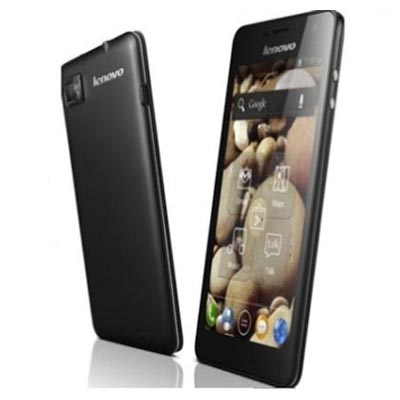
    MUMBAI: – Lenovo India has launched a new TV campaign to showcase a new range of smartphones for the Indian market.

    The TV campaign is conceptualised by Ogilvy India and directed by Shashanka Chaturvedi.

    The commercial focuses on ‘Hands’, of different people from various walks of life: a painter using colors while painting, a boxer while shadow boxing, a gang of bikers out on their Harleys, a mob of protesters, a musician, a crew of skydivers and a group of youngsters partying. These are the same ‘Hands that hold a Lenovo’ and ‘Do More’ with their phones.

    The campaign’s theme is ‘For hands those do’.

    Speaking on the new commercial release, Lenovo India director for consumer business Shailendra Katyal said, “With this launch Lenovo continues its drive to leadership in the PC plus era and takes forward the ‘For Those Who Do’ platform. Our smartphones are synonymous with style, performance and quality, making them an ideal choice for the youth.”

    “As a brand, we are focused on empowering the youth with ‘tools’ that allow them to follow their passion, and succeed and transform their lives,” added Katyal.

    Ogilvy India creative director Rajiv Rao said, “In a market that is cluttered with various smartphone brands, the idea was to highlight Lenovo as a brand that not only has aspirational value, but also a strong connect with the youth. In short, it is an ode to what truly is the most personal and capable tool of ‘Doers’.”


  • China Digital Media Corp completes digital TV migration for 200,000 households

    China Digital Media Corp completes digital TV migration for 200,000 households

    MUMBAI: China Digital Media Corporation, a provider of cable and digital television services and content in China, has announced that it has reached a record level of households that have installed digital set-top-boxes (STB). As of 30 June 2006, approximately 200,000 subscribers had installed over 220,000 digital STBs, with over 15 per cent subscribing for additional digital STBs, according to a media release issued.

    The company receives a portion of the subscription fees from each customer. It installed over 30,000 STBs in May 2006, the highest number of installations in a single month, and these newly installed STBs are equipped with Java platform and Ethernet port, the release adds.

    “This is a major milestone for the company, as it represents a significant source of revenue,” says China Digital Media Corporation chairman and CEO Daniel Ng. “The launch of our new IP based STB has generated incredible interest in Nanhai and surrounding cities. We intend to focus on promoting our value added services and pay TV services, and searching for new projects elsewhere that we believe will enhance revenue growth.”

  • Mobile content, digital lifestyle applications take centre stage in Singapore

    Mobile content, digital lifestyle applications take centre stage in Singapore

    MUMBAI: Convergence has brought together a showcase of overlapping technologies between the media, telecommunications and IT industries at BroadcastAsia, CommunicAsia and EnterpriseIT.

    From infrastructure to deployment, the shows gathered vendors with applications and solutions at different stages of the value chain for convergent technologies such as IPTV, broadcasting to handhelds and mobile entertainment. This year’s events hosted 2,339 exhibiting companies from 67 countries/regions.
     
    A total of 63,814 international attendees, of which 49 per cent were from overseas, saw the latest products and services birthed out of convergence that are expected to change the way consumers and businesses will use and interact with electronic devices. Attendance at this year’s event has increased by five per cent from 2005.

    Singapore Exhibition Services chief executive Stephen Tan said, “The convergence of technology has spawned off a whole new range of exciting digital lifestyle applications many of which were seen on the show floor. Clearly, the focus at this year’s exhibitions is on content for handhelds and the race is on among content providers to come up with new and exciting applications that will enhance mobility for both consumers and businesses. The increase in attendance at BroadcastAsia, CommunicAsia and EnterpriseIT and reflects a surge in industry confidence as convergence becomes reality.”

    Digital lifestyle showcase

    Ericsson showcased a video dating service where one can record a personal video message and send to new acquaintances, and a video karaoke where the user can call to see other singers and rate them as well as sing along to text and music and record it on video.

    On display at NTT Docomo was a technology that allows pet owners to see their pets as well as dispense food into the feeding bowl through their mobile phones. MyHeart by Philips Research Laboratories monitors a person’s health using intelligent biomedical clothes. The data is then sent via a wireless personal area network to a mobile phone or PDA and from there to a health care provider.

    Other mobile lifestyle applications at CommunicAsia included Bidshot – the first ever auction website that allows members to buy, and sell through their mobile phones, XFinance which is a mobile financial management tool which provides an overview of all your income, as well as Xovulation which is a mobile family planning tool.

    At BroadcastAsia, Innoxius Technologies showcased a gadget that turns a PDA into a multi-system mobile digital TV receiver for standards such as DVB-H, DVB-T, T-DMB, DAB and enhanced packet mode DAB standards in various spectrum ranges.

    French exhibitor Visiware launches the first triple-play gaming offer available on TV, mobile and broadband. Games can be played on the TV at home then continued on the mobile or internet. BroadcastAsia also hosted a DVB-H, DMB and Qualcomm’s MediaFLO feature, which demonstrated the capabilities of each standard to bring content onto handhelds.

    Launch pad for international players

    BroadcastAsia, CommunicAsia and EnterpriseIT remain an important platform for international players to reach Asia’s markets. This year, China’s participation at CommunicAsia grew by 45 per cent.

    “Participation in premier industry events, such as CommunicAsia, continue to be a good platform for Huawei to not only reach out to key influencers in the region, but also to deepen our relationship with existing and potential key customers. We have participated in CommunicAsia for more than five years and look forward to next year’s show,” said Huawei Technologies Asia Pacific vice-president Liu Jianfeng.

    The Korean presence on the BroadcastAsia show floor has doubled from last year. Korean Broadcasting Commission technology director Park Jun-Seon said, “Last year’s event was very successful in introducing DMB as one of the latest platforms for convergence services and this year we are here to showcase latest applications available through DMB. BroadcastAsia is a must attend event for breakthrough technologies such as DMB.”

    The exhibitions are seeing strong participation from Europe. The European ICT Pavilion, which was at CommunicAsia for the first time, provided an exciting snapshot of new, leading-edge technologies, products and applications for audio-visual, e-Government, e-health, e-security, and telecommunications.

    A strategic meeting place

    For many exhibitors, BroadcastAsia, CommunicAsia and EnterpriseIT were ideal platforms to showcase their latest offerings, network and meet target buyers.

    “We have found the show to be one of the means to launch and showcase our new wireline and wireless service offerings and solutions to our customers around this region. It is also a very good platform for our executives from across the globe to meet customers in this region and understand their needs so as to better our products for them,” said Ericsson Telecommunications Pte Ltd head of communications (Singapore) Jacinta Ong.

    Echolab was represented at BroadcastAsia two years back through their agents. However, this year the USA-based company considered the event important for them to book a space on their own. Echolab regional sales manager William Gray said, “BroadcastAsia presented us with a wonderful opportunity to reach some countries that are not easy to reach from the USA and also to rope in potential distributors.”

    Commenting on the CommunicAsia Summit, Lucent Technologies Singapore CTO South East Asia region Madhusudan Pandya said, “In-depth discussions on the most exciting and up-to-the-minute technologies, business solutions, and revenue-generating applications made the summit exceptional.”

    “I find CommunicAsia going beyond its name. It has truly become an international event, granting participants the world over to connect and converge more effectively and efficiently in a short duration of three days,” he added.

    Trade visitors armed with a $4.5 billion sourcing budget came looking to purchase the latest products and services and explore potential business alliances.

    “We are here to look at the different types of broadcasting technologies and compare systems to find out which ones will suit us the best. We intend to upgrade our facilities and plan to buy equipment worth millions of dollars,” said Setsiri Trisaksri from the Royal Thai Army Radio and TV, Thailand.

    “I’m a regular visitor here and this is my fourth show in a row. We are looking for small and medium enterprises, which develop niche technology. Here we find these people and we partner with them. We have been very successful in doing that and that’s why we love coming to CommunicAsia. It’s a great meeting place,” said Precision Electronics Ltd India president Nikhil Kanodia.

  • Digital media proliferation, resultant security threats drive DRM systems market

    Digital media proliferation, resultant security threats drive DRM systems market

    MUMBAI: As organisations continue to digitise content in the current business environment, there is substantial need to emphasize the rights on its usage and establish control to avoid any loss of data. This need is expected to have a huge bearing on the enterprise digital rights management (DRM) systems market.

    Frost & Sullivan’s report World Digital Rights Management Market, reveals that the market was worth $369.5 million in 2005 and is likely to cross the billion-dollar mark in 2011.

    As companies continue to lose sensitive data such as financial information, customer profiles and marketing collateral through e-mail or other forms of data transfer, there is a rising need to deploy systems that not only track but also control the use of information. Theft of sensitive data can not only cause a company financial loss, but can also result in brand erosion and eventually, reduce its revenue generation capacity.

    Frost & Sullivan Research Analyst Zippy Aima says, “The need to minimize liability by ensuring that only authorized users have access to appropriate documents will have a positive impact on the demand for DRM solutions. DRM solutions enable content owners to assign specific rights such as view, copy, edit and print to files that need to be protected and these rights remain active and travel with the protected file unless changed by the content owner.”

    Despite these obvious advantages, DRM vendors will find it challenging to convince companies that DRM will not severely curtail access and that organisations can meet their revenue generation goals using this technology.

    Moreover, enterprises have yet to accept DRM systems as solutions that provide security throughout the life cycle of the digital content; be it in the form of a document or a music file. DRM vendors that operate in either the enterprise or media space or both need to create more awareness about the existence of this technology and market their benefits more proactively.

    DRM systems have garnered greater attention in the media industry than in the enterprise sector. Some end users consider DRM to be a hindrance to the entertainment sector. However, the success of the iPod and iTunes is an indicator of the change in consumer buying behavior. Users are gradually regarding DRM more as ‘enabler’ than a ‘disabler’ for accessing digital content.

    Aima adds, “Apart from the shift in perception, the need to comply with regulations such the Health Insurance Portability and Accountability Act (HIPAA), Gramm Leach Bliley, and Sarbanes Oxley is also driving the market ahead.

    “Vertical markets such as financial services, manufacturing, healthcare, and energy are focusing on regulatory compliance, thus ensuring the steady uptake of DRM solutions.”

  • Digital cinema to go low-cost route in India

    Digital cinema to go low-cost route in India

    MUMBAI: Digital cinema is about to take off in India with major players like Anil Ambani-controlled Adlabs Films and Subhash Chandra’s E-City chalking out rollout plans, speakers at a seminar in Mumbai said.

    There are around 400 theatres who have installed digital systems and many more are in the pipeline. But the model being followed so far is low-cost digital cinema or “e-cinema” in contrast to the 1200 installations of “d-cinema” (top quality) made across the world.

    “E-cinema is going to be the larger play in India because of its low-cost model. There is no proper initiative of d-cinema with just two installations so far,” Texas Instruments India business development manager of DLP Products S Ganesh said while speaking at the sixth exhibition of Cinema India 2006.

    Though digital cinema is yet to catch on, this year will see growth from the US which had 600 installations till 31 March 2006. “D-cinema installations are expected to touch 2500 in FY07 with US seeing close to 1800 screens,” said Ganesh.

    Mumbai-based UFO Moviez, a service provider, services 300 theatres in B and C centres. Though it also uses hard disk mode of distribution, the main format to download movies is through satellite delivery. “Digital cinema was a dormant market that was not addressed. Digital delivery of movies has made it possible for B and C centre theatres to have first day releases of big movies. This has meant more audiences and revenues for them,” said Valuable Media Pvt Ltd chief technical officer Sanjay Chavan.

    There are three modes of digital delivery of movies. At the low end is the hard drive model which is loaded into the server in the theatre. Big telecom players like Reliance Infocomm can use their fibre optic backbone to deliver content. The most cost-effective model is the satellite distribution system but it would require more bandwidth.

    “Interoperability and playability across the service providers need to be tackled. We provide solutions which can interchange packages with Dolby and Kodak among others,” said real Image Media Technologies director Senthil Kumar.

    Real Image, which recently received funding from Intel Capital, serves 70 cinema theatres in Tamil Nadu. The Chennai-based company has also sold servers to theatres in the US. “Digital cinema enables democracy in filmmaking and can beat back video pirates. Only a complete end-to-end digital solutions can completely prevent piracy,” says Senthil.

    There is a big task at hand if digital cinema has to be a major force as India has converted only 400 out of a total of 8,000 theatres. While there are 110,000 theatres across the world, the US has 35,000 screens.

  • Reliance Info intl business president Garg to head Flag Telecom

    Reliance Info intl business president Garg to head Flag Telecom

    MUMBAI: Reliance Infocomm Ltd international business president Punit Garg has moved to Flag Telecom as its new head.

    Flag Telecom, which owns and manages an extensive optical fibre network connecting key business markets in Asia, Europe, the Middle East and the US, was acquired by the Reliance Group and became a Reliance Infocomm company on 12 January 2004. Flag offers a focused range of global products, including global bandwidth, IP, internet, ethernet and co-location services.

    Garg will be replacing Patrick Gallaghar. Punit will also continue to be a member of the parent’s senior management team, while Patrick will move on to become the Flag Telecom non-executive vice chairman.

    Garg’s appointment is expected to hasten the process of assimilation for the global carrier with its parent company under the new management and put it on a faster growth trajectory.

    “Punit’s long stint at Reliance Infocomm and his understanding of its objectives and approach will be extremely beneficial for Flag Telecom, Reliance Infocomm and, our customers. The change will help us in charting out a new growth path for the global carrier,” said Flag Telecom chairman Anil Ambani.

    An engineer by training, Garg joined Reliance Infocomm in January 2001 and went on to hold a number of key leadership positions in the company. Planning and launch of fixed call fixed wireless phones, public calls office and broadband are some of the initiatives he spearheaded in Reliance Infocomm.

    Prior to joining Reliance Infocomm, Garg was Lockheed Martin Global Telecom managing director, responsible for joint ventures and business management for South Asia. He has also held senior executive positions in leading global organisations such as Comsat and Equant.

  • Philips debuts digital satellite TV in India

    Philips debuts digital satellite TV in India

    MUMBAI: Philips Electronics India Limited has announced the test launch of digital satellite TV in India. The product, which the company claims as being the first of its kind in the country, will target the “cable dry” semi-urban and rural areas.

    Digital satellite TV has a Set-top box (STB) integrated inside a 15 inch CRT monitor display. This announcement was made by Royal Philips Electronics chief technology officer Rick Harwig in Bangalore today.

    The digital satellite signal from the STB to CRT monitor is in high quality VGA format, Philips said. The product also has external multi-media speakers, with high sound output resulting in a convergence product, TV, PC and radio.

    Interestingly, Philips Innovation Campus here developed the first prototypes of the product which has been successfully test marketed in cable dry areas of West Bengal and Tamil Nadu.

    The Philips Digital Satellite Vardaan TV, when plugged into the CPU of a computer, functions as a PC Monitor. It also comes with a high quality dish antenna and LNB for excellent reception of satellite signals anywhere in the country, the company said.

    The 15 inch digital satellite TV displays 640×480 pixel resolution which is more than twice the resolution seen in normal analog TVs for the same Direct-to Home (DTH) content.

    The company hinted at a “very affordable” introductory price tag for its digital satellite TV. The product will be available at all consumer electronics retail outlets across the country and through the corporate marketing channel of the Consumer Electronics Division of Philips.