Category: Digital Agencies

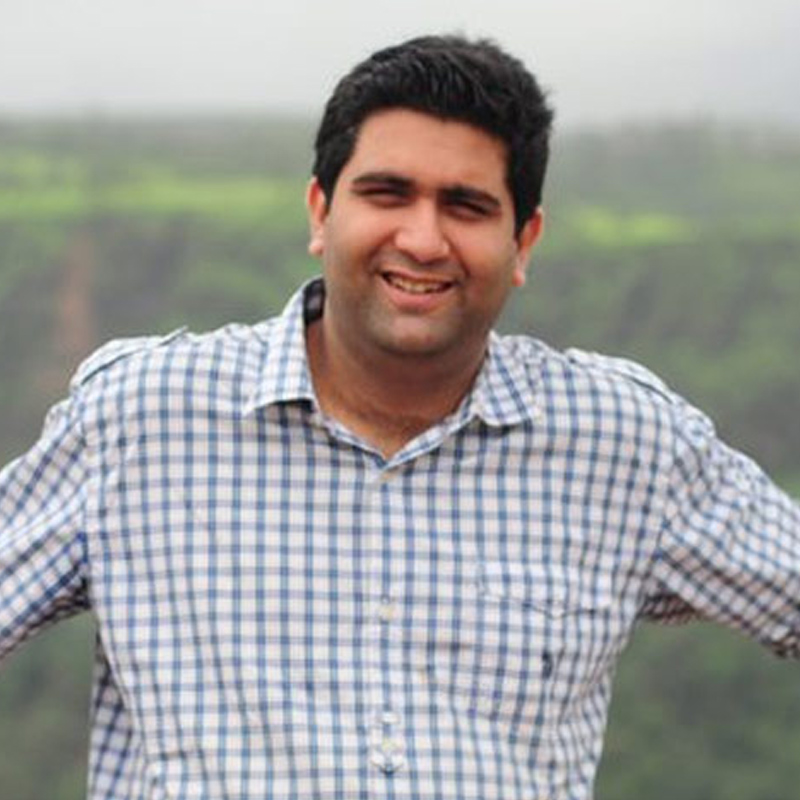
  • Tech, consumer behaviour, marketing create successful campaigns: Logicserve’s Prasad Shejale

    Tech, consumer behaviour, marketing create successful campaigns: Logicserve’s Prasad Shejale

    MUMBAI: Winning 50 awards in 2018 has not dented Logicserve Digital’s urge to keep progressing. The Indian media agency arm of Logicserve Group feels it still has a long way to go.

    In an exclusive conversation with Indiantelevision.com, Logicserve Digital co-founder and CEO Prasad Shejale outlined the major marketing trends that the agency will be focussing on in 2019 for an even better growth trajectory. Logicserve Digital is looking beyond the realms of existing marketing trends that focus heavily on technology, including neural network and programmatic AI, and is also focussing heavily on customer satisfaction driven by creativity.

    Shejale sees that people are not buying voices now, but experiences. Any technology or campaign should look at giving consumers a better experience. “The consumer is changing and so are technology, marketing and advertising. The technology has got incorporated very much into day-to-day life. So, the trends must go beyond these existing paradigms. I think it is a combination of technology, consumer behaviour and marketing which will give a greater experience to the customer and will help in creating successful campaigns. Technology is evolving, so many changes are happening every day, which is great! But to create a seamless experience we need to strike a balance between man and machine,” notes Shejale.

    Speaking about the first of the three major trends that Logicserve Digital is eyeing in 2019, Shejale mentions that next year is going to be for those who understand the consumers and have consumer experience at the core of their strategies, irrespective of the technology they use.

    Elaborating more on consumer trends, Shejale mentions the mantra of ‘video, vernacular, and voice’. He says that video is getting maximum attention and vernacular content is driving a lot of population to these videos. One needs to tap this trend smartly and in a responsible manner. “Agencies should start realising that even while the ads are free, they eat my viewer’s time. That’s why advertisements should be responsible. A line needs to be drawn as to how much is too much and how are ads affecting the life and time of a consumer who is not interested in their content,” he says.

    Shejale notes that personalisation of the ad content is a must in today’s times. “There is a huge divide between India and Bharat. A good amount of people from the latter group have found their way online and probably have the same aspirations as those of a metro person. The focus here shifts on how we interact with those people,” he mentions.

    He adds that due to the new alert customer, there’s a huge responsibility on brands to bring in the right experience — it has to be subtle and personalised. It also has to solve the problem of the customer. “It can’t be spray and pray. If you do spray and pray, the amount of money you will spend will go against your plan,” he says.

    Giving the example of Kia Motors, he says they personalised social media campaigns by introducing real-time marketing. He quips that one needs to keep going back to technologies that are already in place to work on such meaningful campaigns that not only hold consumer’s attention but also drive satisfaction by having an impact.

    There is a huge boom in the technology sector and a continuous evolvement of the space is also happening.  While it is mandatory to incorporate these new technologies in the marketing campaigns, it is much more important to back these up with creative storytelling. Shejale believes that creative people in the industry will have to be constantly on their toes and grill their brains to think of creative concepts to drive successful marketing campaigns.

    “Today’s consumer has a very short attention span. The format of ad consumption is changing—shorter yet impactful ads work. The storytelling has completely changed, wherein it starts with a big impact then there is a build, and then probably the impact or reinforcing of what to be told,” he says.

    However, he isn’t averse to the idea of long-form traditional storytelling. “Yes, formats are changing. The ads are getting shorter. But having said so, we also have n number of examples where, if the story is told well, people are willing to go for longer formats too.”

    Shejale says that it all boils down to only one point – the understanding of consumer journey lifecycle. Agencies should have an idea of how are they getting into the life and awareness phase of a viewer and know where they can’t demand too long a time from him/her. And this is where technology comes into play.  Agencies must use technical tools to form a good database about the consumer in terms of age, gender, profession, among others and then personalise their ads accordingly. 
  • Social Kinnect Appoints Bharat Suri as the Vice President of Operations

    Social Kinnect Appoints Bharat Suri as the Vice President of Operations

    MUMBAI: Social Kinnect, one of the largest independent Digital Marketing agencies in India, recently announced the appointment of Bharat Suri as Vice President of Operations.

    Bharat is a key hire at this stage of Social Kinnect’s expansion. As the head of operations, he will drive optimised, technology-fueled efficiency and further growth for Social Kinnect

    Having formerly worked with giants such as LinkedIn in India and BuzzLogic, Adify Corporation and Red McCombs Media in San Francisco, Bharat has over 15 years of experience across online media, e-commerce, social media, mobile, programmatic and technology. His consultative approach to people management and problem solving make him the right fit for this role. Bharat will be working closely with Chandni Shah, co-founder and COO of Social Kinnect.

    Commenting on Bharat’s appointment, Chandni Shah said, “Social Kinnect is currently experiencing an extreme growth phase. We are confident that Bharat’s immense experience and expertise in people management, process creation and technology adoption will help us operate at the level of any world-class organisation. We are excited to have him on board and wish him a long and successful stint at Social Kinnect. ”

    Discussing his new role, Bharat Suri said, “I am really excited to be one of the young and dynamic Kinnectors! I have been following the excellent work done by the agency across various domains and industry verticals. One meeting with Rohan and Chandni, and I felt aligned with their vision for the company. The growth trajectory that the company has charted for itself is exceptional and I am delighted help take this story to new heights.”

  • Isobar launches Sri Lanka Operations

    Isobar launches Sri Lanka Operations

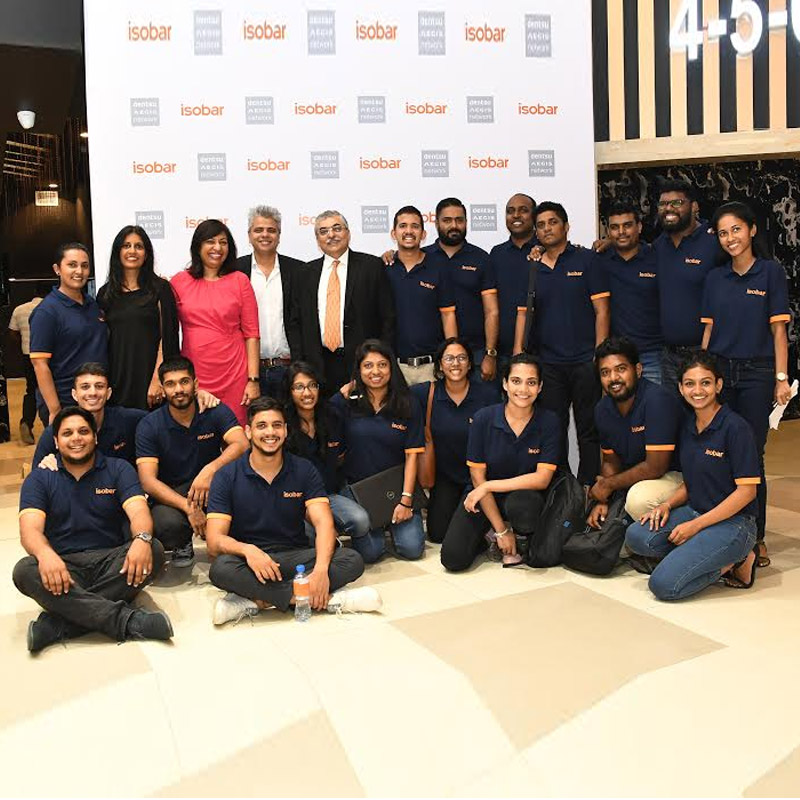
    MUMBAI: Isobar, the digital agency from Dentsu Aegis Network, has expanded its operations to Sri Lanka.

    Last year, Dentsu Grant Group, Sri Lanka's largest integrated communications agency with a 60-year-old legacy, disrupted the nation’s advertising industry with the introduction of the global marketing conglomerate Dentsu Aegis Network into the country.  Now, it will do so once again, reinventing Sri Lanka’s rapidly growing digital economy, with the launch of its full-service digital agency – Isobar.  

    Commenting on the prospects of Isobar in Sri Lanka, Shamsuddin Jasani, Group Managing Director – Isobar South Asia said, “I am very excited to launch Isobar in this amazing country. Sri Lanka is a rising mobile economy with smartphone penetration growing by over 20% and mobile penetration growing over 120% year-on-year. With the launch of Isobar Sri Lanka we are looking at creating a leading agency for the digital age that follows a true full service model. Under the guidance of Neela and her team, I am sure we will be a force to reckon with in this market in the years to come.”

    Speaking on the launch of Isobar Sri Lanka, Neela Marikkar, Chairperson – Dentsu Grant Group and Dentsu Aegis Network Sri Lanka states, “We are thrilled to be introducing such an iconic brand into the Sri Lankan advertising industry. We are fortunate to be working so closely with our global and regional offices; we are confident that we will be able to use their global knowledge and skills to help develop business opportunities for our clients as well as help the digital economy of the country and accelerate through Isobar’s experience led transformation and brand commerce expertise.”

    Ready to revolutionize the market, Isobar Sri Lanka will offer end to end full service digital media creative and technology services and help clients navigate the world of tangible and intangible businesses through mobile brand commerce, product innovations, artificial intelligence (AI), virtual reality (VR), the internet of things (IOT) and wearables.

  • Want to leave a legacy as ‘storytellers’: Gaurav Lulla

    Want to leave a legacy as ‘storytellers’: Gaurav Lulla

    MUMBAI: Customers are pulling the horse by the reins today. Brands are no longer deciding how, when and where they wanted to “interact” with consumers. Customers can easily reject you with the “skip” button if the storytelling isn’t interesting. But how can you possibly keep churning out interesting stuff constantly? This is where a content studio comes into play. They can give a spin to the brand’s traditional communication and make it rather interesting, engaging and efficient in driving more ROI (return on investment).

    Consumers today want appealing and exciting stories. A brand that engages the audience with story driven content ultimately wins brand loyalty. Today, content studios have become the new shiny object that brands are chasing to create compelling stories and content.

    Content studios often solve the problem that internal marketing teams face on how to produce volumes of content at the speed and scale they need it.

    Former Viacom18 executives Gaurav Lulla along Pavneet Gakhal have launched their own content studio after moving away from the company. Loose Cannons Content Studio is a boutique content studio that specialises in content creation for media hubs and brands.

    The studio has a catalogue of content IPs across limited fiction series and non-fiction show formats which are currently being pitched to all and sundry.

    The studio operates in two diverse universes, wherein it partners with various media houses across platforms to enrich their content offering while aiming to solve the imminent communication challenge facing brands to engage audiences beyond awareness scores.

    Indiantelevision.com caught up with the co-founder CEO Gaurav Lulla to discuss his new innings as an entrepreneur, the content studio, challenges and more.

    You had a successful inning at Viacom18. Why did you decide on leaving that and launching a content studio?

    While we were at Viacom18, Pavneet and I realised that we were doing a certain kind of content. I come from a digital marketing and content background and she comes from a music and talent management background. We both wanted to explore our boundaries. In the last seven years that we’ve spent in the media industry, we have worked with around 350 brands and over 900 content creators in different capacities (writers, directors, actors). Pavneet and I understood perfectly what media hubs and brands will need from a content standpoint and what does the artist ecosystem need to bring it together and then deliver that to the media hubs.

    You and Pavneet have been colleagues at Viacom18. How did you guys start the conversation about launching your own venture?

    I joined Viacom18 in 2011. Pavneet and I have been very close friends for my entire duration at Viacom18. The point where we both decided that we needed to do this was when we were discussing what is it that we want to be known for and what legacy will we leave the world with. We wanted to be known as storytellers and people who said endearing stories. Most people think that storytellers want to eventually make a movie but we don’t restrict ourselves. We believe some of the strongest stories are also said in 2 mins, 30 seconds and now thanks to Insta-Stories even 10s.

    What does having a content studio in India even mean?

    The word content studio is fairly abused in India because people don’t understand what it actually does. If we compare it to an international ecosystem, a content studio becomes an intermediary between an array of creators and a media entity/brand that wants to commission content. We want to serve that purpose as we go along.

    So what is exactly the difference between an in-house content studio and a content studio? How different is a content studio?

    The existence of an in-house content studio starts from the brand’s communication and it is an inside-out approach to content whereas we have an outside-in approach. When you’re so close to a brand, you live and breathe the brand you and you often don’t see it in its entirety and end up missing out on how the world sees it. If you take the brand story and marry it with a human insight you might be able to reach out to a larger audience and create a greater consideration for your brand.

    What potential do you see in this space? Why do brands need a content studio?

    Every brand today has the desire to do content marketing and their media and digital agencies are working with them. But, what they are missing out today is a story development that brings the brand out alive and that’s where we come into the picture.

    What we have been noticing lately is that a lot of agencies now have their own in-content studio. While you say that you don’t want to compete with them, how will it work out in that case?

    The agencies in content studio engine internally whereas we will operate from the outside. The agency’s in-house content studio comes from the brand’s perspective because they are guarding the brand’s mandate…

    Won’t you be competing with agencies then?

    We are happy to work with every agency out there to bring the story out of a brand. We are not here to replace anybody or to make someone feel redundant. The field of communication has changed drastically in the last five years. What needs to change the most is the existence of content storytellers and that’s where a content studio comes into the picture. We constantly keep curating a collection of stories at our end and if they fit a brand, we bring it to life for them. We are also open to create a whole new one for brands.

    So you’re saying that this is the right time to launch a content studio in India?

    There was no better time for us to do it than right now! A lot of people that have been doing it for some time now have at some point pivoted into something else because there wasn’t much opportunity in the field. But I think that we are walking into the golden age of content in India with over 35 OTTS.

    What you’re saying is that you will always be a content studio and will not divert your business as other players have?

    I always say, “Never say never”. As a startup, we are very nimble and realistic about what we want to do. Today, the lines are blurring between content creators, YouTube channels, multi channel network and platforms. No matter what we do, content will always be at the heart of it.

    It’s been close to a month now since you donned the entrepreneurial hat. How has it been so far?

    It has honestly been very encouraging so far. We are already creating some interesting content with TVF (The Viral Fever). We are also talking to Arre, Viacom18, digital agencies, talent management companies, music labels, PR agencies as well as brands for some interesting content initiatives.

    You have been a part of the content ecosystem even before it actually kicked off in India. You have seen it evolve over the years. What is your view on the current content ecosystem?

    I think it will explode in a way we cannot fathom. I have been doing branded content before it was called branded content and before the term content marketing came into existence. In the process of its growth, firstly, we as an ecosystem need to do away with is templatisation of content as it is easy. We have a tendency to templatise success. Typically, a boy’s struggle in engineering college is a successful template for a YouTube video. Secondly, we also need to define roles of every entity that’s a part of the content journey. Thirdly, we need to create an incubator for the storytelling talent. We have done that very well with startups wherein if there is a new startup, an incubator comes in and grows the idea by taking an equity in the business. I think the same thing should apply in talent. It also happens in Bollywood in acting talent where we see them getting on board and being groomed but we don’t see that happening to directors and writers.

    What’s the team size of Loose Cannons Content Studio?

    We are currently a team of five people operating out of our living rooms. We have few young talented people who help in conceptualisation of ideas and pitching process. We also have two people who help us in the production. So far, we have already tied up with eight production houses. We have a bank of 15 completed scripts and seven other that are in the process of getting developed which we are looking at commissioning right now.

    Do you see any competition from other content producers in the market or you see them as an ally?

    I don’t think that we have any competition as much as we have opportunities to collaborate with. We love the fact that we are like a Swiss knife that fits into any iota of missing that our clients may have. A talent agency today may miss a content creator, and we are right there for them. Technically, if they get somebody else to make content for them, then they are competitive but then they are not anymore because they are collaborating with us. Similar is the case for an OTT player and production houses, where they make content and so do we, and we are competitors but the moment they look at us thinking we can make content for them, we are not the competition anymore.

  • WPP acquires majority stake in mark-tech company Emark

    WPP acquires majority stake in mark-tech company Emark

    MUMBAI: Wunderman, the global digital agency by WPP has acquired majority stake in Emark, the marketing technology performance company.
    Emark delivers salesforce marketing cloud, commerce cloud, service cloud, DMP, and advertising technology such as Facebook Advertising and Google Ads, as a single, integrated solution.
    The acquisition further strengthens WPP’s and Wunderman’s growing global salesforce practice in delivering marketing and advertising technology solutions for data-driven and personalised customer interaction.
    Founded in 2000, Emark is recognised as a preeminent provider of salesforce multi-cloud strategy and solutions in Europe, with a strong marketing cloud pedigree. Headquartered in Haarlem, Netherlands with international offices located in Barcelona, London and Poland, the company employs around 120 people and serves a wide range of clients across sectors including Bugaboo, ECCO Shoes, Marks & Spencer, Randstad, Scotch & Soda, and The Macallan.
    Wunderman is the world-leading digital agency whose mission is to inspire people to take action. It brings together 9,200 creatives, data scientists, strategists and technologists in 200 offices in 70 markets.

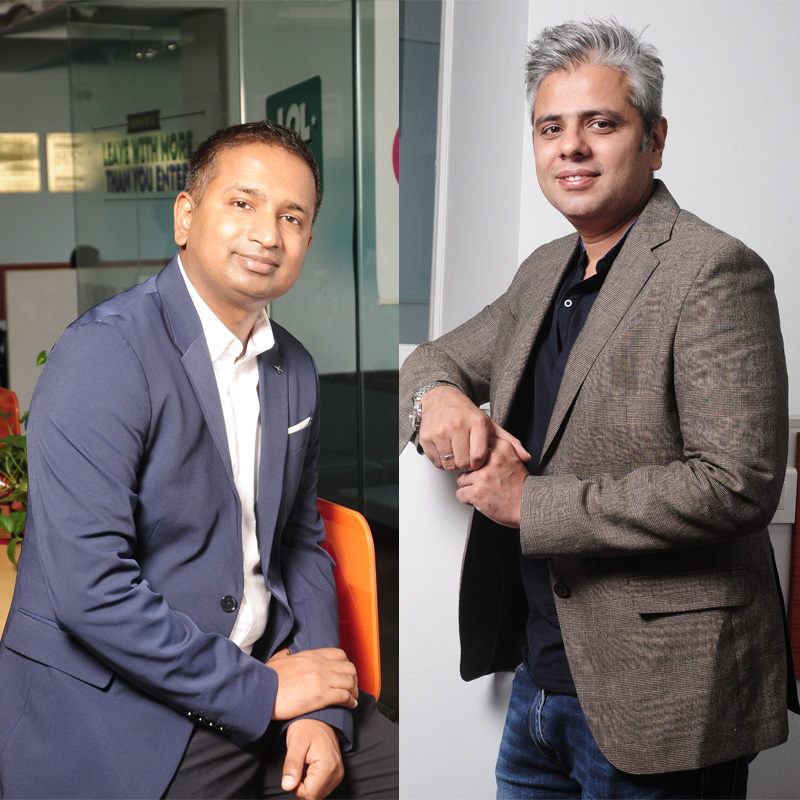
  • TV in future to be delivered through internet pipe, not DTH: Isobar group MD

    TV in future to be delivered through internet pipe, not DTH: Isobar group MD

    MUMBAI: The year 2008 will always be remembered as the year of the global financial crisis. It was the worst financial crisis the world ever faced since the Great Depression of the 1920s. The crisis that originated in the United States gradually extended over a period of time and eventually brought the entire world under its grip. And India wasn’t spared from the catastrophe as well. It was a time when brands didn't have enough money in their pockets to spend on advertising and manufacturing.

    Digital agency Isobar that started operations in 2008 during the meltdown, recently celebrated its 10-year anniversary. While it was a definite challenge convincing brands to come on board to advertise on a new medium, it definitely paid off. The agency has worked for Godrej securities, V-Guard, Wrangler, Adidas, Lego, Durex, Acer, Voot, CEAT, Barbie, ROUSH among others. Isobar has over 6,500 people in 85 locations across 45 markets globally.

    We sat down with the recently elevated Isobar group MD for South Asia Shamsuddin Jasani along with executive vice president Gopa Kumar where they discussed about their journey at Isobar, what has changed in the last 10 years, the advent of newer technologies, challenges for the industry and much more.

    It was a challenging time when you started the agency. How was it?

    Shamsuddin: We started Isobar when there was a global financial meltdown in 2008. Businesses across were shutting down and it was a bad phase for the entire industry. But it was a good time for us to start the company. It was a different time altogether as digital was just coming up. Ashish Bhasin had joined Dentsu just two months before I joined.

    2006-2008 was a time when brands were new to the digital world. How challenging was it to get brands on board?

    Shamsuddin: In 2008, businesses were reducing spends on media due to the global meltdown. People wanted to start experimenting on digital more than before as the idea was that you need to spend much lesser on digital than on print and television. But yes, we worked really hard to get clients on board for a relatively new medium. We had to use our existing list of contacts but it was more about going to clients and explaining to them how digital works. But clients were also receptive to hearing us out as they wanted to experiment with their money. The years 2008 to 2012 was more about educating clients but digital really hit home in 2012. The digital spends between 2008-12 were around 8-10 per cent which has now gone up to 20-30 per cent.

    How has it been working with Ashish Bhasin? He is known as one of those bosses who really gives you the creative freedom to operate the way you want to.

    Shamsuddin: We have learnt so much from him and we have grown so much because he has allowed us to make our own mistakes and take our own risks while giving us a guiding light. I wouldn’t have been able to build Isobar the way it is if we were a part of a different network.

    Gopa: His ethics and the way he conducts himself is inspirational to us. It has been great working with him. He is a guiding light to everyone at Dentsu Aegis Network.

    Are brands okay and accepting to spend a huge chunk on digital marketing or will it still take them some time to accept digital?

    Shamsuddin: The acceptance has happened and clients now know the importance of digital. Every brand is on digital today but it’s more about how brands are exploring the medium to the fullest. For a long time, digital was seen in isolation from other mediums and that is where it failed. I think soon everything will move to digital. Five years down the line, you will have television that will be delivered digital only through an internet pipe and not through DTH.

    So the way we consume digital will change?

    When Jio fibre comes out with its set top box that will be a game changer for television because you will now watch a lot of content on demand. That will create a sea change in the money we are spending. Television metric will be intrinsic to digital because you will be buying everything through digital. The explosion is already happening due to Reliance Jio. In the next few years, video will drive a lot of the consumption stories and advertising stories along with e-commerce. Increasingly, a lot of people are not searching for brands on Google but directly on e-commerce websites.

    When do you see the shift happen when everything becomes digital?

    Shamsuddin: Even when it becomes a digital world, you will still buy television and outdoor. Outdoor will become 30-40 per cent of the total media spends because you will have digital screens. Advertising will be a digital led industry, not necessarily digital buying in as early as 2020. However, that may not necessarily mean that digital spends will be 40-50 per cent of the ad budget.

    They said out of home a dying medium but increasingly we see a lot of brands exploring the medium to the fullest. Also digital OOH is becoming every advertisers’ favourite medium…

    Shamsuddin: Outdoor and digital have the perfect marriage. Experiential advertising in the next few years will change the face of advertising altogether. Nearly 30-40 per cent of all outdoor in India will be through digital outdoor. That is simply because digital outdoor is very local and also digital now allows us to do hyperlocal. Some exciting times ahead for us!

    There is a constant chatter about digital content regulation. If it happens, won’t that only be a bad decision altogether?

    Shamsuddin: The basic question here is, how will you regulate digital content? It basically means that you will not have free content because you can’t regulate digital content. A player like Netflix or Amazon may abide by that but a lot of created and shared content can’t be regulated. You need to have enough filters to stop communal content but a content that users are paying for shouldn’t be regulated. It has to be more about self regulation by content creators because it’s viewed on a personal device.

    Whats your view on technologies like Augmented Reality and Virtual Reality? Will they become inevitable in advertising few years down the line?

    Gopa: India has used VR as a tactic and gimmick but nothing which has translated into scaleable marketing solution. But around the world, people are using VR and actually adding value to it. I think in India, it won’t only be about AR or VR, but mixed reality and that solution will be sustainable. More brands and agencies need to invest in these technologies and only then we can scale it up in terms of quality as people need to experiment.

    Shamsuddin: I think AR will be bigger than VR in reality between the two technologies. That is simply because you don't need bulky headsets to experience AR. Now smartphones come with preloaded AR kit. But I think it will take another two to three years before AR changes the way we interact and use our phones and see things around us. Google glasses came in too early in the game but this would have been the perfect time.

    In India, it’s only Republic TV and Discovery Jeet that are using VR to show news. Is the Indian audience even ready for such technology?

    Shamsuddin: I don't think VR is ready yet in India and I don't think VR is something that you would want to take on live. The virtual content does not lend itself well for live content. It might work well for a cricket match or a Formula1 race but I don't know how important this is for news because news we are already consuming through video or text and that gives us enough information. The immersive concept works well for concerts and live sports.

    One word of advice that you would want to give to upcoming talent?

    Shamsuddin: You need to work on the basics as the basics don't change just because it is a digital agency. Just because you work in a digital agency, it doesn’t mean this is Silicon Valley where you can come in by 2 pm and leave by 6 pm! It is still work and you need to work! You need to work hard, get your basics right and make yourself better every day.

    Gopa: For me, it’s all about hard work, being passionate and having your integrity is the foundation. The industry is dynamic and everything changes at the fly and if you are not ahead of the curve and you are not reinventing yourself, you will never be able to succeed.

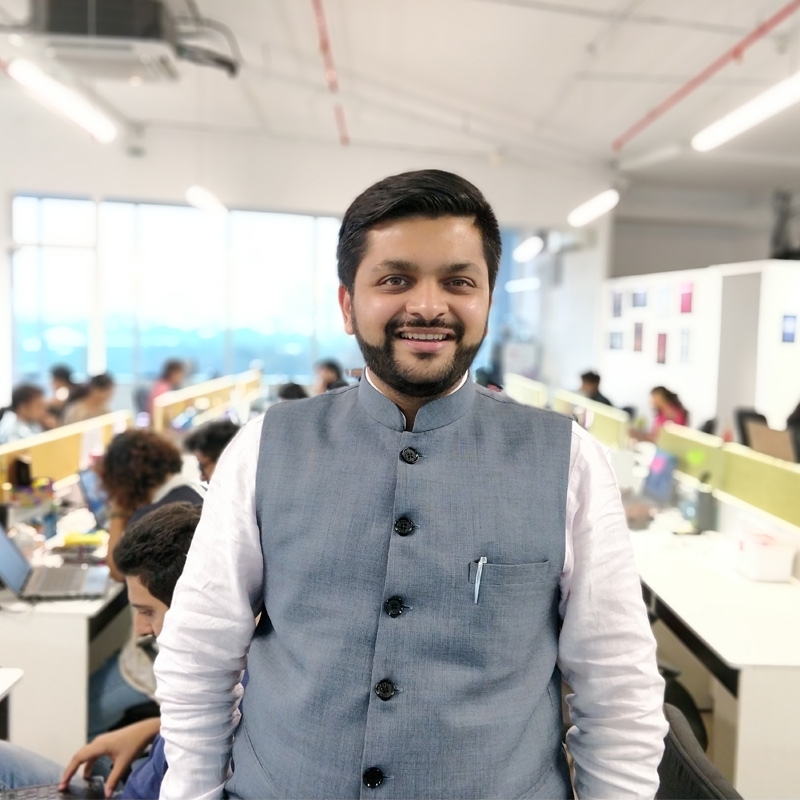
  • Video content will be the game changer in 2019: Shrenik Gandhi, White Rivers Media

    Video content will be the game changer in 2019: Shrenik Gandhi, White Rivers Media

    MUMBAI: A young professional just graduated from an MBA college would be thrilled to join a reputed company like Future Group. But Shrenik Gandhi’s entrepreneur blood wouldn’t allow him to work under someone else.

    Within a year, he quit and started his own digital marketing agency White Rivers Media and propitiously the agency’s first client was Future Group who handed over the signing amount cheque during Gandhi’s exit interview at the company.

    Gandhi began his entrepreneurial journey in 2012 with his MBA batchmate Mitesh Kothari, who was then working for another digital agency WATConsult. What started off as a two-man operation today has a team size of over 75 people in its HQ in Mumbai. With the new office in DLF Cyber City, White Rivers Media is looking to localise all the digital, video and AI-driven e-commerce solutions for its NCR-based clients and more.

    With a strong hand over national and international clients from more than eight countries, it has worked with some of the top-valued brands in the country, executing many of their flagship campaigns and grabbing eyeballs internationally. The agency has worked across a range of industries and verticals, including brands like OnePlus, Viacom18, TATA Cliq, Zivame amongst others.

    Indiantelevision.com caught up with White Rivers Media CEO and co-founder Shrenik Gandhi to discuss the company’s initial struggles, progress and how things are panning out today.

    Excerpts:

    What was your initial capital like when you started off White Rivers Media?

    Our initial capital was just a laptop and our collective brains and I think that is the good and bad thing about digital that there is zero inventory/investment. Today, anyone with a good laptop and internet connection and some brain can start a digital company. 

    How was the opening year for you? Was it hard for you to recover money from clients since you were a new agency?

    Yes, it was difficult to recover money but, luckily, acquiring clients was never a challenge for us because we made sure that the effort and passion we put in was 100 per cent. Our numbers grew only because of word of mouth. We hired a professional business development team only eight months back which only shows that our work spoke about the company for nearly four years. Today, we have 100 per cent growth year-on-year in terms of revenue. 

    Who were your initial clients? And do you think your clients have evolved over the time?

    Our first five clients are still with us. In the first year, we had less than 10 clients but today, we have on board 50+ clients. Most of our business comes from retainer clients and 60 per cent of our clients are retainers. Our clients have also evolved with us and gone are the days when people said that digital is the future. Digital is not the future. The future is now! Most of our clients have accepted that and give us the required freedom to come up with the best possible campaign for them. 

    You recently expanded your reach and opened an office in Delhi. What’s your team size there and was this the right time to expand?

    In Delhi, we currently have a team of four people but we are actively recruiting people to expand the team. Delhi is a big market and it only made sense to scale up and cater to our clients there, by physically being present.

    So is Bangalore the next step for you?

    Possibly!

    You are traditionally a digital marketing agency, but today agencies are looking at expanding their reach and getting more clients to have a diverse portfolio. Will you also be looking at doing traditional medium anytime soon or are you only going to focus on digital marketing?

    To be honest, going forward, I don’t see any offline campaign which will not be supported by digital. It will just not make sense. Yes, a newspaper article is very important but how do we measure it? The campaigns in future will have to be more integrated and digital by itself will not be always enough. As for us, we will do traditional stuff but the core will always be digital. If the offline campaign augments to digital we will definitely do it. 

    Will you be open to getting acquired at any time if a larger network approaches you?

    It is a difficult question to answer, but if it makes return on investment (ROI), we will but only if the ROI makes sense today, after a year and five years down the line. Being a part of something bigger will only make sense when whoever we talk to makes strategic sense and the acquisition helps us in getting a seat next to bigger brands to pitch better with the agency’s larger network. 

    Is it safe to say that India has become digitally evolved with the advent of Jio, free data and cheaper mobile phones?

    People in rural areas today are also using voice search, Google maps and internet. Kids as young as 10-12 years have their own YouTube channel. The younger generation has skipped the laptop and they have gone straight to using mobile phones.  If we look at the data, India consumed roughly 25 crore GB of data per month before Jio was launched. Just after six months of launch, data consumption has grown up to 6X. With over 125 crore GB data consumption in India, we are today the highest data consuming nation in the world. 

    Every brand today wants to be present on digital as that seems to be the latest trend. Do you think digital investment will go up in future?

    It will have to increase because brands will eventually realise that the amount they are putting in on hoardings is not yielding them with enough revenue. Clients might want to cut on the cost of two hoardings to invest on digital. Even if they see the same revenue coming in for the company, it is an ROI for them. You will see a lot of budget being shifted to digital. A lot of campaigns being devised for digital first. Gone are the days when people would say that lets create a digital strategy but the world today has become digital and agencies will have to create strategies which will ultimately be digital. 

    Which category do you think will make the most of digital for advertising?

    I think FMCG and automobile will invest majorly on digital. FMCGs have traditionally been pathbreakers in the use of digital and they will continue to bet big on the medium. Smaller brands, however, will have to scale up and divide their advertising budget accordingly. 

    On a parting note, what do you foresee to be the game changer next year (2019)?

    Without a second thought, it has to be videos. The video consumption in India has gone up rapidly. The consumption of short format six-second, 10-second and15-second videos is increasing. The micro video content consumption has become crazy because people have a lot of free data. Today, four out of 10 posts on your Facebook newsfeed will be videos. One would wonder what is the benefit for the social network in this? Well, it would result in better stickiness on the app and more chances of having videos with free data and better revenue for the social platform.

  • OMD India strengthens its leadership team

    OMD India strengthens its leadership team

    MUMBAI: In a move to strengthen its core leadership team, OMD India has promoted Sulina Menon to the newly created role of chief client officer, while Lalit Agrawal has been elevated to the role of head of OMD India – West.

    The promotions are in line with the executives’ long-standing track record of achievements and will enhance the agency’s leadership capabilities as it continues to take on fresh growth in the Indian market.

    Menon takes on her new role with immediate effect and will work closely with OMD India’s CEO, Priti Murthy, in building the OMD brand nationally. A media veteran with multifaceted experiences, Menon has worked across media agencies, television channels and on the client-side at Samsung. Since joining Omnicom Media Group in 2013 to lead on planning for the network’s Delhi office, Menon has proved her mettle and earned the status of a trusted partner to the agency’s longstanding clients. In this new role, she brings her media agnostic approach, helping clients to focus on what really drives value for their brands instead.

    Speaking on her promotion, Menon says,  “I am really excited about energising our team in India to drive data-enabled, integrated solutions for our clients and look forward to seamlessly on-boarding our new clients. It’s important for us to continue evolving our approach for clients and OMD is well equipped to future-proof their businesses. I am excited to be a part of the journey.”

    In his new role as Head of OMD India – West, Agrawal will drive and consolidate fresh avenues for growth. His presence as a strong business leader is already felt by some of the most iconic brands,  and his consistent delivery of innovative solutions to complex business problems has earned him respect and appreciation from both local and regional clients. During his eight years with OMD, he has been instrumental in delivering several innovations and industry-first initiatives – a feat that he will undoubtedly continue as the agency continues to expand its presence in West India.

    Speaking on his appointment, Agrawal adds, “OMD is now well underway on its new path, with a rejuvenated focus on helping clients make ‘Better Decisions, Faster’. I am thrilled to be part of this momentous occasion as we extend our footprint in West India and I look forward to working with our clients and teams to make a mark for this region.”

    Speaking on the promotions, OMD India CEO Priti Murthy mentions, “I am delighted to partner with Sulina and Lalit in their new roles. As an agency that is committed to generating business results for our clients, both Sulina and Lalit embody this value proposition, having spent considerable time in the industry and at OMD. These promotions are also a testament to the talent of our teams, taking our agency from strength to strength. I look forward to working closely with them both in navigating OMD’s continued journey of growth in India.”


  • The Glitch to leverage GroupM data to reach rural India

    The Glitch to leverage GroupM data to reach rural India

    MUMBAI: Digital is the buzzword everywhere today and the advertising industry is not any different. Companies looking to acquire are also scanning for digital-ready candidates over traditional agencies.

    WPP’s GroupM, the world’s leading global media investment group, recently gobbled up digital creative agency The Glitch in India, showing its appetite for growth in a technology-driven communication market. GroupM South Asia country manager for WPP India and CEO CVL Srinivas believes that the communications ecosystem in India has evolved dramatically in the last few years. “With The Glitch, we found a partner that brings exciting creative and content skills that can leverage our unique assets to create effective solutions for our clients,” he says.

    It was in 2009 that two friends Varun Duggirala and Rohit Raj from Symbiosis decided to quit their jobs at Channel V after it stopped airing music and was pivoting into a general entertainment channel. Recalls Raj, “We went to Channel V because we loved music and wanted to work in the space but decided to quit after our team leaders told us that the channel will be shifting focus to GEC as the youth that was watching music content has now moved into digital ecosystem.”

    Soon after leaving the duo turned entrepreneurs and launched their own digital video production company called The Glitch. Like every other startup, Duggirala and Raj slogged the first two years as they were trying to sell a concept which most clients didn’t have. Duggirala says that due to work of mouth work worked in their favour.

    The company started operations from their apartment’s front room with four employees and an investment capital of Rs 3 lakh. Although they loved creating digital videos for clients, it was only in 2011, that Glitch started its digital agency route with major initial international clients Diesel and Quicksilver in its kitty. Today, the company has over 200 employees and offices set up in Mumbai and Delhi and is looking at setting up a new office at Bengaluru by the end of this year.

    While digital still continues to be an urban phenomenon, low cost data and availability of cheap mobile handsets has helped digital penetration in rural areas. The Glitch CEO Pooja Jauhari emphasises that rural is going to be a huge focus for the team this year. Duggirala adds that with this acquisition, the company is looking at GroupM helping it out on a large scale to tap rural India as GroupM has a large set of data of rural audience which will help them to craft communication better.

    Though the company was in conversation with various agencies over the years, it was approached by GroupM in 2014. Raj mentions, “We started to analyse the pros and cons of each acquisition. We had a two year learning curve to understand and only then we decided to go ahead with the deal.”

    The Glitch Delhi managing partner Kabir Kochhar adds, “In GroupM we saw the market leader that would help inform our intuitions better with data backed insights as well as give us a jumpstart with consumption trends. Post the acquisition, the company wants to concentrate on having quality clients and add new services and business solutions for them.”

    The year started on an extremely positive note for The Glitch and the team has a positive outlook for the year. ”2018 has begun on a very positive note with some key account wins and we look to cement our existing relationships with clients and bring them the benefits we gain from the GroupM alignment,” concludes Kochhar.

    ALSO READ:

    Is India ready for the impact of AI on marketing?

    2017 – The year of long-format ads

    Talent retention is key, says Mindshare’s Prasanth Kumar

    Martin Sorrell on how WPP is combating ad world slowdown

  • Criteo Reseller program Launched to accelerate commerce growth in the asia-pacific region

    Criteo Reseller program Launched to accelerate commerce growth in the asia-pacific region

    Today at Criteo Exec Connect 2018, Criteo S.A. (NASDAQ: CRTO), the leading commerce marketing technology company, announced the launch and general availability of the Criteo Reseller Program. Developed with the needs of the Asia-Pacific (APAC) region in mind, the program allows online marketplaces[1] to resell, Criteo’s best-in-class solution, Criteo Dynamic Retargeting, to merchants or affiliates[2] on their platforms.

    Regional eCommerce sales are expected to exceed US$3 trillion and account for more than 25 percent of total regional retail sales by 2021[3]. Across the APAC region, close to 6 in 10 shoppers purchase products on online marketplaces[4]. The program has therefore been designed to help online marketplaces and their merchants maximize their share of this APAC growth opportunity, while delivering seamless and relevant retail experiences to shoppers across all devices and channels.

    “In virtually every APAC country, an online marketplace tops the list of eCommerce sites or apps most used by local shoppers. For merchants, participation in an online marketplace has become the most obvious pathway to success,” said Yvonne Chang, Executive Managing Director, Asia-Pacific, Criteo. “Through the Criteo Reseller Program, merchants can now take advantage of Criteo Dynamic Retargeting, within marketplace environments, to re-engage shoppers online. They can control and adjust their ad spends to better connect shoppers with products they need and love – this will boost revenue for themselves, the marketplaces and the economies they are a part of. The program will drive further commerce growth in each country and across the region.”

    With access to Criteo’s machine learning technology and open commerce marketing ecosystem, a merchant can now serve personalized product offerings and recommendations to reach, engage and convert shoppers on a larger scale. An online marketplace that empowers increased reach and sales for its merchants will enjoy revenue and higher Gross Merchandise Volume (GMV) growth, while reinforcing itself as a valuable sales channel.

    The Criteo Reseller Program offers online marketplaces an Application Programming Interface (API) that simplifies campaign management. The technology allows merchants to manage and adjust their own ad spends and Cost-Per-Click (CPC) prices to boost sales under the marketplace’s dynamic retargeting campaign. As a result, online marketplaces do not need to manage ad spends and budgets on behalf of merchants. The marketplace manages the technical integration, with no further technical development required from merchants themselves.

    Yahoo! Shopping Japan was an early adopter of the Criteo Reseller Program in early-2016. Within a relatively short period of time, more than 1,800 merchants on the online marketplace saw the value of using dynamic retargeting campaigns to drive traffic to their product pages, thereby increasing Yahoo!’s online marketplace sales by 69 percent.

    Criteo Dynamic Retargeting uses machine learning technology to comprehensively understand shopper behavior across devices, browsers and apps. After accurately predicting an individual’s propensity to buy specific products, the technology customizes product recommendations and the ad’s visual design in real-time, driving engagement and compelling the individual to complete a purchase. Criteo’s direct relationships with thousands of premium publishers delivers scale and ensures the best dynamic ad placements across all online channels, so shoppers can be reached and engaged wherever they are online.

    “The Criteo Reseller Program paves the way for commerce businesses to define their own growth and future. The program was developed to enhance the power of Criteo Dynamic Retargeting for online marketplaces, merchants and affiliates,” said Patrick Wyatt, Senior Vice President, Product Management, Criteo. “By staying ahead of emerging industry needs and offering industry-leading Criteo Dynamic Retargeting technology through this new program, we are committed to fulfilling our vision of building the highest-performing and open commerce marketing ecosystem.”

    At Criteo Exec Connect 2018, the company’s first-ever regional thought leadership and education summit for commerce businesses and digital marketers, the leadership team shared the company’s Commerce Marketing Ecosystem vision, Innovation Roadmap for APAC, as well as Commerce and Online Marketplace Outlook 2018. The Outlook provides valuable insights on voice shopping, data collaboration, connecting online and offline sales, and the impact of the upcoming General Data Protection Regulation (GDPR), among other trends that are expected to shape the industry in the year ahead.

    The summit, hosted by Criteo in Da Nang, Vietnam, from 1 to 3 February 2018, was attended by 40 major APAC commerce players, including Lazada, Expedia, The ICONIC, Flipkart and Nykaa.