Category: Digital Agencies

  • TheSmallBigIdea thinks big

    TheSmallBigIdea thinks big

    MUMBAI: In advertising the Big Idea comes from a small insight. That was the inspiration behind former Reliance Big executive Harikrishnan Pillai and Ex-Times Network's Manish Solanki naming their agency soon after they quit their jobs. Six years down the line, their full-service digital agency,TheSmallBigIdea (TSBI), has grown to a team of 84 professionals, having served clients such as Star Sports,&TV, Colors, Zee Bioskope, Seychelles Tourism, IDFC Bank, HDFC Life, Asian Paints, Chennaiyin FC, and Big Magic. Recently,the agency created headlines for winning the social media mandate for movies like Love Aaj kal and Shubh Mangal Zyada Savdhan.

    For Pillai, it has been a dream journey from 2014, when he started the TheSmallBigIdea as a self-funded venture, by imbibing his experience from the Zee network and Reliance Broadcast Network.  
    His fruitful stints at Zee and Reliance helped him a lot. Talking about his past experience, he said: “If we have hunger and perseverance they gave us the opportunity. It is probably the biggest legacy that I have carried into my team. As I have said, most of our team is home-grown, all trained internally with strong ethos. The team at TheSmallBigIdea is creatively strong.  They are leading the team as if they themselves are the entrepreneurs. The second lesson learnt has been a focus on delivery. A great idea without impeccable execution is nothing. So, while we are idea-driven, we are extremely focused on executions, delivery, and measurement.”

    While brands in the media and entertainment category contribute 60 per cent of its business, TheSmallBigIdea has a stronghold and focus in tourism, education, e-commerce and BFSI. Then around 15-18 months ago,  it ventured into movies. “Movies happened last year with Badhaai Ho. Then we did Bala, Good Newzz, Dream Girl, and so on. Our primary focus is on sustainability and growth. What is going to give us sustainability is the large clientele that we have; our focus has been to provide services to them so that they can stick around us. The other most important factor is growth. When you look at sustainability you also look at growth,” said Pillai. 

    Largely based out of Mumbai, it has reps in Bangalore, Delhi, Punjab and Chennai. 

    The agency also has a sprinkling of media-only clients for whom it does the planning and buying like: Seychelles Tourism, Bahrain Tourism, Welingkar Institute and Dalmia College. Realising the potential in going local, TheSmallBigIdea launched TSBI Bharat as it saw the need to reach out to the next 100 million people who are going to come online. It's not just about language translation but studying how regional markets behave, how they consume internet and the role of neo-social apps in their ecosystem. 

    “We want to understand their sentiments, what kind of content they want to consume, etc. It is about addressing a larger ecosystem rather than addressing one particular language,” says Pillai. 

    TheSmallBigIdea is expecting a lot of growth coming from TSBI Bharat. It is pushing brands to create content in regional languages using neo-social apps. “We are also focusing on TSBI studios, which is the production division at TheSmallBigIdea to create more short-format content, podcasts and ad films. Our analytics tool ACE allows business to derive actionable insight through a thorough evaluation of social and enterprise data,”he added. 

    The agency, is looking at hiring more people to reach the 100-mark. Going forward, TheSmallBigIdea envisages a brighter future. “What works for us are the insights and the content,” says Pillai confidently. “Not only our ideation team but our service team is very strong and that is reflected by the fact that 80 percent of our clients renew contract on Y-o-Y basis. What is not working for us is the reputation of being a media and entertainment company, which is not true. Like I have said we get only 60 percent of revenue from media and entertainment. This perception I would like to change.” he concludes.

    Now that’s what sounds like a sound idea. A big sound idea. 

  • Are hashtags dying: The curious case of right digital strategy

    Are hashtags dying: The curious case of right digital strategy

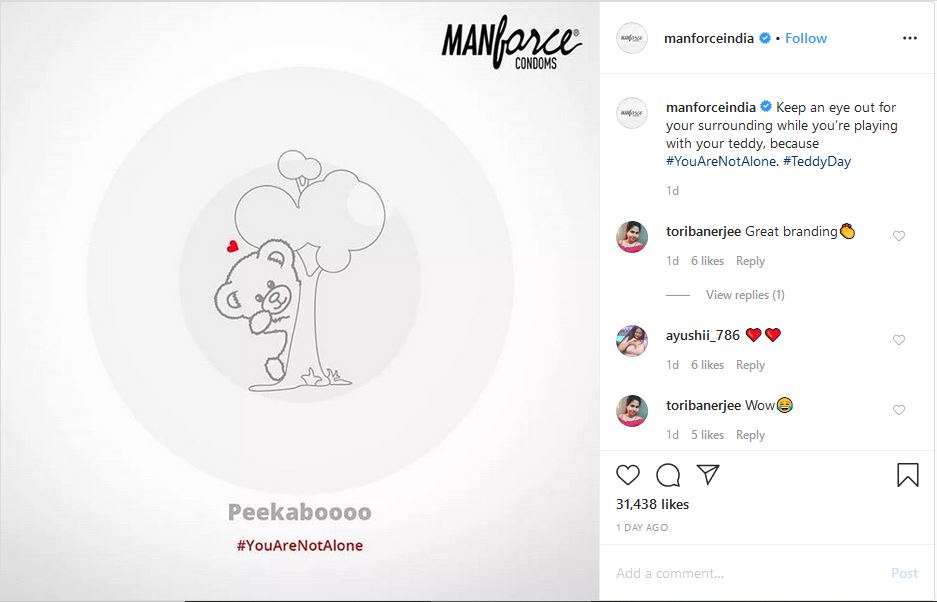
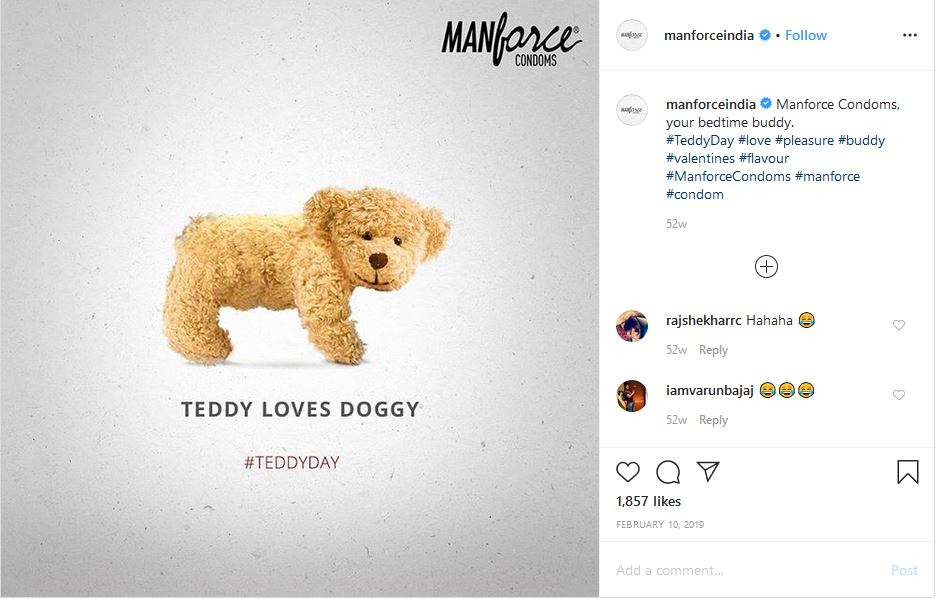
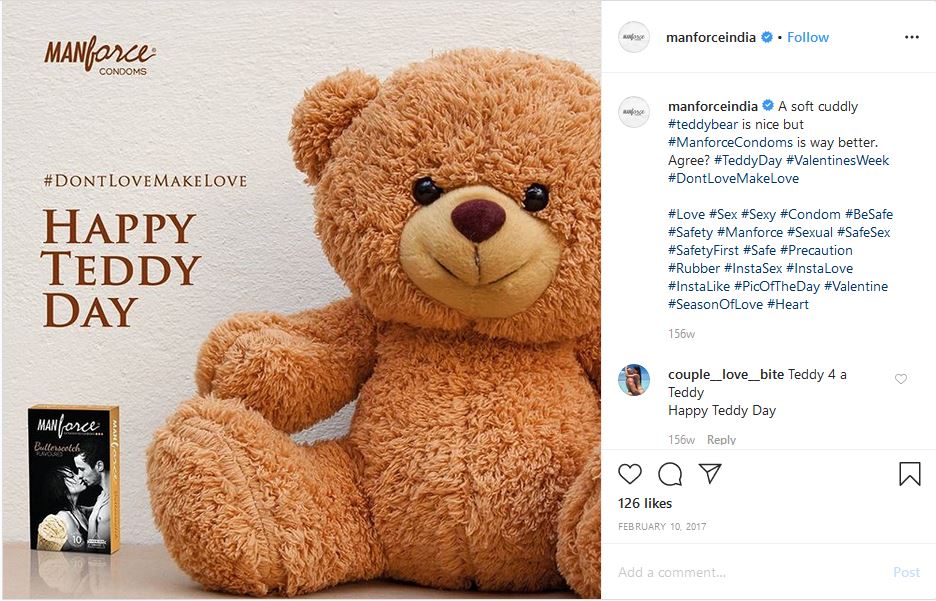
    DELHI: “Don’t hashtag, they’re thirsty,” Ellie (played by Jenna Ortega) tells the lead character of popular Netflix series You in one of the episodes of the recently released season 2. The 13-year-old girl was teaching the art of using social media to the subject, something that comes like second nature to her generation. While she was talking about building a personal brand on the photo-sharing website of Instagram, we have been observing a sneaky exit of numerous hashtags from other brand posts as well. For example, observe the number of hashtags in the Teddy Day posts made by Manforce India, one of the most active brands on social media, in the past few years.

    From 23 hashtags in 2017, the brand has used just two hashtags for this year’s post. So, the question that arises is; are hashtags dying?

    The marketing and advertising industry doesn’t think so.

    According to The Marcom Avenue director Divanshi Gupta the conversation about hashtags dying is quite irrelevant to today’s time, when every campaign that a brand marketer conceptualises begins by producing a catchy ‘#’!

    She says, “The current status of hashtags is quite important but its application in trying to reach to the target audience is now only limited to using the relevant hashtags, as users search and follow hashtags to keep them updated on the platform. Also, hashtags have a different level of reach and meaning to different social media platforms. Thus, the chances of hashtags dying in the near future are quite bleak.”

    Logicserve Digital founder and CEO Prasad Shejale also insists that they remain a great medium of brand engagement.

    “According to Sprout Social report, an Instagram post with a single hashtag can gain 12.6 per cent more engagement compared to a post with no hashtag. They are very useful to attract the right audience and amplify the reach of posts, campaigns with an ability to make things go viral. This, in turn, helps brands target the niche markets and create brand awareness among masses. Even for me, when I post anything on my LinkedIn or other social platforms, with the right hashtag I see a significant boost in the reach.”

    However, there is a need to filter and streamline the number and the quality of hashtags a brand is using with its posts.

    Shejale adds, “Brands shouldn’t overuse hashtags as it can hamper readability and can affect the engagement. It’s also equally crucial to keep the hashtag simple and narrow to retain attention and achieve effective marketing outcomes.”

    Mirum India ECD Naila Patel highlights, “Hashtags were designed to categorise conversations better and most content creators felt the need to add multiple hashtags to explain or engage people in the discussion. But slowly, hashtags seem to have moved away from the omnipotent role to a more 'good to have' existence. In-fact a lot of famous campaigns have seen single hashtags.”

    Elaborating on how to pick the right hashtags, Isobar national head for social media Aakriti Sinha notes, “With the advent of ephemeral content, formats like memes, daily trends, Instagram TV, Insta Live and stickers and now music, hashtags anyway had begun to take a backseat with the dip in number of Instagram posts. There is no necessity to add hashtags except for the campaign hashtags for recall for promoted content. What matters is the CTA vs. the hashtag discoverability. For such content, the campaign hashtags should play a role of brand/campaign activity and/or encourage UGC using the same.”

    Gupta adds, “In a social media campaign, the manager should use a limited number of hashtags wisely to enhance reach. Also, the hashtags used should represent: you, your idea, your brand ideology, trend, and industry. Using hashtags on the basis of these parameters will help you in reaching and appearing in user’s feed who have an interest in similar searches.”

    While hashtags are expected to stay, the next point to ponder on is the right number of hashtags to put on a brand post. Even industry experts are not sure about the right number.

    While Sinha believes that the idle number should be between 5 and 10 Gupta notes that the usage of hashtags should be limited within the range of 3 to 5. Patel argues that only Instagram as a platform has a role for multiple hashtags. She pegs the ideal numbers to be three-four.

    Shejale says, “It’s difficult to decide on an exact number of ideal hashtags to be used for posts. But yes, I would say, around 7-10 hashtags are enough.”

    Gupta shares that using hashtags will help the brand be found in more places but it has to be ensured that the post doesn’t have irrelevant keywords, as it’ll lead to diminished reach.

    Hence, it is safe to conclude that hashtags are not making an exit from the digital world anytime soon, but it is more important for brands today to strategise around this tool for maximum social engagement without any irrelevant reach that can hamper the conversion rates for them.

  • Increasing trust, harnessing technology key ambitions for marketers in 2020: iProspect

    Increasing trust, harnessing technology key ambitions for marketers in 2020: iProspect

    MUMBAI: The recently released whitepaper 'Future Focus 2020: The Next Ten Years' by iProspect from the house of Dentsu Aegis Network (DAN) shows that 78 per cent of marketers identified having a connected data strategy as the most important component of successful digital transformation.  The report is built to help marketers navigate the road ahead in a hyper-sensitive global media landscape. The report uses evidence-based data and interviews to predict that those businesses that reconcile long-term planning with short-term performance will see continued success in the decade ahead.  

    The white paper also revealed that increasing trust and harnessing technology are the key ambitions for 2020 and that the search for ways to keep pace with the speed of change in the next five years keeps marketers awake at night. Marketers are torn between what the industry dictates and their own experience of digital transformation.  69 per cent believe a clear culture transformation strategy is the most underestimated facet. 

    The white paper also suggested that inclusivity is still more a concept than a reality. While 93 per cent of marketers believe inclusive marketing is important, fewer than one in ten review for inclusivity as part of product and marketing campaign development, revealed the findings. 

    Another important aspect highlighted was the new commerce models. One out of four marketers believed subscriptions could represent more than 50 per cent of their revenues in five years, and less than half declared they don’t plan to get involved in recommerce at all in the next five years.  

    iProspect interviewed more than 350 global marketers and leaders across a broad spectrum of brands that included FTSE 100 and Fortune 500 companies, to not only understand their expectations for 2020 but also their hopes and concerns for the next ten years. The white paper focuses on the key areas of digital transformation, de-averaging, commerce redux, and mobilis in mobili. The report also includes exclusive interviews with global leaders from businesses such as Sprint, SideWalk Labs, Microsoft, and Buttercloth.

  • Voice technology market to register 2.8X growth by 2022: WATConsult

    Voice technology market to register 2.8X growth by 2022: WATConsult

    MUMBAI: In the past few years, India has witnessed a rapid rise in its internet consumption, leading to the emergence of voice technology and the ways in which it is consumed across the country. There is a dire need to understand how the audiences interact and perceive voice technology with an increase in its adoption and growing usage across India. From voice-assistant-enabled feature phones to connected devices like Alexa and Google Home, the ecosystem is taking an encouraging turn, and thus, opening up many more avenues for brands and businesses.

    WATConsult, the globally awarded hybrid digital agency from the house of Dentsu Aegis Network India (DAN), under its market research division, Recogn, has launched its latest report, titled ‘Voice Technology in India: Now and Future – Consumer and business perspective’.  The main objective of this report is to share deep insights on voice-tech usage patterns, to consult brands and to help businesses make better decisions.  The report focuses on the market of voice technology in India, the perception of voice assistants, home management with the use of voice and data security concerns. It also highlights the usage patterns of voice -tech across most-used voice assistants including shopping recommendations.

    The agency has integrated with Google Assistant for the launch of this report and will be made available with a bot command.

    Below are some of the key findings from the report:

    ·  Speech and voice recognition technology market stands at Rs. 149.95 Cr as of December 2019

    ·  It is expected to grow at 40.47% to reach Rs. 210.63 Cr by the end of 2020

    ·  76% of the users are familiar with the speech and voice recognition technology

    ·  On an average, users are interacting with voice assistants on various devices for at least a year’s time

    ·  The users residing in Top Metros have been using the voice assistants for around more than a year

    ·  60% of the users give voice commands on their smartphones. Users of the Google Assistant use it for results on their queries and check for navigation while travelling

    ·  Even at this early stage, the majority of users (49%) prefer a combo of speaking and typing that occurs frequently, especially on phones.  38% of users prefer to speak their queries aloud

    ·  On a daily basis, voice assistants are frequently used to listen to music (65%), get daily news and updates (64%)

    ·  When it comes to usage patterns, most of the users search for queries online and are comfortable to use assistants indoors

    ·  Google Assistant is perceived to be smart, intelligent and helpful in search queries

    ·  Alexa is perceived as a reliable assistant in terms of managing smart home devices and usability by its users

    ·  Majority of the users have considered product/service recommendations from the voice assistant and shopped online

    ·  46% of the users feel that voice assistant on their devices are always recording and listening. The users are conscious about their privacy and feel that the tech companies are not safe. They do not feel secure in terms of their data being used elsewhere.

    WATConsult CEO Heeru Dingra said, “We are glad to bring across our latest report in the space of voice technology and have for the first time integrated our report with Google Assistant. Voice marketing has indeed changed the dynamics of the digital marketing landscape and is growing at a fast pace. This report is a one-stop store for brands and industry leaders to understand the growing crescendos of the voice-tech market, giving them a detailed analysis of user behaviour and patterns to abide by.” 

  • Dealing with the slowdown: Madison Media’s recommendations

    Dealing with the slowdown: Madison Media’s recommendations

    MUMBAI: How do marketers deal with the inexplicable slowdown the Indian market is going through? Run for cover? Hide behind a door? Well, Madison Media has come out with some 10 recommendations for marketers to deal with the slowdown which it has put out in a playbook, it released earlier this month.

    Temper expectations from rural market: Nielsen figures show the brakes have been felt less on the urban market with it showing a growth of eight per cent in Q3 2019 as against five per cent for the rural areas. InQ3 2018, rural had clocked 20 per cent growth as against 14 per cent for urban. Hence, marketers need to focus their energies on urban India until farm incomes rise and rural gets back into higher gear.

    Pick your markets: Much like the current politics, the growth in consumption will not be secular across the country. As per a Bain and Company’s report, consumption will be led by 10 “breakthrough” states — Kerala, Karnataka, Andhra Pradesh, Telangana, Tamil Nadu, Delhi, Haryana, Punjab, Maharashtra, and Gujarat. Therefore, marketers will have to repolarise their traditional market prioritisation methodology. Focus on TV investments should be on regional languages channels rather than Hindi GECs.     

    Go for premiumisation: Industry estimates indicate that India will be an economy led by the middle class by 2030. The middle class will be driving 75 per cent of the consumer spending, plus 10 years from now. Therefore, premiumisation and category addition can drive a significant share of incremental spent on categories including F&B, dining out, personal care, and cellphones, etc. 

    Focus on modern trade and e-commerce: The Indian heartland is embracing modern trade with open arms. As per property management company, JLL, 50-60 per cent of the new modern trade outlets are coming up in tier II and tier Ill cities. Brands and marketers should also drive the wave by shifting substantial trade promotion monies to e-commerce portals and managing categories with modern trade. 

    Invest in brand love: During slowdown, brands have a temptation of running promotions rather than building the "Brand Love”, which can prove to be a fatal exercise. A study conducted by the Institute of Practitioners in Advertising [IPA] suggests that emotional campaigns work nearly twice as hard as rational campaigns. It would be wise to synchronise and invest in "bottom funnel" campaign probably using digital media. Such an approach will ensure Share of Mind is translated to Share of Market.

    Manage brand portfolio: To maximise the ROI, marketers should devise and adopt a brand portfolio management approach. Brand portfolio management is all about developing and maximizing halos (cross brand elasticity). Rigorous analytics can help to identify the donors and recipients of "Halos" and thus develop a portfolio strategy that adds to the marketing ROI.  

    Do not under-invest: As widely known, advertising has an ‘S-shaped’ response graph on a plane. If marketers invest below the threshold point– determined by brand size, category, and advertising copy, the entire advertising budget gets wasted. Hence, it is very important to invest in analytics to identify the threshold point and plan advertising spends accordingly. And if a brand is unable to invest at threshold levels, it would be a better strategy to remain silent and mount a BTL campaign. Thus, a proportional slashing of budgets in the wake of slowdown induced budget cuts is not recommended.

    Play ESOV game: It is very common for marketers to slash advertising budgets during slowdown but data suggests that the opposite should be done. Excess SOV (ESOV = SOV – SOM) metric developed by Neilsen indicates that ESOV had a definitive correlation with share growth. On average, a 10 point difference between SOV and SOM led to 0.5 per cent of extra market share growth. However, ESOV was found to be working harder for brands with greater emotional appeal and those who had a higher share of market. For every brand, analytics can help calculate the required Excess SOV for the target market share gain. Downturn is the best time to mount a share gain exercise with ESOV as category heat is expected to be moderate. 

    Milk Existing Assets: To maximise Rol of marketing monies, advertisers could resist the need to change creative assets and instead find ways to extract more out of existing assets. It is only a promotion led campaign that has definitive shelflife. Millward Brown had conducted a global study and articulated that true "wear out" of a TV ad is rare, and many TV ads could have a longer useful life than advertisers realise.

    TV and Digital to be go-to media: Recent study by Accenture titled "Cross-channel advertising attribution report" has quantified the halo impact of TV on digital performance campaigns. Without TV, standalone ROI of digital campaigns comes down by 18 per cent. For a branding campaign, digital adds to the incremental reach of TV at higher frequency at a lower cost, thus increasing the campaign ROI. 

  • WolfzHowl collaborates with Leap Frog Strategy for brand management

    WolfzHowl collaborates with Leap Frog Strategy for brand management

    MUMBAI: WolfzHowl Strategic Instigations, the 7-year-old brand strategy firm founded by Kalyan Ram Challapalli has entered into an alliance with Semiotics specialist firm, Leapfrog Strategy Consulting. Given this new marketing era, both partners in the alliance believe that new thinking, specialised know-how and collaborations are the future of brand strategy solutions.

    Wolfzhowl strategic instigations founder Kalyan Challapalli said, “Interrogation of culture and consumer behaviour from a multitude of dimensions and with greater depth is essential in the post digital world, to create lasting impact. Semiotics is often thought of as esoteric application in marketing and relegated to “also good to do”. WolfzHowl believes that this needs to change. We want to help clients shape their brand-consumer relationships more effectively by taking semiotics into their everyday work.”

    “We enter a new marketing era in 2020. In 2019, 12,000 brands used TV, 2 Lakh brands advertised on print and the number of brands that put money on digital was over a million! Digital has not quite taken off TV’s share (and sheen) but has been additive in customer consumption habits. It has increased today’s marketer’s touchpoints (rather screens and screen time) for the same customer

    and yet it has made the job far harder than ever with the the democratisation of consumer journey and choices,” he further added.

    Leapfrog Strategy founder Hamsini Shivakumar said , “Globally, it is proven that Semiotics is central to brand strategy. We are delighted to partner with the diverse and passionate team of Wolfzhowl to demonstrate the power of semiotics for brands in impacting consumer behaviour while drawing from culture.”

    She further added, “The days when brilliant advertising campaigns were the only basis for defining and building brands are over. Everything communicates and brands use a wide range of media platforms to get their message and image out to consumers. Brand purpose, mass personalisation and customer experience have grown in importance. In such a scenario, tools and frameworks of thought built in the FMCG, TVC, creative campaign dominated world are passé. Brands need much more intellectual horsepower of various kinds, to live up to their potential for creating value for businesses.”

    Hamsini Shivakumar is also co-founder of Semiofest, the only global conference for applied semiotics. Since its founding in 2012, Semiofest has travelled the world. Shivakumar and her team have been working in the field of applied marketing semiotics since 2009. She has previously been planning head for JWT Mumbai and has also worked with P&G as well as TNS/Mode.

    Kalyan Challapalli is a veteran strategist with over 18 years of experience leading strategy teams forContract Advertising, TBWA, Leo Burnett ASEAN and Commonwealth (APAC). Wolfzhowl specialises in creating behaviour change through brands.

  • Brands venturing into tier 2, 3 cities rely heavily on influencer marketing

    Brands venturing into tier 2, 3 cities rely heavily on influencer marketing

    DELHI: Influencer marketing has been picking up the pace at an unpredictable rate for the past two years. 2019, in fact, saw it touching a new high. Influencers found themselves not just at top business conferences but also participating in bigger projects on television, films, and OTT. Influencer marketing firms also gained much prominence as they tried to streamline this haphazard industry.

    In India, one of the top performers was One Impression, a Gurgaon-based influencer marketing and branded content solutions company. Founder Apaksh Gupta told Indiantelevision.com that 2019 was so far the best year for One Impression. It recorded revenue growth of around 900 per cent and managed to create an influencer network of 12 million people globally.

    Gupta noted that brands became more aggressive and started taking the channel of influencer marketing more seriously. “Influencer marketing became first channel of marketing for at least some of the categories. I agree that there was a lot of discussion around the pros and cons of the medium but eventually came out shining, giving a great ROI to the brands. So, the brands are increasing their budgets for the medium," he said.

    He added that new categories that have started investing in influencer marketing are technology companies like Uber and Zomato and fintech companies like HDFC Bank, which used it for launching its new range of credit cards.

    “With influencers penetrating the tier 2 and tier 3 cities, newer categories are investing in the medium. We are doing campaigns for companies like Uber on Tik Tok who are trying to acquire new consumers in tier 2 and tier 3 cities now. We are also seeing a lot of gaming companies investing in influencer marketing. For example, we are working closely with PubG for their influencer marketing programmes,” he added.

    With so much clutter in the influencer marketing arena, One Impression has come up with a more streamlined and scientific method of helping brands connect with the right faces and voices. It uses a complex mix of data and manual segregation to handpick the right influencers who align with the brand image.

    Gupta elaborated, “What happens is that the agencies usually have a pool of 1000 to 3000 influencers and they try to fit in the same pool into the requirements of each brand. But we have introduced an objective and subjective filtration in the process. The objective parts include if the influencers' audience is aligned with the target consumers of the brand. That’s where our data team comes into play. The data team is able to filter our pool of over 3 million Indian and 12 million global influencers by looking into the audience of the influencer.”

    He added, “Now, the subjective part is handled manually where we look at the influencer’s personality, pricing, and availability. As a company, we have our own pricing algorithm that helps us pick the right influencers for each branch.”

    The company expects a 40-50 per cent year-on-year growth for the influencer marketing industry in the coming times. To tap on that, the company is looking to strengthen its influencer pool and data abilities. It will soon come up with an app called One Sponsor for micro-influencers to develop a niche audience and help businesses identify the right partners early on.

  • Mother Sparsh’s #UnscentedHappiness touched 2.5 million people

    Mother Sparsh’s #UnscentedHappiness touched 2.5 million people

    MUMBAI: Mother Sparsh – India's leading organic & eco-friendly baby care products brand has concluded its online campaign #UnscentedHappiness with the reach of approx 2.5 million. On many occasions, parents are in awe to see their infants display similar expressions or habits which they had done in their childhood, making parenthood more special. Mother Sparsh's #UnscentedHappiness was all about celebrating those moments and also celebrating the baby care routine with natural products that is passed on from one generation to the other. Brands such as FirstCry and Tiny Steps had also collaborated with the three-month-long campaign.

    Many new mothers, as well as mom influencers, participated in this online campaign and contributed with many precious memories in the form of a photo or video posts. The campaign ran across Facebook, Instagram and other social media platforms. Mom users also took to Instagram as well as FB Stories to highlight memories of #UnscentedHappiness. 15 lucky participants have won Gift Voucher worth Rs. 2000 each.   

    https://www.instagram.com/p/B55aYm2HVuh/

    https://www.instagram.com/p/B6K6AKIpv2G/

    Mother Sparsh founder and head brand strategist Rishu Gandhi said, "We are thrilled to have received an overwhelming response from new moms and parents on social media for #UnscentedHappiness. The campaign had the dual objectives of reliving precious memories as a parent and also spread awareness on using natural and eco-friendly products for baby care. Many people find it difficult to come across the right products for their kids. We hope through this campaign, we have been able to reach out to a large number of parents with useful information. We will continue to introduce campaigns that are engaging as well as educational for the new parents."  

    Mother Sparsh is an innovative Eco-friendly baby care brand focused towards delivering a holistic experience to the mothers and babies with their natural; eco-friendly, biodegradable, paraben-free and chemical-free offerings. The brand is known for its innovation and revolutionary product segment. Hence, the brand has sold over 2.5lakh SKU’s of their wipes thus avoiding over 100 tonnes of plastic waste to get into our eco-system, and various research organizations also recognize it for their innovation in the field of personal care wipes market.

  • Big Trunk Communications to manage digital duties for Trubore

    Big Trunk Communications to manage digital duties for Trubore

    MUMBAI: In its recent announcement, Big Trunk Communications, a Mumbai-based independent creative digital agency, announced that it will now be carrying out the digital duties for Trubore Piping Systems.

    India’s TruChoice, Trubore Piping Systems, is an industry-leader in the arena of pipes and fitting spaces in South India. With a legacy of over four decades, Trubore has been rapidly expanding its footprint in the market along with an ever-evolving product range and this creative agency will be amplifying Trubore’s online presence through diverse social media platforms.

    Big Trunk Communications excels in conceptualizing and executing 360-degree digital marketing projects. Within a span of six years, the agency has managed to cross milestones and set benchmarks across diverse product categories like Luxury, Retail, Fashion and Clothing, Food and Beverages, Education, Media and Entertainment, Realty, BFSI and E-Commerce, and Pharmacy.

    Trubore Piping Systems Branding and Advertisement manager says about the association, “Times have changed massively. Trends come and go within the blink of an eye and by default, an impressive online presence helps greatly in reaching out to your target audience. We are delighted to have Big Trunk Communications on board with us and are looking forward to this brand-new partnership.”

    Big Trunk Communications will be involved in Social Media Strategy and Media Advertising, along with content creation and design work for Trubore Piping Systems. The account will be serviced from the agency’s Mumbai office.

    Trubore Piping Systems  sales and marketing Hemant Kumar says, “We want our brand story to be reflected across India. A strong and unique online presence is what we are looking for and we have a feeling that all our needs will be well met with this creative and dynamic agency.”

    Big Trunk Communication business head Dinakar Menon says, “We are super excited to be associated with Trubore Piping Systems as their official digital partner. We plan on to give their online presence a boosting momentum by integrating innovation, content and media. The idea is to circulate the brand’s story and give it an online identity. We’re pleased to achieve this milestone and shall strive to deliver outstanding results.”

  • Logicserve Digital gears up for the next phase of growth with a new transformational identity

    Logicserve Digital gears up for the next phase of growth with a new transformational identity

    Mumbai: Logicserve Digital, a digital marketing company and the Indian arm of Logicserve Group, has announced the launch of a new logo for the company today to mark the milestone year, 2019 when the company is witnessing exponential growth. The company will start using the new branding within all it's internal as well as external communications with stakeholders over the coming weeks.

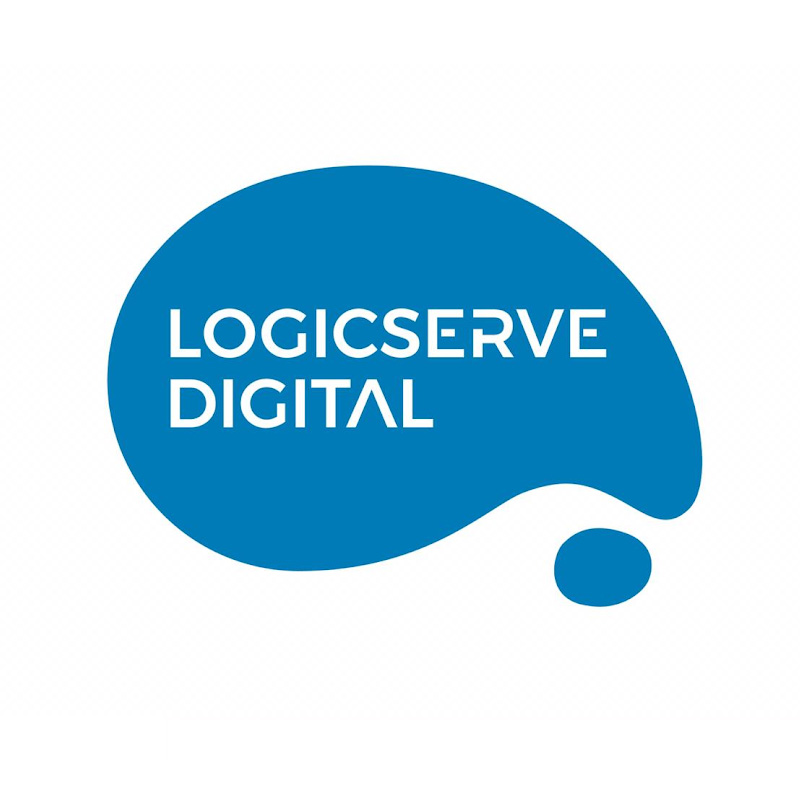
    Here’s a look at the new transformational identity of the company which is in sync with the ever-changing nature of the industry.

    The overall logo reflects the three key character traits of the company: curiosity, adaptability and intelligence; which are indispensable to thrive and lead in the dynamic world.

    The circle at the bottom is similar to the anchor seen in a question mark or exclamation and symbolises curiosity that is the genesis of any change or transformation. The fluid shape showcases adaptability highlighting the company’s ability to change and evolve. The mnemonic that looks like a profile view of a brain, symbolises intelligence and thought leadership.

    Multi-specialisation is the need of the hour and varied skill sets are required to design a solution for the challenges faced by today’s world. Here, the company represents its core capabilities – Media, Creative, Data & Insights, and Technology; as distinct from one another through different colours and shapes. The core capabilities are ever changing and evolving, which is why the shapes are fluid and transient in nature. These core capabilities are interdependent and when brought together embodies what they offer to the world – an integrated solution.  

    Talking about the new identity, Prasad Shejale, CEO & Founder, Logicserve Digital, shares, “One must be curious, adaptive, and intelligent to move with the disruptive times – change, transform and evolve with it. The new company logo is reflective of our new identity encapsulating these qualities. Over the years, these qualities have helped us achieve a rapid growth trajectory and provided us with a head start to embark on the next phase of growth. The overall move reflects the need for us to have a new narrative and logo that reflects our evolution as an integrated digital solutions company.”

    Logicserve Digital continues to advance its growth footprint by being an Independent ‘360-degree digital marketing agency’ providing integrated solutions. The company has won over 100 awards in the past two years for the successful implementation of digital marketing solutions focused on a customer-centric and tailor-made strategy that yields a win-win situation for both brands and consumers. It was recognised as ‘Performance Agency of the Year’ at Digixx 2019 and ‘Performance Marketing Agency of the Year’ at AgencyCon 2019. With a strong team of 320+ digital marketing experts and having serviced over 300 happy clients across various sectors, the company is poised to embark on its next phase of growth by adorning a new identity. 

    Further commenting on the journey of the company, Prasad says, “In 2012 when we shifted our focus to the Indian market, we realised the growth potential and decided to pivot to specific digital marketing services. Our ability to be a ‘Digital trend-catcher’ has benefitted us a lot in terms of strengthening our relationship with clients and their consumers through innovative and data-driven digital campaigns. From 122 employees in 2016 with one office we have grown to a strong team of over 320 employees with three offices in India. We delivered 102% CAGR over the last five years and continue to be on a rapid growth trajectory. In the next three years, we aim to achieve four times the average growth of the Indian digital marketing industry. Also, we have kickstarted our international operations and our new leadership team is all geared up to achieve the next phase of growth. Achievement of these significant milestones has made 2019 a wonderful year for us so far and I would like to thank our clients, partners and team members for bestowing us with their trust for a long-lasting partnership.”