Category: Digital Agencies

  • A hot cuppa instant marketing

    A hot cuppa instant marketing

    'Just take an Uber', is the fastest way of telling, 'arrange a clean, safe, convenient, mode of transport for yourself'. Theoretically, the company and its marketers have at this moment communicated awareness, interest, consideration, preference, purchase, loyalty and even advocacy. Congratulations, dear readers, you just saw a company become a brand.

                                                                “Marketing is a series of events,” said the gurus. Only no longer now and we’ll tell you how!

    With the abundant channels, competitors, digital literacy and logistical accessibility, time has become expensive than money. But the startups and investor backed companies have brought in variety in almost all B2C sectors. As a consumer our intent is to receive the best experience instantly, with least research done. With all of us locked down, all traditional marketing efforts are meagre right now. The marketers are under pressure to create an empirical roadmap to make the target consumer be aware, buy, and become a brand custodian. What’s the bailout?

    Making a quicker marketing journey

    With due respect to the legends, and thanks to the majority imbibing technology across all levels we can jump and skip the non-bankable steps in the various marketing models. Technology and its prodigy, 'the digital', is the push that has triggered the plunge. Our focus on sharper techniques will cut the flab out of the marketing budgets. We’ll hit the target audience where they belong saving a lot of resources and time.

    The new format, we call it the ‘instant marketing’, enables the brand to reach the target customer fast and reduce the cost of communication.

    Marketing today is only as impactful as a user’s attention span

    Marketers have this tremendous pressure to make the consumer make a right swipe within 8 seconds. It’s the ultimate test of seduction out there. Only the best combination of content and media wins the race. This compels us marketers to think slow and act fast. Our goal is to understand everything about our customers, be where they are and then gratify their mind-set.

    In the marketing funnel of 2020, we may not really have to go all the way through awareness, interest, consideration, desire, engagement and action. As per our audience, maybe we jump straight from awareness to engagement and purchase action. Or from interest to desire and action. Any of the combinations work best for our brand! The accessibility of technology and the hand-held medium has given us this superpower to jump our marketing methodology around.

    Covidified consumer behaviour

    Marketers will see themselves become more budget-oriented in order to be cost effective. On its way up to revival, marketers will opt for the most economical methods to reach their audience. There isn’t a lot of liquidity, yet there are huge capacity and inventory. Any player to chance upon and make the fastest dash to be in the playfield will rise above the competition. Post-Covid, brands have a changed course already.

    Consumers will be more thoughtful about what they consume and how much they need to consume. Their value seeking parameters will now be different and they’d look brands with a different eye. Safety, empathy, concern, wellness, purpose driven, social could be some of them. Less experimental now, they’ll choose the brand that they best understand and relate to.

    The marketer’s 2020 tool kit

    Unlike the old dictum, we can now easily measure where half of the money in marketing and advertising goes. We can have instant stats of what works and what doesn't and can promptly change the strategy. We have amazing forces to choose from –

    ·       Programmatic Communication – To shout out loud where your consumer is listening

    ·       Communications Formats – Video and Pictures for tempting their senses

    ·       Performance Marketing – Make a payment on delivery (on a completed lead, sale, booking or download)

    ·       Communications Platforms – Tactically repurposing content for Youtube, Instagram, Google and Twitter

    The organic traffic is down in major industries globally. That’s a huge concern cited by the marketing guru, Niel Patel. When that happens, it reflects, that there is a demand crunch in almost all sectors. It means that disposable incomes are now savings. And it means that the money isn’t flowing. This is the time for consolidation, for being judicious with the expenses and for reaching out to the customers in the tools that use the shortest time. As a marketer, do not be fearful, because right now, everyone is. Be smart, because everyone isn’t.

    By the time you finish reading this article, three businesses got shut down worldwide. You don’t believe me? Google it!

    (The author is integrated marketing specialist at Topline Consulting Group. The views expressed are his own and Indiantelevision.com may not subscribe to them.)
  • Six months of struggle but 6 golden years ahead for digital marketing

    Six months of struggle but 6 golden years ahead for digital marketing

    NEW DELHI: It has been stressed enough that Covid2019 has come as a catalyst for the digital marketing industry. However, this growth is not going to be visible in the immediate CAGR this year, but instead in the increasing share of the overall advertisers’ marketing pie, noted the eminent panel discussing the widening scope of digital marketing in the new world in an exclusive discussion with Indiantelevision.com founder, CEO and editor in chief Anil Wanvari over a digital webinar.

    The panel consisted of Team Pumpkin co-founder and CBO Swati Nathani, Zoo Media and FoxyMoron co-founders Suveer Bajaj and Pratik Gupta, White Rivers Media CEO and co-founder Shrenik Gandhi, iProspect India AVP-strategic solutions Nihal Nambiar and Wavemaker India chief client officer and head–west Shekhar Banerjee.

    Nambiar noted, “Digital, in 2020, will definitely not have a similar CAGR of 27 to 30 per cent as it has been recording for the past few years.” But he is looking forward to some positive quarters ahead in terms of brands moving to digital platforms.

    Nathani mentioned that the Covid2019 period saw a lot of influx by brands, including the more traditional ones in the digital domain and that will enable the industry to make up for more than what was lost in the past quarter in the coming months.

    Gupta insisted that the funnel moving downwards on advertisers who were using all the options that digital provides as a marketing tool was very low earlier and because of the exposure that the advertisers got to the digital realm during Covid2019, this number will now go up quickly.

    Gandhi added, “Going ahead, it is six months of struggle for the digital agencies (given the dip on ad expenditure by advertisers) but six golden years ahead.”

    The panel also discussed the new trends and technologies that will be dominating the digital marketing domain in the coming years, including blockchain, IoT, and online events.

    Speaking about the massive popularity that online events earned during the lockdown, Bajaj quipped, “Obviously there is a cost-reduction of around 65 per cent in taking an event online for the event companies, and they have to sell the tickets at reduced rates as well, but at the same time they can get more and more people come online and watch the event.”

    He added, “BookMyShow expanded its base dramatically by introducing online theatre shows and treasure hunts etc. And then Paytm Insider took it a notch higher by offering live shows, and even various classes including photography.”

    Banerjee cited the example of his client 5Stars Do Nothing show that they did with OML. “The show managed to reach an audience of fifty million digitally, which wouldn’t have been possible in the case of an offline event.”

    Nathani added an interesting insight as she noted that not only brands are collaborating with event companies to curate these shows, or running ads there, but are themselves also running training classes or entertainment events as they have realised a vast pool of opportunities lies in the online events space.

    The panel also extensively touched upon the topic of IoT opening newers realms of marketing opportunities for the brands.

    While Nambiar was of the view that IoT is still at a very nascent stage and is more of a utility than marketing platform, Banerjee highlighted, taking his experience of working with Vodafone in account that the roll out of 5G will lead to an explosion of IoT in the country.

    Bajaj insisted that marketing will greatly benefit from the contactless experience that IoT will soon bring forth, as the brands will have more targetted information about the consumer as it starts relying on technology even for most basic needs like grocery shopping.

    Nathani seconded the thought as she noted, “What IoT will be doing is creating hyper-personalised data, thus seamlessly helping the brands to reach out to the consumers with very targetted needs and that is the space we as marketers and brand consultants will need to explore.”

    Watch the full discussion here:

    Embed:

  • How Covid2019 is fast-tracking digital transformation in experiential marketing

    How Covid2019 is fast-tracking digital transformation in experiential marketing

    Consume or connect ? We didn’t know it at the time but somewhere in the middle of March we all got enrolled in a digital bootcamp. Covid2019 didn’t fast track digital transformation, it literally beamed us into the future. I have never witnessed such far-reaching change at such a pace.

    For an industry built on enabling human connections, Covid2019 rudely hit pause and with little warning. For those who will get the reference, it felt like Mr Freeze was on a rampage in real life. And when things thawed, we were in the future. Engagement changed overnight, calls were replaced by zoom/teams/blue jeans and webex. In a few short weeks we had already graduated to zoom fatigue and realised blue jeans were fading fast. And it wasn’t just about video messaging, the humble WhatsApp became part of the retail renaissance as the mom and pop stores leap frogged into the future and Ludo rivalled call of duty for family time.

    As isolation and social distancing become the norm for now, engagement and interaction has moved to our devices. The buzz in the experiential industry is all about pivoting to digital events. The tech jargon is flying fast and furious and it’s all about innovating or becoming irrelevant.

    Digital transformation isn’t about the adoption of technology, video conferencing has been around since the 80s and live streaming since the 90s. Most of the tech being adopted has been around for a while now and the first virtual conferences were held more than a decade ago. Digital transformation is all about staying real in a virtual environment, looking at screens not as devices to consume but as spaces to create live engagement. The screen is the new experiential touchpoint. Not just a place for content consumption but place to enable real human connections through live digital experiences.

    I am not sure if it was insight or instinct ( or maybe a combination of both) but the lockdown pioneers of digital engagement seem to understand the difference between creating digital content and producing live digital experiences. They understood that being present on the other side of a screen is not the same as participating with the on-screen experience.

    Vir Das hit a home run (no pun intended), with At Home, his online comedy tour for Covid2019 relief. A brilliant and effective use of zoom creates live engagement with the audiences. They are not watching a Vir Das special on their screens, they are part of a live experience. Kommune, the artist collective did something very similar when they created Lockdown Love , a play performed live on zoom. With every performance the experience became more engaging, with audience interaction seamlessly made part of the narrative. These early experiments by creators like Vir and Kommune clearly show that it is possible to connect with people on the other side of the screen.

    Almost every pre-pandemic human engagement has moved online. From fitness to education and everything in between. A recent article in Forbes states that virtual events are up 1000 per cent Since Covid2019, with 52,000 on just one platform called 6Connex!

    Take a look at some of the virtual events scheduled during the next few months. This July, Nintendo will host its flagship event, Pokemon GO Fest in a virtual format. XBOX is following suit with the XBOX 20/20 launch through a series of virtual events. From gaming to finance, with digital payments on the rise, June has seen the opening of Virtual bank branches across the globe from TSB in New Zealand to the Al Salam Bank in Bahrain. Hong Kong is going to see more than five different virtual banks open shop in the coming months. Commerce is not just going digital, it is going virtual. Closer home, the iconic Lakme Fashion week is going digital with the launch of “Virtual Showroom”. A digital engagement platform for designers and artists to showcase their collections to buyers and suppliers. The showroom is set to launch in Q3 with the upcoming LFW.

    We are seeing similar transformations across industries; each is an opportunity for digital experiential marketing because commerce is more than just a transaction. Digital experiential has the ability to elevate the experience and create human connections across the screen and there lies the real transformation. So while we navigate the new and wait for some of the old to return, remember it’s not just about pivoting, it’s about persevering.

    (The author is Geometry Encompass CEO. The views expressed are his own and Indiantelevision.com may not subscribe to them)

  • Is Facebook losing lustre among advertisers?

    Is Facebook losing lustre among advertisers?

    NEW DELHI: Covid2019 has left a serious impact on ad revenues across platforms. The advertisers have controlled outflowing monies, are investing very cautiously in certain properties and some of them have stopped advertising completely. Despite the incredible growth in time spent on smartphones and other digital platforms, the ad revenues have been low for all mediums.

    Facebook, one of the most popular social media platforms across the globe, also reported a dip in ad demands in the first quarter of the year.

    While the APAC region remained the only area to show growth in percentage-wise contributions to FB’s ad revenues, it witnessed an 11.13 per cent Q-o-Q decline in Q1 FY20.

    Schbang founder-MD Harshil Karia believes that it is not only because of the pandemic that the platform is losing ad money. “Facebook has been losing steam because other platforms like Instagram and TikTok have taken over. Also, YouTube has been a pretty strong medium. Because advertisers now have more avenues (to explore), they are removing some of the expenditure from Facebook. Also, advertisers are not seeing good returns on their video spends on the platform. As a lot of content moves towards video, Facebook is facing a challenge.”

    He added that it will be better for the platform in terms of ad revenues once the lockdown is lifted but there are certain fundamental challenges that it will have to address to remain relevant for the advertisers.

    WATConsult EVP-media operations (south and west) Sahil Shah also noted that the popularity of Facebook is certainly not at the top for advertisers. “Consumers have moved to more and more platforms, resulting in explorations. But I reckon it’s still early to tell that big monies are shifting from FB to its competition. Facebook is still one of the largest addressable bases with some good targeting and relatively better brand-safe ad options available for advertisers.”

    However, #ARM Worldwide CEO and co-founder Manas Gulati thinks otherwise. “I think it is a mandatory glitch across platforms as we are seeing most of the advertisers playing it safe, so that they open with the additional reserve when the market opens. We have seen an overall drop in the digital marketing spends especially on the categories which have been directly impacted. Close to a good 45-60 per cent drop in ad spends has been noticed across categories.”

    He added that Facebook remains a central part of the advertising mix for his firm as it delivers great results in driving awareness as well as business results. “Content consumption on Facebook has increased drastically especially during these times. I think the change they have brought about in the recent upgrades of their user interface is amazing. Facebook has always been a great source of profile targeting with great technology. It has been great when it comes to results coming out of the overall umbrella of Instagram, WhatsApp and Facebook itself. Its approach as a product company was always to demographic profile audience so that the leakage of ad spends is kept to the minimum to drive optimum business results.”

  • Update Geotarget enables advertisers to target regionally-curated cable TV channels

    Update Geotarget enables advertisers to target regionally-curated cable TV channels

    NEW DELHI: In this globalised world, hyper-local targeting assumes greater significence for reaching out to the target audience. Contextual and hyper-local targeting of audience through advertising is a trend that no brand can afford to miss. While digital mediums serve this need for brands in the metros and tier I cities, the tier II and tier III regions still remain untouched. Television still remains a preferred medium there.

    We all know that it is not easy to hyper-personalise ads on television. However, Update Geotarget platform has come up with a unique solution with its “Ab Digital Ka Power TV Pe” campaign.

    Update Geotarget founder and managing director Sharad Alwe told Indiatelevision.com: “India is a diverse demographic with 90+ socio-cultural regions, 700+ dialects, and 66 different scripts. Historically, we broad-brush India into HSM and southern languages, but brands which want to communicate with audiences hyper-locally are best served with multilingual messaging for contextual targeting. It has already been accepted that vernacular is important, especially for tier II, there is nothing more powerful than communicating with your target audience in the language they think in.”

    He adds, “Through the strongest and most versatile cable TV channel distribution network in India, the Update Geotarget platform allows marketers to localise their messaging, even at an SCR and district level, so you can be truly hyperlocal.”

    Update Geotarget boasts of an inventory on 2500 free-to-air cable TV channels pan-India, which can allow media planners to slice and dice priority market clusters based on geolocation in all 29 states, 92 SCRs, 440 districts, and top 200 cities, with high availability deep and wide into Tier-2 cities.

    Alwe believes that their product is a perfect complement to TV as an advertising medium.

    He explains: “The challenges with TV advertising are the inability to micro-target, and of course, the costs. Moreover, with the changes post NTO, there has been a significant drop in the availability of satellite channels, as households pick and choose the pay channels they want. We believe that our product offering is a perfect complement to the TV medium, as we are able to use the same ad formats, with the layer of geo-targeting to sets of a highly engaged local audience on regional cable TV channels. A holistic plan with both mediums would drive brand awareness with targeted messaging, delivering excellent ROI for media planners.”

    What makes this proposition even stronger is that while satellite pay channel availability has dropped post-NTO, regionally-curated cable TV channels are mandatory in every cable TV household plan throughout India and Update Geotarget maintains 100 per cent availability in 120 million TV households.

    With the new campaign, created by Mirum, Update Geotarget is trying to reach out to marketing and advertising professionals, brands, media planners and agencies pan-India, and is using digital medium dominantly to promote it.

    “Most of our TG is on social media and other digital platforms, and decision-makers are located in metros/ tier-I cities. Digital was an obvious choice as the group is small but well engaged and connected digitally and socially,” Alwe concludes.

  • Admitad launches support helpline for advertisers during COVID-19 pandemic

    Admitad launches support helpline for advertisers during COVID-19 pandemic

    MUMBAI: Admitad has launched a support hotline for advertisers to combat declining sales and demand in the current crisis. The support hotline is intended to provide assistance to advertisers and mitigate losses caused by the COVID-19 pandemic.

    Named Black Swan, Admitad’s support hotline aims to make life easy for advertisers and publishers looking for an affiliate marketing network. The helpline promises to bail out advertisers from difficult situations by providing useful advice about how to increase sales efficiency and reduce promotional expenses.

    While generating leads and sales during this hour of global crisis can be a daunting task, Admitad believes that testing times like these can create new business opportunities. Online businesses, in particular, have an edge over their offline counterparts and can leverage opportunities to build traffic and increase user base by collaborating with an affiliate marketing network. It is, thus, vital at this time to identify and collaborate with appropriate channels. By partnering with an appropriate channel, advertisers pay only for actual sales and not for the volume of clicks. 

    The current crisis has accentuated the need for online businesses to increase their audience coverage and high-quality targeted traffic. Among the several categories of online businesses, software & digital services and streaming media have together witnessed a 135 per cent increase, according to Admitad data of recent weeks. In addition to these categories, CPA campaigns can be effective for online games, e-learning, and online education. 

    Admitad India CEO Neha Kulwal said, “The support helpline would act as a lifeline for advertisers and help them keep sales on track during the COVID-19 pandemic. As several nations continue to observe a lockdown and markets anticipate long recovery times, it is imperative for online businesses not to lose focus in this moment of crisis and continue to build an affiliate network to sustain in the market. The lockdown provides lucrative opportunities for online businesses to extend support for existing customers as well as welcome new users to their network.”

  • Helo launches new brand campaign ‘Helo Pe Milo’

    Helo launches new brand campaign ‘Helo Pe Milo’

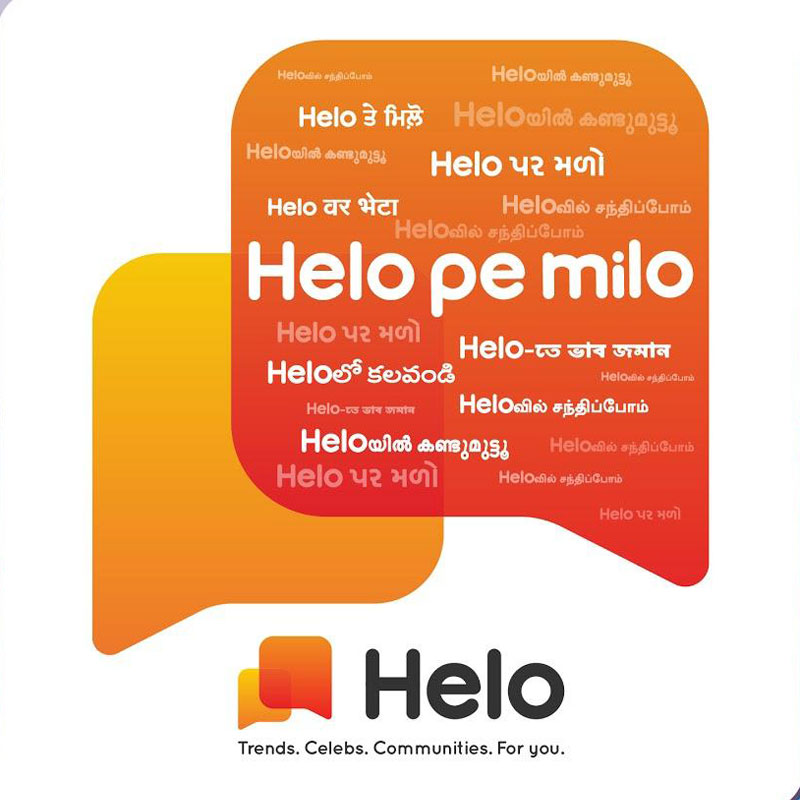
    MUMBAI: Regional social media platform Helo has announced its new and first ever multimedia brand campaign “Helo Pe Milo”. The campaign builds and promotes the idea of self-expression and connecting like-minded people in one's language of choice.

    The integrated campaign consists of Helo’s new brand slogan "Helo Pe Milo" and four multilingual TVC's titled Hostel, Akhada, Cricket, Shayari, that creatively highlights some of the most popular content categories on the platform – Entertainment, Celebrities, Food, Sports and Humor respectively. Helo is also offering a wide array of in-app stickers, templates and contests for its users to create content around the campaign and win exciting prizes.

    Conceptualized by Helo’s creative agency Leo Burnett, the creative concept of the brand campaign is based on user insights from Helo’s market study conducted in July 2019, which revealed that people feel more confident while expressing themselves in their first language or mother tongue. The qualitative study also revealed that 82% of these people feel a need to be up to date with information regularly and are able to relate themselves better with local language digital content because they find it more reliable and credible. Helo offers biggest celebrity interactions, latest trends and interest-based communities and empowers users by enabling the most comfortable experience of creating and consuming content in 14 Indian languages.

    Helo entertainment head Chhandita Nambiar said: “At Helo, it is a constant endeavour to transform the way people interact on social media by enabling the most comfortable environment for self-expression in one's language of choice. Through this campaign, we aim to emphasize the key ethos of our brand to our existing as well as potential users i.e to be inclusive and stay rooted at heart. The campaign also encourages people to ‘Get together on Helo’ for an exciting experience of multilingual content across categories of their interest”

    The national campaign will be deployed across multiple platforms including TV, digital and outdoor, aiming to target a diverse range of audience across geographies and age groups. The campaign is scheduled to go on-air on 12th March 2020 in Hindi, Punjabi & Tamil and will further be rolled out in 9 different languages in phases throughout the year 2020.

  • Jack In The Box Worldwide begins new era in content marketing with creative commerce

    Jack In The Box Worldwide begins new era in content marketing with creative commerce

    MUMBAI: The 120 Media Collective, an independent communications, and content groups, has made two major announcements. Jack in the Box Worldwide has launched a new business model that enables creative commerce for its clients and elevates Axon Alex and Rishi Sen to managing partners of the agency with Roopak Saluja moving into the role of Chairman.

    Changing the course on conventional digital advertising to go beyond traditional content marketing, JITB announced a new business model focused on delivering compelling content for its clients through a performance-based system, backed by analytics and data.

    To this effect, the agency also announced a new operational structure, which will be a first-of-its-kind in the industry. The new structure will see the merging of strategy and creative operations led by Axon, a seasoned planner with 12+ years of experience working across some of the best agency networks including Tribal DDB Worldwide and BBH. Through his career, he’s worked on world-renowned brands including RedBull, Axe, Magnum Ice cream, McDonalds, Idea Cellular and Tata Motors. Rishi Sen, who in 2018, had donned the hat of Chief of Staff at The 120 Media Collective, will now spearhead JITB’s complete client portfolio followed by Performance and Technology. Rishi also brings with him 11+ years of experience ranging from creating robust growth strategies and managing business operations to building technology-backed customer experience modules and corporate alliances.

    Commenting on the developments, The 120 Media Collective founder and chairman Roopak Saluja said, “When you’re navigating the flux of rapid digital evolution, honesty demands the occasional reworking of one’s vision and ensuing structure. Our recent journey of self-reflection revealed to us that while we claimed to be the antithesis to the incumbent agency model, our structure had begun to resemble that of a traditional agency. But now with our new data-backed business model, we move even closer to our holy grail of delivering measurable business impact for our clients. I’m super excited about this new chapter and the fact that Axe and Rishi are the ones leading it. They have sharp intellect and acumen, are extremely driven, complement each other perfectly and know exactly how to galvanize a team.”

    Jack in the Box Worldwide managing partner Axon Alex comments, “It’s an exciting time to be at Jack In The BoxWorldWide. I began my love affair with the internet as a web designer in the late 90s and doing strategic planning for over a decade helped me hone the important skill of understanding why audiences should care about what we do. Today as more ‘advertising’ is being shunned in favour of ad -blockers and better content coming from the creators and publishers on different social platforms I relish the challenge of translating ‘Unadvertising’ which is our agency DNA towards creating content that builds those genuine connections once again in ways that lead to building measurable value for brands.”

    Jack in the Box WorldWide managing partner Rishi Sen said, “Having spent over half a decade with JITB and The 120 Media Collective, I’ve had the opportunity to work with some of the best creative professionals in the industry, while creating some award-winning campaigns along the way. As content consumption increases at an exponential rate, the need for content marketing is more than ever. Axon and I, with our combined expertise, have established a model that challenges traditional advertising practices. For the first time, we’ll be able to effectively drive commerce directly through content and start tracking ROI that goes way beyond just reach and engagement. Jack in the Box has always adapted its model to the ever-evolving digital landscape and I strongly believe that this sets us apart from almost any agency outfit I can think of.”

  • Brands want biz problems solved, not just communication problems: Wolfzhowl’s Kalyan Ram Challapalli

    Brands want biz problems solved, not just communication problems: Wolfzhowl’s Kalyan Ram Challapalli

    MUMBAI: The consumers of today are more complicated than ever. They are educated, smart and can easily call out a bluff if they spot one. They value experiences more than creatives. Advertising and marketing, therefore, is becoming more dynamic and consumer-centric to woo the ever-growing consumer base, which owns more disposable income but less time to invest. Therefore, a brand needs to look beyond a communication-based promotional approach and really work hard to generate not just a greater brand recall but strategise to better get hold of consumer attention on the racks as well.

    Wolfzhowl Strategic Instigations chief strategist and founder Kalyan Ram Challapalli believes that strategists are becoming more relevant and important in today’s time to help brands sail through the competition.

    In an exclusive conversation with Indiantelevision.com, he said, “Behaviour and culture is larger than just an ad or campaign. We can do much more than just (helping with) a firm’s communication. We decode consumer and culture to help brands. What we always strive to be a little more positive towards the consumer and the society, and not just (drive) business transactions.”

    But with businesses moving to in-house strategists or working with agencies for the purpose, how can specialised firms like Wolfzhowl attract prominence?

    Challapalli noted that agencies are more business- and number-driven than consumer-driven. "What is happening with advertising is that the topline and the bottomline are shrinking. The strategists are not getting trained the way they should be because where is the time for training when you have less people to do more work. The role of a strategist is to be a brand business partner beyond what one’s firm does but that is not happening. It is because there are more brands and less strategists and they aren’t trained well.”

    Speaking more about the same, he added, “On the digital side, there are bright young boys and girls working as strategists but they are more channel driven.”

    He insisted that brands today are looking more than what these strategists at agencies have to offer. They want their business problems solved and not just channel or communication problems.

    “There are two things that are missing. One is an integrated strategy and the second is efficacious media-neutral strategy,” Challapalli noted.

    However, he agrees that for some reasons, the independent purely strategist companies are not surviving in the market. But he sees the emerging trend to be providing more opportunities and scope for them in the coming times. He attributed it to the growth of the gig economy where more and more young people are leaving their fancy agency jobs to do freelancing and more versatile work.

    He also noted that the CXOs of today have become as smart as the advertising people, which was essentially not the case earlier. “The CXOs have big decision making power now. They are meeting more interesting people like travel bloggers and product designers when agencies are putting their heads down creating artworks and TVCs,” he said.

    This makes businesses more demanding and aware of the fact that not just communication can solve all their business problems. They need more integrated strategies, from product design to user experience to improved sales.

    He feels that strategists are going to rise as a threat and a pain point to the advertising agencies. “Advertising really lost the game in the early 2000s. When clients cut media budgets and put them on a time-sheet, advertising agencies also put their passion on excel sheets. Whereas, advertising was never a rational business, it is now about putting as much passion as there is money. Another part is that advertisers were cutting-edge thinkers once. Their exposure to life and consumer cycle was higher. But how many people in agencies today go out for a vox-pop or research? They have so much work to do that they prefer searching on google. That is something that a client can also do.”

    Challapalli shared that while advertising is not dead, its role has been reappropriated with the rise of digital and trends like experiential and AI, VR, ML marketing. “I am not saying that agencies are not growing to fit the trends but they are in silos. There is no integration.”

    And that is the exact pain point that strategists and firms like his can address.

  • Marketing modules set to gain importance in 2020

    Marketing modules set to gain importance in 2020

    MUMBAI: Over the last decade we’ve witnessed the field of marketing transform in previously unimaginable ways. Much of this transformation has been driven by the breakneck advance of technology, leaving marketers struggling to catch up. But before the profession starts pinning all its woes on these unprecedented changes, it’s important to take a step back and view the broader picture. Marketing has always been at the very forefront of technological development and advancement. 

    Every era has seen the technologies of the day co-opted and put to use in service of the profession, from SMS marketing of the 90s and media buying during the internet boom, through to the more recent introduction of social media marketing. If we are to stay at the top of our game, it is our duty to remain constantly aware of new and evolving technologies and their applicability to our sector. As such, these are the marketing trends for 2020 that we expect will see the most traction:

    Crowd Marketing

    At its heart, crowd marketing is simply the next step in the natural evolution of influencer marketing. But whereas influencer marketing targets brand endorsements by actors, athletes, and other celebrities, crowd marketing is all about converting regular customers into brand ambassadors across their personal social media channels, regardless of follower numbers. Crowd marketing can serve as the digital analogue of word-of-mouth marketing, and stimulated by rewarding user-generated content and positive online mentions of the brand. In this way, brand loyalty is built and a vocal online community of online supporters is cultivated. This approach has resulted in the democratisation of influencer marketing and completely changed the paradigm. Marketing tools such as Brandie help companies tap engage with this segment, with leading businesses across India (including Air India, The Bowl Company, Godrej Nature’s Basket, and Raw Pressery) all reaping the benefits.

    Meme Marketing

    Memes have long been the mode of communication of choice for millennials and Gen Z-ers. Despite this, you’d be forgiven for never having heard of them before. Memes, for the uninitiated amongst us, are essentially images or videos accompanied by a humorous caption. The more socially relevant and relatable the meme, the more viral its spread across the internet. Meme culture has grown to such an extent that the most popular memes have jumped the bounds of the internet, with people incorporating them into their day-to-day conversations. As such, their allure to marketers should be immediately understandable. 

    Meme marketing attempts to integrate the virality of memes and turn them to the benefit of a brand or company. The most recent high-profile use of meme marketing was by Netflix to promote Sandra Bullock-starrer ‘Bird Box’ in 2018. The film’s striking imagery, and promotional efforts that included a Bird Box themed blindfold challenge with prominent Twitch streamers, saw the internet community produce tremendous numbers of memes, with knowledge of the film spreading through a form digital cultural osmosis. The result was an internet phenomenon and an unmitigated marketing success. According to figures released by Netflix following the film’s launch, Bird Box was viewed by more than 45 million accounts within the first week of its release – a statistic touted as the platform’s best-ever debut for an original film. 

    Dynamic Content Marketing

    Dynamic content, otherwise known as adaptive content, refers to any online content or material which changes based on a user’s behavior, preferences, and interests. By personalising a user’s interactions with a website and the marketing material they receive based on available user data, this form of marketing provides visitors with an engaging and customised experience. Once again, streaming services provide us with an example of this method done right. Through various proprietary algorithms, OTT platforms such as Netflix and Amazon Prime provide us with a selection of media tailor-made for us. These algorithms determine our viewing preferences by analysing various factors such as the genre and setting of the content we view, and then compiling a thematically similar set of options. 

    Video Marketing

    The introduction of streaming services over the past decade has led to a surge in the public’s appetite for video content. This phenomenon has spread to social media as well, with both social networking sites such as Facebook and Instagram (via Facebook Live and IGTV) and standalone video-streaming apps such as TikTok and Dubsmash carving a space for themselves in the market. A direct result of this is the emergence of a glut of video marketing tools, all trying to utilize this opportunity to develop their customer base. The popularity of video content amongst both the public and businesses is easy to understand – it provides the former with a simple, easily digestible form of content, while providing the latter with an engaging and insightful avenue through which to reach their target audience. Social media networks serve as the ideal platforms for this sort of content, and allow for video marketing to target specific audiences and groups.  Startups such as online video creator InVideo are thriving in this environment, by helping companies create marketing videos quickly and affordably through their software. 

    (The author is co-founder Brandie. The views expressed are his own and Indiantelevision.com may not subscribe to them.)