Category: Ad Campaigns

  • Truck Drivers turn artists with Tata Motors’ ‘Photo OK Please’ contest

    Truck Drivers turn artists with Tata Motors’ ‘Photo OK Please’ contest

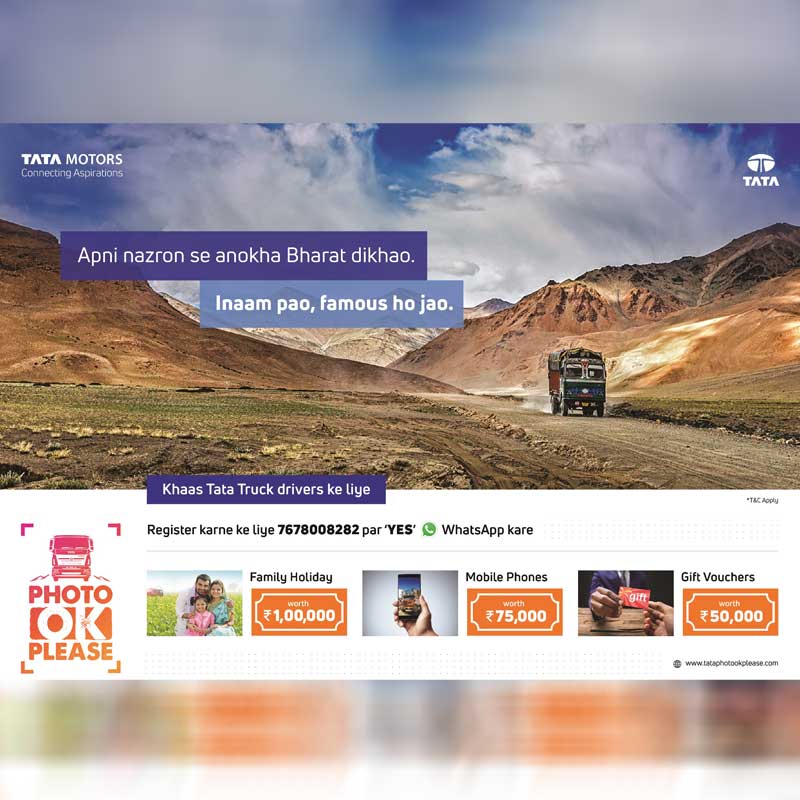
    MUMBAI:  Tata Motors has shared that its brainchild contest ‘Photo OK Please’, an effort to reach out to the trucking community, to recognise the exciting side to their trucking life and encourage digital engagement for the drivers and has been running successfully across the country now. 5500 drivers have registered with more than 13000+ photo entries across 21 cities.

    The unique contest by Tata Motors recognises and rewards the truck drivers as they share photos from their travel experiences. The Tata Trucker drivers get to pass by unique and unseen stretches of India as a regular part of their profession. This makes them privileged in a manner unknown to them and the contest helps them realise their reach and boosts their confidence and contentment in what they do.

    Out of the large volume of image entries received every day from truckers across the country, a daily winner and weekly winner are announced to keep the contest fever alive. Submissions of winners have their names, individual photos, and truck model numbers inscribed with location details on the pictures while posting on social media for recognition enhancement. Out of the top 3 entries selected, the 1st and 2nd prize winners will win family holiday packages worth Rs 75,000 and Rs 40,000 respectively, and the 3rd prize winner will win a smartphone worth Rs 25,000. In addition to these, weekly prizes will also be given out.

    Commenting on the campaign, Tata Motors head marketing communications, CVBU UT Ramprasad said, “At Tata Motors, we are constantly churning unique ways to positively impact the lives of our most important stakeholders, the truck drivers. ‘Photo OK Please’ is meant to be a platform for the drivers to engage with a wider audience and share their experiences on social media. We hope this contest will reveal the lesser known aspect of a truck driver’s life and inspire the youth to consider it as a viable career option. The campaign has received a very encouraging response so far and we look forward to all the wonderful entries still to come.”

    Social platforms such as Instagram, Facebook and WhatsApp are being used to reach truck drivers. The campaign exhibits moments from the lives of the truck drivers on these social media channels and a dedicated website with an extensive promotion of the contest and the entries on television programs and digital channels. A multi-lingual website has been created for the contest, which will be used for registrations, tips, announcing the winners, etc. Additionally, on-ground activation at dealerships is also being carried out.

    The first phase of the year-long campaign ends on 30 March which will be followed by the final winner selection in the first week of April.

  • Dulux Weathershield celebrates Republic Day with #HomesOfTheBrave initiative

    Dulux Weathershield celebrates Republic Day with #HomesOfTheBrave initiative

    MUMBAI:  On the occasion of India’s 70th Republic Day, Dulux Paints from the house of AkzoNobel, a leading paints and coatings company, launched the #HomesOfTheBrave initiative. The campaign aims to celebrate brave hearts of the Indian Armed Forces who leave their homes to protect ours.

    The digital campaign #HomesOfTheBrave showcases the stories of two such personnel from the armed forces: Sumitra Devi, Assistant Sub-Inspector, CRPF; and Ajoy Kumar Rabha, Sipahi, CRPF.

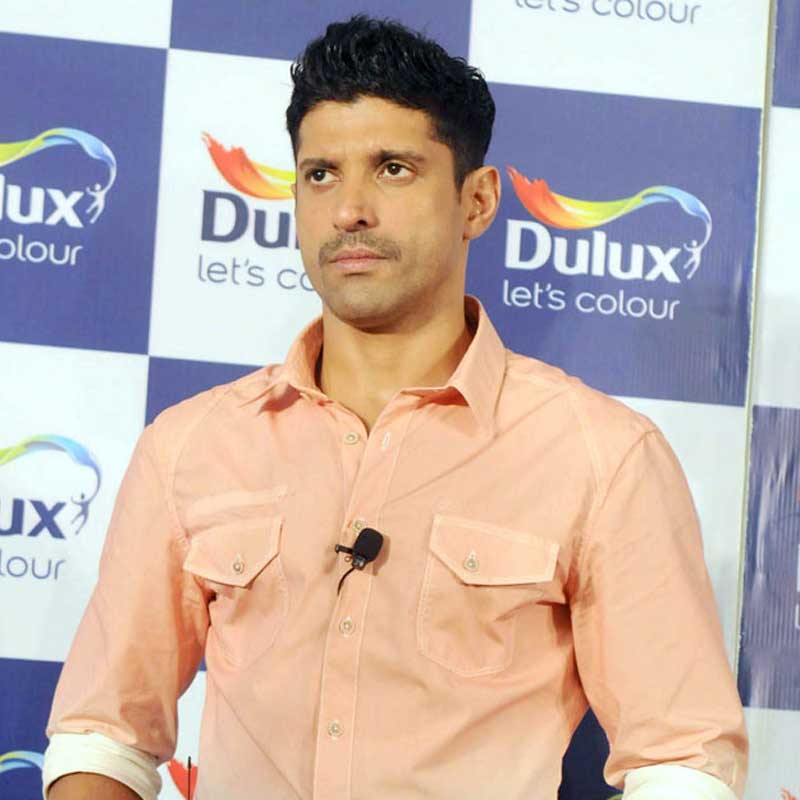
    The video campaign features Farhan Akhtar, the brand ambassador of Dulux. It highlights how the armed forces protect the country while staying away from their homes for extended periods of time. Through #Homesofthebrave, Dulux Weathershield initiated painting the homes of these heroes as a gesture of gratitude and a homecoming gift.

    AkzoNobel India managing director Rajiv Rajgopal said, “The Indian Armed forces have valiantly stood at the borders through tough tides and extreme weather conditions to protect the nation. With Dulux Weathershield’s #Homesofthebrave, we want to celebrate and acknowledge these brave hearts and support them in protecting their homes from the forces of nature.”

  • Taproot Dentsu’s campaign for Network18 CricketNext celebrates opinionated fans

    Taproot Dentsu’s campaign for Network18 CricketNext celebrates opinionated fans

    MUMBAI:  Taproot Dentsu, the creative agency from Dentsu Aegis Network, has rolled out a new campaign for Network 18’s CricketNext app. The app has standard features like live score updates and also acts as a forum for fans voice their opinion and post video comments.

    The campaign aims to celebrate the opinionated fans through two films starring former Indian cricketer, Anil Kumble.

    Speaking about the campaign, Taproot Dentsu creative director Neeraj Kanitkar said, “The all-new CricketNext app is a homage to the ultimate cricket fan who is always ready with an opinion but has nowhere to voice it. This app is a platform where this fan’s every opinion on team selection, on-field strategies etc. is not only heard but welcomed. The TVCs are a dramatic representation of this, with Anil Kumble literally breaking the fourth wall and acknowledging the ultimate fan’s opinion.”

    Network18 group brand advisor Rahul Kansal noted, “Cricket Next is a next level app for the next level fan. Beyond just giving live scores and basic commentary, it invites passionate cricket fans to offer their opinions and share their insights on the game. The film tries to dramatise this promise; that it's an app where fans rule. 

  • Ariel reignites conversations on household inequality with a new campaign – Sons #ShareTheLoad

    Ariel reignites conversations on household inequality with a new campaign – Sons #ShareTheLoad

    MUMBAI: Ariel has been unearthing the reality of inequality within households since 2015 with their award-winning movement #ShareTheLoad. The movement was started in India to address this equality, aspiring for happier households where men and women share the load equally.  Towards this, Ariel has continued to raise pertinent questions that make the audience think, introspect and act. And over the years, this has had a significant impact. More men today are sharing the load than ever before. In 2015, 79%* men thought household chores are a women’s job. In 2016, 63%* men thought household chores are a woman’s / daughter’s job and ‘outside’ work is man’s / son’s job. In 2018, this number has reduced to 52%*. Despite progress, more work is still to be done. Ariel continues to address the issue of Gender Inequality within households and has thus launched their third season of #ShareTheLoad because, with Ariel, anyone can get impeccable cleaning no matter who does the laundry!

    In this newly-released edition of #ShareTheLoad, Ariel raises yet another relevant question- Are we teaching our sons what we are teaching our daughters? Urging mothers to be the changemakers of the society and hence relook at the way they raise their sons. While the weight of external jobs is often split between the couple, women continue to single-handedly take responsibility of the household chores. When husbands are not equipped to share the load with tasks at home, the entire weight of those falls on the women’s shoulders which in-turn impacts their career aspirations and performance at work. A survey by an independent 3rd party in 2018, also revealed that Seven out of Ten women* in India reconsider additional responsibilities at work in order to balance the responsibilities at home.  With the belief that mothers have a strong empathetic point of view, Ariel urges this generation of mothers to raise their children as a generation of equals.

    Through this new film conceptualized by BBDO, Ariel wants to go deeper into the reasons for this disparity and talk about the upbringing of children. Even within the same progressive households, there is often a difference in the way our sons and daughters are being raised. Of late, daughters are being raised to be strong, independent and confident to excel in all fields.  But, they continue to be the primary caretakers of households once they get married. This places unbalanced expectations and burdens on them, which can get in the way of their professional growth. While the society is changing, there is not always enough attention given to raising sons differently. For example, teaching them some new life skills like laundry or cooking, to help better manage their future and make them advocates of household equality. If not taught to #ShareTheLoad, the sons of today become the husbands of tomorrow, who may not be prepared enough to be equal partners.

    Ariel believes in a progressive future and happier households, where both men and women share the load.  In 2015, Ariel raised a very relevant question – ‘Is laundry only a woman’s job?’ to draw attention to the uneven distribution of domestic chores. With the 2016 ‘Dads Share The Load’ movement, the conversation was aimed at unearthing the reason for the disparity, which is the cycle of prejudice passed down from one generation to the next.

    Commenting on the Movement, Sonali Dhawan, Marketing Director, P&G India, and Fabric Care said, “This year, we reignite conversations to go deeper into the cause of this disparity. In the context of right upbringing, we urge this generation of mothers to be the changemakers for the future, and raise yet another pertinent question – Are we teaching our sons what we have been teaching our daughters? If sharing the load is taught at an impressionable age, it becomes a part of their value system. As a mother of a boy and a girl, I truly believe this is possible. I also believe that with Ariel it is possible to simplify the lives of consumers and a happier household is one where both men and women share the load. Ariel encourages men to do their bit and take up tasks like laundry because anyone can get impeccable cleaning with Ariel, no matter who does the laundry.”

    Josy Paul, Creative Director, BBDO adds, “Ariel’s #ShareTheLoad has grown into an active movement for gender equality at home. It has generated greater emotional equity for the brand and has triggered a positive change in society. It is one of India’s most recognized and awarded advertising ideas.  WARC ranked it the world’s most effective campaign for 2017 and 2018. We are excited to launch the next phase of the movement. The new campaign is based on an uncomfortable truth that’s so true for today. In the film, the mother’s realization of an unspoken social conditioning and her determined resolution is thoughtful, sensitive and a big leap for society. Her simple action gives men one more reason to share the load at home.”

    A survey by an independent 3rd party in 2018, also reveals some differences in the male and female approaches. 72% of women believe that weekends are for grocery shopping, laundry and getting homework done while 68% of Indian men believe that weekends are for relaxation. Coming to daily household tasks like laundry, many women continue to single-handedly take responsibility of all the chores. 68% of women come back from work and do laundry regularly, while for men, this number is only 35%. In fact, 40% of Indian men don’t know how to operate a washing machine. Further, more than half of the men agreed that they don’t do laundry as they never saw their fathers do it.

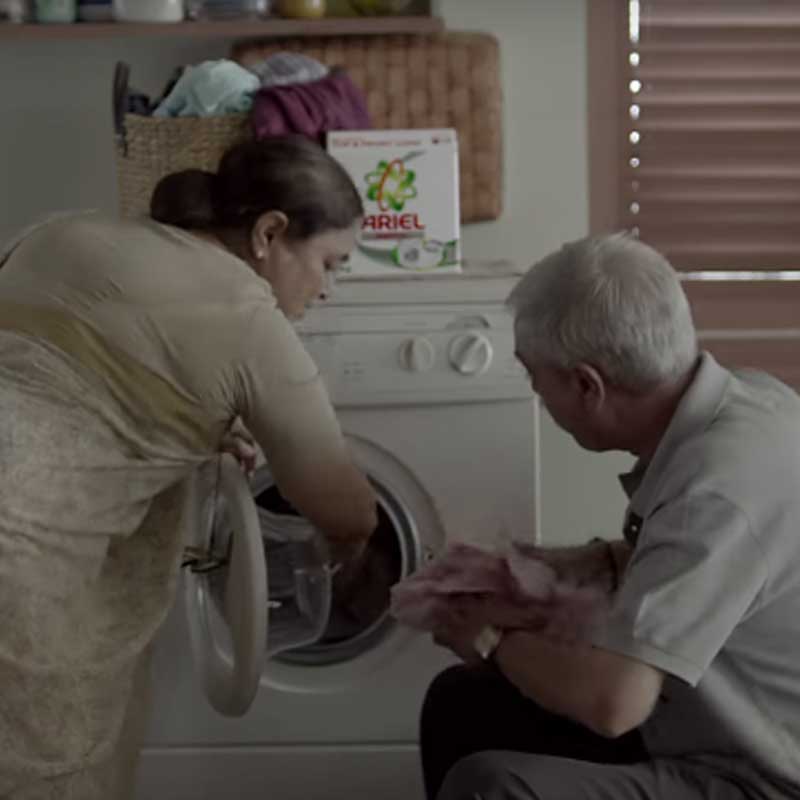
    With laundry at its center, Ariel’s new communication shows a mother teaching her son to do laundry. Ariel believes in not just raising the issue, but also providing a solution so we can move the society to a more equal tomorrow.  Making laundry the face of the movement against this inequality that exists in Indian households, Ariel India with its latest campaign wants mothers to raise a whole new generation of sons who know how to #ShareTheLoad. Because when the sons of today become husbands of tomorrow, they should be equipped to share the load.

  • Bajaj Finserv celebrates the New Year with #FitForLife Campaign

    Bajaj Finserv celebrates the New Year with #FitForLife Campaign

    MUMBAI: Bajaj Finance Ltd, the lending arm of Bajaj Finserv launches #FitForLife campaign to encourage individuals to achieve their New Year fitness resolutions. The company will offer easy EMI schemes on gamut of fitness & wellness products and health treatments. The campaign will commence from January 24th and will go on till January 30th.

    Under this campaign, customers can avail easy EMI offers on products and treatments like gym membership, cycles, gym equipment, sportswear, spa treatments, organic food, water purifier, air purifier, eye care, dental care, hair transplant, cosmetic surgery, bariatric surgery etc. along with other special offers from the partner brands.

    EMI on cycles will starts from Rs. 1,167 and other fitness products at Rs. 999. EMI for hair treatment, eye care, cosmetic and bariatric surgery starts at Rs. 1,818 and spa treatments, gym memberships, organic food, water purifier, air purifier, mattress starts at Rs. 1,667.

    The offer can be availed at 2300+ partner retail stores like VLCC, Dr. Batra, Apollo Health check-up, Sabka Dentist, Partha Dental, True weight, Talwalkars, Gold’s Gym, Hero Cycle, Starkenn, Scott, Track and Trail Cycles, Tata Stryder, Four Fountains Spa, O2 Spa, Kurlon, Sleepwell, Big Bazaar and many more. These special offers can be availed by both existing and new customers of Bajaj Finserv. New customers can connect with the Bajaj Finserv executive at the store to submit their documents & avail the finance option instantly. Existing holders of Bajaj Finserv EMI Network Card can transact using their card.

    The Bajaj Finserv easy EMI option is a monthly instalment-based payment scheme with no hidden costs and most importantly, easy payments.

    Additionally, Bajaj Finserv customers can choose to foreclose their loan anytime without any extra charges and can also choose the tenor most suitable to them to repay on their own terms. This way, customers don't have to worry about immediate payments or about exceeding their budget while shopping.

  • Regional representation in creative teams can help reduce blind spots: Karthik Srinivasan

    Regional representation in creative teams can help reduce blind spots: Karthik Srinivasan

    MUMBAI: If you’re not in tune with the intricacies of a different language, you’re going to land yourself in a soup. Just like Google’s voice assistant Alexa a few months ago when it had censored the word “chhod” (meaning ‘leave’ in English) from a number of popular Hindi songs, as it confused it with an expletive that is spelt the same way when written in English.

    While the world is currently moving in an inner spiral with people and cultures merging, the vernacular is extending outwards. And in an assorted country like India, this trend only deepens. As lucrative as it sounds, advertisers are still struggling to extract the most from this.

    Case in point is the latest ‘Tinda Moments’ campaign by Uber Eats, as highlighted by communications consultant on digital/social media marketing and PR Karthik Srinivasan in a LinkedIn post. Srinivasan, who has earlier worked with companies like Ogilvy, Flipkart, and Edelman, noted that a Tamilian or Malayali might not be able to get the reference of Hindi word ‘Tinda’. He asked an important question, “Is it too much to expect the brand to customise/localise the ad for the regions it is advertising in? Or is it ok in these multi-lingual metro-centric days where having your ad understood by those who can (and if it is assumed to be a sizeable number) is good enough?”

    Indiantelevision.com got in touch with Srinivasan to discuss more on the subject of the need of regional content in the advertising sphere and he shared some interesting insights with us. Edited excerpts follow:

    The need for vernacular content in advertising is rising steadily, especially after the boom of digital media. Most of the marketers are talking about it. But do you think the brands understand this requirement?

    First of all, I would like to note that the term vernacular might not be the best one to describe regional languages. The origin of the word goes back to the varna system in India – it is literally 'language spoken by different coloured people' according to the British. I believe that ‘regional language’ should be used in fact.

    On your question, I'd say that the local brands understand this better than the national brands. Those brands that have a strong regional-decision making team for marketing get this really well. If the decisions are made for all of India, in say a Mumbai or a Delhi, unless the teams have adequate representation from the regions or good, sensible counsel from the agencies, they could miss this aspect. It's hardly ever intentional but more of a blind spot.

    Isn’t it going to cost the brands more if they create the same ad in various languages? How can this progression towards personalised content be made more cost-effective?

    Brands (at least the ones that are national) already do this. Even regional brands, when they go national, do this quite effectively. For example, Manappuram had 8 versions and 8 brand ambassadors, one for each region (Mohanlal, Vikram, Venkatesh, Puneet Rajkumar, Utham Mohanty, Mithun Chakraborty and Sachin Khadekar). I'd not see it as a cost imperative. This is more targetting and effectiveness imperative. Having a nationally known brand ambassador is easy – there are enough Hindi film stars or sports stars, who can be recognised across the country. Having them talk in various regional languages is also a good deal and already happens. But, if you want to reach the heart of a region and not just its eyes, you need to contextualise its communication to appeal to its specific sensibilities. That's not just locally known brand ambassadors, but also locally nuanced content.

    How are programmatic advertising and artificial intelligence contributing to the growth of regional content in advertising space?

    To the best of my knowledge, AI hasn't really caught up with the nuances of Indian regional languages. There are broad efforts to get the basics right, like Google Maps translating names of areas in all Indian languages. But understanding and translating with context to local nuances is quite some time away. Programmatic does help in micro-targeting. There is better awareness in building a pool of localised content and let the right one be used for the right region. But even here, it is the intent that is the starting point. The marketing team should realise the need for localisation first.

    Can you think of any brand that is using regional content to its benefit smartly?

    For instance, take Muthoot's campaign featuring Vidya Balan. The choice of Vidya Balan as a brand ambassador is a good move, given her almost pan-Indian appeal and familiarity. But beyond that, it is very interesting that they use 'Blue' (an English word) as connecting glue for the campaign tagline. 'Blue' is the term for smart entrepreneurs (who get some help from Muthoot Finance, of course). The end tagline, 'Blue hai आत्मविश्वास' (Atmavishwas, meaning confidence) translates to 'நம்பிக்கையின் (Nambikkayin meaning confidence in Tamil) niram blue', for instance. The word blue is not translated and is retained as a common factor to connect across multiple regional languages. If blue was translated too, then the statement may seem different in each language. You can argue that 'neel' in Hindi or 'neelam' in Tamil or similar variants is the most common translation for blue in many Indian languages, but that may not be uniform in all languages. The effort in understanding local nuances and working accordingly shows. Another was an effort by ET Money last year in its “Upar Ki Kamayi” campaign, which was printed in seven different languages for different areas on the same day.

    What can be the key strategies of a brand to design and implement the right form of multi-linguistic content?

    The first, and most basic, is the intent. It is simply recognising the need that regional language content if you have a substantial target audience in that region, will simply work far better in reaching them. It is the humility in accepting that I don't know everything and I can do better by asking around and learning other kinds of effective communication.

    Then you have the strategies and processes. Ad agencies and brands simply need to look for inspiration from the dubbing and subtitling industries in India. If you switch on cable TV and look at any Hindi movie channel during non-peak hours (sometimes even during peak hours), they only play Hindi-dubbed South Indian movies. And that dubbing is done brilliantly, placing the location to Northern regions and even using local Northern dialects and nuances.

    The subtitling industry is also doing some stellar work since that's a basic requirement for films to be shown in OTT platforms. So, much of the subtitles are done professionally, understanding the context within films and not just transliterated. If the film industry can pull it off, there's no reason a far more professional and educated bunch of people in marketing and advertising cannot. It all boils down to the intent and getting the right people.

    How do you see the growth of regional content industry in general?

    I'd say it is the next big frontier. Most large brands like Google, Facebook and Twitter are trying to crack that in order to reach Indians better with better context. Even in the OTT space, there's a profusion of regional language content. From a user interface/user experience perspective too, most of the mobile wallets that are from startups have a multi-lingual interface, while those from larger, legacy banks still lack this feature and use English as default.

    To a large extent, the bigger technology brands are leapfrogging the complexities of written regional language by taking the voice input route. Google and Amazon's smart speakers already recognise and respond to a few Indian regional languages well and are improving.

    Any special pointers you want to share with the brands and marketers regarding the topic?

    The most important one is again on intent. We Indians seldom venture beyond our comfort zone when it comes to languages. For instance, our choice of music or movies is usually in English + our mother tongue. It is only now that subtitles have opened up the audience for all kinds of languages but they remain small. With music, is a classic case – if I ask a Hindi speaking person for his/her favourite Tamil or Telugu songs, the standard reaction would be to name a song from Baahubali (pan-India) and say they don't understand the language so they don't listen. But remember, music was supposed to be universal, and we gladly listen to Latin and Spanish hits from the US, like Despacito! The point is, if your target audience is in Karnataka, get to know the local nuances first and not assume that mere Hindi and English would do. They would, no doubt because most people have been conditioned to learn English and perhaps know functional Hindi too for day-to-day survival in cities, but when they see or hear something in their mother-tongue, the appeal goes straight to the heart. It’s much like you being in another part of India and seeing a car with a number plate from your state!
  • LupinLife’s Corcal Bone & Beauty to bring #Beautifullystrong real women to the ramp

    LupinLife’s Corcal Bone & Beauty to bring #Beautifullystrong real women to the ramp

    MUMBAI: LupinLife’s Corcal Bone and Beauty has announced collaboration with Lakme Fashion Week to celebrate #beautifullystrong women across India at the upcoming Lakme Fashion Week Summer/Resort 2019 edition. Marking its launch in India, the Corcal Bone & Beauty show will bring strong and beautiful women to walk the ramp through an online audition for women across India.

    LupinLife Consumer Healthcare head Anil V Kaushal said, “It’s often seen that women’s health doesn’t receive the attention it deserves. With demanding and multifaceted roles, from homemakers to working women, women’s health usually takes a back seat. Corcal Bone & Beauty is true health and beauty partner of all women which helps them prioritise health – focusing on being healthy within to stay beautiful. Everyone is beautiful the way they are but only good health from within can help stay that way. To create awareness about the link between inner health and beauty, we are delighted to partner with Lakme Fashion Week to showcase a very beautiful collection by designer Rina Singh of Eka as well as have women tell their stories of inner strength and beauty.”

    Speaking on the association, Corcal brand ambassador and Bollywood actor Kareena Kapoor Khan said, “I believe age or life stages should not affect a woman’s career. It’s important not to limit yourself. Women can do it all and I have always enjoyed playing various roles on reel – a warrior princess, model, mother just the way I do in my real life. All of this has been possible because I focus on being healthy inside to stay beautiful outside.  Corcal Bone & Beauty health supplement for women helps them to be healthy within and stay beautiful outside.”

  • Combiflam ICYHOT takes on ‘strong pain’ in new campaign by Ogilvy

    Combiflam ICYHOT takes on ‘strong pain’ in new campaign by Ogilvy

    MUMBAI: Sanofi India – makers of the Combiflam range – has launched the latest ad campaign for its topical analgesic Combiflam ICYHOT.  The ad film has been conceptualised by Ogilvy and drives the ‘Strong pain ko do strong jawab’ message of the brand. The campaign will have a 360 degree approach including TV, digital and on-ground activation.

    As per the brand, the campaign is a clutter-breaking ad with humorous undertones that is bringing smiles on the face of viewers. The ad film was developed on the insight that pain can weigh one down and can derail one’s day to day life. Effective respite from pain can help people get back on track and move forward.

    Sanofi general manager – consumer healthcare, India and South Asia Nikhilesh Kalra said, “We understand how everyday pain affects the quality of life. No matter how much care one takes, physical pain of some sort will find its way to us. Strong pain needs an effective pain relief solution. Combiflam ICYHOT is a topical pain reliever available in gel and spray format for instant and long lasting relief to people suffering from muscle pains and sprains. Given the clutter in the pain segment, our ad is distinctive and hence, memorable, delivering the brand message and the product benefits in an engaging manner.”

    Ogilvy group creative director Srreram Athray said, “The Combiflam ICYHOT film is a quirky take on the pain we may suffer in our everyday lives that end up robbing us of vigour. We tried to deliver the brand message in a way that would resonate with most Indians, in a way never tried before within the category.”

    Ogilvy group creative director Elizabeth Dias added, “The overall look and feel, personification of the characters – strong pain, icy and hot, the hip music lends a really positive vibe to the film and would surely bring a smile to your face.”

  • Brands ride on the 10-year challenge wave

    Brands ride on the 10-year challenge wave

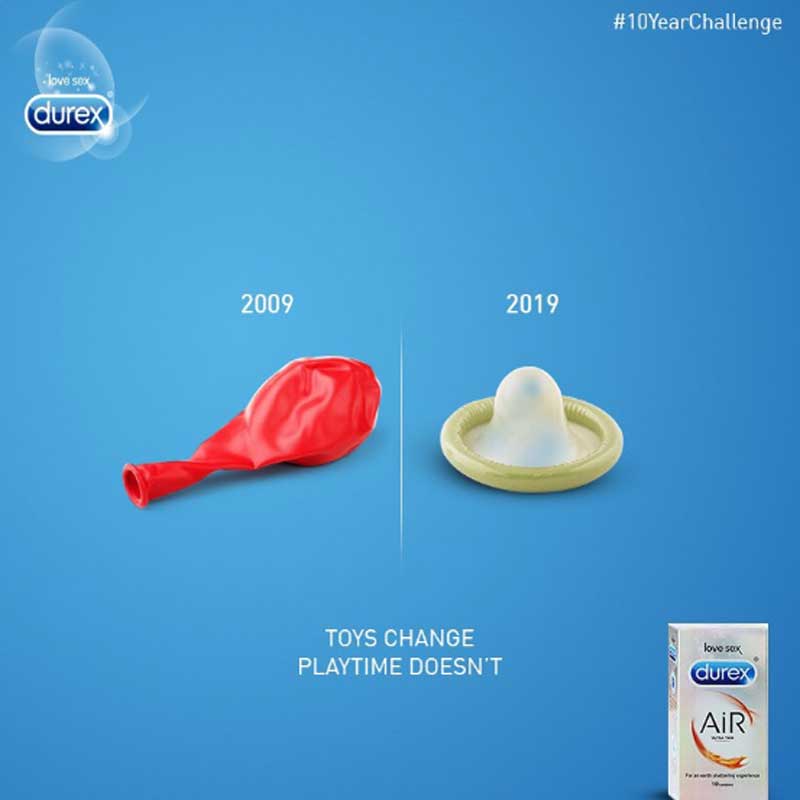
    MUMBAI: While Facebook’s latest viral trend #10YearChallenge is being seen as a negative conspiracy; an attempt to "train a facial recognition algorithm on aging" by many, brands have leveraged the upward tide of its popularity in an interesting manner by sharing their own versions of the challenge. From modest to quirky, the responses are drawing a lot of attention on social media. Check out a few of them below:

    1. Acer boasts about its improved design and efficiency

    2. Durex goes quirky again


    3. Fevicol’s hilarious take on its ‘Mazboot Jod’


    4. Manforce changes the taste of the challenge


    5. Swiggy’s ‘Ladka Nikal Chuka Hai’ is all the assurance you need


    6. Tinder truly drives nostalgia home


    7. Uber Eats brings in the latest viral star to its feed


    8. Talk about personalisation and Zomato is ready with its unique take


    9. Google India changing how we have known things since ever


    While all these brands flowed with the wave of showing changes in the narrative over the past decade, a few brands managed to show how some things never change.

    10. Airtel then and Airtel now


    11. Amul India’s utterly butterly take on its evergreen presence


    12. Kaya promotes its timeless beauty idea

    13. Finolex Pipes shows longevity


    14. KamaSutra India takes pleasure 10 years ahead


    15. KFC India says taste is never out of fashion


    16. Godrej Nature’s Basket brings in a fresh take


    17. Parle G hasn’t changed a bit


  • Dentsu Webchutney, Swiggy help you save an hour every day

    Dentsu Webchutney, Swiggy help you save an hour every day

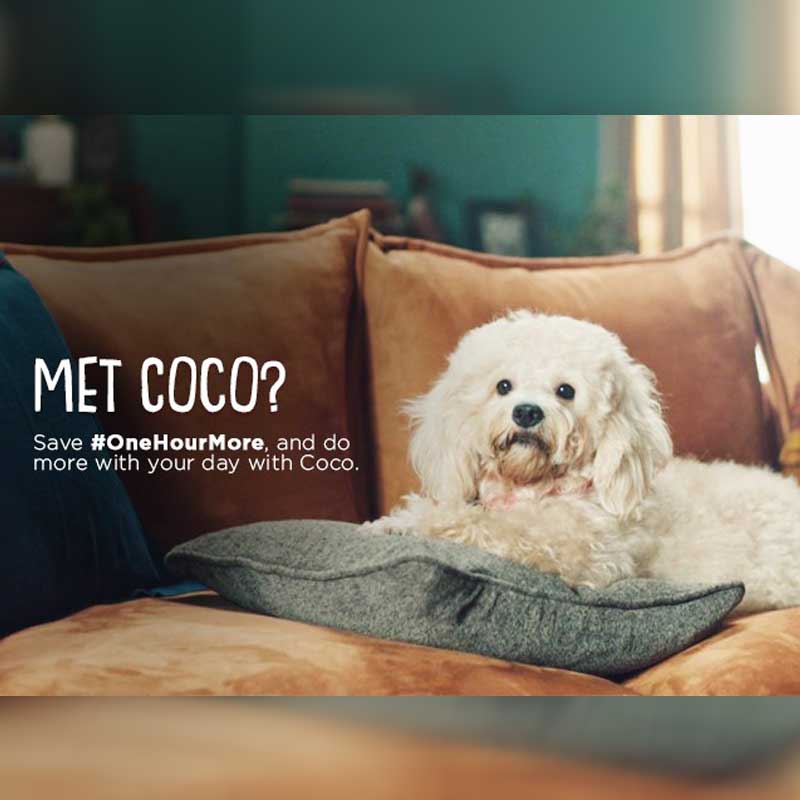
    MUMBAI: For its latest campaign, Swiggy has partnered with Dentsu Webchutney, the digital agency from Dentsu Aegis Network, to tell people how Swiggy can help them save one hour in the day, and what to do with it. In the campaign entitled #OneHourMore, Swiggy’s pup, Coco, shows us that on days when we want an extra hour and choose to leave the food to someone else, there is always Swiggy. 

    Swiggy AVP-marketing Ashish Lingamneni said, “With our hectic schedules and lifestyle, urban Indians are often left struggling to find the time to do the things we love. With the #OneHourMore campaign, we’re channelling a very common thought among all of us- what would I do if I could get a little more time on my hands? As everyday food ordering becomes increasingly common among Indians, Coco, the little pup gives us relatable options we can choose to spend our time on, leaving getting a meal on the table to Swiggy.”

    Dentsu Webchutney, Bangalore associate creative director Ninad Gawhankar said, “With the One Hour More films and microsite, we took a creative spin on the cliché of ‘a dog’s life’, to show that, if you really get down to it, there are ways to take an hour out in the day to do the things you love.”

    The campaign is anchored around two key assets. A film that shows a jumpy little pup that is making the most of his human’s one hour in the kitchen and a unique microsite where he gives you tons of fun suggestions on how to use that additional hour.