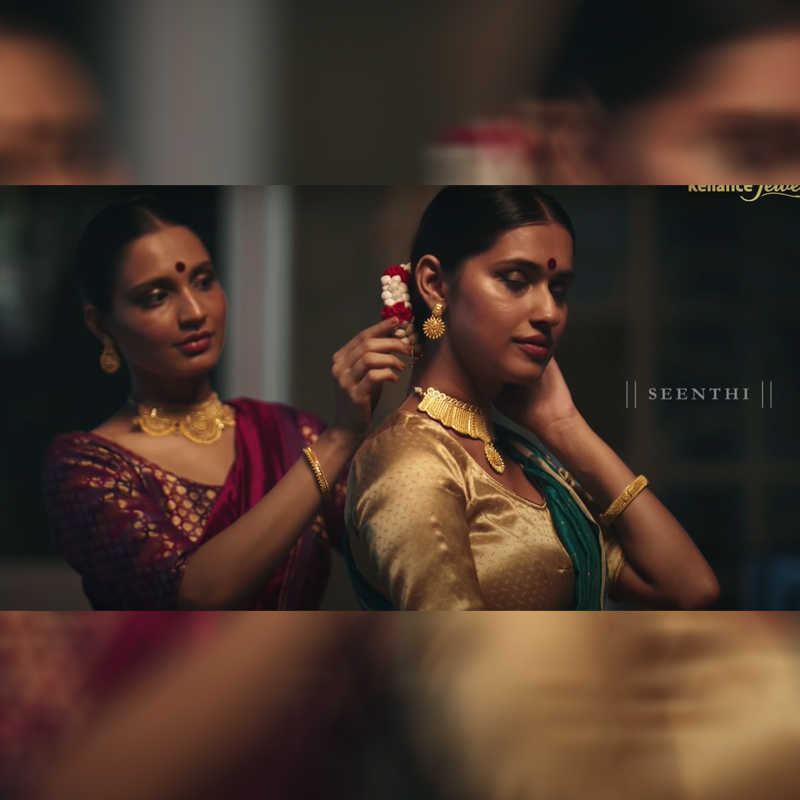
MUMBAI: Reliance Jewels’ has launched a new ad campaign featuring its new festive collection ‘Utkala Where Beauty Rises’, inspired by Odisha's rich art and architectural history.
The film captures patterns and designs that embody the state’s art, tradition and culture, and gives a tour into the culture of Odisha accompanied by glimpses of Odissi music and dance.
Conceptualised by Scarecrow M&C Saatchi, the campaign film features traditional elements and cultural shades of Odisha and is an attempt by Reliance Jewels to exhibit Odisha and its distinctive customs. The video has been shot by Bosco Bhandarkar and produced by Jungle Films. The voice-over is done by celebrity voiceover artist and actress, Manasi Scott. The agency also wrote a Sanskrit shloka for this campaign.
The creative also consists of print shots of the jewellery on models as well as concept shots by photographer Umesh Aher. The music for the campaign is composed by Aman Pant.
Reliance Jewels chief executive officer Sunil Nayak said, "Jewellery communication as a category has become a very seen-it-before kind of imagery. With this campaign, we are looking to break that format and transform the communication into a completely new zone that is quite refreshing to watch and experience for our patrons.”
Scarecrow M&C founder director Saatchi Manish Bhatt added, “It is rare for a brand to give the creative agency an opportunity to explore the rich art heritage of India, its culture, ancient art history, ancient languages like Sanskrit, art forms, and ancient architecture through animation, photography, graphic design, poetry, miniature prop making, and cinematography in one campaign.”
NEW DELHI: Samsung has launched the #HomeFestiveHome consumer campaign to celebrate the indomitable human spirit in these challenging times. As a part of the campaign, there are a slew of festive offers on Samsung televisions and digital appliances.
A very evocative digital campaign, #HomeFestiveHome is aimed to inspire people to enjoy festivals responsibly this year, by staying at home and bonding with family and friends. It showcases how the festivals this year are set to be celebrated with equal fervor, even when people take precautions and stay home, with homemade sweets and delicacies, lighting up the house together, and elbow bumps to greet instead of hugs and high-fives.
The campaign takes viewers on a visual roller coaster ride of celebrating emotions and togetherness. It showcases the little joys of life with a range of Samsung products that makes life at home much more fun, safe, and accommodative for all festive cravings.
“For Samsung, the festive season is a very important time of the year to connect with our consumers nationwide. The theme of #HomeFestiveHome is inspired by the current ongoings. Living spaces have become more intimate than ever before as has peoples’ desire to upgrade homes into festive hubs and rejoice with loved ones. We know, this Diwali, celebrations are going to be even more special and people across the country will leave no stone unturned to make them truly memorable. The campaign is about bringing out creativity and uniqueness while celebrating festivities indoors,” said Samsung India senior director Trivikram Thakore.
"As festivals are a unifying force in this country, so, irrespective of demographics and geographies, we are talking to the entire nation in this campaign," he added.
The ‘Home Festive Home’ deals cover a range of QLED and QLED 8K TVs, UHD TVs, Smart TVs, Spacemax Family Hub™ Refrigerators, Curd Maestro™ Refrigerators, Side-by-Side and Frost Free Refrigerators, FlexWash Washing Machines, AddWash Washing Machines, Washer Dryer Models, Fully Automatic Front Load, and Fully Automatic Top Load Washing Machines, Microwave Ovens and Wind-Free™ Air Conditioners, among others.
Samsung has a tie-up with IPL team 'Mumbai Indians' and the ‘Home Festive Home’ campaign showcases the team’s players as part of the main digital film as well as two others on Samsung’s QLED 8K TVs and its Curd Maestro Refrigerators.
NEW DELHI: One of the Navarasa, hasya (humour) has been an integral part of Indian performance and creative arts since 500 CE. From its presence in the scriptures to medieval performing arts of the nakkal, bhands, bahurupi, bhagatiya, etc in the form of small skits heavy on slapstick comedy, humour has always been a source of entertainment for Indians. At one point in time, Indian movies, be they melodramas or potboilers, were incomplete without the comic relief – an actor whose role was to break the tension with his jokes and shenanigans, without disrupting the narrative.Even the classic action blockbuster Sholay had the characters of Jailer and Soorma Bhopali. Admittedly, it took some time for us to adapt to more subtle and satirical forms of comedy. Take Bollywood for instance – from Mehmood, Asrani and Keshto Mukherjee in the 70s and 80s, to Johnny Lever, Shakti Kapoor and Govinda who ruled the roost in the 90s – there isn’t much difference in their brand of zany, in-your-face humour.
There were filmmakers like Hrishikesh Mukherjee, Basu Chatterjee and writers like Premchand who were experimenting with more subtle forms of comedy, but the attachment of humour with a performance created a blanket view for most of the audience. Certain programmes in the earliest days of television in India were also humorous in nature; ZabaanSambhalKe, Tu Tu Main Main, Ye Jo Hai Zindagi, and Office Office being some examples. Almost all of them relied on a slice-of-life but very heavy-handed humour that aimed to elicit loudguffaws ratherthan leave a pleasant smile on viewers’ faces. A similar flow could very well be traced in the Indian advertising too, of which humour has been a great part.
How Humour Found Its Way In Indian Advertising
"Indian ads have been using humour in various forms for more than five decades. The early ads used to be in cartoon form in newspapers. Then it went to TV and now in digital formats,” Brand Building founder and brand strategist Ambi Parameswaran shares. According to him, humour is just another emotional appeal that connects well with the consumers and has done a good job in increasing the brand propensity among the masses.
Here’s a look at how the element of humour has evolved in Indian advertisements.
The Early Pun-tastic Days
If we look at the early print ads of the 1940s and 1950s, humour was largely missing from all brand communications. Those were the days of long-form, simple, informative copies aimed at hard-selling the products; be it for Rexona, Lux, or Tata Benz.
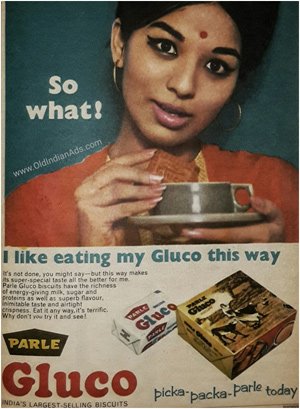
It was in the mid-1960s that brands like Amul and Parle started experimenting with quirkier messaging, thereby introducing humour to Indian advertising. With the use of puns, these brands sought to catch the reader's eye in an instant and also tickle their funny bone.However, the underlying messaging remained the same, indicating the what and why of the product.
Brands like Binaca Talc and political parties like Shiv Sena also made some bold moves with their tongue-in-cheek way of stating things. Both the ads came out in 1967.
The 70s were much braver and incisive with their comedy; Amul took jibes at major social and political matters, while Surf’s Lata Ji tried to claim her territory back from the new entrant Nirma, which offered a similar product experience at a cheaper price.
This was probably the turning point in Indian advertising as brands started getting in more deeply into the humour space. Vicks (Vicks Ki Goli Lo, KhichKhich Door Karo), Luna (Chal Meri Luna La), and LijjatPapad (KurramKurram) were some of the other iconic ads of those days.
The Jibes of the ‘90s & ‘00s
The following two decades saw a great influx of creativity in Indian ad-making. As the economy liberalised, creating greater competition in the market, brands were forced to fight for attention and loyalty. As a result, a great number of print and video ads were churned out during this period.
This era also witnessed a finer form of humour, with personification and exaggeration, taking centre stage. However, most ads still focussed on getting a loud laugh from the viewers. The impact of sitcoms and serials with family values also reflected in the new slice-of-life form of advertising, which had already begun in the 80s but only got refined.
Pepsi (Oye Bubbly), Cadbury (Duniya Dairy Milk Ki Bann Jaye Re), Mentos (Daddu) ads were some of the top commercials to experiment with personification in that era.
As the larger-than-life personalities of the film world made their way to television sets, hyperbole became a key element in many ads, primary examples being the Fevikwik (Chutki Mein Chipkaye), Happydent White (Smile Please), and Center Fresh Fruit (KaisiJeebhLaplapayee) commercials.
Enter The Internet
MICA co-chairperson fellow program in management Prof Varsha Jain states that from 2007 onward, with the advent of the internet and its penetration, humour in advertising took on a new form and direction. As the consumer became smarter, more alert, and better connected with the global world, the ads started becoming more creative, the slapstick humour turned into subtle satire, and more brands started taking into cognizance social and political matters.
Fevikwik (TodoNahi Jodo) is one of the finest examples. Released in 2015, the ad took a beautiful take on the Indo-Pakistan relationship. The Mauka Mauka ads for the World Cup were also very tasteful in their humour.
More recently, there are a number of brands which have had a stunning journey on the funny and quirky side of the scripts. Be it food-delivery platform Swiggy or fantasy sportsapp Dream 11, their ads are always a big hit with netizens.
Brands like Zomato and Durex are making the best use of social media, their moment marketing initiatives always relying on great puns and anecdotes. In the age of internet virality, humour helps businesses make a positive impression on audiences, which can boost revenue and brand awareness.
As per Varsha Jain, humour serves great cognitive benefit for a brand as the ads are more viewable and memorable. That’s why most ads in the early days of advertising were created in a way to start word-of-mouth discussions around the products. This has only transferred to online modes with social media now, but the objective still remains to get people talking.
However, this might not be the only reason making brands stick to funny campaigns with catchy slogans. Another prime reason to play with humour is that the genre allows space for better storytelling in little time, says The Script Room co-founder Ayyappan Raj.
Humour as a genre doesn’t demand much of a scale, therefore offering logistical benefits too. “You can crack a joke in a conversation between two people in a lift, you don’t need to go to Ladakh and do drone shots,” quips Raj.
The Recipe to Strike The Right Chords with Humour
Speaking to Indiantelevision.com on Ad Break, iconic adman Bharat Dabholkar had pointed out that to make humour work, one has to ensure that they stay away from religion, communalism, and sexism; otherwise, pretty much everything can be made to look funny.
Hyper collective founder and global CCO KV Sridhar (Pops) points out that ads with high cultural relevance, quirky, un-dramatised humour and relatable anecdotes for the viewers will always strike the right chords. One perfect example is the ongoing Dream 11’s #ApnaGame campaign.
He adds, “You cannot be offensive or crude in your humour. There is no need to dramatise a joke. If you see today, the donkey campaign (for UpGrad) and the CRED campaigns, they do not work for me at all.”
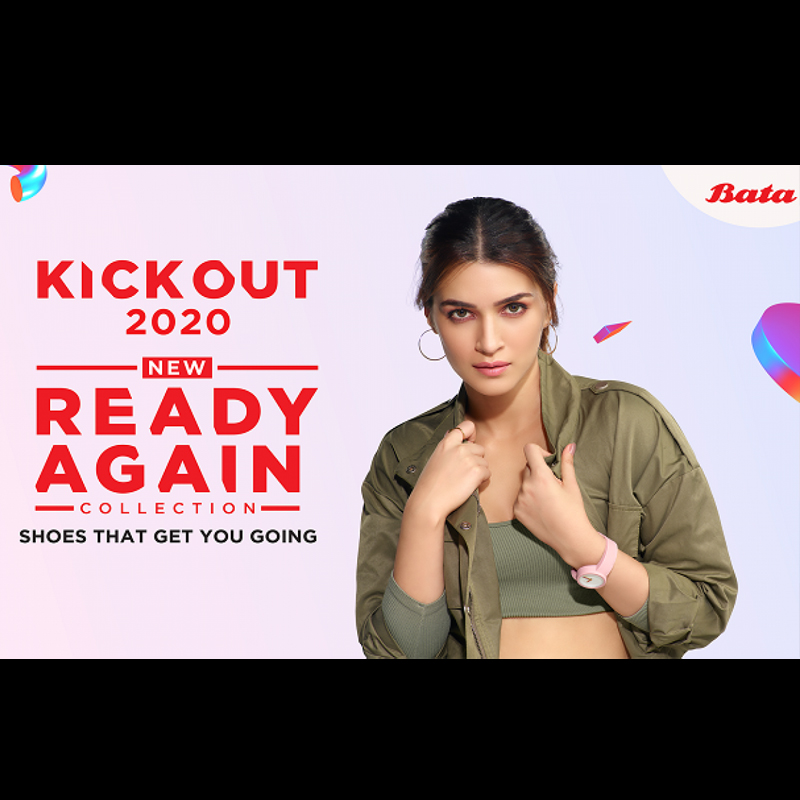
NEW DELHI: The year 2020 has put a dampener on everyone’s spirit with most people having been confined to their homes for the major part of the year. However, to beat the pandemic blues and spread positivity, footwear major Bata India has launched its first big campaign of the year – #KickOut2020. The campaign launch is also accompanied by the launch of new collection – ‘Ready Again’, which comprises of a wide variety of footwear to go with every outfit and occasion. Casuals, festive, fitness, dress, fashion, you name it, the ‘Ready Again’ collection has all the comfortable & stylish designs.
The new campaign urges everyone to kick out 2020 with it all its negativity, take things in their stride, and get ready once again to rejoice in the good times with friends and family, but of course within the purview of reason and safety. Through the campaign, Bata India seeks to boost consumer morale and motivate them to take charge of their lives once again and kick out the mundane blues that captivated lives for long. The brand also urges one and all to follow and ensure all the precautionary measures prescribed by the government and maintain social distancing.
The ‘Kick Out 2020’ TVC, conceptualized by Contract Advertising features Kriti Sanon as she comes back home after shopping at a Bata Store and advises her brother that it is time to kick out 2020. As the TVC progresses, Kriti proceeds to showcase the different shoes she had bought for different occasions, and her excitement at having bought new shoes for working out to be fit, visiting friends and celebrating with family after so long, is quite palpable. She then presents her brother with his ‘new year’ gift-a stylish pair of shoes for his next date. The TVC ends with Kriti urging everyone to kick out 2020 with Bata’s new ‘Ready Again’ collection.
Bata India VP marketing Anand Narang said, “As the Covidstorm continues, people have been stuck at home and adapting to a life of isolation and monotony. As they cope with the mental, physical and emotional stress, at Bata we wanted to inspire them to embrace positivity and focus on the better things in life, to start rebuilding their lives and the economy back. It is now time to kick out all the negativity and by naming our latest collection ‘Ready Again’, we wanted to remind everyone that it is time now to take charge of their lives again and get ready to welcome togetherness, happiness & celebrations. Being from the creative and innovation industry, we didn’t want to sit back and let life pass by. It’s time for brands & marketing fraternity to be original, be agile, to inspire, and remind people to adapt to the new normal and move ahead. We hope that the uplifting tone of the #Kickout2020 campaign along with the message to be Ready Again strikes an emotional chord with consumers, showing the humane &authentic side of the Bata brand.”
Contract India CCO Sagar Mahabaleshwarkar said, “How do you get rid of the most despised year ever? Simple, you just Kickout 2020 and get ready again. That’s the idea behind this campaign. A simple idea that provokes you, makes you think and motivates you. An annual yearend campaign thus turned into something rather unforgettable by Bata India.”
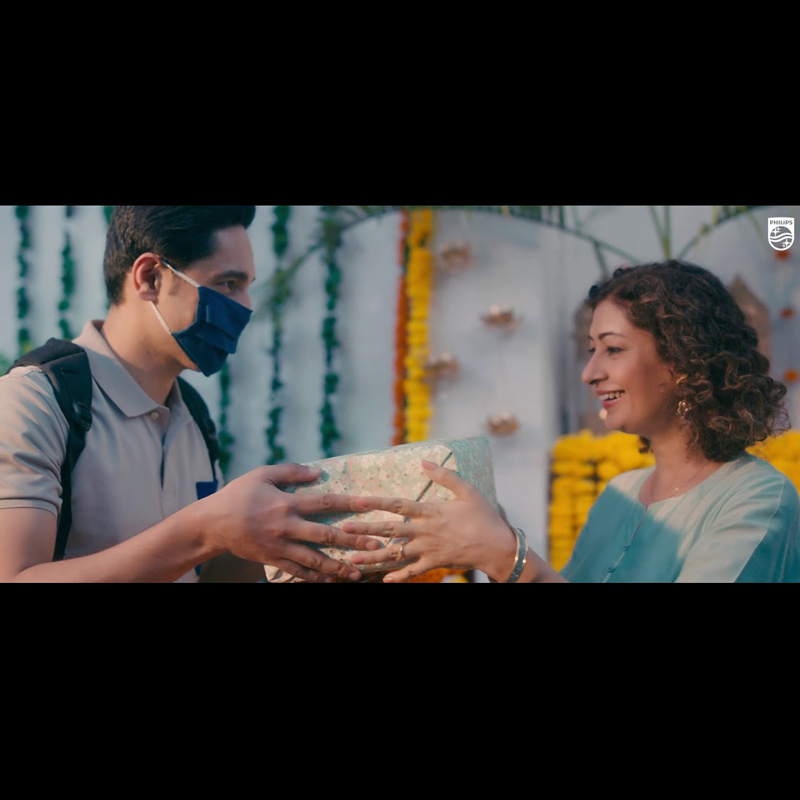
MUMBAI: Philips, a leading player in the consumer electronics segment, has launched a campaign for the festive season titled Khushiyon ki Ladi.
Traditionally, the brand has been a key advertiser during this period because people love to upgrade their homes with electronic devices. A large chunk of people wait for the festive season to buy new goods because they get great discounts, which adds to their celebrations.
The marketing objective of Philips is to revive the spirit of celebration this Diwali, and as a result revive people’s need to make a purchase for their home.
Conceptualised by Ogilvy, the film talks about how each one of us can ignite a Khushiyon ki Ladi or string of happiness. The film illustrates how joy and prosperity can trickle down from one family to another this Diwali – all triggered by one single purchase. Besides film, the campaign extends to other media like Instagram stories, carousels, print and point-of-sale.
The key challenge was to devise a festive campaign keeping in mind the sensitivity of the time. The country is still very much in the middle of the pandemic and an economic crisis. Full blown celebrations are not expected as these have limitations and challenges. Therefore, people are not yet ready to celebrate in a full-blown manner.
The agency shares that when it sat down to think on the communication strategy, it realised that the power to evoke joy and reinvigorate the economy lies in the hands of a single individual. Any purchase made, no matter how big or small, can help make someone else’s Diwali. This becomes especially relevant in the context of India slowly opening up post-lockdown.
Ogilvy (north), chief creative officer, Ritu Sharda said, “We’re all expecting Diwali to be a little different this year, but we’re hoping something will still spark that infectious festive spirit. In some way or the other, we will all celebrate Diwali together. So, we thought why don’t we light a ladi this year, a slightly different one, but one that involves everyone. The beauty is that any one person can spark off this Khushiyon ki Ladi, a ladi that quietly but surely, spreads joy from one home to another.”
It will be interesting to see how the festive season pans out for the consumer electronics segment.
Dollar Industries has unveiled a new campaign to promote its existing range of Dollar Bigboss and Dollar Missy.
The company said that it explores many aspects of self, audaciously embracing and showcasing a collective individuality and shattering of the status quo.
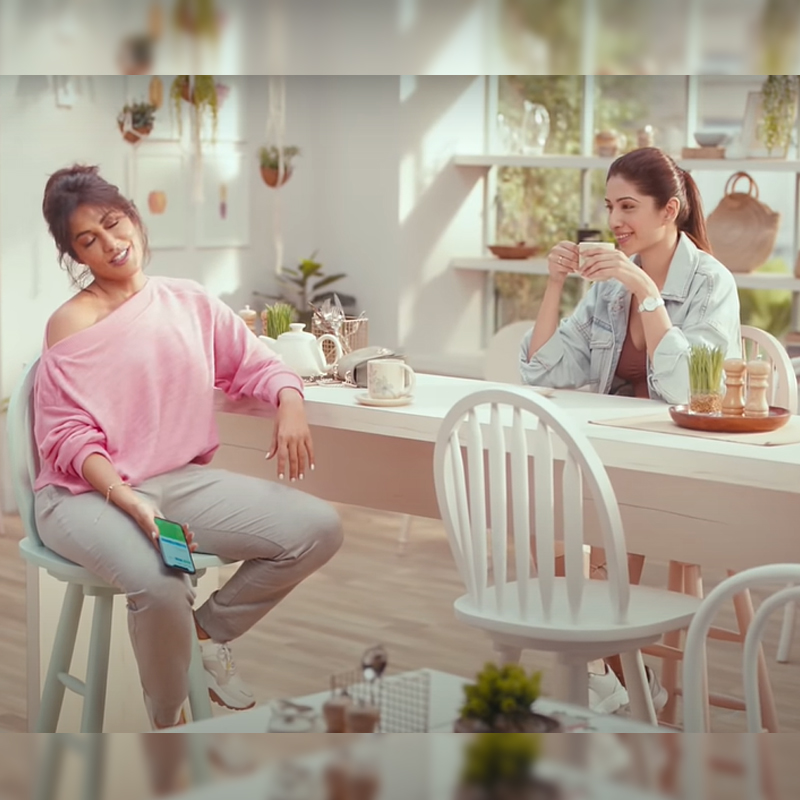
The Dollar Missy campaign film, featuring Bollywood star Chitrangada Singh contradicts the popular philosophy of women prolonging to dress up, the campaign showcases how Dollar Missy enables today’s Gen Y woman to get ready in a jiffy so that she may seamlessly juggle between her personal, official and social lives.
The Dollar Bigboss commercial starring Akshay Kumar reveals the actor’s perfect clone effectively devised, failing in one final and most vital test. Unlike the Dollar Bigboss vest worn by Akshay, his clone’s vest gets easily ripped off portraying only the original brand can stand up to the test of advanced strength and durability.
Developed by Lowe Lintas Kolkata, it reflects the brand’s alacrity to adapt to changing consumer trends and break existing stereotypes when it comes to fashion, both for men and women.
Both the commercials have been directed by ad film maker, Shiven Surendranath. The campaign has been released on both electronic and online platforms.
Dollar Industries MD Vinod Kumar Gupta said, “With our decade long association with Akshay Kumar, our brand has witnessed a 3x growth. Coming to Dollar Missy, for women, armed with an enviable range of womenswear, we felt it was time for us to break old-standing beliefs as well. Our festive collection consists of 102 colors to choose from. The leggings cater to various occasions and are a perfect fit for women across various leagues of life.”
Lowe Lintas regional creative officer Janmenjoy Mohanty said, “Akshay is a brilliant actor who pulls off the film with flying colours. With regards to Missy, the concept was derived from the product itself. These easy-to-slip-on legwear are meant for a wide variety of occasions and uses and lends itself perfectly to the idea that today’s multi-tasking woman is game for #SpeedDressing.”
NEW DELHI: Bolo Indya, the fastest growing short-form video content platform has partnered with Niine, the leading hygiene and personal Care brand as its “hygiene partner” to create social awareness on “menstrual hygiene” amongst its women users on the platform.
As part of the partnership, Niine launches #letstalk periods- 7 days campaign, starting from 11 October exclusively on the Bolo Indya platform, invites users and creators to post engaging video content, highlighting various myths around menstruation while also challenging the country’s entrenched taboos about menstruation.
During the campaign, Niine will also be posting various experts' videos on their official page on the Bolo Indya platform to create awareness on menstrual hygiene and share valuable tips on the subject.
Bolo Indya co-founder and CEO Varun Saxena said, “We take pride in joining hands with a responsible brand like Niine who is tirelessly working towards bringing social awareness around the much neglected subject of women’s personal hygiene in the Country. 42 per cent videos created on a daily basis are by female Bolo Indyans who on an average have 100K+ follower base, thus would act as the perfect influencers to convey the message to deeper towns and cities of India”. “On the sidelines of International girl child day, we at Bolo Indya remain committed to join Niine in this important mission to eradicate the social taboo around menstrual hygiene” he further added.
Niine co-founder Sharat said, “Awareness about menstrual hygiene is a must and our partnership with Bolo Indya will ensure a wider reach amongst tier 2/3 cities where menstruation still remains as a taboo. It’s time the masses talk period”
“Niine’s campaign, #LetsTalkPeriods aims at breaking the taboos around Menstruation and encourages both men and women to talk about it openly. Bolo Indya provides us a platform to change mindsets and take a stand for women and girls for their menstrual hygiene” He further added.
How to participate in the campaign
● Open Bolo Indya app
● Click on #Letstalkperiods hashtag to participate
● Users can create original engaging video content with songs having red in it
● Women users can also switch their profile picture wearing red and post videos celebrating menstruation, while discussing the myths associated with it in an engaging way.
● Share, reshare the content created on the platform via other social media handles such as Instagram, youtube etc tagging Bolo Indya and Niine for enhancing the reach and engagement
Daily winners will be announced by Bolo Indya on the platform as well as other official social media handles of Bolo Indya and Niine basis the content quality, its reach and engagement and will get goodies and gift hampers from Niine.
Bolo Indya is the fastest growing short-video content platform with over 65 monthly active users and is present in over 14 languages in the Country. Niine Hygiene and Personal Care has been actively working and are committed towards making menstrual hygiene accessible to all. Niine is also the principal sponsor for Rajasthan Royals, for the Indian Premier League 2020 this year.
NEW DELHI: Rabindranath Tagore described the fragrance of autumn as one of shiuli flowers and incense. But the poet forgot one little thing – for Bengalis, the autumn air is charged with anticipation for Durga Puja, or pujo. Everyone – from the young and the old, prosperous or modest – comes together to celebrate this annual festival. Family gatherings, pandal hopping and festive shopping are de rigueur. But in the new normal post Covid2019, pujo will be different this year. What hasn’t changed is the zest for pujo in the heart of every Bengali: for it is not just a festival, but an emotion.
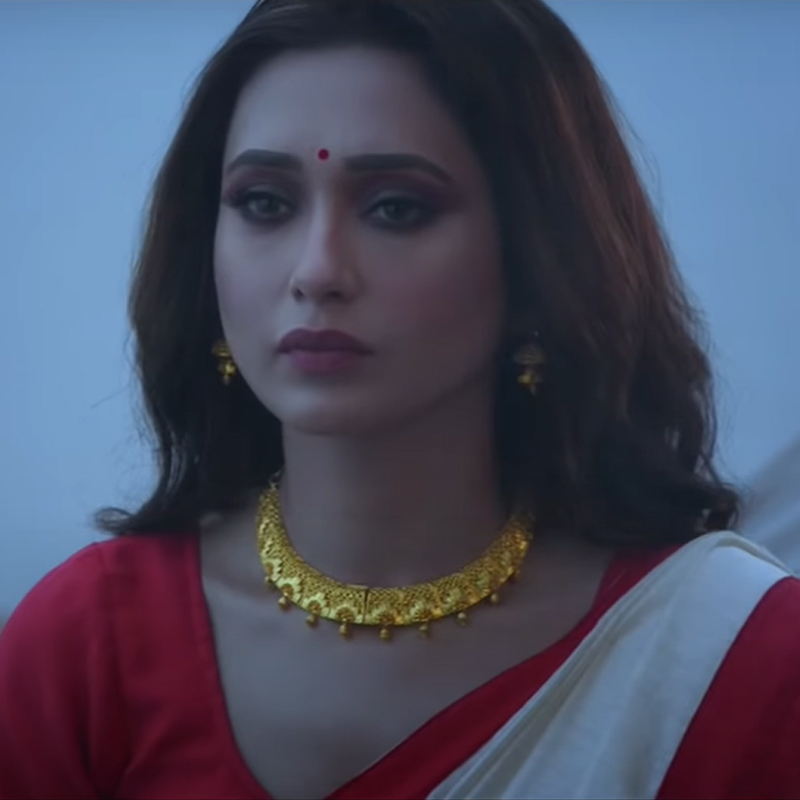
With this sentiment, jewellery brand Tanishq has launched its new campaign Ekotai Shundor, Ekotai Shokti (unity is beautiful, unity is strength), an ode to the resilient spirit of Bengalis. The campaign intends to kick start the season of celebration and encourages people to come together while adhering to safety norms.
Conceptualized by Tanishq and WYP Brand Solutions, the campaign features popular Bengali actress Mimi Chakraborty, who is also brand ambassador of Tanishq for the east region. The campaign dwells on the lore of Pujo and the myths of Maa Durga and is shot against the backdrop of rituals and traditions which are integral to Pujo.
The campaign attempts to put across the message, more relevant than ever in these times, that one cannot battle it out alone and the true essence of victory lies in the spirit of oneness.
The campaign also celebrates the Karigars and the entire ecosystem who infuse life into every aspect of pujo celebrations – from the potters who shape up Maa’s protima (statue) with dedication, to the daaker shaajer shilpi, to the ones who mould the dhunuchis (earthen incense burners) and craft the pradips (lamps) out of brass – essentially everyone who adorns Maa in all her festive glory.
Also pujo is not only a festival but also an industry which provides livelihood to various craftsmen. This year, the pandemic and cyclone Amphan have significantly impacted the overall wellbeing of karigars and the entire value chain associated with jewellery making.
With their campaign Ekotai Shundor, Ekotai Shokti, Tanishq urges Bengali women to make its latest collection – Aparajita a part of their pujo celebration and appreciate the efforts of Bengal’s karigars for their contribution. The new collection in yellow gold inspired by Bengali traditional designs is exclusively curated for Bengalis, and was released ahead of festive season this year.
Explaining the rationale behind the new campaign, Tanishq GM marketing Ranjani Krishnaswamy said that the campaign has been crafted to instill hope, positivity, and oneness which are intrinsic to pujo celebrations. “First came the pandemic and then came Aamphan and along with it, the realisation as to how no one can battle these adversities all alone. The campaign is inspired by the symbolism of Ma Durga, her avatar of Aparajita and the invincible force she represents.”
He described the campaign as an ode to the countless craftsmen for whom these few days of festivities are a crucial source of livelihood. “Even with reduced demand, they are pouring in their artistry with utmost dedication! These karigars are the foundation of the festivities, involved in evoking faith and devotion through the celebrations,” he added.
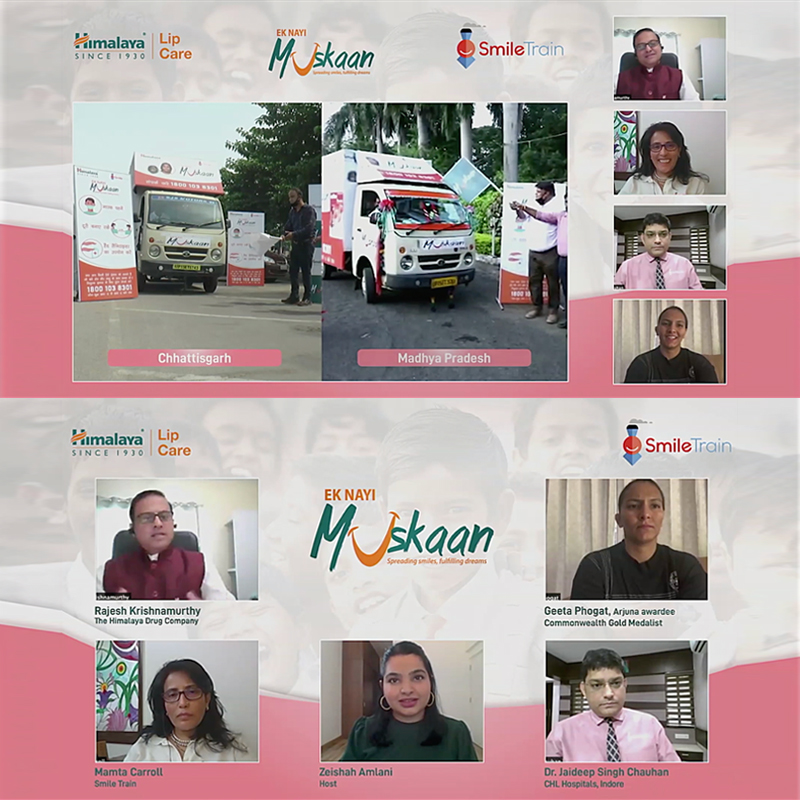
BENGALURU: On the eve of World Smile Day, wellness brand The Himalaya Drug Company rolled out its flagship social impact initiative, Muskaan, to spread awareness about cleft lip and palate conditions. In partnership with Smile Train, the world’s leading cleft lipand palate charity, the initiative will support free life-saving cleft treatment to children in need.
Through the EkNayi Muskaancampaign, Himalaya Lip Care will focus on educating people about cleft lip and the availability of corrective treatments at the grassroots level. The awareness drive kickstarted with a heart-warming video capturing the inspirational story of eight-year-old Munmun. The film portrays how Munmun’s life was transformed with safe cleft surgery.
As part of the initiative, a multimedia awareness campaign has started reaching out to people across Madhya Pradesh and Chhattisgarh. Smile Train India’s toll-free Cleft Helpline, 1800-103-8301, is available for people to enquire about cleft and avail free cleft treatment.
This year’s campaign featured Arjuna awardee and Commonwealth gold medallist Geeta Phogat, who extended her support to the initiative.
“As a wrestler, I have faced multiple challenges throughout my journey, but never let go of my dreams. Every child has a dream, and the ability to achieve the dream should not be limited by a medical condition like cleft. I am extremely happy to be associated with Muskaan, which has been helping children lead a healthy, happy, and fulfilling life. Such initiatives show how a simple surgery can transform the life of children and help them discover a better future,” said Phogat.
Every year in India, more than 35,000 babies are born with a cleft. This can greatly impact their ability to thrive, as having an untreated cleft can cause difficulties in eating, breathing, hearing, and speaking.Smile Train VP and regional director Asia Mamta Carroll said it is imperative to generate awareness around cleft and the importance of early medical intervention.
“There is a lack of awareness that cleft can often be treated with a safe surgery. With enhanced safety guidelines to protect both patients and health workers, our partner hospitals across Madhya Pradesh and Chhattisgarh are now slowly resuming cleft surgeries and we are supporting free treatment for cleft patients,” Carroll elaborated.
Rajesh Krishnamurthy, business director of consumer products divisionat The Himalaya Drug Company believes that the social awareness campaign is true to the brand’s spirit of spreading happiness through wellness and changing lives for the better.
“EkNayi Muskaan is very close to our hearts. Through our partnership with Smile Train India, we have brought smiles to a lot of families across India in the past five years by facilitating free cleft surgeries for their children. Our endeavour is to continue transforming the lives of many more children living with cleft and help them achieve their dreams,” he said.
Himalaya Lip Care has been consistently spearheading cleft care awareness and making efforts to bring many more smiles to children across the country through Muskaan. In addition to creating awareness, Rs 3 is contributed towards Muskaan with the sale of every Himalaya Lip Care product.
NEW DELHI: Bajaj Pulsar has been a trailblazer in changing the face of the Indian motorcycle industry singlehandedly, with its unique communication and product line-up. And it is all set to blaze new trails in this new campaign that highlights the performance and technology of its range of motorcycles, with a very relevant message going out to all riders. More than just a TVC, it’s going to be the new way we ride in the challenging time of today.
The pandemic has changed our lives in more ways than one. And now, in the new normal, the new habits acquired are here to stay. A motorcycle has become one of the safest modes of travel in these times. But the Pulsar is no ordinary motorcycle; it follows the new rules of the game in its signature style! It is no secret that the Pulsar is a thrill machine. And thrill is the code it always lives by. No matter how times change, the one aspect that will bind every pulsar rider will be the thrill of riding it.
The TVC features two riders performing gravity defying stunts with just one underlying rule, maintaining a minimum of 6 feet distance (’2 gaj ki doori’) between them at all times. Highlighting the adherence to the new normal, yet at the same time, not forgetting the desire to thrill.
Bajaj Auto head of marketing Narayan Sundararaman said, “Pulsar as a brand has always been the one to break boundaries and set new benchmarks. Be it technology or gravity-defying stunts, Bajaj Pulsar has always aspired to inspire. With new rules being written in this new age, what does not change is the fact that the product range designed and developed in India is still a bestseller and a world-beater. There is also a surprise for our legions of Pulsarmaniacs where they get a sneak peek of the new Pulsar NS editions in the film.”
Ogilvy India chief creative officer Sukesh Nayak says, “Pulsar ‘Two chalk lines’ is about our spirit of never giving up. It’s about us having the courage to ride out of this challenge too.”
Pulsar currently has variants ranging from Pulsar 125 to the flagship Pulsar RS200. This year it launched a new Split Seat variant in Pulsar 125 with an aim to expand its presence in the segment further by giving the sportiest offering amongst the peers.