Category: Ad Campaigns

  • Breathe easy burnout is not your creative destiny

    Breathe easy burnout is not your creative destiny

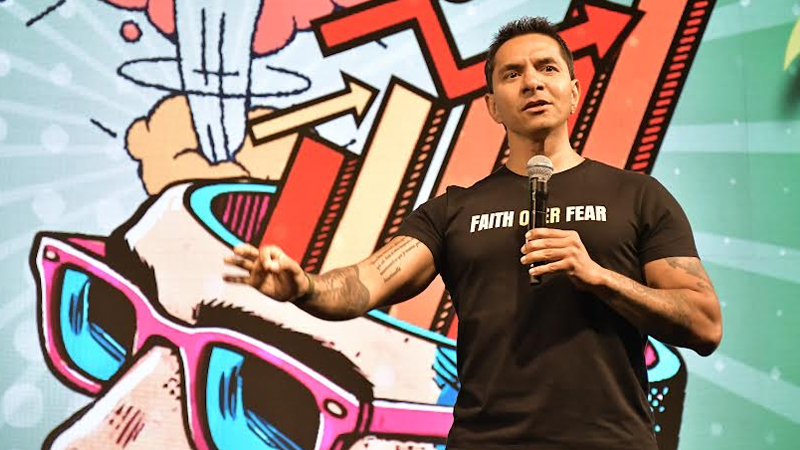
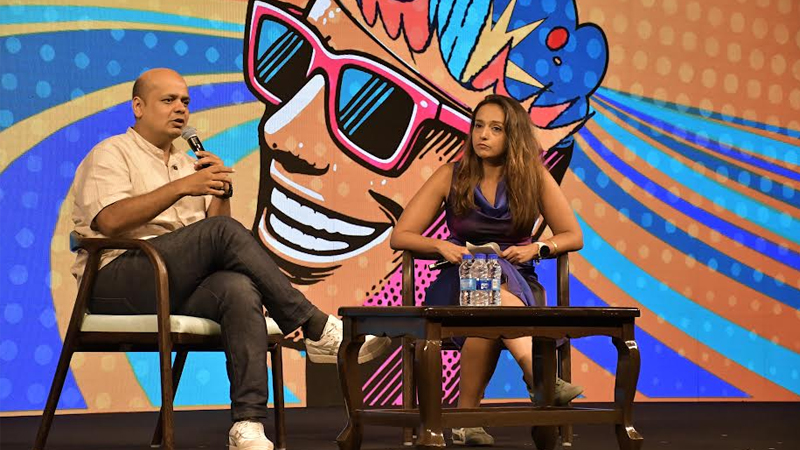
    MUMBAI: Tired is not a personality trait. And if your big ideas feel more foggy than fiery, wellness expert Luke Coutinho might know why. At the Goa Fest 2025 fireside chat with VML India’s Babita Baruah, he unpacked the anatomy of burnout and why hustle culture is creativity’s worst enemy. “Are you exhausted or just on autopilot?” That was Luke Coutinho’s call to action to a room full of creative professionals who raised their hands at the mere mention of burnout. But Coutinho, integrative medicine expert and long-time advisor to India’s armed forces wasn’t here to peddle another green juice. He was here to challenge the cult of grind and offer a surprisingly simple antidote: adapt.

    Burnout, he explained, isn’t just about being busy. It’s chronic stress that numbs joy, dulls creativity, and disconnects people from the very things that once brought them meaning. “It’s when your favourite song doesn’t hit the same, your child’s smile doesn’t light you up, and your morning coffee is just a prop to survive,” he said.

    Contrary to social media’s rigid checklists, Coutinho advised attendees to stop chasing generic wellness trends and instead tailor health practices to their own lives. “Trying to live like a reel will burn you out faster than your deadlines,” he quipped. The solution? A mindful mix of food, sleep, movement, and emotion.

    Four lifestyle levers for creative spark:

    ●    Nutrition: Ditch junk and stimulants. They tank energy and ideas.

    ●    Sleep: It’s not about waking up early, it’s about completing your sleep cycle.

    ●    Emotional wellness: Channel pain into power, not procrastination.

    ●    Movement: Walk, stretch, breathe—endorphins boost the prefrontal cortex, your creative HQ.

    Coutinho dismantled hustle culture as “glorified exhaustion”. Instead, he urged for a shift from performative busyness to “purposeful urgency”. As proof, he shared a story about the architect of Dubai’s Burj Khalifa who, before his big pitch, didn’t power through but went for a swim to reconnect with himself. “Stillness before action. That’s how true creativity emerges,” said Coutinho.

    He also offered a practical fix: six minutes a day. That’s all you need, he said, to begin rewiring your burnout brain:

    1.    Mind Sweep (Morning) – List 3 things you’re grateful for. Set a daily intention.

    2.    Breath Stacking (Midday) – Take 8–10 deep, slow breaths. Reset.

    3.    Digital Sunset (Evening) – Switch off all screens and reflect on a small win.

    These micro-rituals anchor you in the present, a place creatives rarely linger.

    He concluded with a reality check shaped by his work with terminal patients: “Not one of them talks about their titles or salary. They remember love, laughter, and memories.” The lesson? Life isn’t a sprint, and your legacy won’t be built in unread emails.

    So the next time your creativity stalls, don’t scroll or sprint pause, breathe, and ask: what really makes me feel alive?
  • Clickbait to clean slate as HUL leads media trust reset drive

    Clickbait to clean slate as HUL leads media trust reset drive

     MUMBAI: What’s invisible, expensive, and possibly not even human? Thirty percent of your ad impressions. Hindustan Unilever Ltd (HUL),  head of media and digital marketing Tejas Apte didn’t mince words at Goa Fest 2025 as he peeled back the pixel-perfect surface of digital advertising to reveal a mess of murky metrics and media mayhem.

    Speaking in a session titled ‘Building a Safer, Smarter, Cleaner Media Ecosystem’, Apte laid bare the underbelly of modern marketing where ad fraud, bot views, and misuse of data are quietly eating away at ROI and trust. With up to 30 per cent of digital impressions possibly fake, brands aren’t just losing money; they’re losing credibility.

    “Legacy media had a balance subscription and ad-funded models. But digital is almost entirely ad-funded,” he noted. “And that makes transparency and safety non-negotiable.”

    As part of the Indian Society of Advertisers (ISA), HUL has taken a lead in drafting a four-point media charter that aims to disinfect digital with real-world rigour:Safe placements for both brands and users, Viewability standards to filter out the fake, Fraud prevention that spans all formats and platforms, Responsible first-party data usage grounded in clear consent.

    Apte underscored that these principles weren’t just boardroom theory, they were co-created with platforms like Google and Meta, ensuring that everyone speaks the same metric language. The focus is shifting from shallow click metrics to meaningful business outcomes.

    The ad world’s changing algorithm isn’t just affecting platforms, it’s rewriting agency job descriptions. With automation and AI replacing mechanical tasks, Apte sees agencies morphing from campaign vendors to strategic business partners. “In-housing is real, but rarely complete. Agencies remain critical, if they evolve from service delivery to impact delivery.”

    While some brands are building internal muscle, the ISA charter pushes for an ecosystem-wide adoption from nimble startups to legacy giants. The ultimate goal? A future where every impression counts, every ad is seen by a human, and every click has consequence.

    Practising what they preach, HUL has already implemented these guidelines internally. The result? Sharper first-party data strategies, better media ROI, and a wave of new, trustworthy media partners.

    So, next time your ad gets a million impressions, pause to ask were any of them real? Or are we all just chasing ghosts in the machine?

    As Apte put it with a smile, “Click fraud is not just a tech issue. It’s a trust issue.”

  • Gender bender agenda breaks bias on brands’ storytelling assembly line

    Gender bender agenda breaks bias on brands’ storytelling assembly line

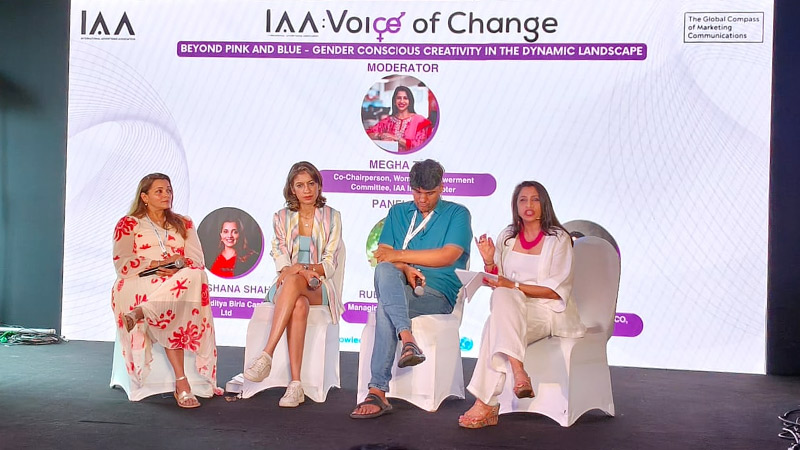
    MUMBAI: Stirring the pot, not the soup, panel shreds the gender script in adland, Forget ‘pink for girls’ and ‘blue for boys’ at the GoaFest 2025 panel Beyond Pink and Blue, industry leaders dismantled the creative clichés still haunting adland like ghosts of campaigns past. From financial services to fashion, panelists shared both their victories and roadblocks in trying to make marketing more inclusive, authentic, and frankly, less boring.

    Moderated by Megha Tata, the discussion brought together voices from across the spectrum like Aditya Birla Capital CMO Darshana Shah, Neil Patel Digital MD Rubeena Singh, Talented co-founder and CCO P.G. Aditya, and Makemytrip CMO Raj Rishi Singh.

    Darshana Shah laid bare the startling findings of a study supported by UNICEF and the Gina Davis Institute: of over 1,000 TV and digital ads analysed using AI, women appeared as often as men but were largely stuck in kitchens or beauty aisles. Men, unsurprisingly, got to handle the chequebooks and cars.

    Even more worrying was how these stereotypes are being hardcoded into generative AI tools. Shah recalled prompting image generators for a 40-year-old Indian woman, only to be served stocky brown-skinned figures wearing bindis with yoga pants. “Even when you say ‘no saree,’ the AI insists on putting her in one,” she quipped, pointing out how algorithms are learning from outdated media input.

    As she explained, “We’re teaching AI stereotypes faster than we’re unlearning them ourselves.”

    Despite leading marketing in a “quintessentially male-targeted” financial services firm, Shah has spearheaded campaigns like Motherhood on Hold, addressing the rising trend of women delaying childbirth due to financial independence. A staggering 45% of Indian women now make that choice, a reality rarely reflected in advertising.

    Still, progress hits walls. Shah shared how she turned down a bold campaign idea around gender-transition challenges in financial documentation simply because the infrastructure and regulation weren’t ready. “We can’t just talk inclusivity if the backend systems still say ‘no’ to identity updates,” she said candidly.

    P.G. Aditiya offered a refreshingly blunt perspective: “Old tropes are not just sexist, they’re creatively lazy.” Behind Talented’s much-lauded work for brands like Tanishq and Urban Company, he credited not just client bravery, but female creators leading the charge from strategy to direction.

    He urged agencies to reframe inclusivity not just as ‘good business’ but ‘good storytelling’. Referencing the Bechdel Test (which Shawshank Redemption famously flunks), he said creatives should challenge the tired setups: men watching TV while women cook. “If your ad only works with that setup, your idea probably isn’t strong enough,” he said.

    Digital may be dynamic, but it’s not immune to legacy mindsets. Rubeena Singh observed that while Gen Z consumers fluidly reject binary gender norms, media decision-makers largely male and over 45, still cling to archaic assumptions.

    From fertility brands that shy away from including men in IVF discussions, to women’s safety campaigns unwilling to speak to male allies, Singh said, “We’ve won some battles, but most briefs still come in wearing blinders.”

    And when briefs do break bias? “It’s usually the younger teams pushing it,” she said, advocating for greater representation at all levels—especially in client rooms where bold ideas often get neutered.

    Across the board, the panel agreed: change starts with who’s in the room. Shah now insists on reviewing director lists for gender diversity before any campaign shoot. “If we want diverse stories, we need diverse storytellers,” she said.

    The path to gender-conscious creativity may not be smooth, but panels like this prove the appetite for transformation is alive and well. As one speaker put it, “Doing the right thing is also often the more interesting creative path.”

    Now that’s a plot twist adland could use.

  • Shahid Kapoor joins Taapsee Pannu to put the ‘eye’ in style for Vogue Eyewear

    Shahid Kapoor joins Taapsee Pannu to put the ‘eye’ in style for Vogue Eyewear

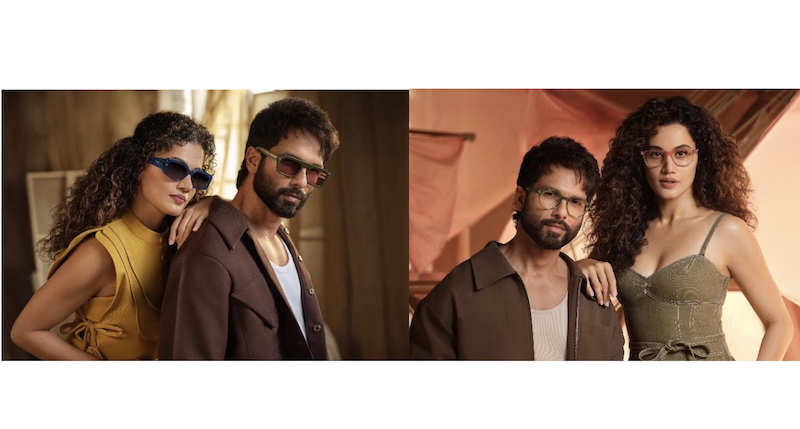
    MUMBAI: Eyewear just got a whole lot sexier. Shahid Kapoor has officially joined the Vogue Eyewear style squad alongside longtime face Taapsee Pannu, in a campaign that throws the rulebook out the window and invites fans to live loud, look sharp, and wear their vibe with no apologies.

    In a film dripping with gallery-chic aesthetics and playful chemistry, Shahid and Taapsee bring to life the spirit of Vogue Eyewear’s ‘No Rules Club’—a movement that champions bold self-expression over boring convention. Think edgy frames, eye-popping colourways, and a clear message: be you, all the way.

    “Style to me has always been about self-expression without boundaries. I’m excited to join Vogue Eyewear and to be part of its campaign, that encourages people to be themselves, unapologetically and without rules,” said Shahid Kapoor.

    Echoing this spirit, Taapsee Pannu added, “Working with Vogue Eyewear has always been about embracing who I am — unfiltered and free”. She also shared her excitement about the collaboration in the new campaign, “Together we hope to inspire more people to own their style, their way.”

    From cat-eye drama to metal-cool classics, the new collection has it all. Shahid’s picks lean sleek, with minimalist gold frames and industrial-edge details, while Taapsee rocks bold silhouettes, vibrant lenses, and chunky temples that scream high fashion with heart.

    Hero pieces from the collection include:
    – Taapsee’s 0VO5637SU: retro cat-eyes in bold shades – Rs 5,890
    – Shahid’s 0VO4322S: timeless square frames in luxe metal – Rs 7,090
    – Taapsee’s 0VO5628: floral-detailed opticals with personality – Rs 5,990
    – Shahid’s 0VO5617: faceted frames with fresh colour play – Rs 5,990

    Prices range from Rs 3,090 to Rs 8,290 and are available at top stores and online platforms.

    So whether you’re team bold or team understated cool, there’s a frame with your name on it. The only rule? There are no rules.

    Watch the campaign film here: YouTube

  • C Com Digital cracks the autism code with Frat campaign in the US

    C Com Digital cracks the autism code with Frat campaign in the US

    MUMBAI: Mumbai-based C Com Digital has pulled off a stunner across the pond, crafting a high-impact digital campaign for Religen Inc, a US healthcare company, and its flagship diagnostic product, the Folate Receptor Antibody Test (Frat). 

    The goal? 

    Raise awareness around early autism diagnosis. The result? Over a  million reached, 15,000+ tested, and a major shift in the conversation.

    FRAT identifies folate receptor autoantibodies—linked to cerebral folate deficiency, a condition often associated with autism spectrum disorders. With over 52 per cent of tested individuals showing these markers, the stakes are high and the science, complex.

    But C Com didn’t just throw facts at the feed. They brought the story to life—with animated explainers, viral social content, sharp infographics, and blogs aimed at both physicians and families. A single TikTok testimonial—a parent recounting their child’s transformation post-diagnosis—went ballistic, racking up 800K+ views and tens of thousands of shares.

    More importantly, the campaign halved cost-per-click and drove a whopping 754 per cent spike in new users.

    “This was more than just a campaign; it was a mission,” said C Com Digital founder/director Chandan Bagwe. “While we led the digital execution, the insights and support from FRAT, medical experts, and families made this a truly collaborative project. It demonstrated how storytelling and science can work hand-in-hand to create real awareness and action.”

    Religen Inc founder Bhushan Sawant added, “C Com Digital played a key role in crafting the campaign’s messaging and outreach, and the results speak for themselves. Their understanding of healthcare communication helped us engage with families and professionals meaningfully.”

    The campaign also stepped beyond the screen—partnering with autism support groups, engaging in platforms like the National Taca Conference, and driving participation in the #BlueBucketPledge. From online virality to offline solidarity, the message was loud and clear: early diagnosis changes everything.

    A masterclass in humanising health tech, this Frat campaign proves that when done right, digital storytelling doesn’t just inform—it transforms.

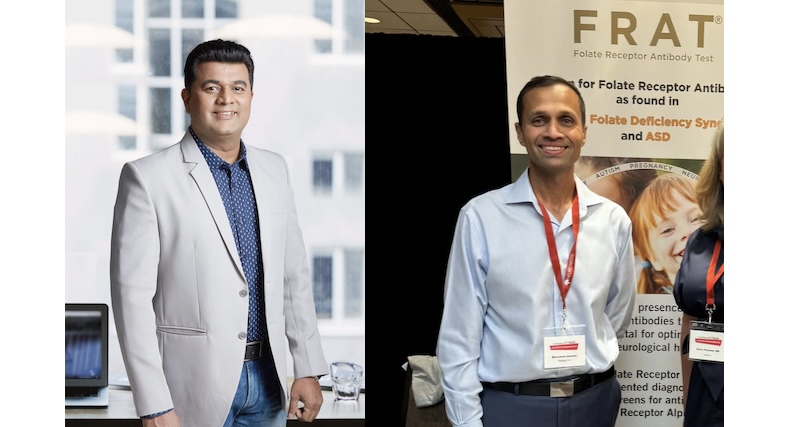
    Pictured above Chandan Bagwe (Left)  and Bhushan Sawant (Right)

  • Wired for Gold Goldmine wins big in London for fiery APAR campaign

    Wired for Gold Goldmine wins big in London for fiery APAR campaign

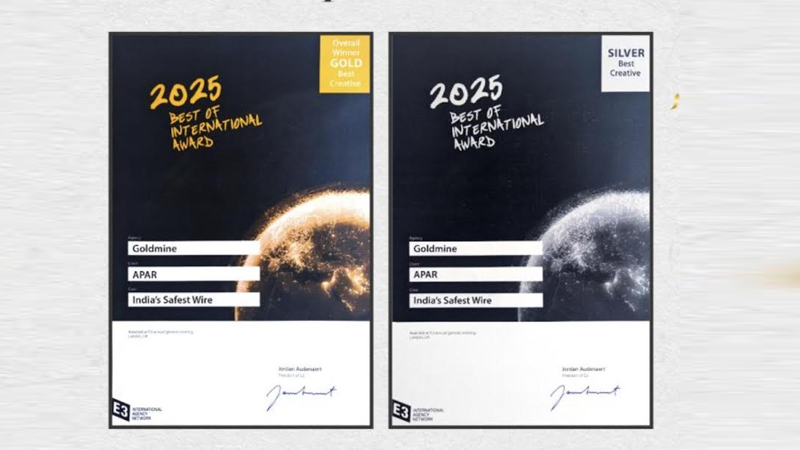
    MUMBAI: This Diwali, the spark wasn’t just in the firecrackers, it was in APAR’s Fire Protekt campaign, which lit up the international stage and earned Goldmine Advertising a golden nod at the B2B Marketing Awards in London.

    India-based Goldmine Advertising, a member of the global E3 Network, scorched through stiff global competition to win Gold for Best Overall Creative Work and Silver for Overall B2B Marketing for its campaign promoting Anushakti Fire Protekt by APAR Cables, a cable that promises safety even in the heat of danger.

    What set this campaign ablaze wasn’t your standard insulation jargon. Instead, it cleverly tapped into festive emotion and human insight, a refreshing twist for the wire-and-cable industry typically powered by technical speak. The digital-first campaign married cultural nuance with cutting-edge technology highlighting APAR’s heat-resistant eBeam insulation and a bold 70-year performance promise.

    APAR Cable Solutions CEO Shashi Amin said, “APAR Fire Protekt represents a significant breakthrough in our safety-focused product line, as APAR continues to diversify its portfolio with solutions that provide both protection and peace of mind. As one of India’s top 5 manufacturers of cables and wires, our collaboration with Goldmine has produced innovative marketing campaigns that showcase this revolutionary product.”

    He further added, “I’m delighted to share that our planned campaign has been tremendously successful, even garnering international recognition. My sincere appreciation goes to the entire APAR Marketing & Goldmine team for their exceptional creativity and visionary ideas that helped bring this success to fruition.”

    APAR Cable Solutions General Manager for Marketing Shhailja Chopra,   said, “In the B2B space, digital campaigns must do more than inform, they must differentiate and connect. Our goal was to align messaging with our channel strategy while showcasing the power of our eBeam technology, which delivers heat-resistant insulation with a 70-year promise.”

    Goldmine Advertising CEO Pratik Singla added, “We’re proud to represent India on a global stage among 27 agencies from 20 countries. APAR is a phenomenal brand, and this recognition is a celebration of the power of bold, insight-led B2B creativity.”

    From copper cores to core emotions, this campaign proved that even the most grounded industries can go global when creativity is allowed to spark.

  • Mobikwik flips the UPI script with Pocket UPI, ropes in Jaideep Ahlawat for new campaign

    Mobikwik flips the UPI script with Pocket UPI, ropes in Jaideep Ahlawat for new campaign

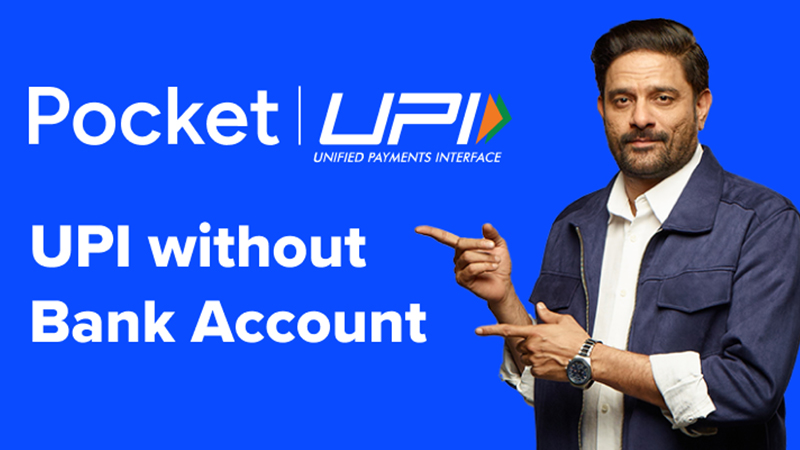
    MUMBAI: India’s largest digital wallet by transaction value, Mobikwik has kicked off a cheeky new campaign spotlighting its Pocket UPI product — a feature designed to challenge the dominance of traditional bank-linked UPI. The multi-media campaign stars actor Jaideep Ahlawat reprising his no-nonsense cop persona in humorous short films tackling the everyday mess of digital payments.

    In the first instalment, Ahlawat is seen policing cluttered bank statements caused by minor UPI transactions, positioning Pocket UPI as a hassle-free alternative. Unlike conventional UPI, Pocket UPI allows users to transact without linking their bank accounts, helping them avoid transaction-related clutter, track monthly expenses better, and make PIN-less payments — all while lowering fraud risks.

    “Pocket UPI is our latest push to simplify how India pays”, said Mobikwik CMO Jaskaran Singh Kapany. “And who better than Jaideep to bring gravitas and humour to what is essentially a smart tech switch for consumers”.

    The campaign dropped with a teaser on Ahlawat’s Instagram on 16 May, generating celebrity buzz around how his character would solve India’s digital payment headaches. The full film went live today on Mobikwik’s digital channels, with more short films focusing on security, speed, and budgeting tools lined up for release.

    According to the Redseer Report, Mobikwik serves over 176.4 million users and 4.6 million merchants and holds a 23 per cent market share in prepaid instrument (PPI) wallet gross transaction value as of November 2024. The company continues to scale its financial services footprint across credit, insurance, savings, and investments.

    Founded in 2009 by Bipin Preet Singh and Upasana Taku, Mobikwik has consistently positioned itself at the intersection of innovation and financial access. With Pocket UPI, it is now attempting to rewrite the UPI rulebook altogether.

  • Asci calls time on opinion trading ads: dicey bets, dodgy claims under the scanner

    Asci calls time on opinion trading ads: dicey bets, dodgy claims under the scanner

    MUMBAI — The Advertising Standards Council of India (Asci) has fired a warning shot at the fast-growing world of opinion trading, releasing a hard-hitting whitepaper titled Examining Opinion Trading in India. With more than 50 million users and Rs 50,000 crore in annual transactions, the sector is booming—but flying in regulatory grey zones.

    Opinion trading platforms let users place monetary bets on binary outcomes of real-world events—from cricket matches to political polls. While they claim to be skill-based, Asci argues that many mirror gambling platforms and carry serious risks, particularly for young and financially vulnerable users.

    Globally, these markets are regulated either as financial instruments or as betting operations. In India, however, stock market watchdog Sebi has already washed its hands off, stating in its 29 April 2025 advisory that “opinion trading does not fall within Sebi’s regulatory purview… as what is traded is not a security.”

    Meanwhile, courts are mulling over public interest litigations, and the legal status remains fuzzy. Amid this uncertainty, Asci has flagged influencer-driven ads that sell these platforms as knowledge games—without any disclaimers or warnings.

    “Opinion trading platforms raise serious concerns as their structure and mechanics closely resemble betting in some instances, and can expose consumers to significant financial risk,” said Asci CEO & secretary general Manisha Kapoor. “The advertising that accompanies these platforms often heightens the risk, with exaggerated claims of easy winnings and false assurances of reliability.  No disclaimers cautioning consumers are provided. Asci’s whitepaper highlights these risks and urges urgent regulatory clarity so appropriate steps can be taken to protect consumers from potential harm.”

    Asci is now calling for one of two outcomes: either formalise opinion trading with tight advertising guidelines, or outlaw it and clamp down on rogue promotions. The whitepaper also dives into global approaches, existing Indian laws, and highlights how current ads may be skating on thin legal ice.

    Until then, it’s a gamble—one that consumers may be taking without knowing the odds. Read the whitepaper here.

  • Vi levels up with one lakh towers and animated cricket squad in IPL-themed campaign

    Vi levels up with one lakh towers and animated cricket squad in IPL-themed campaign

    MUMBAI: Riding high on the IPL frenzy, telecom operator Vi has unveiled a new campaign that blends network growth with cricketing flair. The company marked a major milestone, adding over 1,00,000 towers across India in just six months of FY24-25 — a move it says reinforces its commitment to improving both scale and quality of connectivity.

    The campaign introduces ‘The Netties’ — a team of animated cricket avatars inspired by mobile towers. Positioned as the “strongest team of the season”, these characters symbolise the agility and strength of Vi’s growing network. The campaign, conceptualised by Ogilvy India, aims to explain a deeply technical upgrade through lighthearted, engaging storytelling.

    Vi’s recent strides include the launch of 5G services in Mumbai, Chandigarh and Patna, with Delhi and Bangalore next in line. Simultaneously, the telecom major has expanded its 4G footprint by enhancing capacity across spectrum bands — 900 MHz, 1800 MHz, 2100 MHz, and 2300 MHz — leading to wider indoor and outdoor coverage, faster data speeds, and improved user experiences. The strengthened 4G network now reaches 1.07 billion people.

    “Our network expansion is not just about scale, but also smart, strategic deployment,” said Vi CMO Avneesh Khosla. “By focusing on high-traffic areas and optimising spectrum usage, we’re delivering a future-ready, high-performance network”.

    The new TVCs aim to entertain while informing. In the first film titled The Catch, one of the Netties leaps outside the stadium to grab a sixer-bound ball, subtly drawing parallels to Vi’s reliability in catching even the weakest of signals. The campaign will roll out across TV, OTT, YouTube, radio, and social media starting 17 May.

    “Every Vi campaign should spark joy”, said Ogilvy senior executive creative director Rohit Dubey. “With animation, we turned technical achievements into a cricketing narrative that’s fun, yet impactful”.

    The campaign’s playful narrative underscores a serious message: Vi is investing heavily in infrastructure, prioritising quality, and betting big on entertainment-led engagement.

  • Sara and Sachin Tendulkar drive home a heartfelt message in Spinny’s latest ‘God Promise’ campaign

    Sara and Sachin Tendulkar drive home a heartfelt message in Spinny’s latest ‘God Promise’ campaign

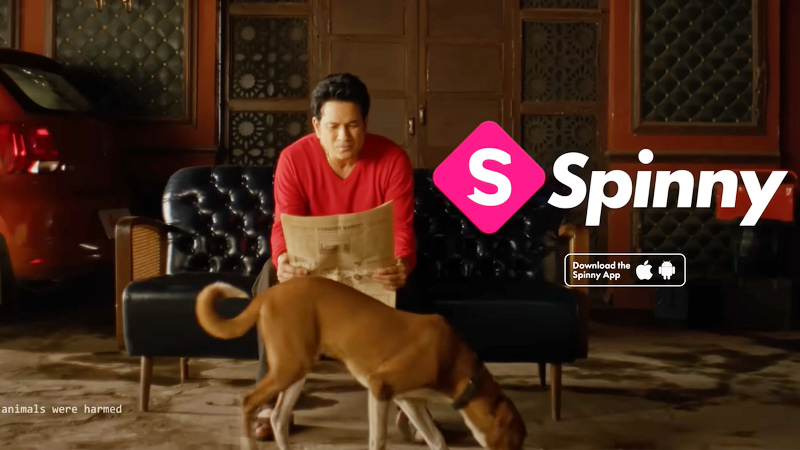
    MUMBAI: Cricketing icon Sachin Tendulkar and daughter Sara Tendulkar have come together in Spinny’s newest campaign, ‘God Promise’, blending familial warmth with an enduring brand message. The campaign, which plays out across Instagram and other digital platforms, showcases the duo’s love for their indie dogs, Spike and Max, while championing Spinny’s promise of trust and assurance.

    The centrepiece is a tender film starring Sachin alongside a soulful indie dog, charting a journey that encapsulates memories, reliability, and the spirit of long-lasting relationships. It symbolically anchors Spinny’s industry-first three year warranty on its Assured+ used cars—a commitment framed as more than a feature, but a lasting promise.

    Sara added her own emotional depth to the campaign by sharing unseen family photographs with Sachin and their beloved pets. Her caption on Instagram read:

    “A really, really long relationship and a promise for the ages. This @myspinny ad brought back memories—of drives, laughs and Spike & Max. This one’s incredibly close to my heart. #godpromise”

    With a mix of nostalgia and simplicity, the film leans into moments that reflect Spinny’s ethos of dependable, people-first service. The involvement of the Tendulkars—and the visible affection for their adopted pets—grounds the message in everyday relatability.

    ‘God Promise’ positions Spinny not just as a car retail platform, but as a brand that recognises the emotional journeys tied to car ownership. By inviting India’s most beloved sporting family to tell a story of trust, the campaign aims to strike a chord with millions of middle-class Indian families who view cars as more than transport—but as memory machines.

    With this campaign, Spinny continues to elevate its storytelling, championing emotion and authenticity over gimmicks.