Category: AD Agencies

  • ‘2009 was our defining year’ : OMD India managing director Jasmin Sohrabji

    ‘2009 was our defining year’ : OMD India managing director Jasmin Sohrabji

    It was in 2007, when global marketing communications holding company, Omnicom, entered India with its media planning and buying network OMD.


    Jasmin Sohrabji, a double post-graduate in Economics and Business Management who had spent 16 years with MediaCom, was taken on board as managing director and the agency went on to make a fortunate start with clients like Ambuja, Parle Agro and J&J in its kitty.


    2009 was almost a defining year for OMD as it took up quite a few biggies under its banner, expanded footprints to Delhi and Chennai and set up new offerings in analytics and digital.


    And now it’s kicked off 2010 on a high note too. It has bagged businesses like Sony Network, Ferrero and Reliance.


    In an interview with Indiantelevision.com’s Anindita Sarkar, OMD India managing director Jasmin Sohrabji speaks about her company’s growth plans at large.

    Excerpts:

    In comparison to the other agencies, OMD is still a new player in the Indian market. Has it been a tough journey so far?


    OMD launched in India in early 2007, and the experience has been exciting, challenging and gratifying ever since! We kicked off with a very sound base (Ambuja, Parle Agro and J&J) and have built consistently and successfully since. 2009 was OMD India’s defining year where we established ourselves as a strong, top player at a national level.

    Being a new entrant, was facing up with the slowdown heat in the Indian market more challenging to gain clients?


    We were very fortunate to have our best year in 2009. We had a record number of wins (HP, Henkel, VISA, Danone, Nissan, etc); we set up two new offices (Delhi, Chennai); we launched our Analytics and Digital offer and we closed the year with global awards and recognition.

    Can you revisit the time when you started off in the Indian market and the transitions that you witnessed through time?


    Gosh, I have spent two decades in this industry and witnessed too many changes and transitions! One of the most striking of all has been in the area of availability of research and access to data; technology…both in the medium itself as well as in accessing and interacting with media and consumers; the other noteworthy change has been the shift in the role and definition of what media agencies provided as a service…we moved from a very simple ‘planners and ops executives’ managing client budgets to a much evolved, technologically sophisticated and consumer-centric thinking and creative solutions.

    What has remained consistent through the decades is ‘never having enough talent’!

    How has the first half of the year fared for the OMD in terms of revenues and clientele?


    Very well. We kicked off 2010 with the Sony Network win, and followed up with Unilever’s digital biz. More recently we won Ferrero and Reliance, among others. We hope to maintain the growth momentum we have been experiencing through the remainder of 2010.

    Has it been better than last year?


    Given the operation is just over three years old, the growth over last year has been extremely high.

    How is dealing with the Indian clients different from the others globally?


    Clients differ depending on their needs and experiences with agencies; they differ in the level of interaction and involvement with their agency partners, and on many such and other parameters. However, I really do not have a strong point of view of difference between Indian and global clients. Among our global clients, we have some who operate largely within the local environment and strategic needs; and there are those who are very much aligned to global strategies and/or processes. In fact, we recently won an award (The Internationalist, UK) for best local execution of an international campaign…so it really does not matter how different the client style is, what’s important is whether the teams at OMD India have a keen appreciation for individual working styles and are able to deliver standout strategies and solutions to the briefs we are given.

    We moved from a very simple ‘planners and ops executives’ managing client budgets to a much evolved, technologically sophisticated and consumer-centric thinking and creative solutions. What has remained consistent through the decades is never having enough talent!

    How are your other divisions of OMD faring?


    Our most successful offer outside traditional is digital. In addition to existing full service clients, we added digital only clients (Unilever, ICICI, HCL, etc). Additionally, we set up Analytics, which has now started gaining momentum. We have two new offerings starting up later this year.

    CPRP is often the final clincher for a pitch and the sole aim for all to target and deliver. Do you see any new change in this methodology?


    Not sure why we are focusing on a change in methodology…we should be looking at value adding to the metric with more engaging qualifiers. If the job of the metric is to compare cost to cost, CPRP does its job. If we are looking to add new dimensions of effectiveness to the cost of contact, then let us evaluate other metric options, not just methodology.

    While above 50 per cent of investments for brand building is made towards above-the-line activities, advertisers are also making investments in below-the-line activities. How do you perceive this medium?


    Below the line activities have always been a relevant part of the recommended mix. The issues around these activities were largely to do with measurement and scalability. What began as ad-hoc and experimental, has now become a critical piece in the communication mix. One is, and will continue to see a lot more action in this space. The biggest advantage of BTL activation is it allows for flexibility and does not have to be templated. The scale, the message, the execution can be customised to the budget, the market and the core TG!

    Which advertising platform is expected to show the maximum growth?


    While digital and radio have the potential to scale up on their currently smaller bases, TV itself will offer newer platforms of addressability and technology through DTH, etc. Radio has never really seen its potential in this market, while digital has already made small dents in traditional media budgets! TV continues to hold out in its traditional avatar…and keeps re-inventing its offer – through content, scale and technology/addressability.

  • ‘Ad sector will see a double digit growth this year’ : Havas Media India & South Asia CEO Anita Nayyar

    ‘Ad sector will see a double digit growth this year’ : Havas Media India & South Asia CEO Anita Nayyar

    As the advertising industry prepares to come out of the slowdown clutter, Havas Media has found proper representation in India‘s two high-growth sectors: telecom and automobiles.


    While Maxx Mobiles came into the fold in 2009, the big catch this year has been Hyundai.


    Havas has almost 50 per cent of its revenues coming from the top five clients – Reckitt Benckiser, Jockey, Bank of Baroda, Max Mobiles and MTS. With Hyundai falling into the net, the top six are in a position to power the media agency‘s growth story in India.


    Havas will stay Delhi and Mumbai focussed while posting slow growth from its three southern offices – Bangalore, Chennai and Hyderabad.


    The big push will come from its integrated funtions – sports, digital and out-of-home.


    In an interview with Indiantelevision.com‘s Anindita Sarkar, Havas Media India & South Asia CEO Anita Nayyar speaks about her company‘s growth plans at large.


    Excerpts:


    How has the first half of the year fared for MPG India?

    We are on track as far as revenues and billings are concerned. On a percentage basis, we have met out targets quite in line with last year and the growth has come from both existing and new businesses. While our existing clients have fared better for us this year, the new businesses have also helped in pumping up the growth.

     
    But are you implying that 2010 has been similar to 2009 in terms of growth?

    Yes. We won MTS and Maxx Mobiles last year and Hyundai this year, all large and prestigious clients. And both telecom/handsets and automobiles are considered as categories doing well with minimal recessionary impact. We also won Dixcy, News X and M3M this year.

     
    As far as revenues are concerned, which clients and categories are the largest contributors?

    We have a client list that is upwards of 50 and across categories which include FMCG, telecom, automobiles, banking, mobile hand sets, beauty and wellness, media and real estate. About 40-50 per cent of our revenues come from our top five clients – Reckitt Benckiser, Jockey, Bank of Baroda, Maxx Mobiles and MTS.

     
    What are your expectations for 2010?

    We foresee a decent growth in 2010, given that 2009 was a recessionary year. Percentage growth in our integrated functions – sports, digital, and out-of-home – will be better as margins in offline business is pretty low.
     
     
    But has not out-of-home taken a hit this year?

    I don‘t think so. In fact, out-of-home has been doing very well for our clients and though it has not increased dramatically, it has surely not taken a dip.

     
    ‘About 40-50 per cent of our revenues come from our top five clients – Reckitt Benckiser, Jockey, Bank of Baroda, Maxx Mobiles and MTS‘

     
    Which are the geographical areas that show potential in terms of advertising?

    As far as we are concerned, we have five offices across India – Delhi, Mumbai, Bangalore, Hyderabad and Chennai and we expect our growth to come in primarily from Delhi and Mumbai. Growth from the southern market is slow for us.

    Overall, from the consumer‘s point of view, the potential surely lies in the semi-urban and rural areas.

     
    How are the other divisions faring – Havas Sports & Ent, Media Contacts and MPG active?

    All three are doing well and on an upswing. Havas Sports took up interesting projects during IPL like the strategic sponsorship deal and the Dhoni endorsement with Max. We are in the process of finalising some more deals. Digital is seeing an interesting growth and Media Contacts is encashing on the situation. MPG Active has been in the news for executing interesting campaigns including the one on INQ Mobiles where they executed the country‘s tallest billboard.

     
    How do you predict the 2010 advertising scenario to be like?

    We should hit double digit growth in 2010. It should be somewhere in the region of 10-12 per cent, though the pace is a bit slow.

     
    According to Tam, the first half of the year has seen a 36 per cent rise in TV ad volumes. Revenue, however, is not growing at the same speed. Why?

    There is too much of a fragmentation today and this is making it difficult to attract the consumer. There are multiple touch points today to capture consumer attention and you never know when and where the consumer will spot the advertisement. And though the ad volumes are increasing, we are not seeing much increase in ad rates.

     
    How much of a change has recession brought into the functioning methods of an advertising strategy?

    When recession‘s not around, we tend to work more liberally. However, recession always teaches businesses to get more from less and our business is no exception. This time around, it taught us to keep a tight watch on our purse string. It told us that we can do with lesser inputs, work, people and resources. Also, while there was a bit of retrenchment as far as our industry is concerned, it was more about not giving increments during the period.

     
    Which advertising platform is expected to show the maximum growth?

    Digital for sure. This is because the medium is progressing towards accountability and efficiency. The platform is seeing about 40 per cent growth year-on-year as advertisers are increasingly getting into the digital and media space.

  • It’s a ‘Mag’ world!

    Fresh off reading the novel The Devil wears Prada and this writer is fascinated by the world of hi- fashion, hi- gloss magazines. But special interest or niche magazines are not limited to fashion, lifestyle or women’s titles alone. In fact one look at the Indian space and you will find a title for every issue that you might conjure.

    While general news, sports, women and fashion and lifestyle magazines are more popular and catch the reader’s eye, dig a little deeper and you’ll find magazines on interiors, housekeeping, carpentry, auto, health, travel, art and design. And given the average Indian’s penchant for weddings – well even an array of wedding magazines dealing with the latest in bridal fashion and bridal jewellery.

    With so many titles in the market and the niche segment only poised to grow further,Indiantelevision.comdecides to delve further into this largely unexplored market. Such an analysis becomes even more pertinent in the light of declining readership numbers and constant ‘death of the magazine’ refrain.


    The special interest magazine serves two masters and there are plenty of titles in both B2B and B2C segments to choose from. The top four categories in magazine publishing measured and reported (IRS, NRS, TAM) include: general interest, women’s magazines, fashion and lifestyle and business magazines.

    Talking about the B2B sector, Infomedia special magazines general manager publishing Krishna Tewari says, “B2B segment until now has been subscription based and controlled. It is only in recent times that the segment has grown into a more professional, organized sector. The B2C magazines on the other hand have been more visible right from the start but the entry of international publishing houses has ensured better competition amongst the existing players as well.”

    The entry of international titles has only reawakened interest in this segment, despite research studies stating a decline in readership figures. In fact, throughout 2004 and for the most part of 2005, seminars and conferences held on print and publishing sounded a death knell for this industry.

    The move was largely facilitated by the government permit to allow FDI upto 26 per cent in general interest publications and 74 per cent in special interest magazines.

    Magazines have declined in reach from 9 per cent (2005) to 8 per cent (2006) over the last one year. Magazines overall show a decline in the reader base, both in urban and rural India. The reach of magazines has declined from 75 million in 2005 to 68 million in 2006. Magazines have lost 12 per cent of their reach since 2005. It must be remembered of course that this refers only to mainstream magazines. A host of niche titles that continue to be launched regularly are not fielded and their collective readership estimate is outside the purview of the study. (NRS 2006 findings)

    Despite the NRS findings there is still significant scope for growth, as ‘359 million people who can read and understand any language do not read any publication’. (NRS 2006 findings)

    So it is not just affordability that is a constraint, since 20 million of these literate non-readers belong to the upscale SEC A and B
    segments.

    This is the market that international publishers are looking to woo. Here’s a look at some on the already existing players in the field. With the first major titles already in the market many of them are now looking to expand.

    – Worldwide Media Inc, a 50:50 JV between Times Group and BBC formed Worldwide Media Inc. The first launch from its stableTopGear is an auto magazine while the company is also actively looking at women and entertainment segments to further increase their titles roster.

    – Infomedia India Limited has been a major player specializing in this category. The company set up a 51:49 joint venture with Reed Business Information called Reed Infomedia India Pvt Ltd. Reed Business Information is part of the $ 9 billion Reed Elsevier group. Their publishing activities are focused at two broad categories – special interest consumer publishing, B2B and trade publishing. Presently, it publishes 20 titles, out of which eight are consumer magazines and 12 are trade magazines. Chip, Overdrive, AV Maxare some of their flagship brands, amongst others. The publisher also tied up Disney Publishing Worldwide India in December 2006 to launch Disney Adventures, an international tweens and kids’ magazine.

    – Haymarket Publishing of UK entered India in a 50:50 joint venture with Sorabjee Automotive Communications (SAC), publishers of Autocar India and launched its second title Autocar Professional in November 2004.

    – The much awaited titles Conde Nast International’s Indian edition of Vogue and Playboy magazine from the Hefner stables are also set to hit the Indian shores this year.

    Global brands are making a splash and how. But it is also important to see what it is that these brands mean to an Indian readership. Says Starcom managing director, India – West & South Manish Porwal, “Both realistically and perceptually, India is a booming market. Although, if you had to compare the Indian special interest segment with those in the west or even some countries in Asia, you will realize that there are at least seven to 10 magazines in each genre while in India the numbers barely cross three to four. But it is the sign of a maturing audience that brings international publishers to this market.”

    The question of greater choice is also answered by the entry of these niche magazines given increasing interest in specific topics and markets. He says, “What these magazines bring to Indian audiences is a more genuine choice. So if you had to look at the technology segment, you would have magazines for the professional and magazines for the so called dummies.”

    Advertising plays a very important role in the niche market segment. If the fallout of increasing awareness of lifestyle brands led to a boom in the fashion and lifestyle magazine segment or the traveling Indian exerted himself through travel magazines, it is now the turn of markets like the auto sector or fitness and health segment that is leading the charge.

    As an example Porwal states, “One of the reasons international editions of women’s magazines and fashion and lifestyle magazines were launched was due to a burgeoning lifestyle market. “Colour cosmetics, luxury goods and most top end products are now available in India. Designer labels in apparel, beauty products, accessories and home furnishings are the obvious advertisers for many of these magazines.”

    Industry experts, however, say that niche magazines in the US and the UK have a larger circulation base through subscriptions. In comparison, in India, niche magazines have a far smaller circulation base. Given that why aren’t magazines alarmed just yet? Au contraire there are more special interest magazines set to roll out.

    Conde Nast India managing director Alex Kuruvilla rubbishes the pessimism surrounding readership and niche magazines. “There are two approaches to magazine publishing anywhere in the world – you are either a market shaper or you become a market follower. As far as Conde Nast India and Vogue are concerned, we clearly want to be market shapers. Our experience and response in China has only strengthened our belief that there is a huge market for fashion and beauty in India as well and Vogue is certainly the bible on anything to do with fashion.”

    Conde Nast India is a 100 per cent owned company of Conde Nast International a $ 2 billion publishing house. They will publish the first global title Vogue this year. “Some of the other titles in the offering and certainly relevant to India include Glamour, GQConde Nast Traveller, Vanity Fair, Wired and Brides,” says Kuruvilla.

    While excitement is rife over the number of unexplored markets niche magaziens can tap into, one genre that has made quiet inroads into the reader space is Auto Magazines.

    Auto Magazines

    Men’s magazine were the flavor of the month last season. Maxim, M and Men’s Healthlaunched last year nailing this belief. While the auto segment has traditionally been a strong player with magazines like Auto Monitor, Overdrive, Car and Bike and Autocar, the entrance of TopGear and Autocar Professionalhas given a huge fillip to this segment. India has become Asia’s auto hub and the trend is not going unnoticed. Many auto magazine heads agree that the automotive industry is not just about flashy cars. India has an equally vibrant two wheeler- bike and scooter and heavy vehicles industry.

    Porwal explains, “International magazines tend to cultivate particular brands or a special clientele even within advertisers. Some of these advertisers have entered India at the same time as the international magazines themselves and have a long standing, loyal base with them even in the European countries.”

    A look at the Tam Adex data for Sept 05 – August 06 compared to Sept 04 – August 05 shows that the auto genre has seen the highest growth in ad volumes at 48 per cent followed by men’s magazines at 31 per cent. (See table)

    The auto magazine ranks 6th according to the genres evaluated by Tam Adex just behind the other more popular categories.(See table)

    Rank Magazine Genre Ad spends (in mn)
    1 General Interest 3497
    2 Women’s 2002
    3 Fashion, Ent &Lifestyle 1389
    4 Biz & Fin 1102
    5 Infotech 336
    6 Auto 171
    7 Career & Education 124
    8 Travel 104
    9 Men’s 69
    10 Media, Ad, Mktg 54
    11 Sports 39
    12 Scientific,Engg &Sci 36
    13 Healthcare 29
    14 Telecom 8
      Total 8960

    Courtesy:Tam AdEx-Period:Sept ’05-August ’06 Ad spends based on industry estimates

    The launch of luxury vehicles like the Rolls Royce would only be an added impetus. 

    ‘Figuring’ It Out

    Take a look at the TAM AdEX figures for Sept 2005-Aug 2006 which show a 48 per cent growth in ad sales volume in the auto genre. Auto advertisers apart there are many lifestyle and luxury products who want to target the upmarket clientelle A definite thumbs up for the auto magazines who would be the top choice for many of these advertisers to reach across to their target group. (See table)

    Genres Growth in %
    Auto 48
    Men’s 31
    Fashion, Ent, Lifestyle 29
    Women’s 29
    General Interest 26
    Business/Finance 21
    Sports 11
    Scientific, Engg, Science 10

    Source: Tam Adex- Growth in Sep’05 – Aug’06 compared to Sep’04 – Aug’06

    We spoke to two auto magazines – TopGear the newest player in the B2C segment and Auto Car Professional a B2B magazine.

    Talking about the content of TopGear, editor Gautam Sen says, “The profile of the TG reader is almost 99 per cent male, upper class with an average age of around 31 years old and is usually from a multiple vehicles home. This is our core readership and our aim is to better understand and service this readership.”

    TG has been launched with an initial print run of 50,000 to 60,000 in subscription and newsstands, although Sen points out that “as for all magazines in India, the number of magazines occupying news stands is larger.”

    Comparing TG and TG UK he adds that TG UK “doesn’t cover motorsport as much since there are further niche magazines in UK and Europe covering auto sports or even auto components. However, in India we haven’t reached that level of segmentation so TGIndia focuses on this aspect due to reader interest.”

    He is, however, quick to point out that while the ratio of the local content is about 70:30, in terms of “brand, ethos and style” TGstays loyal to its international edition.

    Auto Car Professional on the other hand acts as a “bridge between the suppliers and the customers”, says editor Murali Gopalan. Haymarket publishers operate over 40 titles including Auto Car andAuto Car Professional.

    Speaking about Haymarket’s interest in India, Gopalan says, “The international publisher has certainly looked at a few key areas before entering this segment. The levels of spoken or written English, the media driven market, the free press, the buoyant economy and the synergy with publications have all led to a number of international publishers taking more than an interested look at this market.”

    While the target group for Auto Car Pro remains similar, the magazine is well aware of changing trends. “Since we are a B2B magazine, it does not mean that we are dull or unglamorous. In fact, we realized that the women today are just as interested in vehicles and are working on a ‘Women’s Day Special’ issue come May.”

    So far so good. But many of the international titles available in the market range between Rs 70 to 100. So one of the factors that international titles will have to consider is the very sensitive price factor.

    Says Tewari, “International titles like T3, which is a technology magazine is priced at Rs 100. So is Chip. But you have to take into account that a Chip magazine comes with a dual DVD pack and free licensed software that may not even be available in the country. So the price is justified by the value we provide. You cant compare a niche magazine with the free supplements you receive along with the papers. If something is free, the value is obviously lower.”

    Kuruvilla concurs when he says, “The brand awareness and brand salience of a product like Vogue is very high. So yes we are competitively priced. But then again we are not looking at mass numbers.”

    Vogue is priced at Rs 100 and is targeting the high spending community who, he maintains, spend as much on lifestyle as any other developed country.

    Says Gopalan, “While I may be talking about the B2B model based on revenue, advertising and a very discerning clientele who is ready to pay for his piece of information, the pricing for all niche magazines follows a similar principle – the reader is paying for a high value international brand and not just any magazine.”

    In fact, this is the very change in perception that international publishers have brought to the magazine market. It is no longer about copies but brands.

    Says Madison Media Group CEO Punita Arumugam, “The niche titles are not here in the game to sell in numbers. So don’t expect the niche title to set targets like 5 million copies.”

    Many also argue that apart from high pricing, easy availability of information on the net may deter magazine readers. The question is indeed relevant in European markets where internet penetration and bandwidth is huge.

    Says Sen, “The net provides one with relevant news. A magazine like Top Gear may not provide breaking stories regularly but we do provide topical stories. For instance, with the launch of Chevrolet Aveo U-VA we did provide opinion pieces on how it fared vis-a vis a Hyundai Getz. We also do interesting features like ‘Cars of Tintin’- not exactly the kind of fare newspapers or the net can provide backed with research, analysis and some great looking visuals as well.”

    He adds “Besides the shelf life of a magazine is much higher and with niche magazines very often it becomes a habit and the aim is to get a reader to be loyal to the magazine. Many of our readers have been known to purchase and collect special issues of magazines as a collectors item.”

    Apart from web properties, many of the magazines align themselves to events. TopGear associates itself with the Design awards and also uses the Times Drive supplement to woo the newspaper reader and influence him to subscribe to the magazine. In fact, the Times has increased the number of supplement pages from 4 to 6.

    Adds Arumugam, “Many of the titles coming into India are already established brands in most markets. I would imagine tha a magazine like Vogue doesn’t really have to look at marketing itself. To the consumers they are targeting, they are already a known brand.”

    Trendspotting

    So what does the future scenario look like?

    First up, its important to understand that readership and circulation figures are wrong yardsticks to measure niche magazines because in the first place, niche magazines are not really looking at mass circulation. While readership is more fluctuating for a B2C magazine, the loyal base for a B2B magazine is more pronounced. Given this contradiction, the niche segment itself is divided between these two categories.

    On the other hand, for most international publishers, the costing factor in India is very attractive. Given the low cost of production and nominally high pricing on these niche magazines, publishers are looking at attractive margins.

    Although Porwal cautions that while the advertising share of special interest magazines is likely to be around 5 to 7 per cent, readership figures for this niche segment are even lower. Yet, the market is just about warming up to this genre.

    The Indian Magazine Congress held in November 2006 pointed out that the reach of magazines in UK stood at 83 per cent. By that yard stick, Indian magazines have a lot of growing to do from the present 30 per cent.

    Another revealing figure stated that the UK market has more than 600 publishers for magazines, and in the US, the corresponding figure is more than 2,000. In India, even after so many years, 80 per cent of the advertising revenue in the entire magazine sector goes to only 17 magazines. And those 17 magazines belong to the top four or five categories. So, to that extent, all the other categories are underexploited.

    While a better picture would emerge given correct evaluation for niche magazines, the magazines themselves need to continue giving deeper, credible information irrespective of the genre, and that would help continue writing their success story.

    With increasing saturation of mainstream media, the niche segments will come into their own in the country. So far, the emphasis has been on achieving numbers which has resulted in a one-size-fits-all approach.

    Says Tewari, “In the US there are over 3,000 to 4,000 niche magazines while in India there are barely about 100. The international trend is to satisfy the readers even within the highly fragmented niche genre. So within the auto sector, there will be more niche magazines like car modeling, vintage car magazines, car components… The talk is no longer about niche magazines but super niche magazine. This is the next step that publishers both domestic and international will have to take to generate more readership.

    (Photo Courtesy: Landmark Bookstore, Infiniti Mall, Andheri (West)
    Pictures by Nidhi Jain
     )

  • Kinetic Blaze unveils Supermodels’ calendar

    Kinetic Blaze unveils Supermodels’ calendar

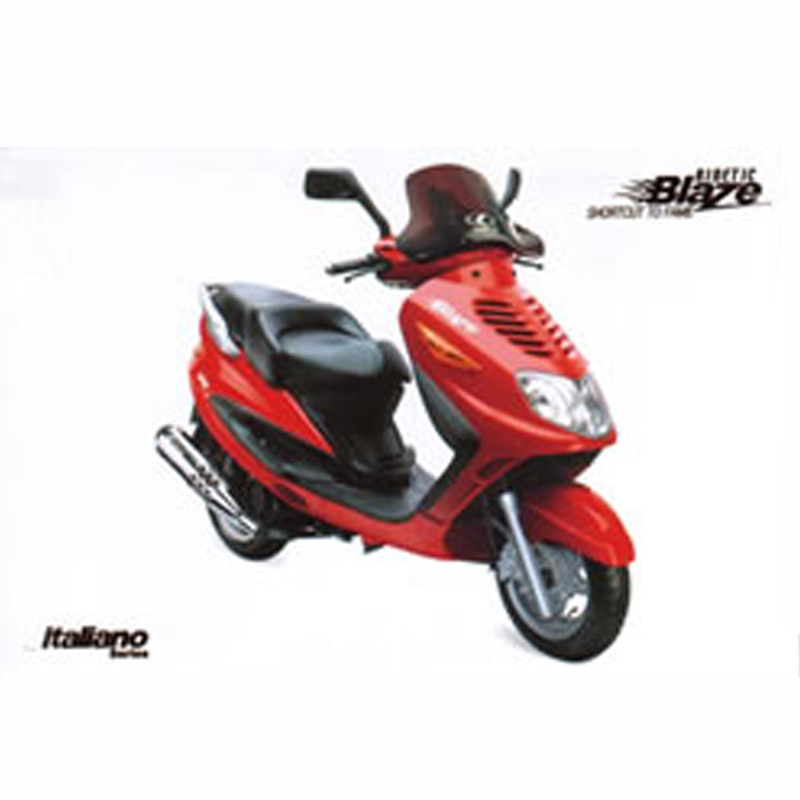
    MUMBAI: Kinetic Motor Company’s Italiano Blaze picked up some top automotive awards for design and performance. And now to entrench the brand further, Kinetic has unveiled what it claims is the automotive industry’s first glamourous calendar- the Italiano Supermodel’s Calender.

    Admittedly the theme is bold, but Kinetic’s managing director Sulajja Firodia Motwani reasons that the calendar clearly spells out the brand aspiration of her target consumer-Stylish, sexy and glamorous.

    “Around the world, calendars that blend the sex appeal of an automobile and a supermodel are a regular feature, but this is a first for the Indian automotive industry.

    Until now the scooter was considered either too old fashioned, family vehicle or effeminate. Our focus was to make the two wheeler a must-have for the young, urban male who is brand conscious and wants to look cool.”

    The calendar designed and executed by Grey Worldwide was unveiled by Firodia- Motwani and Raj Guru.

    The two wheeler claims to be India’s first powerful automatic with a 165cc, 4-valve engine. Kinetic Blaze is the first in a line of seven Italjet scooters launched under the Italiano series. The moto-scooter is prized at approximately Rs 50,000 ex-showroom. Last year, Kinetic had acquired the rights from Italjet to launch its two-wheeler range in India.

    Commenting on whether the price positioning at Rs.55, 000 for a scooter was on the high side, Firodia Motwani says, “We are competing in this market with a Pulsar or a Bullet. The brand aspiration dictates the price and the two wheeler is positioned for a city rider. It has done well mainly in the metros. For a college going guy, the price point is just right when he knows that he can own a ‘cool’ bike.”

    Kinetic Blaze may just be the beleagured company’s ‘shortcut to fame’.

  • Lintas Media Guide 2006 Print pocketed 57% of the total ad spends in 2005

    Media matters and how. Lintas Media Services has churned out a comprehensive media guide, which is an analysis of media spends and buys in the year gone by.Released by Intellect, a part of the Lintas Media Group, it studies all genres; television, print, radio, internet, cinema, outdoor and gives a break up of the media environment and general media industry trends of last year.

    Expansion clearly has been the mantra for the print industry all through 2005. Across publications there have been launches of editions across cities or to penetrate into the lower pop-strata. Increasing competition has brought more and more supplements everyday to seek niche reader segments. The battle of the dailies in Mumbai market is an example of the expansion drive and the result of competition adding to the product. In magazines due to the allowing of foreign direct investment (FDI) we have seen the start of foreign mastheads coming to India and this will only get faster in the years to come.

    Publishers are seeing a balance between driving subscription revenues and advertising revenues. While a few have been able to push up issue prices, most others have kept the issue prices stable. Need to garner growing advertising revenues is aided by the geographical expansion and the niche targeting possible by supplements.

    Print advertising had a share of 57 per cent of the total ad spends for the year 2005. The buoyant categories such as finance, education, auto, retail, etc are all set to adding a lot to the advertising revenues further for the print industry. Realising their strength in terms of ground network, most publication networks are extending their services beyond print space selling to solutions that give a combination of print advertising along with activation programmes at the ground level. Some publications are also able to extend the solution into the web space or other media depending upon the properties they own or are aligned with.

    Like TV, advertising avoidance is an issue for print advertisers too and there are more and more instances of innovative advertising. Advertorials are also increasing besides all efforts to align with related content. However, these as yet form a minuscule percentage of the total advertising space though it is expected to grow in the years to come.

    Readership research does not offer anything new and the issues between the IRS (Indian Readership Survey) and NRS (National Readership Survey) continues as always. There is a need for the print research to reevaluate the needs of the medium and reorient their offering.

    GROWTH OF PUBLICATIONS


    Language
    2003
    2005
    #
    Circ(mm)
    %
    #
    Circ(mm)
    %
    Hindi
    213
    13.1
    28
    203
    12.4
    25
    English
    174
    10.1
    22
    166
    10.6
    22
    Marathi
    57
    2.9
    6
    43
    2.9
    6
    Tamil
    39
    3.2
    7
    37
    3.6
    7
    Gujarati
    32
    2.7
    6
    34
    1.1
    2
    Bengali
    28
    2.9
    6
    31
    3.1
    6
    Malayalam
    32
    5
    11
    33
    6.1
    13
    Kannada
    27
    1.5
    3
    26
    1.8
    4
    Telegu
    20
    2.2
    5
    18
    2.7
    6
    Other
    83
    3.1
    7
    76
    4.4
    9
    Total
    705
    446.7
    100
    667
    48.7
    100


    READERSHIP TREND


    Claimed Readership(%)
    2004 (IRS ‘03 R2) 2005 (IRS ‘05 R2)
    All India
    Urban
    Rural
    All India
    Urban
    Rural
    Dailies 33.2 54.7 24.8 35.9 56.1 27.0
    Magazines 13.6 25.3 8.7 14.5 25.5 9.6
    Any Publication 34.6 56.4 25.4 37.5 58.1 28.5
    Source: IRS 2005 R2


    The Times of India tops the English dailies list when it comes to the top five dailies according to IRS 2005 R2 (all India average issue readership). Hindustan Times, Hindu, Telegraph and Deccan Chronicle (in that order) follow in the list.

    In the regional dailies category, Dainik Jagran rules the roost, whereas Dainik Bhaskar, Daily Thanthi, Amar Ujala and Malayala Manorama follow suit.

    In the Top five English magazines, India Today tops the charts, whereas Readers Digest, General Knowledge Today, Filmfare and Competition Success Review feature in the top five list.

    In the regional magazines category, Saras Salil is the top read magazine. Vanitha, Kumudam, Grihsobha and India Today (Hindi) also feature the top five list.

    PRINT TOP CATEGORIES IN 2004 – 2005


    Category
    2004
    Rs crores
    Category
    2005
    Rs crore
    Educational Institutes
    435
    Educational Institutes
    506
    Corporate Brand Image
    400
    Property / Real Estate
    362
    Car / Jeeps
    300
    Corporate Brand Image
    323
    Property / Real Estate
    272
    Car / Jeeps
    304
    Two Wheelers
    257
    Independent Retailers
    250
    Coaching Centers
    146
    Two Wheelers
    222
    Financial reports
    145
    Readymade Garments
    166
    Cellular Phone Services
    138
    Coaching Centers
    156
    Social Ads
    125
    Cellular Phone Services
    144
    Events
    121
    Travel & Tourism
    142
    Source: Tam Adex & Lintas Media estimates based on indicative market costs


    PRINT TOP ADVERTISERS IN 2004 – 2005


    Advertiser
    2004
    Rs crores
    Advertiser
    2005
    Rs crore
    Maruti Udyog Ltd
    135
    Hewlett Packard
    115
    Bajaj Auto LTD
    100
    LG Electronics India
    86
    LG Electronics India
    89
    Hero Honda Motors
    72
    Samsung India
    85
    Bajaj Auto LTD
    72
    Tata Motors
    69
    Maruti Udyog LTD
    63
    Hero Honda Motors
    65
    Tata Motors
    57
    TVS Motor Co
    60
    Pantaloons Retail India
    56
    Hyundai Motor India
    59
    Hyundai Motor India
    56
    Hindustan Lever LTD
    57
    Samsung India
    54
    Hewlett Packard
    54
    Toyota Kirloskar
    52
    Source: Tam Adex & Lintas Media estimates based on indicative market costs


    Stay tuned for the next in the series…

  • Lintas Media Guide 2006 Movie channels gain in HSM; main Bangla channels lose share

    Media matters and how. Lintas Media Services has churned out a comprehensive media guide, which is an analysis of media spends and buys in the year gone by. Released by Intellect, a part of the Lintas Media Group, it studies all genres; television, print, radio, internet, cinema, outdoor and gives a break up of the media environment and general media industry trends of last year.

    In the second of the series, we take a look at the channels that dominated 2005 in the Hindi speaking markets as well as in the East, Tamil Nadu, Kerala and Karnataka.

    While Star Plus continued to reign supreme in the Hindi speaking market, Hindi movie channels like Max and Zee Cinema have managed to strengthen the position of the genre in 2005.

    In the Hindi speaking markets, Star Plus continued to enjoy its leadership position throughout 2005. Its channel share, however decreased by one per cent last year to 19 per cent as compared to 2004‘s 20 per cent in the C&S 4+ SEC ABC Hindi speaking markets between week 40 – 44. Sony and Zee‘s channel shares, on the other hand, too dipped by a per cent last year to settle at six per cent and four per cent respectively.

    Meanwhile, movie channels like Max and Zee Cinema gained momentum and overall managed to their strengthen the position of the genre in 2005. While Zee Cinema, which didn‘t figure in the 2004 charts, managed to rear its head with a channel share of five per cent; Max retained its channel share of five per cent in 2005. Thus, strengthening the movie genre in the overall pie.

    Cable channels in the Hindi speaking markets too shed their numbers from 13 per cent in 2004 to 11 per cent in 2005. The channel share of DD1 dipped in 2005 from that of four per cent in 2004.

    Also, the basket of “other” channels increased from 46 per cent in 2004 to 50 per cent in 2005 in the Hindi speaking markets.

    In East India, as cable penetration increased, DD7 as a viewing choice of people reduced. Regional channels too suffered as ETV Bangla and Aakaash Bangla each lost two per cent market share last year as compared to a market share of 17 per cent and six per cent in 2004. Zee Bangla too lost one per cent in 2005 with a channel share of four per cent.

    Star Plus, on the other hand, gained one per cent and stood with 12 per cent channel share. Sony managed to hold on to its share of five per cent, whereas Zee TV and Zee Cinema both managed a four per cent channel share in 2005.

    In Tamil Nadu, Kalanithi Maran‘s empire continues to reign supreme. While the flagship channel – Sun TV – continues to rule with a channel share of 49 per cent, its sibling KTV has emerged as a frequency builder with a channel share of 12 per cent in 2005. Two other Sun channels Sun Music and Sun News also made their presence felt with channel shares of six per cent and two per cent respectively.

    On the other hand, while specific time bands of Vijay TV and Jaya TV are doing well, both channels had a share of five per cent each in 2005. Jaya TV‘s share went down by one per cent in 2005, while that of Vijay TV‘s remained status quo. The share of “Other” channels dropped in Tamil Nadu from 17 per cent in 2004 to 14 per cent in 2005.

    In Kerala, Surya TV and Asianet have been loosing their share to other channels. While Surya TV‘s share fell from 27 per cent in 2004 to 22 per cent in 2005, that of Asianet fell from 25 per cent to 23 per cent. “Other” channels have gained share from 24 per cent in 2004 to 31 per cent in 2005.

    On the other hand, in Karnataka, while Udaya leads in terms of channel share, Ushe TV has been emerging as a frequency builder. Udaya‘s shares increased from 17 per cent in 2004 to 21 per cent in 2005. ETV Kannada, on the other hand, managed to retain its share of 12 per cent through 2004 and 2005, while Sun TV‘s shares in Karnataka dropped from seven per cent to nine per cent.

    Stay tuned for the next in the series…

  • TV spends show 20% increase to Rs 55 billion in 2005

    Media matters and how. Lintas Media Services has churned out a comprehensive media guide, which is an analysis of media spends and buys in the year gone by. Released by Intellect, a part of the Lintas Media Group, it studies all genres; television, print, radio, internet, cinema, outdoor and gives a break up of the media environment and general media industry trends of last year.

    With data compiled from all over the Indian subcontinent, spanning more than 28 states and seven Union territories, the guide is an all-inclusive take on the Indian media industry and players.

    Lintas Media Group director media services Lynn de Souza said, “Media closed 2005 on a happy note and 2006 promised to be an optimistic year. The total advertising media spends showed a growth of 15 per cent reaching a figure of Rs 159.41 billion. While print continued to hold more than 57 per cent of the total media spends, radio, as a means of advertising saw an increase in the ad spends. Cinema, outdoor, and internet on the other hand capitalised on innovations. In many ways, 2006 will be a year that we can all excitedly look forward to.”

    The total media expenditure mix for 2005 was that of Rs 159.41 billion over 2004‘s Rs 120.71 billion, of which press saw a growth of 14 per cent over 2004 with an expenditure of Rs 90.64 billion in 2005. Internet saw a growth of 35 per cent with its media expenditure standing at Rs 1 billion in 2005 over Rs 740 million in 2004. Radio and Outdoor medium saw a growth of 25 per cent each, with outdoor at Rs 8.55 billion and radio standing at Rs 3.75 billion. All in all, an overall growth of 15 per cent was witnessed in 2005 across all media.

    Of the total Rs 159.41 billion media expenditure in 2005, press share comprised 56.9 per cent, television was 34.7 per cent, outdoor was 5.4 per cent, radio was 2.3 per cent and internet was 0.6 per cent.

    In the first of the series, we take a look at what the Television scenario in 2005 was like.

    Television spends showed a 20 per cent increase to Rs 55.26 billion in 2005 as compared to 2004‘s Rs 46.08 billion. While cable and satellite channels contributed significantly to this growth, DD terrestrial channels too clocked a healthy growth figure. What has fuelled this growth is the sharing of cricket rights and the increasing need for the advertiser to reach smaller towns.

    Television not only saw a continued increase in the number of channels but also in ad spends. TV spends increased by news channels, kids channels, niche entertainment channels, continued to add to the existing channel bouquets.

    Not only TV software but immense progress was seen in the TV delivery systems. DTH, IPTV, digital cable, CAS – all have become a feasible reality now limited only by the government stipulations.

    The Lintas Media Guide mentions that these developments promise to aid faster penetration of satellite channels to the hinterlands and at the same time will enable providing a richer and interactive viewing experience for the upper town populace.

    DTH, on the other hand, too became a reality with DD Direct and Zee‘s Dishtv stepping on the pedal to make available their services to small town and rural areas. Now with the impending launch of the Tata Sky DTH platform, this space will gain further impetus.

    On the programming front, as family dramas lost some charm, multiple offerings amongst news, kids and niche entertainment channels brightened the choice for the viewers. However, there was no respite in the rate at which new channels are being added to the current bouquets from the earlier years.

    According to the Lintas Media Guide 2006, the emergence of niche genres and their success in capturing the interest of the evolving TV audiences has affected the share of the general entertainment genre.

    Advertising avoidance is a globally recognized issue and broadcasters, advertisers and media agencies are all aware of it. However, with TV still being the most suitable media for various brands, there is a spurt in the efforts to go beyond the 30 second commercial. Content creation, in-program placements, integration with ground activities and creating interactivity are some of the different ways in which the advertisers are trying to get the TV viewer exposed to the brand messages.

    The Guide also mentions that there have been feeble or no attempts by the broadcasters to reduce ad-clutter. Unless DTH, CAS and other addressable systems append to the subscription revenue of the advertisers, the ad clutter is set to increase. The ad-clutter (of an average ads seen by any TV viewer per week) stands at 313 ads per week and shows an increase of eight per cent over last year.

    Apart from that, TV research also continued to be a matter of hot debate and AMap, the new entrant in the industry steadily but surely managed to set up a formidable TV measurement panel aiming to be far bigger in sample size than the existing TAM panel. The year 2006 will have TAM and AMap waging an even more pronounced battle of ratings, says the Guide.

    The research users expect a larger sample size, more description variables and faster reporting among other improvements in the research system. This year will be the year to see how Tam responds to the competitive challenge and how the TV measurement system in India develops.

    According to Lintas Media estimates based on indicative market costs, the top category of advertisers on TV in 2004 – 2005 are as shown below:

    According to Lintas Media estimates based on indicative market costs, the top advertisers on TV in 2004 – 2005 are as shown below:

    According to Ficci, television advertising pie is set to increase its share to 51 per cent by 2010 and a lot of this growth is expected through subscription and content syndication amongst other things.

    “We look forward to 2006 as the year for TV to re-orient itself in the areas of multiple delivery platforms, maturing of the niche genres, innovation in advertising and improved TV research,” says the Guide.

    Stay tuned for the next in the series…