Category: AD Agencies

  • Horse & Country TV partners with Amagi for signal delivery in India

    Horse & Country TV partners with Amagi for signal delivery in India

    NEW DELHI: Horse & Country TV, the specialist equestrian sports and lifestyle network, has tied up with Amagi Media Labs to deliver its signal to cable, satellite and IPTV operators as part of its international expansion plans.

    Amagi offers a next generation cloud-based broadcast distribution and play out infrastructure for television networks. The Bangalore-based company runs India’s largest local advertising network playing more than one million local ad seconds every month on more than ten TV networks ranging from sports and news to entertainment and lifestyle. The company also has international deployments of its broadcast infrastructure in Singapore and Africa.

    Horse & Country will leverage Amagi’s cloudport infrastructure platform to deliver localised channel feeds to current and future markets where the channel is distributed.

    The cloudport platform is designed as a full-featured alternative to traditional channel play-out options (like satellite, fibre). TV networks can deliver feeds with rich channel branding, diverse language versions and subtitles using cloudport.

    The platform can incorporate local advertising and local programme insertion and will shortly also allow for the insertion of live programming. Unlike earlier iterations of remote play-out technologies, the platform allows for full monitoring of programme play-out and health of the play-out servers at the headends. The play-out servers are fully redundant which ensures seamless and fail-safe operation.

    H&C TV conducted an extensive review of technology options for international delivery and play-out of localised content including satellite, fibre and IP delivery, working with John Wallace of Wallace Broadcast, before selecting Amagi cloudport as the best solution for its specific needs for international expansion.

    H&C TV CEO and chairman Heather Killen said, “Future-proofing our channel for multi-platform international distribution has been a key strategic goal for H&C as we expand our presence in new markets. We are confident that we have found in Amagi a partner that will support our development in an extremely flexible and targeted way.”

    Amagi co-founder strategy investments and R&D Baskar Subramanian said, “We believe that cloud-based models are the future of broadcast. Cloudport holistically addresses all the needs of broadcasters for channel play-out and is set to become the standard for multi-platform channel delivery, replacing expensive satellite and fibre-based content delivery. We are delighted to announce Horse & Country TV as Amagi’s first Europe-based, international channel and look forward to a long and successful partnership as they continue their international roll-out.”

    Horse & Country TV broadcasts in the UK and Ireland, the Netherlands, Sweden and Malta. The Channel carries exclusive sports event coverage, news, documentary and personality-led programming to the passionate audience for horse sports and country living. 

  • What now for broadcasters and advertisers?

    What now for broadcasters and advertisers?

    The clock is ticking down for the seven broadcast networks, (actually eight, if you include Discovery too that joined the fray over the weekend) which coerced TAM to report on them on a monthly basis unilaterally without consulting either the Indian Society of Advertisers (ISA) or the Advertising Agencies Association of India (AAAI).


    Late Friday evening, advertisers such as Levers, P&G, Loreal, ITC, Britannia, Marico and Godrej put these broadcast networks on notice that if they did not revert to weekly ratings within 72 hours, all advertising on their channels would be pulled off and release orders would stand cancelled, 48 of those hours have already gone past. These broadcasters have only 24 hours left to take a decision.


    More advertisers have been sending in their notices over the weekend and this is likely to continue over today. And their 72 hour time bomb notice will also continue to tick.


    Advertisers sent the emails over the weekend to probably show they too mean business. Senior managements and sales heads in broadcast networks normally head of for their weekend holidays or timeoffs and hence are normally loathe to convene for any major decisions. With two days out of the three day notice period gone, now broadcasters will be hard-pressed to congregate and do some brainstorming and decide on their way forward today itself.


    Above their heads is the guillotine of losing revenues. An estimate is that these broadcaster will lose Rs 22 crore a day collectively should there be a pullout.


    There’s more to worry about for the broadcasters. If there are no TVCs, what will they do with the time that has been left vacant by the absence of ads? Fill it with promos of their own shows? Film trailers? But for how long?


    They may have to incur further costs should they rely on extra content from 22-24 minutes being churned out currently to 26-27 minutes. That is going to mean writing out larger cheque amounts to TV producers as they will have to work their crew and casts for longer hours.


    Continuing being rigid is an option broadcasters have. But it could lead to advertisers being equally rigid, leading to a standoff. Somebody will have to blink.


    Even though some of the broadcast CEOs have been haw-hawing, saying that it is the advertisers who will do so, because they need the TV channels and history shows that they are prone to buckling under earlier when they are threatened with no ads, it need not hold true on this occasion.


    Advertisers have options today: there are close to 300 channels which are continuing with weekly ratings, while around 105 channels are on a monthly engine. They could put their ads on the weekly-rating- channels. Unless of course the eight “rogue” (in the eyes of the advertisers) networks convince the remainder to join the monthly ratings gang.


    At this stage, media observers feel, both sides are doing some grandstanding, watching each others’ moves closely. The squeeze will come when ads stop on TV, and if there is a stalemate. And it will be felt by both.


    The year has already seen a slowdown on the economic front, thanks to a weak rupee and a general slowdown. Financial results for most companies are not expected to be something that shareholders will take too kindly by end this year.


    Hence, it is in the interest of both to come to the negotiating table, and hammer out a face-saving solution, sooner than later, and keep the advertising cash flows going between each other. A week’s loss of advertising equates an estimated Rs 150 crore in revenue. And a possible further slow down in consumer off take of products from shop shelves for the advertisers. That’s something both cannot afford.

  • Aidem Ventures: A comeback tale

    Aidem Ventures: A comeback tale

    Filling someone‘s shoes is never easy and especially when that someone is the person you‘ve always looked up to. Vikas Khanchandani, director of media outsourcing firm Aidem Ventures, who was part of the founding team humbly acknowledges the fact.

    “We all know Raj Nayak the man who started it and had the vision to look at an opportunity keeping in mind the fragmentation that the industry was witnessing. He has left very large shoes for me to fill and I don‘t think it‘s going to be easy doing that. After working with him for 14 years I am glad to make an attempt at fulfilling a dream and I know he is extremely proud of what we have done and continue to do.”

    Aidem Ventures was carved out of NDTV Media which ad veteran Raj had set up as a 26:74 joint venture in 2003 with major TV news network NDTV. NDTV Media‘s role was to do ad sales for NDTV (and any other channels it would launch), Mi Marathi and Sahara‘s TV channels. All was well for a few years.

    But then NDTV launched a Hindi GEC NDTV Imagine in 2008 and did not hand over ad sales to Raj and his team. He waited and watched for a couple of years for things to change, but nothing did.

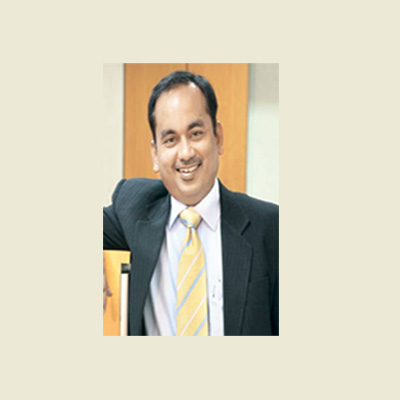
    Vikas Khanchandani believes obstacles are the best path to take

    Hence, in 2010, Raj decided to quit NDTV Media and with the supposed blessings of both Prannoy and Radhika Roy he set up Aidem Ventures taking its entire sales team and business to the new firm in an effort to build a standalone enterprise. Things were hunky-dory, and Raj roped in some senior industry professionals such as Kaushal Dalal, M. Suku to strengthen the organisation. The venture was cruising until a year later when NDTV decided not to renew its contract. It was almost as if the entire floor collapsed under Aidem as NDTV accounted almost 80 per cent of the new fledgling‘s business. 
    Many of the founding senior management team headed for the exits. Around this time, Raj moved to Viacom18 as the CEO of Colors after finding an investor and well wisher, leaving with the belief that Vikas and team would successfully run with the baton.

    Raj also took the efforts to reassure everyone that the company will continue to keep its stakeholders‘ benefit in mind and will work forward to fulfilling its motto.

    “But those were tough times,” recollects Vikas. “We scaled down our operations and had to calm clients apart from making sure that our colleagues were absorbed in other companies. We did not lay off anyone.”

    The Aidem dream team: Alok Rakshit (regional entertainment & news head), Joydeep Ghosh (eBUS business head, India), Lama Choudhury (business development head)

    The investor that came in was none other than a client in his personal capacity: Ashok Gupta of the HDIL group, who was involved in a channel Live India. His entry and financial injection proved to be the proverbial turning point.

    From being a near basket case then, the firm has come back very strongly. And how. Today, Aidem has 100 plus employees and 30 clients across broadcasters and publishers nationally and claims to be more experienced in the outsourced model compared to any of its peers. The reason behind this is nothing but years of experience and practice that has built a whole host of services and IT enabled infrastructure that has given it an edge over some of the larger networks.

    “We spent two years to create extensive resources to have a robust platform which is web enabled giving people opportunity to feed, view and retrieve information on the go. We have experience across platforms and across genres from news – national and regional, regional entertainment, Hindi entertainment and niche and hence have build extensive knowledge and on pricing and strategy which have immensely helped our partners to improve their yields,” explains Vikas.

    He further adds, “We have the finest operations process and teams, something that keeps revenue based errors to negligible levels thereby bringing efficiencies in our service. Aidem also has one of the finest digital sales and operations team offering solutions to our digital publishers. Lastly, we are go-to-market experts, something that we have proven to our technology partners by creating the business model and then executing it as per plan and strategy to create one of the largest service providers in digital delivery of ad commercials within the country.”

    Madison Media COO Karthik Lakshminarayan agrees that there is a need-gap in the market and that is when such media-sales organisations have a huge potential to flourish. “Niche and regional channels don‘t have enough revenues to have a specified sales team and hence, such organisations come to their rescue unlike the large networks which have their own set ups.”

    The Aidem dream team contd: Neena Dasgupta (digital & international business head), Nikhil Sheth (Hindi entertainment & niche channels head) , Shailendra Shetty (systems head)

    Vikas has built a solid team, which is responsible for the Rs 200 plus crore business, Aidem generates across platforms for its clients. Alok Rakshit is the business head across regional entertainment and news. Neena Dasgupta looks after the digital & international businesses as business head. Joydeep Ghosh leads the eBUS Business for India. Nikhil Sheth is business head across Hindi entertainment & niche channels while Shailendra Shetty has been instrumental in devising and developing work flow and system for traffic and sales operations. Lama Choudhury heads the business development team and is actively involved with all commercial negotiations and deal evaluations. He has been with Aidem right from its incorporation.

    “Our hierarchy is simple, each business head has people under them looking after different regions,” explains Vikas.

    Tamil television broadcaster Jaya Network which has been with Aidem for more than an year is not only content but also thanks it for bringing in more clients (read: revenues). “We started with one channel but now Aidem handles the whole bouquet and within a year we have seen a 30 per cent increase in revenue,” proudly proclaims Jaya TV marketing head S Senthil Velavan.

    Similarly, The Economist which is in its second year of association with Aidem never anticipated the results it has got so far. “I knew Neena Dasgupta and when she came with a proposal for our online business, we were open to it. And all I can say is that revenues are now substantial while it was negligible when they came to us,” says The Economist India MD Supriyo Guha Thakurta.

    One venture which the organisation feels was a god-send was that of eBus, a digitial delivery and distribution platform for short form TV commercials, which it set up as a joint venture with a Singapore based company (headed by its CEO Carmine Masiello) of the same name in 2010. eBus is arguably one of the largest providers of this service to the advertising and broadcasting industries and was acquired by media logistics company IMD this year. “The acquisition gave us some good cash which has helped us retire all debt,” says Vikas. “But Aidem has the contract to manage it for the next five years. eBus is one of the finest cloud based delivery service and industry swears by it. We have around 300 clients using it.”

    Karthik Laxminarayan says outfits such as Aidem Ventures help the smaller players

    Like for any other, the journey for Aidem so far has been challenging, trying and exciting at the same breath. Not every client stays and it has had its fair share of losses. For instance, Radiowalla‘s co-founder Anil Srivatsa feels that though they had partnered with Aidem for only six months, the expectations and capabilities didn‘t match. He blames the timing for it, but however hasn‘t struck it off completely and wouldn‘t mind considering it in the future.

    Ups and down are a part and parcel of life and keeping that in mind Aidem sees itself as a platform that will create opportunities for many of its partners to grow and in the process grow with them. It has shortlisted some of the growth areas that it needs to put its energies in to and build them into substantial and valuable business over the next three to five years.

    “Right now, Aidem 1.0 is about trading while Aidem 2.0 will be about building platforms offering solutions across channels using technology as a tool to scale. We will also be building new business/services verticals using technology as a tool/differentiator that will help bridge some need gap within our industry,” says Vikas optimistically.

    He hopes to reduce the revenue dependence on channels too. “We are far better off from the days of the 80 per cent dependency on NDTV for revenues. But I would like it to come down from the 14 per cent to 20 per cent which it is currently. What that means is getting in more channels,” says Vikas.

    What was it that kept him going when everything else around him seemed to be falling apart? “It has been touch and go on several occasions,” he confesses. “But for all of us at Aidem: obstacles are the best path to take.”

    Maybe the quote by Marcel Proust “We don‘t receive wisdom; we must discover it for ourselves after a journey that no one can take for us or spare us” can sum up Aidem‘s journey.

  • Phase II of ad cap comes into effect; channels follow TRAI mandate

    Phase II of ad cap comes into effect; channels follow TRAI mandate

     NEW DELHI: Indian TV viewers are going to be a delighted bunch. Reason: the number of TV commercials being bombarded at them on TV channels just got reduced.


    The Telecom Regulatory Authority of India (TRAI) ad cap regime imposed on news and general entertainment channels came into force today with an upper limit of 20 and 16 minutes per hour respectively. This will run till 30 September, following which the 12-minute rule will come into play from 1 October.


    Both Indian Broadcasting Foundation (IBF) and the News Broadcasters Association (NBA) have said their members are following the regime, the first phase of which came into effect on 29 May when its members agreed not to exceed 30 minutes of advertising per hour. IBF president Man Jit Singh and NBA president K V L Narayan Rao told indiantelevision.com that the TV channels would stand by their commitment to the government since this was now the law.


    The final decision of 29 May had taken a lot of wrangling, with the matter also going to the Telecom Disputes Settlement & Appellate Tribunal against TRAI which insisted that it was only implementing a regulation which was part of the Cable TV Networks Rules 1994.


    Following this, the IBF Board finally appointed a committee of five persons – K V L Narayan Rao, Zee Entertainment CEO Puneet Goenka, Asianet managing director K Madhavan and Disney UTV media managing director K Anand with the assistance of secretary general Shailesh Shah – to research, debate, consult and arrive at what will work.


    The committee admitted in its report that some channels especially those in regional languages ran more than 30 minutes of advertising per hour. Shah, however, claimed to indiantelevision.com that the per hour ad time works out to just over 11 minutes if a full-day average is taken.


    The TRAI, however, says it is going to keep a sharp eye on each channel to ensure that there is no violation of the time cap set on the TV broadcast industry. “TRAI would continue to monitor the timing of commercials per hour by various channels,” says TRAI principal advisor on broadcasting and media N Parameswaran.


    It is quite likely that the air time reduction, could result in revenue losses for the channels. Though none of the broadcast bodies have clearly highlighted how much this erosion could be, media buyers do acknowledge that broadcasters will no doubt hike ad rates with the implementation of 12 minute ad cap on 1 October.
    “The impact cannot be felt as of now. Once the ad time comes down to 12 minutes (across GECs) in October that is when the crunch will be felt,” said an executive from a leading media buying and planning company. June to September is a lean period for advertising on channels, especially considering it is the monsoon season all over India.


    There are also few who believe that the ad cap restriction will improve quality of viewing. Madison Group COO- buying Neel Kamal Sharma opines, “It is a win-win situation. On one hand the advertisers will benefit as now they can target their audiences in an effective way. The broadcasters will also increase their ad rates. Parallel to this even digitisation will bring in extra revenue for the broadcasters, decreasing their dependence on ad revenue.”


    Sharma hopes for the transition to take place in a fair manner, which has been recognized by all without shifting the entire burden onto advertisers. “We must take a long term view of the situation and handle it carefully as some people may try to take advantage of the situation to increase rates disproportionately which may neither be good for them nor good for TV industry’s growth in the long run as many advertisers have already started exploring alternative options,” he adds.


    The message for broadcasters is clear: take tiny steps – together with your advertising partners. Don’t go for the long jump; you might end up jumping alone.

  • Preiti Zinta to be managed by CAA Kwan

    Preiti Zinta to be managed by CAA Kwan

     MUMBAI: Foresight Communications has appointed Anjan Sen as president.


    Sen will be heading the ad agency. He will report to Foresight Communications CMD Vijay Shekhar Gupta who is into ad film making business too.


    Sen comes in with over 25 years of experience in advertising, strategic planning and corporate communications.


    Prior to joining Foresight Communications, Sen was at Wing Pharma. He had also worked with Gadgil Western Group and JK Tyres.


    Established in 1991, Foresight Communications has recently won the advertising duties of Tivoli Gardens and Dunar Basmati Rice.

  • ‘Ad pie shifting towards Indian language newspapers’ : Dainik Jagran Shailesh Gupta

    ‘Ad pie shifting towards Indian language newspapers’ : Dainik Jagran Shailesh Gupta

    Shailesh Gupta, director of Dainik Jagran, has been in the print media industry for more than 18 years. He was recently elected chairman of the Audit Bureau of Circulations (ABC), which provides audited newspaper sales figures every six months, replacing Madison World CEO Sam Balsara. Gupta is also a member of The Indian Newspaper Society (INS).


    Gupta has been a director at Jagran since 1994 driving the newspaper group‘s advertisement and marketing functions.


    In conversation with Indiantelevision.com, Gupta says Tier 2 and 3 towns are now the new volume drivers for newspapers and we now see the advertising pie shift in proportionate terms in favour of Indian language newspapers.

    Excerpts:


    As there is a shift from newspapers to online, the reading habits are changing. What does this mean for the newspapers?
    As a group, we already have a presence in Mumbai with MidDay, MidDay Gujarati,Inquilab and City Plus. There‘s a sizeable presence that we have in the city, and all these brands are growing and doing well. The decision on Dainik Jagran entering Mumbai in the future would depend upon the market forces and many other considerations.


    Any plan of expanding in southern market through an acquisition?
    We currently have a presence in South through City Plus in Bangalore and Hyderabad. Once again the question of acquisition would depend upon the opportunity in question and the prevalent market environment. It would not be fair to conjecture on that as of now.


    The difficult economic conditions have continued in 2012-2013. How do you see the next six months?
    Yes, it‘s been a difficult year in terms of advertising revenue growth. The market sentiment is muted, but there is growth. With the policy level changes taking place, and the festive season coming up, the outlook is more positive for the rest of the year.


    Last year competition drove cover prices down. Do you see the pressure continuing?
    In our markets, we‘ve steadied and increased cover prices instead of reducing. Circulation growth too has happened.


    ‘Our digital portfolio consists of over 12 sites across genres and with over 8.5 million unique visitors, it‘s one of the leaders in the space. And this is just the beginning‘


    The advertisers in Hindi and other Indian language newspapers have still not fully recognised the improved demography of their readership and are not prepared to give advertisement rates that English newspapers command. Why?
    The fact that the market is rapidly shifting to the Tier 2 and Tier 3 towns is a reality. Marketers have increasingly started looking at these markets very seriously for both volumes and growth. From a marketer‘s point of view, it‘s a market that‘s most important, and if the market is sizeable enough, investment flow is commensurate. Historically, the metros provided small geographies with a high concentration of target audiences and the resultant sales volumes. English dailies dominated these metro geographies and at times earned a premium versus the other languages. However, with Tier 2 and 3 towns now being the new volume drivers, the situation has changed completely and we now see the advertising pie shift in proportionate terms.
     

    Is it possible that Hindi language newspaper publishers will agree not to lower their cover price till ad rates are on par with English newspapers?
    The business environment for English in metros and Hindi papers differ significantly as far as the cost structures are concerned. An English paper sells for example at a price of Rs 4 in the metro markets with an average pagination of 40 pages, and the cost structures of the metro notwithstanding. Contrast that with a Hindi newspaper, with an average pagination of 22-24 pages and priced at Rs 3, with a very different cost structure. The differences are all too apparent. The factors behind cover price determination are very different from the factors behind ad rate pricing. Having said that, the model of the Indian newspaper industry is based fundamentally on lower cover prices, high circulation and a higher dependence on ad revenues – and this is true across the board for all languages including English. At the same time, Indian language newspapers have a sizeable part of the revenue coming in from the local markets, which normally are not greatly impacted by macro-economic changes – either positive or negative. Ad rates are a function of position in the market, importance of the market, the prevailing competitive environment and the individual cost structures apart from a lot of other factors.


    What helped Jagran to beat the industry trend and grow at a faster pace?
    We‘ve always believed in realistic planning and extremely focused implementation – these probably are the two central pillars of our work ethic which have yielded results. Other key factors are quick response times, empowered teams, the ability to provide customised solutions, and above all transparency in our working. Innovation is another key driving factor. We study ongoing trends in the market, anticipate a scenario and are able to innovate accordingly.


    What are the plans for Dainik Jagran‘s digital platform? What kind of investments are you planning to make in the digital space?
    We‘ve been very serious about our digital delivery platforms and had taken a lead in investing in this platform as early as year 2000. We have a dedicated digital team that‘s working to distribute the Jagran content across multiple digital platforms and devices. Our digital portfolio consists of over 12 sites across genres and with over 8.5 million unique visitors, it‘s one of the leaders in the space. And this is just the beginning.


    Last year Mid Day and Mid Day Gujarati did well. What is the trend in the current year?
    MidDay is on a growth path – both on the circulation and readership level as well as at the product level. Over the last 3 years, MidDay has seen a good growth – this has come on the back of an improved product. Same goes for MidDay Gujarati – it‘s now the No.2 Gujarati paper in Mumbai and has grown on all counts.


    Last year you were not able to meet the ad revenue target, how do you see things this year?
    We‘ve been realistic with our planning and our expectations. We have a plan for the ongoing year, and we‘re progressing as per the plan.


    Which medium are you banking upon to promote Jagran?
    The biggest platform that we use to promote Jagran is our own existing platform – there‘s no bigger platform that reaches out to almost 70 mn readers and an 8.5mn+ unique digital audience. Add to this our OOH reach pan India. Additionally, we use Radio, TV and some targeted trade and business mediums.


    What is your agenda as the head of Audit Bureau of Circulation?
    The priority at ABC is to bring about a more transparent system, evolve the ABC as a currency and make it a powerful decision making tool for the industry.


    What are the drawbacks that ABC faces?
    There are no drawbacks as such. But clearly we will need to march ahead, look at the changes in the environment, and be able to evolve the currency to reflect the changes. For this, we will need to have all publishers on the same page. It will be important to consider suggestions and opinions of all stakeholders to create a robust and transparent currency – one that truly reflects what‘s happening in the marketplace.


    Will you increase the frequency of audit of circulation figures from six months to quarterly?
    This again is a decision that needs to be taken by the body in consensus with all the stakeholders. As I said, the first priority above all else is to evolve the ABC as a currency and make it a powerful decision making tool for the industry.

  • Goafest: Of Then and Now

    Goafest: Of Then and Now

    Leo Burnett chairman and CEO, India sub-continent and Goafest Committee chairman

    By ARVIND SHARMA

    (11 february 2012)

    I was fortunate enough to be the Chairman of the Goafest Committee in the founding year- 2006. We envisioned it as a platform for celebrating Indian advertising creativity and for the Indian advertising talent- young and not so young- to rub shoulders with the best in the world, exchange ideas, grow and become the best in the world.

    We wanted to make the festival accessible to youngsters and to that end we put together a special package for under-30’s. We were immensely pleased on the launch day of Goafest when we found that more than 800 delegates had chosen to travel and attend the festival. There were people who had already registered and many more who had just turned up at the venue to register and be a part of the event.

    Over the last six years, the quality of the event has been improving each year from the event organisation point of view. 2008 was a significant year. Ad Club Bombay came on board and Abbies at Goafest became the definitive awards of the industry. Last year, International Advertising Association used Goafest as a platform for launching the Olive Crown Awards. Advertising Standards Council of India (ASCI) used it to reach out to the industry to spread its self-regulation message wider. In that sense Goafest has evolved into an industry event, finding relevance amongst every person who is involved in advertising.

    Learning is a continuous process. There were occassions when Goafest was criticised for the way it ran the vital Award shows. And there were others where delegates expressed a desire for better speakers and seminars. What is important, though, is that we learnt quickly and made the next year better. And that we succeeded in staying true to the original vision of Goafest – celebrating advertising creativity and providing a platform for the advertising industry to get together and exchange ideas about our creative business.

    Goafest 2011 was by far the biggest and most successful year yet with nearly 3000 delegates, 80 sessions and discussions held over a period of five days. The Conclave saw participation of over 250 senior marketing and advertising practitioners from across the country. On the awards front, there was tremendous participation from over 140 organisations with over 4000 entries.

    This year while staying true to the Goafest vision, we plan to focus on ‘The Magic of Ideas’. What we do in our business is really magical. It takes serious investments, meticulous planning and complex operations for clients to put out their products and services to consumers. Sometimes consumers embrace them and sometimes they ignore them. Often the difference is in the power of ideas they use to connect with the consumers. Some ideas succeed magically. They can come from anywhere. It is important to recognise them, embrace them and celebrate them.

    This year Goafest has opened its doors to all its South Asian neighbours including Pakistan, Sri Lanka, Nepal and Bangladesh. The response that we have received has been extremely enthusiastic and it presents a great opportunity for the entire South Asian marketing and advertising fraternity to exchange ideas, perspectives and experiences for our greater collective progress.

    Another exciting aspect is the strong client participation that we are expecting this year. It is our strong belief that for clients to pick the best creative solutions for their marketing challenges, they have to be deeply engaged with the phenomena called creativity. We believe that Goafest 2012 will provide a great platform for the advertising and marketing fraternity to come together. The Goafest Committee is also looking forward to young client delegates in large numbers by offering a special package for under-30 marketers.

    Goafest has also taken a conscious step to acknowledge what’s over the horizon. And all of us know what is over the horizon- a far more diverse media environment. The rate at which new media are catching up with the traditional ones poses interesting new challenges. This year we will be awarding nine Grand Prix. There will be Grand Prix for Out-of-home & Ambient, Design, Interactive Digital, Direct and Media. These are in addition to TV &Film, Radio and Integrated Advertising. We believe that this step of extending the Grand Prix to wider number of categories will encourage many more specialist agencies to come forward with their work.

    The theme for the Conclave this year is ‘Ideas for impacting the full circle’. The ultimate objective of this conclave will be to help gear up the industry for opportunities that lie ahead. We are expecting participation of global leaders from marketing as well as the major communication groups.

    I look forward to seeing you there on April 20th and 21st at the Zuri White Sands. Goa here we come!

  • ‘TV is the only medium that does not have geographic targeting’ : Amagi Media Labs co-founder Srinivasan K A

    ‘TV is the only medium that does not have geographic targeting’ : Amagi Media Labs co-founder Srinivasan K A

    Geographic targeting of television advertising is a business that is still in a nascent stage in India. Once adopted by various players in the television advertising chain, it has the potential to be a game-changer in the way brands and products are promoted and aired in India. 

    Bangalore headquartered Amagi Media Labs (Amagi) has the advantage of being one of the first players in this space in India. Amongst the Amagi team are investor and board member N S Raghavan, who was one of the co-founders and joint managing director at Infosys, former ZeeEntertainment Enterprises Ltd CEO Pradeep Guha and ex-CEO of Tata Sky Vikram Kaushik as advisors.

    Amongst the three founders at Amagi who run the show are Baskar S who works on strategy, investments and R&D, and Srividhya S who works on engineering and technology deployment.

    In an interview with Indiantelevision.com‘s Tarachand Wanvari, Amagi‘s third co-founder Srinivasan K A. (Srini as he is called by his friends) talks about the company‘s strategy and growth plans.

    Excerpts:

    How does Amagi tap into advertisers who look at geographic targeting?

    We at Amagi make TV advertising smarter. If you look at all the media options available to an advertiser now, except at a language level, TV is the only medium that does not have geographic targeting. We look to strike out that disadvantage for TV by bringing targeted advertising on this medium.

    By rolling out our patent-pending technology infrastructure across the country, we enable different ads to be run in different regions on the exact same ad spot. So a single 30-sec ad spot can have different creatives running in different cities across the country.


    So you have a business model that can assist local as well as national advertisers?

    We have two business models. The first is local ads. Purchasing power across the top 100 cities in India is growing dramatically. This has been good for a variety of regional businesses in FMCG, retail, real-estate and education catering to the local population.

    These businesses have the capacity to spend significantly in advertising to build their brand, but are limited by the absence of a viable TV advertising option.

    Advertising on satellite TV is expensive and there is a significant spillage beyond their target geography for these businesses. So a lot of them have stayed away from satellite TV, except in pockets like Chennai, where a viable local option was available.

    Amagi for the first time in the country has brought the option of advertising on satellite TV channels for a specific region at a fraction of the national price. This enables local businesses to build brands that emotionally connect with the local audience and unleashes the power of TV advertising for these businesses in the most cost-effective manner. 

    The second model is Ad Versioning. This business option is specifically targeted at large national advertisers. Ad versioning allows able to play different creatives in different parts of the country on the ad spots that they have already bought from the channel.

    One example could be an advertiser can have different creatives for the same brand in different parts of the country – one with Aamir Khan in the north and Vijay in the south, say during an ad spot in a cricket match.

    Another example could be to have different local promotions and offers on products in different regions which today are entirely done in print as TV is not isolatable by market.

    This is the Holy Grail for advertisers who want to target Internet, but want the reach of TV. Amagi‘s platform enables this for advertisers. 

    Amagi also works with TV channels and operators to enable this option for advertisers.


    How have the various players in the equation taken your offering – advertisers, agencies, television channels, MSOs and the cable operators?

    This is a change in the way TV advertising is currently done. Amagi is working with multiple partners in the TV ecosystem to speed up adoption – obviously, anything as dramatic as this option requires time and patience and we are seeing adoption rate accelerating now.

    We believe that this is good for advertisers and the broadcasters – as this brings more advertising monies to TV and improves productivity and effectiveness for the advertiser.

    In the US, local advertising on TV is a $5 billion business, and has been working great for the whole TV ecosystem, and we believe that we can replicate the same success here in India. Like the US, India has a vibrant local economy that has largely been underserved from media availability perspective. We are filling that gap.

    Amagi is bringing in a new set of advertisers at the local level, and a new set of product advertising from larger advertisers which never looked at TV as a viable option. We believe that this a great boon for TV channels as more advertisers and product categories would advertise on their channels, leading to higher yield and revenues. 

    Amagi partners with MSOs who for the first time have the opportunity to participate in sharing advertising revenue.


    What is the size of the market for your services? 

    The size of the market comes from two parts: Regional businesses which contribute 40 per cent of print advertising in the country today; and large businesses that see that Amagi platform enables their ad spends to work better and provide 20 per cent-30 per cent effective over their current ad spends. 

    With these two market opportunities combined, the potential for this capability is above Rs 50 billion by 2015. 


    ‘Amagi for the first time in the country has brought the option of advertising on satellite TV channels for a specific region at a fraction of the national price‘
    What is driving your growth?

    We are an ad marketplace. We connect right content with right advertisers at the local level. Our growth comes from expansion across geographies, and bringing in a portfolio of TV channels that cater to the needs of local businesses.

    We are currently in 15 cities across the country, including Mumbai and Delhi. We will be in 22 cities in the next 6 months. We believe that will give us the critical mass to bring a compelling bouquet of TV channels to local businesses; we will have established a local TV marketplace across the country.


    Could you tell us how your system works and the safeguards from failure and intrusion or misuse or piracy that you have in your system?

    Amagi places ad insertion systems in different cable MSO headends across the country. These systems uniquely and predictably identify the ad spot that is allocated for Amagi, and replaces them with different content in different regions.

    Amagi is a completely automated technology platform and are securely controlled and monitored from a centralised location. So essentially these ad insertion systems cannot be programmed, tampered or intruded at these headends. The only way to programme them to do their activities is from a secure Amagi control server located in Bangalore. So, essentially these boxes have no way to be tampered at the local level. 

    Amagi has been running this technology for the past two years and has done close to half a million seconds of local advertisements across multiple advertisers across the country. 

    Amagi‘s technology is one of the most advanced, robust and comprehensive technologies in the world, where this is the only system that can handle dynamic requirements of sports, news TV channels with their dynamic scheduling needs and abrupt end of ad spots during sports events. We are in discussions with broadcasters outside the country as well, as this need is universal. 

    So this is a mature system with a built-in secure work-flow that guarantees no possibility of any misuse whatsoever.


    How strong is competition in the space that you are in?

    Rediff is one company that started earlier than us in trying to address a similar opportunity. I cannot comment on where they are in their lifecycle.


    How scalable is Amagi?

    We have a scalable technology platform, large sales force across 15 cities and hundreds of installations across the country, and are exponentially increasing the number of deployments as we speak. More than 230 advertisers have advertised on our platform with close to half a million seconds of advertising. 

    We believe this the future of TV, and would be happy to see more people exploring this opportunity as it will help build a vibrant marketplace.

  • ‘The ad market will grow by 13-15% this year’ : Lodestar Universal CEO Shashi Sinha

    ‘The ad market will grow by 13-15% this year’ : Lodestar Universal CEO Shashi Sinha

    Cricket is expected to earn an advertising revenue of Rs 18 billion from its television telecast this year, up from Rs 15 billion in 2010, as it showcases the World Cup and the Indian Premier League (IPL) in back-to-back events.

    The World Cup will be bigger for ESPN Star Sports than it was for Sony in 2007. Digging into the game are a lot more advertisers, offering the telecast rights owner a wider plate to bargain from. The telecom and auto categories, which are the two big cricket spenders, have also grown.

    Ad monies will not shift dramatically from other genres to the World Cup. There is no real worry for the Hindi general entertainment channels (GECs) as the ad market is expected to grow between 13-15 per cent. Cricket will get its share of ad revenue growth, but it will not substitute the Hindi GECs.

    In an interview with Indiantelevision.com‘s Ashwin Pinto, Lodestar Universal CEO Shashi Sinha talks about the advertising opportunities cricket throws up and the impact it could have on the other genres of television content.

    Excerpts:

    The cricket genre is expected to get a big boost with the World Cup and the IPL happening in the same year. Will we see a big ad shift to cricket this year?
    Our estimate is that this year cricket will earn Rs 17-18 billion from television telecast. The World Cup and the IPL will each get around Rs 6-7 billion.

    How much will ESPN Star Sports make from the World Cup?
    Eighty per cent of the figure I earlier mentioned will go to them. The balance will be shared between Doordarshan and news channels.

    The World Cup this year will be far bigger than in 2007. There is an 80 -100 per cent increase in rates compared to what was paid in 2007.

    The logic is that today there are more advertisers. In 2007, there were three telecom companies; today, there are 15. There were five auto companies then; today there are 15. Reach has also gone up. There are at least 60 per cent more TV homes today compared to 2007. I expect ESPN Star Sports to make at least double of what Sony managed to garner in 2007.

    Cricket is pre-sold. Eighty per cent of the ad inventory has been pre-sold for this World Cup, which is what also happened in 2007. It is the client and agency‘s gamble on the property when it is pre-sold.

    Was there hesitation on the part of advertisers after the disaster of 2007?
    It is a question of demand and supply. Also, the issue of India going out after two games does not arise this time (Last time in seven days India was out and people lost interest in the remaining games). Now the schedule has been done smartly. If India goes out, it will be in the third week of March. You are not just sustaining India but also the other teams around India. People, for instance, will follow Australia in anticipation of India meeting them later on, though they are not in our group. Advertisers see a great opportunity in the World Cup. They look at what the scene is today.

    The advantage of the World Cup is that there is more inventory for clients to get on-board. It is not like the 20:20 format; there are more secondages here.

    When people talk about how so much inventory will be sold, they have to keep in mind the fact that the advertising landscape has changed. Advertising was a Rs 160 billion business industry in 2007. Today, it is sized at Rs 280-290 billion. The male dominated categories have grown faster than the female categories. The telecom and auto categories, which are the two big cricket spenders, have also grown.

    Is there any performance guarantee in deals done with ESS?
    There isn‘t any in cricket. It is easy to say that there should be. If supply outstrips demand, then a broadcaster will ensure that there is performance guarantee. If 10 companies are waiting to take sponsorship, why would there be a performance guarantee? Some Indian advertisers don‘t understand that the dynamics of advertising has changed. It is about the supply and demand ratio.

    Are we going to see ad monies shifting from other genres to the World Cup?
    I don‘t think that the shift will be dramatic. There will be a temporary blip, but overall the ad market will grow by 13-15 per cent this year. That makes a big difference. If it was static, I would worry. Around Rs 35 billion will be added this year. It is not like it is not growing like the US – or is shrinking. Cricket is getting its share of ad revenue growth; it is not that it is substituting the Hindi GECs.
    ‘Our estimate is that this year cricket will earn Rs 17-18 billion from television telecast. The World Cup and the IPL will each get around Rs 6-7 billion‘

    How will news channels fare during the World Cup?
    They have built specials around it. CNN-IBN, for instance, is doing programming that is different.

    The news channels will make some money, but the genre is a small part of the overall television advertising expenditure; they earn Rs 8 billion of ad revenue in combine. They will gain but in the larger scheme of things, the gain will be small.

    News channels will make around 10 per cent of what the live World Cup broadcast earns. It is a complementary activity for some clients; others take it as it is less expensive.

    Hindi GECs say that they will hold on due to the women audience. What do you see happening?
    There will be a problem as 75-80 per cent of the Indian homes are single TV. But it depends on who controls the remote. If it is the woman, then the Hindi GECs will be watched. If it is the man, then cricket will gain.

    From an ad revenue perspective, due to competitive pressures people are advertising more; there are more companies coming in. There is no problem in the larger scheme of things. If this was 2009 or five years back, I would have spoken differently.

    How does the World Cup compare to the IPL?
    They are different properties and they do not happen simultaneously. I don‘t know why people compare them. If extra money is coming into cricket advertising, then how are they competing?

    Both properties have relative strengths. If a company is in one property, then its rival will be in the other. IPL gives sustained viewership. In the World Cup, you have to factor in the non India viewership. If India wins, the hype will be much bigger and there will be more eyeballs.

    What difference will there be between India and non India games?
    There will be a dramatic difference. When India plays, there will be an expectation of a national rating of six to seven. If the hype is generated to ensure that non India games deliver a rating of two, then we will be alright. It should not be that non India games give a rating of just 0.5 or 1.

    How do you see this event faring vis-?-vis 2003 and 2007?
    2003 was very good as India reached the final and the tournament was held in South Africa; the telecast timings were very good. 2007 was a disaster and we went out in the first round after two games. This time India would have to be unlucky not to reach the quarter-finals. We play six to seven matches.

    The problem is that with the World cup taking place in India, the hopes are higher. In South Africa, the ratings built up slowly and picked up when India played Pakistan and England. With the event being in India, there is more hype. You are seeing different commercials being created. The bad news is that India has to perform. That is the issue.

    How important will the audience delivery of World Cup be for the ODI format?
    I feel that ODIs are here to stay. People earlier said that Tests would disappear. But it remains healthy, if you look at the India versus South Africa ratings. All depends on the contest and the performance of the teams. In 2009 when Australia came here, people wondered what would happen. Each game was thrilling.

    Your client Amul has sponsored the Holland team. Could you talk more about this?
    It was a bit of a punt taken, but at this point of time the sponsorship is paying off. Holland is a milk producing country. And this is a low cost sponsorship that has been done.

    What kind of activation is being done by companies?
    The ICC should be better organised from an activation standpoint. A key component of activation is tickets. Castrol and other companies are running competitions where people can get tickets. Then you go to the stadium and make a noise, generate excitement.

    The fact, though, is that there are not enough tickets available. I have sat in meetings where ICC sponsors have jumped around and said that tickets are not available. Activation is a weak area in this World Cup.

    Sony is using Dhoni in a campaign while Coca-Cola is doing gully cricket. Can this be construed as ambush marketing?
    No! Coca-Cola did the initiative in the past also and it is for the IPL. Ambush marketing is when you are doing activities in a stadium. While Reliance is an ICC sponsor, if a competitor does something in the stadium that is ambush marketing. It is very direct. These examples that you have given do not constitute ambush marketing.

    There was ambush marketing done in the past. Now the rules are very tight and corporates realise that it is not worth the risk. Big corporates are careful about their reputations. For brands that want recall, it boils down to how good the commercial is. Does it have a good story to tell? That is what consumers will react to rather than anything else.

    Didn‘t LG make a mistake by not taking on-air sponsorship for the World Cup?
    I am sure that LG would have thought about it. Being an on-ground sponsor, the first right of refusal for on-air would have been theirs. As sport gets more official, ambush marketing is getting difficult. LG would have realised that if they did not take the on-air sponsorship, there would be five other television manufacturers waiting.

    In terms of ROI, how is cricket faring?
    Cricket gives instant reach, eyeballs and passion. The disadvantage is that the entry cost is high. With cricket you do activities in a four-to-six-week period. If you want to do activities for a sustained period, then you have to look elsewhere. Cricket is too expensive to use across the year.

    Has there been a fatigue in cricket viewership?
    In India, there is no sport apart from cricket. In the US, you have four games competing; there is an audience for all of them. Here there is a lack of sporting content. The Indian cricket team cannot play for more than 150 days.

    Are advertisers looking at other sports?
    As sports develop, advertisers will come; they chase eyeballs. In the 15-18 demographics, EPL has become big in Mumbai and Delhi. Clients are looking at it. Tennis and F1 may be very niche, but for certain clients associating with them makes a lot of sense. I expect football to become big here – as it has globally.
  • ‘The pharma industry needs an absolute mind shift. They have to think FMCG and act pharma’ : McCann strategy director Manjunath Hegde

    ‘The pharma industry needs an absolute mind shift. They have to think FMCG and act pharma’ : McCann strategy director Manjunath Hegde

    Manjunath Hegde, masters in marketing management from Jamnalal Bajaj Institute, has over 23 years of experience in 360 brand management and consumer insight based strategy and creative. Over the years he has worked on some of the best brands – P&G, Unilever, Infosys, Taj Hotels, Lakme, ICICI, United Brewries, Marico, Zee TV, CRY. He is also associated with agencies such as Ambience Publicis, Leo Burnett and Bates Clarion.

    Hegde has also spent a couple of years in Dubai as COO, Liwa Advertising, restructuring the agency to global standards and getting business worth millions during the peak of recession. He also co-founded the brand consultancy firm ‘Chlorophyll‘.

    Hegde is presently McCann strategy director, specifically focusing on the pharmaceutical industry.

    In an interview with Indiantelevision.com‘s Anindita Sarkar, Hegde talks about the various advertising and marketing challenges that the pharma industry faces today.

    Excerpts:

    Unlike yesteryears, today there is a lot of brand communication talk happening within the pharma industry. Why this shift? 

    Until now pharma companies had not found a need for real brand management. But they are slowly waking up to the need. And this is because pharma companies have recognised that there is a need for multiple touch points to contact its various stakeholders – patients, chemists, doctors, relatives – for a range of categories as the market in ever expanding and is hugely competitive.


    You have been involved in branding at various levels. How similar or different is brand building in the pharma industry?

    The brand building process of a pharma product is very challenging. The principles of brand building will always remain the same; it‘s the manner of executing them that change when it comes to the pharma category.

    Look, for example, it is quite easy for the FMCG advertisers to create brands because they have access to the mass media. But when it comes to the pharma industry, there are media and legal restrictions; you need to take care of your audience and the key influencer, which is the doctor. Because, in this case, you cannot reach out to the consumer directly by foregoing the doctor.


    So, what is the communication challenge of an OTC product?

    See, an OTC product can be divided into two categories. The first kind is one which can be purchased across the counter and, therefore, can be advertised like cough syrups. The second category is where by repeat purchase (self medication), the product steadily falls into the OTC bracket again. And in both these categories, it is a must for the products to build an image of their own. The brand communication has to create space in the consumers‘ life; it has to be an experience by itself. It cannot behave indifferently. Only then will the brand be recognized by the consumer. And this is the communication challenge in this category.


    How do you deal with the branding strategy of a pharma product as against any other category?

    In the pharma industry, unlike an FMCG product which talks to masses or for that matter any other category, we are dealing with problems that are related to health issues. So, here you are talking to someone who is ill and while your audience is that one affected person, the relatives and family members also become an important audience. Also, here the communication has to be done with the key influencer or the qualified influencer, which is the doctor. And in addition to this, there are also the strict government rules which one needs to adhere to. So the category advertising by itself is extremely challenging and the treatment is very different. Here the product has to go beyond the regular talking about what it will do as a drug and rather become a part of the affected consumer through a new life changing story.

    For example, if it is a product that is made for diabetic patients, then it should talk about the healthy lifestyle approach that one needs to take if affected. It has to show support and concern. Only then will it become a part of the patient‘s life.


    What is the primary difference between promoting an OTC brand versus a general brand?

    In an OTC brand, you talk to the consumer directly. But for non-OTC, you cannot use mass media; you are not allowed to. These brands have to be prescribed by a doctor. So in this case, the communication is directed towards the doctor.

    Also, most brands decide not to go OTC (and sometimes they cannot go because its ingredient based) because it is a different ball game altogether. The media spends are higher, the exposure to competition is on a severe basis; it‘s a large market now and totally volume based. So it‘s largely a pull versus push strategy wherein you make the consumers come and ask for it. Whereas, when it comes to non-OTC, it is only a push and push strategy. The companies push it down to the doctors and then the doctors push it to the consumers.  

    ‘A larger trend is moving towards the wellness category – it is a huge market out there. So there is a huge growth opportunity in this segment.‘


    So many times is it a conscious decision to go non-OTC? 

    Absolutely. Many times it happens that brands have become OTC by default. And this means that at some point of time they were prescription based, but gradually the consumer has moved to buy the product on his own through repeated purchase. Now, one could take a decision to go OTC but in that case, it may lose out on the prescribed category because the doctor will now stop prescribing that medicine.

    The doctor has to and should refer a non-OTC brand and, therefore, companies who are pharma strong will give a window to the doctors.


    In a category like this where you cannot advertise through mass media, what are the primary marketing platforms? 

    In this category there is a need to be present so that you are seen and can touch consumer life in areas where you can meet them. These could be jogging parks, treadmill companies, doctor‘s clinics, conferences and forums. The brands have to talk about their own essence, and say, “I am there.”

    Also, the pharma industry needs an absolute mind shift. They have to think FMCG and act pharma. This means they have to look into the product from the consumer‘s point of view.


    Is there alternative medicine market in India (like ayurvedic products, etc.)? Is there a fair consumer tilt towards these?

    Today consumers are becoming more and more health conscious and, thus, there is a trend wherein people are moving towards organic and non-toxic products, courtesy the internet. A larger trend is moving towards the precaution and wellness category – it is a huge market out there. So there is a huge growth opportunity in the wellness category.