Category: AD Agencies

  • O&M launches B2B practice – Ogilvy Business Network

    O&M launches B2B practice – Ogilvy Business Network

    MUMBAI: As India emerges as a hub for IT, BT, ITES and BPO companies in the world, the need for a new channel of communications has arisen, that of Business to Business (B2B) communication. Ogilvy has tapped this area and has in turn opened its India operations – Ogilvy Business Network (OBN) that will cater to the many offshore businesses in India.
    OBN has already been successfully introduced in the key Asia Pacific markets and resides in over 120 countries in the Ogilvy network. Harnessing this expertise from across the network will be a swift and smooth transfer of knowledge tools and staff training. The Ogilvy global network will provide access to expertise of a global standard that is currently servicing international clients around the world, informs an official release.
    Ogilvy, being the leading communications agency in India and managing the largest share of communications spent in this market, is well-known for its B2C (Business to Consumer) communication work with several prominent brands – both local and multinational – in this segment, such as Hindustan Lever, Titan, Asian Paints, Fevicol, Hutch, etc.
    OBN will aim at harnessing the existing strengths of the agency to provide clients with the best of breed solutions driven by strategy and insights. Existing services such as Ogilvy PR, OgilvyOne, OgilvyInteractive and Ogilvy Activation will complement the new initiative in their respective countries.

    Commenting on the launch of the B2B service, O&M CEO India and South Asia John Goodman said, “We have a wide network of offices across the globe that share best practices and provide cutting-edge solutions to leading brands in the world each day. Ogilvy Business Network will take advantage of this strength to provide clients with a single window interface for services required in key cities in the world.”

    O&M executive chairman and national creative director Piyush Pandey said, “Ogilvy is considered a power brand in India today and this is a result of our strong focus on creativity, professionalism and our vast portfolio of offerings. Ogilvy Business Network will be the latest entrant among our professional services that will help us consolidate the position even further.”

    Ogilvy Asia Pacific B2B Practice group leader and director Asia Pacific – IBM Brand Services Bill Merrick explains, “This will be a focus segment for Ogilvy in the coming months and we have established suitable resources and finalised investments to support its growth. I am also happy to announce that we have already recorded business wins in B2B from Bangalore, Hyderabad and Chennai in the last few months.”

    On a country-by-country basis, India is expected to show the highest CAGR (compounded annual growth rate) of 83.7 per cent in e-commerce revenue from 2003 to 2008, thus marginally exceeding the CAGR of 81 per cent expected in China, according to IDC’s forecast on Asia Pacific Internet market. Consequently B2B e-commerce is estimated to grow rapidly at a CAGR of 59.1 per cent. Ogilvy India’s B2B practice is geared to meet this growth.

  • The future is about reinventing and recasting: Rohit Ohri

    The future is about reinventing and recasting: Rohit Ohri

    Dentsu created waves early this year when the Indian National Congress chose the agency to handle its creative mandate for the 16th Lok Sabha elections. The country’s oldest party might have lost in the elections but the communication was the talking point among industry as well as people.


    Rohit Ohri’s nearly twenty-four year journey in advertising communications, began with the Tata Son’s Marg Publications, but he soon moved to JWT, first Kolkata and then Delhi. Under his leadership and strategic direction, JWT Delhi’s top-line doubled, making it the largest branch office of any advertising agency in India, the largest and most profitable JWT office in Asia Pacific and the third largest JWT office in the world.


    In August 2011, Ohri, a golfer at heart with a seasoned sense of humour, joined Dentsu India Group as executive chairman. Today, he has additional responsibilities on his shoulders as its CEO in APAC (south).


    Indiantelevision.com’s Meghna Sharma caught up with the man to know more on how his term has been with the agency so far and what can be expected from it in the coming months.


    Excerpts…


    The year started with the great Indian political tamasha. How was the experience especially when the party blamed the agency for the debacle?


    The congress party had organised a pitch wherein 16 agencies were pitching, which included JWT and McCann and another six to seven top agencies. We won the business on the basis of our merit. We made over 16 pitches before we actually won the business, so everybody saw the quality of work and what we could deliver before being chosen.


    We had absolutely no problems with the congress party at all. None, whatsoever. And this blame game is a media created story. We have got letters from the party’s head of the communication cell that they are very happy with us especially for the quality of work that we delivered and the professionalism with which we worked. Congress party is not blaming us at all, it is an absolute lie.


    The first phase of campaign that we had created was really strong and worked really well. The fact is everybody we talked about the campaign, told us that it was strong and strategically correct.


    I think the issues are much larger and advertising campaigns are at best support but there has to be an overall positivity behind a candidate or the party. Unfortunately, it was a tough election.


    I would say the year started off pretty well for us. As an agency, and it was on the basis of merit and I am quite proud of it. Most of the bigwigs in politics believe that election campaigns are won on the ground. What a party does at the ground-level with the party workers makes a great primary for a win.


    We did not do the Delhi campaign; it was done by JWT and McCann. But see what happened to Sheila Dixit government.


    The real thing is what the need of the nation is.


    And then came the debate over the new Airtel ad?


    I think it is fantastic. The Airtel ad is about connectively and if the ad itself creates conservations then what more do you want?


    Everything generates two or more different point of views. So, if the ad shows new dynamics of relationships, it is bound to generate buzz. Change is not accepted easily. Today, we all are creating content that everyone wants to talk about and viralise. So, here it did the same. We had Barkha Dutt doing a show on it and people were logging on to just see the advertisement. So, which client will be unhappy with it?


    You will complete three years in the agency, soon, how has the journey been so far? What have been the high and the low points?


    I haven’t had any low points. When you look at cultural transformation in an organisation, I think when I look back and then see today’s Dentsu, it is in a much stronger place than when I had joined. I think that is an enormously gratifying feeling.


    So, I do feel that agency works very well in terms of where it wants to go in the future. Lot of things in terms of our acquisitions, not just of the company, the talent, and how we build within the Dentsu agencies and how we have integrated well with Taproot and WebChutney matters. And now on a larger level, with the entire Dentsu Aegies Network how we are leveraging the strength across the entire network. We have come a long way and I think we are very happy about that.


    It wasn’t very difficult for you to merge the cultural differences between the various Indian and international agencies?


    No not at all. If you fundamentally look at a few values of the network, it is about the focus on the quality of creative, integration and on collaborative model of working together. These are things that Dentsu Inc holds very close to its core in Japan.


    Example, today everybody talks about integration. It has really turned a new paradigm for advertising and communication agency. Almost 12 years back, Martin Sorrel started the whole thing of unbundling. It created individual interest versus brand interest dominations. In many ways what happened was that fragmentation was created between advertising and marketing and the agency structure was going somewhere else.


    That is the reason Dentsu never unbundled itself. It always stayed as an integrated agency firm from day one. The network saw this happening internationally and as the world’s largest advertising agency, could pretty well have gone the same way but decided not to do.


    Agencies within the Dentsu Aegis Network collaborate around a particular client saying that if a particular client needs x, then we will work around that particular client. So that the client’s interest is served before anything else. There is certain liquidity in the network and the network is dependent on the basis of client’s needs.


    With four creative agencies under the belt, how do you make sure that there isn’t any overlapping?


    The fact is that from a philosophy perspective it is one Dentsu; each one of the agency with the exception of Taproot. We have three Dentsu branded agencies and then Taproot which is our acquisition. There is one thinking around all of them. Physically three separate entities have been created so that there is absolutely 100 per cent confidentiality with each and every client.


    How has the partnership deal with Aegis Media helped Dentsu in escalating its position?


    The partnership with Aegis Media has been perfect for us. Primarily, because Denstu’s core vision, philosophy and point of view on advertising has been about innovation and integration. If you look at that, to deliver integration we need the best in class services across the whole wide number of platforms.


    We now have various offerings and all those capacities ready to take to the clients’ saying that ‘with all our entities, we can actually empower your brand.’


    In many ways Denstu has completed Aegis and Aegis has completed Dentsu. Now we are a full service integrated brand solution company.


    You have said that digital ad campaigns will drive Denstu’s next big initiatives. So, in the future, do you see brands being lead by chief marketing officer or chief technology officer?


    For Dentsu, the core of the brand is really about the intersection between creativity and technology. Technology is not just a lap over but technology is something we use as point of view. Technology is needed to reach out to new consumers and empowering them. Dentsu has a rich heritage of harnessing technology for brand communication in a creative and interesting manner.


    Going forward, it is a marriage of the two – creativity and technology. It’s not that human beings have become robots. Human beings will be human beings. There will be hearts; emotions and softer side that you need to connect with. It is important for us to say that technology is the enabler. So, how can we make it seamless to form connect with the consumers. It should be able to connect across multiple screens. Seamless connectivity is the idea and technology is letting it happen.


    Now that you are talking about seamless connectivity, there has been an increase in penetration of smartphones and tablets. But do you think brands know utilising that medium effectively especially in the rural India?


    As smartphones penetrate deeper and deeper into the socio-economic gratification, we will see a phenomenal rise of it.


    When mobile phones came, they changed the way we connected. Smartphones are the next level of it in the transformation. The power is in our hands it is only multiplying. One can watch videos, work, buy products etc all by a click on the device in my hand.


    However, one of the biggest challenge in front of the brands is that how to use that powerful device. Mobile is a great way to pole-vault over the lack of infrastructure. Where roads can’t reach, voice can reach. So, there is a huge opportunity for brands especially e-commerce because a large part of commerce comes from small towns where premium brands don’t have stores. The whole democratisation of luxury has happened so everyone has access to every brand. And this is what technology is doing.


    Also, there is a democratisation of creativity. Competitor of a creative agency is not another creative agency but it is the consumer. Today, individuals create content and upload it which sometimes become viral. As a brand/marketer, I will have to create something which people want to share and watch.


    One of your favourite digital campaign is…


    We saw many wonderfully crafted campaigns at Cannes Lion, this year. One campaign where Sweetie, a 3D CGI created child, from the Philippines working in the online sex industry was the perfect honey trap. It proves that how technology can be used to innovate for the betterment of the society.


    Dentsu has made a number of acquisitions in the country. So, will we see a lot more in the near future? Is that the way forward?


    India is a very important market for us and hence, we will look at more acquisitions here. We have a long-term strategic plan for the country and globally also. For us, it is all about a constant process of excellence, so we keep looking out for companies and opportunities. We want to build the Dentsu Aegis Network’s vision that is to build a complementary network – a network of complementary services rather than a network of competitive services. So, we want to have a collaborative culture within a network and it is very important to be complementary to each other. Because when two competing brands come together, brands don’t benefit from it but in a complementary set up clients benefit.


    Seeing that digital is the way forward, is acquiring digital agencies on priority list or creative?


    Currently, we have a very strong digital presence in India. We have iProspect, Isobar, Webchutney, which are complementary in the way they work but each has its own core competence. So when the three come together we have a powerful offering for the clients to leverage.


    We always look at bringing services – creative, digital, OOH, activation or any other – that are cutting-edge. That is how we look at organic and inorganic growth.


    How has the performance been on the financial and people front?


    Last year, for instance, our creative network grew at 65 per cent which made us the fastest growing Dentsu-branded agency anywhere in the world.


    It is a fantastic testimony of the fact that we have really come a long way and that Dentsu’s evolution and cultural changes bought in internally and externally have really worked for us. We may want to be anything but what you want to be, has that been bought by clients? That has been a very clear case for us.


    Touchwood, in the last three years the senior management lost nobody. Talent has always been my first and foremost agenda. We are a talent business so one has to bring in talent through collaborations, direct hiring or partnership.


    What can we expect from Denstu in the coming years?


    One of the things which we are really forward to bringing in for our clients is some of the technology platforms we have in Denstu Inc to India. We are already in a very advanced stage of conversation with one of our clients.


    We want to fundamentally change the paradigm of engagement with the consumer and when you interphase creativity with technology then you have a whole new paradigm of engaging with consumers at a deeper, meaningful and intimate communication. That’s what I’m excited about.


    As we go forward, it is about reinventing and recasting which advertising promised to do but has not really done for a long time.
  • PolicyBazaar.com appoints Lowe Lintas as advertising agency

    PolicyBazaar.com appoints Lowe Lintas as advertising agency

    MUMBAI: PolicyBazaar.com, a web aggregator for insurance, has appointed Lowe Lintas as its advertising agency.


    The development comes close to the company receiving a funding of $20 million, most of which will be deployed to step up marketing activities and ramp up technology.


    PolicyBazaar.com CMO Naveen Kukreja said, “PolicyBazaar.com has been a key force in developing online insurance along with our insurance partners. Over the last six years, we have helped more than 50 lakh users save money by comparing different policies before purchase. Online purchase and the habit of comparing different options through a neutral platform, is still in a nascent stage though. Our key focus now, is to increase the reach, awareness and build on our strength as a preferred destination for comparison, and saving on purchase of insurance policies.”


    He added, “In order to meet this objective, we are excited to partner with Lowe Lintas as our brand agency. With them on board, we are now gearing up for a new brand positioning and innovative marketing campaigns in the near future. We chose Lowe Lintas for their clear understanding of our brand, proven record for delivering some of the most successful ad campaigns and focus on delivering business results.”


    Lowe Lintas & Partners president Naveen Gaur said, ‘‘PolicyBazaar.com is a young dynamic brand which has revolutionised  the financial management and investments category. Its proposition of comparing financial products is truly unique. We were very excited by this proposition and that clearly showed in our presentation to them. The first set of work after our formal association with each other will be out shortly, and I am sure that this will be the first of many steps we will take together to make this brand the success it should rightfully be.”


    PolicyBazaar.com, which recently completed six years, has already launched strong campaigns, which urge people to compare insurance policies before making their purchase. This year, they have already kicked off a campaign in July and are looking to roll out more campaigns. The company also recently experimented by launching a radio campaign in Delhi.

  • Leo Burnett consolidates Asia Pacific and Greater China regions

    Leo Burnett consolidates Asia Pacific and Greater China regions

    MUMBAI: Leo Burnett Worldwide chairman and CEO Tom Bernardin announced the  consolidation  of  the agency’s  operations  across  Greater  China  and  Asia Pacific.


    Leo  Burnett  Asia  Pacific president Jarek Ziebinski  will  take charge as the chairman and CEO for the consolidated operation including China as of 1 September 2014. The regional chairman and CEO of Greater China, Eddie Booth, will retire after 15 years with the agency. Booth will continue to be with the agency until 31 December to see through the smooth transition of leadership.


    Said Bernardin, “Eddie and I have been in talks regarding his plans to retire from the agency over the past year. After more than 20 years in the industry and 15 years of successful leadership at Leo Burnett in Greater China, Eddie has decided it’s time to retire from advertising. We want to thank him for his wonderful  work building  Leo Burnett Greater China to what it is today and wish him every success as he embarks on his new journey in life.”


    In his new role, Ziebinski will continue to report directly to Bernardin and will split his time between Shanghai and Singapore.  Leo Burnett China group CEO Donald Chan will be assuming additional duties to oversee Leo Burnett Hong Kong. Both Chan Leo Burnett Taiwan group CEO Margaret Huang will report to Ziebinski.


    “The  consolidation  of  Leo  Burnett’s  Asia  Pacific  and  Greater  China  operations  is  a  strategic decision to bring together the best of the network’s resources, talents and capabilities across these two important regions under one proven leader. The scale and efficiencies Leo Burnett will be able to achieve from the consolidation will enable the network to deliver greater value for our clients’ businesses in today’s environment of remarkable change and possibilities,” said Bernardin.


    Continued Bernardin, “Jarek’s track record of success across two very different regions – central eastern Europe and Asia Pacific – at Leo Burnett speaks for itself. The growth and momentum  he delivered for Leo Burnett in Asia Pacific over the past five years makes him the ideal candidate to take  over  the  consolidated  leadership  of  Leo  Burnett  in  this  region.  Asia  Pacific  is  a  critically important region for the Leo Burnett global network and I’m confident that with Jarek at the helm, he will be able to help us deliver the best in the world, bar none.”

  • Strike ‘Out of the Box’ to win!

    Strike ‘Out of the Box’ to win!

    MUMBAI: While playing a game of tic tac toe, ever thought you could win a game by just drawing out of the box? If not, then maybe you weren’t creative enough.

    With a single stroke of pen, Out of the Box, a Delhi-based creative agency has proved its point. Tired of the recycled ideas and unoriginal advertising, Saatchi & Saatchi ex-creative Saatchi & Saatchi (then, now L&K Saatchi & Saatchi) Viral Pandya decided to start his own venture.

    The agency formed in 2006, has been planning to revamp its logo for a long time now. It claims that after long, it finally had time to put its creative heads together.  “With so much of work on your table, you rarely get time to think about yourself. Ironical as it may sound, it’s the truth. However, the thought of designing a fresh, new brand identity for Out of the Box was always there at the back of our mind,” says the agency’s co-founder and chief creative officer Pandya.

    With the new logo, the agency wanted to say everything about the agency without speaking a word – its philosophy, its approach, its challenges, its lunatic side, everything. So what one sees as the logo is what defines it as a creative company.

     However, it wasn’t an easy task. With hundreds of drafts on their heads, the agency arrived on something extremely simple – a tic tac toe game with a strike through outside the boxes to say that one will always win with out of the box ideas.

    When asked what the agency is trying to convey to its clients and market, Pandya explains, “Playfulness. Spirit. Radical Approach. All in all, it talks about what we truly are. For clients, it gives an indication of what can be expected of us. As for the market, it tells them how mad we are about what we do. For aspirants, it reminds them of what we expect them to be and deliver.”

    The year has been full of work, full of awards and full of happiness. Graceful to God, Pandya believes that the agency has been able to pull off work that augurs well for the clients. So, far the work has won a fair share of awards this year. Whether it’s One Show Design, New York Festivals, Kyoorius, Luerzer’s Archive or Goafest, the agency has hit a jackpot. “Indeed, it feels good to be consistent. And it also keeps us on our toes to deliver every time.”

    And with two or three exciting accounts in the pipeline, the agency believes that every day there’s a new brief, a new challenge, a new idea and new excitement. But the work that really excites the people at the agency is the curriculum books for Presidium Schools.

    It was the biggest challenge, as well. The agency was supposed to adhere to the guidelines set by NCERT’s National Curriculum Framework (NCF), something that it was completely alien to.

    “Keeping that in mind, our job was to make these books interesting, inspiring, stackable and identifiable. Above all, the biggest mandate was to create the finest curriculum books in the country. It took us one and a half years to design the entire set of books, and there are more than 100 books still in the pipeline,” says Pandya while adding that it would be fair to say that this year was dedicated to education books.

    There’s another piece of work the agency is really excited about. It is a new campaign for Presidium Schools called Leadership via Academics. The first print ad of the campaign was released on Independence Day, and one can see a lot more of them in the coming weeks.

    One work, which made Pandya jump off his seat was ‘Dumb Ways to Die’ for Metro Trains, Melbourne. “So simple, so adorable, so moving, and bang on to the brief, a proof that the more innocent an idea is the more it touches the society,” he says.

    The agency which believes in never giving up, strives for the best and then tries to better it. So, what sets them apart from the others? In one word, passion. “We don’t take any short cuts. We pull all stops when it comes to generating ideas as well as in execution. And most important, we enjoy what we do,” states Pandya matter-of-factly.

    To create its unique identity, even in the age when digital medium has become an integral part of communication, the agency has successfully executed social media and digital campaigns, but it doesn’t set out to do digital campaigns. It wants to crack media-neutral ideas, and factor in digital, if needed.

    In the competitive market where mergers and acquisitions have become a common phenomenon, Pandya thinks it’s both easy and difficult for an independent agency to operate. “There are no network clients and therefore no free lunch,” he laughs and adds, “On the plus side, we enjoy creative freedom and can have clients who appreciate good work.”

    As for the future plans, Pandya jokes and says that as of now, the plan is to print T-shirts for the team with the new logo. “At Out of the Box, we hardly worry about the future. Our primary focus is to keep on creating work that works for the clients and us. What we really worry about is what we are going to drink after a long day at work.”

  • Publicis WorldWide acquires stake in Arcade

    Publicis WorldWide acquires stake in Arcade

    MUMBAI: Publicis WW has acquired a minority stake in Asia’s fastest growing digital network, Arcade.


    Publicis Worldwide CEO Arthur Sadoun said, “Asia is a strategic priority for us. The Arcade team’s core values of creative excellence, entrepreneurship and digital innovation are a perfect match for Publicis Worldwide, as we strive to be the preferred partner of our clients in their digital transformation.”


    Arcade CEO and founding partner Nick Marrett said, “The worlds of marketing, entertainment and information are colliding. Arcade’s entrepreneurial approach to creativity helps brands find new ways to thrive in this new and challenging environment. We are thrilled to be joining forces with Publicis as we accelerate our development across the region into key markets like China, Africa and India for the benefit of our clients, and strengthen our Asian credentials. The chemistry and alignment with Publicis was incredibly strong right from the outset.”


    Headquartered in Singapore with offices in Shanghai, Tokyo and Jakarta, Arcade currently employs more than 100 professionals across the region. Some of its key clients include Clear, Close Up, Pond’s, Rexona, IKEA, Coca-Cola, Bango, WeChat and Google.


    Publicis WW CEO APAC Loris Nold added, “Arcade has built a unique model that allows them to create global and incredibly innovative work out of Asia. Our key clients have made Asia a global hub for some of their brands and we are increasingly working with Asian brands that have global ambitions. To partner Arcade’s founders, Nick, Gary, Mark and Matt, across the region is fantastic news for us.”

  • M&C Saatchi and Delhi-based February join forces

    M&C Saatchi and Delhi-based February join forces

    MUMBAI: M&C Saatchi Worldwide is strengthening its presence in India through a tie- up with Delhi-based independent creative agency, February. The tie-up sees the launch of a new Indian agency christened M&C Saatchi February with immediate effect.


    Offering  advertising, design, digital, social, mobile, events and activation, M&C Saatchi February’s founding portfolio of blue-chip  clients  will  include  Nando’s,  Typhoo,  Avis,  Blossom  Kochhar  Aroma  Magic,  DLF  retail, Ananda in the Himalayas, SBI Cards and Panasonic Mobility.


    M&C Saatchi Worldwide CEO Moray MacLennan said, “India is a fundamental part of our global strategy, and we’re delighted to join forces with a brilliant team to help us create a global hub in this critical market.”


    The deal follows a strategic review of the agency’s Indian operations and will see M&C Saatchi’s new Indian  agency  –  M&C  Saatchi  February  –  headquartered  in  February’s  offices  in  Delhi’s  Shahpur Jat.


    February’s  founders  Gopal  Krishnan  and  Nirmal  Pulickal  will take over  the leadership  of  the combined operation. They will be supported by M&C Saatchi Delhi CEO Anjali Nayar, who has been appointed as the president of the new venture.


    MacLennan  added, “In Gopal, Nirmal and the team at February, we have found our perfect partners. They’ve built an agency producing world-class work for both local and international clients.  They share our obsession with ‘Brutal Simplicity of Thought’, and our laser-like focus on building business results for our clients.”


    Initially, the  partners  of  February  will  have  a  majority  stake  in  the  venture,  with  M&C  Saatchi Worldwide taking over the majority stake over an agreed timescale.


    Krishnan said,  “We’re  delighted  to be  joining  forces  with  M&C Saatchi  as we embark  on the next phase  of February’s  exciting  journey.  We’ve been doing some great work for some wonderful clients over the last couple of years, and this new partnership will help us play on an even bigger stage going forward.”


    Pulickal added, “When we launched February two years ago we had a simple goal – to create great work that works for our clients’ business.  It’s great to find a partner in M&C Saatchi who shares our vision entirely. We’re very excited about the future of M&C Saatchi February.”

  • DDB Mudra Group launches Bernbach Fridays

    DDB Mudra Group launches Bernbach Fridays

    MUMBAI: DDB Mudra Group has announced the launch of Bernbach Fridays, a tribute to a man who is the Father of Modern Advertising, a brilliant advertising mind of the 20th Century and DDB’s founder the great Bill Bernbach. The sessions take place on the last Friday of every month at the DDB Mudra Group office, and so far a total of four successful sessions have already taken place.


    The maiden session of Bernbach Fridays saw DDB Mudra Group’s very own Chairman and Chief Creative Officer, Sonal Dabral. Having over 2 decades of experience in the field of advertising, he shared his life journey with the audience. Right from his NID days to his first job to how he helped Ogilvy Singapore become the hottest agency in the region and the No.1 creative office of the WPP global network and also his experience as a TV host and a scriptwriter in Bollywood.  He inspired and engaged the DDB Mudra Group employees which was the perfect kick-start to Bernbach Fridays.


    The second speaker of Bernbach Fridays was Shreedavy Babuji, of DDB Mudra West, who presented an extremely interesting project she had worked on. The project was a documentary covering the various aspects of an age old folk art form of India – The Truck art. Titled ‘Horn Please’, the documentary focuses on origin of truck art and its evolution since then. The documentary has been accepted at festivals across the world and is getting tremendous reviews everywhere.


    The third and fourth sessions of Bernbach Fridays saw Varun Thakur – stand-up comedian and E Suresh – Founder of Studio Eeksaurus, respectively. With a good mix of personal stories, observational humour and impersonations, Varun was an act that no one could miss. E Suresh, also the founder of Famous Studios, shared his eventful journey in the world of animation.


    Sonal Dabral, Chairman and Chief Creative Officer at DDB Mudra Group said, “Our instincts and craft as creatives gets honed everyday by just observing and assimilating life happening around us. Which means the more we are aware of our world the better advertising professionals we become. That’s where curiosity comes in. The desire to know as much as possible. Desire to find out the answers. Desire to be acquainted with as many subjects as possible. Curiosity and creativity are never far apart. Without curiosity, we will never be innovative. There will be no growth and nothing will change. To fuel this curiosity we have launched “Bernbach Fridays”.”


    The main aim of Bernbach Fridays sessions is to celebrate advertising by creating curiosity. The audiences at DDB Mudra are always ready for something new, therefore these sessions will see speakers from different fields which would include Fashion Designers, Chefs, Film Makers, Scientists, Directors, Musicians, Artists and so on.  


    You can view the sessions here:

    Varun Thakur – https://www.youtube.com/watch?v=w8X715bm1P0

    E Suresh –https://www.youtube.com/watch?v=RfdgXn4Nirk&list=UUXZ6ZNX6CZDAytIwNXZlNkA

  • HSBC appoints L&K Saatchi & Saatchi as its communication partner

    HSBC appoints L&K Saatchi & Saatchi as its communication partner

    MUMBAI: HSBC has awarded its communication mandate to L&K Saatchi & Saatchi for the re-launch of its premier offering in India. HSBC Premier is the group’s premium financial services product, offering exclusive banking services to high net worth individuals.


    The agency will be taking forward the globally integrated campaign for the re-launch of Premier. The agency’s Mumbai office will handle the account.


    The new positioning for HSBC premier is ‘Personal support, for your Personal Economy’. 


    L&K Saatchi & Saatchi CEO and managing partner Anil Nair said, “We are extremely pleased to work with HSBC in India. HSBC has given us the mandate on the ‘premier’ business which is very challenging and exciting. We look forward to creating interesting work in collaboration with the HSBC team in India.”


    The campaign took an inside-out approach for the re-launch, starting with HSBC’s own relationship managers to better understand the real challenges that their clients face. 


    Extensive research, consultation and interviews with both relationship managers and clients revealed the insight that high net worth individuals across the world have one major characteristic in common: they each have their own individual, highly personal economy.


    Interconnected to all aspects of their lives – whether home, family, work, experiences or passions – their personal economies are always with them, always changing and needing care and attention in order to grow. 

  • Sir Martin Sorrell shares 10 trends shaping the global ad business

    Sir Martin Sorrell shares 10 trends shaping the global ad business

    The world’s biggest media conglomerate, which shapes the advertising and marketing of brands globally, has good news for marketing companies even though some nations are going through economic crises.


    WPP’s founder and CEO Sir Martin Sorrell shared his views on the trends impacting the global marketing service industry on his Linkedin blog.


    “As we plan for the future of our business, looking across the 110 countries in which we operate, we try to identify the trends that we think are shaping the global marketing services industry.


    Here’s our top ten:


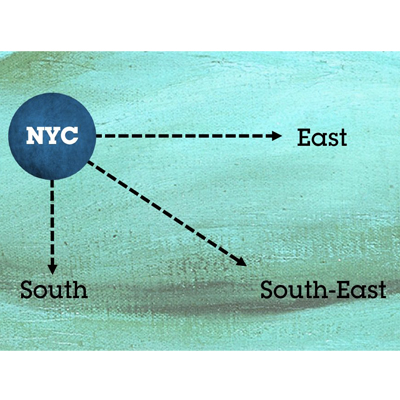
    1. Power is shifting South, East and South East

    New York is still very much the centre of the world, but power (economic, political and social) is becoming more widely distributed, marching South, East and South East: to Latin America, India, China, Russia, Africa and the Middle East, and Central and Eastern Europe.


    Although growth rates in these markets have slowed, the underlying trends persist as economic development lifts countless millions into lives of greater prosperity, aspiration and consumption.


    2. Supply exceeds demand – except in talent

    Despite the events that followed the collapse of Lehman Brothers in 2008, manufacturing production still generally outstrips consumer demand. This is good news for marketing companies, because manufacturers need to invest in branding in order to differentiate their products from the competition.


    Meanwhile, the war for talent, particularly in traditional Western companies, has only just begun. The squeeze is coming from two directions: declining birth rates and smaller family sizes; and the relentless rise of the web and associated digital technologies.


    Simply, there will be fewer entrants to the jobs market and, when they do enter it, young people expect to work for tech-focused, more networked, less bureaucratic companies. It is hard now; it will be harder in 20 years.


    3. Disintermediation (and a post-digital world)

    An ugly word, with even uglier consequences for those who fail to manage it. It’s the name of the game for web giants like Apple, Google and Amazon, which have removed large chunks of the supply chain (think music retailers, business directories and bookshops) in order to deliver goods and services to consumers more simply and at lower cost.


    Take our “frienemy” Google: our biggest trading partner (as the largest recipient of our clients’ media investment) and one of our main rivals, too. It’s a formidable competitor that has grown very big indeed by – some say – eating everyone else’s lunch, but marketing services businesses have a crucial advantage.


    Google (like Facebook, Twitter, LinkedIn and others) is not a neutral intermediary, but a media owner. Google sells Google, Facebook sells Facebook and Twitter sells Twitter.


    We, however, are independent, meaning we can give disinterested, platform-agnostic advice to clients. You wouldn’t hand your media plan to News Corporation or Viacom and let them tell you where to spend your advertising dollars and pounds, so why hand it to Google and co?


    Taking a broader view of our increasingly tech-based world, words like “digital”, “programmatic” and “data” will soon feel out-dated and obsolete as, enmeshed with so many aspects of our daily lives, network-based technologies, automation and the large-scale analysis of information become the norm.


    The internet has been a tremendous net positive for the advertising and communications services business, allowing us to reach consumers more efficiently, more usefully and often more creatively on behalf of clients. But it won’t be long before those clients stop asking our agencies for a “digital” marketing strategy (many already have). It will simply be an inherent part of what we’re expected to offer.


    4. Changing power dynamics in retail

    For the last 20 years or so the big retailers like Walmart, Tesco and Carrefour have had a lot more power than manufacturers because they deal directly with consumers who are accustomed to visiting their stores.


    This won’t change overnight, but manufacturers can now have direct relationships with consumers via the web and e-commerce platforms in particular. Amazon is the example we all think of in the West, but watch out for Alibaba, the Chinese behemoth due to list on the New York Stock Exchange later this summer in what could be the largest IPO in corporate history (and heading a capitalisation of around $200 billion).


    5. The growing reputation of internal communications


    Once an unloved adjunct to the HR department, internal comms has moved up the food chain and enlightened leaders now see it as critical to business success.


    One of the biggest challenges facing any chairman or CEO is how to communicate strategic and structural change within their own organisations. The prestige has traditionally been attached to external communications, but getting internal constituencies on board is at least as important, and arguably more than half of our business.


    6. Global and local on the up, regional down

    The way our clients structure and organise their businesses is changing. Globalisation continues apace, making the need for a strong corporate centre even more important.


    Increasingly, though, what CEOs want is a nimble, much more networked centre, with direct connections to local markets. This hands greater responsibility and accountability to local managers, and puts pressure on regional management layers that act as a buffer, preventing information from flowing and things from happening.


    7. Finance and procurement have too much clout, but this will change

    Some companies seem to think they can cost-cut their way to growth. This misconception is a post-Lehman phenomenon: corporates still bear the mental scars of the crash, and conservatism rules.


    But there’s hope: the accountants will only hold sway over the chief marketing officers in the short-term. There’s a limit to how much you can cut, but top-line growth (driven by investment in marketing) is infinite, at least until you reach 100% market share.


    8. Bigger government


    Governments are becoming ever more important – as regulators, investors and clients. Following the global financial crisis and ensuing recession, governments have had to step in and assert themselves – just as they did during and after the Great Depression in the 1930s and 1940s. And they’re not going to retreat any time soon.


    Administrations need to communicate public policy to citizens, drive health initiatives, recruit people, promote their countries abroad, encourage tourism and foreign investment, and build their digital government capabilities. All of which require the services of our industry.


    9. Sustainability is no longer “soft”

    The days when companies regarded sustainability as a bit of window-dressing (or, worse, a profit-sapping distraction) are, happily, long gone. Today’s business leaders understand that social responsibility goes hand-in-hand with sustained growth and profitability.


    Business needs permission from society to operate, and virtually every CEO recognises that you ignore stakeholders at your peril – if you’re trying to build brands for the long term.


    10. Merger flops won’t put others off

    Despite the failure of one or two recent high-profile mega-mergers, we expect consolidation to continue – among clients, media owners and marketing services agencies. Bigger companies will have the advantages of scale, technology and investment, while those that remain small will have flexibility and a more entrepreneurial spirit on their side.


    FMCG and pharmaceuticals (driven by companies like 3G and Valeant) are where we anticipate the greatest consolidation, while our own industry is likely to see some activity – with IPG and Havas the subject of constant takeover rumours. At WPP we’ll continue to play our part by focusing on small- and medium-sized strategic acquisitions (31 so far this year, and counting).”


     (These are purely personal views of  WPP’s founder and CEO Sir Martin Sorrell and indiantelevision.com does not subscribe to these views.)