Category: AD Agencies

  • Adcap case put off to 29 March; Discovery moves for  intervention, Home Cable seeks early hearing

    Adcap case put off to 29 March; Discovery moves for intervention, Home Cable seeks early hearing

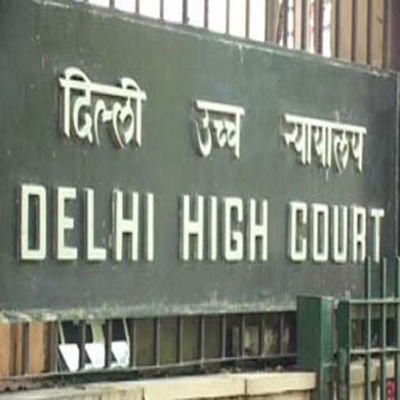
    NEW DELHI: The Delhi High Court today adjourned the hearing of the adcap (advertising cap) challenge to 29 March, when it will also take up the application by Discovery Communications to intervene in the matter.

    While the matter was listed for today, it was put off to another date in view of pending cases before the court.

    In the last hearing on 27 November, the Court chaired by Chief Justice G Rohini said the matter had been pending for some time and therefore it will hear and conclude the case in the next hearing.

    On that day, the Information and Broadcasting Ministry had informed the Court that it was in talks with the News Broadcasters Association (NBA) and other stakeholders on the issue of the advertising cap of 12 minutes per hour. This was the first time that the Ministry had put in an appearance in the petition filed by the NBA and others against the Telecom Regulatory Authority of India (TRAI) and others.

    On an oral plea by intervenor Home Cable Network Pvt Ltd counsel Vivek Sarin for early hearing, the Court directed him to file a written application with the relevant contentions for early hearing, saying that the court would consider it.

    Even as Discovery Communications sought to press its plea for being impleaded as an intervenor, the Court said this would also be considered at the next hearing.

    Home Cable Network was permitted to intervene on 5 January and the Court had agreed to consider contentions on whether pay channels should be permitted to carry commercials in view of subscription fee charged by them. Sarin had told the court that the petitioners had not disclosed that broadcasters had given their consent to observe the 10+2 ad cap rule under the Cable Television Network Regulation Rules 1994 and the Act that followed a year later and also under the Uplink and Downlink Guidelines.

    He also said pay TV broadcasters should not be allowed to take ads as they charged subscription fee.

    The case, filed by 9X Media, NBA and others against TRAI and the Union Government, has so far been adjourned from time to time on the plea that the government and the broadcasters are in talks on this issue.

    Indiantelevision.com has learnt that this comes in the wake of a statement made by Minister Arun Jaitley in January last year that there should be no ad cap in the print or electronic media. However, no instructions have been issued in this regard by the Minister so far.

    The Court has already directed that the order that TRAI will not take any action against any channel pending the petition will continue. In an earlier hearing, the Court had, at the regulator’s instance, directed that all channels keep a record of the advertisements run by them.

    The NBA had challenged the ad cap rule, contending that TRAI does not have jurisdiction to regulate commercial airtime on television channels.

    Apart from the NBA, the petitions have been filed by Sarthak Entertainment, Pioneer Channel Factory, E24 Glamoru, Sun TV Network, TV Vision, B4U Broadband, 9X Media, Kalaignar, Celebrities Management, Eanadu Television and Raj Television.

    Meanwhile, according to information available with this website, the Chief Metropolitan Magistrate in Delhi is already hearing a case on this issue against 15 broadcasters. It is further learnt that officials of these channels have obtained bail and the matter is pending before the Magistrate.

  • Adcap case put off to 29 March; Discovery moves for  intervention, Home Cable seeks early hearing

    Adcap case put off to 29 March; Discovery moves for intervention, Home Cable seeks early hearing

    NEW DELHI: The Delhi High Court today adjourned the hearing of the adcap (advertising cap) challenge to 29 March, when it will also take up the application by Discovery Communications to intervene in the matter.

    While the matter was listed for today, it was put off to another date in view of pending cases before the court.

    In the last hearing on 27 November, the Court chaired by Chief Justice G Rohini said the matter had been pending for some time and therefore it will hear and conclude the case in the next hearing.

    On that day, the Information and Broadcasting Ministry had informed the Court that it was in talks with the News Broadcasters Association (NBA) and other stakeholders on the issue of the advertising cap of 12 minutes per hour. This was the first time that the Ministry had put in an appearance in the petition filed by the NBA and others against the Telecom Regulatory Authority of India (TRAI) and others.

    On an oral plea by intervenor Home Cable Network Pvt Ltd counsel Vivek Sarin for early hearing, the Court directed him to file a written application with the relevant contentions for early hearing, saying that the court would consider it.

    Even as Discovery Communications sought to press its plea for being impleaded as an intervenor, the Court said this would also be considered at the next hearing.

    Home Cable Network was permitted to intervene on 5 January and the Court had agreed to consider contentions on whether pay channels should be permitted to carry commercials in view of subscription fee charged by them. Sarin had told the court that the petitioners had not disclosed that broadcasters had given their consent to observe the 10+2 ad cap rule under the Cable Television Network Regulation Rules 1994 and the Act that followed a year later and also under the Uplink and Downlink Guidelines.

    He also said pay TV broadcasters should not be allowed to take ads as they charged subscription fee.

    The case, filed by 9X Media, NBA and others against TRAI and the Union Government, has so far been adjourned from time to time on the plea that the government and the broadcasters are in talks on this issue.

    Indiantelevision.com has learnt that this comes in the wake of a statement made by Minister Arun Jaitley in January last year that there should be no ad cap in the print or electronic media. However, no instructions have been issued in this regard by the Minister so far.

    The Court has already directed that the order that TRAI will not take any action against any channel pending the petition will continue. In an earlier hearing, the Court had, at the regulator’s instance, directed that all channels keep a record of the advertisements run by them.

    The NBA had challenged the ad cap rule, contending that TRAI does not have jurisdiction to regulate commercial airtime on television channels.

    Apart from the NBA, the petitions have been filed by Sarthak Entertainment, Pioneer Channel Factory, E24 Glamoru, Sun TV Network, TV Vision, B4U Broadband, 9X Media, Kalaignar, Celebrities Management, Eanadu Television and Raj Television.

    Meanwhile, according to information available with this website, the Chief Metropolitan Magistrate in Delhi is already hearing a case on this issue against 15 broadcasters. It is further learnt that officials of these channels have obtained bail and the matter is pending before the Magistrate.

  • R Scape: Understanding the rural consumer

    R Scape: Understanding the rural consumer

    MUMBAI: Last year the broadcast and advertising industries woke up to the rural television audience with Broadcast Audience Research Council India’s rural inclusive data. Now, as several industry experts have been cited as saying that as the rural market has become extremely important for advertisers as it commands almost half of the total television viewership. Not to mention that with improved internet services and  infrastructure in these areas, the need to understand how consumers behave differently in these pockets has become extremely important. Marketers have come to understand that a single brand communication may not work in both urban and rural markets.

    With this understanding comes the awareness of how limited our knowledge is of the evolved rural consumers, and how badly marketers need to develop tools to address the change in the landscape.

    Keeping that in mind, IIM-Ahmedabad, MaRS Monitoring and Research Systems, Decision Point and the Geometry Global I Encompass Network have done an extensive study of consumer behavior in the rural markets to help marketers come up with new strategies to address new challenges in rural marketing.

    Called the R Scape, the study dashboard is able to generate category-level adoption, purchase and consumption-related insights based on inputs such as age, gender and region/ state.  

    R Scape covers 6,000 rural consumers  with near equal split of married men, married women, young men, young women across eight states, which represent all regions across India and over 20 popular categories including deodorant, shampoo, hair oil, lipstick, toothpaste, talcum powder, shaving cream, after-shave lotion, cooking oil, toilet soap, fairness cream, detergent, utensil cleaner, floor cleaner, biscuit, tomato sauce, butter, jam, breakfast cereal, branded aata, shoe, denim, candy, seed, pesticide, banking, life insurance and mutual fund.

    As per the study, the rural consumer segmentation needs to be a function of adherence to village norms and urban centricity, which has created strong differentiation among rural married women.

    Moreover, rural consumers tend to  exhibit lack of brand fidelity attitudinally as well as behaviorally. The biggest divide when it comes to urban and rural consumption is the reason for consumption itself. Hence, the same brand positioning or advertising does not work across both markets. Add to that that rural markets are not homogenous, therefore, reasons to buy and consume categories are often starkly different for consumers from different regions.

  • R Scape: Understanding the rural consumer

    R Scape: Understanding the rural consumer

    MUMBAI: Last year the broadcast and advertising industries woke up to the rural television audience with Broadcast Audience Research Council India’s rural inclusive data. Now, as several industry experts have been cited as saying that as the rural market has become extremely important for advertisers as it commands almost half of the total television viewership. Not to mention that with improved internet services and  infrastructure in these areas, the need to understand how consumers behave differently in these pockets has become extremely important. Marketers have come to understand that a single brand communication may not work in both urban and rural markets.

    With this understanding comes the awareness of how limited our knowledge is of the evolved rural consumers, and how badly marketers need to develop tools to address the change in the landscape.

    Keeping that in mind, IIM-Ahmedabad, MaRS Monitoring and Research Systems, Decision Point and the Geometry Global I Encompass Network have done an extensive study of consumer behavior in the rural markets to help marketers come up with new strategies to address new challenges in rural marketing.

    Called the R Scape, the study dashboard is able to generate category-level adoption, purchase and consumption-related insights based on inputs such as age, gender and region/ state.  

    R Scape covers 6,000 rural consumers  with near equal split of married men, married women, young men, young women across eight states, which represent all regions across India and over 20 popular categories including deodorant, shampoo, hair oil, lipstick, toothpaste, talcum powder, shaving cream, after-shave lotion, cooking oil, toilet soap, fairness cream, detergent, utensil cleaner, floor cleaner, biscuit, tomato sauce, butter, jam, breakfast cereal, branded aata, shoe, denim, candy, seed, pesticide, banking, life insurance and mutual fund.

    As per the study, the rural consumer segmentation needs to be a function of adherence to village norms and urban centricity, which has created strong differentiation among rural married women.

    Moreover, rural consumers tend to  exhibit lack of brand fidelity attitudinally as well as behaviorally. The biggest divide when it comes to urban and rural consumption is the reason for consumption itself. Hence, the same brand positioning or advertising does not work across both markets. Add to that that rural markets are not homogenous, therefore, reasons to buy and consume categories are often starkly different for consumers from different regions.

  • Leo Burnett partners with Bajaj Auto to create ‘V’

    Leo Burnett partners with Bajaj Auto to create ‘V’

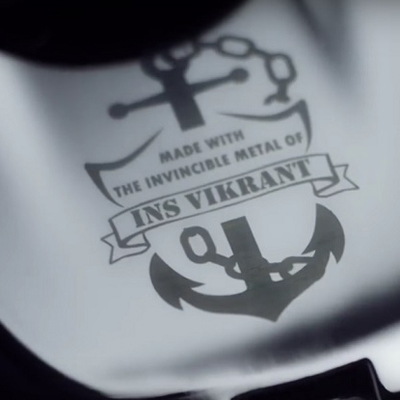
    MUMBAI: It was a leap of faith of sorts when Bajaj Auto took to Leo Burnett’s idea of carving a bike out INS Vikrant’s metal scraps, and from a mere prototype gave shape to Bajaj V, whose launch has  set social media ablaze .

    Amidst tweets, photos, Facebook status updates and insta-shares,  the latest commuter segment bike offering from Bajaj Auto  titled ‘V’ launched with much pomp and show in Delhi today.

    The bike was already making headlines since a video with a preview of it went viral online almost a week ago. Conceptualised by Leo Burnett India, the video shows documented footage of the aircraft carrier in all its glory and its subsequent dismantling in 2012 which is sure to set pangs across several patriots in the country who grew up with the name Vikrant.

    And the subsequent shot of the new bike born from the ashes of the war ship’s scrap sends across a sense of awe.

    While it is of common knowledge that Leo Burnett India are behind the creative campaign for the new bike, very few are aware that the original idea for the bike actually came from the agency as well.

    The idea for  Bajaj V, came from a prototype that Leo Burnett had conceptualised for their long term client.

    “We had to come up with a way to deliver on the idea if ‘Hamara Bajaj’. We didn’t want to go with the old song and dance formula and deliver something more participative. It was around the time Vikrant was going through its decommissioning and was being scrapped. Seeing the unanimous dismay over the scrapping, the team felt what if there was an iconic bike that carried the symbol of vikrant and every Indian could own it ? What better way to communicate hamara Bajaj?” asks Leo Burnett CEO Saurabh Verma.

    “Even in its nascent stage we only had a limited edition launch in mind and built the entire prototype on the back of that. It elaborated on how people will connect to it and engagement and campaign ideas for it.” Verma adds. Little did he know that automobile brand will take the idea to the next level. Bajaj Auto bought away the Vikrant metal; enough to process it to be a part of gas tanks of a lac of V motorcycles.

    This is not the first time the agency had lend their creative mettle in experimenting  with new ways to engage with brands they cater to. Their consumer engagement activity they built around OLX Mad ads was well loved and appreciated by the industry. What does it say about the  changing role of agencies and their significance to the clients?

    “Bajaj V is not just a campaign mandate for us, it’s much much more. Bajaj team and Leo Burnett team are partners increating this iconic bike, therefore there is more accountability involved. With this unique partners we handle campaigns for Bajaj, we handle activation and shopper marketing for them as well. Not to mention their internal communication and Pr as well,. From conceptualising an  from its very production to rolling it across every medium –  there is definitely a lot more involvement and ownership that leads to accountability for the brand,” responds Verma, adding that they have several other projects in the pipeline where they have experimented with brands on different levels.

    Expanding on the concept of building a bike’s gas tank from the scraps of a warship, the brains behind the idea Leo Burnett CCO Raj Deepak Das adds, “ Growing up, the biggest warship that comes to our mind is INS Vikrant. Therefore when they decided to scrap it, it didn’t sit well with many, me included. So when someone from the team suggested if we could use those scraps, we decided what better way than a bike through which we can own a bit of history?”

    It’s been over a decade since India’s popular locomotor brand Bajaj has churned out a motorbike. Their last, Bajaj Pulsar was a huge hit, and now is almost a household name.

    “The Bajaj V shall usher a new era in commuter motorcycling. We believe the Indian customer buying a commuter motorcycle deserves something that is substantial, solid, and which moves with a sense of purpose,”said Bajaj Auto president–motorcycle Business,Eric Vas

    Expected to be priced between Rs 60000  to Rs 70,000, the bike will hit the roads by this March.

    “We will start with a capacity of 20,000 units month and should demand exceed that, there is no problem in enhancing the capacity further,” adds a confident Bajaj Auto managing director Rajiv Bajaj while signing off.

  • Leo Burnett partners with Bajaj Auto to create ‘V’

    Leo Burnett partners with Bajaj Auto to create ‘V’

    MUMBAI: It was a leap of faith of sorts when Bajaj Auto took to Leo Burnett’s idea of carving a bike out INS Vikrant’s metal scraps, and from a mere prototype gave shape to Bajaj V, whose launch has  set social media ablaze .

    Amidst tweets, photos, Facebook status updates and insta-shares,  the latest commuter segment bike offering from Bajaj Auto  titled ‘V’ launched with much pomp and show in Delhi today.

    The bike was already making headlines since a video with a preview of it went viral online almost a week ago. Conceptualised by Leo Burnett India, the video shows documented footage of the aircraft carrier in all its glory and its subsequent dismantling in 2012 which is sure to set pangs across several patriots in the country who grew up with the name Vikrant.

    And the subsequent shot of the new bike born from the ashes of the war ship’s scrap sends across a sense of awe.

    While it is of common knowledge that Leo Burnett India are behind the creative campaign for the new bike, very few are aware that the original idea for the bike actually came from the agency as well.

    The idea for  Bajaj V, came from a prototype that Leo Burnett had conceptualised for their long term client.

    “We had to come up with a way to deliver on the idea if ‘Hamara Bajaj’. We didn’t want to go with the old song and dance formula and deliver something more participative. It was around the time Vikrant was going through its decommissioning and was being scrapped. Seeing the unanimous dismay over the scrapping, the team felt what if there was an iconic bike that carried the symbol of vikrant and every Indian could own it ? What better way to communicate hamara Bajaj?” asks Leo Burnett CEO Saurabh Verma.

    “Even in its nascent stage we only had a limited edition launch in mind and built the entire prototype on the back of that. It elaborated on how people will connect to it and engagement and campaign ideas for it.” Verma adds. Little did he know that automobile brand will take the idea to the next level. Bajaj Auto bought away the Vikrant metal; enough to process it to be a part of gas tanks of a lac of V motorcycles.

    This is not the first time the agency had lend their creative mettle in experimenting  with new ways to engage with brands they cater to. Their consumer engagement activity they built around OLX Mad ads was well loved and appreciated by the industry. What does it say about the  changing role of agencies and their significance to the clients?

    “Bajaj V is not just a campaign mandate for us, it’s much much more. Bajaj team and Leo Burnett team are partners increating this iconic bike, therefore there is more accountability involved. With this unique partners we handle campaigns for Bajaj, we handle activation and shopper marketing for them as well. Not to mention their internal communication and Pr as well,. From conceptualising an  from its very production to rolling it across every medium –  there is definitely a lot more involvement and ownership that leads to accountability for the brand,” responds Verma, adding that they have several other projects in the pipeline where they have experimented with brands on different levels.

    Expanding on the concept of building a bike’s gas tank from the scraps of a warship, the brains behind the idea Leo Burnett CCO Raj Deepak Das adds, “ Growing up, the biggest warship that comes to our mind is INS Vikrant. Therefore when they decided to scrap it, it didn’t sit well with many, me included. So when someone from the team suggested if we could use those scraps, we decided what better way than a bike through which we can own a bit of history?”

    It’s been over a decade since India’s popular locomotor brand Bajaj has churned out a motorbike. Their last, Bajaj Pulsar was a huge hit, and now is almost a household name.

    “The Bajaj V shall usher a new era in commuter motorcycling. We believe the Indian customer buying a commuter motorcycle deserves something that is substantial, solid, and which moves with a sense of purpose,”said Bajaj Auto president–motorcycle Business,Eric Vas

    Expected to be priced between Rs 60000  to Rs 70,000, the bike will hit the roads by this March.

    “We will start with a capacity of 20,000 units month and should demand exceed that, there is no problem in enhancing the capacity further,” adds a confident Bajaj Auto managing director Rajiv Bajaj while signing off.

  • GroupM partners LINE to reach APAC consumers

    GroupM partners LINE to reach APAC consumers

    MUMBAI: GroupM has inked a media partnership across Asia Pacific with LINE Corporation of Japan.


    LINE is a free call and messaging app, which is rapidly expanding its global user base with 212 million monthly active users, mostly in the Asia Pacific market in countries such as Taiwan, Thailand, and Indonesia.


    The multifaceted agreement commences immediately and is one of many new media partnerships GroupM is establishing to support clients in the region.


    LINE allows brands to communicate with audiences safely in real time.  LINE is an instant smartphone messenger that users check constantly through the day, enabling brands to make timely, relevant outreach.  Because LINE is a closed social networking service where users communicate mostly with personal acquaintances, it also serves as an intimate source of reliable information for the user and a trustworthy environment for brands. Advertisers on LINE additionally benefit from strict policies around user eligibility which ensure no fake accounts exist.


    “Clients look to us for the most innovative ways to reach their audiences across Asia Pacific. LINE is one of the fastest-growing natively developed social media platforms in Asia and is undeniably an important new vehicle for consumer engagement. Our agencies are already helping clients to leverage the platform within media plans, and we engineered this partnership to make LINE’s digital products work harder for their brands,” said GroupM Asia Pacific CEO Mark Patterson.


    The deal offers clients of GroupM agencies a competitive advantage through efficient pricing, quick access to new advertising products and specialised training to support appropriate implementation based on unique platform characteristics and user preferences.   


    “Today, it is a worldwide trend to utilise messenger apps for consumer communications and customer relationship management, connecting brands with their audiences. Through this partnership with GroupM, we will connect even more brands with consumers. Through our LINE Training Sessions, we’ll also help instruct the most effective marketing solutions for LINE’s unique communication environment and establish market-leading benchmarks,” added LINE Corp SVP, head of corporate sales Sintaro Tabata.


    “Online consumers around the world – including those in APAC – have shown a marked preference for platforms and services they find trustworthy. LINE’s closed nature appeals to consumers who favor a more private social networking experience, and by connecting reliable brands with users in this implicitly trusted setting, GroupM and LINE will help our clients reach users in a fun, yet unobtrusive manner,” said GroupM Asia Pacific deputy head of trading Nick Bins.

  • JWT bags creative duties of Vietnam’s first international DTH company

    JWT bags creative duties of Vietnam’s first international DTH company

    MUMBAI: Vietnam’s satellite television operator VSTV/K+ has named J. Walter Thompson as its creative agency of record in Vietnam after a recently concluded multi-agency pitch.


    VSTV/K+ is a joint venture between state-owned VTV and Canal+ Overseas, a wholly-owned subsidiary of Canal+ Group of France.


    A total of three agencies were invited for this pitch, which was overseen by VSTV/K+ team from Vietnam and representatives from Canal+ Overseas.


    K+ entered the Vietnam market in 2009 as a DTH pioneer with exclusive English Premier League content. Since then it has garnered a subscriber base of more than 800,000.


    By using direct to home and advanced technologies, K+ brings quality national level satellite TV service to Vietnamese households via SD and HD set-top-boxes at competitive prices, offering 4 K+ premium and exclusive channels, up to 130 SD channels and 10 HD channels across genres: sports, movies, general entertainment, news, music, and documentaries.


    VSTV/K+ COO and CFO Frederic Berardi said, “Whilst K+ has made a name in the Vietnam television space, our brand now needs to take the high ground as an entertainment hub for Vietnamese homes via exclusive, premium content. JWT demonstrated to us strong understanding of the big picture, the road map and they combined that with an entrepreneurial mentality, so essential as we seek to drive change in a fast evolving market.”


    As part of the restage program, K+ has been enriching the content on its four exclusive channels with key investments in 2015. This includes strategic partnerships with leading film studios, BHD (Vietnam) and CJ (Korea) to beam latest Vietnamese movies into Vietnamese homes, only few months after their release in cinema. Another one is the exclusive acquisition of ATP World Tour series for the next three seasons (2016/2017/2018) which has just been announced.


    JWT Vietnam CEO Saby Mishra, who led the pitch effort, added, “For J. Walter Thompson this is a real honor to work with the country’s premier broadcasting venture. We are excited about the opportunity to work with the VSTV/K+ team and pioneer a true premiumization inflection-point in a broadcast market where free-to-air analogue terrestrial has been the norm for long.”


    “The challenges of digital switchover will however vary significantly across ASEAN region, depending on market conditions. In case of Vietnam, its 23 million TV households in a population of 90 million, is showing an appetite for quality content so we believe that there is now headroom for creating a mass-premium segment via exclusive content, smart value propositions, branding and creativity,” Mishra said.

  • Mullen Lowe Lintas Group India wins its 75th award for the year

    Mullen Lowe Lintas Group India wins its 75th award for the year

    Mumbai: Starting with the Effie India 2014 to the recently concluded Campaign South Asia Agency of the Year awards, Mullen Lowe Lintas Group India has won a total of 75 honours last night, making it the most awarded agency in India in 2015. All the 75 awards were won either for market/campaign effectiveness, or on overall agency performance.


    The awards list this year includes the group’s performance at Warc Prize for Asian Strategy, where it won a grand prix, a gold, a silver and a bronze. The year culminated for the agency with a fine performance at the Campaign Asia Agency of the Year awards show where it was declared the ‘Best Creative Agency of the Year’, the Best New Business Development Team of the Year, Best Strategic/Brand Planner of the Year and Best Account Person of the Year.


    Commenting on the agency’s strong performance on the awards front, Mullen Lowe Lintas India Group CEO, Joseph George said, “It’s been a milestone year for us in India. We are glad to have ended the year on the same high that we started with. All this recognition is a result of all our key people putting up their hands, wanting to be counted and bringing value to the table. And this happened only because everyone thought of themselves as key stakeholders of the company. ”


    Adding his views on the agency’s achievement Lowe Lintas India CCO Arun Iyer said, “I’m proud of the consistency with which each of our offices has churned out some great work across a large and diverse client set. Our work has excelled on a portfolio that’s a combination of classical and progressive brands, from young upstarts to large market leaders. 2015 serves as a reminder of how setting the bar high is an everyday pursuit, and how successful teams are greater than the individuals.”


    Mullen Lintas India chairman and CCO Amer Jaleel added, “The best barometer of our work being appreciated is when it manages to bring about a shift in perception and thought among the people. That’s what we achieved with few of our brands that went on to redefine the way a campaign should be approached, and which ended up winning awards that were unique in nature. Special accolades for Indian brands such as Havells, Tata Tea and the others were something that no agency had ever received before, and we are proud to have set a trend by being the first.”


    Adding his views on the agency’s achievement Lowe Lintas India CCO Arun Iyer said, “I’m proud of the consistency with which each of our offices has churned out some great work across a large and diverse client set. Our work has excelled on a portfolio that’s a combination of classical and progressive brands, from young upstarts to large market leaders. 2015 serves as a reminder of how setting the bar high is an everyday pursuit, and how successful teams are greater than the individuals.”


    Mullen Lintas India chairman and CCO Amer Jaleel added, “The best barometer of our work being appreciated is when it manages to bring about a shift in perception and thought among the people. That’s what we achieved with few of our brands that went on to redefine the way a campaign should be approached, and which ended up winning awards that were unique in nature. Special accolades for Indian brands such as Havells, Tata Tea and the others were something that no agency had ever received before, and we are proud to have set a trend by being the first.”


  • Internet advertising to takeover television by 2018: forecasts ZenithOptimedia

    Internet advertising to takeover television by 2018: forecasts ZenithOptimedia

    MUMBAI: India, Indonesia and Philippines emerge as hot spots of ad spend growth as per ZenithOptimedia’s Advertising Expenditure Forecast of December 2015. These are the only three markets in which adspend is growing at double-digit annual rates . Between 2015 and 2018 the report estimates Philippines to expand by USD 1.2 billion dollars at growth rate of 13% a year, while’s India’s ad spends will increase to USD 3 billion also at 13% a year.

    Indonesia is expected to show the biggest growth at 17 % a year, touching USD 4.1 billion.

    Calling it Fast Track Asia bloc comprising of China, India, Indonesia, Malaysia, Pakistan, Philippines, Taiwan, Thailand and Vietnam, the report further mentions that ad expenditure in Fast-track Asia will  grow at 8.9% in 2015, and at an average rate of 8.4% a year between 2015 and 2018, down from 14.7% a year between 2009 and 2014.

    Having said that, even with their growth rates slowing down China will continue to be one of the biggest contributor to the global ad spends which is estimated to reach USD 579 billion at a growth rate of 4.7 % by 2016. Between 2015 and 2018, China is expected to contribute 24 percent of the global  ad expenditure only preceded by the US at 26 percent. The UK comes third, contributing 7%, and Indonesia fourth, contributing 5%. Not to mention, the top five of the ten biggest contributor to the global ad expenditure is expected to come from the Fast Track Asia countries, by 2018. Overall, rising markets will contribute 54% of additional ad expenditure between 2015 and 2018, and to increase their share of the global market from 37% to 39%.

    “Growth of the global ad market is being driven by advances in technology, especially mobile and programmatic tech,” said Steve King, ZenithOptimedia Worldwide CEO Steve King. “But television remains by far the most important channel for brand communication, and online video, its digital offshoot, is increasing the audiovisual share of global display advertising.”

    The report also singles out internet to become the most preferred medium of advertising with internet advertising command 36.6 per cent of global advertising, overtaking the current largest advertising medium, television by 2018. Looking at the ad market as a whole, television’s share peaked at 39.7% in 2012, and is estimated at 37.7% in 2015, before falling back to 34.8% by 2018.

    The report highlights paid search as one of the key reasons for televisions loss of adspend share. Paid search is essentially a direct response channel (together with classified), while television is the pre-eminent brand awareness channel which is expected  to remain so for many years to come.  Television offers unparalleled capacity to build reach, while online video offers pinpoint targeting and the potential for personalisation of marketing messages. Both are powerful tools for establishing brand awareness and associations. As per the report, television will account for 44.7% of display expenditure  in 2015, and 42.9% in 2018.

    Within internet advertising, mobile advertising will emerge as the leading platform with it overtaking desktop and accounting for 50.2% of all internet advertising.

    Mobile advertising will total USD 114 billion in 2018, up from USD 50 billion in 2015. Moreover, according to the report, mobile advertising is responsible for almost all of the growth in global adspend. The report forecasts  it to grow at an average rate of 32% a year between 2015 and 2018, and to contribute 87% of all of the new ad money added to the global market during these years.